Tag: Working from home

  • Hard times: WFH employees without necessary equipment

    Patrick Crowder

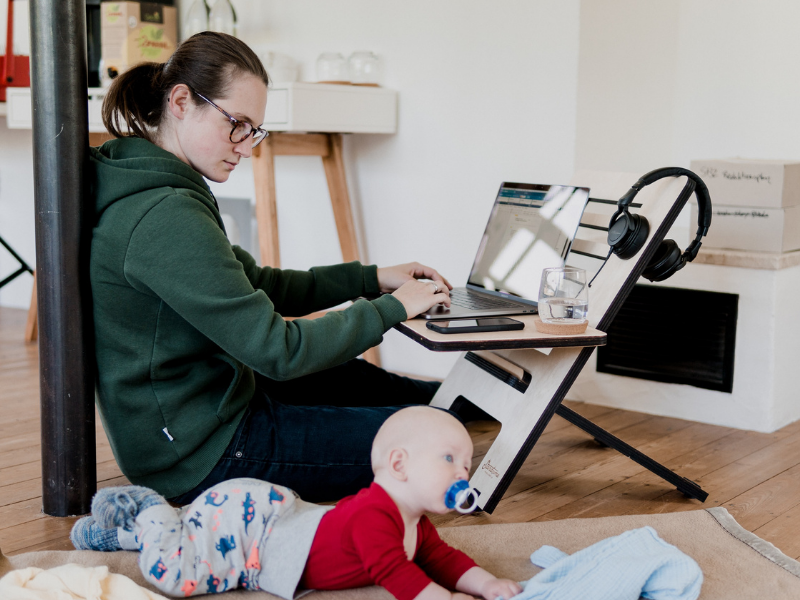
    Working from home is rapidly becoming more accepted, and for many people it is a good change. However, a 1,000-employee survey conducted by Fellowes Brands suggests that more than half don’t have the equipment they would have in a traditional office.

    Of the employees surveyed, 58 per cent said that they do not work from a home office, instead opting to work from the kitchen, living room, or bedroom.

    Not having a dedicated home office can lead to problems. Desk chairs are designed ergonomically for long-term use, unlike other chairs around the house which could encourage bad posture and cause back issues down the line. Additionally, lack of an enclosed office space can allow all manner of distractions to creep in causing a loss of productivity. Productivity expert Martin Geiger explained the issue: “Throughout my career working with some of the world’s biggest companies, one thing I’ve come to notice is that the most productive people all seem to have one commonality: satisfaction. To successfully transition to this exciting hybrid working future, employers must implement practical strategies that allow their employees to be satisfied with the setup within the corporate office, as well as within their home working environment.”

    While a temporary home set-up may have been suitable as a stopgap measure to ride out the pandemic, more permanent solutions must be found if WFH is going to continue to succeed. Seven out of ten employees believe that their employer is responsible for giving them the tools they need to work from home, and 81 per cent say that the ergonomics that come with a proper home office are essential to productivity.

    “The future of work is hybrid. No longer is working solely relegated to the company office; the modern workspace now involves employees splitting a portion of their time working from within the corporate office, and a portion working from the home office,” Geiger continued. “Employees who are well equipped and thus satisfied with their working conditions in both locations will lead to outcomes of higher productivity.”

    As the transition to remote working continues, there will surely be issues to iron out. Providing the tools needed to be productive will solve one of these problems, and based on the evidence, it looks like investing in equipment for WFH employees is a small price to pay.

    Credit: https://www.fellowes.com/us/en

  • Fiona Millar on our hidden mental health crisis in the workplace

    Fiona Millar on our hidden mental health crisis in the workplace

    It’s really hard living with someone with mental health issues. I remember days when I would sit at my desk and think: “I just can’t do this.” But looking back now, it’s one of the things that made me resilient: I know that I can put one foot in front of the other no matter what. 

    One of the things I’ve always thought about Alistair’s mental health is that once he stopped drinking, he transferred his dependency, and his self-medication became work: he threw himself into that to stop himself addressing the deeper problems. He could perform at a very high level in the workplace – but then he’d come home and struggle and I would bear the brunt of that. 

    It was astonishing. We worked together at Downing Street during the Blair administration and I’d see him be amusing, engaging and charismatic with people – but then at home, he’d be good with the kids, but with me he’d crash. I’ve now started doing meetings with other people who live with those suffering mental health problems and it’s very common: people live with fear of what their friends will say, or else they feel responsible as if the problem originates with them.

    In fact, 99.9 per cent of the time it’s nothing to do with you at all. People who are mentally ill can be quite manipulative, and gaslighting is very common. Initially, I just thought Alistair was quite a difficult personality and it wasn’t until he was formally diagnosed that I was really able to say he had mental health issues. 

    Of course, during lockdown people’s working situations have been very unusual – and some people haven’t had any work because they’re self-employed in creative industries. But in general I’d say that people tend to use work as a way to take themselves out of a situation, because if your partner has mental health problems, you have to find things for yourself, otherwise you can get consumed by the other person’s illness. Work is quite a solace – although for the person actually suffering from mental health, often they can’t cope with going to work.

    Alistair was very lucky to be able to work 28 years, even though he was seriously ill, and Tony Blair was always very accommodating. Not all employers are, and there are some toxic workplaces out there. For employers who want to make the workplace a friendly environment, they need to ask themselves not only how they actually do it – but more, how do they do it on a consistent basis?

    That has to begin in an organisation’s leadership – to treat other people as you wish to be treated yourself. You’ve got to do more than talk the talk. If an employee comes to you with a family problem or a mental health concern you have to do all you can to accommodate it.

    It’s too early to say whether there’s any mental health washing in companies, as mental health has only really been a hot topic during the pandemic. What’s concerned me during Covid-19 is the way in which managers closed their office as a cost-cutting device. That was fine in the beginning – people thought it was fantastic to be working from home. But I’ve noticed of late that a lot of younger people aren’t living in particularly convenient circumstances and the novelty has worn off. Working all day in your bedroom isn’t great. It’s not healthy to have a remote relationship with your employer who, after all, is meant to be responsible for your well-being: that means there’s currently a lot of hidden mental health problems in the workplace. 

    I’m all in favour of flexible work – especially for families – but we need to get people back to some sort of physical relationship with the people they work with, otherwise we’ll see casualties from this. People started off not wanting to come to the office and now they kind of want to come back. Managing that is going to be very important, and we’re probably at the crunch point now.

    But by creating this online support group, we’ve hit on a very simple model. There’s no real cost involved, and we’ve got people coming from across the country to our group. At the moment, we’ve limited our numbers to ten or 12, and we’d like to expand it into local communities. This could be tacked onto existing organisations, and I’m hopeful we can do that. 

    To discuss mental health issues with Fiona Millar, tweet her on the Twitter handle @schooltruth

  • Will the work-from-home revolution adversely affect working mothers?

    Will the work-from-home revolution adversely affect working mothers?

    Alice Wright

    With many firms offering new flexi-working arrangements as restrictions begin to lift across the UK, a study conducted by the World Economic Forum has raised questions about the impact working from home (WFH) may have on career progression, particularly for women.

    The study asked lots of different questions about attitudes and outcomes of working from home, collecting data from 5,000 randomly selected UK workers. When asked how much time the employees would like to spend working from home there was a large variety in answers. The report raised the concern that those who “WFH may end up suffering long-run in terms of promotions, which would be a major issue for diversity if certain demographics, like women with young kids, opt to WFH more and miss out on promotions.”   

    Indeed BBC research suggested that people with disabilities, people with children and women make up the largest number that prefer the prospect of more time working at home. Therefore there could develop a situation where young, ambitious single men who opt to work in the office get ahead of their female peers who decide to work from home.  

    The BBC report goes on to say that “research shows that home workers – however productive – suffer from a lack of face time with colleagues and managers, which negatively impacts promotions, and ultimately may stall careers.”

    It has been well-documented this year that the Covid-19 pandemic has had an adverse effect on women: the burden of domestic chores and childcare has fallen disproportionately on women. Before the pandemic women were doing three times the amount of unpaid domestic and care work than men, but now UN Women Deputy Executive Director Anita Bhatia says this has “doubled.”  

    For many, home working in a blended manner is here to stay and workers are increasingly being offered choice. But if those that go into the office are more likely to gain promotions by forming stronger bonds with their superiors, and having their work continuously acknowledged and women remain working from home to fulfil domestic needs, then the gender gap at work looks set to regress.  

    The issue of a disparity in promotions between in-office workers and WFH workers existed well before the so-called “work from home revolution” brought about by the pandemic. In a 2014 study conducted in China, researchers from the Stanford Graduate School of Business found that while people working from home were around 13% more productive, they weren’t rewarded with promotions at nearly the same rate as their colleagues working in the office. The BBC report also stated that remote workers who aren’t being promoted can also end up with a heavier workload.

    While more choice for employees on where they work can be considered a positive, before hailing it as ‘revolutionary’ the potential detriments to diversity in leadership must be considered to ensure hard-fought gains on women’s economic and social independence are not lost.