Blog

  • 2024 Highlights: Exclusive: how Elon Musk is changing the global economy

    Christopher Jackson

    Elon Musk is one of those public figures like Mark Zuckerberg who seems to have his own uniform. It is difficult to imagine Musk not dressed in black boots, black T-Shirt and tight-fitting black jeans. And at Bletchley Park, for an AI safety summit, here he is: like a life-size Musk doll which turns out actually to be Musk. When he speaks, he rather charmingly mumbles. I wouldn’t call his fellow tech billionaires Bill Gates, Jeff Bezos, or Zuckerberg disarming. Musk is. He has a way of murmuring intelligently, even humbly. There is something mesmerising and centred about him which is separate from his wealth.

    Speaking to the UK prime minister Rishi Sunak, he says: “I think actually [this summit] will go down in history as being very important. I think it’s really quite profound.”

    This praise is offered somewhat in the voice of a homeless person soliloquising at a bus-stop. But it seems to do the trick. Sunak himself looks like being prime minister may have been less to do with forging some sort of change to Britain than an elaborate attempt to meet Musk, which is only on this day meeting bearing fruition. When Musk compliments Sunak on inviting China, I briefly think Sunak might weep for joy. “Having them here, I think is essential really. If they’re not participants, it’s pointless. I think if the United States and the UK and China are aligned on safety, that’s all going to be a good thing.”

    The inescapable conclusion is that Musk is more powerful than Sunak – or he certainly seems to be at Bletchley. Musk is not only one of the people likely to shape the destiny of AI, and therefore the future of humanity; he can also get into space in a way that NASA can’t (SpaceX); give internet to places like Ukraine if he wants to (SpaceX again); control the future of the electric car (Tesla); control the future of robotics (Tesla, Neuralink); drill vast tunnels and solve your traffic problems (The Boring Company); collect vast troves of data (Twitter); decide on the direction of free speech (Twitter); and has also had, or is about to have, a say on our the financial system works (PayPal, perhaps Twitter again). Rishi Sunak on the other hand will likely shortly retreat into private life, probably as a sort of a middling financier. No wonder Sunak was in his own words ‘privileged and excited’ to be interviewing Musk and not the other way round.

    What else did Musk say during the interview after the Bletchley Park summit at Lancaster House. From the perspective of work, Musk predicted that AI would ‘create a future of abundance where there is no scarcity of goods and services. There will come a point when no job is needed – you can have a job if you want for personal satisfaction, but the AI will be able to do everything.”

    These were stirring words for an employability magazine to hear. After the talk, some listeners were taking Musk’s words with a pinch of salt. The South African-born entrepreneur hasn’t got to where he is by thinking small ball about the future: it is almost a running joke that every year at his Tesla presentation he predicts that driverless cars are imminent: and every year that turns out not to be the case – so far.

    But the naysayers should also beware: Musk has a habit of making things happen which onlookers had thought impossible: nobody expected SpaceX, Tesla, or Neuralink. We didn’t think reusable rockets could be a thing; they are. I never thought it possible for a robot to delicately pick up an egg and transfer it from one hand to the other; Musk thought it doable and made it happen. This is a man who has repeatedly changed the world by sheer gumption, hard work, imagination, zeal, and brutal workplace practices. We might not like him, but we’d be crazy at this point not to pay attention.


    The Musk Method

    The Musk we see at Bletchley and later at Lancaster House might seem unassuming and even gentle, but it is one of many Musks – to put the matter mildly. Musk is protean; like many great men, he is complex – at constant motion. As is so often the case when it comes to well-known people, journalists get the most palatable version. But there are others Musks than the one we see at Bletchley: the goofy version who bought a sink into Twitter on his first day as a pun on the idea of ‘Let that sink in’ referring, I think, to the new working culture which he would bring to the social media company. For someone so intelligent, Musk’s sense of humour can be remarkably puerile, as followers of his X feed will know.

    Then there is the dreamer, often to be found in Isaacson’s indispensable biography Elon Musk: this Musk is to be seen off to one side of a busy room, letting the future and his role in it coalesce around him. A science fiction fan when young – perhaps the biggest single influence on him is Douglas Adams’ Hitchhiker’s Guide to the Galaxy – it can seem as if he is more comfortable out of the present moment, inhabiting future ones. With Musk, contemplation of the future is a salve to stress: it is, I think, a kind of resting-place with him.

    Then there is the Napoleonic questioner: the Musk who stalks his factories and asks questions of his staff. Could this be done more efficiently? Most importantly: could it be done more quickly? This version of Musk is difficult to distinguish from Musk the Engineer and Musk the Mathematician – someone who both presides over his companies, and also occasionally interferes with theme, descending onto his engineers with quixotic passion or baffling rage. With his sudden lurches, and bursts of frenetic activity, he seems as far as possible from the man we see at Bletchley with his softly spoken politesse as almost to amount to a different person altogether.

    James Badgett, the CEO and founder of the Angel Investment Network, has seen thousands of businesses come through his doors since the company’s inception. He helps me begin to get the measure of Musk: “One thing I have noticed is that engineers make really successful entrepreneurs – the two often go hand in hand. That’s not just to do with knowing the detail of the mechanics and the workings of a project: Musk is remarkable at that, particularly in his feel for a problem. It’s also because companies at their best need to work with something like the logic of machines. They need to have their own workings, and their own mechanisms. Musk is a prime example of this – he is a brilliant engineer but also an engineer who uses that knowledge to create efficient corporate systems.”

    This is certainly the case. But it also opens up onto another Musk, the one his colleagues fear. This is the version identified by his partner Grimes called ‘demon mode’. This Musk is full of a dark rage, and comes into being with an unsettling randomness. Demon Mode Musk manifests as supreme urgency, and goes like this. A product or situation will be adduced by a hapless underling, possibly a newbie. It will not be good enough. Musk tends not to be polite about not good enough in general – but he is especially disparaging about the subpar when in demon mode. In such instances it leads to rage and dismay. “Does this timeline seem like something I would find remotely acceptable? Obviously not. If a timeline is long, then it’s wrong,” Isaacson quotes him as saying in relation to a situation with the servers at Twitter on December 22nd 2022. This then is followed by: the imposition of an insane deadline; the overriding of any opposition to that deadline, usually by threatening job losses; a series of firings anyway; a period of manic and sapping activity; the creation of something new.

    This isn’t always successful in its entirety. In Isaacson’s book, he recounts Musk’s decision so move all the servers on Christmas Eve. Everyone says it will take six months, but Musk gets it done in a week – although in retrospect he admits it was probably a mistake. Even so, Musk’s career with all its outsized achievements is unthinkable without demon mode. It is what gives him his edge.

    Which is enough to make us all wonder whether we have enough urgency in our own working lives. Most readers of Isaacson’s book will feel quite simply that they didn’t do enough today. And maybe they didn’t.

    But there is something informative about the Musk energy. When you emerge on the other side of Isaacson’s book, you realise that almost every business you’ve ever interacted with is too sedate to be what Musk would regard as fit for purpose. One London lawyer I speak to, who has worked with Musk, is prepared to corroborate this, though prefers to remain anonymous. “I was on a call with him and the work energy was different to anything I’ve experienced before. It was so intense and focused. We had some recommendations to make, and Musk assimilated them so quickly that what would normally have been a two hour call was over in five minutes. He broke down our instructions and then gave orders and deadlines. That was that. It was astonishing – I’ve never experienced anything like it.”


    Introducing Errol


    So why is he this way? One of the most striking things about Musk is the strained relationship with his father, who was extremely brutal to the young Elon, and today sways between family sage and internet conspiracy theorist.

    It is also worth noting that Musk was also bullied when young and growing up in South Africa. It seems to have lodged enormous defiance in him – and ambition. Some of the instances in Isaacson’s book are appalling. At one point, Musk is bullied severely at school. When his father finds out, rather than extending sympathy, he gives the young Elon a psychologically tormenting rant about his weakness.

    When I talk to the revered psychologist Dr. Paul Hokemeyer, I ask if trauma of this nature can be resolved by an outsized work ethic? Hokemeyer explains: “Trauma, and in particular relational trauma where a child feels rejected and is abused by a primary caregiver, has a profoundly negative impact on the child’s physical, emotional, and relational functioning. This is especially true in situations where the trauma is ongoing, chronic, and pervasive rather than being a one-off event such as being involved in a motor accident or witnessing a horrific event. The latter is known as simple trauma whilst the later, complex. Abusive relationships with parents fall squarely in the category of complex trauma.”

    We are therefore in a position where the most powerful man in the world is dealing with trauma on a rather considerable scale. Hokemeyer continues: “In these cases, the child’s central nervous system operates in a perennial state of crisis and produces a steady stream of toxic neurochemicals that flow through their entire body. Because all of this happens during critically important developmental stages of a child’s life, this complex trauma causes significant damage to a person’s sense of self and self-esteem, their brain functioning, their ability to have intimate relationships and to effectively regulate their emotions. It also instils in them a haunting message that they are not enough, unlovable, and unsafe in a hostile world.”
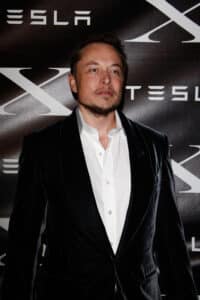
    This rings true and can be seen at certain points in Musk’s life: especially in those moments of sudden intense focus à la demon mode. So how does this manifest in Musk? Hokemeyer is clear: “For these reasons, men and women like Musk, people who are compulsively driven to attain extreme levels of power, fame, and financial success, typically struggle under an internalized narrative of scarcity. The lens through which they view the world and their place in it is colored by a chronic sense of impending annihilation. At any given moment, they feel their world can be invaded by vicious predators who will shame and torture them to a slow and humiliating death.”

    And how is it possible to offset these feelings of shame? “To guard against these persistent threats to their existence, these incredibly clever and talented individuals invest their life force in attaining exaggerated levels of wealth and garish levels of individual power. In our capitalistic world, such herculean investments pay exceptional dividends for the highly clever, the compulsively driven and the emotionally extinct.  These men and women are not limited by considerations of intimacy, morality, equity, empathy, or compassion. They are myopically focused on the outcomes of a zero-sum game where the winner takes all and the losers get what they deserve. And because they are idolized and handed even more power by virtue of their outsized influence they are never called to account for their actions or to change their way of viewing and operating in the world. The irony is that the higher up the power and wealth scale they get, the less safe and secure they feel and thus, the harder they need to work and insensitive they need to become to maintain a baseline level of protection from the hostilities they internalized as highly vulnerable youths.”

    This sounds – and is – bad. It seems certain that Musk, carrying around in him these sorts of traumas, has sometimes felt very little when he has treated employees with bluntness, and often with cruelty. But Musk’s career makes us wonder whether he would have achieved much, or even anything, without them: his traumas feel so woven into his life story, that I wonder if we’d have Tesla, reusable rockets, Optimus, and many others if that man hadn’t, when just a boy, experienced such pain.


    Off with the Birds

    But not all of this trauma has been to the good: there remains the perception that Musk almost enjoys creating difficulty for himself. He distrusts peace; no sooner than he sees a clear blue sky than he thinks of brewing up a storm. For example, in the leadup to his sudden purchase of Twitter, everything was going eerily well for Musk. He was selling vast numbers of Teslas, and SpaceX was making more successful missions than ever before. In this context, the purchase of Twitter seemed unnecessary and even borderline mad.

    When I ask around, I get a wide variety of views on the platform now known as X. “I think he dramatically overpaid for it,” says the philanthropist and businessman Mohamed Amersi, who has just penned his autobiography Why?. “The danger is that he is now going to control it to the point of extinction. And the rebranding from Twitter to X was bad – and his approach to free speech may well be deemed unconventional.” Meanwhile, the founder of Ebookers Dinesh Dhamija, and author of The Indian Century, is prepared to wait and see: “I think that it’s too short a time since his purchase for one to make up one’s mind. By relabelling the platform X, he’s moulded it in his own image; one has to give it two or three years to see.”

    It’s easy to criticise Musk’s tweets and his purchase of Twitter: for many people it is a strategic error because it has taken him away from his strong suit of engineering into the media world where he is less suited as he limited empathy with other people.

    Yet a surprising number of people I speak to are positive about Musk’s purchase. “I think it’s a fantastic platform, and that the free speech element is so important,” says Badgett. “It will come good.” When I speak to Anushka Sharma, who has wide experience in startups, she says: “With Elon orchestrating, there’s a whole load more happening than you think. There’s always been a play with X; it was never just about publishing. It’s the payments stuff. By now none of this should surprise us, he has a bigger plan.”

    One person who agrees with that is Stephen James, the CEO of Hermes Digital, who has deep experience of using all social platforms including Twitter before and after Musk’s purchase. He tells me: “I find the recent transformation of Twitter under Elon Musk’s leadership a fascinating case study in strategic adaptation and influence. The platform’s evolution into “X” under Musk’s guidance has been akin to watching a master chess player at work. The introduction of a premium subscription model, which filters out noise and anonymous accounts while simultaneously encouraging free speech, has been a strategic move in a complex game, where controlling the narrative becomes as important as the narrative itself. This new Twitter landscape offers a more streamlined, focused environment for communication – it allows me to cut through with the messaging for my clients, particularly politicians.”

    James admires the way in which Musk is beginning to create a set of structures around which free and measured speech can prosper: “Musk’s emphasis on free speech, while opening the platform to a broader spectrum of voices, also necessitates a delicate balance. In this new era of “X,” every tweet, every statement must be made with precision and intention, balancing the fine line between transparency and strategic communication. Why? To be verified, you need to supply contact details and payment details… which means you can be held to account for what you say! This underpins the importance of a measured, calculated communication strategy, especially for my clients where we are building personal brands and networks.”

    For James, we underestimate Musk at our peril: “It strikes me as a strategic masterstroke,” he continues. “The platform’s ability to provide real-time data and insights, particularly when integrated with AI, is invaluable. It’s akin to having an ancient oracle atop a mountain that can gauge public sentiment and trends – a crucial tool in shaping effective strategies for those in the public eye and also running businesses.”

    When I ask James for applications of how Musk might ultimately be able to leverage the X business, he cites the government’s use of the 77th Brigade during the Covid crisis to monitor social media posts. “Machiavelli said it’s better for a prince to be feared than loved. Along the same theme, we could ask if you had to choose between being wealthy with money or powerful with knowledge (data), which would you choose?” It goes almost without saying that Musk has chosen both.


    Elon’s Guide to the Galaxy

    Nevertheless, the Twitter sale – whatever one thinks of the wisdom of it – is really of a piece with the way in which Musk does business. He never thinks how to make money – he thinks about a goal. We need electric cars, or we need to get to Mars, or we need to build better tunnels, or have safeguarded AI. He then works back to figure out how to make money from this. Badgett says: “I think this partly shows the level that he’s at – he has enough money where he can think: ‘Now what are the big problems that humanity needs to solve’?. On the other hand, he’s definitely always had these grand visions for humanity – most notably the urge to get to Mars.”

    The filmmaker Guy Ritchie, who is focussed on his own grand creation of WildKitchen, an outdoors-indoors cooking unit, tells me: “I quite like him: he’s hilarious. He’s playing a big game.”

    In general Ritchie respects Musk’s approach: “I love him for being so radical – that’s what I like about him, he goes against the political zeitgeist. He seemed like he was going one way then went another way. I wonder how he’ll stand on his narrative over electric cars: it’s probably a wobbly narrative and I feel he’s transcended it.” It does seem as though Musk is paradoxically committed to what might be viewed as the left-wing narrative of climate change with Tesla, while also reserving the right to be a defender of Donald Trump’s free speech.

    However, Ritchie is not so sure about Musk’s plans to get to Mars with SpaceX: “You don’t want to live on another planet: it would be like living in a gilded cage in hell.”
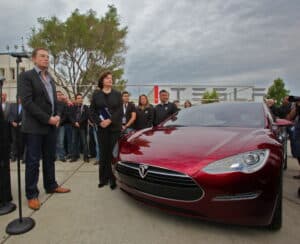


    Stars and Mars

    In many respects, the goal to get to Mars is core to Musk’s life. Is this a realistic goal? To gauge the anwer, I talk with the Astronomer-Royal Lord Rees. Rees is well-qualified to comment since his book On the Future, now translated into 20 languages, and his more recent book The End of Astronauts, grapples either explicitly or by implication with what Musk is trying to do at SpaceX. “In my books, I argue that as robots get better and more sophisticated, the practical case for sending people into space – at least lower than Low Earth Orbit – gets weaker all the time,” he tells me. “That’s because it’s very expensive to support humans on a journey to Mars. You have to provide a year of food, and protect them from all sorts of hazards – whereas robots can be sent more easily and with one-way tickets.”

    Anyone who has seen video footage of Optimus, Tesla’s most advanced robot yet, which has human-like grace in many of its movements – though also slightly odd low-slung walk like someone in an egg-and-spoon race, will be able to imagine what Rees is describing. He continues: “For that reason, if I was an American taxpayer or European taxpayer I wouldn’t support NASA’s or ESA’s programmes for manned space flight. On the other hand, I’m prepared to cheer on the endeavours of Jeff Bezos and Elon Musk in the private sector. Firstly, they’re not using taxpayers’ money, and secondly they can take higher risks than NASA or ESA can when sending civilians into space.”

    Despite this, Rees is realistic –  and even cautious – about what is possible for humans in the hostile environments which await us beyond the earth’s atmosphere. “It’s also important to think of space as being a dangerous environment. We should talk about Space Adventure and not Space Tourism, for instance. I’d argue that Branson makes a mistake in talking of tourism as if travel beyond this planet would ever be normal; if you take that view the first accident is going to be traumatic. If these private sponsors are prepared to send risk-takers up into space – the Sir Ranulph Fiennes’ of this world– I’m prepared to cheer them on.”

    So what does he think will happen? “My prediction is that by the end of the century there will be a few pioneers living on Mars, but they’ll be that kind of person. Elon Musk has said he wants to die in Mars but not on impact. And he’s fifty years old; it’s just about achievable. These pioneers will have a long-term importance, and they’ll be in a very hostile environment. They’ll want to take advantage of all the techniques of genetic engineering and cyborgs and so on.”

    That’s in contrast with the vast majority of us with less appetite for risk than Musk. “Here on earth we’re going want to regulate and constrain things like genetic modification on both prudential and ethical grounds. These guys will be away from all the regulators anywhere and have a far greater incentive. I imagine a few centuries from now they will have become a new species – secondary intelligent design will be much faster than Darwinian natural selection.”

    This is a truly astonishing notion, and it makes one’s head spin. The Mars mission has its critics. One vaguely accepts that it should be priority at some point to have a presence there, since every palaeontologist knows that asteroids do hit earth. However, it doesn’t happen regularly – and the majority of scientists argue that climate change is happening now. Bill Gates tells Isaacson: “I’m not a Mars person He [Musk] is overboard on Mars. I let him explain his Mars thinking to me, which is kind of bizarre thinking. It’s this crazy thing where maybe there’s a nuclear war on Earth and so the people on Mars are there and they’ll come back down, and you know, be alive when we all kill each other.”

    You can feel Gates’ contempt for the idea. Meanwhile, Rees criticises Musk from another angle: “Of course, the money might be better spent on the environment – but if it’s spent by individuals who otherwise would buy a football team or a huge yacht, I’m prepared to support it.” Even so he laces this acceptance with a warning: “Musk, like my late colleague Stephen Hawking, thinks that there should be mass emigration to Mars to escape the problems of the earth. That’s a dangerous delusion. Dealing with climate change is a big challenge, but it’s a doddle compared to terra forming Mars. There isn’t a Planet B for ordinary risk-averse people.”


    Space Jobs Alert

    On the other hand, we’re a species of dreamers, and I suspect it will be very hard to change that. Besides, in the future – which seems to have a habit of arriving quicker and quicker all the time – a career in space won’t be only for those with the ability to tolerate risk. Anushka Sharma, the founder of the London Space Network, explains to me some of her backstory: “I set up the London Space Network as a community which anybody with an interest in the UK space sector can join. We now have 1200 members on our list from students and astronauts, and space agency people.”

    So how does she think Musk, and his competitors, will shape the future? “When we think about humans and navigation, and the whole question of travel on earth, we’ve always used the stars to navigate – but the opportunity of building a human presence on Mars, and on icy moons, presents the possibility of the foundation of our human future. At the moment, only nation states through their agencies have managed to land on the surface of the moon. But SpaceX and other companies are removing these barriers meaning that state resources can be relocated to the exploration science.”

    That’s an enticing prospect in itself. But meanwhile, there are employability implications not just for governments but for all of us. “When the cost of space travel comes down it will open up huge markets of growth,” Sharma continues. “Who doesn’t want to wear a pair of trainers that have been in space or products that have orbited our planet?. Children everywhere will be inspired to innovate; the opportunities for a STEM career will be unimaginable. Will there be art galleries on the moon in 100 years’ time? We would get so bored if we didn’t think beyond our planet. This is why I care about the space sector.”

    And what does she think of Lord Rees’ idea that there will one day be a civilisation on Mars evolving at a different pace to the less risk-averse here on earth? “I get that – but I think that for me I need to fight for everyone and make sure space is as inclusive and open as possible. I don’t want to see a duality whereby the rich are the only ones who can access those trips. That’s why I try to be open as possible with everyone I meet across every background. Martin Rees is an incredible force with extraordinary insight – I just hope he’s slightly wrong!”

    And what does Sharma think of Musk? “If you look at the career trajectory, he’s an incredibly intelligent man. Elon is just incredibly good at building companies. We were told that electric cars wouldn’t be a thing – now look at the shift and disruption that he’s caused to the automotive industry generally. Likewise, his decision to engineer rockets to be reusable. It’s impossible to think of anyone in our time who has had such an impact on technology and production.”

    What about his style of leadership and the silly tweets? “I’ve not worked directly with him, but know people who have. He has this style of leadership. But he’s moved things forwards in leaps and bounds which has disrupted the space ecosystem. I would also love to shift some of his thinking to be more open and inclusive.”

    Inclusive in what ways specifically? “I want more of a feminine presence on the space sector: having said that, I tip my hat to Gwyneth Shotwell, who has been running the operation at SpaceX and is also a force of nature. So Musk does build teams, which together help him fulfil this vision. Even so you do hear of engineers at SpaceX paid peanuts who should be paid more. But he’s played a big part in awakening our imaginations.”

    Sharma points to a specific example of the recent competition for a group of artists to go around the moon with SpaceX – the so-called Dear Moon crew. In the end all the tickets were bought up by Japanese entrepreneur Yusaku Maezawa, who then made sure they got to a broad cross section of talented and interesting people including British photographer Karim Iliya and American DJ Steve Aoki. “These are inspirational stories, of everyday people getting access to space, and it’s all been underwritten by a billionaire. This will shift the imagination even more, and it’s a SpaceX initiative.”


    Tesla and all that

    Of course, Musk is spread thin – he must be owner of the finest portfolio career in the history of the world making former Chancellor George Osborne look lazy. Musk’s career shows a surprising degree of unity for someone who does so much although one can sometimes, for instance, wonder if there is tension between, say, his espousal of electric cars, and the environmental pollution causes by SpaceX.

    Dinesh Dhamija cherishes his Tesla: “I’m a big fan of Tesla,” he tells me. “When I sold ebookers.com, I had salespeople trying to interest me in all kinds of fancy cars. Some of them I couldn’t squeeze into. Others just made me feel like a polluting road-hog. Several years later, I’m still extremely happy in my quiet, smooth, comfortable and non-polluting Tesla. And so is my wife, in hers.”

    So what does Dhamija think will happen next when it comes to electric cars? It’s exciting to see that Elon Musk is getting serious about setting up Tesla in India. He’s met Narendra Modi a couple of times already and held meetings with commerce minister Piyush Goyal about building one of his mega factories in the country. Of course, there are hurdles to overcome. Despite hundreds of millions of consumers, few Indian car buyers can afford to pay $38,000 (the current cheapest Tesla). The government would have to lower its 70 per cent tariff on cars below $40,000 and 100 per cent on cars above $40,000, which will be resisted by domestic carmakers.”

    How might these hurdles be surmounted? “An Indian government official was quoted in the Financial Times proposing a 15 per cent tariff for all EVs, in return for building a plant in the country,” explains Dhamija. “Infrastructure for EVs is basic to non-existent in much of India. Right now, they make up just 1.5 per cent of passenger vehicles sold in the country. And the most popular types of car are tiny, compared with the spacious Tesla saloons.”

    Despite the possible hurdles, Dhamija is confident that they’ll be surmounted. “Like so much in Elon Musk’s career, the idea of attacking the India market shows imagination and vision beyond the scope of most other people. He sets almost ridiculously high targets – the latest is to produce 20 million cars a year by 2030, more than Toyota and Volkswagen combined. For India and specifically for Narendra Modi, a new Tesla plant would give all the right signals: it would show that he welcomes industrial investment, is further developing his green agenda, boosting high tech employment and helping to improve India’s terrible air quality.”

    Dhamija explains that he doesn’t buy his Teslas, he leases them. “The reason is that the technology advances so quickly over the course of six months. By leasing, you get a better deal. There are other competitors of Tesla and they’re fine too.”

    Dhamija was referring to reports that in the last three months of 2023, BYD, a Shenzhen-based EV giant, sold 526,000 fully electric vehicles to Tesla’s 484,000. What does Dhamija think of this? “I’m not worried if Elon Musk wins the car competition by numbers – though I’m sure he makes much more profit than they do. As long as keeps advancing the technology that’s fine. He is ahead of everybody else.”

    To what does Dhamija attribute Musk’s success? “I just saw his factory from the motorway in Germany outside Berlin and it’s huge: as you drive past it, it goes on and on and on. I discovered that when he went there recently, he didn’t stay in the hotel, he stayed in the factory. Time is money. If you can get something done faster than others that’s impressive.”

    Does Dhamija see any tension between the work of, say SpaceX, and the stated goal of an electric car future? “I’m not a purist in these matters,” Dhamija says, unwilling to criticise someone who has achieved so much. Mohamed Amersi agrees: “I agree absolutely with his mission to Mars. It is an important part of human nature to push the envelope. We need to explore new frontiers. If we agree on that, we have to accept that the only way at the moment for space travel to happen at all is for conventional jet propulsion fuel. In ten years there will be greener fuel, presumably a nuclear-based alternative. But we can’t delay the conquering of new frontiers for that to happen.”

    Amersi has met Musk and recounts his experiences. “Elon Musk was in attendance once at Dumfries House, and behaved somewhat arrogantly. He came to the house because he thought that Charles was living there, and so flew in with his girlfriend on a private jet. What I think Musk wanted to be faced with some transformational tech ideas. What he found instead was Charles’ admirable commitment to improving lives and livelihoods and to reskilling local communities. He didn’t even stay for dinner, which was a shocking breach of protocol.”
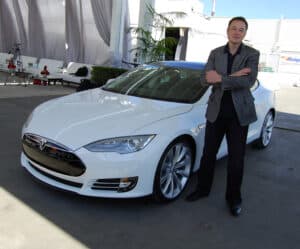
    This rings true – in Isaacson’s book, he refers to philanthropy as ‘mainly bullshit’. For Musk, change is best brought about by the corporate sector. Amersi continues: “I have a photo of me with Charles and Musk, before beautiful Renaissance tapestries; me, in national garb, and Musk holding forth. There is no art to find the mind’s construction in the face. The conversation seems very civilised, and it was to some extent. But my main memory is that Charles and Musk were very far from a meeting of minds. Charles expressed his concern that driverless cars would take away people’s jobs and Musk replied that for every job lost he would invent five new jobs for them, and that all he needed was to be able to skill people to do those jobs. They were talking at cross purposes over a great divide: the concerned Charles and the profit-minded Musk. It was an image of two different time scales when it comes to money: Charles’ family is and always will be one the richest families in the world; Musk had made his wealth recently – and it showed.”

    On the question of philanthropy, Musk has clashed with Bill Gates, not least because Gates took a half billion short position against Tesla, thinking that ultimately demand for the cars would dry up. Never one to mince words, this led Musk to describe Gates as ‘categorically insane’ and ‘an asshole to the core’, but Gates has been more obliging about Musk’s achievements: “You can feel whatever you want about Elon’s behaviour, but there is no one in our time who has done more to push the bounds of science and innovation than he has.”

    This is the thing with Musk – everything keeps coming back to his behaviour. This is even more the case now that he owns Twitter. Errol Musk has a tendency to tweet conspiracy theories. Musk loathes his father – but now he does the same. I become interested in these blind spots in our lives and ask Hokemeyer why we are drawn to emulation of someone we might think we despise? Is this involuntary genetics at work or might there be something more going on?

    “Human beings are hardwired for emotional connections,” Hokemeyer tells me. “We come into this world completely dependent on the approval, love, and nurturance of our primary caregivers. All goes well when we get sufficient care, but when there is a breach in this care, particularly over a long period of time, what were adaptive survival techniques to deal with these breaches often morph into significant personality disorders, mental illness, and even physical illnesses such as hypertension and stress related diseases. And while the adaptation in the face of parental abuse and rejection calls for a conscious swearing off of interpersonal vulnerability, as a person matures, there remains an organic and biological need for neuropeptides such as oxytocin and vasopressin in men that are generated through intimacy that our bodies physically crave to feel safe and at ease in the world.” So Elon is still trying to get Errol’s love – and perhaps has subconsciously chosen Twitter as a way to do so? Hokemeyer seems to agree: “These primal urges never go away and in fact, in my clinical experience re-emerge with great intensity as a person reaches late middle age and begins to become aware of their impending mortality and how they have behaved during their life. In these cases, they are called on a deep intrapsychic level to fix that which was originally broken.”


    The Future is Musk

    Whether one likes it or not, the impression is that Musk is living a definitive life; it is quite clearly one of the most important of our times in terms of his ambition, the range of his activities, and the high achieving example he has set.

    If you want to know the future, a study of Musk is indispensable not just because he will help define it, but because more than anyone I can imagine, he lives there within the realm of his imagination. Talking to Sunak, Musk says: “One of the challenges in the future will be how do we find meaning in life if you have a magic genie that can do everything you want.”

    It’s grand statements like this which draw us to Musk, in spite of the things he has retweeted which he shouldn’t have and the nagging suspicion that we could never be his friend. To consider him is to be jolted out of a torpor you didn’t know you were experiencing. As Sharma puts it: “He’s definitely had one of the biggest impacts of anyone alive today, if not the biggest. When I think of Elon I realise that we only have a finite term on our planet: his work ethic is to live quite simply, and to acknowledge that time is the only resource none of us have enough of: that’s an acknowledgement we have to make if we want to create true change. That’s what drives him, and it opens up onto a set of facts we’re now all awake to: your children’s future is fast-changing, and some of this change is determined by decisions taken before they were born. At a time when science and technology is opening up new avenues, I feel we have a unique window of opportunity now; I feel incredibly grateful to be born into this era.”

    Which is in many ways the era of Musk. His example, considered at its best, seems to lay down the gauntlet to the education system to produce a new generation of far-sighted people who can feel at home and propser in the future which Musk has already to some extent brought about. Stephen James, in addition to his role at Hermes Digital, is also the founder of Conservative Friends of Education, and sees an opportunity here in the realm of education which he hopes governments will take up. “Some might see Musk as a pseudo Bond villain, but his entrepreneurial spirit is a beacon, and the education system, I believe, must foster such innovative minds,” he tells me. “It’s not just about imparting knowledge but about instilling a sense of strategic thinking and resilience. Encouraging young entrepreneurs through initiatives that provide practical business insights complements traditional academic routes. It’s about preparing young minds not just for tests and exams but for the real-world challenges of business and innovation. The fact that Musk could afford any school he wishes but still chooses to homeschool tells you how he views the education systems around the world.”

    For James too the example of Musk is another reminder of what this government, and the next administration needs to do in education: “Reflecting on the nearly 14 years of Conservative governance, the synergy between business and education has been a focal point of interest. The challenge lies in integrating a business-friendly approach with a robust and inclusive education system. This balance is key to nurturing a generation that is well-versed academically and equipped with entrepreneurial and work-ready skills.”

    And what does Musk think will happen in the future? He tells Sunak: “It’s fun to cook food, but it’s not that fun to wash the dishes. The computer’s perfectly happy to wash dishes.” That sounds fine to this reluctant washer-upper. And how will we all make a living in the future? “We won’t have universal basic income. We’ll have universal high income.”

    Musk might be ridiculous sometimes. Sometimes his tweets are plain offensive and seem to deliberately bait people by espousing foolish prejudices. He’s obviously difficult to work with. In his own words: “To anyone I’ve offended, I just want to say, I reinvented electric cars and I’m sending people to Mars in a rocket ship. Did you think I was going to be a chill, normal dude?” No, we didn’t. But when you look at the scale of Musk’s achievements, you wonder if you need to summon a little uptightness, even a little abnormality, in yourself – even if only for a little while – in order to reach the next level.
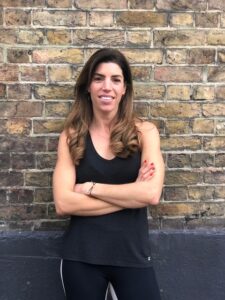
     

  • Hello world!

    Welcome to WordPress. This is your first post. Edit or delete it, then start writing!

  • 2024 highlights: Vicki Anstey: The Incredible Story From Advertising to Endurance

    Vicki Anstey

    I grew up in North Yorkshire in a tiny village in a fairly remote part of North Yorkshire. I went to Bristol University and really thrived there; I read French and loved it and lived in France for a year as part of that degree. I then went straight into the world of advertising and worked both agency side and then, more latterly, on the client side.

    I spent about a decade in advertising, but got to a point of burnout. I started to neglect myself and invest a bit too heavily in the slightly hedonistic lifestyle that advertising involves. I was leading Ikea’s advertising strategy at the age of 24 and managing multimillion media and production budgets. It was a huge upward learning curve and I thrived on that but it was also a lot of pressure.

    I moved sideways out of advertising for a little while, and joined a social enterprise called We Are What We Do. Their whole ethos was about engaging people in small actions. It was a wonderful organisation and felt so much more fulfilling, but I still hadn’t really found my groove.

    I ended up taking a U-turn and going into the fitness industry largely because I had discovered this incredible method called Barre based on ballet movement which literally transformed me physically. Barre is a strengthening and conditioning component of ballet, and essentially consists of all of the movements that a ballet dancer would do in order to prepare themselves to dance and to develop, build and maintain the right kind of structures and posture in their bodies.

    I stumbled on this methodology and was completely hooked. With my advertising hat on, I realised that more people needed to know about this incredible methodology and if it could change me and my physique then it could also change the lives of other people.

    I therefore took a bit of a gamble on setting up a studio here in London in Richmond and that was the first dedicated Barre studio in the UK. Nobody had ever heard of Barre and I was taking a huge risk. I took on an old office space in Richmond and created a studio that felt like a home from home. People came – and they queued around the corner to be a part of it. I ran that business for 12 years.

    However, over the course of that 12-year period I left a very long term relationship. I had been in that relationship for 20 years, married for 12 and I found the relationship stifling, and more latterly quite coercive. It didn’t enable me to be the best version of myself and it took a really long time for me to get the courage to leave. My childhood had conditioned me for that kind of relationship. I grew up thinking I had to live up to a certain narrative and stay in my lane and live quite a gendered expectation of how I would go on to live my life.

    After I left the relationship, I heard that SAS: Who Dares Wins was inviting women to apply for the programme. I mentioned this to a few people and I was encouraged to apply for it which I did and then I ended up on that programme and really discovering what my capabilities were. It was quite a life-changing experience and I got through to the final stages of the show.

    There was a lot of press surrounding it because it was the first year that women participated so there was a lot of expectation and speculation about how we would be treated and whether it was right or not. Even the team of special forces operatives who run the show weren’t quite sure how it would all work out. I had to face fears I had had throughout my life, such as heights and water. I had to really believe in myself.

    What I realised from doing the show was that embracing vulnerability is a very powerful thing. The idea of facing my fears became quite intoxicating and I entered this phase in my life where I said yes to everything.  I was at a press event for Who Dares Wins and someone asked me if I would like to row an ocean and I just instinctively said yes. I had grown up with this fear of deep open water as I had had a near drowning incident when I was 12 with my sister and just avoided going in deep water my whole life.

    To take on this new task, I ended up doing cognitive behavioural therapy and open water swimming coaching. I had various panic attacks along the way trying to deal with the underlying reason for that fear in the hope that my fear responses wouldn’t threaten my life or the lives of others that I was on the boat with. Then I embarked on this huge campaign to row across the pacific from San Francisco to Hawaii for a distance of 4,000 kilometres. We got the boat ready, and raised £70,000 worth of sponsorship. We packed our boat up with all of the kit and supplies that we needed – and then Covid happened and the race was cancelled.

    That was soul-destroying. The two crew mates who I was meant to row with, and who I had known for a significant period of time, didn’t defer their places so they weren’t able to do it at any further point in the future. I had the choice either to walk away from the whole thing or to find new crew mates.  There were too many people involved to let down. It’s not easy to find people with the resources and capabilities and flexibility to do something like that but I did eventually find them. Since we were in lockdown, I didn’t meet one of them until we got to the start line in 2021.

    We had to go through all the processes of taking on skills and assimilating knowledge that you need to do an ocean row through lockdown. The gyms were all closed so we trained in our living rooms. You have to learn chart navigation, you have to master radio communication, you have to do first aid at sea courses. All sorts of courses were required for participation so we did a lot of that on Zoom.

    We set off at the end of May 2021 and we arrived 60 days, 17 hours and 6 minutes later. Sadly, the team dynamic from the start was really problematic. There was some really bad behaviour – a lot of psychological game-playing, stonewalling, and bullying isolation tactics. I found it a very difficult experience. It’s important to remember that in the run up to the row we also hadn’t had the opportunity to spend time together, and therefore to explore our reasons for doing it, and to share our insecurities and fears. It was a really hostile environment.

    I was also seasick for 23 days which was very debilitating. When I was off the oars I felt horrendous. The truth is that you can’t let conflict escalate on a tiny boat in the middle of an ocean so I really had to just tolerate and accept the situation I was in. It wasn’t particularly enjoyable but we did pull together as a team at times and ultimately we got the world record.

    I learned a lot through that process, not least about how to manage your thoughts and emotions and how to tolerate really emotionally challenging situations where there is literally no way out. As a result of my experiences, I have become a stress and resilience coach. I am a qualified coach of a mind-set methodology that was developed for the All Blacks Rugby team back in 2001 when they kept losing at World Cup Finals.

    I have become really fascinated about how our brains work with thought and fear and stress and how we are more in control of that than we think and how important choice and autonomy is. For people in toxic environments it is helpful to be reminded of the fact that we are ultimately in control of our lives however difficult and challenging our situations might be. One thing that we are always in control of is how we think about things and therefore how we influence our emotional responses.

    The thing I try to make really clear is I am not advocating that emotionally challenging workplace situations should be tolerated but if there is a situation that you can’t get out for a period of time – as I couldn’t on that boat – then there are some really useful strategies that you can employ to get on top of your thoughts.

    It’s about understanding how our stress responses work. We can regain perspective, take a step back, and choose what kind of head state we want to be in in a given situation. That’s a skill. You have to practice it. It’s not something that you master and conquer and become an expert in for the rest of your life.

    What makes a difference is having that little bit of biological literacy, and understanding of basic neuroscience. If we don’t do that, we can be really hard on ourselves. These days, we get extremely stressed about things that are not life threatening at all so our stress responses are completely at odds with reality. If we understood that, we would be able to cut ourselves a lot more slack.

    After I did the row I was left with a sense of lost faith in teamwork, and brought the whole campaign to an end. I made myself a promise that I wasn’t going to become this person who had to keep doing more and more crazy things but apparently I have become that person. I just kind of knew that I needed to put some things right.

    So I asked a friend if she would run across the Arctic with me. We did a 250 kilometre footrace carrying everything that we needed to survive and it was an incredible experience in minus 35 degree temperatures. You literally couldn’t stop or you would get hypothermia or frostbite so it was very much about regulating your pace, and not getting too hot, or getting too cold. I have also done another ultra-distance run another 250 kilometres across Kenya – in obviously, completely different conditions.


    I am now training really hard to do The World’s Toughest Bike Race (The Race Across America) which is a 3000 mile West to East Coast race.  It’s quite established in the US, but not that well-known in the UK. We are a team of four women, and hoping to beat the world record which is 6 days 15 hours.

    That’s fast. We have to do an average of 19.3 miles per hour, so it’s non-stop 24 hours a day, with the four of us on a shift rotation pattern. We will get to sleep a bit but only in vehicles that are constantly moving. I am not a cyclist any more than I was a rower so for me it’s all about showing people that they can do anything and train capabilities that perhaps they didn’t think they had.


    For more information go to http://vickianstey.co.uk 

  • Sir Paul McCartney’s Lyrics: “geniality and humility”

    Christopher Jackson

    I once commissioned Paul Muldoon for a poem for a magazine for which I was editing the poetry section. He was very responsive to the idea that the readers of a high end luxury magazine ought to have some poetry in their life. I made it clear I would pay £100.

    Muldoon sent a poem which was really a song lyric and I still remember it’s refrain: “It’s been an uphill battle to go downhill all the way.”

    Incidentally, when I tried to pay Muldoon he went mysteriously dark, though his home address was on his email. When I was next in New York, I took a hundred dollars down to his apartment on the Upper West Side, and gave it to his wife, Muldoon being out of town in New Jersey.

    I later discovered that he was financially secure many times over. He simply didn’t need the money and wasn’t interested in it.

    In that he was a strange kind of poet. I didn’t know then that this was the same apartment which Paul McCartney had begun occasionally visiting in order to have the conversations which make up this book. Had I known, I might have stayed around a bit.

    This book, writes McCartney in the foreword, was a far more feasible project than a straight autobiography: the songs, in any case, tell the story of his life better than a prose book. The book is the product of a series of enviable conversations between Muldoon and McCartney, but with Muldoon’s contributions elided.

    In some respects, this is a shame as I expect the back and forth would in some ways have been more interesting than what we are presented with here. Muldoon is one of the greatest poets of our time, and would be greater still if he could always bring himself to write comprehensibly. I expect some of what we have here would be more exciting if we could hear the pair of them sparking off each other.


    With the conversations divided into chapters centred around songs, some of them can seem a bit perfunctory – a couple of pages for ‘A Day in the Life’, that remarkable work, about which books could be written. There is much that could be said about McCartney’s contribution in the second part of the song after the titanic crescendo of the orchestra, which isn’t touched on here.


    McCartney has in the past said it was a song he’d had lying around. It would have been interesting to know the process by which the two were yoked together. Though the truth is, for most of the time in songwriting, the songwriter is in receipt of forces he won’t understand and there is a sense in which McCartney can sometimes seem a baffled visitor on his own songwriting past.

    But this is to carp about what we don’t have instead of to celebrate what was actually managed. We should be grateful for this: McCartney is a world-historical figure who is far busier than most, and it’s good that he found the time for us at all.

    Besides there are some moments of real insight. For instance, in ‘All My Loving’, McCartney points out that it is an epistolary love song in the vein of Fats Waller’s ‘I’m Gonna Sit Right Down and Write Myself a Letter’. But it is also to do with being on the road and not being able to see your love. That makes Lennon’s triad chords in the rhythm guitar all the more suitable because it mimics train tracks, and the rickety motion of transport.

    I’ve always liked McCartney. Lennon could be cruel in a way unthinkable for McCartney, and cruel to McCartney too. I think it probably stemmed from work ethic. Lennon had a sort of lazy streak which probably irked McCartney who, born with a gift which often seems to emanate from some other dimension, seems to have been born with a kind of duty to be true to it.

    He’s still hurt, of course. Things turned out better than they might have with Lennon, because at least they weren’t actively warring with each other. Apparently they had a nice conversation on their final meeting about baking bread.

    Strange forces brought these two together. It continues to feel marvellous that in Liverpool at that time, these four boys were permitted to meet, that their music found its audience. They then hit upon, and at the same time had a share in creating, a historical moment which we are only just beginning to understand.

    It was freedom: the freedom to experiment and to find out who and what one loved. And it was love, as McCartney has often pointed out, which underpinned it all. Over eight wonderful years, ‘Love Me Do’ became ‘And in the end/the love you take/is equal to the love you make’.

    After that, McCartney got lucky domestically with Linda Eastman, and here and there the music falls off a bit. That seems to be a law of popular music: the energy of youth can only come once. It is invisible in those simple chord sequences which gave us She Loves You: there is a primal urge driving it forward which could only come once.

    Sometimes a magnificent song would come along: ‘Maybe I’m Amazed’, ‘Band on the Run’, and much later, ‘Beautiful Night’.


    But something went out of McCartney’s life forever when John, with the malicious glee which sometimes characterised him, announced that he was leaving the Beatles. It appealed to John’s wrecking ball nature to destroy the thing he loved.

    It never appealed to McCartney – and still doesn’t. Every time we have a new initiative with the Beatles today – such as the AI project Now and Then, you feel that McCartney is the driving force. He wants to be back in Abbey Road again. Perhaps he wants to be young again.

    Yet this is to paint him as more melancholy than he actually is: optimism has always marked McCartney – a sense that somehow or other everything will be alright. His songs almost always insist on a good outcome, sometimes amidst sadness. Jude will make it right if he lets it be. Even Yesterday, on the face of it a very sad song, seems to resolve that sadness by the end: perhaps yesterday in that song is a place where the singer will one day comfortably reflect. It is a place he will one day revisit.

    That is what this book is, a kind of reckoning. It would have been possible to have done it differently and just published the transcripts as Seamus Heaney did in Stepping Stones and as Nick Cave did with Faith, Hope and Carnage.

    But it’s good to have this book. It doesn’t really alter McCartney’s reputation too much since he was already in the stratosphere anyway: it simply proves that genius can sometimes go hand in hand with geniality and humility. And if that’s the case with McCartney, it certainly had better be the case with us who, whatever our virtues, never had it in us to write ‘’Eleanor Rigby’.

  • The Future of Project Management: The Next Gen’s Guide

    Lysan Drabon, Managing Director – The Project Management Institute

    We live in a world of constant flux, where technology is rapidly advancing, society is shifting, and the climate is changing around us. Both the private and public sector are moving to adapt and react to these evolving trends, by developing new projects across sectors like infrastructure, healthcare, data, security, and utilities, as well as many more.

    Project management provides the tools to bring structure and progress to what can be perceived as chaos and help steer these change-driving projects towards successful outcomes. It is a profession which is dynamic and impactful, giving individuals the opportunity to play a part in facilitating some of the world’s most ambitious changes and shifts. Mastering project management is like gaining a superpower, equipping you with essential skills to navigate complexity, achieve your goals, and shape a better future.

    Project management is defined as “the application of knowledge, skills, tools, and techniques to project activities to meet project requirements.” This might sound formal, but it boils down to getting things done – efficiently and effectively. In a world grappling with climate change, social inequalities, and rapid technological advancements, the need for skilled project managers has never been greater. These skills are essential in virtually every industry, from developing life-saving vaccines to launching innovative tech start-ups.

    The UK, like many nations, faces a critical skills gap. Businesses struggle to find individuals with the project management expertise needed to drive innovation and productivity. This presents a huge opportunity for young people. Graduates equipped with project management skills are highly sought after, possessing the ability to plan, execute, and deliver projects that are successful. This translates into tangible value for organisations and opens doors to a wide range of career opportunities. In a competitive job market, project management skills, even from personal projects or volunteer work, gives you a distinct edge.

    And it’s not just about landing a job; it’s about thriving in your career and navigating the evolving world of work. Project management empowers you to take ownership, manage your time effectively, and achieve your professional goals. It builds confidence, develops leadership skills, and prepares you for the demands of the 21st-century workplace. In today’s digital age, with the rise of remote work and the gig economy, project management skills are even more valuable. They are essential for managing online collaboration, multitasking, and adapting to new technologies.

    The profession is also changing and adapting to a new world. Project managers are at the forefront of AI use, using it to boost productivity, effectiveness, and creativity. AI-powered platforms like Jira Align and Monday.com offer data-driven insights for better planning and resource allocation, while tools like Asana and Trello, integrated with AI, provide real-time progress monitoring and alerts. Furthermore, AI automates routine tasks, freeing project managers to focus on strategic work, and enhances collaboration through tools like Slack, which are particularly beneficial for international teams. AI is no longer a bonus, but a necessity, for a modern project manager.

    It is not only technology which is changing the profession – women are increasingly leading the charge as agents of change within the sector, driving critical initiatives across various sectors, and demonstrating the transformative power of project management. Empowering women in project management is crucial for driving innovation and economic growth. There is ample opportunity for further individuals to make their mark – the Project Management Institute (PMI) projects a need for 25 million new project professionals worldwide by 2030. This presents a significant opportunity for young people, particularly women, to enter a growing field and make a real impact.

    For young people in the UK, facing an uncertain economy and a competitive job market, project management offers a pathway to success. It’s not just about career advancement; it’s about equipping yourselves with the skills to navigate a complex world, drive innovation, and make a real impact on the issues important to you. Project management, powered by AI, is your toolkit for shaping a better future. Embrace it and unlock your full potential.


  • Meredith Taylor reviews A Complete Unknown: “one you won’t want to miss”

    Meredith Taylor


    Dir: James Mangold | Writers: James Mangold, Jay Cocks | Cast: Timothee Chalamet, Elle Fanning, Monica Barbaro, Edward Norton, Scoot McNairy, Boyd Holbrook | US Docudrama 141’


    New York 1961. Against the backdrop of a vibrant music scene and tumultuous cultural upheaval an enigmatic 19-year-old from Hibbing Missouri arrives with his guitar and revolutionary talent destined to change the course of American music, at the same time as the Beatles across the Atlantic in England.


    A Complete Unknown is the 13th movie about the American singer Bob Dylan. James Mangold’s docudrama takes its title from a song from the 1965 album ‘Highway 61 Revisited’. It charts Dylan’s meteoric rise to fame embarking on a journey from Minnesota to New York to meet Woody Guthrie and culminating with his ground-breaking 1965 performance at the Newport Folk Festival when he plugged in an electric guitar to pioneer his transition into rock to the dismay of folk fans. Dylan forges intimate relationships with folk icons of Greenwich Village: Joan Baez, Pete Seeger, and Johnny Cash who were all pivotal in his future success, along with his manager Albert Grossman (Dan Folger). Taking the city by storm Dylan cuts a swathe through the music scene beating his own path from folk singer to rock star with a controversial performance that reverberates worldwide.


    Timothee Chalamet, now a superstar himself, plays Dylan with same gravelly voice and recalcitrant insouciance in an electrifying performance that rocks from the rafters in James Mangold’s docudrama. Chalamet embodies the vulnerability and subversive unruliness of one of music history’s most iconic singer songwriters, still rocking at 83 and in the midst of his three-year world tour.

    According to sources, Dylan was ‘hands-on with the script’ for this rousing epic, and even has an executive producer credit. Edward Norton plays Pete Seeger with empathetic confidence while pioneering his own music as an instrument for social change. Elle Fanning shimmers as Dylan’s stable rock Sylvie Russo (real name Rotolo), a poignant and thoughtful first lover who knows, as a fellow artist, only too well when her time has come to bow out of his life. Monica Barbaro, sparkles as the sultry storied folk singer with an impressive vocal delivery as Joan Baez who shared a tempestuous relationship with Dylan, but also enabled his path to stardom by covering his breakout songs. Boyd Holbrook stirs it all up as Johnny Cash with his assured pizzazz and dashing guitar numbers he believed in Dylan and supported his vision. Mangold’s Johnny Cash biopic Walk The Line won an Oscar. There’s humour too: one scene pictures Dylan and his manager in bed together. This is a film that never takes itself too seriously and one you won’t want to miss, fan or no fan, picturing a celebrated cultural decade, and a living legend with over 40 recorded albums to his 60 year career, and still counting.


    In an interview in ‘Rolling Stone’ magazine James Mangold describes his film as ‘more of an ensemble piece rather than only about Dylan’ who granted the director music rights for his film whose focus is “a very specific moment” in time. Mangold and his co-writer Jay Cocks capture the zeitgeist of a memorable time of flux when significant events coalesce and become seared to the collective consciousness: JFK’s 1963 shooting; the Civil Rights Act, and footage of CBSNews Anchorman Walter Cronkite reporting on the Cuban Missile Crisis as it breaks on Bob’s TV while the singer crafts his own musical bombshell.


    Chalamet, Norton, Barbaro, Holbrook and others sang every song live on set and their performances were extensively used in the final film. Chalamet remained strictly in character during filming, insisting on being referred to as “Bob Dylan” throughout, and learned to play over 30 Bob Dylan songs fluently. Norton and Barbaro trained for many months to learn the banjo and guitar for the film.


    The film opens in the UK on 17th January 2025


    Watch trailer here: https://www.youtube.com/watch?v=FdV-Cs5o8mc&t=3s


  • Opinion: Stuart Thomson on work-life balance

    Stuart Thomson


    Many people come to think about the balance between their personal ‘work life’ and their ‘personal life’ later in a career. That should be a consideration from the start. But it also means appreciating that the two cannot often be neatly divided or evenly balanced.


    The idea of a work-life balance appears to suggest some type of equilibrium between the two. It also often places the burden on the individual to draw the lines between the work and the personal. Actually, most employers rightly recognise the benefits to themselves and the individual if the balance is considered. Personal health and productivity can improve, and the level of job satisfaction increases. If you feel as though you are being looked after, then the longer you may even stay in the role.


    Considerations about a form of balance should not, though, be left until later in a career. It is not just about the ability to spend time with children and families or focusing on leisure pursuits to counteract aging!


    Often the balance can entail quite serious commitments in the personal realm, for instance, those with caring responsibilities. Those responsibilities can impact anyone at any age.

    It is also up to each person what their time looks like outside of the workplace. It cannot, of course, clash with the day job or bring any form of potential reputational damage, but otherwise, the time is yours to do with what you will. That could be study, having a ‘side hustle,’ taking up a hobby, or finishing a box set—whatever works for you.


    That does not mean that a workday can be neatly divided. For many workplaces, especially in a professional setting, there is not really a 9-5. That requires flexibility on both the part of the employee and the employer. It becomes clear that the balance between work and life cannot be neatly divided and compartmentalised. For those with pressing commitments, such as caring, arrangements can be made, but for the majority, sometimes you will work ‘late,’ and there will be periods of intense work and potentially pressure. This cannot be avoided. Whilst employers recognise the need for everyone to think about their relationship between home and work, that does not mean the employee has all the control. There is often a lack of balance, and especially in the early years of a career, it will be weighted in favour of the employer.


    How can each individual think about setting some dividing lines from the outset?


    Boundaries – The UK hasn’t yet gone down the legislative route for a ‘right to switch off,’ but many firms have. There is no harm in having conversations with line managers about such matters.

    Time management – The better organised a person is in the workplace, the better able they are to finish their work on time and move onto the personal.

    Co-existence – There is no reason why some of the personal and professional cannot overlap. If, for instance, a class is during the workday, then as long as the work is done, the class could still be attended. A balance does not mean complete separation.

    Personal health – The critical role of physical and mental health is now largely uncontested in the workplace, so explore the opportunities for these from the outset. Do not leave it until later.

    Timesheet culture – For many organisations, the quality of the work is more important than the time spent at a desk. But for some organisations, particularly in professional services, they can expect both. It may be that this is reflected in the pay packet, but think about what you want from the outset.
    Never fall into the trap of thinking that there is any such thing as a perfect balance between work life and personal life. Especially early on, the boundaries can be extremely unclear. You may socialise with colleagues as well as work alongside them. That is an important part of building a culture—but is that ‘work’ or ‘personal’? It is both.


    It is important to think about what balance in life looks like rather than expecting an equilibrium to be achieved. Never leave that thinking too late.


    Stuart Thomson


    Stuart Thomson’s latest book is The Company and the Activist


  • A Question of Degree: David Landsman on the importance of learning languages for careers

    Are language degrees useful? David Landsman argues that they’re highly underestimated


    In Britain we often like to play down our skills and achievements (except perhaps in sport).   There’s nothing wrong with a bit of modesty.   But I’m not sure we do ourselves – or the next generation – any favours if we end up boasting about how bad we are at something or another.  We rightly admire those who have overcome, say, dyslexia to achieve academic success and a great career.   But it’s decidedly odd how people make light of not being able to do maths (“not really my thing, thank goodness for calculators”).    I’ve never heard anyone in Asia, for example, boasting about being functionally innumerate….

    We’re also a bit too ready to shrug off being monolingual in what is, without doubt, a multilingual world.    Pretty well everywhere you go, you’ll meet people who take speaking multiple languages for granted.    I once visited a village school in Eastern India: the schoolgirls, aged from 8-12, spoke to me in reasonable English, one of the five languages they could communicate in.  In many, people speak one or two “home” languages, but I’m not sure our culture values these skills highly enough.  I remember asking a South African lady how many languages she spoke.  Her initial answer was “just a bit of French from school [in addition to English]”.  After a few more questions, she admitted that she spoke a couple of African languages, but hadn’t thought it worth mentioning…

    My own story with languages, like most, started at school, in my case with French and Latin, followed a year or so later by Ancient Greek.   I recall my teacher saying that the best thing about the ancient languages was that they had no practical use – probably not the best motivational talk for a twelve-year-old boy!

    But what I found exciting about Greek and Latin was their sheer “otherness”: new words, new grammar (and lots of it) and new ways of expressing yourself, for example in Greek you express the idea of “if only…” with a whole new piece of grammar (the optative mode for anyone who’s interested).   The puzzles that you have to solve in order to decipher complex constructions are the classics’ answer to a tough computer game or Sudoku.

    It was, in my case, the language puzzles rather than the ancient history or archaeology that persuaded me to opt for classics at university.   But before starting my degree, I spent a few months in Greece, which without making me change my degree plans, ultimately changed everything.  Within a minute of landing in Athens, I realised that the linguistic skills which had landed me my place at Oxford wouldn’t let me read most of the signs at the airport, still less order a beer.

    That’s when I decided to spend as much as possible of my time in Greece learning the modern language which, apart from being of more use in the bar, also got me fascinated by how the language had evolved.   I took this fascination with me to university where I studied philology (the history of languages) as part of my degree and with that went on to do a Masters and PhD in linguistics (the structure and behaviour of languages), focusing naturally on Modern Greek.

    I can’t say that my languages were an essential part of my path to the Diplomatic Service, but they certainly helped me once there.  The British Foreign Office doesn’t require candidates to speak foreign languages before they arrive, but instead uses a (pretty reliable) language aptitude test to find out who’s best suited to being trained in the most difficult languages.

    In my own case I soon found myself being sent off to fill a gap in the Embassy in Greece, belying the old joke that if you speak Russian, they’ll send you to Brazil.   Later I learned Serbo-Croat and Albanian for postings in Belgrade and Tirana; I also took a course to improve my French which is still a key diplomatic language; and have acquired along the way varying amounts of German, Turkish and Hungarian, though not as much as I would like.

    Today, after over a decade in business, I’m still at it, trying to improve my German (an important wedding to attend next year) and taking an online course in Russian with a brilliant teacher, just because I can. I’m a strong believer in the BOGOF principle of languages: learn one, get another if not actually free, much “cheaper” as every language you learn trains your mind to learn the next one.

    There are so many ways to learn languages, and different things you can be good at.   I’ve got quite a good ear, so sometimes my pronunciation can be deceptive and give the (dangerous) impression I know more than I do.  On the other hand, I’m no artist, which always put me off languages like Chinese and Thai as I’m sure I couldn’t master the elaborate writing systems.   You can learn by reading classic literature if you like, but if you prefer the news, or social media, or films, it’s your choice.  My wife has to put up with me listening to songs in whichever language I’m focusing on at the time.

    But is it really worth learning languages, when “everyone speaks English”?   First, it’s good for you. There’s plenty of evidence that language learning staves off Alzheimer’s because it’s a great form of gymnastics for the mind, which makes sense even if you’re far too young to worry about losing your memory.

    Languages are an excellent way to understand quite how differently it’s possible to think. Take colours, for example: some languages don’t distinguish between “blue” and “green” and have a single word covering both.  On the other hand, Greek and Turkish have completely different words for light and dark blue.  So if you’re speaking one of these languages, you’ll see light and dark blue as differently as we see, say, red and pink.

    This opens up a new world of understanding difference, going well beyond colours to the essence of people and civilisations.   And when you understand better, you can communicate better.   Nelson Mandela might have been talking to diplomats when he said: “If you talk to a man in a language he understands, that goes to his head. If you talk to him in his language, that goes to his heart.”   But it’s not just diplomats who need to communicate.   As former German Chancellor Willy Brandt is reported to have said: “If I’m selling to you, I speak your language. If I’m buying, Dann müssen Sie Deutsch sprechen”.    Prosperity depends on trade, and trade depends on dealing with abroad.  Language learning isn’t just an academic exercise.   I’d like to see more businesspeople, not just teachers, speaking up for language learning.

    If I were back at school today, what would I want to study?  To be honest, I’m not sure it would be classics (maybe my old teacher had a point).   But perhaps it wouldn’t be a pure languages degree either.   I was talking recently to students about languages at a secondary school in London and was struck by how many were thinking about taking a course combining a language with another discipline.   There are many more such courses today and they look to be well worth exploring.   You choose law or business or maths, while getting all the benefits of studying a language at the same time.   You prove that you can acquire a valuable real-world skill while giving your mind two different types of gymnastics at the same time.   And don’t worry if you can’t decide which language to study: once you’ve tried one, there’s always BOGOF.


    David Landsman is a former British Ambassador and senior executive.  He is now Chair of British Expertise International and the author of the Channel your Inner Ambassador podcast.

  • Friday poem: ‘Sabbatical’ by Yasmin Blake

    Sabbatical


    Quite frankly, you’d had enough.

    Britain was a dystopia.

    You’d take some time off –

    and head to Ethiopia.


    Not for you a life of grandkids

    watching Brave or Zootopia.

    Instead this is what you did.

    You went to Ethiopia.


    The Ancients once thrived there

    before we became dopier

    and dopier, and fell to despair.

    And so: Ethiopia.


    I’ve not seen you since.

    With the world ropier

    and ropier, it’s easy to convince

    me that your trip to Ethiopia


    was a necessary phase,

    designed to help me cope with a

    certain pervasive malaise.

    Will you be back from Ethiopia?


    They say they need you at the office.

    They say that they hope you are

    alive, and in one piece.

    We want him back, Ethiopia!


    Yasmin Blake

  • Christophe Jaffrelot on Narendra Modi: “he is a solitary figure”

    In advance of our cover story on Narendra Modi, we spoke with political scientist Christophe Jaffrelot on his book Gujarat Under Modi


    What was it that set you onto this subject matter? It’s a vast book and so an equally vast commitment! I’d love to know the story of your writing the book.

    I have visited Gujarat every year, at least twice, between 2001 and 2020. I saw the traumatic effect of the 2002 anti-muslim pogrom and started to meet and interview survivors, NGO activists, journalists, academics… I had to tell this story and the strategies of Narendra Modi to retain power. I followed the 007 and 2012 election campaigns; i saw the rise to power of Gautam Adani, in the wake of Modi; the ghettoization process of Muslims; the growing inequalities; the capture of institutions, including the police and the judiciary. I had to testify. But I am an academic and, therefore, to write a book was my natural inclination – and to do it with some theoretical framework. This is why I analyse Modi’s Gujarat as an example of ethnicisation of democracy, national populism and electoral authoritarianism – these concepts have been used in other contexts.

    The book manuscript was ready in November 2013. By then, the chances of Modi to win the May 2014 elections were very high and, therefore, the Indian publisher who had bought the rights of the South Asian edition was not prepared to honour our contract. I preferred to wait. It took me ten years, but the book is now out in India thanks to the courage of the Westland/Context people.

    It can be a real headache writing about living people. Can you talk about the challenges of that and how you navigated it?

    It was not an headache at all: I did my job by writing this book as I did with the previous ones. My arguments have been supported empirically by interviews, testimonies, secondary as well as primary sources (including statistical data). Certainly, by contrast with my previous books (for which I had interviews the main actors, Advani, Vajpayee etc.), I did not interview Modi. I did not even try: I knew that I would not learn anything more than what I knew thanks to his speeches, writings, interviews.

    How important do you think previous executive experience is when taking on national leadership? What are the transferable skills from regional leadership to national leadership?

    Narendra Modi is governing India the way he governed Gujarat. This is the main argument of my latest book. Certainly he did not have any previous national executive experience when he became Prime Minister. But he did not have any executive experience at all when he became Chief Minister. He had never been elected. He was an organisation man. Hei has invented a political style as Gujarat Chief Minister, that he has retained when he became Prime Minister.This style relied on four pillars: first, the polarization of the voters along ethno-religious and xenophobic lines, a strategy that culminated in the 2002 pogrom and that hate crimes (including lynchings) and hate speeches routinized subsequently; second, the capture of key institutions, including the police and the judiciary, a process that has been made easier by the ideologisation and the moral as well as material corruption of some policemen as well as lawyers; third, the making of a special kind of political economy implicating a form of populist welfarism relying on growing inequalities and crony capitalism – note here that the number one oligarque who grew in the shadow of Modi in Gujarat – Gautam Adani – has become the richest man of India under Narendra Modi Prime ministership; and fourth, the national populist repertoire of Modi who learned how to saturate the public space in Gujarat by resorting to social media, holograms etc. and who started to adopt a sarcastic, provocative register to cultivate emotions like fear, anger and plebeianism.

    Has your opinion on Modi’s contribution as PM changed at all since you wrote the book?

    There is one thing that I had underestimated till I wrote my two books on Modi – « Modi’s India » and « Gujarat under Modi » : his contribution to the development of infrastructure. He has prioritised the building of roads and energy plants in particular. This is a very revealing choice: in Gujarat, this investment prevailed over education and health. This is revealing of his supply side economic orientation that explains the kind of jobless growth India (and Gujarat in particular) is experiencing. India is not creating enough jobs partly because its entrepreneurs promote highly capitalistic activities and because the manpower is not sufficiently qualified.

    Which figures in history and in his life do you think have most influenced Modi? Can we speak of him as having mentors or being a mentor?

    The mentors Modi mentions occasionally are RSS men and religious figures. Unsurprisingly, as a young volunteer – he joined the RSS when he was a child – he has been influenced by full time cadres of the organisation known as « pracharaks » – before becoming one himself. This influence was particularly strong because he used to live, as a young man, in the RSS office in Ahmedabad. Subsequently, his other mentors came from religious orders, including the Ramakrishna Mission (that he discovered in Belur Math, near Kolkata) and the Swaminarayan movement (a sect of Hinduism based in Gujarat).

    Modi has disciples, but mentoring requires a certain empathy – and is very time consuming. He has always been a solitary figure and, for a long time, an organisation man. His disciples are mostly impressed by his charisma as a national-populist since the 2000s.

    What characteristics does Modi have as a leader which young people might wish to learn from?

    Those who want to become political activists may emulate his discipline – a key characteristic of the RSS – and his capacity to mobilise support: his energy, in this domain, is unbeatable – and his communication acumen inimitable. Modi does not know how to interact with interlocutors (he has not given any proper press conference) but he’s a great orator and resorts to techniques of body language as well. But I do not think his style is taught anywhere yet – certainly not in universities! Incidentally, there is some confusion about his degree: he could never produce his diplomas…
     
    What is Modi’s standing like with the young?

    He relates to the young the way he relates to others to a large extent, by inviting them to celebrate the greatness of the Indian past, culture, achievements, future… However, he speaks also to every category of the Indian society separately. Vis-à-vis the youth, for instance, he will urge them to study and will give them advice before the exams season. He uses his monthly radio program there, Maan ki Baat.

    What has Modi meant for India-UK relations?

    The main difference with his predecessors pertains to the way he has tried to relate to the Indian diaspora, and to its Hindu component in particular. Relying on the groundwork the Hindu Sevak Sangh, the local version of the RSS, the British branch of the ABVP (the students union created by RSS), the VHP-UK and The Friends of BJP, another UK-based organisation related to his party, Narendra Modi has engaged the diaspora by organising mass meetings in iconic places like the Wembley stadium. Cameron and other Conservative leaders who where Indians themselves or of Indian origin (including Priti Patel) have helped him – and been supported by Hindu voters in return. This scenario is not at all specific: the equation between Modi and Trump relied on the same modus operandi. But in the US as well as UK, other diasporas – including the Muslim and Sikh diasporas – are making things more complicated because of tensions between the Modi government and these two communities. To some extent, India has exported in the West some of its domestic conflicts, as evident from the Leicester riots in 2022.

    What chance do you think there is of a comprehensive trade deal between the two nations?

    I would rephrase the question and ask: what will be found in the FTA that both countries are bound to sign – because the stakes are too high for nor reaching some agreement… By the way, the same thing can be said about the EU-India trade negotiations. In both cases, there are big bones of contention, in the context of rising protectionism and xenophobia. The most damaging one may concern visas: India would like the europeans to give visas to many citizens of the country (including IT engineer) but in the West (the US are no exception here), anti-immigration policies are the order of the day, in the context of the rise of the far right. Let’s close on this major paradox: national-populists like Modi and Trump have a lot in common (including their rejection of liberalism), but their want their country to be great again… at the expense of the other, inevitably.