Tag: Usain Bolt

  • Rafael Nadal: a member of “the elite of the elite of the elite”

    Why is Rafael Nadal so important? As the great tennis-player retires, it is clear he inhabits very rare company, writes Christopher Jackson


    It is the humility of Rafael Nadal which is part of what makes him so magnificent. Retiring from professional tennis in mid-November 2024, he described himself as ‘just a kid who followed his dreams’.


    He was that, of course. But his great rival Roger Federer came closer to the mark when he wrote in his moving statement marking Nadal’s departure from the sport: “You made Spain proud. You made the whole tennis world proud.”


    In fact, Nadal – like Federer himself – comes from a very small group of sportspeople who make the whole world proud. They are a credit to their species. Part of living in an era whose defining obsession is sport is to find a dramatic increase in the type which we might call the elite of the elite of the elite.
     

    Why is Rafael Nadal so important?
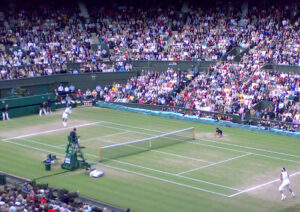
    The 2008 Wimbledon final. Federer is serving for the third set


    The group I am describing is not made up of No.1’s – though all of the people I would put forward for this category have been at one time or another the best in the world at what they do. But being no. 1 in the world doesn’t get automatically get you entry to this club. Being the best in the world here is a mere starting point to being perhaps one day somewhere near this conversation.


    Anyhow, you need to be World No. 1 for a long time to qualify. You have to be world no.1 over and over and over – but even that doesn’t get you there. Rory McIlroy has been the no.1 golfer time and again, but he isn’t in this category: he isn’t actually particularly close. The English swing bowler James Anderson is closer, but not quite there either.


    To be in the elite of the elite of the elite you need to do things nobody else can do – in fact, you need to perform at a level to which nobody else has ever performed. And you need to do it in a certain way. We can call this genius, or magic.


    In the first place, it has partly to do with ease of doing – or apparent ease. When we watch Simone Biles performing her floor routine we can see that she is doing much more than the relatively prosaic thing of winning her gold medal. She is reinventing that sport: she is qualitatively different. The same used to be true of Federer when he would waltz through a Grand Slam without dropping a set. It wasn’t just the ease with which he did this – it was the beauty with which he did it.


    Usually the elite of the elite of the elite express themselves in memorable moments – moments where time itself might seem to slow down, to expand, or to become elastic in some way. Furthermore, these moments will usually be tied to some form of necessity: they therefore represent necessity surmounted, or responded to with unusual skill and awareness.


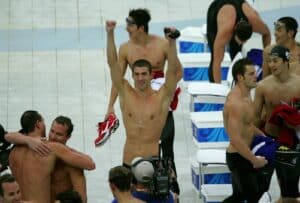
    These are the moments which send a shiver. One thinks of Michael Phelps in the Beijing Olympics in the 100m breaststroke. Going for his seventh gold medal – to tie the Michael Spitz record which he subsequently beat – he was looking tired coming down the stretch against Milorad Cavic.


    Then something happened. Nearing the finish, Phelps summoned some last ditch strength, and rose out of the water with a sudden show of speed, to tap 0.01 seconds ahead of his rival. He rendered himself above an impossible moment.


    Tiger Woods was able to do the same. At the 2005 US Masters, Woods needed a birdie on the famous 16th hole. His drive went left down a precipitous slope. Viewers at home tend not to know how difficult the greens at Augusta National are: it’s like putting on glass.


    Woods, as every golf fan knows, lofted the ball up and it ran down the slope. It teetered on the edge of the hole then toppled in. Woods went on to win the tournament. He needed to do something nobody had ever done before and he did.


    The presence of someone who is in the elite of the elite of the elite doesn’t always need to come in moments when their backs are to the wall. It can also show itself with a certain ease of doing which can lend itself to a sort of inverse drama: it is the drama of things not being close at all.


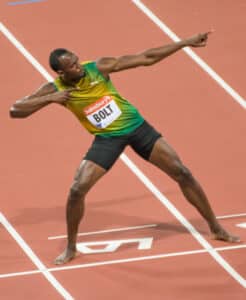
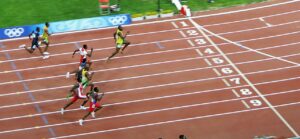
    In this category one thinks of Usain Bolt at the 2008 Beijing Olympics already celebrating about 80 metres in as he broke the world record by a vast margin. He looked almost as if he was flying. Nobody else has ever looked like that. In Bolt’s case it was tied together with a sense of theatre which in retrospect had to do with an extra awareness about the nature of the occasion: the nature of the occasion being that he was very likely to win and so could afford to lark about a bit.
     

    Michael Jordan is another example. When we watch reels of him hanging in the air before dunking a ball, it really can seem as though he has a different relationship to the essential physical structures of life to everybody around him.


    In team sports sometimes we find a certain heightened sense of strategy and inventiveness – the ability to conduct surprising situations with a certain innate virtuosity. In this category we find the great footballer Pele. I have always been fond of the last pass that leads to Carlos Alberto’s goal against Italy in the 1970s World Cup Final.


    Pele looks like he’s playing against children. He collects the ball with his left foot, cradles it briefly, and then with a kind of infinite laziness sends it off to Carlos Alberto, who rifles into the net.
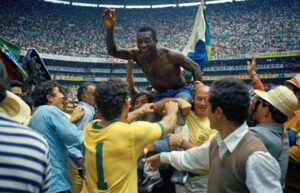


    Some of my favourite Pele moments have almost a kind of silliness to them. The attempt to score from behind the halfway line against Czechoslovakia in the group stages of the 1970 World Cup. The ball misses, but its sheer audacity opens up onto a whole realm of possibilities about how we might play football.


    Similarly, in the same tournament against Uruguay, Pele is running towards the box and the keeper coming towards him, both towards a cross coming from the left wing. Instead of trying to poke it past the keeper, Pele lets the ball go and circles back on himself while the goalkeeper flounders. That he then misses the goal doesn’t matter: he’s shown that there are another set of possibilities for the people to come after him to explore.


    Sometimes the elite of the elite of the elite can create moments which enter national folklore: inherently patriots, they can have a heightened sense of what their country requires of them. In 2008 Sachin Tendulkar, batting against England in the wake of the appalling Mumbai attacks, needed to produce a century to lift his country’s spirits, and he did. There can be something solicitous about the elite of the elite of the elite: they do what we need to them to do on our behalf.


    Clive James used to tell a story of Joe DiMaggio towards the end of his career. One of the greats of his sport, he was asked why he was warming up so hard when the game didn’t matter all that much in the context of a hugely successful career. “Because there’s a kind out there who hasn’t seen me play before,” came the reply.


    When this top flight of sportspeople are obstinate, their obstinacy can take on infinite proportions. Shane Warne, another member of the elite of the elite of the elite, was once asked who was the best batsman he’d ever bowled against. He replied: “Tendulkar first, then daylight, then Lara.” Asked why, he recalled how during one particular tour Tendulkar had found himself getting out to the cover drive. Unprepared to accept this reality, he simply cut the shot out of his repertoire all day long. Warne was shocked and delighted at the sheer determination of the man.
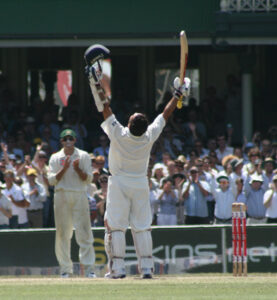


    Warne shows another example of the way this rarefied group can respond to circumstances. In Warne’s case, everything he did was characterised by a certain adventurous humour. During the 2006-7 Ashes, Warne was provoked by Ian Bell’s sledging to produce his highest test score. Bell, who Warne had been calling the Shermanator throughout the series, chose to answer back.


    Warne pointed his bat at Bell who was in the slips and said: “You mate, are making me concentrate.” Warne went on to score 71 from 65 balls. The implication is that he was so good he could stand in the great arenas of his sport, and not need to concentrate. But if you ever provoked him to do so, he could be as much a batsman as a bowler.


    Nadal reached these heights not because it was easy for him, but because he managed to balance extraordinary effort with profound humility. It was this which made him seem, as commentators frequently said, of another planet.


    That perhaps is what really unites these great sportspeople: they feel separate from us – they seem to resemble gifted visitors. One is sometimes left with the impression that the gulf between us and them is too great for it so be possible to learn anything from them.


    And yet at other times, it seems as though they have everything to teach. What makes it all a little easier to swallow is that time and again they teach the same sorts of things: hard work, humility, endeavour, a mysterious depth of commitment and even humour. We will need all those things in our own lives: that’s we won’t go far wrong if we make the Nadals and the Federers of this world our mentors.
     

  • Lessons from the Olympic Spirit: Insights into Competition and Humanity

    Lessons from the Olympic Spirit, Christopher Jackson


    It is always a boost to look up from whatever one’s doing to see that the Olympics are just around the corner. That’s the case this year with Paris Olympics – the 131st incarnation of the Games – which begin on 26th July and finish on 11th August. One sees them in the calendar with that same delight with which one sees other rare occasions such as the Football World Cup, or the Ashes.

    Their regularity is sufficient to generate familiar feelings of affection, but the gap between Olympiads is never too narrow as to lead to weariness. The Olympics get to anybody who can be gotten to. In being able to do that, they have a way of joining us together.

    It is worth noting that most sporting events are of more interest to some countries than others. While there has been a noticeable increase in American interest in soccer these past years, it still isn’t the sport which the country’s premier athletes tend to opt for, preferring the dizzying financial prospects of baseball, basketball and American football. China, perennially second in the medals table at recent Olympiads, has only appeared in one FIFA World Cup in 2002, losing all matches and scoring no goals. Similarly the Cricket World Cups are of interest predominantly to nations of the Commonwealth who were taught under Britain’s transient dominion the undoubted virtues of the sport – but it doesn’t travel much beyond that.

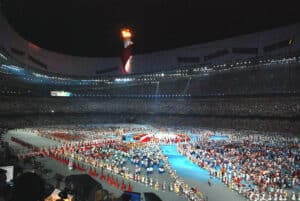
    But alongside the sense of international carnival, each Olympiad is also an opportunity to focus in on the host country. We became honorary Brazilians when the Olympics were held in Rio in 2016, and will be honorary Frenchmen this year when the greatest show on earth reaches Paris. Everybody in this country remembers Danny Boyle’s marvellously mad opening ceremony, which celebrated everything from James Bond to the NHS. France, too, has a vast amount to celebrate.

    A brief list might include: l’escargots, steak bavette, Claude Monet, the first cathedrals, Les Miserables, the Napoleonic Code, wine and champagne (the latter invented by Benedictine monks), as well as Joan of Arc, Descartes, Pascal, the Tour de France and, if one were inclined to see past that famous headbutt, Zinedine Zidane. That’s quite a lot to be going of as a first draft of an opening ceremony.

    Nevertheless, the global excitement is one of many differentiators between our Olympiad and the ancient games held at Athens. The political situation in Ancient Greece was inevitably provincial compared to ours, but before we feel superior to them, we might remember that sport in those days was part of an integrated vision of life which can shine a light on our somewhat atomised approach. For instance, the Greeks tended to announce political alliances during their games, and one of the greatest poets Pindar wrote predominantly around sporting themes. I know of relatively few good poems about sport – certainly compared to its apparent importance in our lives.

    Even so, there is still something marvellous about the way in which the Olympics provides one of our links to the deep past. The Olympics open up onto history and complicated questions about meaning and why we deem tasks to be worth doing at all. Today, sport too often seems to be about more than just who wins and who loses; we have made it limited and reductive when it is actually capable of opening up onto exciting realms of meaning.

    But before we broach all that, what makes the Olympics so interesting is that winning and losing seems to mean more at the Olympics than it does anywhere else. There are two reasons for this. One is the occasional nature of the Games, meaning that even a great athlete may only compete in several Olympiads. It is quite possible to be the best athlete in the world at your discipline, and somehow, either due to nerves, injury or bad luck, not get that CV-defining gold medal.

    Colin Jackson was perhaps a bit like this – a great hurdler who fell just short. Conversely, it’s possible to be a rank underdog and by some mix of cunning, gumption and adrenalin-fuelled raising of one’s game, win through. Our Olympic long-jumping champion Chris Rutherford is an example of this: I remember vividly in 2012, his own surprise that he had seized a moment which nobody had especially expected to be his.

    When it comes to the Olympics, such narratives feel enlarged and cannot be replicated in, say, our weekly football matches, where this week’s defeat can be remedied by the following week’s improvement, and even a disappointing season at least cedes, after a brief lag, to the next set of opportunities in a new calendar year.

    But the other reason for it all mattering so much is that many of these sports are weird and wonderful and hardly watched at all by the general public in the period between Olympics. It is a rare delight to find one’s interest in, say, equestrian activities, peculiarly re-emerge every four years, and how swiftly one reacquaints oneself with a connoisseur’s eye for dressage.

    Every four years I am always interested to mentally re-enter the swimming pool, consider again the plight of the lonely Olympic archer, wonder at the dedication of the weightlifter, feel exhausted as I watched the muscled striving of the rower, and look on with amazement at the life decisions of the top table tennis players. I am therefore thoroughly delighted to see that breakdancing makes its debut at the upcoming Games, and shall be tuning in with particular interest to that.

    What makes these quixotic heroes so remarkable is that they have found purpose in activities from which they are unlikely to make much money: this lends a certain purity to their endeavour which feels admirable. It’s incidentally a reason why one never quite buys into the idea of golf or tennis as Olympic sports: we can’t quite believe in Novak Djokovic or Rory McIlroy as feasible visitors to the Olympic village, since they are no doubt en route to their five star hotels.

    They may have suffered once for their art, but they have been too amply rewarded since really to qualify in my mind as Olympians. Most athletes partake in the Games strive in the almost certain knowledge that they will never be rewarded. It is the loneliness of the endeavour which gives it its heroism.

    Besides, it’s the stories you don’t see which really form the essence of the Olympic experience. I remember sitting in the track and field stadium in East London when the Olympics came to London in 2012. I was watching the heats for the women’s 100 metres. I noticed one athlete – I have never been able to discover her name – who was defeated in her heat, and I found myself reflecting that her entire Olympic experience had lasted just over 10 seconds.

    I watched her long walk back to the changing room, already in some way manoeuvred into her post-Olympics life, head bowed and thoughtful. The cameras do not take us there – they need minute by minute drama. A dramatic defeat might make their highlights reel, but not the prosaic ones. Yet to me she had a kind of dignity and decency which made my heart go out to her. She had done what she had to do.

    One wonders sometimes about the voices which prompt these athletes to follow these paths. We can only imagine that there is an authentic need here, a wish to take part and belong to something larger than oneself – to strain, to go on a journey of discovery, to compete and to learn to live with defeat or acquire the taste of victory.

    I hope that that athlete who lost in qualification may over time have come to reflect that she had much more than that ten second sprint by which to remember her Olympic experience: she could think back with pride on her time of training and the camaraderie that would have entailed; on the excitement of arriving at the Olympic village and the great spirit of mutual joy which pervades it; of the wonder of partaking in the Opening Ceremony; and then, in the experience of defeat, a certain humility and self-knowledge which couldn’t have been arrived at by any other set of experiences.

    If we consider that every single one of the athletes at the forthcoming games is embarked on such a journey then perhaps we can enter vicariously into the spirit of the Games with even greater delight.

    Even so, the Olympics have down the years bequeathed their particularly memorable dramas, and these all seem to correspond to lessons which we can learn from. Everybody knows that Jesse Owens in 1936 thwarted the racialist ideology of Adolf Hitler when the Games were staged in Berlin. That win reminds us that of the point of competition: our bodies, in their measurable capacities, open up onto reality in a way in which the dark fantasies of dictators do not. This is the health of sport: each discipline is calculable, and the fact of an agreed upon set of rules makes us pay attention and leads us onto truth.

    Those who win all teach us something about how we might find something extra in our own lives, no matter what it is we have been called upon to do in our work. I remember the extraordinary career of Michael Phelps who in 2008 broke Mark Spitz’s record by winning 8 gold medals at one Games.

    In his seventh win he seemed to be losing in the 100 metre butterfly to Serbia’s Milorad Čavić and somehow in the last stroke made a great lunge forward to win the race by one hundredth of a second. It was a lesson on the very fine margins between success and its antithesis, but also opens up onto the possibility that we may all have something more within ourselves: it is a question of searching – and in this case, having the ability somehow to summon up precisely what you need when you most need it.

    Usain Bolt was a different sort of athlete altogether. He made his element pure showmanship, and I doubt any Olympian ever bestowed so much joy per minute. I expect if you totted up all his races across his career, you’d arrive at about five minutes of entertainment. Yet he changed the world because he showed us how to compete without arrogance, yet in celebration at what we’re capable of.  There was nothing self-effacing whatsoever about Bolt, but everybody could see his good nature – his delight was never aimed at his rivals in any negative way. Instead, it went outwards with the honest intention of delighting the crowds.

    Everybody who comes before us in the Olympics can feel transparent in that way – under the microscope of our collective observation. We feel we know this procession of athletes: Simone Biles with her agility and her occasional lapses into mental fragility; Daley Thompson’s slightly embittered determination; Steven Redgrave’s nearly humourless bloody-mindedness.

    Each of these, and so many others, present themselves for our inspection and we can admire their strengths, consider their foibles. Here is success to be reached for with a certain inner uncertainty (Biles), to be grimly and sometimes glumly striven for (Redgrave) or loftily assigned to oneself (Thompson). Personally, I can never get over the straightforward delight of Dame Kelly Holmes as she realises what she’s done in winning the 800 metres in Athens in 2004.

    I have written several drafts of this article, and each time when I get to this paragraph I have paused to watch that race, and felt the same tingle when the bell for the last lap rings. Each time, I find myself muttering, “Go on, Kelly” on the final stretch even though I know the result of the race. So much that is precious about the Olympics and humanity is contained in her expression when she sees she’s won: she can’t believe what she’s done as she didn’t know what she was capable of – until she gave it a try.

    Despite this, defeat can sometimes be more vivid than victory. Consider, for instance, the story of Derek Redmond who was running in the semi-final of the 400 metres, with a very good chance of a medal should he reach the final. Sadly, he tore his hamstring, but decided to finish the race, evidently in extreme agony. His father came down from the stands to assist him and help him finish.

    Nobody who has seen this very moving footage can doubt that there is something here in our own lives which we might emulate. We all go through our lives, vaguely aware that it is in our gift to help each other. But this is an illustration of what help often looks like. I imagine Redmond’s father may briefly have wondered if he was allowed to cross over the stands and help his son, and yet chose to overcome that impediment. It is a reminder that there are always reasons we create for ourselves not to help.

    Whenever I watch any montage of Olympic highlights, I start to wonder what it’s about. What is it that makes human being create these disciplines and perfect them? Does it matter if we ever run 100 metres in under 9 seconds? Did it matter that Roger Bannister ran the four minute mile? From one standpoint, it can seem oddly futile – the balls going back and forth; the bodies in their postures; the weights being lifted; the heights being hurdled or vaulted.

    And yet there is something good for us about learning to do things well: at our best, it seems that by determined efforts we reach some kind of higher freedom, where we are in some better relationship with natural law. Besides, it is unthinkable to permit a world without play.

    It was the great scientist and theologian Emmanuel Swedenborg who said that when the angels play in heaven, they play far harder than we do here. The only right response to the advent of the Paris Olympics is to emulate that.