Tag: Ukraine

  • Brooks Newmark on Rwanda, Lifelong Learning, and His Humanitarian Work in Ukraine

    As an MP, over 25 per cent of the people who approach you for surgeries is generally about their children and their children’s education. My mum didn’t have much education – she left school when she was 12 or 13 – she was also a great believer in having a good education, and having me her eldest child going to Harvard Business School and Oxford was a proud thing for her. So the importance of education has been instilled in me from a young age.

    While I was an MP, in my second year in Westminster around 2007, I had the opportunity to work on a social action project in Rwanda. This was post-genocide Rwanda when they were still trying to rebuild the country and Claire Short, who had been Blair’s International Development Secretary, donated a huge amount of money for Rwanda. The UK at the time was the largest donor to Rwanda.

    Cameron decided this was important, and a trip was organised with eight MPs, and we worked on five different social action projects. I was in charge of a project which involved helping to fix up a small nursery kindergarten in a poor area in Kigali. There were 83 kids. I put in around £5,000 of my own money and we fixed up the school: we got electricity, we had two big water tanks, a lot of rooves and walls had holes in and we fixed that up.

    David Cameron then came over for two years to see the projects we were doing. And I remember one of the journalists who was with me came and visited me and he said: “You’re here for a couple of weeks and then leave it. What difference can you possibly make?” I explained that the infrastructure was better and so on.

    Back in the UK, six weeks later, I received a phone call saying: “Rwanda Health and Safety want to shut it down”. I said: “What do you mean?” He said: “Well there were 83 kids and now there are 343 children there in these tiny classrooms.” So I flew back and I met with the Minister of Education and I said: “Don’t close the school down. I will rebuild it.” In my head I thought it would cost me £100,000.

    I found a new site which I bought about a kilometre away, and spent two years getting planning permission, which I finally secured. We had a foundation laying and the President decided to come and I asked him why he came. He said: “Most people come to me giving advice. You came, saw a problem and put your hand in your pocket to fix it.” He added: “I would like you to do one thing: make sure there are all Rwandan teachers.”
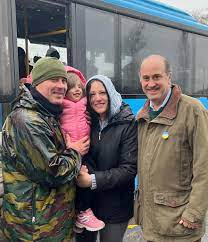
    At that time a lot of teachers came from surrounding countries like Uganda, Tanzania and Kenya and so on. So I took that on board and we finally opened the school in January 2012. I then created a charity called a Partner in Education and we went on to build a secondary school. By 2017, we were ranked in the top three in the country, with nearly 100 per cent Rwandan teachers. At that point, I built a teacher training centre too.

    When I left Parliament in 2015, my old tutor came to see me and said: “Brooks what are you doing next?” He said: “We’ll figure out what exactly you do.” In 2016, I was sitting next to a Professor in the education department and I was asked to give a talk. I was asked to sit in on his class. I suddenly realised how little I knew about education even though I had this school.

    After three classes I asked if I could do his Masters. I passed and got in. I was 60 years old, but I always love learning. It’s never left me. I went back to university at the age of 60 and my dissertation focused on fine motor proficiency of seven year old children as a predictor of academic achievement.

    They then said I should stay on and do a doctorate. I decided to look at policy-making in Rwanda. I realised there are a lot of policy ideas which are generated without real focus on outcomes. For instance, they have this thing one laptop per child. But if there isn’t broadband in schools, or the teachers aren’t trained you won’t get satisfactory outcomes. We can’t really think about these things in a linear way.

    I decided to look at it through the lens of a systems approach and consider what enables and what constrains policy implementation. For instance, if teachers have only rudimentary understanding of English they can’t overnight suddenly be able to deliver lessons in English to children who themselves don’t speak English. It was understandable why the Rwandan government wanted to bring that in; but this top down approach wasn’t working.

    Having been in government myself, I can say with some authority that we have a habit of coming up with great ideas which in principle sound good, but we don’t think enough about who we need to bring on board to implement these things properly.

    But things happen in life and get in the way. I started my DPhil and then in 2020 Covid hit, and I couldn’t do my field research. Then, my mum got sick in 2021 and I could see from January she would pass away, which she did in May of that year. Finally I did some research in November 2021, and then suddenly the Ukraine war starts.

    It seems I will continue to find reasons not to work! I saw a friend of mine was on the Polish border moving people along refugee centres into Europe. I messaged him and asked if I could come and join him. Four days became two weeks. Soon, I began bringing buses into Ukraine from Lithuania, moving people from Kviv and Lviv to the Polish borders.

    As the war moved to the East, I had hubs across Ukraine, and I spent a lot of time in Kharkiv: we moved 1,000 women and children out of a Russian-controlled area. To do that we had to move 500 metres of anti-tank mines, which was an amazing achievement.

    I am torn between doing what I am doing in Ukraine and not wanting to drop the ball on my DPhil. I’m trying to navigate with my supervisors between my work with Ukraine and getting to the next stage of my DPhil.

    But the moral of the story is you’re never too old to learn. While my wife does Sudoku as a form of brain gym, I have my doctorate. Having started 40 years ago, I feel much better prepared through having had life experience in business and as an MP.


    Brooks Newmark was formerly Minister for Civil Societies

  • From Ukraine to London: how the Finito bursary scheme helped Ukrainian refugee Valeria Mitureva

    Christopher Jackson reports on the moving success story of Valeria Mitureva from Ukraine and her experience of the Finito bursary scheme

    Very often mentoring can deal with minutiae – the creation of a LinkedIn profile, the process of CV-writing, and all the small steps which, taken together, move a job hunter into the category of employee. These things are very important, of course, but they can seem to be a long way from the daily drama of news headlines. But everything we do in this life has a historical context; we can’t escape history even if we’d sometimes like to.

    This truth was brought home to us at Finito by the arrival on our bursary scheme of refugee Valeria Mitureva from Ukraine. Valeria grew up in eastern Ukraine and says of her upbringing: “I grew up as a curious child. From early childhood I was interested in books, other countries and cultures. At school everything was interesting, so in my youth I was faced with the fact that it is very difficult to choose one thing and move in that direction.”

    Valeria’s instinct was towards broad enquiry and international travel, and in ways which she couldn’t then predict, these wishes would indeed be granted. But initially, she decided that it would be better to specialise. “I decided to enrol in a technical specialty at the university – technical information security systems,” she recalls. Characteristically, she didn’t leave it there. “I additionally studied French and English in my free time,” she recalls. This latter decision would prove useful, again in ways she couldn’t have imagined at the time.

    So what happened after university? “I accidentally got into IT in the sales field while finishing my bachelor’s degree,” she recalls. “But I was still ready to explore the world and decided to change my career to the design sphere, and I am glad to have been doing it for four years now and I see incredible opportunities for my development,” she says cheerfully.

    All this might have proceeded upon the expected track, and Mitureva would have continued her progress towards a design career within Ukraine. But, as the world knows, Vladimir Putin was gearing up for his 2022 illegal invasion of Ukraine – that appalling violation which would upend so many lives, including Valeria’s.

    Valeria recalls the terrible ructions which took place a year ago. “I did not plan to move: everything happened very tragically and quickly. A full-scale invasion of the Russian Federation into the territory of Ukraine began in February 2022. We call it full-scale, because in 2014 the Russian Federation already occupied part of the Eastern region of Ukraine, where I grew up, and where my home is.
    Therefore, for my family, this is already the second war.”

    Valeria was proactive during that terrible spring. “I read about the Homes for Ukraine program and decided to apply. I contacted my future sponsors (my British family!), packed my suitcase and all that was left of my courage and landed in Heathrow on April 30th.”

    It is impossible to imagine her emotions on being forced to leave her homeland and making the leap into the unknown. So what were Valeria’s initial impressions of the UK? “It felt as if it was my second home. The culture is familiar through books, films, music. It’s also a very friendly and open people, with incredible stories – and, of course, I was shocked in a good way by the incredible support of the British people. You have a beautiful country and incredible people.”

    When Valeria refers to her British family, she is referring to the family of Amy le Coz, the founder of Digital Media Services, who immediately took to Valeria’s infectious and optimistic spirit. “In those first few weeks when she lived with us, my husband and I were immediately very impressed and delighted with her work ethic and proactive attitude both for her job for her Ukrainian employer, as well as around the house,” Le Coz recalls. “We were both also profoundly moved by all that she had had to endure and at such a young age.”

    By good fortune, Le Coz met Finito Education Chief Executive Ronel Lehmann at The Spring Lunch which raises money for Conservative Marginal Seats and Women2Win soon after Valeria’s arrival in the country. Valeria recalls: “My sponsor met Ronel at the event, who explained to him that they were hosting a Ukrainian woman and he immediately offered his help. I was impressed with the approach, professionalism and, most importantly, the structure of the organisation. Finito has a huge team of mentors with a wide variety of expertise. It was indeed like a guiding light for me at that time.”

    Le Coz recalls that Valeria was “buzzing with excitement” upon hearing of the opportunity – and it was certainly one which she took with both hands.
    Valeria worked mainly with three mentors: “I worked with Robin Rose, Claire Messer, and Kate King. I’m grateful for their support, ideas and that they let me work it out myself, rather than tell me exactly what to do. Sometimes we would discuss my hobbies – so, for example, Robin gave me links to music events, which was helpful for a person who had just moved to a new country.”
    Mentorship is sometimes really a kind of friendship. But the pair also got down to work.

    Initially, Rose held two Zoom meetings in order to get himself up-to-speed on Valeria’s situation, and began to carve out a plan. “We needed a workable strategy to find her a role in web or graphic design at a level which matched her experience and which would provide sufficient income for her to fund an independent lifestyle,” he recalls.

    But there were initial headwinds, partly due to the uniqueness of Valeria’s situation. “Valeria had had a good education and relevant training throughout her career in Ukraine. She is personable and speaks good English,” Rose continues. “However, recruiters and HR people were unlikely properly to appreciate her potential from just seeing her CV when evaluating her documentation against other candidates particularly at junior or entry level. She had sent off over 50 applications and had had just one video interview.”

    Rose looked hard at the situation, and made the following assessment: “This shotgun approach was unlikely to return any result for the time invested and continuous rejection was likely to sap her confidence even further.” Rose saw that the starter salary jobs in the sector – typically around £20,000 per annum weren’t a fair reflection of Valeria’s experience in Ukraine: “I felt that Valeria was, in reality, better experienced and should have been competing for jobs in the £30-40K bracket. She had, however, an understandable confidence issue with this approach.”

    This meant that Valeria needed confidence training: “She needed to re-establish her belief in her own abilities. We needed to set up exploratory meetings with people working in the industry so that she could see how she would be of value. I thought that this activity in itself might lead to opportunities.” Rose also suggested that the pair conduct web research to identify at least four organisations she’d like to work with.

    In time, Rose worked closely with Valeria to make more targeted approaches, and provided her with a list of London-based creative agencies. Meanwhile, Valeria was also paired with another Finito mentor Claire Messer, who worked with her in August 2022, casting an experienced eye over her CV.

    Messer says: “I explained to Valeria that recruiters look at CVs for an average of six seconds, and so it was important to make sure we had complete clarification over what kind of visa Valeria had obtained, right down to the number of hours a week which she was able to work. I also worked on clarifying the CV, and making sure that her work experience was tailored to the companies she was applying to.”

    Valeria was beginning to realise that she didn’t want to work for a large company but for a smaller graphic design or creative agency. Claire explained to Valeria the valued of LinkedIn Premium, and showed her mentee how direct messaging of creative agency owners might be to her advantage: “I suggested that messaging owners and CEOs might have traction,” Messer recalls. “This is because some smaller agencies tend not to use recruitment companies as the fees are too high for them. I told Valeria they tend to work by word-of-mouth referrals.”

    In time, Valeria was put in contact with another Finito mentor Kate King, and this led to her first interview. “She felt that the interview went well but that the actual role was outside her technical skill,” King recalls: “It was a great practice interview and helped her to increase her confidence.”

    Her confidence had in fact been transformed and Valeria was then well-prepared when she had the interview with the design studio where she now works, as she had hoped she would: “I’m currently working as a graphic designer at a company called Spark,” she tells us. “I mostly do packaging design but also I do some motion graphics and am learning to use new software as well.”

    Most of all, she feels part of a team. “I am participating in design studio brainstorms and I learn from my experienced colleagues how to deal with nontypical issues. I am happy to have the opportunity to be involved in most of the projects the studio creates. I simply love what I’m doing now as there are a lot of training and a lot of challenges.”

    So how does Valeria see her future now? “The main task is to keep enjoying my job and do everything possible for it. I want to be a worthy professional and to be proud of my projects. For now I’m concentrating on feeling more confident in my role in the UK, studying the culture, the people and concentrating on developing as a designer.”

    For Ronel Lehmann, Chief Executive of Finito Education, this has been an important mandate: “I myself finally got to meet Valeria in person at a Women2Win Business Club dinner in Fenwick of Bond Street. The guest speakers were Gillian Keegan MP, who was at the time Minister for Care and Mental Health and Virginia Crosbie MP. It was particularly apt to be able to listen to two Parliamentarians speak about overcoming adversity. I felt that it resonated with Valeria who is simply inspirational”.

    The support which our bursary scheme has given to Valeria would have been impossible without the generosity of one donor in particular.

    We would therefore like to thank Dr Selva Pankaj, the CEO of Regent Group, who says: “As CEO of a UK education group, I fully appreciate how difficult it can be to take those first steps onto the career ladder, especially in the volatile landscape during and after the pandemic. Hopefully, by supporting this initiative, we can help more individuals find the path that is right for them.”
    That’s certainly the case with Valeria, who now has a bright future ahead of her. We will continue to help her in her career journey and report back in these pages on any developments.


    Interested in our bursary? See these other stories:


    2022 Highlights: How the Finito Bursary scheme changed my life

    Finito Bursary Candidate Nick Hennigan: “I Want to Do My Family Proud”

  • Mohamed Amersi: “We ignore the Middle East at our peril”

    Russia is today’s global hotspot but we ignore the Middle East at our peril, according to businessman and philanthropist Mohamed Amersi

    Russia’s invasion of Ukraine has galvanised the international community and triggered a combination of diplomatic condemnation and economic sanctions, unprecedented in recent years.

    Seen from a UK perspective, the response to Russia’s actions has been swift and strong. It has re-energised NATO and united the EU whilst giving Britain an opportunity to show it can still play a leading role on the world stage in the post-Brexit era.

    But, despite the formidable international coalition ranged against Russia, we should not make the mistake of thinking that the rest of the world sees the conflict in exactly the terms that we do.

    In the Middle East, the situation is more nuanced. On February 28th, four days after the invasion, the Arab League, which represents 22 Arab states, issued a statement that failed to condemn Russia and was lukewarm towards the Ukrainian cause. The UAE abstained when the first UN Resolution condemning Russia’s invasion was proposed.

    Responses have hardened since then, but nevertheless there remains a body of opinion that the West is guilty of double standards and hypocrisy. Critics ask: are Russia’s actions in Ukraine so different from the wars waged by the US and Britain in Iraq, Afghanistan and Libya?

    If there is to be a diplomatic reset what does that mean for the Israel-Palestine question or the conflict in Yemen and Libya? Why was the same approach not applied to refugees fleeing devastation in Syria, Iraq, Yemen and Afghanistan? Sceptics argue say that countries of the Middle East are often used as a playground to settle scores by the use of proxies and ask whether there are parallels with Ukraine.

    During my career as a lawyer, financier and entrepreneur, I visited all but one of the 22 countries in the Middle East and Africa (MENA) region. I am concerned that the region is so little understood by the new crop of parliamentarians, even though it is gripped by huge geo-political issues which will return to centre stage and ultimately have as great an impact as Russia’s invasion of Ukraine.

    Sadly, this attitude is not confined to backbench MPs who may not be primarily focused on international affairs. It also appears to be shared by Boris Johnson’s government.

    Earlier this year, he abolished the Middle East and North Africa portfolio held by James Cleverly and made him minister for Europe and North America instead. Despite mounting tensions and ongoing wars in the region, the Government does not seem to believe it needs a dedicated MENA minister, merging the role with others in the department. It is too early to tell whether splitting the Middle East role amongst three Ministers will prove more engaging than having a single Minister, given that conflicts in the MENA region are all inter-connected.

    That smacks of a “Little Britain approach” and it makes no sense. The potential for further conflicts in the Middle East should alone be enough to make it a key area of foreign policy for the Government. But, in addition, the region is crucial to its ambitions of promoting a ‘Global Britain’ in the post-Brexit trading world.

    With its long history in the region, the UK has relationships which could give it an advantage over other trading blocs, but only if they are deployed judiciously. Yet the Conservative Party currently has no group representing its interests in the region.

    The Conservative Middle East Council (CMEC), which was established in 1980, disaffiliated from the Party in 2019, having stayed from its founding principles to foster better understanding of issues in Palestine and the wider Middle East. Instead, it has become closely aligned to certain Gulf States, raising funds from unknown donors; organising junkets; and receiving payment for its services.

    In 2020, I was asked to discuss the establishment of a new organisation fully affiliated to the Conservative Party with the objective of promoting understanding and cooperation between the party and the countries of the MENA region.

    My vision for Conservative Friends of the Middle East and Africa (Comena), is as a friendship group which organises exchange visits, lectures and cultural events to promote greater understanding of the region and stronger ties with members of the Arab Diplomatic Corps in London, opinion leaders across the Arab world and with the MENA diaspora in the UK.

    The vision embraces the entire MENA region, rather than ignoring North Africa and the Levant. No funding or funders would be allowed to dictate the agenda and the group would exert a positive influence through mutual understanding, co-operation, and dialogue. Promoting peace and prosperity throughout the region would be our goals.

    More than 100 parliamentarians, diplomats and Middle East experts expressed interest in membership, subject to its affiliation with the party and complying with its constitution. The UK needs to re-set its relationships in the Middle East and Comena could give this vital work fresh impetus because it would be a new organisation, focused on the region’s future, not its past.