Tag: Travel Sector

  • Sir Rocco Forte: ‘I’ve never worked so hard in my life’

    Sir Rocco Forte: ‘I’ve never worked so hard in my life’

    Robert Golding speaks to the famous hotelier about his opposition to lockdown and what graduates need to know about the hotel industry 

    For many, it will be outdated to think of Covid-19 as being a Biblical reckoning of sorts, where the last shall be first, and the first last, but there have been some tremendous reversals of fortune.  

    Hoteliers are up there with airline owners and restauranteurs among those who have most had to duck and weave. And there’s no hotelier more famous than Sir Rocco Forte. To talk to him is to suspect that he is the sort of man in whom stress takes the form of indignation, but we should be open-minded about that: Forte has seen his business upended by the pandemic.

    Forte is a lockdown sceptic of the Toby Young and Laurence Fox school, but with the crucial difference that with business interests to protect – and employees to look after – he has attracted less opprobrium.  That’s partly because he is talking from a position of commercial pragmatism rather than whimsical philosophical pushback. This is the voice of business and it’s a powerful thing to hear.

    He begins our interview by recalling the strains of the first lockdown: “Our German hotels stayed open with greatly reduced staffing levels, as we had long-term customers and under law we couldn’t take advantage of their furlough scheme, if we closed. In Russia the hotels remained open as there was no furlough, and therefore there wasn’t much difference in cost between staying open and closed.” 
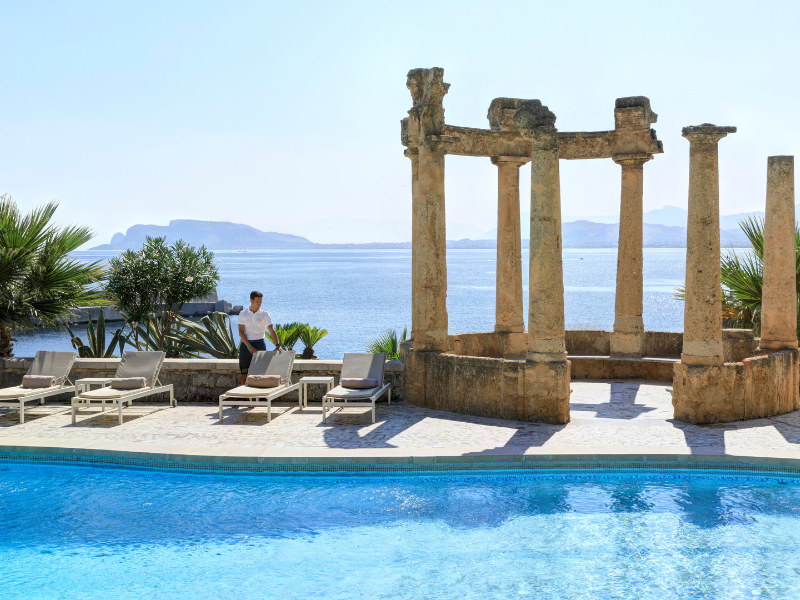
    New opening, Villa Igiea

    He sighs pre-emptively at the thought of the ensuing recollections: “The reality is most of my hotels depend principally on international business. The Italian city centre hotels [such as the Hotel Savoy in Florence, and the Hotel de Russie in Rome] have six per cent local business; Brown’s of London has nine per cent UK business. With restrictions on international level, they can’t function on a profitable basis.” 

    But Forte is in the league of the hugely successful and one can sense beneath the extraordinary difficulty of the situation his resilience. He will not take reversal lightly – and 2020 did see a few successes. “Most of these hotels will continue to limp along. The two exceptions in August, September and October were our 40-bedroom hotel Masseria Torre Maizza in Puglia, and the Verdura Resort in Sicily which had a reasonable August. But it’s a gloomy scenario.” 

    To put it mildly, Forte is no fan of the Johnson administration, but reserves special ire for government scientists. “The government needs to change its attitude to the pandemic,” he continues. “The very few people who are endangered are old and have underlying health problems. It’s not nice to talk about people dying and it’s sad, but it’s not a disease that affects young people. Scientists you’ve never seen before are now enjoying the limelight: they didn’t have authority before, but can now tell people what to do. Really, we should get back as quickly as possible to a position where we’re all allowed to make up our own minds about the risks we want to take.”
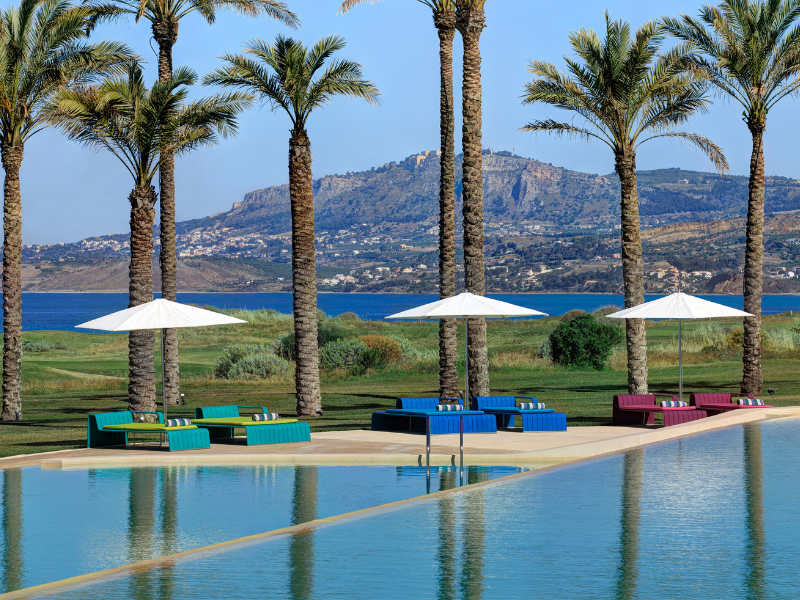
    The Verdura Resort in Sicily enjoyed a profitable summer in 2020

    Forte was talking before the second wave, and the deaths which followed. When I catch up with him again in late April however he questions the government’s narrative about the spike in deaths: ‘I am also upset about the exaggeration of deaths. The reality is that under the age of 60,10,000 people have died, they’re running the economy. 80,000 of the so-called Covid deaths have been in people over 80 and another 30,000 of people between 70 and 80. It’s not a reason to close the economy. The whole thing is to terrify people into submission. I never knew how totalitarian states cowed people into submission. Now I know how they did it.”

    Perhaps it will always be salutary to have someone like Forte arguing during a time like this against the status quo since that asks those in power to check whether the balance is right. “We closed our whole economy and it’s just nonsense, we’ve got to move away from being ultra-cautious and ultra-careful.” 

    In the event of it, the Johnson administration did listen to some extent and in hindsight we all know, after the Winter of Variants, that so far, there has always been cost attached to the decision to open up. Yet we also know that we can’t go on like this indefinitely, and Forte is among the most compelling voices pointing to the cost to business of not opening up.

    Forte, like Goldman Sachs CEO David Solomon, wants his staff back in the office. “I started getting people back in the office in July 2020. Staff were anxious to get back to work. Employers have got to get harder with people. People who have underlying health issues – that’s understandable. It’s the same with the schools: children are not at all at risk of the disease.” 
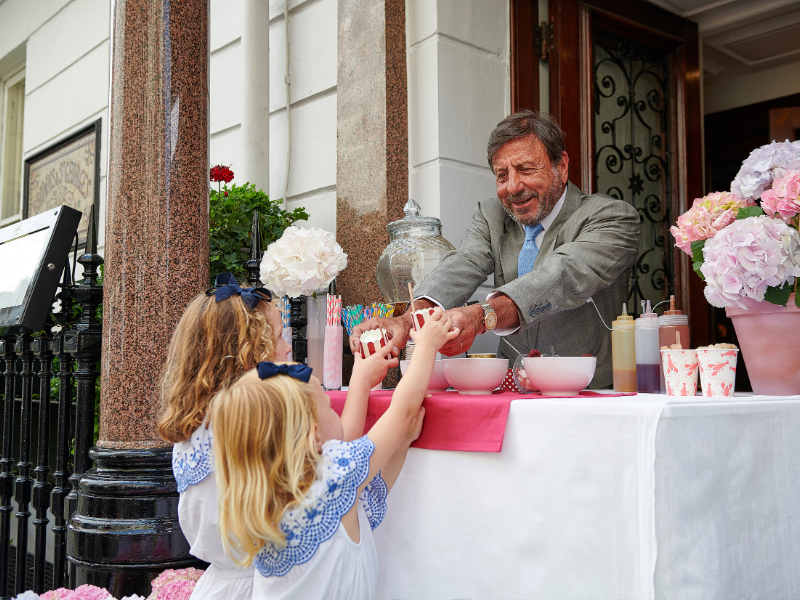
    Sir Rocco Forte outside Brown’s as part of its Luxury is Local push. Brown’s footfall pre-pandemic was only 9 per cent domestic

    The counter-argument would run that this misses the point and that nobody is particularly arguing that they are: what the government is saying is that they can carry the disease and transmit it to someone who is at risk. Forte pushes back on this: “The government said there would be a spike when the children went back to school in March and there wasn’t.”

    Forte is illuminating on the commercial reality: “The economy is talked about in the abstract. It’s about people’s livelihoods and their families. We’re still not open and free to work.” This is plainly true, but there again one might say that it’s precisely in recognition of this fact that we have the furlough scheme.

    The suspicion remains that confronted with the pressures of SAGE’s advice, and the public health, Forte might have done the same thing as Johnson and Sunak, although perhaps with even greater reluctance. He rejects this: “I keep thinking, ‘What would Mrs. Thatcher have done?’ For one thing, she’d have known the science herself. And she’d’ve have taken a much more pragmatic approach. And why is the government talking about an early election? Because the government is popular and people are at home, being paid and not having to work. We’re not seeing the eventual effect of all this, which will come two years down the road. Their propaganda has made them popular and they don’t want to see adverse effects. There’s a lot of talk internally within the Party about a new election.”

    Forte then is a man at bay, and at odds with the government. If you take the long view, you might say that the brand is strong, and that given his own immense savvy, he will find a way back. But there must be days when it doesn’t feel like that. ‘It’s cost the company around £100 million,’ he tells me in April.

    It’s no surprise to hear his opposition to home-working going forwards. Recalling the first lockdown he says: “For the first six weeks, I’ve never worked harder in my life, but after a while the whole thing pales. Being in an office creates discipline. And if not being in an office is demotivating for me, what’s it doing to the rest of my staff?” 

    And what about the position on tax going forwards? Forte is clear about mooted tax rises: ”We want to get the economy moving, and we’re not going to do that by raising taxes. Servicing the debt will cost half a billion a year which is not significant. Why do we need to start repaying the debt now? We finished off paying our war debt three years ago. We don’t need to rush.”  
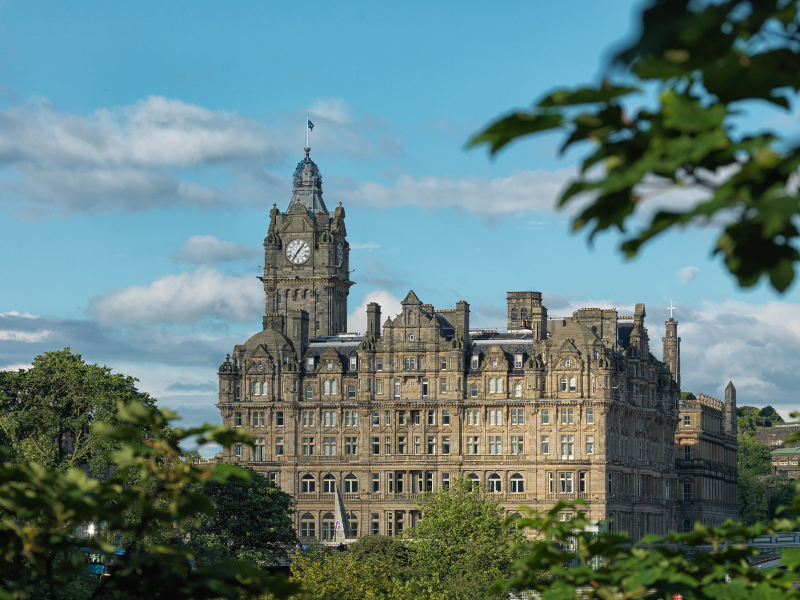
    The Balmoral in Edinburgh is another option for the domestic traveller

    As a Conservative Party donor, has he spoken to the prime minister about all this? “I’m afraid I’m not in a position to pick up the phone to him to tell him what I think. The best way to influence those in government is to make your views known very publicly. I have appeared on television which is not something I normally do – desperation.” 

    So will he be looking to hire this year? “Once things normalise, a lot of businesses won’t be around anymore. Ones like mine who can borrow more money will be more indebted with the constraints that puts on business. But we’ll still be looking to hire people.” 

    So what does he look for in potential employees? “We look for an element of enthusiasm for the industry. I would never advise anyone to come into this industry who didn’t enjoy working in it: you should try and do a holiday job for a few months, and see if you like the feel of working in a hotel and what it entails.” What should they be prepared for? “It’s quite hard work,’ he says. “It involves unsociable hours a lot of the time and people in the business enjoy that. You need to have camaraderie and a sense of belonging. Upwards mobility can be very quick. You can start as a waiter and end up in a management position if you have the right attitude and the abilities to do so and these are recognised. If you’re a shrinking violet it’s not the place for you.” 

    So, once the pandemic’s over with, what are his plans? “Well, I have big concentration in Italy as we already have a strong position. But I’m not in Milan. Venice is somewhere we should be. I want to do more in the UK. It’s very difficult outside of London to look at smaller hotels in important tourist destinations where a larger hotel won’t work. Where a fifty or sixty bedroom hotel would be quite successful. As a UK-based company it’s a shame we’re not doing more here.” 

    You get the impression that this is how he’s used to thinking – dynamically and rapidly about future plans. It’s a window into the mindset the pandemic has deprived him of. “Then I’m not in Paris, not in Madrid and Barcelona. I’m in St. Petersburg not Moscow. Then I’d like to be in the States – a big proportion of our business comes from there, so New York and Miami…” 

    At which his voice trails off, seemingly with the realisation that none of this is possible at the moment. But everything about the man makes you realise it will be again – and perhaps sooner than any of us realises.  
  • How the travel sector handled Covid-19

    How the travel sector handled Covid-19

    By Lana Woolf

    There is a phenomenon called Stendhalismo named after the French novelist Stendhal, which refers to the act of travelling abroad and then swooning before objects of great beauty. It was in Florence where Stendhal – born Marie-Henri Beyle – first experienced an almost hallucinatory sense of awe at the Italian experience: ‘I was in a sort of ecstasy, from the idea of being in Florence,’ he wrote, ‘close to the great men whose tombs I had seen. Absorbed in the contemplation of sublime beauty.’

    Two hundred years later, we have a new version of this phenomenon – but altered to reflect our new pandemic reality. It might be too flippant to call it Covidismo, but it can entail pausing in our UK homes and suddenly having a flashback as to all the travelling we did, which we now doubt we’ll ever do to the same extent. For those of us who were lucky enough to travel widely, a rhythm we hardly knew we had established has been suddenly suspended. Never again will the airport be quite so routine; nor shall we return home to find ourselves gearing up for the next trip with quite the same regularity.

    Time is now marked in a different way. What else to do then, but sit at home and dream – of Florence, of New York, of Kyoto, of all the places that we have been to and loved. In our best moments we can feel grateful we had what we had; but it is also possible to swoon Stendhalstyle in our kitchens and feel bereft at what have been so arbitrarily deprived of.

    Balearic Blues

    But what if travel is your livelihood? Like a career in aviation it would have seemed at the start of the year the safest of all sectors – and perhaps few countries would be safer to work in than that perennial favourite Mallorca.

    Sometimes during Covid-19 I have thought back to this island of peace and lemony light, where Robert Graves lived out his years, and where Chopin and George Sand visited. It was surreal to imagine a touristless summer there.

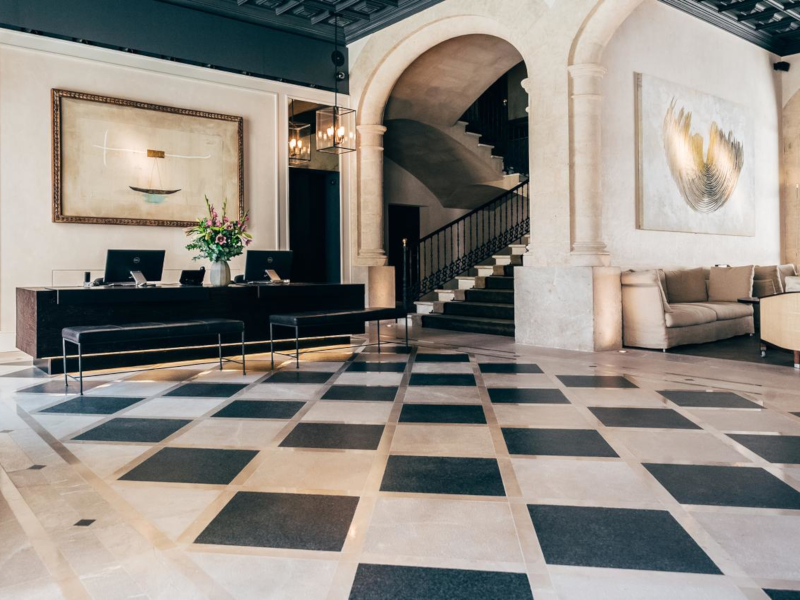
    Miguel Feliz is the general manager of Sant Francesc, a five-star hotel in the centre of Parma. ‘It’s been a tough and challenging year for all of us, especially those in the hospitality industry,’ he explains. ‘We are extremely lucky that Sant Francesc is a well-established, year-round property and Palma is a popular destination even in the cooler months,’ he explains, adding that he ‘remains optimistic that we will begin to see some normality from September onwards, which is just in time for my favourite month in Mallorca.’

    If the guests return – and at time of writing the government’s muchcriticised quarantine policy has made travel an anxious business – then guests will find a subtly altered hotel. ‘We have put extensive new measures in place by following the recommendations and directives from the Spanish National Health Services, as well as the World Health Organisation, in order to ensure the wellbeing of our guests and team members,’ Feliz tells me. ‘These include everything from twice-daily temperature checks for all staff as well as guests on arrival, to mandatory use of masks for our team – and masks and hand sanitizer being readily available to guests at all times. Extensive new cleaning programmes have been put in place for guest rooms and all public areas and social distancing will be encouraged wherever possible.’

    As workable as that sounds, it was also a tough time for the company in another sense when the owners had to address the question of the expected opening of a sister property Can Ferrerata in Santanyí. ‘We decided to postpone until March 2021 and take our time, in order to give it the opening it deserves.’

    This hiatus has been painful – and of course Sant Francesc is just one story among thousands globally where hotels have had to pause, pivot, or just take the financial hit. The effect on the hotel industry has been seismic, as any brief walk through central London immediately attests: one thinks of the empty forecourt of Buckingham Palace, or the nowunphotographed lions of Trafalgar Square.

    But travel is a vast industry with numerous professions attached to it, which  have experienced the knock-on effects of the virus. From aviation, hotel events, to travel PR, and travel journalism, it’s a sector full of economically significant subsets.

    I catch up with Cathy Adams, who is the travel editor at the Independent. She’s on maternity leave at the moment, and says she’s grateful to have a break from breast-feeding to share her thoughts with me. For her, travel journalism was already in a state of ruction pre-Covid. ‘Even before coronavirus swept the globe, travel journalism was changing fast,’ she tells me. ‘We were working to promote underserved destinations rather than those afflicted by overtourism; and the climate crisis had made us rethink how we spoke about travel and holidays to promote more responsible tourism. Then came coronavirus, which in many ways has accelerated the issues many travel journalists have been grappling with in recent years.’

    So is travel journalism still a career you can go into? The answer is yes, but with caveats. ‘Travel journalism, when, like travel itself, it returns to the masses, will continue to become more thoughtful: expect more coverage of British holiday spots as travel restrictions drag on and we want to inject more money into our domestic tourism market. Plus, the coronavirus has highlighted just how risky travel can be – in terms of spreading the virus, and how quickly border closures can stop travel; the world will no longer be seen as a free-for-all, and journalism will take this into account when deciding which destinations to talk about.

    And will hotels still feel able to host significant numbers of journalists in order to make sure they get their copy? Adams explains that ‘editorial will remain an important part of a destination’s marketing plans, but I imagine with the focus on fewer trips and a smaller tourism market generally, they won’t be quite the all-out affairs they once were.’

    How PR went into ER

    Every one of these hotels has its marketing budget and there are many PR firms around the world earning their crust by promoting them. One of the best of these is Perowne International run by the redoubtable Julia Perowne.

    Perowne recalls for me the bizarre events of February 2020: ‘I realised in February that the situation was getting more serious and that its impact would spread outside China. In many ways the hospitality industry was one of the first sectors impacted and sadly will likely be the last.’ It was a fast-moving situation, she says. ‘We have clients all over the world and several beautiful hotels in Italy which was impacted first in Europe. We were shocked by the speed and severity of its development there and could see quickly that this would not be contained to one country. In early March we started to analyse the situation in more detail and prior to lockdown actually went to our clients and offered them significant fee reductions to help them through this tough time.’

    Overnight, the nature of the job changed: ‘The most significant thing has been the emotional support the clients have needed rather than just the practical,’ explains Perowne. ‘This has been a devastating time for the industry – businesses that have worked so hard have been hit badly and there’s definitely been a need to help people emotionally get through this. In addition, we have needed to look ahead to the future and ensure that when we come through this, the clients are looking as desirable and as relevant as ever. The consumer’s values have changed over the last few months and we need to ensure that we are prepared for that.’

    Perowne was forced to take advantage of the furlough scheme (we’re hopefully in the process of reinstating them’), though she would have liked to have seen a different scheme in place. ‘It would have been great if the government could have subsidised salaries and allowed people to still work if they could as they did in Ireland,’ she argues. ‘We desperately needed all-hands-on-deck but simply weren’t getting the fees from the clients so we had to utilise the scheme.’

    Echoing Adams’ observations about journalism, Perowne says that Covid-19 ‘will simply accelerate the changes that were happening,’ adding that ‘we have to be compelling storytellers.’

    Tricky Calculus

    Perowne praises the agility of her clients. One of these is the Cambridge University Arms, where Ian James, the general manager, approached the crisis in a highly community-minded way. Although he closed the hotel on 22nd March ‘with heavy heart’, he explains that ‘it was also important to us to help alleviate the strain on our NHS.’

    As the city’s oldest continually operating hotel, the team was minded to take the long view. ‘The property has truly stood the test of time – living through two world wars, the fight for woman’s rights and in 1665, the University Arms temporary closed its doors due to the Bubonic Plague,’ James explains. ‘Isaac Newton had to work from home and he used this time to develop Calculus and the theory of Gravity. Therefore, we remain positive that we will soon put this latest travail behind us. As Solomon said, “This too shall pass”.

    It’s also a hotel which has been caring toward its staff and the people in the immediate locality. ‘As the hotel closed and we were heading into lock down, our main concern was the wellbeing of our team,’ he explains. ‘Our Chef Director Tristan Welch and his team coordinated care packages to keep everyone going during the difficult times of self-isolation. Our ‘Most Wanted’ packages were filled with essentials including many items that were proving difficult to come by in the supermarkets at the time. These included everything from pasta, flour and toilet paper, to oats, sugar, cereals, stock cubes, tinned goods as well as fresh fruit. In addition to this, the property has donated some key items locally to those in need. These included disposable aprons and gloves to the Papworth Trust as well as eggs, yogurt, vegetables and other food items to Cambridge Cyrenians.

    This is a sector which has experienced the severest setbacks of any. And yet it’s a hopeful sector. James is cautiously optimistic: ‘The desire people have to travel will always prevail and the industry will always need fresh talent.’

    Miguel Feliz echoes those sentiments: ‘The hospitality industry is so versatile and offers the unique opportunity to travel the world and learn about different cultures, so there is always an appetite for travel.

    Nothing will take that away from us.’ Perowne adds in respect of a career path in travel PR: ‘for those who really want to go for it, the opportunities are endless.’

    So in a sense the buoyancy of the sector comes back to Stendhalismo: a French writer broke out into a cold sweat because of the treasures of Florence, and there will always be a part of us that will long to do the same. Far-flung parts and new experiences are things we’ll always be susceptible to, and a virus will not decrease our need for adventure – indeed, in the long run it may only increase it.