Tag: Tom Pauk

  • Tom Pauk: Meet the Mentor

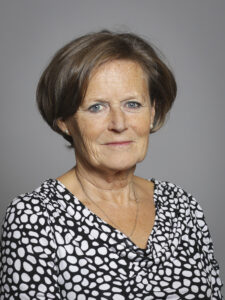
    Finito World caught up with Finito Education’s likeable and passionate senior mentor, Tom Pauk


    Tell us about your career before you joined Finito.


    After studying drama, my efforts to become an actor ended with a whimper rather than a bang, and I retrained as a solicitor. The career that followed was a “game of two halves”, half-time marked by the global financial crisis of 2007-08. In the first half, at City law firm Allen & Overy, then in-house at American bank Citigroup, I’d specialised in large cross-border lending transactions.

    In the second, I helped restructure loans borrowers had taken out in more prosperous times but were now struggling to repay. After leaving the bank in 2017, I began mentoring young men in prison, returned to Allen & Overy, now in a role mentoring lawyers in the early stages of their careers, and began writing plays. My professional life, it seems, had come full circle!


    Did you feel your education prepared you for the workplace?


    A degree in drama could not have prepared me better for the cut and thrust of commercial law, an above-all collaborative endeavour with a diverse cast list of characters, long “rehearsals” with unfeasible deadlines we somehow always managed to meet. At the conclusion of an especially high-profile deal there was the added satisfaction of reading the “reviews” in the financial press.

    The practise of law is essentially an exercise in problem-solving. In my case, a love of modern languages and playing the violin had also prepared me for the intellectual rigour of law, and I was even able to use my mother tongue Hungarian in transactions with Hungarian clients. So to anyone reading this wondering whether a knowledge of an obscure language might prove useful one day, the answer is a resounding Yes!


    Did you benefit from mentorship during your career?


    When I’d started out, mentoring was still very much in its infancy. Fortunately, I was able to benefit from the law firm equivalent, the “seat” system, under which trainee solicitors move from one department (or seat) to another every few months to build up expertise in different areas of a firm’s practise. Each seat is supervised by a senior lawyer — part mentor, supervisor and critical friend — overseeing a trainee’s professional development.

    Over the course of my training contract I was exposed to a variety of mentoring styles, which then shaped my own approach when I assumed the role. But I continue to benefit from ongoing, less formal mentoring in the shape of the extraordinary people I encounter and who inspire me with their wisdom. So in actual fact I’ve never really stopped being mentored.


    What are the most common misconceptions about a career in the law?


    I think there’s a general (mis)perception that law is a dry, bookish occupation, and that lawyers are aloof from the rest of society, be they pin-striped solicitors in their ivory towers or wigged-up barristers bowing obsequiously in courtrooms. In fact lawyers are widely dispersed throughout society, in the public sector (civil service, local authorities, regulatory bodies), in companies and banks, charities and NGOs. If you’re a young person considering a career in law you’ll be able to select from a wide range of specialisations that play to your unique skills and interests.


    Mental health is a particular passion of yours. Can you describe how your interest in that area came about?


    There were occasions, especially early on in my career, when my mental health was impacted under the pressure of work. Symptoms included poor sleep, high anxiety and irritability, and a compulsion for checking work emails 24/7. Back then, there was a stigma around discussing one’s mental health, let alone seeking help when you needed it. Worse, it was regarded as a sign of weakness, possibly even career-limiting, to self-disclose. So one’s natural instinct was simply to keep quiet and soldier on.

    Thankfully, we’ve evolved to a more enlightened view of wellbeing in the workplace, with a plethora of interventions designed to promote a healthy mind as well as body, including mental health first aiders, mindfulness, and discouraging staff from checking work emails after hours. Eight years ago, the memory of my own experience led me to train as a volunteer at a mental health charity. At The Listening Place I’ve seen vividly for myself how poor mental health can quickly escalate into crisis, and how being truly listened to can be life-saving. Literally.


    Work-life balance is something you’ve been vocal about. What are the most common pitfalls people fall into there?


    Most people understand the importance of achieving a sensible work-life balance, at least intellectually,  And it’s hard to argue against. But here’s the challenge: we’re not necessarily aware of the pendulum as it is swinging in the wrong direction. Whether it’s staying ever-later in the office, checking, or worse, responding to emails at weekends  (“because it’s already tomorrow in Tokyo”), before we know it life is work and work is life. Of course we tell ourselves that it’s only temporary, that as soon as we’ve broken the back of whatever it is we’ll take our foot off the accelerator.

    But it isn’t that simple, for we may unwittingly have recalibrated our benchmark of what a normal working day is. We’ve trapped ourselves into believing our own indispensability (“If I don’t do it no-one else will). We assume that working harder improves performance, demonstrates commitment to our employer and enhances our prospects for promotion. I’d counsel anyone reading this to challenge these assumptions and to listen out closely for the whirring of your inner pendulum!


    You obviously have a passion for mentoring. What are the most common challenges you’re seeing among your current crop of mentees?


    I’m certainly seeing the longer-term impact of the pandemic. This is the generation whose educations, family and social lives were disrupted by successive lockdowns. And I’m in awe of just how well they’d adapted to remote ways of studying and working. Another challenge is the sheer number of high-calibre applicants vying for limited places on the graduate recruitment schemes of investment banks, accountancy firms and corporations. Training contracts in City law firms are similarly over-subscribed, and with increasing candidates achieving top grades there’s now a far greater reliance on critical reasoning and situational judgement tests, presentations, written assignments and long assessment days.

    However I’m also sensing some really positive new trends, with mentees less motivated by achieving huge salaries than they are by finding a fulfilling career. And finally, one positive legacy of the pandemic: Finito mentees are often engaged in volunteering activities, whether it’s repurposing old computers and teaching older people how to use them, mentoring disadvantaged kids, or stacking boxes in foodbanks. Something, finally, to celebrate in challenging times.


    Do you vary your process for each mentee, or do you have a particular approach which you use with each candidate?


    Mentoring is a transformative tool for supporting the development of a mentee, and because no two mentees are the same the mentoring process does inevitably vary. Having said that, there are common features in my approach.  In the first place, it’s not about the mentor. Our prime responsibility as mentors is to listen attentively at all times to our mentees. Listening actively (as distinct from merely hearing) is a skill that one develops with practice.

    And it’s crucial we’re responsive to the stated needs of our mentees rather than clinging stubbornly to our own agendas. One unique aspect of mentoring is our willingness to share our own knowledge and experience to support the development of our mentees. A word of caution however, because this has nothing to do with being directive. What we’re aiming to do is empower our mentees to think and act for themselves. Finally, mentoring is a two-way street. At its most fruitful the relationship between mentor and mentee is one in which sharing and learning opportunities arise for both participants. I’m forever learning from my mentees.


    What do you know now in your career which you wish you’d known at its start?


    Hindsight being a wonderful thing of course, here’s three things I tell my mentees. Firstly, it’s important to pace yourself, especially when starting out in a new role and you’re trying to make a good impression. Keep something of yourself in reserve for when you really need it. Secondly, don’t plot out your entire career from the get-go. Life has a mischievous habit of opening new doors and leading you in new directions. And thirdly, know where you add most value, and focus your energies accordingly.


    Do you have any new challenges on the horizon?


    I’m excited to have just been appointed to the board of the Joseph Rowntree Charitable Trust, whose endowment supports people tackling the root causes of conflict and injustice. Along with my governance responsibilities, I’ll also be involved in grant-making decisions, an area entirely new to me.

     

  • Leah Houston’s amazing bursary journey

    Christopher Jackson

    One sometimes hears someone called a ‘black sheep’ of a family as a pejorative term. It needn’t be like that. Most people who look inward in any concerted way find some surprising differences between their own hopes and dreams and their outward circumstances. Knowledge of this difference can open surprising inner capacities and point the way to a fruitful life. In the best cases, it is possible to strike out in a different direction from one’s family, and to feel no sense of alienation whatsoever – but instead to feel a sense of loving journey, which ultimately all members of the family will accept and profit from in understanding.

    Something like this appears to be happening to Finito candidate Leah Houston. I ask her about her upbringing: “I’m from very humble beginnings,” she tells me, her accent distinctively Northern Irish. “Education was never pushed for me. It wasn’t the world I was in. I’m the first in my close family to be interested in my studies, and then to want to pursue them, and then to go onto university at the Belfast Bible College in Dunmurry, Belfast.”

    Despite this, Houston is aware of many similarities between herself and her family. “On the other hand, working hard was pushed on me – it was a question of financial necessity. I’ve had a part time job since I was 14. After school you went to work: food had to be placed on the table somehow. In hindsight, I wouldn’t have changed a thing at all.”

    So what did her parents do for a living? “My Dad is typical Northern Irish. He is a part-time farmer and he sells animal feed from a local agricultural shop. My mum worked in office work all her life – then she had me. She felt that to stay at home was her calling, but then she started looking after other peoples’ kids and soon she had her own childminding business.” This seems to amount to a strong entrepreneurial streak in the family. Houston agrees: “You have your hands and you can do something about it – so go work,” she says, simply.

    This innate understanding of business was already becoming apparent in Houston’s choices. “Business makes sense to me,” she explains, “seeing something through from 0 to 100. You’ve got to see what you’re good at and make something of it. I studied Business through to A-Level and initially thought I would study that subject at university as well. But I had a bit of a change of heart.”

    This brings in another side of Leah – her religious belief. “I grew up in a strong Christian household,” she recalls. “It wasn’t pushy but it was fostered. So I studied religion and law at university which was a major change.” Throughout our conversation she will talk about her faith in the relaxed, confident way which people do when their beliefs are deeply embedded.

    I am interested to know how this degree was structured. She explains: “The main aspect of it was theology, but with world studies, policy and law examined. It was all to do with how one’s faith works out in the public sphere. I was focused predominantly on Christianity but I also did world religion modules.”

    This decision garnered a mixed reaction at home. “My extended family – my cousins and so on – weren’t sure. Firstly, because I’m a woman – that didn’t go down well, and led to some opposition. Some also thought I would lose my own faith, and question what I believe.” And has she? “I haven’t. Growing up in a Christian country, Christianity can be ugly because it’s political. There have been civil wars in the name of Christianity in my country. I came out the other end with a wider appreciation of all religions and the part they can play.”

    Houston loved her degree, but like most humanities degree, the gain of doing something one loves had a flipside: such courses don’t lead to such clear destinations as vocational courses. “I didn’t want to go into the Church, so in hindsight it was a much harder option. For the first few years I thought it was all amazing, but I’m not philosophical – I’m much more practical. My interest is in thinking how faith values can be implemented. During the three years of my degree, I did some time with a charity at home called the Evangelical Alliance. That organisation tries to bridge the gap between Church and politics. In hindsight, my time there planted the seed for politics and the public sphere.”

    This seed came to fruition when Houston began working for Baroness Anne Jenkin in the Houses of Parliament. “When I finished university, I thought: ‘What the heck am I going to do next?’ I came across Christian Action Research Education (CARE) a charity which seeks to facilitate getting a job as a Christian in politics in addition to offering training in thinking about politics. Anne Jenkin is extremely kind and said she’d take me for a year.”


    Baroness Anne Jenkin has been a huge help in Leah Houston's career journey

    And what were her impressions of the role? “Anne is so hard-working – no two days are the same for Anne,” Houston recalls, laughing perhaps at the remembered bustle of it all. “I was involved in diary management, speeches and organising meetings she would host. It was general ad hoc stuff and I was an extra pair of hands.” Leah brought a very clear sense of purpose to the role. “I was there to serve Anne – to allow her to do her job better. That could be sending letters, or photocopying, or making a cup of tea. I also became immersed in the question of gender ideology, which is one of the key issues for Anne.”

    And what was the culture like in Parliament? “As a practising Christian myself, I was interested to discover the APPG, Christians in Parliament, that is a cross-party group of Christians. As long as you were a passholder you could be a part of that: MPs, kitchen staffers, it didn’t matter. It brought a sense of community, with weekly services held in the Chapel of St Mary Undercroft. Politics is so polarised and tends to be all or nothing. It is meaningful to have something that unites: at election time we prayed for whoever was in leadership.”

    Through Baroness Jenkin, Leah met Finito Education CEO Ronel who saw Leah’s potential. “Ronel is a great supporter of Anne and he took me under his wing. I was with Finito for half a year and the investment in me was incredible.”

    This is good to hear and I ask her what the impact has been. “Besides all the practical things such as the LinkedIn training, the CV writing and the mentoring, I especially value the confidence that the Finito service gives to someone in my circumstances. It was as if I was being seen for the first time. This was so encouraging for me especially given my upbringing, where my wanting to succeed was perhaps sometimes considered a bit weird. My extended family would wonder why I was in London, and why I’m in the job I’m in. This was an organisation which wanted me to succeed.”

    This process of building confidence in an individual is integral to the mentoring process. It begins from our first encounter with a new student. Houston recalls: “I remember vividly the first meeting with Ronel where I brought him my CV. When I had been in parliament I had co-founded a network for the protection of gender-critical views. I showed my leaflet to Ronel and it was an incredibly important moment, because someone was looking at my work, and taking an interest in me. It brought me an overwhelming sense of pride.”

    Mentoring is to do with becoming reoriented in one’s life by coming into one’s essential self.  Houston recalls that her being photographed by in-house photographer Sam Pearce continued this process. “I spent an afternoon with Sam and I noticed that she took the time to make me feel comfortable. She also took time to ask questions between pictures – it was not a transactional photoshoot, it was more an investment in who I was.”

    Following on from there, Leah had her LinkedIn training with Amanda Brown (‘incredibly helpful’) and then began work with her lead mentor Tom Pauk. “He was so lovely and I was telling my heart and how I feel things deeply. He said: ‘I think you need to go into the charities sphere’. I said: ‘ I think you’re correct.’ And now I’ve landed a job with a charity which is a start-up. Tom was amazing, and gave me contacts.’

    From Pauk’s perspective, Houston made an excellent impression. He recalls: “Leah struck me as a highly intelligent, articulate and values-driven young woman, seeking a position where she can employ her myriad skills to improve the lives of others, especially those of women and children.” Pauk noted early on that her priority was ‘to use her lobbying skills to help bring about changes and social impact,” adding that “she is not driven by earning a high salary, though she’ll need a sustainable one.”

    When the job came along it all happened very quickly ‘in the space of a week’. Houston brings me up to speed: “I now work for a charity called Forum which is based in London and has launched in America too now. Its purpose is to serve leaders and influencers from all sectors of society. It tries to link up like-minded people. I’m a data manager and administrator, which is important for Forum, as someone’s name in the database is like gold to the business. I’m also EA to the founder David Stroud, who is married to Baroness Stroud.”

    So how does she see the future? “I actually don’t know,” she admits. “My life these past few years has been full of uncertainty, but I can see myself settling here for a good while. It’s a start-up with huge potential for growth and now the whole past five years makes sense.”

    At the end of our interview Houston reflects a little on her journey so far. “It’s strange to be in London and not be money-driven. Wealth to me isn’t money. It’s what I had growing up: I had family and friendship and relationships and that to me is wealth. Marriage and education is wealth.” And are her family beginning to understand the nature of her journey now? “My parents have been massively supportive, but we don’t always speak a common language. My cousins have their own convictions and they don’t necessarily agree. But the relationships are there and really there’s so much love and support.”

    One is tempted to call this attitude mature except that many people live their whole lives without realising the importance of things which Leah innately understands. She also has an immense capacity for empathy and understanding. Houston is someone whose narrative is not to be judged by the usual metrics of success: money, or position or anything else – though there’s nothing to stop her acquiring these. But she is in such a strong position because she isn’t a materialist. She is someone who will make her own way – and in fact is already doing so.

    The help which Finito gave to Leah would have been impossible without the generous help of the Stewarts Foundation. The firm’s managing partner Stuart Dench says: “In a perfect world comprehensive career guidance would be available to all regardless of their background. The Stewarts Foundation is delighted to support the important work of Finito via its bursary scheme.”

    Stuart Dench and the Stewarts Foundation has supported Leah Houston's career journey

    When it comes to someone like Leah, the importance is difficult to measure because it has to do with ineffable things like confidence, connectivity, and the unleashing of possibilities within a person who may not yet know how capable they are. In her case, it is also to do with helping someone to arrive at the realisation that the place they’re born in need not be a limiting factor. Ultimately it’s for us to make our own way – though it is right that we do so with the help of others.

  • Discovering the Charm Budapest: Tom Pauk’s Letter from the Heart of Hungary

    Tom Pauk


    I’m writing at our table in the New York Café, Budapest, although to call this ridiculously ornate former insurance hall a café seems at best irreverent. I’ve just polished off a bowl of somloi galuska, Hungarian trifle made with walnuts, chocolate and cream, soaked in apricot brandy.

    I’m here with my wife Rachel in Hungary’s capital visiting friends and relatives. My parents fled the country during the 1956 Uprising, so it’s another opportunity for me to practice my rusty Hungarian, a dauntingly opaque language linked only to Finnish and Estonian.

    Budapest is above all a city of bridges, connecting the commercial side, Pest, with the leafy hills of Buda, dominated by Castle Hill with its steep, cobbled alleys, atop which the imposing Castle, Fisherman’s Bastion and magnificent Matthias Church.

    During your visit you’ll find yourself crossing the Danube often in order to take in this stunningly beautiful city and walk off the calories. The most famous crossing is the “picture postcard” Széchenyi Chain Bridge; designed by an Englishman, constructed by a Scot.


    Pest is home also to Hungary’s 286 metre-long neo-Gothic Parliament (or Országház) in Kossuth Square. It’s well worth the visit and the No. 2 tram and Line 2 metro stop right outside. If you’ve been to Vienna you’ll be reminded of its architectural doppelganger, Vienna’s gothic City Hall.

    Prior to WW2, Budapest was home to one of Europe’s largest Jewish communities. The first anti-Jewish laws had been passed in 1938; Jews were banned from working in government and from editing newspapers, and only six per cent. of lawyers, doctors and engineers were permitted to be Jewish. The events that followed Nazi Germany’s invasion of Hungary in March 1944 need no retelling here, suffice to say that my own family (both maternal and paternal sides) was severely impacted.

    The Dohány Street (or Great) Synagogue (closest metro stop Astoria), built in an Arabic-Moorish style (check out those Alhambra-like domed towers), remains Europe’s largest with a capacity of 3,000 worshippers. A visit (guided and private tours can be booked on-line, or just buy a ticket and wander around) takes in the synagogue itself, memorial gardens and the Hungarian Jewish museum on the site of the house where Theodor Herzl was born. Especially poignant, the dramatic Emanuel Tree (or Weeping Willow) Memorial, which has the names of thirty thousand Holocaust victims inscribed on its metal leaves.

    Dohány Street marks the border of the former Budapest Ghetto within Budapest’s District 7, an area now popular for its specialist coffee shops, falafel bars, craft beers and quirky shops. While there, admire the fusion of Judeo-Art Nouveau of the orthodox synagogue, and stop off for a superb flat white at Stika.

    Do also visit the Cipők a Duna-parton (or Shoes Memorial) roughly half-way between Parliament and Széchenyi Chain Bridge on the Pest embankment. The sixty pairs of iron shoes, boots and sandals commemorate the hundreds of Budapest Jews lined up and shot into the river by the Hungarian Fascist Militia in December 1944. My father, then only eight, was one of those rounded up for execution. Mercifully, he was able to run away and avoid recapture.

    Budapest is famous for the wellbeing properties of its waters. The city sits on a geological fault line with hundreds of natural springs jetting skywards. Following their conquest of Hungary in 1526 the Turks built a number of Hamman-style thermal baths, three of which, Rudas, Király and Veli Bej, operate today. However, for the full spa experience, head over to either of Gellért Baths (in the fabulous Art Nouveau Hotel Gellert on the Buda side), and Széchenyi Baths (the largest spa complex in Europe, and especially wonderful in winter) for a full range of spa treatments, and for mineral-rich indoor and outdoor swimming.

    A quick mention of Hungarian politics. Hmm. Hungary continues to struggle with … let’s politely say idiosyncratic views, likely a result of being subjugated over the centuries by successive invaders (Ottoman, Austro-Hungarian, Soviet) and now struggling to assert its own identity. Happily, as a visitor you’ll be oblivious to the country’s growing political radicalisation on the global stage, and unless you’ve a good grasp of Hungarian you’ll miss the inflammatory political messaging on posters and billboards.

    Where to stay? You could check in to one of the global 5* brands (Four Seasons, Kempinski, Ritz Carlton and others) but Budapest also has an abundance of boutique hotels and Airbnb properties. On one memorable visit Rachel and I stayed at Brody House,  a former artists’ salon, now quirky boutique hotel, in which each of the ten rooms has been decorated by a different artist.

    If you’re staying for more than a long weekend, a half-day in the small baroque town of Szentendre along the banks of the Danube (40 minutes on the HÉV H5 local train from Margit Bridge) provides a wonderful escape from the bustle of the city on a hot summer’s day. With its narrow cobblestoned streets, art galleries, coffee shops and churches, Szentendre is home also to the Szamos Csokoládé Múzeum (Museum of Chocolate).

    Your waistline won’t thank me but trust me, you will!

    On the subject of food (I keep coming back to that, don’t I), traditional Hungarian restaurants abound, and with the forint weak against Sterling and US$ you’ll find prices generally low by say London standards. I’d suggest avoiding the glitzy eateries along the Pest embankment and up on Castle Hill in favour of more authentic dinning venues like Café Kor, Két Szerecsen and, for a modern take on Hungarian classic cuisine, Szaletly. Reservations are always wise; Budapest is busy all year round.

    More Budapest top tips:


    ABSOLUTELY take the number 2 tram (Pest side) on its stunningly scenic 20-minute meander from Közvágóhíd to Jászai Mari Square at the Margit Bridge. For 450 forint (under a quid!) you’ll take in many of the major Budapest landmarks. When you get off, walk half-way across the bridge to Margit Island, a one-kilometre green oasis equivalent to say Hyde or Central Park. It will take you a pleasant hour or so to circumnavigate.

    Download the BudapestGo app to purchase e-tickets for bus, tube and tram. Alternatively, buy books of ten from ticket machines (4,000 forint or roughly £8.50). A word of caution: ticket inspectors are ruthless and abundant, and all tickets (paper and digital) must be validated in a designated machine to avoid incurring a hefty penalty fare.

    Download the Főtaxi taxi app,  Budapest’s cheap and reliable equivalent to Uber.  Főtaxi is the official provider of taxi services to and from Budapest Airport. Fares are transparent and reasonable. Bolt also operates in the city.


    Budapest is a walker’s paradise (wear comfortable shoes) and is perhaps even more beautiful after dark!


    ***


    Back at the New York Café our waitress has returned. Would we like the bill, she enquires, her eye on the growing queue of impatient faces that now snakes all the way back to the main entrance. Not just yet. Could we see the menu again? That raspberry and pistachio tart looks rather tempting.

  • Meet the Mentor: Q&A with Finito senior mentor Tom Pauk

    Mentoring is part of what we do at Finito. Kicking off a new series, Tom Pauk answers our questions about mental health, his career, and the mentor-mentee relationship


    Tell us about your career before you joined Finito.


    After studying drama, my efforts to become an actor ended with a whimper rather than a bang, and I retrained as a solicitor. The career that followed was a “game of two halves”, half-time marked by the global financial crisis of 2007-08. In the first half, at City law firm Allen & Overy, then in-house at American bank Citigroup, I’d specialised in large cross-border lending transactions. In the second, I helped restructure loans borrowers had taken out in more prosperous times but were now struggling to repay. After leaving the bank in 2017, I began mentoring young men in prison, returned to Allen & Overy, now in a role mentoring lawyers in the early stages of their careers, and began writing plays. My professional life, it seems, had come full circle!


    Did you feel your education prepared you for the workplace?


    A degree in drama could not have prepared me better for the cut and thrust of commercial law, an above-all collaborative endeavour with a diverse cast list of characters, long “rehearsals” with unfeasible deadlines we somehow always managed to meet. At the conclusion of an especially high-profile deal there was the added satisfaction of reading the “reviews” in the financial press. The practise of law is essentially an exercise in problem-solving. In my case, a love of modern languages and playing the violin had also prepared me for the intellectual rigour of law, and I was even able to use my mother tongue Hungarian in transactions with Hungarian clients. So to anyone reading this wondering whether a knowledge of an obscure language might prove useful one day, the answer is a resounding Yes!


    Did you benefit from mentorship during your career?


    When I’d started out, mentoring was still very much in its infancy. Fortunately, I was able to benefit from the law firm equivalent, the “seat” system, under which trainee solicitors move from one department (or seat) to another every few months to build up expertise in different areas of a firm’s practise. Each seat is supervised by a senior lawyer — part mentor, supervisor and critical friend — overseeing a trainee’s professional development. Over the course of my training contract I was exposed to a variety of mentoring styles, which then shaped my own approach when I assumed the role. But I continue to benefit from ongoing, less formal mentoring in the shape of the extraordinary people I encounter and who inspire me with their wisdom. So in actual fact I’ve never really stopped being mentored.


    What are the most common misconceptions about a career in the law?


    I think there’s a general (mis)perception that law is a dry, bookish occupation, and that lawyers are aloof from the rest of society, be they pin-striped solicitors in their ivory towers or wigged-up barristers bowing obsequiously in courtrooms. In fact lawyers are widely dispersed throughout society, in the public sector (civil service, local authorities, regulatory bodies), in companies and banks, charities and NGOs. If you’re a young person considering a career in law you’ll be able to select from a wide range of specialisations that play to your unique skills and interests.


    Mental health is a particular passion of yours. Can you describe how your interest in that area came about?


    There were occasions, especially early on in my career, when my mental health was impacted under the pressure of work. Symptoms included poor sleep, high anxiety and irritability, and a compulsion for checking work emails 24/7. Back then, there was a stigma around discussing one’s mental health, let alone seeking help when you needed it. Worse, it was regarded as a sign of weakness, possibly even career-limiting, to self-disclose. So one’s natural instinct was simply to keep quiet and soldier on. Thankfully, we’ve evolved to a more enlightened view of wellbeing in the workplace, with a plethora of interventions designed to promote a healthy mind as well as body, including mental health first aiders, mindfulness, and discouraging staff from checking work emails after hours. Eight years ago, the memory of my own experience led me to train as a volunteer at a mental health charity. At The Listening Place I’ve seen vividly for myself how poor mental health can quickly escalate into crisis, and how being truly listened to can be life-saving. Literally.


    Work-life balance is something you’ve been vocal about. What are the most common pitfalls people fall into there?


    Most people understand the importance of achieving a sensible work-life balance, at least intellectually,  And it’s hard to argue against. But here’s the challenge: we’re not necessarily aware of the pendulum as it is swinging in the wrong direction. Whether it’s staying ever-later in the office, checking, or worse, responding to emails at weekends  (“because it’s already tomorrow in Tokyo”), before we know it life is work and work is life. Of course we tell ourselves that it’s only temporary, that as soon as we’ve broken the back of whatever it is we’ll take our foot off the accelerator. But it isn’t that simple, for we may unwittingly have recalibrated our benchmark of what a normal working day is. We’ve trapped ourselves into believing our own indispensability (“If I don’t do it no-one else will). We assume that working harder improves performance, demonstrates commitment to our employer and enhances our prospects for promotion. I’d counsel anyone reading this to challenge these assumptions and to listen out closely for the whirring of your inner pendulum!


    You obviously have a passion for mentoring. What are the most common challenges you’re seeing among your current crop of mentees?


    I’m certainly seeing the longer-term impact of the pandemic. This is the generation whose educations, family and social lives were disrupted by successive lockdowns. And I’m in awe of just how well they’d adapted to remote ways of studying and working. Another challenge is the sheer number of high-calibre applicants vying for limited places on the graduate recruitment schemes of investment banks, accountancy firms and corporations. Training contracts in City law firms are similarly over-subscribed, and with increasing candidates achieving top grades there’s now a far greater reliance on critical reasoning and situational judgement tests, presentations, written assignments and long assessment days. However I’m also sensing some really positive new trends, with mentees less motivated by achieving huge salaries than they are by finding a fulfilling career. And finally, one positive legacy of the pandemic: Finito mentees are often engaged in volunteering activities, whether it’s repurposing old computers and teaching older people how to use them, mentoring disadvantaged kids, or stacking boxes in foodbanks. Something, finally, to celebrate in challenging times.


    Do you vary your process for each mentee, or do you have a particular approach which you use with each candidate?


    Mentoring is a transformative tool for supporting the development of a mentee, and because no two mentees are the same the mentoring process does inevitably vary. Having said that, there are common features in my approach.  In the first place, it’s not about the mentor. Our prime responsibility as mentors is to listen attentively at all times to our mentees. Listening actively (as distinct from merely hearing) is a skill that one develops with practice. And it’s crucial we’re responsive to the stated needs of our mentees rather than clinging stubbornly to our own agendas. One unique aspect of mentoring is our willingness to share our own knowledge and experience to support the development of our mentees. A word of caution however, because this has nothing to do with being directive. What we’re aiming to do is empower our mentees to think and act for themselves. Finally, mentoring is a two-way street. At its most fruitful the relationship between mentor and mentee is one in which sharing and learning opportunities arise for both participants. I’m forever learning from my mentees.


    What do you know now in your career which you wish you’d known at its start?


    Hindsight being a wonderful thing of course, here’s three things I tell my mentees. Firstly, it’s important to pace yourself, especially when starting out in a new role and you’re trying to make a good impression. Keep something of yourself in reserve for when you really need it. Secondly, don’t plot out your entire career from the get-go. Life has a mischievous habit of opening new doors and leading you in new directions. And thirdly, know where you add most value, and focus your energies accordingly.


    Do you have any new challenges on the horizon?


    I’m excited to have just been appointed to the board of the Joseph Rowntree Charitable Trust, whose endowment supports people tackling the root causes of conflict and injustice. Along with my governance responsibilities, I’ll also be involved in grant-making decisions, an area entirely new to me.