Tag: Sport

  • Dinesh Dhamija: Is sport in India about to explode?

    Dinesh Dhamija


    Now that the eyes of the cricket-loving world are turned to the country, as it hosts the World Cup – the biggest event in the sport’s calendar – there’s a new and different story to tell. This tournament is great, but it’s also more of the same. India has co-hosted the Cricket World Cup on three previous occasions (in 1987, 1996 and 2011) and is doing a great job this time around. This weekend India will play Pakistan for the first time on home soil for seven years in front of an estimated TV audience of half a billion people – that’s five times the Super Bowl!


    These are phenomenal figures, but what interests me is the potential for a huge uplift outside cricket. With 1.45 billion people, it’s an anomaly that India produces so few sportspeople. Where are the athletes, the soccer players, the golfers, the swimmers, the cyclists, the boxers and the tennis players? India lacks both the centralised political system that drives millions of Chinese into sport and the wealth of funding available to young sporting Americans and Europeans. Change could be on its way: two pieces of news came to my attention this week that offer hope for the future.

    First, the International Olympic Committee is about to hold a conference in India. The choice of venue is always important: It shows that the IOC is taking India’s bid for the 2036 Olympics seriously. All the other summer games up to 2032 are already taken. If India wins the games, this would be truly transformative. Massive amounts of funding would be channelled into developing India’s sportspeople over the next 13 years, bringing untold opportunities to those hundreds of millions of Indians who adore sport, but have so far lacked facilities and access. Narendra Modi is firmly behind the bid, just as he has supported the rapid and dramatic expansion of cricket in India. He recognises the multiple benefits in terms of health, community cohesion and national pride. I really hope it happens.

    Second, my colleague David Nicholson, who helped research my latest book The Indian Century, competed in a triathlon in Goa last weekend. Triathlon is a relative novelty in India – Ironman 70.3 Goa only began in 2019 – but it attracted more than a thousand athletes. Goan Chief Minister Pramod Sawant sent the competitors on their way at 7am to swim 1.9km in the Arabian Sea, cycle 90km through the Goan countryside then run a half-marathon in the blazing heat next to Miramar beach in the state capital Panjim.

    The race prompted both state and national press coverage, including an article on David and his son Samuel, who also took part, with David winning an award for coming second in his age group. “There was a fantastic buzz about the race,” David tells me from Goa. “The streets were filled with supporters, alongside reporters and press photographers. It was a carnival of sport, with athletes from more than 30 countries competing.”

    I would love to see more events like this, as India takes its place among the world’s great sporting nations.

    Dinesh Dhamija founded, built and sold online travel agency ebookers, before serving as a Member of the European Parliament. His latest book, The Indian Century, will be published in the Autumn.
  • Tokyo Olympics: What will be the cost of cancellation?

    Tokyo Olympics: What will be the cost of cancellation?

    Alice Wright

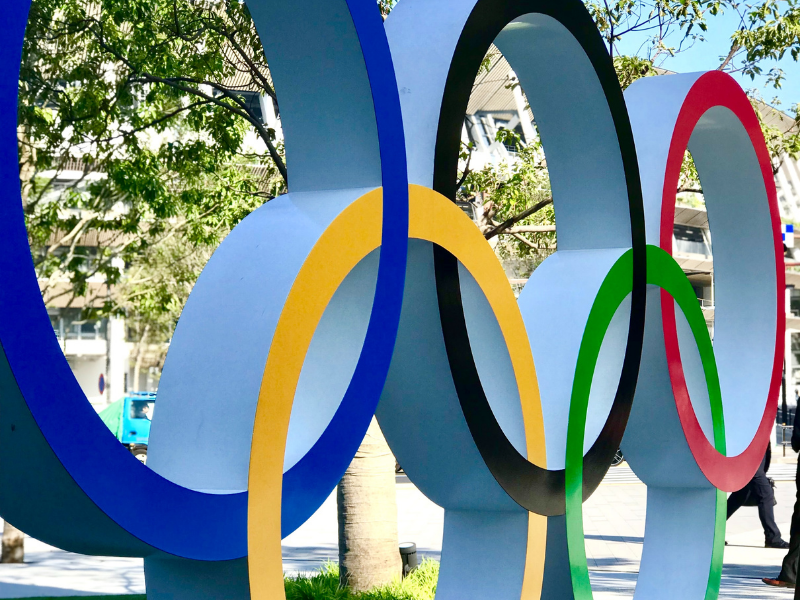
    The organisers of the Tokyo Olympics have announced that there will be no international fans at the Olympic or Paralympic games that are due to go ahead in July and August respectively. The Olympic events were postponed – for the first time in their history – last March as the Covid-19 pandemic spread around the globe. 

    The Olympic torch relay started last week, a year later than planned and still in midst of a pandemic. The relay starts off the countdown of the 121 days until the games begin and will travel across all 47 of Japan’s prefectures. Yet this relay will not be the spectacle of old: like the rest of this year’s events it will be largely crowdless, and therefore less full of life.  

    The International Paralympic Committee president Andrew Parsons said “difficult decisions” had to be made, with safety the “top priority”. The decision to ban international spectators and supporters is another major financial hit to the games that have already exceeded in cost by £2.1 billion from the original budget, with £670 million extra spent on coronavirus measures alone. These measures will include an infection control centre in the athletes village and regular testing. 

    A report in the Japan Times said holding the Games without spectators would cost Japan 2.4 trillion yen ($22.9bn). Al Jazeera reports that “holding the Tokyo Games behind closed doors would cause a loss of 381.3 billion yen ($3.64bn) in spending related directly to the games, or 90 percent of the original projection for the events […] Economic gains from promotional sporting and cultural events after the games will also be reduced by half to 851.4 billion yen ($8.1bn).”

    These games are now set to be the most expensive in Olympic history with an economic return that is not likely to match former games. Usually a summer of Olympic celebration brings in millions in revenue to the host country. For example, the London 2012 Olympics reportedly boosted the UK economy by £9.9 billion through tourism, trade and investment. 

    However, AP Sports journalist Stephen Wade, told Al Jazeera that “the economic impact … is very small. This is an economy with five or six trillion dollars GDP/GNP […] The Olympics are small potatoes, it’s a couple of weeks, it doesn’t have much effect.”

    Yet even if the situation has a smaller impact on the economy at large than expected, the impact on individuals could be far more significant. Data produced in July 2019 predicted that 1.9 million people would find new employment opportunities across Japan due to the Tokyo Olympics. However, since the postponement and mass scaling back of the events this is likely to have dipped considerably. There will be less employment needed to cater for large crowds. Accommodation needs have also been considerably reduced.   

    While 11,000 athletes from around 200 countries are expected to take part, with a state of emergency in Tokyo and surging waves in other countries such as Brazil and France, questions are still being raised about who will be able to travel to take part. 

    Surveys also show that the Japanese public are mostly against holding the games, and according to Business Insider there is still a chance they could be postponed. If athletes are unable to make the Olympics then their funding and sponsorship deals could be at risk, and the financial hit to Tokyo will be substantial.  

  • Talan Skeels-Piggins: ‘Ask yourself: how many people have you helped?’

    Talan Skeels-Piggins: ‘Ask yourself: how many people have you helped?’

    I wanted to become a P.E teacher because I am passionate about sport. In a team game I always enjoy working with others and individually. I’m a bit sad that I’m no longer teaching, but life changes and we’ve got to move with it. If you’re always looking over your shoulder at what you were then you’re never looking forward at what you could be. 

    I was in the Navy as both a regular and then as a reservist. In the regulars, I was a fighter controller in the operations room. I was only in my early twenties and there was a massive amount of responsibility placed on me at that young age. When I was a divisional officer, I would mentor a group of sailors that were in my charge, helping them along with their careers. That was very rewarding. 

    I did six years as a regular and then I was a reservist. Shortly after I joined the reserves in November 2002, I was paralysed, at the beginning of March 2003, as a result of a motorcycle accident. Initially the Navy dismissed me, but I wanted to go on my own terms. I argued my case to the medical board of survey and proved that I could carry out the same requirements an able-bodied officer would have to. I did the bleep test, the mile and a half run in a race chair, the weapons handling test, the gas mask handling test and I passed each one for my age group. I did everything that would have been expected of me if I had been able-bodied.

    Then I went to the medical board of survey and put forward all the things that I could do. I accepted the considerations and understood that I would not be going to sea again, and I ended up working with NATO. 

    My case has set an important precedent in allowing disabled people to remain in the armed forces. Back in 2003, I wasn’t allowed to tell anybody the outcome as the Navy were concerned that the floodgates would open and all those that had been previously dismissed would want to return. Then there were all the injuries from Afghanistan and Iraq, and people were able to use my ruling as a precedent to continue serving in whatever shape they could. It’s great to see that the military now do not simply give up on the wealth of knowledge that these people have.   

    We learn as we go through life; some of the learning we don’t even know we’ve got. We experience things and they remain dormant inside us. After the paralysis, I was in a pretty dark place, this massive change had happened to me and when we have change happen to us, all we can see is the change. Initially, for me, it was a space I didn’t want to be in. 

    Luckily for me, I had a chat with a guy, who had also become disabled, who had come in for a regular check-up, while I was laid up in hospital. He told me about the opportunities that were still there for him. He started to list things: he still had a girlfriend; he still drove a car; he lived by himself. Then he said he had been skiing. I couldn’t believe that; I thought it was incredible. That became my little goal: to get out of hospital and to learn to ski.  I didn’t know at the time that I would become a gold medallist in the European championships.

    In order to do that, I had to accept what had happened to me. The more I looked internally, the more I realised that we have this untapped power, resilience and energy inside of us. I call it the little person inside. I believe that we all have it. I don’t have any magical ingredient. I’m not superhuman. I’m not special. We should use ourselves as our greatest source of inspiration. You don’t need to look externally for inspiration.  

    Motorcycling would become another passion. As with the Navy, I went about getting permission to race motorbikes by looking at the arguments as to why I couldn’t do it and then I would try and show what I would do to overcome that obstacle. Gradually I worked through all the different obstacles, and jumped through all the hoops that they put me in. 

    To finally do it, it was the most thrilling thing I had ever done and it then opened the pathway to others. Since that point in time there have been quite a few paralysed motorcycle racers and all they have to do now is go to a club, get their license like anyone else and they can race any capacity bike. There are no restrictions placed on them. 

    In Great Britain you are either a motorcycle racer or you’re not, and that was what I was fighting for. It is a really fabulous thing for me as a paraplegic to go and compete with able-bodied cyclists. It’s a little bit of escapism because for that moment in time I am simply a racer and I’m not being treated any differently from an able-bodied racer. I feel free from my wheelchair, my disability and the restrictions that have been placed on me due to an accident. For my own personal mental health it is vital that I get to compete against able-bodied people. 

    I set up a charity called The Bike Experience. I take disabled people and help them to learn to ride motorbikes. We’ve taught over 400 people so far. Some people come once and it’s the catalyst for them to go off and do other things, whether that be triathlons or fly planes. Some people come back and they’re able to ride on the road again. You see someone arrive nervous; when they leave they look like they can take on the world. 

    After 13 years of being paralysed, I had a conversation with myself about what it means to be a human being. I asked myself: ‘How do I validate my existence?’. The answer I came up with was: ‘How many people have you helped?’ and I realised that since I’ve been paralysed I’ve helped more people than I would have done if I had been able-bodied. So therefore, I wouldn’t change what has happened to me. That moment was when I fully accepted the change in my life.      

    It’s a very difficult time right now, and everyone is experiencing change: they’re allowed to be upset. Sometimes when you have things that affect your life it sets off these waves or these ripples in your timeline, but it’s realising that it is only temporary and the next peak is coming. Don’t feel as though you are weak for being upset. We can all grow and learn by giving something back. I think we don’t take enough time to do self-reflection. It’s amazing what you can get from it.  Everyone is an amazing person, you just have to believe in it.

    Talan Skeel-Piggins was talking to Alice Wright

    https://www.existentialbiker.com/the-bike-experience.html#
  • Sports focus: Mayweather vs Paul and the Rise of the Freak Show Fight

    Sports focus: Mayweather vs Paul and the Rise of the Freak Show Fight

    Ben Godfrey

    In the past few years we have come to accept strange as the new normal, so perhaps it should come as no surprise when we see a YouTube star booked to fight one of the greatest fighters of all time.

    There has been much talk about whether this kind of freak show is good for fight sports or not. Does it degrade the dignity of a noble and dangerous profession? Or does it draw a wider audience to the sport that might ensure bigger pay days for real fighters in real fights in the future? Probably both are somewhat true. This, however, is not what is most interesting. What is most interesting, is why so many people find these fights so compelling.

    First, let us chart the evolution of this oh-so post-post-modern spectacle. It all began with KSI vs Logan Paul in August 2018. That fight saw two YouTube stars who had been beefing online decide to settle it in the ring; they were smart enough to monetize it.

    Eddie Hearn (Matchroom Boxing) saw the money-making potential of the event and threw his promotional weight and know-how into the cauldron. A monster was born. An 8 fight event, with a host of internet stars, who are apparently followed by a horde of hundreds of millions online. Two or three events and one unconscious NBA player later, Logan Paul signed a contract to fight Floyd Mayweather Jr. (arguably the greatest defensive boxer of all time). Meanwhile Jake Paul is set to box retired MMA fighter Ben Askren.

    So, what does this tell us about humanity? Firstly, it shows that even people with little interest in fighting excellence love a good scrap. We would probably be pretty uninterested in watching two people play an unskilled tennis game, but if a fight kicks off-at a sporting event, at a pub, in a nail salon, we can’t take our eyes off it.

    Secondly, what is even more compelling than watching two strangers fight? Watching a friend fight. Internet stars make a living out of sharing with fans, posting 2, 3, 4, 5, maybe even 20 times a day; their teenage fans see these people more often than their best friends, maybe even than their mothers.

    But what makes these fights most compelling, is the collision of the fake and the real, the constructed and the chaotic, the candy-floss simulacrum and the steak-and-eggs visceral. Perhaps nothing is more symbolic of 21st century veneers of false reality than the rise of the internet star; curating and distributing a cult of personality to millions of zombie-eyed followers, all the while getting paid for sponsored content.

    Equally, perhaps nothing is more symbolic of older, simpler times, than two people agreeing to duke it out in front of a crowd until one is proclaimed the victor and the other the vanquished. Perhaps I am sentimental, but I hope that the real wins out here. Mayweather may be twice Paul’s age and half his size, but the smart money is still on him – surely, there is no possible world in which he loses? That would be like Donald Trump winning a presidential election.

  • A Question of Sport: is the government underestimating the loss of physical education?

    A Question of Sport: is the government underestimating the loss of physical education?

    by Alice Wright

    Many battles were won on the playing fields of Eton, and while we’ve moved past that elitist old lie, the central tenet may still be true: sports is a vital part of education in preparing children for the challenges of future life.  

    School for an entire cohort of children has been irreparably disrupted, and whilst the focus has rightfully been on what is missing in the classroom, the loss of physical education in all its sweaty variety should be cause for concern too. 

    There are many reasons for that. School sport is more than just a government-mandated bleep test, it’s a chance to learn the unquantifiable skills of teamwork, perseverance and problem-solving in a safe environment where the stakes of success and failure are low. 

    Sport is also about developing these skills into coping techniques. Navigating stressful situations in the workplace and the inevitability of friction with colleagues will not be easy for children who have not had the opportunity of honing such skills on muddy playing fields. Generation Z-oom will not always be able to simply mute those that irritate them, and there will be a reckoning for the soft skill deficit we build up with everyday that children are out of schools. 

    As well as being good for physical fitness and mental wellbeing, school sports equip children with the knowledge to take care of themselves physically and mentally in the future through knowledge and by building healthy reward pathways, self-esteem and discipline. 

    With still some way to go, schools were coming on leaps and bounds to make sports inclusive, no matter children’s gender, religion, disability or culture. Such strides will most likely be lost to the progress and attainment abyss of the last twelve months. Ofsted has little interest in sport, and its qualitative benefits do not neatly fit government box-ticking progress sheets – therefore it is being forgotten. 

    Sportsmanship may sound like an archaic principle now but there is something in the gentle aggression of a sportsperson that shows they know more than how hard to hit a ball. Joe Wicks, ‘the nation’s PE teacher’, reaches millions of living rooms across the country in his 9am ‘PE with Joe sessions’ for children and adults. Marcus Rashford, the Manchester United forward and free school meals campaigner, has steered government policy for children over the last year. It is clear both men owe more to sport than just stellar careers. They are both motivated and positive individuals with drive, as well as effective communicators, campaigners and organisers. 

    Wicks and Rashford have both spoken openly about the way in which sport can be the crucial lifeline that engages many at-risk children in school. Without it, drop-out rates could increase. This is already a serious problem. Between lockdowns the amount of children returning to school dropped significantly, with over 50% of those no longer attending ‘vanishing’ without explanation. A holistic approach to education includes sports, and the loss of it must be considered too.