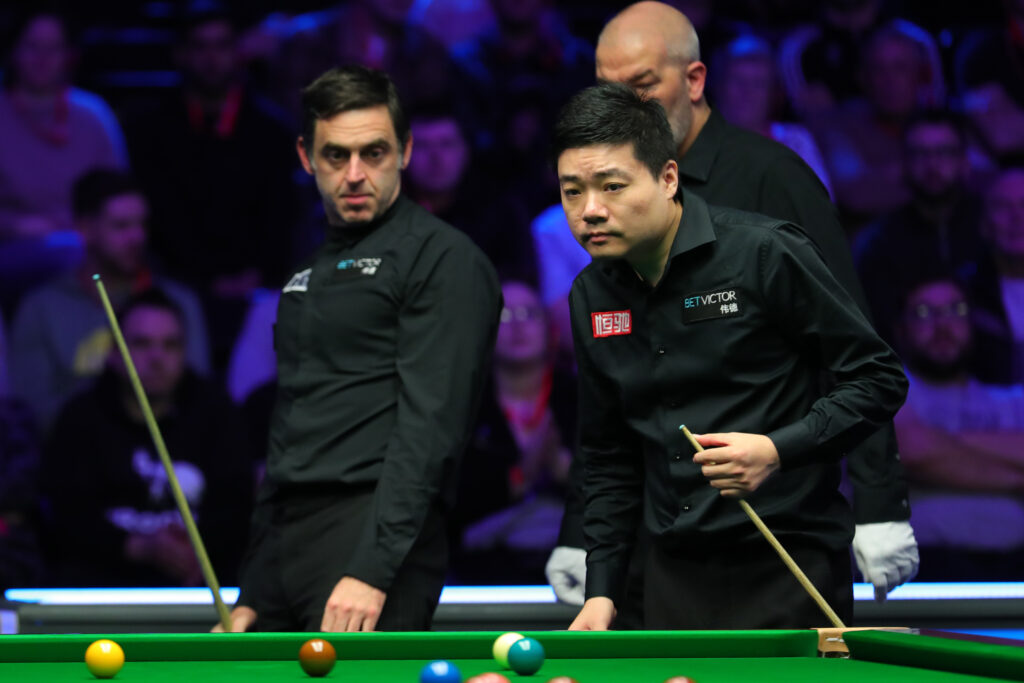
Patrick Crowder talks work/life balance, homesickness, mentorship, and education with the champion Australian snooker player.
How do you normally prepare for a match?
Generally I don’t really like eating that much before I play, and it’s always been like that throughout my career. I actually try to eat anything I can really, because the worst thing is when you’re playing and you get hungry because maybe you didn’t eat enough before the match. My go-to is a peanut butter and banana sandwich because I find that really easy to eat, and it kind of fills me up for quite some time. Before I play a night session, like a final, I mean the worst thing you can do is eat a proper full meal and then all of the sudden you’re getting ready to go out and play and you feel like you’re ready to check out for the night, sit on the couch, and just watch some TV. Generally I always try to get down to the venue around 35 minutes before I play, and I think 15 minutes on the practice table is perfect. Some players like getting to the venue 45 minutes before, but then you’re waiting around and using a lot of nervous energy.
What is your proudest moment in snooker?
Probably being the first overseas player to win the Triple Crown – that’s winning the World Championship, the Masters, and the UK Championship. I did that in 2013, and to be the first player to do that is pretty cool. It’s certainly something I never thought was possible when I first came over to this country, not in a million years. Also, I guess I’m proud of how long I’ve been able to be successful, coming over from Australia. A lot of great players who have come from overseas will sort of go pro for ten years and then they’ve had enough and they go back home, whereas I’ve been able to sustain it for 20 years now living over here. I’ve been able to win a tournament every year since 2006, so that’s also right up there, I’m proud of being able to keep that winning streak going.
How did you adjust when you first moved to the UK?
In the 2001-2002 season when I was only 19, I was living in Leicester and I didn’t enjoy living there at all. It was completely different to Melbourne, so I really struggled. It was different back then as well, there wasn’t any sort of internet where I lived so it was difficult to keep in touch with the people back home. It always seemed like I’d have to walk an hour in the rain to get to this one internet café, and I just thought ‘this is depressing really’, so that was when I was questioning if I really wanted to commit to snooker and live in this country. I took a year off the tour, and I came back in 2003 with a few friends from Australia and we moved to Cambridge, which was a completely different world. From then on I settled in really quick.
How do you manage your work/life balance, especially with two young children?
My daughter is turning three tomorrow, and my son is eleven and he’s really into his football, so I tend to pick and choose my tournaments a little bit more these days. I can’t really commit to an absolute full season because if I do that then I’ll hardly see my family. I’ve sort of achieved everything I’ve wanted to achieve in my career ten-fold, so now if there are some smaller events on the calendar I’ll choose to miss a few of those and be home for the week instead. I take my son to all of his football training and his matches, and I get a really big buzz off of that. I think it’s important to strike that balance, and I think what’s led me to have good longevity in the sport is that when I’m playing in tournaments I really want to play. I don’t feel like I’m getting burned out and like ‘oh jeez, I’ve been playing too much’, so when you see me at events you’re seeing me when I’m very determined to do well.
How do you like to unwind when you’re not playing snooker?
Before lockdown I used to play in Warhammer tournaments, but I haven’t really been able to get back into it the same way that I was. Ever since my son has been doing really well in football I’ve not been able to participate in any of the tournaments, so I haven’t really been painting as much either. I do still love it, and I will get back around to it, I mean I used to spend 30 hours on a miniature and do really well in painting competitions. I also chill out a bit with some of my friends playing a bit of World of Warcraft. When you’re in a hotel room it’s nice to have a laptop or something to chill out and unwind. And that probably helped me get through when we were in the bubbles in the hotel. Some of the guys who I know started to lose the plot after three or four days in the hotel room, so it’s always good to have things outside of snooker.
It sounds like you’re really involved in your son’s football, do you find that your experiences in sport allows you to help him better?
I never played when I was younger – back in Australia everyone played cricket or Australian football – so I don’t really coach him as such, but I do analyse a lot and I try to help him out with experiences I’ve had through snooker about improving and being patient with yourself. It can be frustrating when you’re trying to do something and it’s not quite coming off, so he’ll be practicing in the garden and I’ll tell him the importance of learning patience, sticking to it, and putting in the hard work. I just basically try to let him do it himself as well, I don’t want to push him too much, I want to let him enjoy the sport. But I do like to try and implement the things that I know work for me and see if he can take those on board. Throughout your career have you ever had a mentor to help you through? Have you been that mentor for another player?
Yeah, Joe Perry has been fantastic. I think one of the luckiest things that happened to me is that when I moved to Cambridge in 2003, he was changing clubs from where he lived to the club that we were going to. So he put his professional table in there, and we were lucky that we had someone like Joe to learn off. We could watch him every day to see how he goes about things, Joe’s been fantastic about those sorts of things and he’s always been great for advice. If I were to get into coaching it would be as a mentor – maybe to someone who has a lot of potential and plays the way I did when I was younger so that the things I learned to become a winner could help them make that transition as well.
You left school at 15, right? What would you say to someone with a lot of potential trying to choose between further education and following their dreams in sport?
Oh, stay in school! My son and his friends will be talking while playing footie in the garden or something and I’ll hear one of his friends go ‘I hate school, I can’t wait to leave’, and I’ll say ‘Hey, hey, boys, you’ve definitely got to stay in school’, then of course I’ll get the ‘Well yeah, but you left school at fifteen!” So I have to kind of really say “Look, you don’t understand, I’m a one in a billion story, this just doesn’t happen normally”. So I always say, at worst get a good basic education where you can always go back. At least complete your high school and get that done. Because especially with today, you can do courses online and stuff, you have to get a solid education. The chances of making it in sport and getting to the point where you actually earn a proper income is so rare. In the Premiere League it’s something like .002%, and you can’t pin your hopes on that. It was pretty tough on my mom when I left school, because no one from Australia had ever made a living in snooker, and I had to move to the UK, and there was no guarantee that I could do that. So definitely stay in school, there’s always time. You can still do your studies and practice whatever it is you’re passionate about. You don’t need to leave school to be a professional sportsman, it’s just not true.
If you had another job within the snooker industry, what would it be?
I’d be doing studio work (commentary) for sure, I’ve done that quite a few times and the feedback has been fantastic. It’s very easy to do as an ex-player, you’re talking about stuff that you know. So it’s very straightforward and enjoyable, really, getting to see what other players do, so I quite like doing that and it’s probably something that I’ll transition into quite well.
Were there any times of doubt?
Yeah, it’d be when I was 21. I was playing back home and I was off the tour, I wasn’t professional at the time. I didn’t have an education, so it was really hard to get a job, and my brother and I had this tiny flat. I had to go to the job centre, which is where you go to get what’s called the dole in Australia (Jobseeker’s Allowance, or unemployment). It was a dreaded moment to get in the queue for that, because when I went to the UK when I was 15 I figured by 21 I’d never have to do anything like that. In front of me there was a guy who was absolutely kicking off. I think he forged some signatures or whatever and they weren’t going to pay him, and he just started swearing at everyone and it was really awkward. I was just thinking “Oh God, is this my life?” and I went out and started having a real good think about things. I wasn’t really practicing much at the time either, I had kind of lost hope. Then I decided to practice a bit more, and I got a call from Mike Peachey who was the head of the Australian Billiards and Snooker Council. He told me that the world under-21s was going to be held in New Zealand, and that he would help with the expenses. To cut a long story short, I performed really well at the world under-21s and won it, and that got me back on the tour card, and the rest is history. So that was a really massive turning point in my career.
It’s a special year for snooker. Not only are crowds returning to Sheffield’s famous Crucible Theatre to see the action, but the game itself is celebrating a one-of-a-kind birthday. The cue sport which has captivated fans all over the world was first played in India in 1875, making this year snooker’s 147th anniversary.
That number (147) is important to players and fans because it represents the maximum number of points which can be scored in a single snooker frame. This incredible feat was first performed on television in 1982 by Steve Davis; many fans will also remember Cliff Thorburn’s 147 in 1983, the first time any player pulled it off at the World Championships. Since then, many players have made maximum breaks, but none faster than Ronnie O’Sullivan who cleared the table in just five minutes and twenty seconds during the 1997 World Championship.
To celebrate the long-standing tradition of snooker, we’re taking a look at the whole industry from amateur leagues to the top levels to see what lies ahead for the sport.
Local clubs – the heart of snooker
If you’ve ever played a casual frame of snooker, you’ve probably done so at a snooker hall. Though snooker halls are not as packed as they were during the height of their popularity in the 1980s and 90s, there are still many places to play dotted around the country.
The backbone of snooker today does not come from massive television viewership or pro players’ star power, but rather from amateur players who form a community of people who love the sport.
One such player is Pete Przednowek. Przednowek frequents London snooker halls playing matches with his friends while bringing new players such as myself into the group as well. For him, snooker has been a lifelong passion.
“My dad bought me a little table-top four foot table when I was around eight years old, and it was the best thing to ever come my way,” Przednowek says, “I was hooked from the start, and as soon as I was old and tall enough I started playing on full size tables in clubs.”
For most amateur players, snooker is a way to compete with friends in a friendly environment with the only goal being to have a bit of fun. For Przednowek, that’s what his relationship with the game started out as, but he soon found himself wanting to take things to the next level by entering competitions.
“I had my first experience playing in snooker tournaments at my local club in Croydon around the age of 16,” Przednowek says, “I got my ass whooped most of the time but I loved it all the same, and it made me realise that there is no better way to improve in sport than putting yourself out there and playing against random opponents who are better than you a lot of the time.”
He continued to play through his days in university where he developed an appetite for American pool. After a few years of casually playing 9-ball, he decided to return to his first love.
“I started playing snooker again more regularly not long before the pandemic struck. Then once the lockdowns were lifted, around April 2021, me and a few of my mates started playing more and more,” Przednowek says, “There were around six of us who had “caught the snooker bug”, so I decided to organise a little league between us all, with weekly matches, where we all play each other once over the course of a mini-season.”
Dedicated amateur players keep snooker halls alive, and the fine folks at Cousin’s Professional Snooker in Seven Sisters rely on players like Przednowek for business.
Cousin’s is a family business and takes a slightly different approach than other clubs. At Cousin’s, respect for other players and staff is paramount. There are the typical notices posted reminding members to keep quiet and respect other people, yes, but it is an atmosphere which fosters such a welcoming community environment.
People who come to Cousin’s feel no pressure to immediately rent a table or buy a drink. Instead, the owners view it as more of a community centre for members to come, relax, watch whatever cue sport is on the television, and feel like a part of a larger group with a shared interest. In another departure from snooker hall norms, their £30 membership lasts for life. I spoke with Paul O’Neill, who has worked on and off at Cousin’s for over 30 years, to ask him what makes Cousin’s a different sort of club.
“Cousin’s is a family-run business, which I think makes a big difference. We’ve only got two clubs in London, so it’s different from some of the chains,” O’Neill says, “It was established back in 2002 as a members club, and both of our locations are totally multicultural, we’re all different colours and creeds here. Snooker clubs have had a bad reputation traditionally as smoke-filled dens of iniquity, but we at Cousin’s had a vision to change peoples’ perspective. Our aim is to attract snooker and pool lovers of all ages and to be a meeting point for good characters from all walks of life. We’ve got fathers and mothers bringing their children here in the afternoon to play because it’s a relaxed, friendly, peaceful club.”
During the pandemic, many billiards halls struggled, and some even had to shut down. Cousin’s had to follow the same restrictions as any other place where people gather, but O’Neill says that the clientele at Cousin’s were eager to support the club and get back on the tables again.
“The last time that we reopened was a Monday, and we were full up. We had a waiting list for people to get on the tables on that day, everyone was so eager to play because it’s a very addictive sport if you like. They were missing it because they couldn’t go anywhere to play a game of pool, not even to a pub, so it was just completely off the list. So when we opened up on Monday it was absolutely packed in there – it was the busiest Monday we’ve ever had,” O’Neill says.
Not only are clubs like Cousin’s a safe, friendly environment to have a game, but they’re also places to meet people from all walks of life. In my experience, Cousin’s is more than a snooker club, it’s a way to meet people with similar interests and connect. Snooker provides the common ground, so you can always talk about what’s happening on the table, but quickly a few frames with someone you met that day can turn into a lifelong friendship. O’Neill explains how Cousin’s helps all kinds of people connect.
“There aren’t a lot of places now, in fact I don’t know any, that have so many different colours and creeds under one roof. All of the community centres have been closed down over the years, so people don’t get together anymore. But at least at Cousin’s we have all different nationalities mixing, they all meet at the club and become friends,” O’Neill says, “It really does bring people together, and that’s all we were hoping to do. There is still a lot of racism that goes on in this country, and this makes people open their eyes up and see that we all have the same personalities. Thank God for sport, it’s a great way for people to meet and understand each other.”
As a family-run and family-oriented club, Cousin’s provides a place for young people to meet in a safe environment. O’Neill has seen personally the way that having a healthy way to enjoy yourself can have a great effect on your life.
“There are a lot of youngsters who have gone the right way because of the club. They spend a couple of hours here after school and they go home instead of staying out on the streets and getting into trouble,” O’Neill says, “Without snooker I have no idea what would have happened to me because I grew up around all sorts of different people and influences, but I was in the club playing snooker instead of getting involved in anything else.”
Lessons with the pros
If you’ve never played snooker before, believe me, it’s harder than it looks. On a good day, the pros can make it look like the balls have a natural desire to find the pockets, and fly in willingly, with a good amount of pace. For a player like me, a good day is potting a few in a row, and even then, they’re rattling their way in, looking for any opportunity to bounce out. Thankfully, I’m not the only one with this problem, and coaches like John Woods are here to help.
Woods has been a snooker coach since 2010, when he passed the World Snooker Grade A coaching course in Sheffield, but he has been a snooker player for nearly his entire life. Just after leaving school, he found a job at his local snooker hall – a smart move for a young player looking to pay to enter tournaments, not to mention that snooker hall employees can normally play for free. Since then, his working life has been centred around snooker.
“I was playing in the qualifiers in the lower tier of the game – I was never full time, I went to work to fund myself,” Woods says, “It’s difficult in any sport to fund yourself I think, and it reached a point where it was just too much. There was personal stuff going on at home, so I couldn’t fully commit to it. So I went into coaching.”
He set up his business, Gone2Pot Snooker, and started finding students. Now, he is the main coach for all of Central London, providing instruction to players at more than five snooker halls. He coaches plenty of adults like me who hope to improve their game, but he also runs a kid’s club at the Hurricane Room in King’s Cross. There, he teaches total beginners, and helps them grow in both technical and mental skill, whatever their end goal may be.
“With the kid’s club we usually start off keeping it pretty fun, and you can see the ones who want to take it more seriously. We’ve got kids at the club who just want to play for fun – some kids go to football on a Saturday, some go to the cinema, and some like a game of snooker or pool on a Saturday morning, and it’s just a bit of fun and games. But obviously, you’ll get the ones who go: ‘Hold on, I think I like this’. Then, Mum and Dad will go: ‘Alright, how do we move forward with this?’ Then we work out coaching for them and see where it goes from there,” Woods says. “We’ve got a massive academy going on – players competing in National events, players close to turning pro, and they all started off at the kid’s club.”
When Woods earned his Grade A coaching badge, it was the highest qualification offered by the World Professional Billiards and Snooker Association (WPBSA). Since then, they have changed the ranking system to three levels.
“The level three is very intensive, the level two is fairly intensive, and the level one is essentially a guaranteed pass. You don’t have to be a great player to be a level one coach, you’ve just got to have a knowledge of the game, and a passion about growing the game. You can get a level one badge fairly easily as a snooker enthusiast.”
In my session with Woods, he focused on the fundamentals first before moving on to practice routines. It turns out that, subconsciously, I had been holding the cue with an odd grip which was throwing me off the line of the shot. Once corrected, I had to get used to the adjustment, but eventually it felt as natural as the way I had been playing before.
Keen to tap into the natural inclination most snooker players have to keep score of themselves, Woods showed me a practice routine which would measure my progression as I continued with it. By completing a series of exercises designed to test my potting angles, straight cuing, and technique, I was able to set a baseline score for myself based on the number of exercises I completed successfully. We found lots of room for improvement, so you’ll probably find me down at the snooker hall when I’m not writing articles for Finito World…
The big leagues
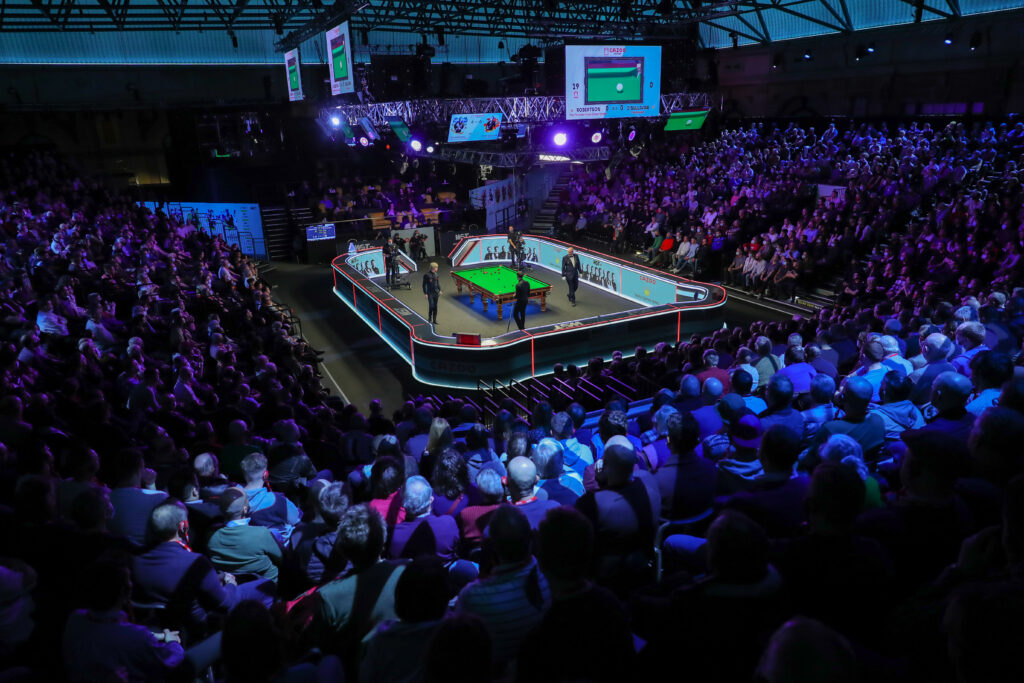
We’ve seen how people are creating careers and lives in snooker without going pro as players, but I was keen to get a look at snooker at the top levels as well. I went down to the 2022 Betvictor European Masters in Milton Keynes to see the action.
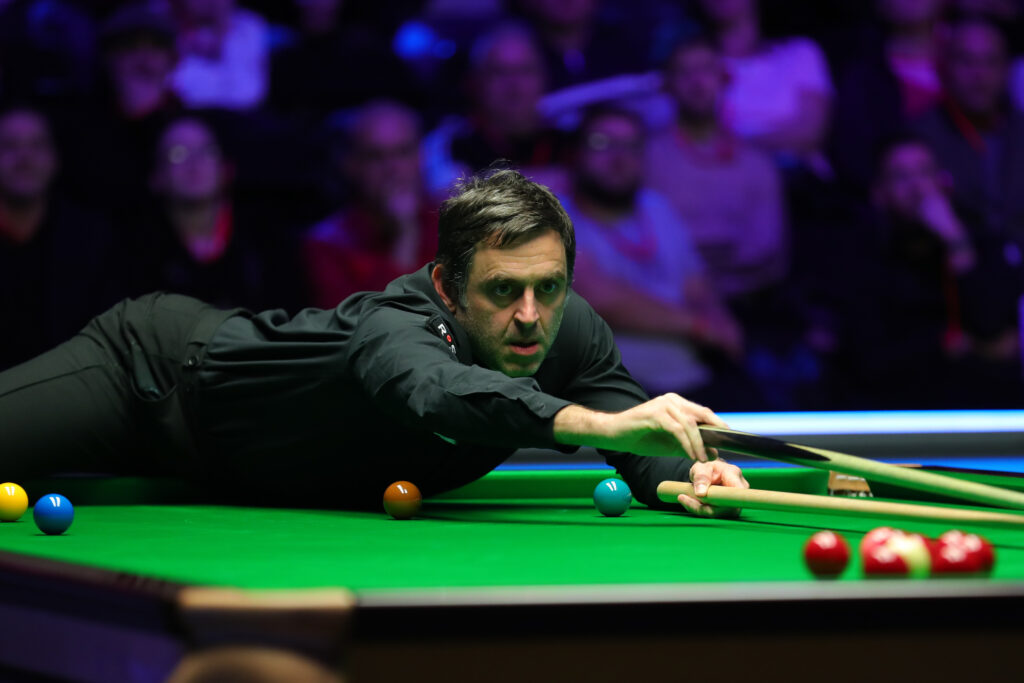
Top players faced off at the event, including veteran Graeme Dott going up against Ryan Day, Fan Zhengyi versus David Gilbert, and Liang Wenbo facing off against Scottish favourite Anthony McGill. But the main draw of the event was Ronnie O’Sullivan taking on Tom Ford. During that match, the crowd was notably more energised than they were in previous pairings, and O’Sullivan was on top form. In the first frame of the match, O’Sullivan scored a century break with apparent ease to a crowd of cheering fans – a feat which he repeated later that night.
In between the action, I was also able to get a glimpse behind the scenes. I talked to Ivan Hirschowitz, who is the Head of Media for WST, to find out about his role in growing and promoting the game around the world.
“I suppose our biggest ambition is to grow snooker as much as we can throughout the world, so from a media perspective we’re always trying to reach new people through our different platforms. And one of our biggest challenges is promoting our players – they’re the role models. We want to bring lots of young people into the sport, and people will look up to the Judd Trumps and Ronnie O’Sullivans, so one of our big priorities is to show our players’ personalities through our social media and video content,” Hirschowitz says.
The only way for snooker to continue to grow is for young children to have the opportunity to play and take to the sport, but older perceptions of snooker can damage the chances that a parent will choose snooker for their child over something like football or cricket. One of the main issues has to do with the seeming lack of physicality in snooker – parents want their children running around, exercising, and breathing fresh air, and as Hirschowitz explains, that’s not the image which often comes to mind when talking about snooker.
“I think one of our hangovers from the 80s is that perception of the smoky snooker hall, and that’s one of the things we’ve got to try to move away from and give snooker a younger, fresher feel to it. Any time there’s a snooker player who’s into fitness we’re all over it, and we’ll go and do a story about it. If we can promote the idea of snooker as a physical sport then we jump at the chance to do that,” Hirschowitz says, “The other good thing about snooker is the mathematical element, so it is quite good for kids to learn their maths and we’ve done some school programmes surrounding that. So I think we do get the fact that some people might not perceive it as a sport which has a lot of benefits for kids, but actually it does. There’s a guy named Rohit Sagoo who wrote a really good thesis on the benefits for mental health in snooker, like the fact that when you’re there potting the balls on the table it can be quite therapeutic. It’s something that you can do on your own which is quite enjoyable. To me, the other great thing about snooker is the inclusivity of who can play. It doesn’t matter your age, nationality, gender, or anything like that – anybody can play against anybody.”
As well as Hirschowitz, I also got the chance to talk with Sam Fletcher. He’s a snooker player himself, and an author for WST. He remembers the change from his early years in the typical sorts of snooker halls often portrayed in media to the futuristic training facilities such as the Ding JunHui academy today. They trade the smoky practice room for well-lit, white walled training facilities which look towards the future of the sport, not the past. Fletcher also pointed out an often overlooked draw of snooker – the game’s natural beauty.
“I think that’s one thing about snooker, with the attire, is that it can be quite an immaculate environment. You go out there and, if you’ve never been there before, it’s sort of like going to a ball or something. The tables are beautiful things in and of themselves, and I think that’s important,” Fletcher says, “It was so funny to go from a club with dodgy tables to this incredible facility, suddenly I think my mom and dad saw it as a much cleaner pursuit.”
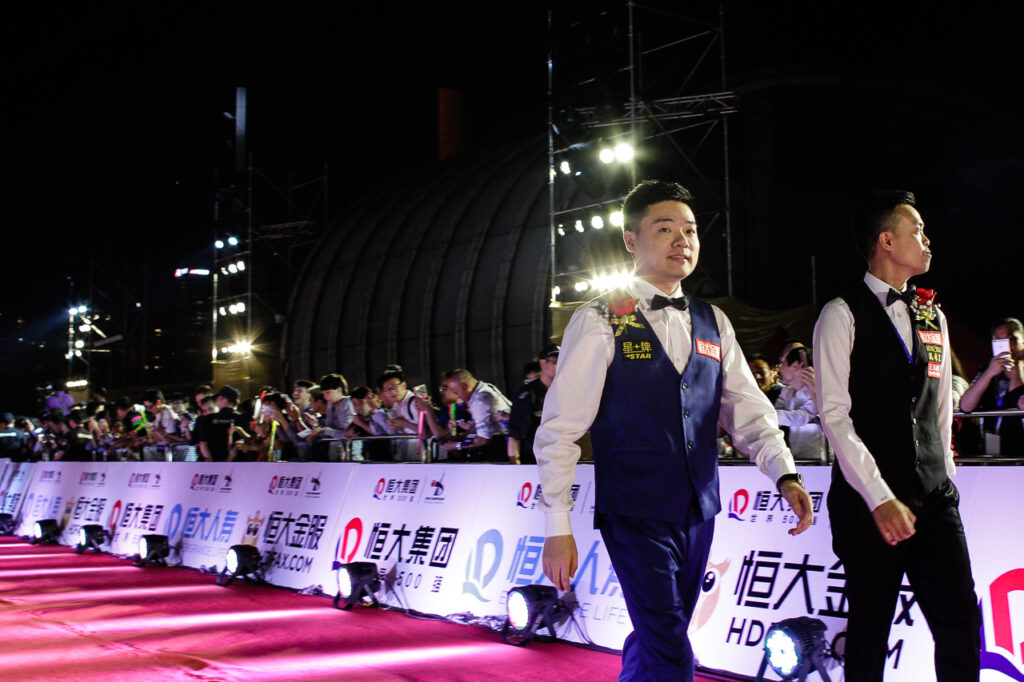
Snooker has come into the modern age in terms of training facilities, but most of the big competitions have retained the traditional dress code, which includes a button-down shirt and waistcoat. China’s influence on snooker has also greatly increased, and part of the appeal in China comes from the traditional dress code. Jason Ferguson started his career in snooker as a player, and now he is the chairman of the WPBSA and Director of WST. He gave me his view on why some things should remain traditional.
“In China the sport is seen as very high end – it’s dress suits, it’s immaculate, it’s smart, it’s aspirational, and it’s very well respected as a high level sport. And what that has done is it’s driven a much younger audience. So the audience is very young. Snooker is in schools, it’s in universities, you will find young people in clubs, and you will find clubs that are set up for a family environment rather than just billiard halls,” Ferguson says, “I think it would be a huge mistake to drop dress code in Asia, generally. The dress code is aspirational. It’s looked up to and it’s something that people aspire to wear and be part of the sport. We know that the kids are not going to go down their local club in a dress suit every day, but if you’re playing competitive, high-level events, that’s the level that we’re looking for. I think there are some things that need to be preserved.”
In addition to keeping long-time fans of the game, Ferguson also has a major interest in introducing young people to snooker. He explains how engagement with young people can change the way they see the game and inspire passion.
“I think every sport in the world is fighting to get people off of Xboxes and computer games and iPads and things. What we’ve got to do is use technology to drive participation as well, so we’re looking at various ways we can do that. We’ve got things like CueZone programmes in schools, this involves small folding tables which we designed ourselves for this purpose. If you imagine a table tennis table, you go into a school, you can put ten tables up in ten minutes, and you can create a snooker hall in the hall of the school,” Ferguson says, “They’re great fun days as well. So the audience is getting younger, and that’s very encouraging. And what comes with that is probably an audience with more disposable income, and so on, and that in turn will bring new partners, new sponsors, and new commercial partners to work with.”
Ronnie “The Rocket” O’Sullivan
After his decisive victory winning 5-1 over Tom Ford, Ronnie walked into the media room and I got a chance to talk with him. It wasn’t a long conversation, so here it is in full:
“After a great match like that, what are you doing to celebrate?” I asked.
“Just going to eat some scones,” he said, before clarifying, “You’re from America?”
“Yes I am.”
“So you’ve heard of scones, clotted cream, and jam?”
I reassured him that I knew what he was talking about, and he continued.
“Oh you have! Well that’s what I’m going to be doing tonight, I’ve got them outside. They’ve got to be good ones though, I get mine from Marksies. When you get them and they’re not great it’s just… I can’t do it, they’re one of my favourite things, you know? If my last meal could be something it’d probably be that.”
“In terms of the future of snooker, are there any young players you see coming through who impress you?”
“I don’t have opinions on anything to do with snooker, other than I wish all the guys the best of luck. It’s a great game, great sport, I hope they all get whatever they desire from it. I’m a snooker man through and through, so yeah – whatever they get, times it by twenty and I’ll be happy for them.”
“Can you tell me what makes a match enjoyable for you?”
“It’s really difficult to say, I’m not sure if I really get enjoyment out of it, it’s just sort of like – it’s just a challenge, you know, I just enjoy sort of putting myself through a test I suppose, that’s about it really. It asks questions of me, and I just try to stay on top of it which is a success in itself, you know?”
“How much of it would you say you do for the fans?”
“I’ve never really done it for the fans, but as I get a bit older in my age… you look back and get a bit more nostalgic and a bit more, probably, appreciative of stuff, and you can kind of mirror yourself with other sportsmen who have done other stuff similar to you and you can see how people react to them and think, well I have the same with the snooker fans. So listen, you know, I’ve got a great relationship with the fans and hopefully they’ve been entertained over the years.”
O’Sullivan’s attitude towards questions about snooker here is fairly typical of how he’s been answering recently, and maybe there’s a good lesson in that. His general mantra these days is that he’s not too bothered about winning or losing, he doesn’t want to get into discussions about the future of snooker, and he is playing for his own enjoyment. Especially in a sport like snooker where the mental side of the game is so important, a certain level of detachment seems like a good strategy after being in the spotlight for nearly 30 years.
Let me make one thing clear: Ronnie O’Sullivan still cares about his level of play, and he still takes snooker very seriously. No matter what he says in interviews, you can see his dedication manifest on the table when he plays. So what if we applied O’Sullivan’s mental approach to our own lives? Let’s say you’re a fresh graduate whose applications seem to be getting lost in the crowd when applying to your dream companies, as so often seems to be the struggle. Don’t stop caring, of course, but try not taking every rollercoaster ride. Just like snooker, the game of success is largely mental, and it’s easy to get bogged down with self-doubt and disappointment when something you’ve worked so hard for isn’t coming to fruition the way you’d hoped. Be like Ronnie: Keep on pushing, keep your standards high, but there’s no need to engage with every setback or stress about things beyond the scope of what you’re trying to accomplish. When O’Sullivan comes to play snooker, he plays snooker. Nothing else matters in that moment, and the best way to avoid turning mistakes into larger issues is to let anger and disappointment fall like water off a duck’s back.
There is a lot of opportunity in snooker. There is the opportunity to play at a high level and go pro, definitely, but more than that there is the opportunity to be a part of a community, to teach others, to concentrate on improving your own game and maybe even learn something about yourself in the process. Snooker has a long history, and thanks to the people who I talked to in this piece, and all others who have a deep passion for the sport, it looks like snooker has a long future ahead.