Tag: Sir Keir Starmer

  • Jon Sopel’s fascinating take on January 6th, the Starmer administration – and why he left the BBC

    Jon Sopel


    I am sometimes asked about why I left the BBC. I remember the corporation went through this spasm of asking themselves how to attract the young. If you watch the news, by and large you’re over 60. The same is true of the Today programme.

    The editor of the 6 O’Clock News was thinking about how we get more young people. Do we need younger presenters? Or do we need old people like me talking about young people’s issues? This was at a time when LPs were making a comeback. We sent a young reporter down to Oxford Street, and said to a teenager, holding up an LP: “Hello, I’m from the Six O’Clock News. Do you know what this is?” The teenager replied: “Yes, it’s an LP. What’s the Six O’Clock News?”


    Thinking back to January 2021, I can’t forget the day after the inauguration when Joe Biden was finally President. Washington DC that day was less the elegant neoclassical city that most people remember from the Capitol through to the Supreme Court and the great museums that go to down the Mall. It was a garrison town, the place was absolutely sealed off. There were rolls and rolls of barbed wire because of what had happened on January 6th. I will never forget the shock of that.
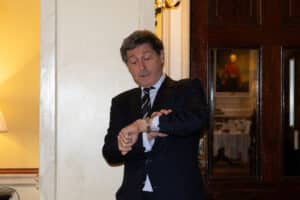
     

    Jon Sopel book launch in aid of Hospice UK and hosted by Finito at The East India Club, London. 17.9.2024 Photographer Sam Pearce / www.square-image.co.uk


    January 6th is also inscribed on my mind. I’ve been in situations where I’ve faced greater personal danger, when you’re in a warzone and you’ve got a flat-jacket one, and there’s incoming fire. But I’ve never seen a day more shocking than January 6th when the peaceful transfer of power hadn’t happened. I went on the 10 o’clock news and the mob still had control of Congress and Joe Biden’s victory still hadn’t been certified. That’s the starting point for my new book Strangeland: I wonder how safe our democracies are. My experiences in America made me realise that we cannot be complacent in the UK.


    Another thing happened the day after January 6th. The Capitol had been sealed off by razor wire and I went as close as I could, and went live on the 6 O’Clock News. There were lots of Trump supporters around and they heckled me throughout so that the anchor Sophie Raworth had to apologise.

    It soon morphed into a chant: “You lost, go home! You lost, go home!” I was trying to figure out what that meant. At the end of my live broadcast I said to this guy: “What on earth does this mean?” He poked me in the chest and said: “1776.” I thought: ‘Do I explain that my family was in a Polish shtetl at that stage?”


    Peter Hennessey, the great chronicler of government in the UK, talks of the good chap theory of government – you rely on people to do the right thing otherwise the system falls apart. I came back to the UK at the beginning of 2022 after eight years in America. The first election I voted in was 1979. For the next three years I knew three prime ministers: Margaret Thatcher, John Major and Tony Blair. In 2023 we had three in one year – that’s a reminder of the volatility of the times we live in. In many ways in 2016 – with Brexit and with Trump – the world jumped into the unknown.
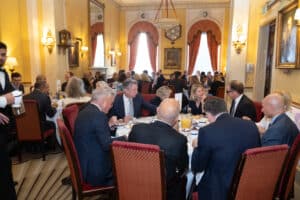
     

    Jon Sopel book launch in aid of Hospice UK and hosted by Finito at The East India Club, London. 17.9.2024 Photographer Sam Pearce / www.square-image.co.uk


    It’s always seemed to me that the Labour Party finds power a really inconvenient thing to happen. They much prefer it when they’re forming Shadow Cabinets and discussing the National Executive. Then you’d get pesky people like Tony Blair who come along and remind them it is about power. The Conservative Party was always the ruthless machine of government: there is an element in which the Conservative Party is in danger of going down the Labour Party route. It was the Conservative Party membership, for instance, who gave us Liz Truss, the patron saint of our podcast The News Agents. We launched in the week she became Prime Minister – and my God, she was good for business.


    What would Britain look like if there were 10 years of Starmer? He’s done the doom and gloom, and how everything is the Conservatives’ fault. That’s fine – but so far, he’s not set out what the future is going to look like under him. Is it Rachel Reeves’ vision of the growth economy? Or is it Rayner’s vision of increasing workers’ rights. I think Starmer is an incrementalist and simply doesn’t know. If he has any sense at all he will look at the centre of political gravity in the electorate and go for growth because that’s what the country needs.
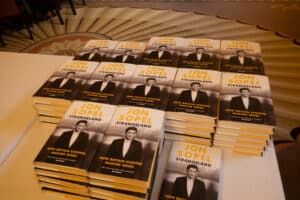
     

    Jon Sopel book launch in aid of Hospice UK and hosted by Finito at The East India Club, London. 17.9.2024 Photographer Sam Pearce / www.square-image.co.uk


    Hospice UK do the most amazing work. The book I’ve written Strangeland deals with the challenges facing Britain at the moment. Hospice UK do the most amazing work. Strangeland deals with some of the huge challenges facing the . Hospice care is one area where something urgent needs to be done.


    Jon Sopel was talking at a Finito event given in aid of Hospice UK. To donate, go to this link: https://www.hospiceuk.org/support-us/donate


  • Labour’s Ambitious Green Policies

    Labour’s Ambitious Green Policies: Navigating Challenges for a Sustainable Future, Dinesh Dhamija


    When Sir Keir Starmer took office as Britain’s new Prime Minister on 5 July, there was a sense of relief among many people in the renewable energy sector that the Conservative government, which had begun to make a virtue of its opposition to green measures, was gone.

    Instead of delaying the deadline for the phase out of petrol and diesel cars, Labour is keen to re-establish it. Rather than pandering to the oil and gas lobby, Labour will allow more onshore wind energy development. Overall, the incoming government aims to double onshore wind, triple solar power and quadruple offshore wind energy as it pursues its goal of net zero carbon power generation by 2030.

    The trouble is that the undercurrent of opposition to many green policies, which the Tories identified and tried to harness, has not gone away. Reform, which won 14 per cent of the popular vote (4 million votes), promised to do away with subsidies for renewables and instead ‘drill down’ to harness Britain’s remaining reserves of coal, oil, gas and shale. This appeals to the same instincts that Reform appeals to more generally, opposing immigration, reducing imports and fostering nationalism.


    Labour’s task is to foster nationalism of a different kind, persuading the nation that its future prosperity lies in clean energy rather than in the extractive industries of the past. There is a deeply regressive feel to this debate: in the 1980s, it was the right wing of British politics under Margaret Thatcher that sought to move the country on from its dependence on coal mining, while Labour fought to maintain it. Today, the right-wing Reform party is trying to re-introduce this dirty, polluting, climate-change-inducing (but still cheap) energy source, against the flow of history.

    Labour will face other obstacles to its green agenda, including from green activists themselves, who decry the miles of pylons that must be erected to transmit clean power around the country and from anti-immigration parties like Reform, who oppose bringing in overseas labour to help build the necessary infrastructure. Then there is the cost of the plans, which Labour kept quiet about during the campaign, fearing that any specifics would be held against them by the Conservatives, accusing them of planning tax rises.

    This is all the business of politics, making unpopular choices for the long term good of the economy and the nation. It remains to be seen whether this government has the courage to act on these instincts and face down its detractors, knowing that with every year the potential for climate catastrophe comes ever closer.

    Dinesh Dhamija founded, built and sold online travel agency ebookers.com, before serving as a Member of the European Parliament. Since then, he has created the largest solar PV and hydrogen businesses in Romania. Dinesh’s latest book is The Indian Century – buy it from Amazon at https://www.amazon.co.uk/dp/1738441407/


  • Opinion: Are General Elections in the UK still fit for purpose in 2024?

    Opinion: Are General Elections in the UK still fit for purpose?

    Finito World


    ‘Laugh about it/shout about it/when you’ve got to choose/anyway you look at this you lose.’ So sang Simon and Garfunkel in their song ‘Mrs Robinson’, and judging by the sheer number of people who voted for smaller parties and independents in the July 2024 general election, it would seem many feel the same.

    This isn’t about the result of the general election, which was the largest display of collective schadenfreude ever aimed at a UK government, but about process. When Sir Keir Starmer arrived on the steps of 10 Downing Street to announce that the country had voted for change, most people in the country inwardly assented. Indeed many Conservatives had been privately wanting their leadership to change tack for years.

    But then the question followed: what kind of change? Even when Starmer announced at the end of that first address to the nation as Prime Minister that he was heading indoors to get to work there was still a good deal of doubt as to what precise work he might be referring to.

    Would he empty the prisons as his new advisor James Timpson wanted him to? And how would his new Justice Secretary Shabana Mahmood feel about, having said rather different things? Would Starmer raise taxes? And if so, which ones? And to do what?

    Labour’s campaign had been a masterclass in campaigning according to Napoleon’s dictum of never interrupting your opponent while they’re making a mistake.


    The format of our general elections had meant that by and large he hadn’t had to elaborate on his plans. This isn’t good for the electorate – and it’s not ideal for the Labour Party itself which will eventually disappoint partly because people have been projecting their hopes at this vagueness. “I serve as a blank screen on which people of vastly different political stripes project their own views,” as President Obama wrote in The Audacity of Hope.

    At one point in his speech, Starmer said he would be ‘unburdened by doctrine’. This was good to hear, since we are crying out for sensible politics – but it’s difficult to think of a more ideological policy than the end to the VAT exemption for private schools.

    Starmer has said some promising things, but mainly people like the way he has said them, since that’s mostly what they have had to go on. At the tail end of 2024, positions will need to be carved out and crises will need to be responded to. Shakespeare’s Hamlet found out that there is nothing quite like events for forcing you into a display of your character which will smoke out your beliefs whether you like it or not.

    When it comes to employability, the subject of this magazine, the matter hardly came up throughout the six-week campaign – except tangentially in that there was talk of an increase in green jobs due to decarbonisation of the economy. Labour also stated that a ‘back to work plan’ would aim to increase the employment rate from 75 per cent to 80 per cent.

    The new Department for Work and Pensions secretary Liz Kendall spoke during her 2015 leadership campaign of her commitment to the living wage, and expressed support for worker representation on company boards – which Theresa May also at one time espoused. None of this is much to go on.

    In fact, the media must take a larger share of the blame for our lack of knowledge about the nature of the new government. The TV debates were once again ludicrous with the whole of the taxation or healthcare system having to be explained in 45 seconds. The manifesto coverage was slender, as were the manifestos themselves.

    The typical response from the media is that they must whittle the issues down in order to cater to voters’ dwindling attention spans. But what if there is a far greater hunger for detail than they think? One often hears its chief reporters speculating about how a certain matter is ‘only for people in the Westminster bubble’. The depth of emotion around politics at each election cycle makes on think that at 45 seconds into an explanation around tax, the people may not be tuning out – they may just be tuning in. To paraphrase Starmer, it’s time for a change.

  • The Baroness: Frances D’Souza on Sir Keir Starmer, Rishi Sunak and the current deluge of legislation in the House of Lords

    The former Speaker of the House of Lords explains the current deluge of legislation facing a somewhat recalcitrant House of Lords


    I don’t think the next election will be a slam dunk for Sir Keir Starmer. The main reason for that is that I don’t think Starmer is a leader. Of course, Rishi isn’t either, but the Tories won’t do anything about that until the next election, after which they’ll likely get rid of him.

    Having said that, I met Sunak recently, and I found him very nice: he comes across as someone who listens, and he is very smart. He said something which I thought was wonderful: “I believe in doing less but doing it well.” This led onto another conversation about the sheer volume of legislation tumbling down on us. He said: “It was on the books when I came into position.” He was basically saying, “Not my fault, mate.” But it does mean that if Sunak continues – which I doubt he will – he’ll bring in less legislation, which would be a very good thing.

    All in all, it’s been this cataract of legislation. There have been three bills. The Online Safety Legislation Bill has been in the making for about six years, and deals with the uncontroversial idea that there should be some online protection regarding content harmful for children. Molly Russell’s father has been campaigning on this; and Beeban Kidron, a fantastic cross-bencher, has been leading on that, and done a fantastic job.

    I’m always in principle opposed to any legislation which interferes with free speech, because once it’s on the statute books it’s a hostage for fortune. You never know, we might have a fascist government one day; it’s not impossible. It’s a very technical bill, which only a very few people understand. Ultimately, the large companies are going to have to abide by advertising standards, but to get them to do that may require legislation.

    The second bill is the Retained EU Law (Revocation and Reform) Bill whereby the government is seeking to wipe off the statute books around 6000 executive orders which have come from the EU. The minister dealing with that happens to be dealing with that Martin Callanan is quite abrupt and there have been some testy exchanges. That makes life quite interesting – people at least wake up!

    But I’m particularly concerned about the third bill, the Illegal Immigration Bill. This goes against our treaty obligations – as was pointed out in the second reading in the House of Lords.

    As the Bill stands, we have the government-sanctioned entry points, which have special status – essentially if you’re an Afghan or Ukrainian refugee, or if you’re from Hong Kong. But let’s say, for example, that you come from Eritrea: if an asylum application is refused, then you can never return in your lifetime. Furthermore, if you’re an unaccompanied child, you can stay until you’re 18, then you’re sent to Rwanda. It rides roughshod over 1951 Refugee Convention.

    The point the government makes – and it’s clever of them to make it – is that nobody is coming up with an alternate system. What we argue is that if the UK is serious about immigrants and asylum seekers in genuine fear of persecution, then they’ve got to create more safe routes into this country.

    In actual fact, the numbers that comes here are quite low pro rata as compared with Germany, France, Italy, Greece and other European countries. Of course, there is undoubtedly a problem with economic migrants who come here, but there is a mechanism in place to determine people’s claims.

    The question is why does the government not go after the criminal gangs? They’ll never succeed in starving them of revenue with the current proposed legislation. Really they need to infiltrate the criminal gangs. Intelligence ought to know who they are – and if they don’t, they should. It’s certainly worthy of a question in the House. Are the intelligence services on this?

    Incidentally, the current processing of the special programmes is a shambles. The Ukrainian situation has more or less obliterated the work on Afghanistan, due to the melancholy fact that the Foreign Office can’t do two things at the same time. To be registered as a genuine asylum seeker, the offices which issue refugee passes are few and far between, and hugely overburdened with around 350,000 people currently awaiting recognition that their application is bona fide.

    All of which, as Sunak knows, is a lot for the Houe to process. The trouble is we only have about 50 or 60 hard-working peers; they do a fantastic job, but that number is very small – but the question of House of Lords reform is a topic for another article altogether.


  • Secretary of State Gillian Keegan on Sir Keir Starmer, Rishi Sunak and how Shirley Williams wrecked the education system

    Gillian Keegan


    I spent most of my career in business and am a bit of a Johnny-come-Lately to politics; I got elected at the age 49. I am the first former apprentice to be Education Secretary – and I’m also the only degree level apprentice in the House of Commons.

    25 years ago, growing up on the outskirts of Liverpool in Knowsley, there weren’t that many opportunities. For me, an apprenticeship was a golden ticket; I was so delighted at the time. But it’s been quite a shock at the Department for Education when everyone looks down on you as if you’ve come up with soot on your face.

    I’m sometimes asked who was the person who most destroyed the education system and I’d say Shirley Williams. I was on a trip with a Lib Dem MP, going to St Mungos to visit a homeless shelter; we were on a Public Accounts Committee together. She spent the entire train ride telling me how fantastic Shirley Williams was, and all about the comprehensive system. Having been a beneficiary of this system, where 92 per cent of students were without any qualifications, I was confused by her enthusiasm. Then I found out on the return journey that her education consisted of the International School of Brussels and Roedean; she’d never been anywhere near a comprehensive school.

    That’s the whole point: theory and practice are very different. Rishi Sunak understands that and it’s one of things which makes him a fantastic prime minister. He has the most extraordinary talent; he’s very detailed and strategic and kind. I look at him and think that he’s got that stardust, and a lot of space to grow: I think he will be a world statesman.

    Rishi is very encouraging but also gets things done. Look at the Windsor Framework: when you consider the column inches which were devoted to this, and the question of whether it was any good or not, and whether it was practicable: he got it through. Look at the way he’s handled the health unions and the teaching unions.

    Education will be a big part of the story we tell to the electorate next year, when it comes to our achievements over 13 years. In 2010, we inherited a lot of problems in our education system. The attainment of children wasn’t up compared with other countries; for instance, in the PISA rankings the country had fallen back nine points over the 13 years of the Labour government. That’s quite a lot. We had fewer schools deemed ‘Outstanding’.

    We also did a lot in childcare in our budget earlier this year. In 13 years of Labour government, all Labour introduced was 12 and a half hours for three and four year olds. That was it. Since then we’ve introduced 30 free hours, and now we’re doing nine months to five years, which leaves Labour nowhere to go.

    You’ve also got to look at what Michael Gove and Nick Gibb did in setting up academies; they’ve transformed academic outcomes and opportunities for kids. Having grown up in Knowsley, I know there are large numbers of very bright children who don’t get the chance to go to an outstanding school or to university. Social mobility is not a slogan with me.

    We’ve also done a lot to be proud of when it comes to universities, and in relation to skills. That’s a nice thing about my current role: it’s where I started as a skills and apprenticeships minister. I can now get stuff through which I wanted to do then and which everyone overruled me on at the time.

    One such thing is medical apprenticeships. I started to think: “How do we get parents to want their children to do apprenticeships?” I thought about what parents want for their children: they want their kids to have a good profession and a stellar career. When it comes to medical apprenticeships for 18 year olds, the courses are five years long. That means you can come at 18 and be a doctor in five years. It’s the sort of thing which shows you that this is a government focused on delivery.

    From my seat on the front bench I have a good view of the Leader of the Opposition. The only time Sir Keir Starmer has ever energised a room is by leaving it. It’s quite a good vantage point on the front bench. I think: “You’re making a massive miscalculation. What are you going to say when we deliver all this!” Margaret Thatcher always used to say, if you’re not ten points behind then you’re not doing enough. This is going to be a historic fifth term.


    Gillian Keegan was talking at the In and Out Club