Tag: Sir Alan Duncan

  • Food and drink: The post-pandemic return of the literary lunch

    Food and drink: The post-pandemic return of the literary lunch

    The words ‘literary lunch’ have a certain allure which may not be entirely due to alliteration. As the pandemic continues to retire itself from view, Costeau has seen the invites begin to trickle back – not with the traditional thud on the doormat, but with the ping in the inbox.

    First up was Sir Alan Duncan, whose gossipy diaries have made a stir of late – particularly on account of his late night venting against colleagues when a minister. 

    Costeau turned up at the function at the University Arms, Cambridge to find something like the pre-Covid literary world restored. In fact it was somewhat of a hybrid event: books were on sale, and there was an air of excitement about ‘meeting the author’.

    Costeau recalled all those lunches, pre-pandemic. One such occasion involved those nominated for the TS Eliot Prize, who had been dutifully lined up signing their books, trying not to register queue envy if a fellow author had attracted more fandom. Costeau saw that the line for the late Dannie Abse was a bit shorter than the others and duly deposited himself in front of him. Our conversation was underwhelmingly emblematic of these occasions: “How do you know my work?” Abse said, wearily. “I read some of your poems in the London magazine.” “Oh.” Abse shrugged his shoulders with palpable exhaustion. The poet died soon after, and Costeau has ever afterwards hoped that the event wasn’t the last straw.

    Duncan went at the occasion with considerably more vim – his manner throughout positively thespian. That’s the thing about the literary lunch: it actually best suits a certain kind of Conservative politician. At a similar recent occasion Costeau saw Lord Ed Vaizey, though promoting no book, speak without notes for an hour. He gave the impression which Michael Gove also gives on such occasions, that there is no topic on earth for which he doesn’t have a 20,000 word speech readily to mind.

    The paradox is that the collision of real writers with the public can sometimes be a stilted affair. Costeau recalls the late Christopher Hitchens speaking at a lunch in Oxford University. Having stayed overnight, the polemicist moaned about the quality of the beds: ‘They can’t stop you doing it, but they can certainly make it less fun.” Throughout his talk, he smoked the cigarettes and drank the whiskey which together would kill him, as if they were a lifeline from the tedium of the occasion. 

    On the other hand, mere readings – as opposed to lunches – plainly have their limitations. Attending such occasions can be dispiriting, and the experience is brilliantly satirised by Sam Riviere in his recent debut novel Dead Souls. In that book, everyone in the room offers up dutiful ‘words of praise’ – and this absence of risk kills the occasion without anyone even knowing it. 

    Duncan wasn’t exactly on edge at his lunch. He spoke to the assembled literati with a cheerful eloquence, even taking a moment to lambast a reviewer in The Guardian who had picked the book apart the weekend before. But he knew his audience would be favourable – it’s in the nature of the literary lunch. 

    In literary circles there’s a lot of talk about how readings don’t sell books, because they keep reader and writer at too much of a distance. In Costeau’s experience, literary lunches with their more intimate arrangements, do sell books as there’s a sense of greater connection, and therefore obligation between the relevant parties. Duncan himself wisely circulated the room offering to sign copies, thus engendering a minor guilt among those who hadn’t taken the plunge. 

    The literary lunch shall return, if only because there’s a perennial fascination about writers among people who don’t write. It is, after all, a very unusual and counterintuitive thing to set aside years of one’s life – really one’s whole life – to making marks on paper. The desire to meet and observe these unfortunate creatures is understandable. 

    The phrase itself retains a certain allure, conjuring associations of a Wildean and witty lunch where because other people sparkle, we sparkle as well. It’s essentially an aspirational thing – to do with bettering ourselves. That’s why the comeback, if it happens, shall be welcomed by Costeau: if ever there was a time to sparkle and really enjoy the possibilities of life, it’s now. 
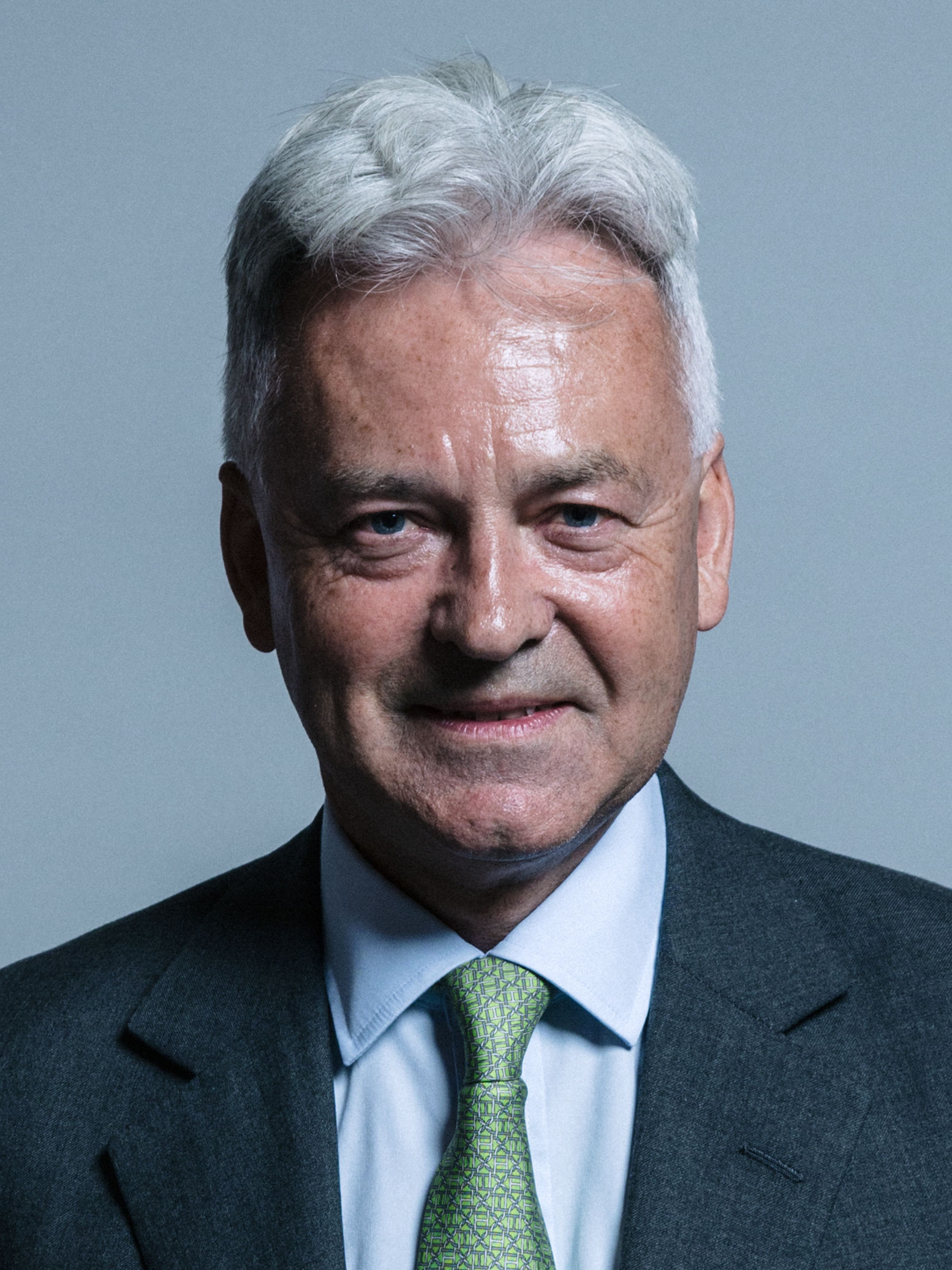
  • Sir Alan Duncan: “Have I Got News For You was absolutely terrifying”

    Sir Alan Duncan: “Have I Got News For You was absolutely terrifying”

    The former foreign office minister tells us about his degree and how it impacted his life in politics

    I studied PPE at Oxford, and when I’m asked what my degree taught me I always think of Harold Macmillan. Macmillan was a former prime minister, who was once Chancellor of Oxford, and he said to our College, which was St. John’s, that what freshers year taught you is when someone is talking rot. That’s always been my lodestar for what a good education means: if you know when someone’s talking rubbish, you know what’s good sense and what is not. 

    But political ambition predated my time at Oxford – I got the bug actually when I was about 12. Whether I regret that or not now is unclear, but everything I did at Oxford, and thereafter, was geared at getting into Parliament. 

    Politics and economics at Oxbridge is quite a well-trodden degree – but it’s often pointed out to me that the current prime minister wields his English language skills and classical education, and that that gives him an advantage. Well there might be truth in that, but there was an element of history in my papers too. My history tutor – who I knew for years afterwards – told me something I’ve never forgotten: “No economist ever makes a good banker. If you want to be a good banker, you have to read history.” I think there’s a lot in that, because it gives you a strategic perspective. It’s not about the numbers, and it’s not just about economic theory nationally. It’s about the ups and downs of life and societal and economic forces – and historians understand those far better than economists. 

    So in terms of my degree, I feel I learned enough – and I also learned a lot from the practical politics of the Oxford Union. This was at a time when the then Labour government under Jim Callaghan was falling to bits, and Thatcher was on the rise. So the 1979 elections slightly ate into my revision for finals – God knows how I got a degree at all. 

    It’s interesting to note that Theresa May studied geography, but I think in the end formal education isn’t what it’s all about. Whether you succeed in politics is more to do with your disposition and what you’ve done in life. The problem is I think a lot of people are going into Parliament now without any particular experience – and definitely too little international experience. 

    I was lucky to gain both in the oil industry. In that industry my best friend was Ian Taylor who died last year – and that friendship, together with the skill I’d acquired in the oil industry, did come in handy in particular when it came to getting rid of Colonel Gaddafi in Libya in 2011. Ian was buying and selling crude oil into Benghazi and we were able to go to the then prime minister David Cameron and explain that if he didn’t follow our strategy, he’d lose the war. Gaddafi was oil, and our approach helped bring him down. 

    If young politicians ask my advice about appearing on television, I say it’s the wrong question. The trouble is most politicians today don’t think about Parliament first and media second. They have it absolutely the wrong way round.

    What I think does matter about being a minister is time management. If you’re not careful, and you don’t administer your day, you can easily be organised by your private office: one of the golden rules of being a minister is always to make sure that you control the diary, rather than let the diary control you. So that means you need to look ahead, particularly for travel and set priorities – and make it clear to your private office that the priorities are as they are, that you will see some people but not others. You also need to explain that you want time to think – or time to call in one of the teams in the foreign office responsible for an area and get into an issue in more depth. So, planning, and not allowing yourself to be just told what to do as a process is the way to do it.

    The media doesn’t help any of this. Believe it or not, I’ve never been on The Andrew Marr Show, but I think Andrew has completely lost its way. The questions have become so staid and obvious, and it’s a programme whose time is up. It’s junk because Andrew keeps asking questions to which there can be no clear answer, doesn’t delve deeper and it’s all about trying to trip up the politician. It’s a dead programme. 

    I did use humour quite a lot in my career – on Have I Got News For You four times in fact. That was absolutely terrifying – they can’t prepare you for that at Oxford! 

    Photo credit: By Chris McAndrew, CC BY 3.0, https://commons.wikimedia.org/w/index.php?curid=61323695