Robert Golding speaks to the famous hotelier about his opposition to lockdown and what graduates need to know about the hotel industry
For many, it will be outdated to think of Covid-19 as being a Biblical reckoning of sorts, where the last shall be first, and the first last, but there have been some tremendous reversals of fortune.
Hoteliers are up there with airline owners and restauranteurs among those who have most had to duck and weave. And there’s no hotelier more famous than Sir Rocco Forte. To talk to him is to suspect that he is the sort of man in whom stress takes the form of indignation, but we should be open-minded about that: Forte has seen his business upended by the pandemic.
Forte is a lockdown sceptic of the Toby Young and Laurence Fox school, but with the crucial difference that with business interests to protect – and employees to look after – he has attracted less opprobrium. That’s partly because he is talking from a position of commercial pragmatism rather than whimsical philosophical pushback. This is the voice of business and it’s a powerful thing to hear.
He begins our interview by recalling the strains of the first lockdown: “Our German hotels stayed open with greatly reduced staffing levels, as we had long-term customers and under law we couldn’t take advantage of their furlough scheme, if we closed. In Russia the hotels remained open as there was no furlough, and therefore there wasn’t much difference in cost between staying open and closed.”
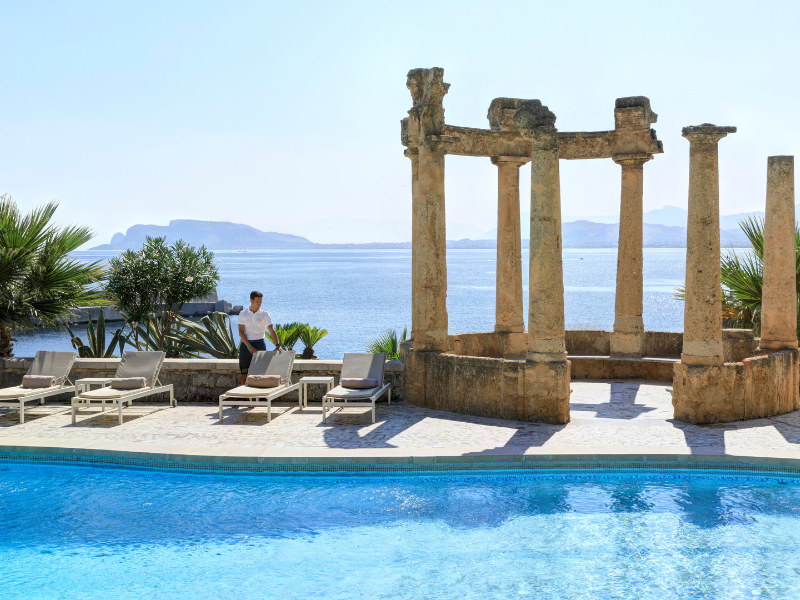
New opening, Villa Igiea
He sighs pre-emptively at the thought of the ensuing recollections: “The reality is most of my hotels depend principally on international business. The Italian city centre hotels [such as the Hotel Savoy in Florence, and the Hotel de Russie in Rome] have six per cent local business; Brown’s of London has nine per cent UK business. With restrictions on international level, they can’t function on a profitable basis.”
But Forte is in the league of the hugely successful and one can sense beneath the extraordinary difficulty of the situation his resilience. He will not take reversal lightly – and 2020 did see a few successes. “Most of these hotels will continue to limp along. The two exceptions in August, September and October were our 40-bedroom hotel Masseria Torre Maizza in Puglia, and the Verdura Resort in Sicily which had a reasonable August. But it’s a gloomy scenario.”
To put it mildly, Forte is no fan of the Johnson administration, but reserves special ire for government scientists. “The government needs to change its attitude to the pandemic,” he continues. “The very few people who are endangered are old and have underlying health problems. It’s not nice to talk about people dying and it’s sad, but it’s not a disease that affects young people. Scientists you’ve never seen before are now enjoying the limelight: they didn’t have authority before, but can now tell people what to do. Really, we should get back as quickly as possible to a position where we’re all allowed to make up our own minds about the risks we want to take.”
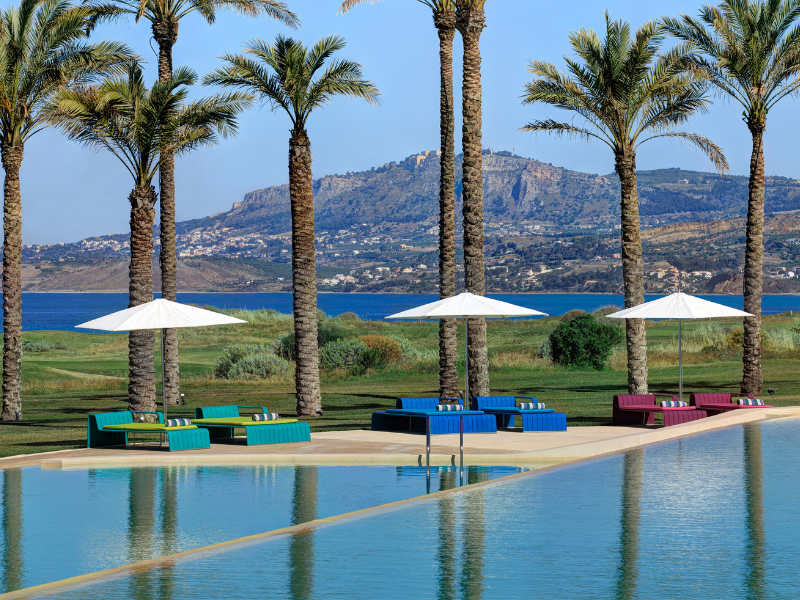
The Verdura Resort in Sicily enjoyed a profitable summer in 2020
Forte was talking before the second wave, and the deaths which followed. When I catch up with him again in late April however he questions the government’s narrative about the spike in deaths: ‘I am also upset about the exaggeration of deaths. The reality is that under the age of 60,10,000 people have died, they’re running the economy. 80,000 of the so-called Covid deaths have been in people over 80 and another 30,000 of people between 70 and 80. It’s not a reason to close the economy. The whole thing is to terrify people into submission. I never knew how totalitarian states cowed people into submission. Now I know how they did it.”
Perhaps it will always be salutary to have someone like Forte arguing during a time like this against the status quo since that asks those in power to check whether the balance is right. “We closed our whole economy and it’s just nonsense, we’ve got to move away from being ultra-cautious and ultra-careful.”
In the event of it, the Johnson administration did listen to some extent and in hindsight we all know, after the Winter of Variants, that so far, there has always been cost attached to the decision to open up. Yet we also know that we can’t go on like this indefinitely, and Forte is among the most compelling voices pointing to the cost to business of not opening up.
Forte, like Goldman Sachs CEO David Solomon, wants his staff back in the office. “I started getting people back in the office in July 2020. Staff were anxious to get back to work. Employers have got to get harder with people. People who have underlying health issues – that’s understandable. It’s the same with the schools: children are not at all at risk of the disease.”
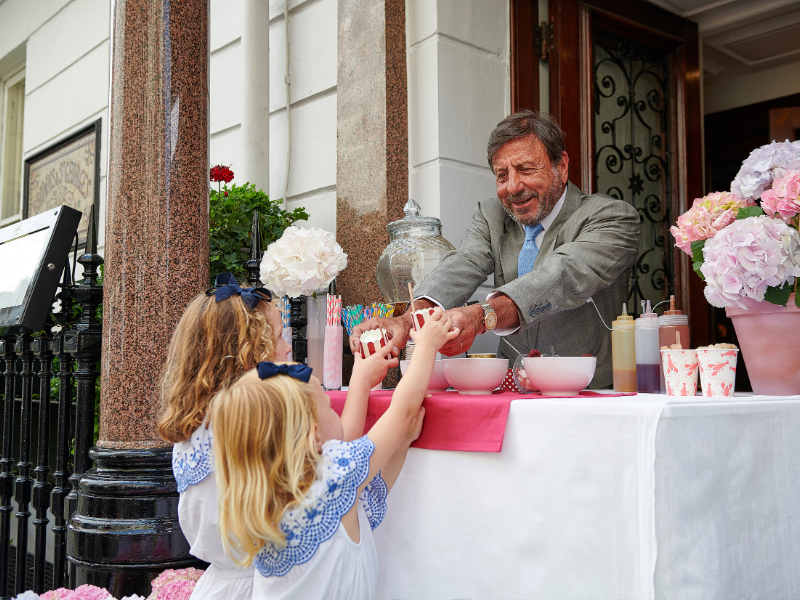
Sir Rocco Forte outside Brown’s as part of its Luxury is Local push. Brown’s footfall pre-pandemic was only 9 per cent domestic
The counter-argument would run that this misses the point and that nobody is particularly arguing that they are: what the government is saying is that they can carry the disease and transmit it to someone who is at risk. Forte pushes back on this: “The government said there would be a spike when the children went back to school in March and there wasn’t.”
Forte is illuminating on the commercial reality: “The economy is talked about in the abstract. It’s about people’s livelihoods and their families. We’re still not open and free to work.” This is plainly true, but there again one might say that it’s precisely in recognition of this fact that we have the furlough scheme.
The suspicion remains that confronted with the pressures of SAGE’s advice, and the public health, Forte might have done the same thing as Johnson and Sunak, although perhaps with even greater reluctance. He rejects this: “I keep thinking, ‘What would Mrs. Thatcher have done?’ For one thing, she’d have known the science herself. And she’d’ve have taken a much more pragmatic approach. And why is the government talking about an early election? Because the government is popular and people are at home, being paid and not having to work. We’re not seeing the eventual effect of all this, which will come two years down the road. Their propaganda has made them popular and they don’t want to see adverse effects. There’s a lot of talk internally within the Party about a new election.”
Forte then is a man at bay, and at odds with the government. If you take the long view, you might say that the brand is strong, and that given his own immense savvy, he will find a way back. But there must be days when it doesn’t feel like that. ‘It’s cost the company around £100 million,’ he tells me in April.
It’s no surprise to hear his opposition to home-working going forwards. Recalling the first lockdown he says: “For the first six weeks, I’ve never worked harder in my life, but after a while the whole thing pales. Being in an office creates discipline. And if not being in an office is demotivating for me, what’s it doing to the rest of my staff?”
And what about the position on tax going forwards? Forte is clear about mooted tax rises: ”We want to get the economy moving, and we’re not going to do that by raising taxes. Servicing the debt will cost half a billion a year which is not significant. Why do we need to start repaying the debt now? We finished off paying our war debt three years ago. We don’t need to rush.”
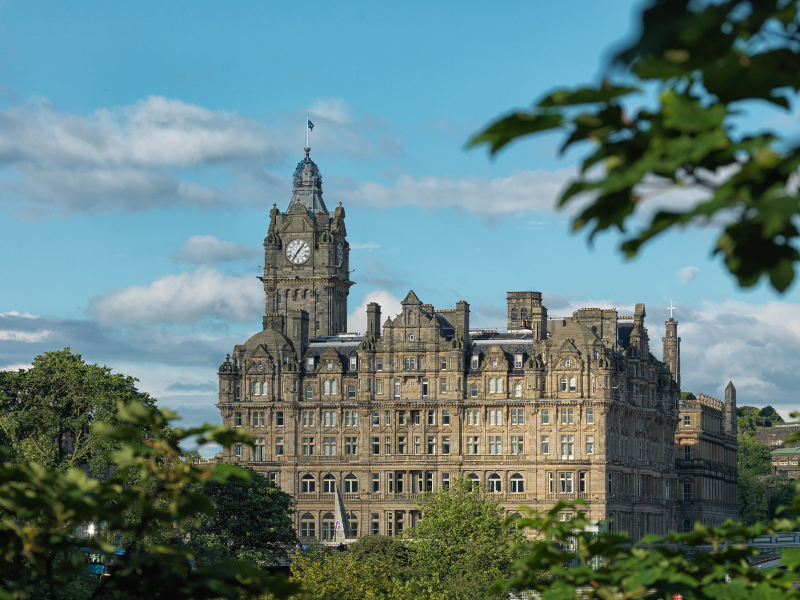
The Balmoral in Edinburgh is another option for the domestic traveller
As a Conservative Party donor, has he spoken to the prime minister about all this? “I’m afraid I’m not in a position to pick up the phone to him to tell him what I think. The best way to influence those in government is to make your views known very publicly. I have appeared on television which is not something I normally do – desperation.”
So will he be looking to hire this year? “Once things normalise, a lot of businesses won’t be around anymore. Ones like mine who can borrow more money will be more indebted with the constraints that puts on business. But we’ll still be looking to hire people.”
So what does he look for in potential employees? “We look for an element of enthusiasm for the industry. I would never advise anyone to come into this industry who didn’t enjoy working in it: you should try and do a holiday job for a few months, and see if you like the feel of working in a hotel and what it entails.” What should they be prepared for? “It’s quite hard work,’ he says. “It involves unsociable hours a lot of the time and people in the business enjoy that. You need to have camaraderie and a sense of belonging. Upwards mobility can be very quick. You can start as a waiter and end up in a management position if you have the right attitude and the abilities to do so and these are recognised. If you’re a shrinking violet it’s not the place for you.”
So, once the pandemic’s over with, what are his plans? “Well, I have big concentration in Italy as we already have a strong position. But I’m not in Milan. Venice is somewhere we should be. I want to do more in the UK. It’s very difficult outside of London to look at smaller hotels in important tourist destinations where a larger hotel won’t work. Where a fifty or sixty bedroom hotel would be quite successful. As a UK-based company it’s a shame we’re not doing more here.”
You get the impression that this is how he’s used to thinking – dynamically and rapidly about future plans. It’s a window into the mindset the pandemic has deprived him of. “Then I’m not in Paris, not in Madrid and Barcelona. I’m in St. Petersburg not Moscow. Then I’d like to be in the States – a big proportion of our business comes from there, so New York and Miami…”
At which his voice trails off, seemingly with the realisation that none of this is possible at the moment. But everything about the man makes you realise it will be again – and perhaps sooner than any of us realises.
It is an aspect of the absurdity unleashed by the pandemic that work sectors experienced contraction, stability, or even expansion, according to their relationship to human touch and proximity. It is as if someone had madly gone through society punishing only people over six feet six, or those with red hair.
But though it was a pretty safe bet being an air pilot or an events manager before Covid-19 had its way with the world, I still think the reversal experienced by the hotel sector counts as the most symbolic. Most of us never saw an empty aeroplane – we saw empty skies. And events moved online.
But we all cancelled our holidays, and many of us can easily imagine an empty hotel. We were also all too familiar with the interiors of our own homes. Hotels are in fact symbols of power, and nothing quite so brought home the strangeness of coronavirus than their sudden lapse into emptiness, and the surrealness of furlough.
They had a particularly powerful advocate for staying open in the shape of Sir Rocco Forte, who has been vocal in Finito World and elsewhere about government policy which he views as far too restrictive. The mask has had no greater foe, and social distancing no greater cynic than Forte. But then most people would be cynical of any government regulation which cost them £100 million overnight as this one did.
Once the pandemic began to lessen a little, I realised it would be a missed opportunity not to return to Italy, the heart of the Forte empire, to see how his two great hotels – the Hotel de Russie and the Hotel Savoy – had fared in the interim. There was more than curiosity at work here: I’ve always loved these hotels and sometimes feel I am simply marking time in London, waiting to go back to them.
Rome is, in its way, one of the most powerful nouns on the planet. It seems almost to have the same force as those large abstractions: love, peace, truth, goodness. It connects back to a former time – or a series of former times – which seem to contain people who were better and wiser then than we are now.
Perhaps that’s never felt more the case than to return there now after the pandemic. Our forebears lived daily with the thought of death; it can sometimes seem as if we have sanitised it. It has also to be said that nowhere I’ve been in the world has quite such a passion for regulation as Italy. Whether this is an inheritance of Catholicism, or a more mysteriously national appetite for rules, I’ve never been able to decipher. But it’s definitely the case that if in Italy you walk into a sandwich shop and forget your mask for even a moment you run the risk of being accosted not by an owner but by a customer. This is a noticeable difference in cultural mores which no doubt must vex Forte himself.
To look at Italy politically there is a sense that it has fallen on hard times, with debt levels not far off Greece’s, and significant poverty especially in the South, where a shadow economy may or may not be making life more supportable for young people, depending on which economist you speak to. I sometimes think that the beauty and the significance of Italy’s history somehow excuses it from doing anything in the crucial realm of the present. But I forgive it this as everything else: I’ve never been unaware in Italy that this is a country which has fallen on somewhat unhappy times since the time of Michelangelo; but then I’ve never minded much because I’m in the country of Michelangelo.
The Hotel de Russie is right under the Borghese Gardens, next to Piazza del Popolo. That makes it reasonably near the Spanish Steps and about a half hour walk from the Coliseum and the Forum ruins. It’s a hotel so good it makes you delay your sight-seeing a little – and that’s the case even in a city where you know you’re ridiculously up against the clock on a long weekend, since there is more to see here than can be seen in a lifetime.
The Hotel de Russie’s Secret Garden sweeps upwards in attractive tiers, almost as far as the Borghese. It is a place of white climbing roses, yews and palm trees. Water fountains trickle on each tier, meaning that breakfast is a calm affair. Several years ago, they used to serve delicious honeycomb as part of the buffet, but that has now been jettisoned due to the pandemic, a sad legacy.
The hotel has a star-studded history. It was here that Pablo Picasso and Jean Cocteau stayed when collaborating on Palade, the first of the so-called Ballets Ruses, a production which counts as the first Cubist ballet. The hotel is justifiably proud of this heritage, and has a Stravinsky bar, and a Picasso suite. On the top floor there is a vast apartment with a sauna in it where the cast of Ocean’s 11 reportedly stayed.
On our first day, exhausted by EasyJet’s tendency to demand farmers’ hours of its clientele, we were jolted into wakefulness by the magnificence of the Coliseum. Vaccine passports were on use in that attraction – and in all the others we went to – and seemed to work well.
Inside, you feel dwarfed by the scale and ambition of what you find, and overwhelmed by the evidence of a civilisation with more intellectual force than ours. It is a strange thing that our society for all its ingeniousness seems to lack some quality which theirs had. Perhaps the Roman confidence can only come once to a species, but that doesn’t mean we can’t learn from it, and enjoy a touch of nostalgia along the way. Of course, in the process we must be careful not to turn a blind eye to the brutality of gladiatorial combat and slavery. But the fact remains: there is something about being in Rome which makes you want to do something big with your life, and why not begin that today?
The ruins of the forum will forever remain one of the sites of the world, especially at sundown, when they are filled with a melancholy light which knows all about the rise and fall of civilisations. It is futile, by the way, to search here for the place of Julius Caesar’s assassination since that took place around a half kilometre away in the Largo di Torre Argentina.
What are we searching for among these ruins? It seems to relate to some lack in ourselves which is betrayed by our glass architecture, our world of consumption, our frenetic pace. It is said by John Buchan that the peoples of the past were all storm and sunshine – that is they lived next to the bad in life and so experienced a heightened sense of the good. Anyone who even glances at the Pantheon knows that it may as well have been created by aliens: nobody alive, and least of all our modern architects, seems to know how to do this.
If Rome makes us feel as though we have become somehow pale, then this is the case too when we compare ourselves to the Renaissance. Rome isn’t necessarily the best place to understand the Renaissance, partly because Raphael and Michelangelo dominated all the commissions. Besides, much of what they did is squirrelled away in the Vatican, either in rooms the public can’t access, or in places the public accesses too much. Even the Sistine Chapel feels like the expression of one man’s slightly cantankerous achievement.
Instead, to understand the Renaissance in its breadth and depth, you have to go to Florence, and fortunately the Rocco Forte chain have created the excellent Hotel Savoy there, this time just off the Piazza del Repubblica.
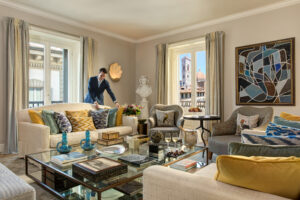
The suites here have been enlarged and the number of them reduced since I was last here in 2017, meaning that the customer has a roomier experience. The Presidential Suite in particular is one of the finest hotel rooms in the world with excellent views of Brunelleschi’s Duomo and Giotto’s Campanile.
Giotto didn’t live to see his bell-tower completed, but Italy is a reminder that the work we do, if it’s any good, will be taken on by others. The Renaissance is a relay-race: we think of it as a time of great individuals when really it was a team effort. This is perhaps best encapsulated by a young Leonardo da Vinci’s role in raising the great gold ball on a pulley system to cap Brunelleschi’s lantern on the cathedral. Years later, whenever he needed to summon up courage for the next big task he would recall that day: it’s for others to show us what is possible, and for us to enact that on our own terms.
Italy asks that we summon up courage in our own lives. By hosting both the Roman Empire and the Renaissance it reminds us that a country can be great more than once – and it does so even in its present condition when so much else has atrophied.
The great joy of Florence is in its churches. It is vital not to miss Donatello’s pulpits in San Lorenzo, and while you’re there not to forget to see the Laurentian Library whose steps were designed by Michelangelo. Tourists should also know that these are on separate tickets and by separate entrances, and not always open on the same day. If you go to Santa Croce make sure to visit the Pazzi chapel and its adjoining courtyard: they are places of rare peace and tranquillity.
The city has suffered during Covid, as is to be expected when the country bore the brunt of the earliest part of the pandemic in Europe. In particular, a favourite restaurant Il Menagere had not yet reopened when we were there. Meanwhile, the Orsanmichele was permanently closed when we were there at the end of 2021 and still operates reduced opening hours at time of publication.
But world historical cities like Florence have in-built resilience which stems from their perennial desirability. Boccaccio begins his book The Decameron with a description of the Black Death and how it affected his contemporaries. You can still visit today the Santa Maria Novella where that scene is set, and I hope people will still be able to do so hundreds of years from now.
Inside the church you can see Giotto’s Crucifixion, and Masaccio’s Trinity which more or less single-handedly started a revolution in art which still governs the way we see today. When the Black Death came, few would have imagined that the world was on the cusp of two hundred years of unprecedented achievement across every area of human endeavour.
Perhaps this is ultimately what Italy has to say to us now: that any civilisation worth its salt is in it for the long haul. And although the Rocco Forte chain has had a difficult pandemic, one senses that these magnificent hotels will bounce back also. The good things in life always do because ultimately that’s what people want.
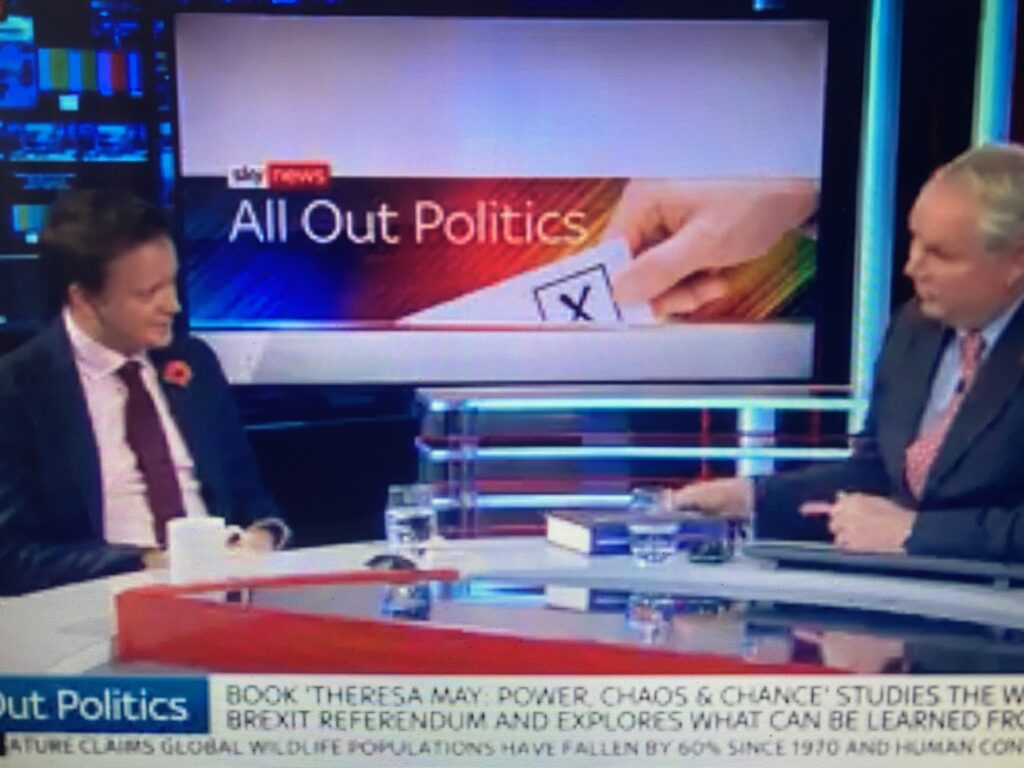
Three years ago, invitations began trickling into my inbox to appear on television. At that time, I was the author of one of the only books about the then Prime Minister Theresa May. The first time a request came in, I happened to be in Zanzibar, on holiday with family. The email came via my publisher from a researcher with a Sky Newsemail address asking me on All Out Politics, presented by Adam Boulton.
The memory transports me back to the mixture of emotions I felt at the time: flattery, excitement – and of course, fear. It was the television and restaurant critic AA Gill who recalled on the occasion of his first appearance on live television the makeup artist saying: ‘Just act normal!” Gill recalled himself thinking: “But this is the least normal thing I’ve ever done.”
That remains true, of course. On the Zanzibar occasion, I had my excuses. If my plan was not to appear on television, I had positioned myself perfectly. Before the trip, I had intentionally not packed my laptop in a bid to switch off properly. Stone Town, the nearest outpost of civilisation to my hotel, wasn’t stocked with 5 star hotels which might have wanted to set up a live video link for a tourist who had walked in off the street babbling about Adam Boulton and Theresa May.
So on that occasion I declined – but with a certain guilt, knowing that while it hadn’t actually been possible, part of me hadn’t wanted to do so. Even so, a seed had been planted, and I began to suspect that if one person might invite me on TV then so might others – and I might not always have the protective shield of a holiday in Zanzibar to bat the problem away. There might come a time when I might have to say yes.
Whether to say yes or not is therefore the first question that is likely to affect you when the flattering but somewhat-to-be-dreaded call comes. Some will feel immediately inclined to say yes but others will be more doubtful.
When I speak with Lord Dennis Stevenson, the former chair of HBOS, he recalls a similar approach. “I happened to be very successful very young and – at risk of letting readers know how old I am – in those days there were only two television channels – and both wanted to do big documentaries on me.” Stevenson faced a definite fork in the road, and turned to a valued mentor for advice. “I went to David Astor, who was the son of Nancy Astor the famous politician. David was one of my heroes. He said, “If you tell any of my journalists this, I will kill you, but if there’s ever a request for you to appear, don’t do it unless it will help promote a cause you believe in.”
For Stevenson, the negatives outweighed the benefits: “David went on to say: “At the moment any programme you do will make your mother feel very proud, but it’s an unnatural thing to do. Besides there may come a time when things aren’t going so well and then you’ll be much better dealt with on the way down if you’ve not been on television.”
In my own instance it would have been an unfairness on the publisher, who had shouldered the costs of the book, not to proceed. But others should be wary. Dominic Mohan, the founder of Dominic Mohan Media and former editor of The Sun, tells me: “I will deter a client from an appearance as a pundit or commentator if they are not entirely comfortable with the subject areas – I don’t want them to be outside their comfort zone.”
Of course, if you say yes, there is a confidence boost of a not necessarily trustworthy kind around the corner. In a television-dominated society, there’s a sense in which you’re not really successful unless you have appeared on television. Of course, there are some who buck this trend. In literature, there are successful recluses like JD Salinger or Thomas Pynchon whose myth is partly linked to their having ducked out of the pubic discussion of their works. There remain many successful businessmen like Stevenson, who spend a sizeable chunk of their income keeping out of the media. Most people are probably television agnostic – they deal with the matter when it comes up.
That means that many of us are caught unprepared. The following week I was asked again to appear on All Out Politics, and found myself saying yes. Beforehand when I asked Zoe Brennan of Portland Communications for advice on going on television she said, pointing at a blue and white striped shirt I’d just bought from Pink,: ‘Don’t wear that shirt’.
Armed with the limited knowledge that a white shirt is best on television, and lacking PR representation of any kind, I found myself going up to Sky News’ studios for my slot – which again, was with Adam Boulton.
I didn’t view the occasion with unmitigated glee – and in this I suspect I was reasonably typical. Others relish these occasions, and if you can get yourself into that mentality, it will certainly do you good on camera. When I speak to celebrity lawyer, Nick Freeman – otherwise known as Mr Loophole – he radiates enthusiasm: “I love being on TV. The adrenalin flows. Yes, you’re going to be nervous, but I’ve done hundreds of interviews and I find the adrenalin helps you to perform. It’s your chance to flourish.”
So how does he manage to feel confident before the big occasion? Freeman is infectiously helpful. “You can’t just say, ‘I’m going to be fine’ and leave it at that. Preparation is king. Knowledge is king. Know your subject.” Freeman also alikens the process of going on television to an actual job interview: “You wouldn’t go to a job interview without having carefully researched the business – so don’t go on TV without careful preparation.”
There are limits to this, of course, because overpreparation can also be a danger. Mohan tells me: “I will obviously ensure I speak to the journalist or producer ahead of the interview to see what they’re thinking and where the interview is likely to head. However, as a former interviewer myself, I am conscious not to over-media train some clients as I want their true personality, views, language and style to come across.”
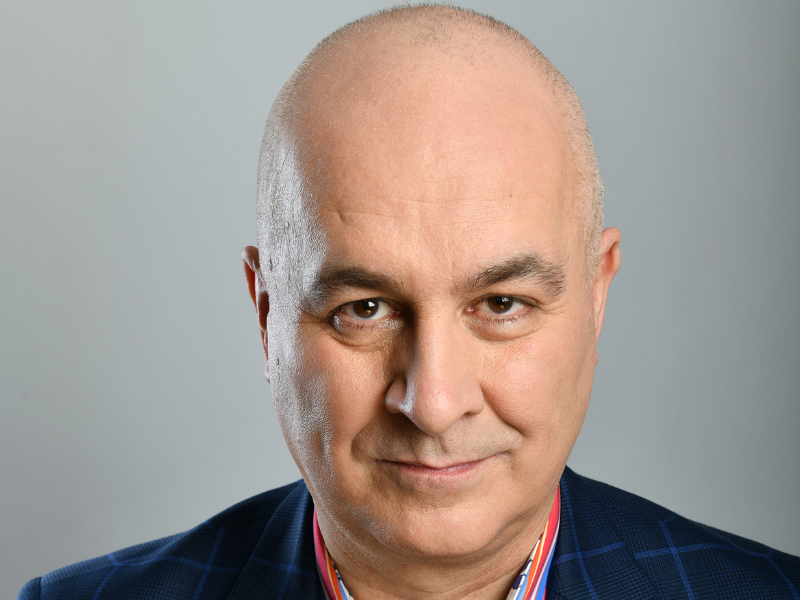
Most media experts flag that the danger of deciding too carefully what you’re going to say is that you don’t listen to the answer. Iain Dale, the LBC broadcaster and author, points out that this is something to consider on the interviewer’s side as well: “What I’ve found on the rare occasions when I have had producers give me a brief of the areas I’m meant to cover, and told me what the questions are, is that you’re so busy concentrating which one of these you should do next that you’re not listening to what the person is saying.” This accounts, says Dale, for some odd moments you sometimes hear on the radio. “Whenever you think an interviewer asks what you think is a random question it’s because they haven’t been listening to the previous answer.”
Experienced presenter Iain Dale explains that it’s important not to overprepare when it comes to TV interviews.
On the way up to Sky News, I doubt that Freeman’s advice to know my subject would have been entirely helpful. As the biographer of Theresa May, my subject in theory encompassed not just the whole of Brexit, but the whole gamut of policy. That meant that, as hard as I’d worked on the book, it was wholly impossible to be the complete master of what I had been called on to discuss.
In the event of it, I turned up at Millbank on the back of a seven mile run, a course of action I’d recommend to anyone about to endure the stresses of live television. I’ve often wondered in retrospect whether I was too physically tired to be particularly nervous.
Even so, the reality of walking into a television studio is very strange: one feels as though one must be trespassing. This sense of portentousness also seems at odds with the mundanity of a typical TV studio. Sky’s Westminster studio, for instance, feels somewhat unloved – much as Parliament does once you’re inside. There is the sense that this building must very recently have had some other purpose – either as a middling solicitor’s office, or as the rundown domain of a recently deceased think tank. And yet in spite of this, you also know that this building is about to beam you to a million people.
The author in the studio with Adam Bolton
That’s where television gets its core strangeness from. Try imagining a million people and your imagination balks a bit – and obviously this will lead to some people freezing or panicking. But the sheer enormity of the occasion can also be a help: once the mind is stymied in trying to imagine such a large audience you end up putting it to one side, increasing your chances of a coherent performance.
Up in the Sky studio, there’s a small reception desk, and a little side room for makeup. The people on before you all look as though they belong in the studio and if you’re not careful you can worry that you alone among all the other fleeting guests lack some essential TV-readiness. It feels a bit like an awkward dinner-party. Rather oddly, waiting for a make-up chair to become vacant, I am directed to a kitchenette, overlooking the Thames, where I make myself a cup of instant coffee.
After make-up, I am ushered down a corridor. To your right as you walk, you can see Adam Boulton in his layer, handling what will turn out to be a forgettable roundtable discussion. It occurs to me that this is precisely the goal for most people of appearing on television: to produce a segment of entirely forgettable television. In this era of YouTube sensations, the creation of memorable television is almost always not what you want.
There then follows a strange bit of small talk with an usher. I am asked to conduct small talk all the while aware that I am about to do something extraordinarily stressful. This brief moment beforehand will turn out to be the hardest part of the experience. Time bends a bit. You are conscious that you’re hurtling towards a now unavoidable ordeal, but also that that ordeal seems to be taking a long time to come about.
In the event of it the conversation goes well. Inherent in the nature of television is that questions rarely tend to any depth, and the presenters themselves are so busy that it’s not to be expected that Adam Boulton, if he is interviewing you about his book, has actually read it; it’s more likely that one of his researchers has skimmed it.
The conversation was divided into two segments of roughly five minutes each. In the ad break, Boulton smiled to himself and looking down at my book said with perhaps a certain pity: “So when did you write this, then?”
I told him and he smiled to himself as if at the enormity of my folly, and then looked into a glass case at an iPad. This he began scrolling, retweeting a few articles, radiating the run of the mill nature of the occasion from his own perspective. Then it was back into the conversation, which unfurled without too many mishaps.
Afterwards, a car is there to take you where you need to go – the most VIP aspect of the whole occasion. News International has obviously decided to expend budget on getting its guests from A to B. As I weave through the crowds of Parliament Square towards a day of quotidian work, I see many people definitely not thinking about the fact that I’ve just been on Sky: television seems to occur in a secret bit of our collective mind.
Of course part of the fear of television these days is that it has become so much more polarised as a medium. Especially if you’re on to talk about politics, part of the reason you’re nervous is the uncertain emotion you suspect to be roiling in the country at large.
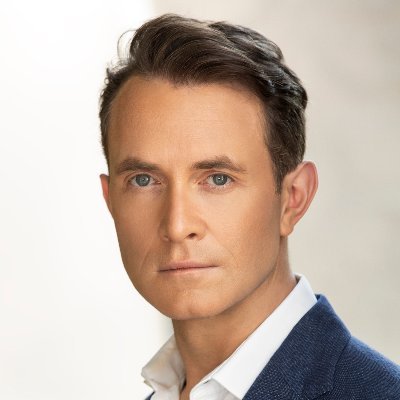
When I speak to Douglas Murray, the author and commentator, he recalls the nature of the appearances he’d made in the past: “When The Madness of Crowds came out, I was in a radio discussion – actually a rather badly imagined programme – where you bring together two people from different sides of the political spectrum, and then negotiate some sort of agreement.”
Douglas Murray warns against adversarial television where one side of the political divide is pitted against the other
When I ask Murray how he prepared for the occasion, he smiles: “I was on with somebody from The Guardian, who’d had a book out some weeks previously. I’d gone to Waterstones of my own volition and brought it with my own money – I even got the staff to get it off the stock in the back of the shop, where I’m happy to say it was residing. My enemy had been remaindered. I read it and it wasn’t good, although I found a review of it in The Guardian describing it as the work of a great historian and one of the titans of the age and so forth.”
And when Murray got to the studio? “I realised immediately that not only had she not read my book, but she’d made no effort to read it, and had read none of my previous books either. At the end of the show the presenter asked if she’d learned anything, and she said: “Well, I know what Douglas thinks already.” That’s very telling of the intellectual divide in this country.”
Of course that feels initially more of a problem for those of us who happen to comment on politics. Some people I speak with have their own private rules. Dennis Stevenson tells me: “I won’t go on the Today programme as I’ve found them to be very irresponsible. Though I don’t think much of the News International empire, I’ve found Sky to be infinitely more responsible.”
Especially after Brexit and Covid-19, politics today appears to be so contentious that it can even affect a hotelier who happens to be on television. When I speak to Sir Rocco Forte he recalls for me an appearance on Question Time with David Dimbleby. “I think there was a rape case or something like that. I said: ‘Of course, I was brought up to treat women with respect, as they are the weaker sex,’ and one of the left wing panellists said: ‘You should arm-wrestle my daughter’.”
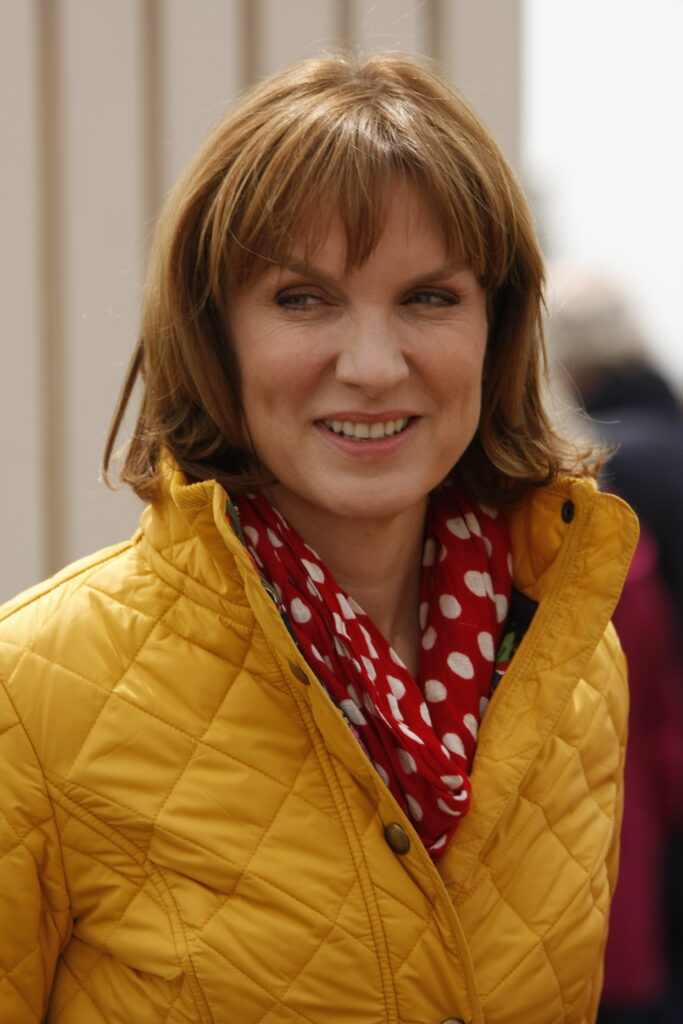
Fiona Bruce is the current chair of Question Time. Photo credit: By Andrew Campbell – Fiona Bruce, CC BY 2.0, https://commons.wikimedia.org/w/index.php?curid=90080879
Sat in Browns, one of many hotels he owns, and with his confident, patrician voice, you initially imagine television would hold little anxiety for him. But he disagrees: “You always get nervous because you’re worried about making a fool of yourself!” So how did he cope? Forte echoes Freeman. “You have to have a clear idea of what you want to say and then it depends on the kind of programme you’re on. I was on Question Time on another occasion and I got an unexpected question on the Arab-Israeli situation, and I had to think about my Arab and Israeli clients as I was talking, and so I must admit I gave a very wishy-washy answer.”
So would he advise our business readership to do TV? “Businessmen shouldn’t do these things because they’re always going to feel political and you’re going to offend some element of your customer base. As it happens, because I have very personalised hotels, I think a large majority of my customers would probably agree with what I have to say.”
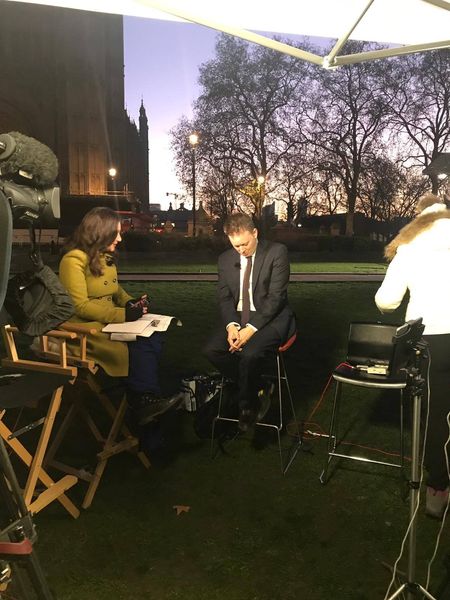
My second appearance on television for Bloomberg occurred on an extraordinarily cold morning in December, very early in the dark. For this occasion, I was prepped by the excellent Malika Shermatova of Minerva PR, who was kindly up at the same ungodly hour – about 5am – to accompany me in the pitch black to College Green. I suspect we both had that strange form of tiredness you get when catching an early flight.
This occasion was a reminder that once you’ve said yes to television, you are in the channel’s hands as to what happens next. On this occasion, it transpired that the news anchor, whose name I have never been able to discover, was angry at not being in the warmth of a studio. An acolyte was charged with rushing between takes to place a blanket on her knee and she was visibly irritated throughout by her predicament. The presence of me on the chair opposite her didn’t seem in any way to mitigate those emotions.
The author up very early preparing himself for an early morning Bloomberg interview
Again, it was clear that she hadn’t read the book, and on this occasion I was asked some unexpected procedural questions about what was going on in parliament on that day. Unexpectedly, I found myself putting my finger and thumb together, as Tony Blair used to do, in a series of jabbing points designed to project confidence. This tactic, arrived at spontaneously, made me all at once sympathetic to politicians who do this on a daily basis.
When I catch up with Sir Alan Duncan who, though a Marmite figure, was always good on television, I ask him how to be good on TV. “I wish,” he sighs acerbically, “you had asked another question about what parliamentarians should do in Parliament!”
Retrospectively irritated, as often seems the case with Alan Duncan, that he was never prime minister, he continues: “The trouble is that the people there only think about the media and not parliament which is their job.”
I press him on the question a bit. “Well, the answer to your question is to forget the script and just be normal. Talk as if you’re talking to a teddy bear on a chair five feet away – that’s the sort of intimacy you should aim for.”
And what about the sheer unpredictability of the occasion, such as I encountered at Bloomberg? “Yes, that’s why you must stay relaxed – because they could cut you or make you a minute long, or also give you a difficult question, and if you don’t stay relaxed it could get out of your control.”
After a while, the interest in May increased to such an extent that I was being asked on television most weeks, and often by foreign media who were covering Brexit with increasing bemusement. These proved to be extremely enjoyable, because they were usually pre-records which are far more in-depth and less stressful. I began to fit these in around other things, and even to make a few demands about when and where to speak.
I would advise anyone asked to appear on television to try and dictate terms, and see if a pre-record is an option. There was a half hour chat with Clive Bull on LBC recorded on Christmas Eve, which was broadcast in full on New Year’s Day. There was also a Polish TV interview conducted at work meaning I didn’t have to travel anywhere. On another occasion, an on-camera interview next to the playground at Dulwich was filmed while my son played about fifty metres away. Perhaps most fondly, I recall a chat with the magnificent Kim Bildsoe-Lassen, Denmark’s Andrew Marr, who once conducted a famously tough interview with George W. Bush, and who interviewed me in the Four Seasons and then insisted we have breakfast on another occasion afterwards.
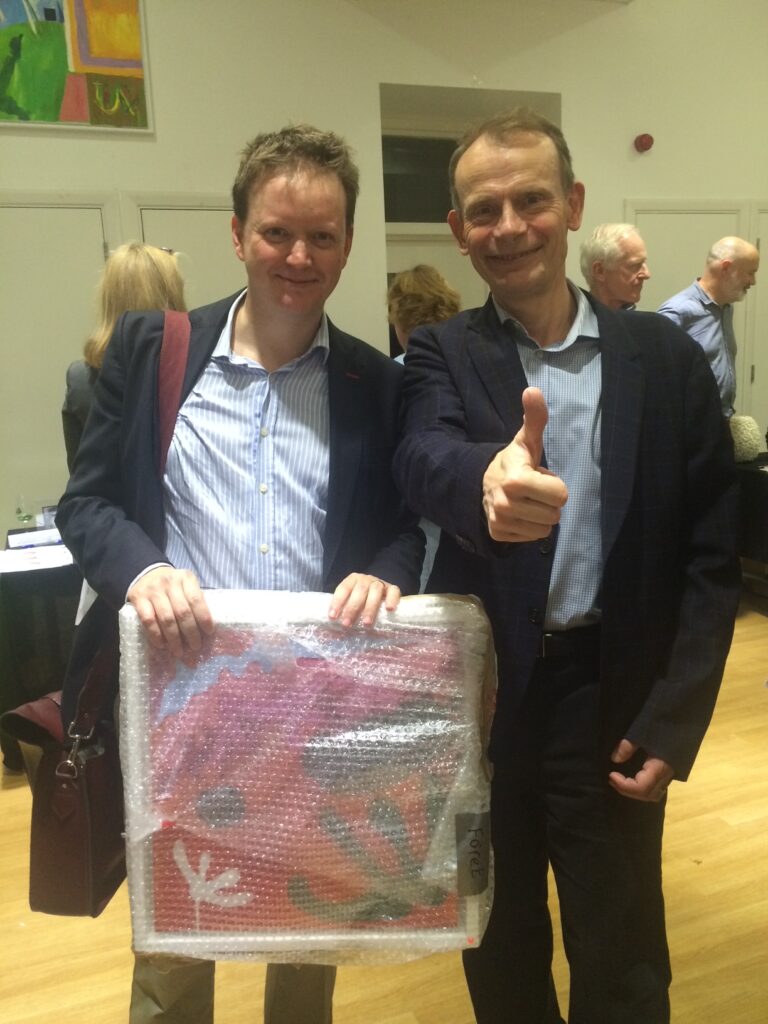
The real Andrew Marr turns out to be very agreeable in person – though frailer than one might have imagined. I meet him at an exhibition of his paintings, and am able to tell him that I bought one of his pictures just before our encounter. “Oh, a book on Theresa May – you must send it to me,” he says, before locking eyes with me reassuringly: “I will read it, you know.”
Andrew Marr retains perspective on TV – what he’s really interested in is art.
But it seems fitting that most of our conversation isn’t about TV at all, but about painting, which is his principal interest now. I’ve rarely seen a person’s face light up as much as it does when Marr sees fellow painter and collaborator Adrian Hemming among the crowds. When he leaves at the end, he is relaxed about the work awaiting the following morning: “I must go – interviewing the PM in the morning.”
Television and radio were never normal for me, as they are for Marr or for Boulton. If Marr ever read my Theresa May book he decided it didn’t qualify me to review the newspapers on his show – and I must confess that I felt some relief about that, though I suspect I would have had to say yes if he had done. A part of me would still endorse Dennis Stevenson’s verdict on television: “I don’t like it. I don’t like it at all.”
Towards the end of the book promotion cycle I found myself saying no – especially to very early appearances in Sky’s studio in Osterley. Today the problems of travelling to the studio have receded somewhat due to the pandemic, but that opens up questions regarding your domestic setup.
Dominic Mohan recalls one unhappy experience: “Early on in my journalistic career and then a father of young children, I did a broadcast interview from home with Alan Brazil on TalkSport. I was alone with my three year old son who I thought was happily playing in the other room. As the chat began, he battered down the door of my office and began to grab my leg, weep and scream at me throughout it. Needless to say, the exchange was cut short and I was never asked back.”
For my part, I remember my three-year-old biting my leg during a discussion on LBC which itself seems to have curtailed my relationship with that organisation.
But overall, the experience isn’t something I’d take back. It can be fortifying, and can lead to making new friends, and new connections. And David Astor is right that if you do find a cause in the future which you believe in, television is still among the best ways of promoting it. Your contacts may come in useful at some later point.
As for me, over time, new books will come out with my name on the spine and cover, and perhaps the whole rigmarole will begin again. I’ve sometimes vaguely asked myself how I’ll feel about it. As soon as I do that, I feel that jolt of adrenalin which makes me know I’d say yes – but that, as AA Gill knew, it will never be normal.