Tag: Rishi Sunak

  • Dinesh Dhamija reacts to Rishi Sunak’s appointment as PM

    Finito World

    Rishi Sunak’s appointment as Prime Minister has focused attention on the rising influence of British Asians.

    Yesterday, British-Indian entrepreneurs were reacting to the news. But on in particular caught our attention: entrepreneur and politician Dinesh Dhamija. Dhamija came to Britain aged 17 in 1968. He founded online travel agency ebookers in 1997, and sold it for £247 million in 2004, before serving as a Lib Dem Member of the European Parliament from 2019 to 2020.

    It’s worth remembering that Dhamija’s autobiography ‘Book It!’ was published earlier this year. Readers might remember that in that brilliant book, he comments on Rishi Sunak’s father-in-law Narayana Murthy. One relevant passage reads:

    “Rishi Sunak’s father-in-law Narayana Murthy stands head and shoulders above other Indian businesspeople in my view,” he continues. “He pioneered the current generation of Indian software companies, taking Infosys to global leadership – it was the first Indian company listed on the Nasdaq – and introducing the Global Delivery Model of software development.”

    Dhamija also puts the magnitude of Murthy’s achievements in context: “Basically, Murthy popularised tech outsourcing from Western economies to India, where he recruited thousands of highly qualified software engineers to work on the problems of American banks and multinational corporations,” he writes.

    For Dhamija, Murthy’s work must be viewed in the round – not just as a money-making enterprise. Another passage reads: “What I most admire about Murthy is that he combines commercial genius with a human regard for employees and a strong customer focus. Infosys isn’t just about making money, but about making the world a better place. These qualities have won him many friends, along with the Legion d’Honneur from France, the Padma Vibhushan from India and countless other awards and honours.”

    Yesterday, Finito World got in touch with Dhamija to get his views on the appointment of Murthy’s son-in-law as the UK’s first Asian Prime Minister. His reaction was typically forthright and illuminating: “I’m very pleased to see Rishi become the first British Prime Minister of Indian heritage. I believe he has many of the qualities needed to rescue the country from its current crises – even if he played a role in getting us here! Among other things, it opens a potential window of opportunity for closer economic ties between the UK and India, something that I’ve urged the government to pursue for many years,” he told us.

    And did Dhamija have any advice for the incoming PM? “The best thing for the UK would be to get 10,000 Indian software engineers to come to Britain, that would be gold for us. If Rishi can face down the anti-immigrant factions in his own party and act in Britain’s best interest, he could achieve something that his recent predecessors have failed to do and create a new era of Anglo-Indian cooperation.”


    For more information about Book It!: How Dinesh Dhamija built and sold online travel agency ebookers for £247 million, go to:

     

  • Poll exclusive: Boris Johnson still enjoys strong support

    Despite being forced to resign, Boris Johnson still enjoys widespread grassroots support among Conservative Party members, a new survey finds. According to a poll conducted by Folkestone and Hythe Conservative Association on the 14th of July, and seen by Finito World, 49.4% of Grassroots Conservative Party Members would support him if he was on the ballot paper.

    Boris Johnson will leave office after the summer and has said he is leaving with his ‘head held high’. This assessment appears to be shared by Conservative affiliates. Here are the numbers in full:

    Boris Johnson: 49.4%

    Penny Mordaunt 24.4%

    Rishi Sunak 10.4%

    Liz Truss 6.7%

    Suella Braverman 3%

    Tom Tugendhat 4.3%

    Kemi Badenoch 1.8%

    The survey consisted of a data pool of 167 verified responses, and reveals fascinating trends, amounting to an intriguing snapshot of the crucial voters beyond the parliamentary party who will ultimately decide who is the next Prime Minister.

    Folkestone & Hythe Conservative Association Chairman, Stephen James, said: “Boris Johnson appears to still have wide support amongst my fellow members and some have even called for Boris Johnson to be added as a third name in the leadership contest. It is often said that the ‘Westminster Bubble’ isn’t a true reflection of the wider country, and this poll seems to support that premise.”

    Asked what the key issues are for his members, James added: “Brexit, Furlough, Vaccines, and Ukraine are all issues that Boris can be proud of, and I think many will lament his departure. It will be interesting to see if Boris Johnson will use this support to influence the leadership race or if like his hero, Sir Winston Churchill, he will make a comeback… Boris Act II.”

    However, the poll was also further good news for Penny Mordaunt, and further unsettling news for the other camps. In a poll without Boris, the results are as follows, with the former Defence Secretary out in front by an eye-popping margin:

    Penny Mordaunt 52.7%

    Rishi Sunak 13.9%

    Liz Truss 13.9%

    Suella Braverman 6.1%

    Tom Tugendhat 7.9%

    Kemi Badenoch 5.5%

    Finito World News Director Christopher Jackson said: “Much can happen still in this race, but this latest poll only confirms that all the momentum at the moment is with Penny Mordaunt. It’s clear that in a crowded field she has managed to cut through among Tory grassroots in a way that none of the other candidates has been able to do.”


    Penny Mordaunt MP


    The Member of Parliament for Folkestone & Hythe, Damian Collins MP added on Twitter: “Penny Mordaunt is a team player and a leader you can trust. She has a track record of service that will make her an outstanding Prime Minister #PM4PM.”


  • Opinion: Has the Chancellor Got it Wrong on Self-Employment?

    Opinion: Has the Chancellor Got it Wrong on Self-Employment?

    By Finito World

    As we emerge from this period of crisis, the nature of the political debate has subtly shifted. We’re no longer thinking about how to get through the next days and weeks, but about what we’ve learned during this time of trial. 

    The Covid-19 pandemic has yielded a thousand stories – from the heart-breaking tales of businesses gone to the wall, to the extraordinary heroism of Captain Tom Moore, all the way to the resilience of the tech sector which has shown us glimpses of an accelerating future. 

    But as a vast and imaginative furlough scheme was unfolded – at a pace and with an efficiency which Finito World applauds – there have been those who have fallen through the cracks. That this was inevitable during a time of such upheaval doesn’t make the matter any less urgent. 

    One of these was the self-employed, who have been the sacrificial lambs of Covid-19. Consider, for instance, that you had taken the entrepreneurial step of moving to sole trader status during the tax year 2018-2019. You’d have qualified for no government support, but by a quirk of HMRC’s rules, found yourself liable to pay 150% of tax for the next two years. All that would be payable by 31st January. 

    Now imagine that you’ve done made that move, but you’re also a parent. The services which you’re paying for – chief among them, education – would have been closed for the majority of the year.  

    With kids out of school, the self-employed, lacking the structure of an employment relationship, found themselves especially vulnerable to productivity issues. The incomes of the self-employed rises and falls according to daily output in a way which isn’t true for people in regular jobs.  

    The government has made some of the right noises. In early February Boris Johnson sent a well-meaning letter to all parents, praising their work in picking up the slack. In a time of unparalleled – and justified – government largesse, it was not uncommon in the first part of 2021 to hear parents wonder, only half-jokingly, when their own tax rebate was coming.  

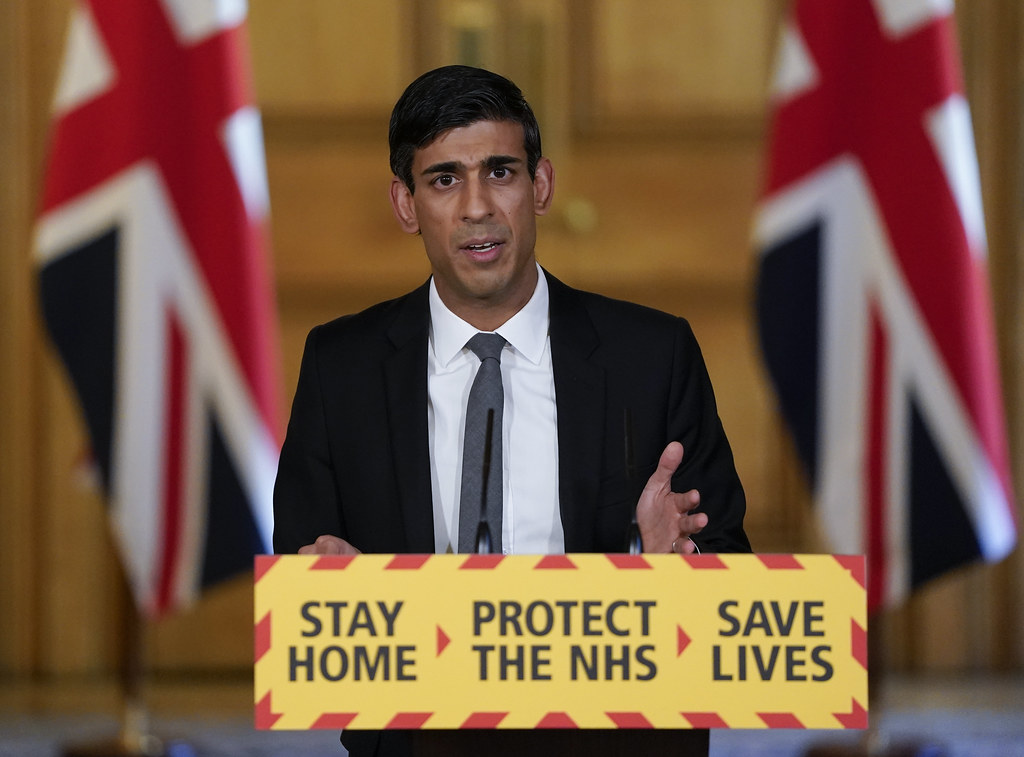
    Noting the anomaly, the Chancellor Rishi Sunak moved to take into account the tax return filings made in 2019-2020 to expand the help offered to the self-employed. This was admirable, but it was accompanied by noises that at some point the self-employed National Insurance contribution would rise from the current 9% to 12% in line with those in employment.  

    This is short-sighted. Without pension contributions, or reliable pay checks, the self-employed take on a greater degree of risk. They’re by nature entrepreneurial – the sort of people the Conservatives are meant to admire. Self-employed parents are believers in the importance of the family unit – another important plank of Conservative thought.  

    This isn’t just about self-employed fathers, but mothers too. The leading charity Pregnant Then Screwed was set up to fight against the discrimination women face during pregnancy and after having children. The organisation recently took the government to court, to challenge the Self-Employment Income Support Scheme.  

    The basis of their argument is that the calculation of the grant does not exempt periods of maternity leave when calculating average earnings, leaving around 69,200 women affected. When questioned, the Chancellor compared taking maternity leave to taking a sabbatical or ill-health. The charity lost their challenge in February 2021 and are seeking grounds for appeal.   

    Rishi Sunak’s style of delivery is always impressive. He is surely right to speak plainly to the electorate about the condition of the public finances. But when the government looks at how the cost of borrowing will be born going forwards it will be important – both politically and morally – for recent history to be understood.  

    The reality is that the complex realities of family life is an area which isn’t being sufficiently explored by the leading think tanks – a fact in itself symptomatic of an issue which has fallen through the cracks.  

    Mark Morrin, Principal Research Consultant at Respublica, says: ‘For years the self-employed have been encouraged to go that way, but when the crisis came they were ignored.’ He adds that this gap speaks to the fact that the Conservatives ‘used to be entrepreneurial under Thatcher,’ but that now ‘the Red Wall Tories don’t look at the world that way. You might not admire Hungary and Poland for obvious reasons, but they have more sophisticated approaches to family policy.’  

    Morrin’s right – the Chancellor needs to look at the nuance of this before saddling the next generation of entrepreneurs with an impossible burden.