Tag: Relatively Speaking

  • Lumos Education CEO Johanna Mitchell on her early life and the incredible influence of her parents


    Johanna Mitchell


    I had no idea that I would work as an education consultant, until I was in my mid-30s, running a small school for the Lawn Tennis Association. The education part I got from my father and my sense of optimism from my great aunt, Pat.  My own experiences of education made me want to help other children. When parents ask me to find a ‘leading’ school or university for their children, I always ask what they mean. If it doesn’t cater to the specific emotional and social needs of their children, it’s leading them nowhere.

    My father was an academic.  A North Londoner, he attended Haberdashers, after failing the 11+. Prior to this, he was told by his prep school head that he would amount to nothing.  Like many young men, he started to thrive at aged 13-14 and went on to have a career in food technology. He was said to have developed the recipe for Quavers crisps whilst at Unilever.

    His colleagues described him as the Patrick Moore of the food science world. He was the archetypal mad professor and was often to be seen on stage, trying in vain to put his hands into the pockets of his inside-out lab coat.  His secretary remembers him telephoning her regularly from airports to ask: ‘where am I going?’.

    Whilst my father was secular, my Roman Catholic mother was the major force behind my schooling. My father confided that there were two things that filled him most with trepidation:  one was the nuns and the second was women, of a certain age, telling Peter Jones’ customer services that they were ‘cross’.  The head of my first secondary school, a convent, was the formidable Sister Mary Angela.

    At parents’ evenings, she would send my father into a spin. At Sister Mary Raymond’s funeral, an elderly piano-teaching nun with six fingers on one hand, Sister Mary Angela marched to the altar and slammed her coffin lid shut, exclaiming ‘thank God she’s gone!.’ It was pointless getting on the wrong side on Sister Mary Angela.

    A gentle soul, who didn’t hold with too much authority, my father sneaked a replacement tape player into my boarding house, right under the housemistress’s nose.  My old one had been confiscated for playing Pink Floyd’s The Wall loudly.  Later, at another school, I was expelled, with my friend Isobel, for posting questionable photographs on the head’s door in the middle of my night. My father was summoned and when Father President handed him a manila envelope, containing said photographs, my father took them out, examined them and burst into laughter. I loved him for that. Priests didn’t frighten him as much as nuns.  I’m not sure why. Perhaps it was the added female dimension. Or the veil.

    After this, I had to sit my A levels as an external candidate, at schools which had the same specialist papers.  Oakham School were very kind. My father decreed that I would have to self-fund part of my private tuition by working in a launderette and waitressing. I know how to operate a dry-cleaning machine and am a dab hand at silver service. It was a challenging period. Despite being predicted straight As, I lost all my university offers, and had to take up a clearing place. In my work with Lumos Education, I feel an affinity with children who have experienced ruptures in their education.

    Post university, I went to live in Paris for a few years, teaching English, working as a fille au pair and doing a postgraduate at the Sorbonne. I wanted to be an academic, like my father – maybe in English or French literature. He himself said he would have liked to have been a Bond hero. Or perhaps, a politician.  He saw both as more glamorous. His own father had overseen general election campaigns for Conservative Party central office.  So he had some understanding of politics.  His one and only student job was delivering Conservative Party campaign leaflets throughout Hampstead and Finchley. No launderettes for him!

    Back in London, I joined the civil service.  Sir Humphrey stalked the corridors of my first department. I remember one senior civil servant telling me that I could only handle confidential files if I put on the pair of white gloves which were in the cabinet, with said files.  I didn’t double check invites that had been printed for the Science Minister inviting his guests to the Zuckerman Science Lecture that year, and afterwards to a buffet supper. The letters went out inviting guests to a ‘buffer supper.’ Although this seemed quite appropriate, given some of the audience, the minister was, understandably, not happy.

    In London, I began to spend more time with my great aunt Pat, whom I hadn’t known well as a child.  She divided her time between London and Sydney, was from the Irish/Australian branch of the family and a real bon viveur. Unfailingly cheerful, she lunched most days at Frantoio on the Kings Road.  Three months pregnant with my youngest daughter, I arrived for a pre-lunch drink and she filled a half pint class with brandy .

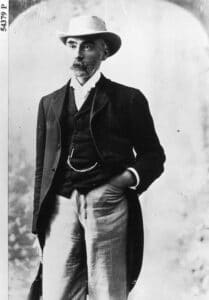
    When I refused the drink:  ‘lily-livered all your generation are!  All vegetarian’, she said.  Once her back was turned, I tipped the brandy into a pot plant (which was conspicuously absent on my next visit).  Both Pat’s sons had pre-deceased her, but she was just incredibly resilient.  Her family history was both entrepreneurial and tragic. Her grandfather, my great, great grandfather, was Charles Yelverton O’Connor, the engineer who constructed Freemantle Harbour.  He rode into the sea and shot himself after being criticised, for his work, in the Times.  There are two statues commemorating him in Freemantle.
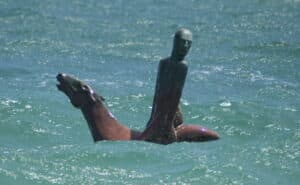
     

    Commemorative statue at Freemantle


    Charles Yelverton O’Connor


    Her aunt, my great, great aunt, was Charles’ daughter, Kathleen O’Connor, the celebrated Australian impressionist artist who defied the patriarchy surrounding women artists of her time, and lived to her 90s.  Pat had some of her paintings in her Chelsea home. My husband and my daughters enjoy painting.  Pat lived until 100 and, even in her nursing home, she shared a bottle of good red with her fellow residents every night. I learned a lot from her – mainly that your glass should always be half full.
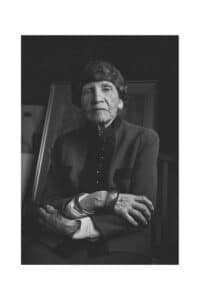
    Credit: Richard Woldendorp


    Some of my dearest friends today are from the civil service, school and university. Interestingly, in my time there, there were a lot of civil servants who had been raised in the Catholic church. Whether or not you continue the religion into adulthood, it does give you a sense of service. I love helping families to navigate global education systems which can seem incredibly complex.  Pastoral care is so much better now and we understand more about the emotional health of the child. There are still key improvements to be made in education, but it’s far cry from my experiences in the 1980s.

    My father and aunt Pat were givers. Dad loved to help others, young academics and children whom he tutored in chess. He sponsored a young girl’s education in India and, despite being an incredibly busy man, he wrote to her regularly.  He didn’t give a fig for money, rank or power.  He always said ‘be kind, for others are fighting a harder battle.’ I didn’t understand exactly what he meant then. I do now. We have a picture of Plato on our kitchen wall, with his quote below. My daughters have stuck a moustache on poor Plato. Having both studied ancient Greek, they should know the importance of this great philosopher.

    My father was also a man of his generation, without much freedom to express his emotions.  He would have had more emotional freedom now.  I remember him crying three times:  when his first marriage fell apart, when he watched a programme on Siege of Leningrad and on the day of the Brexit referendum result.

    I’ve made so many mistakes and continue to do so.  So did my father and my aunt. It’s essential to learn from them.  And to hold ourselves accountable when things go wrong. Staying in one’s integrity, and treating people well is not always easy – but it’s the most important thing. My father understood this.  With challenge comes growth.

    Ancestral lines are not just linear. Their branches grow thick and dense with our colourful ancestors whose loves, hopes and losses were not so very different from ours. When asked, most people can’t remember the names of their great grandparents. How quickly we are forgotten. A reminder to live for now and to do our best work.


  • Cricket Nostalgia: Henry Blofeld on PG Wodehouse, Ian Fleming and the Remarkable Cricket of the Past

    The great commentator Henry Blofeld permits himself a moment of cricket nostalgia about his upbringing and the cricket of his youth

    At my age, you’re permitted to look back a bit – to think of the circumstances of one’s family and the ways in which the world is changing. A bit of nostalgia never goes amiss when you’re in your eighties as I am.

    As I do this, I realise it’s the small things which tell you rather a lot. I recall that my father was a great reader aloud which is something which happens less and less today – but if you don’t do that you miss the sound of words, and it’s that which can really connect you to a writer. My father not only had a beautiful voice but was extremely articulate and was really an academic I suppose. Wodehouse was one of those authors he introduced me to between the ages of 10 and 16 – and taking those books close to my heart has shaped my life. It’s dated, of course, but it’s very funny.

    Sometimes Wodehouse seems to come near to my own life. There’s a book by Wodehouse Psmith in the City which describes an extraordinarily similar path to my early career. Wodehouse was in the City, and so was I – at a merchant bank called Robert Benson Lonsdale. I was there for three years; Wodehouse, of course, was quietly writing novels during his ordeal. But you could say that both of us were rather out of place and rather eager to leave.

    I was very lucky to get into sports-writing. One of my heroes was John Arlott, and that led me into an interest in the batsman Jack Hobbs. Arlott adored Jack Hobbs – Hobbs could be said to be the greatest batsman ever produced. He played his first test match in Melbourne in 1907, and played his last test in 1930 – the sort of longevity we’ve seen recently in the fast bowler James Anderson.

    Hobbs and Sutcliffe together were the most extraordinary pair – just as Anderson and Broad were. Hobbs and Sutcliffe even made runs on old-fashioned sticky wickets in Australia. He must have been the most supreme technician and was every bit as good in defence as Geoffrey Boycott – but in attack he lived in another world.

    I sometimes hear it said that bowlers used to appeal in somewhat meeker way in the 1940s and 50s. One hears it said that bowlers, seeing a possibility of a leg before wicket decision, would politely enquire of umpires: “How was that?” But this is sometimes exaggerated. I think of lots of photographs of cricket in the old days and they all go up like mad. It might perhaps be that distance may have learned a certain enchantment. Do people really think there was an age in life when bowlers were uncorrupted? I fear not.

    And distance lends lustre in lots of ways. WG Grace was an amazing cricketer, of course. In fact he was one of the greats – but not a great man. He comes quite badly out of the chapter in my book in 1882 when he ran out Sammy Jones when for all intents and purposes the ball was dead. That was entirely reprehensible and an appalling thing to do, and it was more appalling in 1882 than it would have been in 1982.

    Of course, in that year, Botham ran out Geoffrey Boycott – but that was done deliberately as he was sent in in Christchurch. It took Botham two balls and was one of the funniest things I’ve ever seen. He pushed it to the offside and a lot of sashaying up the pitch, and “Yes-no-wait!” After he was run out, Boycott said: “Do you know what you’ve done? You’ve ruined my average!” I can’t remember what Botham said in return, but it was something very flowery and Boycott withdrew in a sulk.

    I am sometimes asked about my surname, since it is used in the Bond novels, and I suspect Ian Fleming thought of it because of me. I knew Fleming a bit, but I didn’t exactly think much of him – and I don’t go to the Bond films to see my family name written in lights. Fleming and I were elected to Boodle’s on the same day; I had dinner with him and my first wife in Jamaica, when I was 22. I was quite young to be meeting such well-known people. I suppose that did make me more confident later on.

    And confidence would come in handy in my career. In the early days of broadcasting, doing reports of county matches, stopwatch in hand – that was a very hairy business and to do that one had to have a certain confidence.

    Sometimes one had to commentate in rather bizarre situations. I can also remember sitting on a sack of sawdust in the groundman’s office at Sydney at the back of the Noble stand without any windows at all, doing a report for Sport on Four. I can also recall doing reporting on a total eclipse of the sun from Bombay – not to mention reporting on the riots in Lahore during the 1977 Test Match. It was nothing if not varied.

    I do wonder about the future of the sport. I can see the point of One Day Cricket in the same way I can see the point of instant coffee – which I find quite undrinkable. One Day Cricket was introduced as a financial palliative, and it’s not ideal in my view. Perhaps one day we’ll have the ultimate cricket match where each side will have one ball, bowled in front of 100,000 people. I wonder what WG Grace and John Arlott would make of that – and PG Wodehouse for that matter.


  • Simon Callow on his upbringing, life as an actor and the dangers of the art house flop

    Simon Callow

    I am sometimes asked by young people who want to be actors whether I can help – realistically, there’s not much I can do because I’m not Laurence Olivier so I can’t invite people to come and work in my theatre.

    But when asked for advice, I tell young people that it’s a very, very hard life.   If you are considering this route, you must first ask yourself: “Do you need to be an actor?” Unless your life depends on it – unless it’s the only thing that you can imagine yourself doing – then don’t even think about it because it’s a life of rejection and disappointment.

    I lived in Streatham until I was five and then I went to live in Berkshire where my mother was the school secretary for two years, before we returned to Streatham. When I was nine, I went to Africa; we returned eventually in 1962, and I lived then in Gypsy Hill.

    I didn’t think I was going to be an artist until much later. I had no idea but my grandmother had been a singer, and even been on the stage. She was a contralto – one of those deep female voices that you don’t really hear so much nowadays.  But the life was not for her since she suffered quite badly from nerves so big concerts were difficult. However, she did sing at the Albert Hall to celebrate the end of the war in 1919.

    She was a very theatrical human being as was her father – who was Danish and had been a clown in the Tivoli Club, and then became a ringmaster in Copenhagen where he married my great grandmother, a bare back horse rider. He came from a long line of equestrian folk and came to London and became an impresario. So theatre was there but not close to hand.

    As a child I was rather extrovert.  When I was out with my grandmother shopping I would be doing routines and someone said to my grandmother: “This child should be on stage, he is very gifted.” My grandmother was delighted by that idea and told my mother the good news and my mother said: “Over my dead body!”

    When I was in Africa, aged 9 or 12, in Lusaka, Zambia at school we did little playlets but tiny stuff. When I went to boarding school in South Africa at a school called St Aidens in what was then Grahamstown, I did actually act in plays but I have very little memory of it – except there is a photograph of me dressed up as an angry old man shaking my fist.

    When I came back to England, I went to a school called the London Oratory which was in those days in Chelsea but subsequently moved to Fulham and became quite a famous school partly because Tony Blair went there. It was a pretty terrible school and we had no drama at all. I knew nothing about acting at all. But London was all around me, and from my personal experience, I was overwhelmed by the work of the National Theatre and the Old Vic. I wrote a letter to Laurence Olivier who suggested that I might apply for a job in the box office.

    Since that time, I’ve been very lucky in my career, and I do get recognised, especially after Four Weddings and A Funeral. However I’m not Jennifer Lopez and I’m not Brad Pitt so the true burdens of fame aren’t something I’ve had to bear.

    I’ve had my share of setbacks. Not all movie executives or financiers are especially responsive to my art, but then that’s especially normal when people cross over from theatre into film. Take Tom Stoppard, as an example, who has sometimes seen his scripts go unmade: he is essentially a playwright, and he knows what he’s doing. But when executives read a Tom Stoppard script they probably don’t see dollar signs. Instead they think: “This is very clever, this is very interesting but where’s the money and the audience?”

    I have sometimes had to face the fact that I’m not commercial. I directed one film called The Ballad of the Sad Café which was a sort of mildly respected flop. An art house flop is the worst sort of film you can make. You could make an art house success, and that’s very good. You can also make a commercial flop – but if you brought it in on time and under budget then you would still be a safe pair of hands. But an art house flop is an absolute no-no.

    Even so, things are looking up and I have some movies in the pipeline, which are very promising. But the thing about making movies is that it’s very expensive, and people don’t like spending their money – except when they sometimes go mad and think that they are making art like Warren Beatty’s famous flop Ishtar, where everybody spent more and more money because he was Warren Beatty.

    This is all partly why I am quite nervous when I am doing plays with other people: on my own I am my own master completely and even if were to forget a lump of the text I can make it up, and I am now quite good at improvising Dickens and Shakespeare. I note that the solo play is becoming a trend. I see that Eddie Izzard has just done Great Expectations, and that Andrew Scott has done Uncle Vanya as a one man show. The only novel that I have ever done as a one man show is A Christmas Carol which works because it is this amazing magical performance where you can jump from one scene to another: the narrator of A Christmas Carol in our version is a conjurer and that makes sense.

    I am often asked about my next one man show. I’m sure Gore Vidal would make an entertaining evening but I don’t think I would be the person to do it. I am always nobbling writers to write me things and they are always a bit daunted by it. They are adapting at the moment a novel by an American novelist called John Clinch. Clinch he writes two kinds of novels: straightforward narratives and prequels somehow interconnected to already existing novels. One he wrote was called Marley; I happened to review it for The New York Times – and I immediately took an option out on it because I could see huge cinematic potential in it, as well as solo performance potential. I’m on a third draft of it, and getting close to something performable now.

    I’ve now been writing about Orson Welles for over a quarter of a century: I have become a more nuanced viewer of the human scene than I was when I was younger but that’s not surprising. But lately I’ve been thinking about fiction too: there are about half a dozen novels swirling around in my brain and I would love to write them, but I have so many other things that I have still got to do before that. I also want to write about my family – but not in fictional form:  I have just got to get it out of my system.

  • Laurence Fox on wokeism, education, and running to be London mayor

    Laurence Fox on wokeism, education, and running to be London mayor

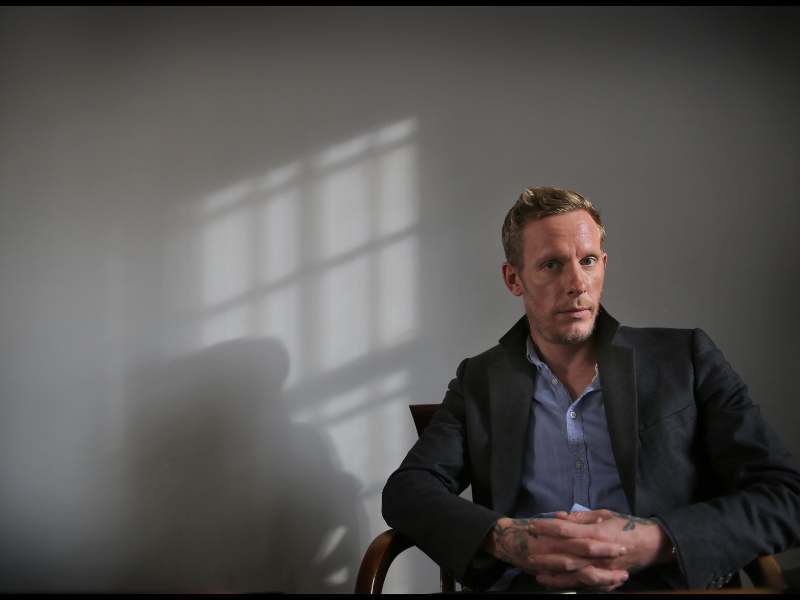
    As part of our series focusing on candidates for the London mayoral elections, Emily Prescott speaks to the former actor about his ambitions to change education and jobs in London

    Laurence Fox hates confrontation. This may not be immediately obvious if you’ve seen the footage of the actor metamorphosing into a political brand on Question Time while accusing an audience member of racism after she called him a “white privileged male”. But he tells me although he is morally opposed to wearing “face nappies” to prevent the spread of coronavirus, he occasionally acquiesces — just to avoid arguments on the tube.  Besides, as he is getting a lot of attention for setting up his political party, Reclaim, and running for London mayor, masks make for a good disguise.

    When I walk into Reclaim’s office in London Victoria, Fox is finishing off his lunchtime plate of chips and his son is sitting at a laptop in the corner. Fox apologises, explaining his son isn’t allowed into school as he is supposed to be isolating. 

    Fox, 42, shares an office with one of the few right-wing comedians, Leo Kearse, who helps Reclaim with social media and Stephanie Kowalski, his executive assistant, who he met after she messaged Reclaim’s website. They seem to get on well with Fox, Steph’s only complaint is that he overshares and so people take advantage of him. They are part of a core team of three, which sometimes becomes twelve, making up his new Reclaim party. That’s excluding the people who have already been fired. 

    The internal recruitment hiccups seem unsurprising given the divisive nature of Fox’s work. His party has been characterised as ‘UKIP for culture’. Curiously, on the weekend that former UKIP leader Nigel Farage announced he was stepping back from politics, Fox announced he was stepping up and running for London Mayor. Fox doesn’t entirely reject their similarities but stresses that, unlike Farage he’s not focused on immigration. Fox, who voted for Jeremy Corbyn in 2017, says he would encourage a policy of “assimilation.” “I’m not like out on the Channel with a boat saying ‘go home’. Not my vibe,” he adds. 

    So, what is his vibe? He says he hates the lockdown rules as they stand in opposition to his love of freedom. “They’re ruling us and I don’t want to be f**king ruled,” he tells me like a rebellious adolescent. I start to think of him as the Right’s Russell Brand. The comedian who, while learning about politics in the glare of the public eye in 2015, briefly attempted to start a revolution by suggesting people shouldn’t vote.  But unlike Brand, Fox isn’t just words, he’s extremely proactive — and his message is clearly resonating. More than 30,000 people have already signed up to Reclaim and businessman Jeremy Hosking has donated £5million to the party and is bankrolling Fox’s run for mayor. 

    I wonder then, is he more akin to Boris Johnson who served as London mayor en route to Number 10? But aside from their well-to-do backgrounds and passionate patriotism, they have very little in common. Boris plays the class clown while trying to advance his own career, whereas Fox tries to be a serious politician, to the detriment of his (former) career.  Also, unlike Johnson, Fox doesn’t seem to care for an Oxbridge following. Fox doesn’t infuse sentences with classical allusions and he is quick to tell me about his contempt for cyclists. Critically, Fox is a far more ardent libertarian when it comes to lockdown.  

    Fox is particularly concerned about the impact of lockdown on jobs and the economy and is focusing his mayoral campaign around this issue. He says: “We did polling and found out that 75% of people are worried that local small businesses are going to close.” 

    “It’s costing over £1billion a day which is crap, 50,000 lost jobs on Oxford Street, 700,000 jobs lost nationwide. I think it’s really sad but I think more importantly, people need to get out and be together and have fun again and remember what it’s like to be alive,” he sighs. 

    He also says children should have never been taken out of schools. On education more generally, Fox, who was ultimately expelled from Harrow for having sex at the sixth-form ball, hopes to raise the quality of all state schools across the country and doesn’t think much of private schools. But on this policy area, he is more attitude than detail. “I hate paying private school fees for my children. If it was my choice, I wouldn’t be doing it because I just think it’s a waste of money,” he says of his two sons, from his tumultuous relationship with actor ex-wife Billie Piper. “What’s the point in spending money so you can teach them all to be posh and hang around with other elite parents? Boring.”

     Although he doesn’t know specifically how to improve all state schools, he is happy to delegate to the experts and he says, “I’m just fairly logical. So just go, what’s the logical solution to this problem?”  

    One thing he is sure about is that calls to decolonise the curriculum are problematic. Advocates of decolonisation want to interrogate the historical cannon and include a wider range of perspectives. But Fox says, if anything, we “need to recolonise the curriculum” so there is a greater emphasis on British history. “Rather than being taught to look at history through a lens of race or gender, they should probably be taught to look at history through a lens of identity and home,” he explains.  

    He believes firmly in a culture war and the ultimate aim of Reclaim, he says, is just to shift the “Overton window” — the range of ideas that voters find acceptable. “We live in a kind of two tier system in this country ‘the morally superior’ and the ‘deplorables’,” he says he represents the latter.  I wonder how he takes the temperature of the nation and how he plans on measuring the movement of the window.
     
    He doesn’t have Facebook, which I suggest might be a better way to reach potential followers, but he says: “Twatter feed gets looked at quite frequently.” He knows it’s an “utter sewer of a place” and while he used to get offended by the comments when he first joined the platform in 2009, he insists now they don’t upset him. Ironically, it was fellow Lewis actor Rebecca Front who encouraged him to sign up, though they have since had a very public falling out on the site. 
     
    Fox blames social media for the rise of what he calls “wokeism” and he says he pities the “very serious and pious” generation who are growing up in the digital age. He also says there’s an awful lot of “virtue signalling” on the site. He references actor Ralf Little who denounced Fox on Twitter but was quiet when Fox threatened to expose some “horrendous” stories. He says he has had quite a few “showbiz people” criticise him on Twitter and then privately message an apology saying, “that’s the way the game works”. Indeed, since launching his political career, his acting agent has dropped him.  

    As a member of the “Fox Acting Dynasty” – including agent Robin, his sons Edward, James, Robert, and next generation actors Emilia, Freddie, and Jack – Laurence is not an outlier. He comes from a long line of entertaining and divisive eccentrics. In 2016 for instance, Edward told The Daily Mail: “Manhood is up against it now, because they’re not being asked to be proper men… Men are more animalistic than these metropolitan, so-called ‘civilised’, ‘good’ people.” 

    Laurence Fox tells me he was raised in a matriarchy. “I didn’t even know about the patriarchy until about three years ago. I didn’t even know there was a tyrannical patriarchy,” he shrugs.  He certainly doesn’t think it is something he has benefitted from: ”Yeah, there’s a lot privileges that females get, there’s definitely some male privileges as well. I think overall, we’re equal.” 

    When I dare to ask him the naughtiest thing he’s ever done he cites his respectful attitude towards women: “You know how some of these people get into power and then you suddenly find out that they’re a bit handsy with women. I’m so grateful now I’m working in the political arena that I’ve never been that way inclined.” He suggests the naughtiest thing is probably drugs, although he doesn’t think they are that bad, either that or punching a photographer. 

    Fox is used to being scolded by the media for his rebellious behaviour but setting up Reclaim and launching a bid for mayor has led to a constant onslaught of what he perceives to be unfair criticism. Before we met, he had an interview with The Times’s Andrew Billen. Fox bet me £100 that Billen would paint him as a suicidal divorcee just looking for a reason to live or an Oswald Mosley type.  He also says Billen pointed to the way he disciplined Blaze the Labrador and Sparky the Jack Russell to suggest he might be an angry man. Indeed, Billen writes that while speaking to Fox, images of the facist popped into his head.


    Fox doesn’t seem to be motivated by a thirst for power, rather he is driven by a sense of victimhood and it seems feelings of love rather than feelings of anger. “We live in the free-est most tolerant, progressive society on earth and everybody has renounced that,” he says. His anti-COVID-regulation views come from a place of love. “A mate of mine died in a hospital, choked on her vomit because no one put a f***ing heart rate monitor on her finger.” While he doesn’t blame the NHS for her death, he says there are more important health issues than coronavirus. 
     
    Indeed, love is inked over his body. On his hand, he has a rose “because I am sometimes quite animated with my hands as you can probably see when I’m waving my hands so it’s to say there is love behind it.” He has a tattoo commemorating his two boys. Throughout the interview he keeps telling the potentially contagious yet very well behaved son that he loves him. Fox also has a cover-up of a wedding tattoo, as well as his mum’s maiden name which was Piper, “awkward”. 

    His mum died in April and he shows me a dove of peace on his arm which symbolises her going to heaven. The words on his hands are an ode to his mum’s favourite expression: “I just want freedom and space”. I felt for his loss. “No, don’t worry about it, it’s not your fault,” he says. 

    It’s been a challenging year for Fox, he’s lost his mum and his acting career and has had so many death threats, he now has a bodyguard. ”Sometimes I wake up and think when is one of these days going to be like, chilled,” he sighs. Entrance into the political arena may be taking its toll and despite his previous protestations, he seems to have an almost masochistic taste for confrontation. 

    The “chilled” days aren’t going to happen particularly soon as the battle for London Mayor is going to be tough. But he tells me he’s not worried about the “other two”. “Sadiq Khan is Boris’s stooge isn’t he? Because he’s with Boris, he’s like, more lockdowns, longer, and I don’t know what the Conservative dude is on about except doing even more controversial Tweets than I do.” What about the Green’s Sian Berry, I ask? “Who’s Sian Berry?” he says.

    I wrap up the interview and he opens the door for me, “I guess this is toxic masculinity,” he says with a friendly wink. He is sardonic and charismatic, and from the perspective of an interviewer, his candour is refreshing. He is a lifelong entertainer and so it is easy to see him as the joke candidate. But Count Binface he is not. 

    His defenders would point to the need for plain-speaking in a society where ‘wokeism’ is on the rise but for many he has crossed a dangerous line, both in the manner of his speech, and in his attitude to public health. Now Fox is really throwing his hat into the political ring, he will rightly face more scrutiny than ever before.

    Photo credit: Martin Pope