Tag: rADIO

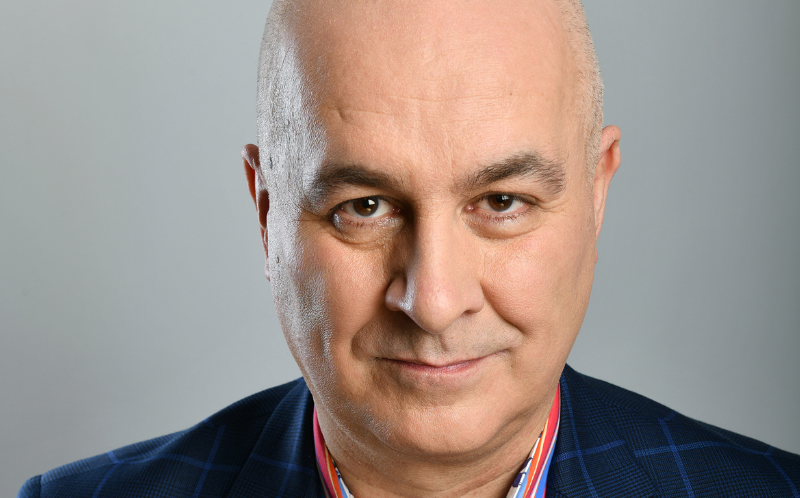
  • Iain Dale’s Advice to Young People Considering a Career in Radio

    Iain Dale’s Advice to Young People Considering a Career in Radio

    Everybody has got to work towards achieving their dreams in life. Most people have ambitions. There are people in this world who are very comfortable doing a nine to five job, and never do any work at home. Their evenings and weekends are for relaxation and family and whatever. 

    Then there’s the other sort of person, which is what I am: somebody who never really switches off. I’ve always had ambitions – and my two ambitions when I was at university, were either to be a member of parliament, or to be a radio presenter. Now I had a good go at being a member of parliament, but there was a bit of electoral pushback so that didn’t happen. 

    But in respect of my second ambition, I would I say one of the lessons is: it’s never too late. I was 48 when I got the gig on LBC – and I thought I’d had it, and that I wasn’t going to achieve that as well. But I just happened to take the initiative at the right time.

    The guy who was running LBC ten years ago saw something in me that others hadn’t. I always knew that I could be a good radio presenter but, of course, you’re always reliant on getting the opportunity. I didn’t get that job because of who I knew. But I got an opportunity to do an audition at LBC, and I thought it had gone terribly but clearly hadn’t. I’d gotten imposter syndrome! I started doing some cover programmes in 2009, and then they offered me a five day a week show in September 2010, and I’ve been there ever since. It’s the best job I’ve ever had.

    So don’t think everybody is automatically ever going to be able to achieve what they want to achieve in life. Life isn’t like: it can throw a lot of hurdles in your way. But application, persistence and patience can get you a long way.

    Of course, radio presenting is a very precarious profession. You’re not employed – except insofar as you’re taken on a fixed contract. That contract can finish at any point and it can come when you least expect it. It has a finish date, and I’ve always assumed that they wouldn’t renew it. I’m 58 now. I’ve had 10 years. If it all finished tomorrow I could have absolutely no complaints. And I’m not going to be one of those radio presenters who flounces off. You know at some point, you will be got rid of. your contract won’t be renewed you haven’t been sacked, they just haven’t been able to contract. At some point, they will decide that they want to put some new blood into the daytime schedule, and one of us will be the unlucky one. Now, it may be me – who knows. I hope to be there for some time to come.

    Of course, there are other career routes within radio, and I’m sometimes asked whether it’s possible to make a living producing radio programmes. That’s now very different to what it was. It’s a lot more difficult to get into now than it was 20 or 30 years ago. You have to have a broadcasters degree, and it’s very rare that you get taken on if you haven’t got a professional qualification. Though there are exceptions to that, they are very rare exceptions. 

    There’s a guy at LBC now who hasn’t got the traditional qualifications, but he literally came in at the age of 18. He just came in, shadowing one day, and somebody saw something in him – and he made himself indispensable. He’s now producing for Nick Ferrari at a very young age and you think, “Well, good on him!” 

    I always remember in about 1994, I took on a politics student – and he had something. I like to talent spot. He said, “I really want to get into political broadcasting.” I said, “Well, Sky News Milbank studios are literally 400 yards down the road. Go, and just turn up a reception. Say you want to see Adam Bolton and tell him that I sent you”. And he ended up effectively making Adam Bolton’s tea for a couple of weeks, and – to cut a long story short – ended up as the editor of Tonight with Trevor McDonald, and This Morning. But this was in 1994 – I don’t think you could do that nowadays. But maybe you could. 

  • Iain Dale: ‘I know what politicians don’t want to be asked’

    Iain Dale: ‘I know what politicians don’t want to be asked’

    The LBC presenter on the art of the interview and his complicated relationship with David Cameron

    If you appear in the media, everyone imagines that you must be a complete extrovert. 

    Of course, even in an interview there is a little bit of ham-acting involved, particularly if you’re in television. But most radio and TV presenters have a shy side to them. Perhaps shy people tend to be a little bit more empathetic.

    Shyness is more common than you might think. I knew somebody who was a conservative parliamentary candidate who would literally throw up before every speech. But I don’t get nervous. Having said that, I recently interviewed former FBI director James Comey, and had little time to prepare. Thankfully, my approach to interviews is normally not to do a lot of preparation because I like to think of them as conversations – and the more preparation you do, the more stilted it is. I never have a list of questions, for example. I try to listen to what the answer is. If you have a list of questions, the temptation is just to go through them one by one and ask them. Well that’s fine, but it’s not very rewarding.

    We are all human beings, and this is what sometimes people forget about people in the media – or more to the point, politicians. We all have the same human reactions as everybody else. If an interviewer starts asking really aggressive questions right from the start., it’s no surprise that the politician puts the shutters up and thinks, “Well if you’re going to be like that, then I’m not going to give you anything.” There has to be a degree of mutual respect. 

    Interviewing prime ministers is interesting. In 2003, I was asked to write an article about who will be the ten people at the top of politics in ten years’ time. I remember writing in that article that David Cameron hadn’t really made a mark on parliament. The week after the article was published I sat next to him at a dinner. When I raised it, he said, “Yes, I did see it. I asked my staff to leave the room and I put my feet up on the table, and I just sat there for five minutes thinking: “He’s right. What have I achieved in two years in Parliament?”’ That was a brilliant way of defusing a potentially awkward social situation. 

    Later, when I was running for parliament he drove up in his Skoda to campaign with me and we had a brilliant day together. And when he was prime minister, I did three interviews with him. I was poacher turned gamekeeper, and understood where he was coming from. This is one of the advantages of having been involved in politics, and then moving into journalism and broadcasting. As an interviewer, I have an advantage over people who haven’t been involved in politics: I know how they think, and what they don’t want to be asked. 

    Boris Johnson wrote the foreword to my latest book. He said yes immediately and then of course COVID happened. I got in touch in July 2020, and told him I’d understand if he couldn’t do it, and that there was no need to write 20 pages or anything like that! And it came on time. 

    But it was interesting to see the reaction. Some people on social media said,  “I wanted to buy this book but I’m not buying it because you’ve got Boris Johnson in it.” I thought: “If Jeremy Corbyn had won the election I would have asked him!” 

    It’s quite difficult to come to a judgement on a prime minister who’s still in office. Boris’ reputation in history will depend on how quickly the country gets back on its feet and how many people are actually out of a job. But most prime ministers are known for one thing in history. He wanted to be known as the Prime Minister who ‘got Brexit done’. He has got it done. But I suspect he’ll be known as the Covid Prime Minister.

    I used to find it very difficult to interview people that I know well. Now I just go in for the kill. Brandon Lewis and David Davis, who are my two closest friends in Parliament, say that they find me the most difficult interviewer. They think it’s because I’m overcompensating for the fact that everybody knows that. I don’t think it is. I just get more out of people by having a conversation with them. 

    Iain Dale’s latest book is The Prime Ministers, £25 from Hodder and Stoughton

    Photo credit: Steve Ullathorne