Tag: Publishing

  • Harry Hyman: a Labour government will be a helpful ‘resetting of the clock’

    Christopher Jackson


    I meet the entrepreneur and publisher Harry Hyman in his offices on Haymarket. He is ensconced in a corner office surrounded by John Piper prints and art which speaks to his love of theatre.

    Hyman has had an interesting life, succeeding in both the healthcare and publishing sectors. I am keen to know how it all began and ask him about his upbringing: “My parents both came from an immigrant background,” he tells me. “My father’s family came from Eastern Europe between 1890 and 1900. One lot came from what was then Belarus and the other lot came from what is now Poland but both I think then were under the Soviet influence. They probably wanted to get to New York, but they ended up in London by mistake, or because they didn’t have enough money to get there.”

    And on his mother’s side? “She was Anglo-Indian – and that meant nobody liking you, neither the Indians nor the British. People didn’t have very much money and so I think they were both very keen for people to do well and education was a very important part of that. It was drilled into you that education was vital.” He laughs: “I still believe that one of the few things that Tony Blair actually said that was probably right is: ‘Education, education, education’.”

    And how was Hyman’s education? “I knuckled down and did very well. I went to Cambridge, and graduated there with a first class degree in geography. I stayed for one year to think about doing a PhD but felt that wasn’t for me: it was too specialist and not very exciting. It’s a weird thing that when you study geography the more you go into a particular area it becomes like another subject: so for a physical geographer you almost become a geologist; a bio geographer becomes almost a biologist; an economic geographer becomes almost an economist; and a historical geographer becomes almost a historian.”

    But the year was 1979 and Thatcher was on the rise. Hyman intuited the enormity of the shift, and decided to enter the business world at perhaps one of the most opportune times in history: “I went off to Price Waterhouse and followed this quite conventional route of becoming a chartered accountant which I did very well at and I enjoyed my three and a half years there,” he recalls.

    However things were about to change for Hyman – and as so often happen, due to his meeting the right person at the right time. “I met this really entrepreneurial dynamic financier called Michael Goddard who worked at a business called Baltic plc and I had 11 very enjoyable hard-working years where I learned a lot about finance and about business and about negotiation but it instilled in me a desire to do my own thing.” Around that time Hyman had also begun to take an interest in healthcare. “I got very interested in health, and was interested to take the techniques of asset finance and structured finance, which was what Baltic specialised in, and apply that to different parts of the public sector which had been starved of capital because the Treasury controlled the purse strings.” Hyman saw that Thatcher’s administration was serious about shaking things up: “Norman Lamont introduced the Private Finance Initiative and I thought that was quite an interesting turning point; it was an opportunity for the government to form partnerships with the private sector to invest in infrastructure.”
     

    It was to be a huge success. Hyman left Baltic in 1994 to start his own company Nexus. This business set up Primary Health Properties; Hyman would manage it for 27 years, and only stopped being CEO in April 2023.

    When Hyman set up the healthcare business was he partnering with government from day one? “I got very interested in the fact that GPs, although they are independent contractors, have a contract with the NHS: as part of that they get their rent reimbursed to them by the NHS and of course the NHS is part of the British government. Therefore from an investor’s standpoint although your tenant is actually a group of GPs, the payor of the rent is actually the NHS which is the government: so you have a gilt-edged income stream even though your tenant is just a group of professionals.”

    For Hyman, this was a clear opportunity: “I saw that there was what I would call a yield and covenant arbitrage there and so set up the business to take advantage of that and to act as a funnel of capital back in, in order to modernise the NHS. Even today, 40 per cent of all primary care premises in the country are sub-standard and you are seeing a paradigm shift effectively away from an old-fashioned converted house where you had your polio jab on a sugar cube with a single handed GP giving it to you into a much more modern medical centre.” The beauty is that these centres are much more modern and contain ‘a raft of ancillary services’. This is, of course, also in the interests of the doctors. “They don’t want to take on the capital burden of providing a £9 or 10 million building: they are quite happy for a third party landlord like Primary Health Properties to be that partner and now our portfolio is around £2.8 billion: we have 514 centres, of which 21 are in Ireland and it’s a very interesting and safe and secure business model.”

    It sounds it, and the success of the venture has enabled Hyman to diversify into publishing. “Here at Nexus we publish B2B magazines and we run events around them. Our titles are Health Investor, Education Investor, Caring Times, Nursery Management, and today we have got a small publication called Nutrition Investor and we have Independent Schools Management. The theme of those is very much health and education. Property, health and education has been my raison d’etre for the past 30 years.”

    I say that publishing is a difficult sector compared with healthcare property. Why put himself through the stress? “The original reason is because I couldn’t find anything I wanted to read and so Health Investor is a B2B magazine focused on investors that are providing contracted out services to the NHS.   It’s basically an events business.  You obviously have to have content. I don’t think you can run the events without titles but as you know we’ve moved from a non-digital basis to a digital basis and people will pay for high quality content but it is quite hard on a lot of businesses who have really struggled with that.”

     

    And what does Hyman think of the prospect of a Labour government? “I think there’ll be a resetting of the clock, and that will allow someone to have a slightly longer timescale. I think Covid and the political contortions of late have given governments quite a short term time horizon which is not very good in terms of ensuring that infrastructure goes in to the built environment.”

    But that doesn’t mean that Hyman agrees with Labour, especially when it comes to its commitment to impose VAT on private school fees. “Will that apply to early years? Will it apply to all sorts of education? Will it apply to university tuition? Is it going to be five, eight, ten, or 20 per cent? How is that going to work? It sounds like a great manifesto commitment but I wouldn’t be at all surprised if it never got legislated for because it will push much more demand back into the state sector which is hard pressed anyway. In France everyone goes to a state school as I understand it. You are then talking about a wholesale system change.”

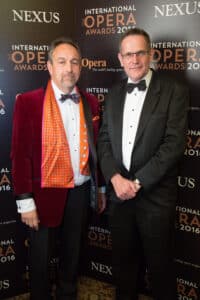
    Hyman’s success has allowed him time for his passions, chiefly opera. He founded the International Opera Awards in 2012, with a view to helping the sector. What was it that drew him to classical music? “They are quite profound stories. The topics in Shakespeare are enduring and unfortunately people think it’s all DJ toffs walking round Glyndebourne. Most opera houses go out of their way to try and encourage a younger generation of opera goers otherwise the whole audience will be dead in 10 or 15 years’ time.”

    The problem is that television has encroached on the economics of live performance, so it’s not an easy sector in which to pay the bills. “My shtick is to try and encourage younger people to make the grade from music college through to a proper career in opera whether they be singers, directors, musicians, or conductors – but it’s tough. Last year we gave out £100,000 worth of bursaries to 20 people: it’s not that enormous a sum of money but can make the difference between someone stopping their career and carrying on.”

    The plight of even the most talented musicians is an extremely difficult one. “You go to music school and then you get your music qualification – but then you have to make it as an artist and that will require you to sing in a chorus or hope to get spotted and get a supporting role. That in itself is difficult – and if you are not from a less well-off background or if you are an overseas person, it’s even harder. We have supported some Ukrainian people who have the right to be here as a student but they don’t have the right to work.”

    This interest brings him full circle back to his parents. “They were very interested in opera.  I first went in 1984, and it has been a journey since. I like Wagner: his music is absolutely sensational and the stories he writes about are primeval almost. The Ring is very profound isn’t it?  It’s about man’s quest for money and power and ends in disaster.  They all end up regretting having it but it’s this lust that drives them.”  And with that, I head back out onto Haymarket, reflecting that it’s not often you talk about Wagner and the private finance initiative in the same conversation – but Hyman is an interesting man with a broad frame of reference.


    To learn more about the International Opera Awards go to http://operaawards.org
     

  • Iain Dale on his experience as a business-owner: “There were a couple of times when I nearly couldn’t pay the salaries”

    Iain Dale on his experience as a business-owner: “There were a couple of times when I nearly couldn’t pay the salaries”

    Iain Dale

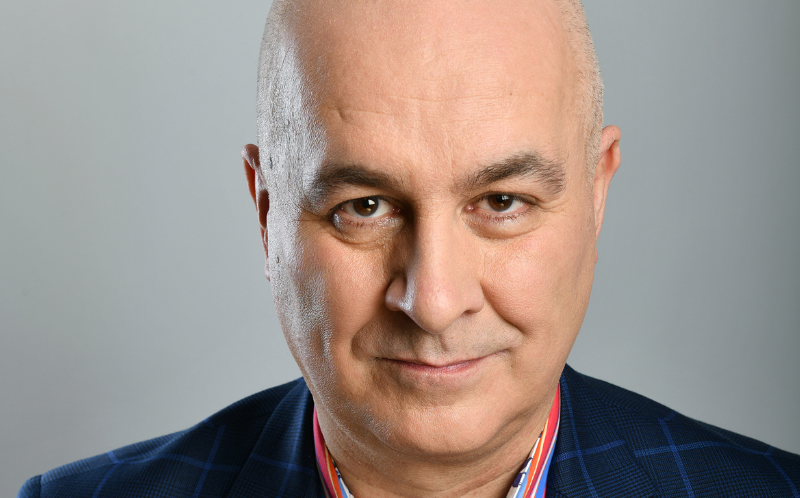
    I’ve now founded or run seven different companies. Tony Benn called me once his favourite Thatcherite entrepreneur and I’d say to him, “Well, how many Thatcherite entrepreneurs do you know, Tony?” and he said, “Well, you’re the only one.” 

    I suppose all my companies have worked to one degree or another but I’ve never particularly made any money out of them – but then I never went into them to make money which is maybe a mistake! But then most of them have revolved around books and publishing – and anybody who knows anything about books and publishing knows that it’s not a particularly lucrative area.

    But I’ve employed a lot of people over the years. I would like to think that most of them would think I was a good employer, and that I treated people well, and that I paid them decently. You learn a lot from running your own company. I remember when I started the bookshop Politicos in 1996, I don’t think I really comprehended that cash flow is more important than profit at that time. I started off with very little money myself – perhaps around £20,000 to put into from a pay off from a previous company. I raised another £40,000, but it was madness to start a business like that, with essentially no working capital. 

    I did it for seven years, and it was always on a financial knife edge. I was always thinking about, “Who do I pay now? Who do I put off paying?” There were a couple of times when I nearly came close to not being able to pay the salaries at the end of the month and that really concentrates the mind. 

    Anybody who employs people knows that you make some wrong decisions. I was saying all this to the managing director of a FTSE 250 company in the late 1990s. I’d just employed somebody as a bookshop manager, and had to get rid of him after about a week because I just knew that he wasn’t up to it and that I’d totally misjudged him from the interviews. He said: “Don’t beat yourself up about it. If I get one in three hires right, then I think I’m doing well.” So that gave me a lot of comfort, actually.

    I have had to sack people too. Anybody who thinks that an employer finds that an easy process is deluding themselves. It’s awful. Often it’s happened that I’ve had to get rid of people for different reasons – and it’s probably the main reason I don’t want now to start another company. I don’t want the responsibility of it – and it is a huge responsibility. 

    When I was running Biteback Publishing, I think at one point we had 20 employees –  and that’s the most I’ve ever had at any one time. And I really thought, “If I make one wrong decision here, I put 20 people out of work”. That to me was the biggest responsibility that anyone can have. I left about two and a half years ago now, and I thought I would miss it. In actual fact, I haven’t missed it as much as I thought, and I think I know why. It’s because the responsibility of it all preyed on my mind a lot more than I realised at the time. It’s such a relief not to have to worry about cash flow anymore.

    So all in all, I like what I’m doing now, especially the radio broadcasting. I actually don’t enjoy writing; in fact I have a major case of Imposter Syndrome about that. I’ve always been able to talk. If I never appeared on television again, it wouldn’t bother me at all, and as a result I’ve done very few television programmes. Writing for me is really a way of bringing people to the radio programmes. Really I’ve edited about 40 books but only written two. So I’m very lucky to do what I’m doing and I don’t miss my life as a business-owner one bit.

  • Chloe Ward: the publishing sector is now the preserve of a ‘privileged few’

    Chloe Ward: the publishing sector is now the preserve of a ‘privileged few’

    Chloe Ward

    The publishing industry is crucial to society. It gives us new perspectives, encouraging much-needed understanding of the world around us. The content being published has the power to change perspectives and narratives in real life. However, what the industry publishes is a reflection on who is purchasing that content. 

    Currently, the core audience for publishers in the UK is white and middle-class. The whole industry is essentially set up to cater to this one particular audience.

    Being mixed-raced means subjects or content in contemporary publishing that relate to my own lived experience feel few and far between.   

    I have always loved books and stories, finding it easy to be whisked away by dragons or follow heroes into battle. However, it has always felt to me like someone else’s adventure, someone else’s journey. To this day the content I consume, though wonderful, has very little to do with me or the cultures I am familiar with.

    When I started studying publishing at university, it was originally because I wanted to be the one to discover stories like those I’d loved before first-hand. However, throughout my studies, it became clear that this lack of diversity in both industry staffing and output was an issue – and not just my issue, but an issue for publishing as a whole. How much of an audience is this current industry reaching? I knew I wanted to make a change for others like me. 

    When I handed in my dissertation and final major project back in May 2020, despite the global pandemic raging on, I entered the real world with a sense of naivete about how easy finding a job would be.

    At any given time, it is difficult to get a toe in the door of the publishing industry due to its competitiveness. One role at a Big Five publisher can have over 1,000 applicants. But what made it worse was that during the uncertainty of the pandemic no one was hiring.

    I became frantic, spending hours writing and re-writing my CV. Cover letter after cover letter. Adhering to the advice of tutors to just keep on trying… and trying. Tailoring everything for each new role. Endless optimism…only to find hundreds of job rejections in my email.

    It is evident that publishing companies have put some useful initiatives in place for potential graduates, however if the industry wants to transform and diversify, it needs to make far greater and more fundamental changes. Putting more support in place for potential graduate employees is a must. Having a BAME internship available is all well and good, but when only 13%[1]of the workforce identifies as minority ethnic, this leaves a lot to be desired. The goal should be recruiting in a balanced way from all backgrounds, reflecting the demographics of real-life, to prevent gatekeeping of our published output becoming the preserve of a privileged few.

    More needs to be done by the industry once the pandemic is over to ensure that minority groups have a chance to gain employment and in turn make the change needed for a more diverse workforce. It is our job as the young voice driving the next generation to find these solutions and drive for them to be implemented; I have so many ideas and such a thirst to get going – what a difference we can make for our future. I’m excited to see the view from the other side.

    The writer is a graduate, seeking her first job in publishing


    [1]https://www.publishers.org.uk/publications/diversity-survey-of-the-publishing-workforce-2019/#:~:text=13.0%25%20of%20respondents%20identified%20as,yet%20reached%20the%2015%25%20target.

  • Dr. Todd Swift’s advice to young people on a career in publishing

    Dr. Todd Swift’s advice to young people on a career in publishing

    Todd Swift has spent a lifetime on the front line of literature as a publisher, poet, and writer of film scripts. Here he discusses the future of publishing

    If we have learned one thing from the pandemic, it’s that people seek comfort in stories. That these stories are often nowadays told in videogames, or on streaming TV services, or in Tweets and other brief image-based social networks, does not change a fundamental truth – stories arise from story-tellers, and most of those are writers. To extend that logic, most writers ultimately want to see their words published in books. Books, as we know, now evolve into many forms of adapted species, from electronic, to audio, and on to game, film, TV series, meme – and, yes, Halloween costume. JK Rowling may have her detractors, but she still launches a thousand Potters on October 31st

    All these stories, when gathered, and published, one way or the other, are the responsibility of publishers – and publishers need people to work with, and for, them. Apprenticeships, mentorships, and other programmes, are available online and in person, and in the post-vaccine days of the hopefully sunlit uplands to come, the young people of today could well be on the road to a job in publishing in a more socially pleasant future.  

    This article is meant to be a hopeful, if practical, and very brief guide to what they may face, should expect, and need to do, in order to best prepare for the interview and the potential jobs ahead, from editor, to typesetter, to book designer, to marketing or PR person; and concomitantly, what publishing faces when meeting them. 

    The only preparation for working in publishing is to read. A recent story in the news about a rock star in his fifties who had never read a book until lockdown, then read dozens, shows it is never too late to acquire the gift of ravenous literacy. But for a young person wanting to work in the book trade, an earlier relationship with them is essential. This may have once sounded elitist; it may well still sound so. But the good news is that libraries and online word hoards like Project Gutenberg make it less difficult for any person to find the great works they need to dive into.  

    A second skill – and it arises from the art and joy of reading – is writing. No one working in publishing can expect to get far without some ability with gramma and spelling. If you are the sort of GCHQ person who corrects books with a nibbled pencil stub when you read them, you will do well. Again, though, we have moved on from the old days. Enlightened pedagogy means that even people with dyslexia now work in publishing, even in proofreading. 

    The educational profile for younger people working in publishing has been an issue in the press and wider world of discussion of late. It is probably accurate to say that there was a time when you’d find the Bright Young Things of Bloomsbury beautifully dressed and cleverly down from Oxbridge with a First in Classics.  

    While this sort of clubbable coterie is ever-present, the truth is that almost all universities in the UK and beyond offer Publishing and Creative Writing degrees, from BAs to PhDs. The best-known course may be UEA in the fens of Norwich, where Ian McEwan famously studied, but it is no longer unique. Further, in the age of LGBTQ, Biden-Harris, BLM and MeToo, publishing houses are in dire need of being yanked, pushed and thrown into the 21st century. While many of the smaller independent presses (like ours) are able to be more flexible, the larger companies, replete with the pale and stale males still wearing their spattered ties from that long Soho lunch with Ian Hamilton in Soho from the 70s, have been less nimble, more oil tankerish. But even they have recently taken on board the calls to arms and hastened to appear desirably open to all. 

    It may be unfair to characterise young people as being hip to the latest trends, but youth, by definition, can never be late to the party. It should be said that the direction in publishing can only benefit those who have an awareness of TikTok binary identities, ambiguous pronouns, James Baldwin’s resurgence, and Billie Eilish.   

    On the other hand, we could also do with learning a little wisdom and restraint in publishing. This was seen recently, when junior sub-sub-editors and many up the chain of command refused to work on books by famous actors and writers whose alleged behaviour or opinions differ from their own. To a man in his mid-50s, like myself, freedom of speech means publishing Morrissey, Larkin and Peterson, warts and all, as well as Das Kapital and Mein Kampf. It means having a broad and morally demanding list, capable of accommodating both Richard Dawkins and the latest Archbishop with a laptop and some spare time. Not so for the young of today, the ‘milkshakes’ as I call them. For them, only the just and right-on should be free to speak; the ones who profited from injustice for eons should now step aside. 

    There is, of course, another curious incident of moral and philosophical disconnection between the generations. That’s the understanding of how capitalism works with regards to literary and commercial enterprises. Since many young people in publishing are left-leaning, their sympathies are not with owners or directors, seeking to maximise profit, though by law, companies in the UK must not intentionally lose money or avoid profit.  

    The ideal view is that books should be as free from the taint of money as possible – yet the industry they enter is enmeshed in a centuries-old cutthroat market system. Agents and writers seeking sales and royalties complicate the story, for you may often encounter a mild-mannered Marxist poet, or writer’s union official, whose work challenges the structure of Western industry at every stage, yet who demands top dollar for their writing, and wants their books to sell in bookshops and online without discount. Poets, especially, seem torn between wanting readers (and the cheaper the edition, the more readers one gets) versus wanting money.

    The fact is the old ways of publishing are being swept away. This is one reason why, despite most bookshops being closed for many months in 2020 and 2021, my smallish press did not collapse at once. Like every other publishing house we have begun already to diversify, and even before the pandemic, were somewhat insulated from the worst of social distancing. Now audiobooks and eBooks represent far more of the sales; print on demand allows for a back list to be digitally available globally without large overhead; and new distribution channels arise to try to compete with Amazon. 

    It can be tempting to be overly bullish at a time of great depression. False bravado cannot mask the poverty of our cultural moment. As the book becomes a delivery system for preconceived comforting images and tropes, the danger of The Book has been somewhat forgotten. My company supports free speech in the traditional broad church sense. Our motto is: No book is better being burnt than being placed in a library for posterity. Judgement is never really ours; it is temporal. We are dust after we are dancers. 

    Working at a smaller, independent press has both the disadvantages of working freelance or part-time but also the freedoms and flexibilities that come with it. A quick glance on the Internet will show that even in London the media salary for a junior editor at a large well-known publishing house is often under 22K, and even experienced editors take years to reach above 30K. The financial rewards of a career in publishing are not therefore likely to be magnificent. To work part-time for a small indie press, therefore, means being able to seek other rewards and even study (or train), but it may be nail-biting. But then is not all the world nail-biting, now? 

    Books have endings. I always advise writers to end their books with an echo of the first sentences of the first chapter. Seamus Heaney would, following Robert Frost, always remove the final poem in a collection, and keep it to start his next. As I write this article, the world is in ferment, but it is potentially transforming itself. Publishing, perhaps, can become enriched by new thinking, new technologies, and new politics. As in so many walks of life, the old will step aside, as the young run past, to see if the bookshop doors are open again, come the end of this pandemic.

    Todd Swift is the director of the Black Spring publishing group.

  • Douglas Murray: the big publishers are becoming ‘weird NGOs’

    Douglas Murray: the big publishers are becoming ‘weird NGOs’

    When it comes to publishing, the problem these days is getting your foot through the door in the first place. You can publish Jordan Peterson now despite the controversy surrounding him because has already broken through. That’s the obvious example. The thing I worry about here is: “How are young people at the very of beginning of their career, allowed to say what they think?”

    I remember when The Strange Death of Europe came out, I was face to face with a very nice lady at a drinks party who said she was in the publishing industry and working for one of the major publishers. She said she’d said to her boss: “Have you seen how well Douglas Murray’s books are selling?” And he said: “Yes.” She said: “Didn’t I tell you we ought to do something in that area?” The area, I suppose, would have been immigration. And apparently her boss said to her: “We wouldn’t those readers.” So I said: “You must tell him at his next shareholders meeting that they are not a for-profit organisation, but rather a sort of weird NGO of some kind.” 

    So the publishing industry – like every industry – is susceptible to this same strange problem of wokeness. I was with an academic recently, who was gay, and had got into terrible trouble because he’d been pro-Brexit. I found myself saying at one point: “Why is it such a terrible sin to be in agreement with the majority of the public?” I don’t want academics to be pro- or anti-Brexit; I just don’t particularly want this kind of conformity which a vociferous minority seems to want. 

    One thing we have to think about seriously as a nation in the years ahead is where the talented people go. I spent a certain amount of time in Silicon Valley in recent years researching The Madness of Crowds so this has been on my mind a lot. Would a smart person today go into politics? Would they seek to be an MP? Would they seek to be an academic? Probably not – and that accounts for the impoverished nature of this moment in both politics and education.

    My friend Christopher Hitchens used to say that he couldn’t write fiction, and he knew why. He knew people who could – like Martin Amis and Salman Rushdie – it was because they were always interested in music. Well, I enjoy music, and I play the piano every day. Sometimes people try to get me to do fiction. First of all, I don’t think you should force it on anyone. Secondly, my view is that for the last 20 years we live in an age of reflection and that has made fiction feel secondary – it’s rather like trying to write the book of the age in heroic couplets. For example, if you wanted to read about the Vietnam War, for instance, would you do better reading a novel about it or a great book like Nothing and So Be It by Orianna Falacci. I would suggest the latter. There’s this feeling that fiction is not where the action is. But it does feel that to me that poetry on the other hand, always has such a small audience that somehow it never becomes irrelevant.

    When prose-writing is exceptionally bad, as with for instance Judith Butler, it can be for one of two reasons. One possibility is that that person simply has nothing to say. But the second thing is rather more alarming – that they know that what they’re writing simply isn’t true. And there’s a lot more of the latter kind of literature around than you might think. 

    What happens in academia is that impenetrable language is used as a screen. You’re meant to think that if it’s unreadable that must be wisdom there somewhere. That’s why you can’t just critique these books, you also have to offer an alternative reading list. In that sense everything begins with Plato – and also with the Judaeo-Christian tradition.

    Photo credit: By AndyCNgo; cropped by Beyond My Ken (talk) 00:23, 8 May 2020 (UTC) – Own work, CC BY-SA 4.0, https://commons.wikimedia.org/w/index.php?curid=89983788

  • Founder of the Blue Pencil Agency Sara Sarre: “Writing is a gift”

    Founder of the Blue Pencil Agency Sara Sarre: “Writing is a gift”

    Editor, writer and founder of the Blue Pencil Agency Sara Sarre speaks to Georgia Heneage about the bureaucracy of the publishing industry, the personal events which led to her first novel and buckets of advice to budding young writers.

    The publishing industry has changed

    An artist is a rule breaker, boundary pusher, and brave commentator on the state of society; art is a dangerous craft which should challenge the status quo. These have been the governing principles of the arts sector for centuries. “Learn the rules like a pro, so you can break them like an artist,” said Pablo Picasso as he transformed traditional portraiture into strange, abstract shapes. Banksy- an artist whose work is almost self-consciously defined against the commercial art world- argues that artists should “think outside the box, collapse the box, and take a f**king sharp knife to it.”

    The fact that the term ‘Creative Industries’ was first coined by New Labour in 1998 shows how even in its inception the industry was born out of economic interests. And the fact that the artists themselves were not beneficiaries of the employment boom which ensued- and led to more jobs in areas like marketing and sales- is even more telling. 

    Despite what Banksy says, the freedom of the artist to work against the commercial, money-oriented mainstream seems to be the luxury of a bygone era. No longer can artists bend the “rules” towards their own craft, as Picasso said. The rules now exist as binding mantras which keep artists under the bureaucratic grip of the industry, and it’s now near impossible for artists to have complete freedom over the direction their art takes.

    This prioritising of profit as the capitalist edge of the arts sector has inflected the publishing industry in the UK. Sara Sarre, whose work as an editor, writer and founder of literary consultancy Blue Pencil Agency has given her an insight into the rotten core of the publishing industry, says the problem is that it has become prescriptive and books now have to have a marketing hook over and above all else.

    “Twenty years ago the publishing industry started to change,” says Sarre. “Editors once nurtured young writers, and it was all about what a writer had to say. Now the sales team have far more power than editorial.

    “Writers are now more concious of the market; a lot of authors are getting out there not because they are brilliant writers but because they have brilliant concepts. You really have to consider your audience and understand that this is a business”.

    It was from this recognition of the power imbalance in relationships between writers and publishers that Blue Pencil Agency was founded: “I set it up really to help writers edit their own work and get to a stage when an agent would then have a look at it”, says Sarre. The agency is focused on bringing back that element of nurture which she believes should be the bedrock of every literary relationship.

    Covid-19:  are we seeing the best of our time?

    It has become somewhat of a post-pandemic truism that great art (in particular great literature, because of its unique medium) is born from worldwide catastrophes- the war, the depression, the bubonic plague. The events of the past year will no doubt be no different.

    But, like post-war literature, it may take decades for works to emerge which reflect quite literally on the pandemic. Sarre says that though BPA have received lots of submissions inspired by the pandemic, “as a literary subject, at the moment everyone’s avoiding it. I don’t think anyone wants to hear or read it because we’re still in the middle of it: it’s hard to reflect on because we don’t really know the outcome yet”.

    Like the book market as a whole, Blue Pencil Agency’s business has soared since Covid. Sarre jokes that agents and editors have developed a regularly-discussed “submission fatigue” because of the sheer amount of material which has been created over lockdown.

    One of the more negative aspects of Covid on the literary world has been that it’s made an already saturated market almost unbearably impenetrable, especially for young writers. According to Sarre, there’s a lot of good writers not getting published just because of the sheer amount of material being generated at the moment.

    The spirit of youth: what advice does Sarre have for emerging writers?

    Despite the overloaded market, Sarre is adamant that now is a “very good time to be a young author”. The phoenix-like literary moment of Sally Rooney’s Normal People was pivotal for young writers, and Sarre says there’s since been a massive wave of fresh young voices.

    So for those budding young authors out there just starting to dip their toes in what can feel like a challenging sector to breach, what are Sarre’s nuggets of wisdom?

    • Learn to write for a readership rather than yourself. “Writers love to write for themselves because it can be a really cathartic process, and writers are specific types of people. There’s almost a masochistic element to it.” But readers are the most important thing: “Go and stand in a bookshop and ask yourself where you want to be in that bookshop. You are writing for a public, not for yourself.”
    • Empathy, tenacity and imagination. “Empathy: you have to be able to put yourself in the shoes of the character. Tenacity: you’re going to be turned down again and again. Imagination: having the ability constantly invent worlds that are not similar to your own (or are).”
    • “Learn to read as a writer; we all read for pleasure, but part of being a writer is understand how particular writers work.”
    • Show not tell: Sarre says that though a lot of journalists make good writers because of their professional ability to tighten language to a wordcount, they are “the worst” in terms of telling a reader something, rather than showing them. ‘Showing’, says Sarre, is letting your characters and the events of the story do the work; if you’re ‘telling’, the writer is doing the work, and therefore the reader is not.
    • “Learn the technical side of writing, such as tone of voice and narrative distance. They are your tools.” Sarre says she found her creative writing MA unhelpful in this respect, but recommends looking at useful online tools or short courses where you can learn the basic skills.
    • Story over style: Sarre says the problem with many first-time writers is the tendency to prioritise descriptive writing over the sheer weight of a good story. “Each paragraph each scene each chapter has to move the story forward. That took me a while to understand.” Though literature in the past had more freedom to subjugate narrative for style, nowadays everything has become focused on the story. This is partly a result of a culture where immediacy is everything: “If it doesn’t hook us straight away, we’re onto the next thing”.

    ‘Writing is a gift- it has to be’

    Last week, Sarre published her novel Mothering Sunday under her pen name Sara James. It tells the story of a young mother who has to give up her child. The reception, she says, has been unexpectedly “fantastic”, and the book has taken on “a life of its own”.

    Did her own principles of writing and her perspective as an editor come into play? “Definitely. Being an editor taught me to write- you learn to avoid all those typical mistakes that every author makes.”

    Sarre’s book, though, seems to have bucked the trend she herself identified: that in tailoring one’s work towards a particular commercial readership, a writer inevitably loses a sense of the autobiographical.

    Mothering Sunday sprung (albeit subconsciously) from deeply personal experiences. “It’s a young woman’s story with an older woman’s perspective”, Sarre ruminates. “My mother abandoned my brother and sister for a short time. The ripple effects of that decision were huge; the whole family never got over it.

    “Everyone one of us, including my mother- who died quite young I think as a result of the stress- suffered.” Then, when Sarre got pregnant as a student, her sister’s response was to give it up for adoption. “Though I didn’t marry the father, I wanted to keep my child and now he’s very much a part of my life.”

    It’s a book for mothers. And though she wrote for her reader, which is clearly why the book has been such a commercial success, the process of writing was indeed “healing” for Sarre, who felt like she was “bringing out into the air” an issue which lay at the core of her wider family.

    Sarre’s next book, however, has nothing to do with her own life. “I’ve learnt to write for the reader, and I now know my audience- or I’ve been told my audience by my publisher- which is women.

    “You take what you know- what you’ve learnt, what you’ve lived- into the work. But one of the biggest steps I’ve made as a writer is understanding that it’s not for you. It’s a gift; it has to be. It’s your responsibility to take your reader on a journey away from the world they know and into another. By doing that, you let go of your own fears.”