Tag: Politics

  • Leah Houston’s amazing bursary journey

    Christopher Jackson

    One sometimes hears someone called a ‘black sheep’ of a family as a pejorative term. It needn’t be like that. Most people who look inward in any concerted way find some surprising differences between their own hopes and dreams and their outward circumstances. Knowledge of this difference can open surprising inner capacities and point the way to a fruitful life. In the best cases, it is possible to strike out in a different direction from one’s family, and to feel no sense of alienation whatsoever – but instead to feel a sense of loving journey, which ultimately all members of the family will accept and profit from in understanding.

    Something like this appears to be happening to Finito candidate Leah Houston. I ask her about her upbringing: “I’m from very humble beginnings,” she tells me, her accent distinctively Northern Irish. “Education was never pushed for me. It wasn’t the world I was in. I’m the first in my close family to be interested in my studies, and then to want to pursue them, and then to go onto university at the Belfast Bible College in Dunmurry, Belfast.”

    Despite this, Houston is aware of many similarities between herself and her family. “On the other hand, working hard was pushed on me – it was a question of financial necessity. I’ve had a part time job since I was 14. After school you went to work: food had to be placed on the table somehow. In hindsight, I wouldn’t have changed a thing at all.”

    So what did her parents do for a living? “My Dad is typical Northern Irish. He is a part-time farmer and he sells animal feed from a local agricultural shop. My mum worked in office work all her life – then she had me. She felt that to stay at home was her calling, but then she started looking after other peoples’ kids and soon she had her own childminding business.” This seems to amount to a strong entrepreneurial streak in the family. Houston agrees: “You have your hands and you can do something about it – so go work,” she says, simply.

    This innate understanding of business was already becoming apparent in Houston’s choices. “Business makes sense to me,” she explains, “seeing something through from 0 to 100. You’ve got to see what you’re good at and make something of it. I studied Business through to A-Level and initially thought I would study that subject at university as well. But I had a bit of a change of heart.”

    This brings in another side of Leah – her religious belief. “I grew up in a strong Christian household,” she recalls. “It wasn’t pushy but it was fostered. So I studied religion and law at university which was a major change.” Throughout our conversation she will talk about her faith in the relaxed, confident way which people do when their beliefs are deeply embedded.

    I am interested to know how this degree was structured. She explains: “The main aspect of it was theology, but with world studies, policy and law examined. It was all to do with how one’s faith works out in the public sphere. I was focused predominantly on Christianity but I also did world religion modules.”

    This decision garnered a mixed reaction at home. “My extended family – my cousins and so on – weren’t sure. Firstly, because I’m a woman – that didn’t go down well, and led to some opposition. Some also thought I would lose my own faith, and question what I believe.” And has she? “I haven’t. Growing up in a Christian country, Christianity can be ugly because it’s political. There have been civil wars in the name of Christianity in my country. I came out the other end with a wider appreciation of all religions and the part they can play.”

    Houston loved her degree, but like most humanities degree, the gain of doing something one loves had a flipside: such courses don’t lead to such clear destinations as vocational courses. “I didn’t want to go into the Church, so in hindsight it was a much harder option. For the first few years I thought it was all amazing, but I’m not philosophical – I’m much more practical. My interest is in thinking how faith values can be implemented. During the three years of my degree, I did some time with a charity at home called the Evangelical Alliance. That organisation tries to bridge the gap between Church and politics. In hindsight, my time there planted the seed for politics and the public sphere.”

    This seed came to fruition when Houston began working for Baroness Anne Jenkin in the Houses of Parliament. “When I finished university, I thought: ‘What the heck am I going to do next?’ I came across Christian Action Research Education (CARE) a charity which seeks to facilitate getting a job as a Christian in politics in addition to offering training in thinking about politics. Anne Jenkin is extremely kind and said she’d take me for a year.”
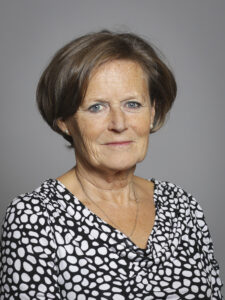
     

    Baroness Anne Jenkin has been a huge help in Leah Houston's career journey

    And what were her impressions of the role? “Anne is so hard-working – no two days are the same for Anne,” Houston recalls, laughing perhaps at the remembered bustle of it all. “I was involved in diary management, speeches and organising meetings she would host. It was general ad hoc stuff and I was an extra pair of hands.” Leah brought a very clear sense of purpose to the role. “I was there to serve Anne – to allow her to do her job better. That could be sending letters, or photocopying, or making a cup of tea. I also became immersed in the question of gender ideology, which is one of the key issues for Anne.”

    And what was the culture like in Parliament? “As a practising Christian myself, I was interested to discover the APPG, Christians in Parliament, that is a cross-party group of Christians. As long as you were a passholder you could be a part of that: MPs, kitchen staffers, it didn’t matter. It brought a sense of community, with weekly services held in the Chapel of St Mary Undercroft. Politics is so polarised and tends to be all or nothing. It is meaningful to have something that unites: at election time we prayed for whoever was in leadership.”

    Through Baroness Jenkin, Leah met Finito Education CEO Ronel who saw Leah’s potential. “Ronel is a great supporter of Anne and he took me under his wing. I was with Finito for half a year and the investment in me was incredible.”

    This is good to hear and I ask her what the impact has been. “Besides all the practical things such as the LinkedIn training, the CV writing and the mentoring, I especially value the confidence that the Finito service gives to someone in my circumstances. It was as if I was being seen for the first time. This was so encouraging for me especially given my upbringing, where my wanting to succeed was perhaps sometimes considered a bit weird. My extended family would wonder why I was in London, and why I’m in the job I’m in. This was an organisation which wanted me to succeed.”

    This process of building confidence in an individual is integral to the mentoring process. It begins from our first encounter with a new student. Houston recalls: “I remember vividly the first meeting with Ronel where I brought him my CV. When I had been in parliament I had co-founded a network for the protection of gender-critical views. I showed my leaflet to Ronel and it was an incredibly important moment, because someone was looking at my work, and taking an interest in me. It brought me an overwhelming sense of pride.”

    Mentoring is to do with becoming reoriented in one’s life by coming into one’s essential self.  Houston recalls that her being photographed by in-house photographer Sam Pearce continued this process. “I spent an afternoon with Sam and I noticed that she took the time to make me feel comfortable. She also took time to ask questions between pictures – it was not a transactional photoshoot, it was more an investment in who I was.”

    Following on from there, Leah had her LinkedIn training with Amanda Brown (‘incredibly helpful’) and then began work with her lead mentor Tom Pauk. “He was so lovely and I was telling my heart and how I feel things deeply. He said: ‘I think you need to go into the charities sphere’. I said: ‘ I think you’re correct.’ And now I’ve landed a job with a charity which is a start-up. Tom was amazing, and gave me contacts.’

    From Pauk’s perspective, Houston made an excellent impression. He recalls: “Leah struck me as a highly intelligent, articulate and values-driven young woman, seeking a position where she can employ her myriad skills to improve the lives of others, especially those of women and children.” Pauk noted early on that her priority was ‘to use her lobbying skills to help bring about changes and social impact,” adding that “she is not driven by earning a high salary, though she’ll need a sustainable one.”

    When the job came along it all happened very quickly ‘in the space of a week’. Houston brings me up to speed: “I now work for a charity called Forum which is based in London and has launched in America too now. Its purpose is to serve leaders and influencers from all sectors of society. It tries to link up like-minded people. I’m a data manager and administrator, which is important for Forum, as someone’s name in the database is like gold to the business. I’m also EA to the founder David Stroud, who is married to Baroness Stroud.”

    So how does she see the future? “I actually don’t know,” she admits. “My life these past few years has been full of uncertainty, but I can see myself settling here for a good while. It’s a start-up with huge potential for growth and now the whole past five years makes sense.”

    At the end of our interview Houston reflects a little on her journey so far. “It’s strange to be in London and not be money-driven. Wealth to me isn’t money. It’s what I had growing up: I had family and friendship and relationships and that to me is wealth. Marriage and education is wealth.” And are her family beginning to understand the nature of her journey now? “My parents have been massively supportive, but we don’t always speak a common language. My cousins have their own convictions and they don’t necessarily agree. But the relationships are there and really there’s so much love and support.”

    One is tempted to call this attitude mature except that many people live their whole lives without realising the importance of things which Leah innately understands. She also has an immense capacity for empathy and understanding. Houston is someone whose narrative is not to be judged by the usual metrics of success: money, or position or anything else – though there’s nothing to stop her acquiring these. But she is in such a strong position because she isn’t a materialist. She is someone who will make her own way – and in fact is already doing so.

    The help which Finito gave to Leah would have been impossible without the generous help of the Stewarts Foundation. The firm’s managing partner Stuart Dench says: “In a perfect world comprehensive career guidance would be available to all regardless of their background. The Stewarts Foundation is delighted to support the important work of Finito via its bursary scheme.”

    Stuart Dench and the Stewarts Foundation has supported Leah Houston's career journey

    When it comes to someone like Leah, the importance is difficult to measure because it has to do with ineffable things like confidence, connectivity, and the unleashing of possibilities within a person who may not yet know how capable they are. In her case, it is also to do with helping someone to arrive at the realisation that the place they’re born in need not be a limiting factor. Ultimately it’s for us to make our own way – though it is right that we do so with the help of others.


  • 7th October one year on: A Letter from Israel

    Christopher Jackson


    This letter is ten years late. I went to Israel for the first and so far only time in 2013, and for obvious reasons have been thinking about the country a lot since the attacks on 7th October 2023, and the events which followed. This is really a letter to Israel – a delayed epistle I’d been waiting for an excuse to write.

    I was unlucky in the lead-up to that trip: I dislocated my knee playing tennis a week before flying. I was thus forced to cut a comic figure in Jerusalem and Tel Aviv, hobbling with my grandfather’s old silver cane around the Old Town, which, as visitors will know, contains numerous steep pathways, including the famous Via Dolorosa up which Jesus is meant to have shouldered his cross. At one point, I remember an eight-year-old girl trying to steal my cane off me, leading to a scene reminiscent of the sort of thing which might happen to Larry David in Curb Your Enthusiasm, where I sought to wrest it back and found myself only just equal to the task.

    But I found I loved the country: loved its noise and its contention, and the passion for theology, philosophy and history that lay behind its disagreements. Jerusalem is a microcosm of the human story. To step into it – even casually, and unwittingly – is akin to presenting yourself to humanity for inspection. It all amounts to the strangest of looks in the mirror.

    In Jerusalem, it’s not unusual to find people coming up to you in a bar and asking some variant of the question: “Who are you?” “Where are you from?” To ask this question in any other city in the world is to issue a pleasantry; in Jerusalem it feels deeper than that, an invitation to consider your personal identity. Most people who go to Israel end up feeling that they somehow needed the experience. At times, it feels like undergoing therapy.


    It’s no coincidence that in the Gospels Jesus’ opening remarks to his disciples constitute both a salutation and a challenge: “What seek ye?” Quite a lot of the time in Jerusalem one closely neighbours the related question: “What am I seeking?”

    The answer, if we’re honest, almost always involves some sort of large noun: truth, beauty, happiness, love, God – peace. Jerusalem is a place to consider all these things, although periodically, as on October 7th 2023, it particularly evokes the question of peace. That’s because that question: “What am I seeking?” hasn’t always summoned up the same answers in the hearts of human beings.

    The large nouns mean different things to different people: for some happiness is a rave – for others it’s a church service. Peace in turn can be the means by which we gently seek to bring others into our sense of the world, or open ourselves to new avenues of being.  Alternatively, as with Hamas, peace might almost slide into its opposite: it might masquerade as the means by which we seek to still a murderous resentment which all too readily rises up in human minds.

    The founding of the state of Israel was widely deemed necessary in the aftermath of the Holocaust, but soon ran into a difficulty which now feels somewhat inevitable due to the geography of the situation. And yet if we believe at all in human freedom then we can’t quite throw up our hands and shrug that it had to be that way. We must admit that the whole question of the state of Israel foundered on human frailty.

    As a general rule, wars are what incompetent governments inflict on unsuspecting peoples. We cannot call the period from 1948 a period of model governance. On the other hand, there have been periods of statesmanship: the Oslo Accords, begun in 1995, and the Unilateral Disengagement Plan in 2005 both amounted to attempts to move towards the solution of the problem.

    As I travelled through Israel, I found myself asking how the situation has deteriorated so seriously so rapidly. The first clue is in the history itself. Everywhere else on earth, history feels asleep by comparison. Here, you feel its urgency – its pulse. To be surrounded by so much holiness is to exist in a highly alert moral condition, and this is the case if you’re only visiting. To live here must be another step up.

    Secondly, I often think of an observation once made by Daniel Barenboim the c0-founder, with Edward W. Said, of the West-Eastern Divan Orchestra. This orchestra brings together Israeli and Palestinian musicians. Barenboim was at a rehearsal and stepped out for a moment, returning to find his orchestra at loggerheads over politics. He watched them argue and reflected that both sides of the argument are of a similar temperament. It isn’t, Barenboim reflected, like a conflict between the Swedes and the Italians. This fact alone, Barenboim says, accounts for much.

    It all amounts to a charged atmosphere. There is a lovely museum Ticho House in Jerusalem which all visitors should see. It was founded by Dr Abraham Ticho, the husband of the landscape artist Anna Ticho. When Abraham, an ophthalmologist, was injured in the 1927 Palestinian Riots everybody – Jews, Christians and Palestinians – prayed for his recovery since he was the go-to man for the treatment of the common ailment trachoma.

    These riots, in which 133 Jews were killed by Arabs and 116 Arabs killed predominantly by Mandate police, were sparked by questions of access to the Western wall. It all reads like a terrible promo of the conflict we now have. The Shaw Commission, charged with looking into the matter, would find that the riots were caused by “the Arab feeling of animosity and hostility towards the Jews consequent upon the disappointment of their political and national aspirations and fear for their economic future”.

    Of course, one might have feelings of disappointment and anxiety without resorting to murder, and Ticho’s story reminds us that many didn’t have these feelings. It is worth visiting the Ticho museum to remember not just Ticho, but the people of every denomination who prayed for him because his medical skill ensured he was part of their shared interest. In Ticho’s story, we receive a tantalising glimpse of another set of possibilities for the region which sadly has never yet been taken up.

    And there is something unique about his wife Anna’s landscapes too. In these pictures, it is as if the land of Israel, like Jerusalem itself, carries a particular charge. This isn’t solely to do with politics: for Christians (and for many Muslims), these are the hills which Jesus retreated to in between sermon and miracle; for Jews, each bush can be aflame, as it was for Moses, with the suddenness of God; for Muslims, the very sky is open – filled with the idea of ascending to the Heavens. That means that Ticho can never be painting landscape in quite the same way that, say, Constable is painting landscape: she’s painting spirit.


    Injured though I was, I decided it would be worth taking a taxi out onto the West Bank. In Bethlehem, you can visit the Church of the Nativity – the supposed original of the manger which we used to recreate in our youth in rural Surrey. As we drove out, I saw the grape sellers – all Palestinians – reduced to selling grapes on the side of a dusty road, where little traffic comes. All drivers know that non-dusty grapes are available in the supermarkets of the built-up settlements nearby. It is a hopeless situation and even those broadly supportive of Israel will wonder at a lack of humanity which is so evident but whose causes are so difficult to trace.

    In Hebron, the look and feel is of a warzone without the bombs falling. Children kick bedraggled footballs against the walls of shuttered shops; Israeli tanks move through the streets, like sharks through a fish tank. Here the guidebooks point you to the Cave of the Patriarchs, considered to be the burial place of Abraham and Sarah – figures whose importance the major religions agree on.

    Here one feels one is entering something like the crux of the matter. As a Westerner, I was only able to go in through the Israeli side. There is an entrance for Muslims I didn’t see, and the interior itself is partitioned. I hobbled up towards some Israeli soldiers who seemed to be mocking my injury in Hebrew, which didn’t strike me as the most welcoming start.

    Cave of the Patriarchs

    Inside, there is a seminary where Jewish students recite passages from the Torah, and everywhere there was a hushed seriousness and, to me at least, a palpable sense of things being about to kick off. This is the hard fact about Israel: from Woody Allen to Larry David, Jerry Seinfeld and Mel Brooks, nobody has made the world laugh harder than Jewish people. But to come to this land is to feel that everything keeps coming back to a flammable seriousness.

    In that Shaw Report which I quoted a moment ago, the writers added that the cause of those 1927 riots was the Palestinian sense that Jewish settlers were ‘not only a menace to their livelihood but a possible overlord of the future.’ In 1927, some two decades before the founding of the state of Israel, this was remarkably prescient: for many Palestinians this is what did happen.

    As you climb the hill to see Herodium, Herod the Great’s palace, I had a panoramic view of the homogeneous settlements somewhat resembling the worst kind of British council housing. As I hobbled skywards, the Adhan – the Islamic call to prayer – reached me easily from the skies. Sometimes it sounded like an assertion of some kind; at others a cry for help. Looking down on those towns from the archaeological site, everything felt so terribly boxed off.

    A commitment to freedom of movement is what we still have here in Britain and in the UK: this in turn is built on trust and the notion that everyone potentially has something to contribute through hard work to the betterment of all our condition. Interestingly, if you had to pick a country in the Middle East which has some of this spirit, you’d also pick Israel, especially Tel Aviv with its superb food and Miami-like energy of expansive bustle.

    We have all seen music festivals like the one which was taking place near Re’im on Black Saturday; most of us have been to them. These festivals, very far from my cup of tea, are part of our national life, and so we might recognise ourselves in the victims of the massacres. Alarmingly, I don’t think if Hamas were exported to the UK, that they would have much hesitation in massacring Glastonbury, as appalling as that might be to contemplate.

    This, in turn, cannot help but generate some questions regarding the pro-Palestinian – and all-too-often pro-Hamas –marches on the streets of London. Firstly, how many have been to Israel? Secondly how many of them have been to Glastonbury? One suspects here a far higher percentage in answer to the second question than to the first. But if this is the case, then many are marching in favour of the very people who would murder them if they had half a chance.


    Tel Aviv skyline

    None of this means that Israel has behaved in a flawless manner. Too often, violence has met with ratcheting language, and counterproductive violence. The failure is predominantly one of political leadership: no one would accuse Benjamin Netanyahu of too much resembling Nelson Mandela. But to consider this an isolated failure on the part of Israel’s leadership, as so many do, is a dangerous fantasy. To land on a fairly obvious point: any organisation whose central text is the Protocols of the Elder Zion, as is the case with Hamas, has a fair amount to learn about peace-making.

    Some people need to be fought; there is such a thing as the legitimate causus belli. In addition, the Mandelas of this world have a far greater dose of realpolitik in their make-up than we realise when we later lionise their achievements in peace. We forget that they often pivot to resolution only after having defeated the harshness of their enemies. Hamas has never been as cuddly as the left-wing intelligentsia has liked to imagine it.

    The reality is that history – any nation’s history – is peppered with injustices of every kind. The past is in some fundamental sense unthinkable – and yet it all happened.

    The usual way in which we move beyond atrocity is by acknowledging that many evils were perpetrated by the dead. This is the basis on which we forgive and forget. In England, we no longer identify with a particular side of the War of the Roses; I am as welcome in Lancaster as I am in York. Except when a rugby match rolls round, we have also rather forgiven the Norman conquest – and anticipate, as we walk through Paris, a degree of forgetfulness regarding Agincourt. The past has to recede because it was conducted by imperfect people.

    The same is true of the founding of Israel, and in relation to recent history in the region. There are two differences. Firstly, these events are closer in time. But secondly, the fear is that they shall in same way always remain so, because they revolve around both temporal and eternal questions. For so many people, Christianity, Judaism and Islam still matter, forming part of our essential hopes beyond the life of the body. It is not just that these affections won’t go away – it’s that anyone of religious inclination would be bereft if they did.

    If you want to know what that would look like then you have Soviet Russia, and maybe the hard-left wokeness in the UK to sample: identikit moralities where power goes not to the meek, the thoughtful or even the hard-working but to the noisy and the cunning. That’s the real reason one suspects that a large chunk of the left marches against Israel: they don’t believe in any eternal dimension whatsoever and would like to delete that from their lives. Like Christopher Hitchens, they loathe religion full stop, and can’t distinguish easily between the book of Genesis and Hamas: to them, it can all be grouped under the ‘God is not great’ banner.

    This is the intractability of the crisis: it goes deep into all of us and keeps refusing to recede. Israel is a remarkably complex undertaking with a paradox at its centre. It is, in one sense, a representative of the Western way of life in the Middle East. There are few cities so Bohemian as Tel Aviv. But, at the same time, when you get right down to it, it isn’t a particularly secular country. Too much of the Bible and the Koran takes place there for that to be possible.

    These two aspects have both created enemies. The hard fundamentalist right dislikes its licence; the left dislikes the obligation it places on us to consider religion. Israel is a land of miracles and from one perspective the bar of not killing one another over a set of misunderstandings feels sufficiently low that it ought to have been achievable by now. But we have to admit that it hasn’t been and that if you ever go to Israel you’ll be visiting the saddest, but also the most necessary, place in the world. It’s not a foreign country – it’s our collective story and that’s why it will always matter.


    For other examples of our letter series try these:


    Discovering the Charm Budapest: Tom Pauk’s Letter from the Heart of Hungary

    Omar Sabbagh’s Letter from Dubai: ‘As soon as it was safe enough to reopen, that was done’


  • Sir David Lidington on the importance of relaxing when in a high-pressured job

    Sir David Lidington on the importance of relaxing when in a high-pressured job

    Sir David Lidington

    I’d say that three things define an aptitude for elected politics. The first is fascination with human beings and what makes them tick, and how power is exercised. It’s difficult to imagine anyone getting far in politics without those interests.

    Secondly, regardless of left, right, centre, almost everyone I’ve met in politics starts with a commitment about changing things for the betterer in their country. The motivation is always there. 

    The third thing which separates the natural politician from the civil servant is a certain zest for the theatre. It’s that willingness to take the risk and stand on the stage and at the end you don’t know you’ll have a standing ovation or a bag of rotten tomatoes slung at you. The natural civil servants shy away from that. What’s interesting, of course, is that you sometimes see a politician who’s really a civil servant – and vice versa, a mandarin who’s really a politician, and the thespian is striving to get out there.

    Asquith complained that you bring to the prime ministership what you know at the time of assuming office, because there’s not enough time once you do to learn anything new. I think it’s hugely interesting that Asquith complained about that in the days when parliaments went into recess for quite a long time in the summer, you didn’t have rolling news media or twitter. In those days, when something embarrassing was going to happen you had all the editors in to say let’s keep this quiet – as in fact happened when Winston Churchill had his stroke.

    The question in high office is how you manage to find space to time and think. Different prime ministers approach that in different ways. Mrs Thatcher was a complete Stakhanovite whereby Dennis would force her to go on holiday and she really would sit there reading the Planning Inspectors’ Report into nuclear power stations. She’d sit up into the small hours mastering the small detail and I don’t think she really recovered any sense of normality outside of No. 10 when she was forced to resign in 1990.

    John Major was different. To John, cricket and sport remains a great solace to him, and it’s a time when he can really switch off and cares fall aside for a time. For Tony Blair it was having a young family – as well as football and music to some extent. Blair, like Cameron with his young family, used Chequers an awful lot. They used to go there most weekends with the family and it provided privacy, as well as easy reach of London in an emergency. It’s that physical space to kick off your shoes and for the children to run around and not feel het up and bored! And Asquith didn’t have Chequers of course – Lloyd George was the first to have that. 

    Gordon Brown, I’d say, was also a bit of a Thatcher – though perhaps he might not like the comparison. David Cameron, though he was mocked by the media for the date nights and chillaxing – that was a way of keeping sane. Theresa May – again, she worked herself incredibly hard, and had a profound sense of public duty. For her home was a sanctuary and her marriage to Philip May was critical in providing that stability and that source of strength and renewal.

    As for Boris, it must be difficult. When you’re in high office, your time is not your own in that you have to fight to block off time . That’s true for any senior ministerial job. It’s backbreakingly busy as everything happen simultaneously. You can’t say as prime minister – well, we’ll fix Brexit this week, then China the next, then after that handle schools. It doesn’t quite work like that! 


    Read about how workplace stress can lead to burnout here

  • 2022 Highlights: Sir David Lidington – ‘History trains the imagination’

    2022 Highlights: Sir David Lidington – ‘History trains the imagination’

    Sir David Lidington, the former de facto No. 2 in the May administration, talks about how a history degree has helped him in his political career

    Certain traits define an aptitude for elected politics, and I’ve tended to find they can be aided by a study of history. One useful aptitude would be fascination with human beings – what makes them tick, and how power is exercised. Secondly – regardless of whether you come from the left, right, or center – almost everyone I’ve met in politics starts with a commitment to changing things for the better in their country. To do that, it helps to know what injustices have existed in the past.

    There’s a third thing, and I would say it also separates the natural politician from the civil servant: a certain zest for the theatre. Politics involves a willingness to take risk, and to be prepared to stand on the stage at the end, and not know whether you’ll have a standing ovation or a bag of rotten tomatoes slung at you. The natural civil servants shy away from that but what’s interesting is you sometimes see a politician who’s really a civil servant – and then a mandarin who’s really a politician. The thespian is striving to get out there.

    The wonderful thing about history is that it trains the imagination: when you start to really delve into history – and read deeply as well as widely in a particular era – you find people in the past had various assumptions and moral codes that can be very different from how we operate today. For example, for people living in 1800 or 1850 the idea that there was going to be this industrial revolution, and transformative migration of people to cities, and a growth of urban conurbations – that’s something which some might have predicted, but by no means everyone. Training of the imagination is important.

    History also teaches you how to use and assess evidence. Particularly in postgraduate study, you have to go back to original source material and assess the reliability of it. You look at state papers, which by and large deal with high politics and the people at the top. But if you go to legal records, there you find out about yeomen and merchants – the people who went on Chaucer’s pilgrimage to Canterbury all crop up as plaintiffs or defendants.

    Another applicable aspect of history was borne in on me when I was Europe Minister. I visited about 40 countries from Russia and Turkey, to the South Caucasus and Iceland. If you want to understand today’s political outlook you have to understand what happened in the past. What are the demons they still fear? What are the experiences that have shaped the outlook of a particular society today?

    For instance, I have long felt that the tension that has always existed between the UK and the EU derived in large measure from contrasting experiences and lessons in the mid- 20th century. For most of Europe this was a period of disaster when national institutions all failed in the face of tyranny, invasion and ethnic hatred. From the EU perspective, therefore you have to build up those institutions to stop anything happening again.

    Another example would be China. I remember a few years ago, I met Xi Jinping’s number two, and he started out with this recital about the Opium Wars and how China had been attacked in the 19th century because it was weak and the European powers had exploited her. Hearing that, I began to understand why they see the world as they do today. They feel a need to put right the century of humiliation and to restore China’s place as a global power. One needn’t necessarily agree with that – but you have to understand how the other side thinks.

    So history is a real asset in politics because you learn how human beings interact with each other, how relationships and power is mediated through institutions, and what lies behind the motivation of countries and individuals. How a Tudor court operates is good for understanding all about access in No.10 Downing Street. Now you have your special advisers rather than Grooms of the Stole or royal pages. Think about Elizabeth I. Who was it who could actually get in to see the monarch and be sure you got your bit of paper in front of her? Likewise, today – who can get something in the prime minister’s box? Patterns reproduce.

    One of the most difficult things for government or for the man or woman who’s prime minister is finding time to regenerate yourself and your government while in office. There are always things pressing in. For me the great prime minister of the 19th century was Robert Peel: he was prepared to change his mind when the facts had changed. If you look at how he moved on Catholic Emancipation and on the Corn Laws and trade you can see that he took decisions based on what he thought was right for the country even at the fatal cost to his own political fortunes. Disraeli was vastly entertaining, but Peel was the greater man and the greater prime minister.

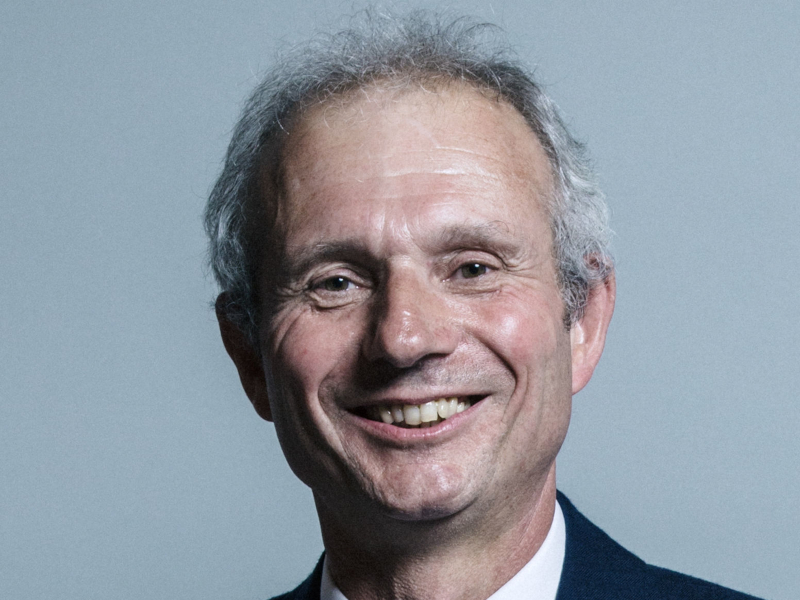
     David Lidington was deputy prime minister under Theresa May and is now Knight Commander of the Order of the Bath

    Read Sir David Lidington’s advice on handling the stress of a high-pressure job here

  • Margaret Greenwood: ‘damning’ that we have seven million adults with poor literacy skills

    Margaret Greenwood: ‘damning’ that we have seven million adults with poor literacy skills

    The former shadow schools minister recalls life as a teacher and thinks there might be answers for the present in the past 

    Whenever you ask the government about exams they say it’s the best form of assessment, but that’s a meaningless comment which stands up to no scrutiny. When I started teaching secondary school, GCSE was 100 per cent course work. The exam board would ask us to put forward ten pieces of work for each student; two of those pieces had to be done in controlled conditions, like an exam. Pupils knew that every piece of work at the start of the year mattered. It meant pupils took up-front responsibility for their own learning. 

    When they brought that arrangement to an end it was like attending a wake at my school: we were mourning the passing of this as we’d seen such an increase in quality. If you have an exam at the end of the year, you’re talking about memorising things rather than developing skills. I found the old way very constructive and flexible. If you have a situation where a pupil has missed a month of school or been ill, or something terrible has happened in the family, you could say, “Let’s get on with the next thing.” 

    I’d like to move to a system where we have greater development of skills and research. In the age of the search engine, to have assessment processes in demonstrating memory seems flawed to me.  

    I once taught in an adult centre reading to adults who struggled with reading. That was quite a profound experience because you were in close contact with people who throughout life had experienced that profound deprivation of not having sufficient literacy skills to make their way in the world. Today we have around seven million adults with poor literacy skills: that’s damning in a country like ours. 

    That’s why in 2020, as shadow schools minister, I argued against the Reception Baseline Assessment. There was evidence it was causing children distress, and taking teachers away from settling children into school-based routines and developing relationships with pupils. We’ve got a similar issue with SATs. I spoke to a mother who told me when her daughter was in Year 6, she used to cry on her way into school as she wasn’t very good at maths. That’s why a broad-based curriculum is important. These decisions taken early in children’s lives affect employment outcomes further down the line.  

    If you’ve ever been to adult education centres, you learn the hunger people have for learning when they’ve missed out on it. One class I once taught was called ‘Women Back to Work’. These were women who wanted to get back into the workplace, and needed a GCSE in English to do that. One knock-on effect was the impact on their children: they would bring them into the classes with them, and proudly stand in front of the class and give a talk while their child was there, looking up so proudly at what their mum was doing. 

    When you think of women who have come out of work to look after children and then become carers, they can often lose their confidence. Adult learning is a fantastic way to open up ideas. I worry about the long-term economic impact of children who grow up in poverty. They don’t earn much, not as many go to university and they’re less likely to have good health later in life. This government has no appreciation of the scale of the problem. It was dragged kicking and screaming on school meals by Marcus Rashford, a fact which spoke volumes.  

    Part of the problem is that the status of teaching is still low in relation to what it should be. At a local level, people are still immensely grateful to their local teacher so the relation between pay and status has to come from government. When I look at what primary teachers do, their skill levels are absolutely phenomenal.  

    The Labour Party is in a process of development of policy, and have to include our membership in that. Keir’s been leader for a year or so, and because of Covid too there hasn’t been the opportunity for meetings or conference. I think it’s too early to say, but we need to look to the past for inspiration.  

    In the 1970s, we had a big pay rise and there was buoyancy because we as teachers felt valued. This was before the national curriculum and we’d teach as we saw fit, with no testing regime and more creative time. I remember we used to put on school plays and when they bought in the national curriculum it killed it dead. I think that’s tragic. We need to look at that. Exams are not the answer.  

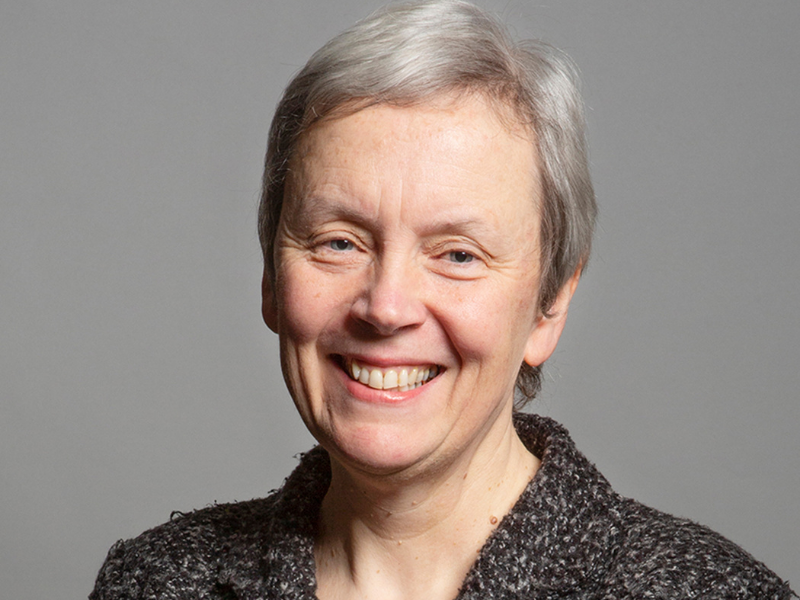
    Margaret Greenwood is the Member of Parliament for Wirral West 

    Photo credit: David Woolfall under Creative Commons License 3.0

  • Sharon Hodgson on why we need to renew our focus on the arts in education

    Sharon Hodgson on why we need to renew our focus on the arts in education

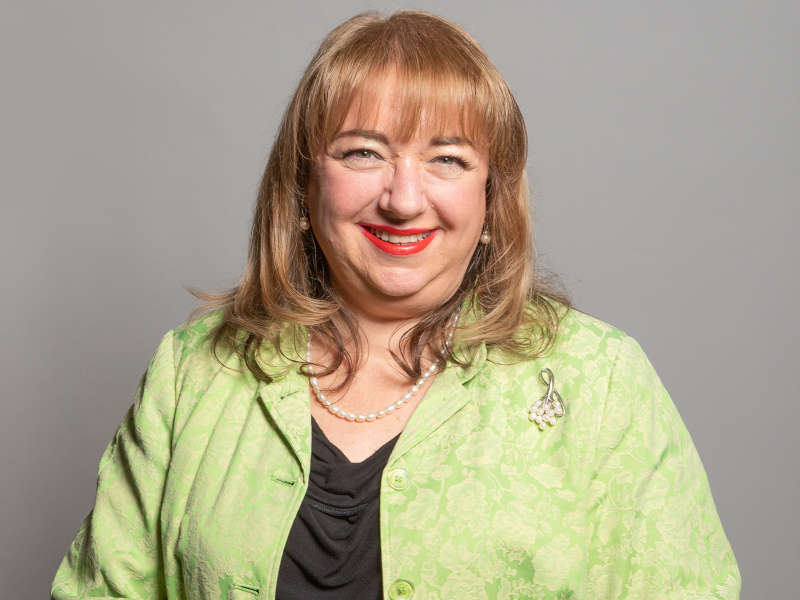
    The Shadow Minister for Veterans Sharon Hodgson explains how a broader arts-based curriculum could transform our economy.

    It was Jeremy Corbyn who first came up with the idea of an arts pupil premium that might be used to close the gap for disadvantaged children. Myself and Susan Coles – with whom I set up the All-Party Parliamentary Group on Arts Education – were excited when we heard the announcement. It seemed the right thing to do: if you grow up in households where the arts are appreciated that just happens. Usually it’s poorer households that don’t get that cultural capacity.

    School is meant to be a leveler and an equalizer. Lockdown has shown that when you take school out of the equation it really does lay bare not just the inequality in economics but cultural inequality. A whole generation of people are then going to be the best part of a year behind. Some will have had an amazing lockdown education, but overall the cultural gap will have widened.

    You hear a lot from the Conservatives about character in education, but it’s my belief that the arts are the best teacher of resilience and confidence: in the arts, you tend to try and fail before you get it right. That’s definitely what you need in an employee when they get into a workplace, no matter what work is conducted in that place. If all you’ve got is someone filled with knowledge and the ability to pass exams, then they’ve got no capacity to think outside the box.

    They’ll have no capacity for innovation or freedom of thought; they might only have been told what’s right and what’s wrong. They lack the creative freedom and too often seek instruction from their employer.

    That’s why the Chinese have started looking here for our creative education – and the same is true in Singapore and South Korea. Those countries have tended to churn out people who are good at passing exams. The irony is that just as they’re looking to learn creativity off us, we’re leaving creative learning behind in our state sector.

    What’s really required is a broad and balanced curriculum. In Wales from September 2020 there’s been a new curriculum with arts and well-being taught as a mandatory part of the curriculum. The same is true in Scotland, where the arts are also valued. What we are aiming for is for the arts to be elevated to that extent in England.

    Some people have criticized the idea of the arts pupil premium as being all about ephemeral away days – trips to the theatre and museums, and so on. There’s nothing wrong with away days, but it needn’t be only that. Imaginative teachers could use it for a whole host of things. Under Corbyn, we imagined that if we did have an arts pupil premium we might give guidance to make sure teachers understood the range of things it might be used for: it could be used to buy fantastic art materials, to recruit amazing teacher specialists, or to bring artists into the school setting.

    The argument is clear – and if anything, it’s been brought into sharper focus by the pandemic. More and more children under lockdown are having troubles with their mental health – and we know that art is able to help with that. I’m not saying that Math and English don’t give joy, but our spare time as adults is usually spent around the arts but in school that seems to have been left to one side, by people like Nick Gibb especially.

    The irony is that the creative industries are valued by the Treasury but not so much by the Department of Education. There’s no joined-up thinking across government. We’ve had five education secretaries in ten years, and unfortunately Nick Gibb has been around for a lot longer than I would have liked. I don’t wish him ill – I just wish him into another job. He doesn’t have a background in anything to do with arts and education. He has fully bought into Michael Gove’s ideological stance.

    It’s because of Gove that our APPG was formed. The EBacc has been especially problematic in terms of its unintended consequences for the arts. Gibbs came to our APPG and we told him he needed to acknowledge the effects of the EBacc. We had 80 experts in the room and Gibbs simply stated that he had an ‘alternative set of facts’.

    The trouble with academies is that they create a system of ‘postcode luck’ with regards to whether you have access to the arts. Sometimes the free school system allows schools to be innovative but at others they detract from what should be a standard. We may have to look at governance again and consider getting schools back under local authority control.

  • Sir Anthony Seldon on why Sir Keir Starmer has blown it already

    Sir Anthony Seldon on why Sir Keir Starmer has blown it already

    by Sir Anthony Seldon

    It’s ten years since David Cameron and Nick Clegg stood in the Downing Street Rose Garden at the beginning of the Coalition.

    But from the perspective of universities, and our wider education system, it was a man who wasn’t at that press conference who would really go on to change our education system.

    Michael Gove arrived in Great Smith Street with a strong agenda. Assisted by Dominic Cummings, he would have an extraordinary impact on how schools conducted themselves: his was a tenure ambitious for all students regardless of background. It’s hard to point to many other education secretaries who have made such a significant difference – Tony Crosland perhaps, who served under Harold Wilson, and launched a campaign for comprehensive schools. Whether he’s at DEFRA or heading up the Cabinet Office as he does today, Gove’s energy remains remarkable: any department that he comes into is very quickly overhauled. In any cabinet, Gove is always one of the most erudite. Peter Mendelsohn held a similar distinction during the Tony Blair years.

    As education secretary, Gove accelerated free schools and continued with academic, building on the Andrew Adonis years. Adonis and Gove are comparable: each had the same ambition for schools, and a similar desire to bring in external energy and remove schools from local authority control. But I would say Gove arguably had a clearer agenda around school standards.

    Cameron deserves some of the credit for the achievements of those years. Margaret Thatcher was probably the last prime minister who didn’t see education as a major part of her job. All prime ministers since Tony Blair have had a major interest in education, and Cameron was no different, though it’s probably true to say he didn’t involve himself greatly.

    One thing Cameron did do was to invite the heads of independent schools into the Cabinet room, and seek to persuade them to start academies. It wasn’t very successful, but he was always supportive of Michael Gove. He knew when to leave someone to it.

    A decade later, there are remarkable continuities. In Keir Starmer, we have a leader with deep roots right down to his Christian name in the left movement, as Brown had. And it hardly needs saying that we have an old Estonian in Number 10.

    A comparison of Brown and Starmer yields intriguing thoughts: both are very bright people, and both have legalistic minds and a superb grasp of detail. But their disparities may in the end prove crucial. Starmer is untested as a leader. Brown, when he came to become prime minister, had been for ten years the longest serving Chancellor of the Exchequer, and had a formidable knowledge of how government operates. Whereas Starmer today is the younger man on the rise; Brown, in 2007-10 was arguably at the peak, or beyond the peak, of his energy.

    As for David Cameron and Boris Johnson, they’re very different. Cameron had a vast appetite for detail, but he was primarily interested in foreign policy, leaving economic and domestic policy to George Osborne. Johnson tends the other way: he’s not interested in foreign policy, but in the domestic side. He has a far shorter attention span, not the same work ethic, and is still relatively new to Westminster politics.

    How it plays out remains to be seen, but I certainly wouldn’t give Labor high marks for their handling of coronavirus so far. Starmer didn’t do enough to stand up to the unions, and the party gave the impression that it was far less interested in children – including the socially disadvantaged and those with mental health challenges – than in their own membership. Accordingly, they have lost moral authority, and shown intellectual weakness. They had an opportunity to seize the high ground but they blew it.

    The quality of the opposition always matters but especially so now. The next years will see real difficulties for universities. I certainly don’t subscribe to the belief some on the right hold, which is to let the poor universities and those that don’t compete internationally go to the wall.

    That position is about as intelligent as saying, ‘Let schools that don’t come top of the league tables collapse.’ In reality, it’s those in the middle and at the bottom that are adding most to the attainment of young people. It’s simply that the quality of the raw material they proceed with is much less high academically. Besides, if you let the universities in the middle or bottom disappear, you will be stripping northern cities, as well as cathedral and rural cities of their economic dynamism and vitality, and doing irreparable damage to the social cohesion of the country.

    So ten years on from the outset of the Coalition, some themes are recurring. But as Heraclitus knew, we never step into the same river twice. The success of this administration will be in identifying what a crucial moment this is and not just for universities but for our entire education system.

    Sir Anthony Seldon is a historian and biographer who recently stepped down as the vice-chancellor of the University of Buckingham

  • Sir Michael Barber: ‘Most prime ministers don’t care enough about education’

    Sir Michael Barber: ‘Most prime ministers don’t care enough about education’

    The great educationalist on Blair, the Office for National Students and lessons learned in international education

    Secretary of State for the Department for Education Gavin Williamson recently asked me to chair a review on digital poverty. We’ll publish in February and we’ll look at what universities have been doing in this area and we’ll make some recommendations both for the next academic year 2021-2 and for the long term.

    A lot of people think that ‘digital poverty’ means I haven’t got a laptop but there’s a lot more to it than that. It’s also: ‘Have you got the hardware? Have you got appropriate software? Have you got a teacher trained to teach online? Have you got connectivity and reliability and rapid repair if needed? If any one of them isn’t functional, you’ll be losing out digitally’.

    When I was working with Tony Blair, he always used to say about education: ‘This is much more important than anything, even than the Middle East.’ Most prime ministers don’t care enough about education and it was great to know when the spending review came round that the PM would want to increase the education budget. And to be fair to Gordon Brown he was also a big fan of education. It’s not their fault but the new government has been completely overwhelmed by the coronavirus crisis.

    In my most recent role as head of Office for Students, I’m always aware when I’m dealing with universities that these are institutions under immense strain because of the coronavirus situation. But because of what’s been happening with Black Lives Matter, we’ve been very careful to make sure we hold their feet to the fire on making sure the numbers stack up on underprivileged children, especially those from minority backgrounds.

    Pakistan is a country I’ve grown to love. I’ve been there 50-something times. It’s a tough place to work and I’ve grown to love the people. Delivery Associates, the firm I chair, focused on primary elementary school and on getting kids into school and making sure they’re learning. We made some significant progress. There are 100 million people including 13 million children, and we had a wide range of initiatives, including vouchers for lower income families getting their kids into school.

    Travelling around the world I’ve had the opportunity to work with some brilliant people. For instance, Barack Obama had a Secretary of State for Education called Arne Duncan. The US federal government is a relatively minor player in the US, as most is funded at local and state level. But Duncan got a big pot of money as a result of the legislation passed in the aftermath of the financial crisis. Another person might have just shared out the money by state according to population but he didn’t do that. He did a Race to the Top competition whereby any state lifting the cap on the number of charter schools and introducing an individual student level data system could play. The traditional thing would have been for the education department in Washington to pick and choose among state proposals and be lobbied endlessly by senators from states. Duncan got panels of experts to interview state teams. They reported back to him and he placed the interviews between experts and state teams on YouTube. That worked well, as it was a wholly transparent process.

    The turnover in our civil service is too high. When I was working in the Blair administration, I would typically say to the permanent secretary in the education department, on an important issue: ‘This is an important priority of the prime minister. Would you please make sure this person is a) good at their job and b) likely to be in it for a while? Otherwise, I knew nothing would get done.’

    There’s another perhaps deeper issue, which is institutional memory over a long period. People forget the history. Nobody forgets the 70th anniversary of the NHS; in 2018 everyone celebrated. Now we have the 150th anniversary of state education in this country, as a result of the Education Reform Act passed in the first Gladstone administration, and no one knows about it. But in September, after some pressure from me, the Foundation for Education Development [FED] was persuaded put on an event.

    Employability is a big issue universities need to look at.

    Too often the careers department is tucked away in some backwater of the university and nobody knows to go there. We need to take a leaf out of Exeter University’s book where the careers department is this very visible building in the Centre of campus.

    I don’t know truthfully what will happen as a result of coronavirus, but I hope some surprising and positive things will come out of it. One thing will be the use of digital techniques including not just lectures and individual tuition online – all of which happened very rapidly once lockdown occurred – but also things like virtual reality. For instance, if you’re training to be a pilot, you’re not in a plane most of the time; you’re in a simulator. Things like that will be accelerated.

  • The Chair: Robert Halfon interview

    The Chair: Robert Halfon interview

    The Chair of the Education Select Committee tells us about his latest fight for guaranteed apprenticeships and why universities need to up their game to survive.

    It doesn’t matter how good policy is, unless there’s genuine evangelisation it doesn’t make any difference. When I die – which hopefully will be a long way away – I’d like it on my grave that I was a campaigner.

    The big thing in politics is relentless repetition: it takes about ten years to get people to notice what you’re saying. I liken it to pizza delivery. How many times do you get a Domino’s leaflet through your letterbox? 99 times out of 100, you’ll throw it away. But it’s when you have no food, and you’re knackered, and you have no food in the fridge, that you suddenly remember that pizza leaflet.

    In politics it’s the same. I push my ideas in every forum I can: in committees, in articles, speeches and interviews. I’ll raise things in parliament in questions, debates, and Commons motions, and try and keep what I’m working on at the time in the prime minister’s mind, and in the minds of his advisers.

    This year, it looks like they’ve picked up my pizza leaflet. It’s been an exciting time. In June, I met with Prime Minister Boris Johnson before the Liaison Committee, and I used the phrase ‘apprenticeship guarantee’. A week later, he repeated the whole phrase in a speech. What that signifies is that policy-makers in 10 Downing Street are clearly looking at this, and I hope as Chair of the Education Select Committee, I can move the policy forward. It’s the best offer we can make to young people.

    My hope is that one day 50 percent of students will be doing apprenticeships. So, for instance, if you are doing English you should be working during your degree in a publishing house or alongside an editor – and that should be part of your degree. A history graduate should be working in a museum or alongside an archaeologist. I also think work experience should be compulsory, or at least be encouraged as much as possible by government.

    I had the best time of my life at university. But I’ve always worked doing summer jobs – and that’s the advantage of apprenticeships.

    You do your degree and get academic experience. You go to the student bars, but you also learn about office work and about teamwork. And of course, if you do a career apprenticeship you get paid, so there’s no loan. It’s a no-brainer to me and now’s
    the time for the government to act.

    We’re hopeful we won’t have the usual battle with the Treasury on this. There’s a £3 billion skills fund in the manifesto,
    which has now been confirmed by the Chancellor Rishi Sunak in his most recent budget. But I think at some stage, we’ll need to consider skills credits for businesses. We might structure a policy whereby the more disadvantaged and younger people a business has taken on, the bigger their skills credit.

    I’m sometimes asked how to stop the golf club mentality of people giving jobs to their friends – or more likely their friend’s children. That’s human nature. But businesses will have to change because the world has changed. We’ve got the 4th Industrial Revolution and jobs will be affected by it. That trend has only been exacerbated by coronavirus. We’ll have lots of redundancies, but if people have the right skills and get good qualifications and on-the-job training, it will make a huge difference.

    That’s why I want government incentivising every company in the country to work with universities. I also think grants to universities should be conditional on whether they have a significant number of degree apprenticeships. It depresses me that Oxford has closed its doors to any kind of apprenticeship at all. I think they’re snooty, and seem to think university is about research and nothing else. Meanwhile, Cambridge to their credit at least kept the door open.

    Fortunately, there are amazing universities – Warwick especially springs to mind – doing wonderful work. We look at the whole idea of an elite university the wrong way round: an elite university to me should have a lot of people from  isadvantaged backgrounds, brilliant graduate outcomes, and should embed work experience in the curriculum. Many universities are trading on their marketing.

    It’s a long road, but we have a PM who’s a vision person. The doom-mongers will say it can’t be done but one of my favourite
    quotations is from Sir Nicholas Winton: ‘If it’s not impossible, there must be a way to do it.’

    The Rt Hon Robert Halfon MP for Harlow and political director of Conservative Friends of Israel.