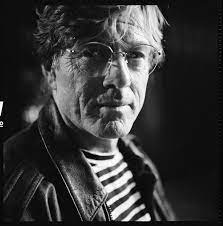
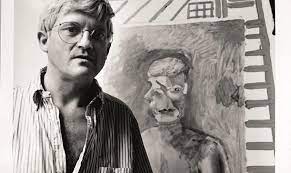
Tag: Paul Joyce

  • To Read or not to Read: Paul Joyce introduces his new music column

    Paul Joyce


    If I were to introduce myself to you as a gambling man, then I would be willing to bet you a pound to a penny that your reaction to the statement I will shortly make would be one of the following: a) a sharp intake of breath; b) a quick gaze heavenwards; c) a short swearword or lengthy blasphemy d) “You’ve got to be kidding me!” or “thanks for the warning!”.

    So here we go: I am about to present my credentials to you as a reviewer of the latest releases of classical CDs, and I do not read a single note of music. There, and yes that’s indeed what I said, and once the smoke clears I will try and explain why I still feel this is a task I am not only willing to do, but possibly well suited for as well. Oh, and by the by, I worked alongside the wonderful opera director Jonathan Miller (on his mighty BBC Shakespeare series, and as his assistant on his final La Boheme at English National Opera) and he couldn’t make out a single note of music either!

    Despite the fact that my prep school instilled in me a dread of music classes where small groups of children wielded reedy recorders to little visual or certainly audio effect, it was only a little later when I attended Dulwich College that one of those legendary teachers (we can all name one) provided me with a proper introduction to the language of Music.  And here I really do mean Music with a capital “M”, and as to its unique language, for surely it is the only one that speaks without the need to master a foreign tongue (of which there are over 7000, I am reliably informed, spoken and signed.)

    Once played and experienced, its universality becomes immediately understandable, and most significantly, a direct means of communicating all important human emotions: joy, sadness, pain, loss, regret, nostalgia, sentimentality, but above all (and this is why I own three thousand CDs), pleasure. In ideal circumstances a musical fanfare would announce our birth, then marriage, together with many highlights in between, and some previously selected individual track {“My Way”?} would finally see us into the oven or the ground. In other words, although we rarely think of it as such, we spend much of our lives within a musical envelope of some kind. Yes, even in the now infamous lift, so thoroughly despised by composer Peter Maxwell Davies (muzak, that is).

    My job now is to help those of us with a traditional bent towards classical compositions, but who do not have a sea anchor to cling on to, to appreciate the wealth of recording both existing and yet to be laid down, which hopefully will now start arriving on my desk every month. I hope too that you will learn to trust my judgement, at least in part, flawed though it may be considered in certain circles, in at least dividing wheat from chaff.  At the end of the year I will compile, like the venerable “Gramophone” magazine, a list of what I consider to be the finest new (or re-issued) recordings. Believe me there is a deep vein of musical masterpieces waiting to be mined, recorded and re-recorded, and then humbly presented by me for your future enjoyment.

    I am thrilled to be asked to reach out to you every month or so with my strongest and best recommendations, and in return would urge you to communicate your own thoughts and experiences within the contemporary classical music market place back to me; for it is one which has regained its strength, curiously aided by the individual isolation during lockdowns, and is now thriving in a way unseen for some decades. I also have some tips on how to obtain CDs even on a tight budget.  What I will not be able to help with, is the matter of streaming and downloads. I’m afraid I am locked into the notion of physicality of what I own, which is why I quickly abandoned Kindle nonsense and returned with a sigh of relief to my modest library. Who would have thought that expensive reference-quality vinyl  pressings would be walking off the shelves, along with first, HDCD (High Definition Compact Discs) then followed shortly thereafter by SACDs (Super Audio Compact Discs). Sound frequencies are being captured that defy the human ear and only bats in belfries would understand. Enough of these boring technicals, so now, music maestro please!

    David Fray is a comparative youngster (born 1981) at least compared to other older and possibly more easily distinguished pianists. He burst onto the scene in 2008 being named as Newcomer of the Year by BBC Music Magazine, and was immediately snapped up as a potential star by Virgin Classics. (Although Warner Classics now seem to be releasing his recent albums). Already his collaborations have involved many of the most prestigious names in the classical music scene; conductors Marin Alsop, Kurt Masur, Riccado Muti and Christoph Eschenback amongst others. Thus far he has recorded Bach, Mozart and Schubert and it is his interpretation of the latter’s works that I want to comment on today.


    David Fray

    I will return to Schubert (1797-1828) quite frequently I suspect in this column, as he ranks toward the top of my “favourites” If not actually planting his flag on the summit already.  Other contenders would of course be that legendary lion, Beethoven, carefully guarding the gates to a musical nirvana, with Mozart closely behind and Dvorak managing a spirited sprint towards the finish line. And with dear Franz who died at the frankly ridiculously early age of 31, we encounter, especially in his piano work, a soul-searching and maturity quite belying his few years on earth. It is funny (strange) how, if one survives long enough oneself, that likes and dislikes, passions even, come and go with the passing decade. For instance, when I first read Ernest Hemmingway’s “Across the River and into the Trees” in I guess what might have been my early twenties, I thought it immediately a masterpiece. Returning to it in my forties I considered it to be a cliché-ridden tract of an old man with nothing left to say. Now, as I exceed the age of the dying hero in this wonderful novel, I come back to hailing it as a much underrated masterpiece again. In other words, our own unique experiences in life mounds the way we respond to the world’s ability to wound us or transport us in the most unlikely ways. (Remember it was Hemmingway who said that one becomes strong in the broken places.) So it is with Schubert’s sublime sonatas and moments musicale. These seem to me to be the pinnacle of a genius who understands that ultimate sadness, and feeling of reluctant surrender to the enfolding arms of inescapable loss that we all experience as we trudge towards that inevitable darkness; the big sleep. At a later date, as I say, I will try and summarise my view of the great Schubert pianists, Radu Lupu, Sviatoslav Richter, Wilhelm Kempff, Imogen Cooper, Paul Lewis, Maurizio Pollini, Alfred Brendel, Murray Perahia , Mitsuko Uchida and many more dead and alive. No barrier to age or sex, each brings his or her individual talents to bear on Schubert’s timeless music.


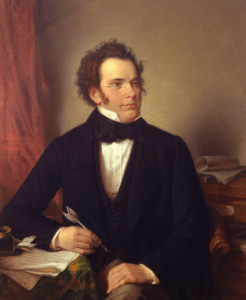
    Franz Schubert

    So now to young (ish) David Fray, and I will discuss and address his two Schubert recordings which I note are about seven years apart (2008-2016). Fray approaches Franz with a deal of caution, which I feel to be only appropriate. Comparing Fray’s interpretations of say the moments musicale 1-6, with one of the piano’s grand masters, Wilhelm Kempff and his recordings stretching as far back as the 1960s, the timings between the two are completely different.  In each case, Fray is drastically slower, in one case up to nearly three minutes behind Kempff, and the longest of moments is only just over seven minutes! Now there are musicians in the past who have seemed to wilfully adopt much slower musical tempi than others (including often the composers themselves) such as Otto Klemperer for example. And it is true that other great conductors, and here I am thinking particularly of Toscanini, have set records in brevity.

    Thus, I am reminded what Sir Thomas Beecham quipped when questioned about the speed he adopted in a final concert piece, so saying “that’ll get the buggers home!” Sometimes speed can generate a direct emotional response in an audience, for example The legendary Hollywood Quartets’ version of Dvorak’s American Quartet, in my view the very best available. Something is clicking in my memory that Bernstein laid down a Mahler symphony where one movement doubled in acknowledged length in his hands.

    But I digress, back to Mr Fray. He clearly divides critical opinion. At a live recital at Wigmore Hall more than a dozen years ago the Guardian critic Andrew Clements wrote: Fray certainly looks the part: bent low over the keyboard as if intent on drawing something personal and highly wrought from the instrument. But the slackness of his playing and its strange discontinuities were far from convincing…..and a little later in summary:  Some fierce, almost brutal octaves in the finale of the Waldstein seemed surreally out of context, like a sudden fit of temper. Perhaps Fray was as disappointed with his performance as some of the audience. Hardly a ringing endorsement.  And here is Hugo Shirley in “The Gramophone”:  Fray’s approach is supremely seductive but it does occasionally sound as though he’s about to nod off… Well I would certainly not go that far but there is a tendency of his, in my view, to over-extend notes and chords to a point where some would find more than a hint of sentimentality emerging.

    However, if I have to deliver a verdict on his Schubert, I think it is masterly, imaginative and the occasionally extended time he takes strikes me as being entirely in concert with the music itself. This to the point that, when I returned to old favourites (as in the list above) some sounded frankly hurried and pedestrian. Although in relation to my own age, many would assume any vote from me would go to Kempff, in fact my own X rests firmly on David Fray’s forehead, surrounded by his beguiling Franz Listian locks.

    I shall be scouring the record label’s catalogues for upcoming new releases from Fray, whose talents at the keyboard stretch over many compositional centuries and musical styles. But I have a feeling that he is far from done with Schubert, and personally I can’t wait to hear his interpretation of the three final sublime works of Schubert’s genius, piano sonatas D958, 959 and 960.


    Paul Joyce is an internationally renowned director, painter, photographer and writer.


  • A Tribute to a Great Career: Paul Joyce remembers Dennis Hopper

    British filmmaker, photographer and painter Paul Joyce first met Dennis Hopper in 1986 while making the documentary Out of the Blue and Into the Black. They became friends and remained so until Hopper’s death in May 2010. This article is Joyce’s personal tribute to Hopper. He shares numerous anecdotes, as well photographs he took of Hopper in his hometown of Venice, California. It is a poignant portrayal of a pioneering Hollywood rebel with a cause who will be remembered as one of the greatest screen icons of our time.

    It was different working in British television back in 1986. They thrust money in your purse and sent you around the world, and even threw in film crews. At that time Jeremy Isaacs (who, as well as setting up Channel 4, acted as godfather to me and my company Lucida Productions) heard me talking about the unique LA based independent production company BBS and how important it was as a trailblazer in the US indie cinema sector (remember that Jeremy had recently incorporated C4 in order to undertake just such a transformation of the UK independent television sector). My business partner at that time, Chris Rodley, fortunately knew one of the key players in the game, Dennis himself, from a previous encounter when he had set up a London screening of The Last Movie. Before we knew it, we were bundled onto a 747 and told to come back with two “riveting” hours of primetime television. What an extraordinary thing that seems now, in an age when the arts documentary has difficulty getting arrested, let alone financed or even (God help us) aired.

    It is curious that BBS was little known then, as indeed it still is now, even though its activities had placed a small but significant time-bomb into Hollywood’s very foundations. Bert Schneider, a legendary producer whose father worked for Columbia, set up BBS and would stamp his indelible mark on Hollywood with a handful of great pictures – Five Easy Pieces (1970), The Last Picture Show (1971), The King of Marvin Gardens (1972), etc. But before BBS emerged (the initials standing for Schneider, director Bob Rafelson and artist’s manager Steve Blauner) came a couple of runaway successful pictures that helped finance the whole operation. One was Head (1968), starring pop phenomenon The Monkees and the other, Easy Rider (1969), which announced the arrival of a very special talent indeed, director Dennis Hopper.

    In order to tell the complete BBS story, we intended to confront the prime progenitor of this tremendous run of American cinema. The problem was, at the very moment our plane began its descent into LAX, Dennis Hopper was being carted off to a clinic with a suspected overdose, the result of severe alcohol and substance abuse. Oh dear, what to tell Jeremy Isaacs back home? Well maybe best to keep schtum. Get on with something else. Perhaps our man may even recover?

    And here Bert Schneider came to the rescue – as he did on a number of occasions in Hopper’s life and career – by visiting Dennis in hospital at his lowest ebb, by gently cajoling and encouraging him to try driving again, going out again, using a camera again. This act of friendship carried Dennis through his worst moments and helped him to emerge, seemingly unscarred, three weeks later into our open, camera extended arms.

    During the three weeks or so that we were waiting for Dennis to recover, I shot more film in a short month than I have before or since. Apart from laying down the two hours of the BBS story (Out of the Blue and into the Black), I did a 90-minute film on Monte Hellman (Plunging on Alone) another on Peter Bogdanovich (Pieces of Time) and ultimately a final one on Dennis himself (Some Kind of Genius). So we were by no means just lounging around hotel pools, as some of the early C4 commissions chose to spend their time, and money, without on occasion even completing the film they were charged to deliver!
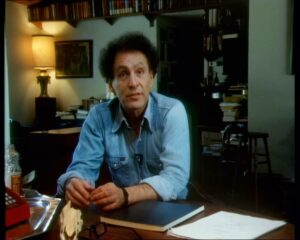
    Monte Hellman, interviewed in Out of the Blue and Into the Black.
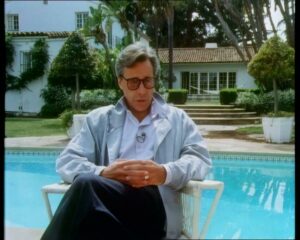


    Peter Bogdanovich, interviewed in Out of the Blue and Into the Black.

    When we finally got the call to say we could now visit, it was with great trepidation that we approached Dennis’ house in Venice, a suburb of LA. But his chosen retreat on Indiana Avenue was not located in the top end of town by any means, but in the decidedly ‘wrong side of the tracks’ area, in what seemed to be a large galvanised shed surrounded by abandoned cars and shopping trolleys. It was here that Dennis would spend over thirty years hunkering down and gradually increasing the perimeter’s fortifications, rather like John Wayne might have done with his garrison in Fort Apache. And I can assure you the natives here were quite as unfriendly as John Ford’s.

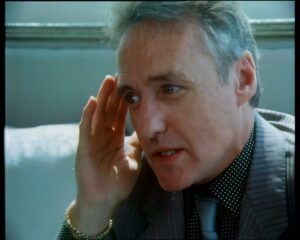
    Gingerly, Chris Rodley edged forward to the door as we hung around the unit vehicles, nervously puffing on Marlboro Lights (as everyone did then). After fiddling with the entry-phone, which was still faulty on every occasion I visited, which must have been thirty times over as many years, Chris disappeared shortly to be followed by his beckoning finger poked round the door indicating it was “all OK”, a signal agreed in advance. In we piled to find a suntanned and very fit looking Dennis, neatly coiffured and dressed like an enormously wealthy investment banker or hedge fund manager: dark grey silk suit with discreet stripes, matching tie and a dark shirt with tiny white polka dots. Clearly master of the situation and the soul of hospitality, he was “off” everything but cigarettes, which he chain-smoked whilst we were there, using the 100mm-sized white tubes as batons to reinforce points during the filmed interviews (he gave up cigarettes shortly after this, and stayed clean until in the last decade of his life when he developed a penchant for Havana cigars).
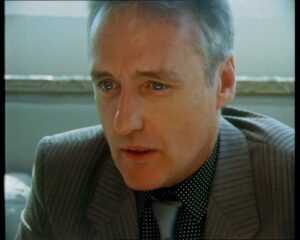
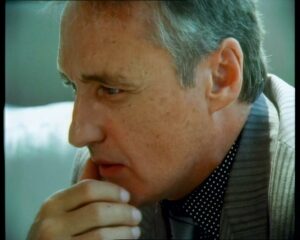
    Dennis Hopper, interviewed in Out of the Blue and Into the Black.

    But first thing’s first…

    Dennis Hopper was born in Dodge City Kansas in 1936 and trained in classic theatre at The Old Globe Theatre in San Diego, before moving to New York to study with Lee Strasberg at The Actor’s Studio. It was at this time that he met James Dean, and they immediately became friends. Dennis not only idolised Dean, he also learnt a huge amount from him, including lessons in acting that would remain within him forever. For example, Dean advised him, when approaching a particular scene, to simply perform an action without contemplating it in advance. “Don’t act drinking from a cup,” Dean said, “just take the drink!” Dennis was convinced that Dean’s ability to perform on-screen action, containing himself when he had to and then exploding into movement, came from his hard work in basic training as a dancer. It gave him a balletic quality that Dennis greatly admired, but was unable fully to emulate. Dean and Dennis worked on two pictures together, Rebel Without a Cause (1955) for Nicholas Ray, and Giant (1956) for George Stevens, the latter of which was merely two weeks away from the end of the shoot when Dean died. From talking with Dennis over the years, it was clear that he would continue to feel the loss of this developing friendship for the rest of his life, and in a sense would never quite recover from this premature bereavement. Dean was the reason Dennis took screen acting so seriously, Dean was why he picked up a stills camera, and Dean it was who also turned him towards the career which would obsess him for the next half century – directing films.

    A few minor television roles led to an offer from Hollywood for Dennis to star in a western to be directed by notorious actor-killer Henry Hathaway. Hathaway was regarded by many as the epitome of the cigar-chomping, whip-cracking old-style director who intimidated actors, particularly inexperienced ones, and this was to be Dennis’ ordeal by fire. The film was a western, From Hell to Texas (1958) and hell indeed it proved to be. The scene was simple, a few lines only, and Hathaway gave Dennis explicit directions as to the gestures and line reading. They began at 8am in the morning and by 6pm Hathaway had rejected 85 takes and Dennis was reduced to a tearful jelly. In the meantime, both the head of Universal and Jack Warner himself had called Hopper saying, “Hey, kid, what are you doing, this is Hathaway you are fucking with here!” Halfway through this farrago, Hathaway took Dennis aside and gestured to the corner of the set. “What are those?” he demanded. “Why,” Dennis replied, “they are film cans.” “That’s right, kid” responded Hathaway, “and I own 40 per cent of this studio and we’ve got enough film to shoot here for months if we need to!” Finally, on take 86 Hopper capitulated and completed the scene as Hathaway had demanded nine hours before. As he stumbled away from the set that day, Dennis also left the business (or rather the business left him) for the rest of that decade.

    Eight years later – with a rapid fade-out followed by an extremely slow fade-in – Hopper is considering 100 different ways of disposing of Hathaway when he takes a call from the man himself. No announcement or even a “How are you?” just, “Hey kid, do you want to be in my next picture?” Apparently, John Wayne (The Duke) and Hathaway have taken pity on Dennis because he is now married to Margaret Sullivan’s daughter Brooke Hayward, who in turn has produced a daughter of their own, Marin Hopper, and the old stagers want to give Dennis a chance to re-enter the ranks of the Hollywood blessed. According to Dennis, he is offered exactly the same part – the weakling son of a crooked father – with the same lines, motivations, western location, everything. So in front of The Duke, Hal Wallis and a line-up of the studio dignitaries on the set of The Sons of Katie Elder (1965), Dennis takes Hathaway’s instructions and line readings to the letter, and delivers the dialogue as instructed in a single take. Hathaway calls “Cut!” and goes to embrace Dennis with tears in his eyes. “That was great, kid, just great!” Dennis looks up at him and says, “You see Mr Hathaway, I’m a much better actor now.” Hathaway drags the cigar out of his mouth and says, “You’re not better kid, you’re just smarter, you’re just smarter.”

    CHATEAU HOLLYWOOD


    Although we had tucked ourselves into what was to become Lucida’s LA outpost for over a quarter of a century, “The Magic Motel” in West Hollywood, we spent a good deal of time at the infamous Chateau Marmont. I had known it since 1978 when I stayed there with my actor friend David Warner (in Hollywood to make Time after Time (1979)), at one of the bungalows around the pool; come to think of it I do believe it was the same one that John Belushi expired in, in 1982. It was a place redolent with history. Looking up at the illuminated façade from outside at night, you fully expected to see the ghost of Jim Morrison hanging precariously from the roof as he tried to swing himself through his bedroom window (God knows why) thereby using up, as he later said, ”one of my eight lives”. And was that Howard Hughes, light gleaming for a moment on his binoculars, as he peered at the girls in the pool from his attic apartment? I did actually see a real-life Leonard Cohen relaxing under a huge sunhat in the garden, but although not an everyday occurrence, such a sight was by no means unusual.

    During the time of Dennis’ 1986 hospitalisation, our film crew were not merely hanging around the Chateau, we were also busy interviewing the victims and benefactors of Dennis’ notorious approach to creativity. We especially wanted to illuminate the time between Easy Rider and the incorporation of BBS, and one who could help us was granite-jawed top studio boss Ned Tanen, then President of Universal Pictures, who had to deal with Hopper in the aftermath of his huge initial success.
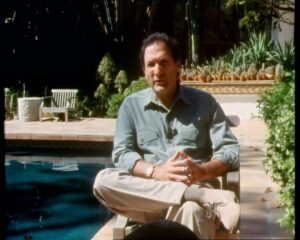
    Ned Tanen, interviewed in Out of the Blue and Into the Black.

    By the time we spoke to him, Ned had been poached to do the same job by Paramount Pictures, so we met him on the famous Paramount lot in an executive bungalow kitted out in Native American and Mexican artefacts. Ned was a no-nonsense guy, but even he was confounded by Hopper’s next project after Easy Rider. The film The Last Movie is about how western “culture” can corrupt a primitive culture almost in a single encounter. It is based on a wonderful premise: when a Hollywood production company shooting in a primitive area (in this case Peru) moves on, the natives continue to make their own “pretend” movie with bamboo cameras and wooden props. The twist is that instead of using blanks for their gun battles, as the film company did, they use real ammunition. The problem for Ned Tanen was that Dennis had been introduced to the films of the nouvelle vague, whose philosophies of film-making were not exactly compatible with Hollywood.

    Tanen found himself commuting between Hollywood and Peru during the shoot, and then on to Taos New Mexico for the editing; both stages were fraught with danger and despair. “People in the crew flew down there, went into the jungles, and simply never came back!” Tanen told us. A mad cocktail of drink, drugs and willing native women overwhelmed many, with Dennis acting as a stoned ringmaster pulling all the strings, but mostly tangling them into a giant Gordian knot. Tanen remembers a visit when he literally encountered a genuine Taos orgy. Not a man to be shocked easily, Ned was aghast, “There were thrusting buttocks and tits everywhere, it was like a cut scene from Caligula but for real!” In a hopeless attempt to conduct the business he had come for, he managed to locate Dennis’ writhing body and lightly tapped him on the shoulder, ”So sorry to interrupt, but may I have a quick word with you about how the edit is coming on?”

    As had happened with Easy Rider, the first edit – a four-hour cut which Dennis refused to trim down – nearly derailed the whole project. Ned’s frequent, if mainly abortive visits to Taos were punctuated by trips to the fleapit cinema that Dennis had set up for the locals. But attempts to introduce films like Jean-Luc Godard’s Les Carabiniers (1963) to them only resulted in a multi-coloured decoration of local fruit and vegetables being hurled at the screen.

    When The Last Movie was finally given a strictly limited US release, this near-impenetrable stream-of-consciousness piece of avant-garde cinema left much of the small audience who bothered to see it confused. This seeming farrago effectively buried Dennis’ directorial career for the rest of his life. But here we are getting ahead of ourselves again, so let us return to the mid-1960s, when youthful enthusiasm and simple pleasures first drove the likes of Hopper, Peter Fonda, Henry Jaglom and Peter Bogdanovitch towards the cinema, and all the promises it seemed to hold for them.

    BREAKING IN


    At that time, Roger Corman – the king of low-budget exploitation movies – had established a market for biker flicks with The Wild Angels (1966) and Devil’s Angels (1967) and hoped to produce Easy Rider with the backing of cigar-chomping lawyer Sam Arkoff. One day Dennis took a call from friend Peter Fonda who was at a film festival in Canada (they had previously agreed never to do another biking picture fearing they would end up branded as latter-day Roy Rogers and Gabby Hayes). Fonda said he was in a meeting with Arkoff and he had pitched him a story “It’s about a couple of dirt bikers who make money in a drug deal in Mexico, buy two new gleaming bikes, head to New Orleans and get stoned, then get shot by a couple of duck hunters. He said you could direct and I can star! What do you think Dennis?” Dennis replied, “Are you sure Arkoff said he has the money?” “Oh yes,” comes back Fonda “he said he’d give us the money alright”. “Well” retorted Dennis “I think it’s a great story!”

    Shortly after at a meeting with Fonda, Corman and Dennis, Arkoff became concerned by the explicit language Dennis was using, and demanded a clause in the contract stating that Dennis could be replaced as director if he fell behind schedule. Hopper’s explosive “Fuck you!” could be heard all over Burbank. Shortly after this abortive meeting, Jack Nicholson moved the whole project to Columbia Pictures. In return for packaging and promoting the project, he took the role of George Hanson, which turned him into a star overnight – a part the unlucky Bruce Dern had previously been earmarked to play.

    At this stage of his career Dennis was basically uncontrollable. He made enemies left, right and centre and cared not a jot about it. For instance, he found himself sitting next to George Cukor, director of The Philadelphia Story (1940) and A Star is Born (1954), at a Hollywood dinner. In horror, fellow guest Peter Bogdanovitch heard him say to Cukor, “You’re old Hollywood and we are going to bury you!”

    The way that Easy Rider was made and finally completed is a tribute to producer Bert Schneider’s ability to hold together a potentially disintegrating project. Drink and drugs fuelled the production with a great deal of testosterone added to the mix. The shoot began with an infamous trip to the Mardi Gras in New Orleans, with Dennis, by all accounts, behaving like Orson Welles on speed – the unit returned with about 20 hours of incomprehensible 16mm footage. Again, it was Bert who had to drag the two antagonists, Dennis and Peter Fonda (who played the lead, Captain America) apart, thereby preventing mutual emasculation.

    Weeks of production activity on the road covered the full gamut of fist fights, orgies, drug binges, drink and rock and roll! After the New Orleans Mardi Gras, Fonda and Dennis’ brother-in-law, Mike Hayward, returned to LA with a stack of on-set tape recordings of Hopper ranting, determined to have him fired from the picture. On one of these tapes, he was heard demanding to know why a particular lighting rig was not in evidence on set. ”Red, blue and green lights making a white light goddamn it!” Schneider conceded that Dennis sounded “a little agitated”, then added, “but if he had asked for a certain red-blue light in advance, and it was not there, then surely he had cause to be upset, didn’t he?” Such a sympathetic view, in the guise of an unanswerable question, was why Schneider was widely regarded as “The Last Tycoon” of his generation.

    According to Henry Jaglom, a fellow veteran of the independent film sector, Easy Rider was shown in its five hour and twenty-minute version to an eminent French film critic who exclaimed, “It’s a masterpiece, don’t cut a single frame!”, which Dennis adopted as his own mantra. Enter Schneider, from camera left, to the rescue once more, setting Jaglom at work at one end of the cut, with Jack Nicholson editing at the other end until they met somewhere in the middle. Dennis always maintained that he was personally responsible for the edit, but my pretty strong guess is that Nicholson and Jaglom helped him a lot, and he ultimately approved their work. Dennis also said, well after the event, that he had intended to win the top award at Cannes, but the fact remains that the Palme d’Or going to Easy Rider was a great surprise, and it heralded a new era of bold, uncompromising truly independent cinema.

    Steve Blauner then took up the story for our programme; he was helping with the advertising and distribution of the film. Bert Schneider’s father was still a senior executive at Columbia Pictures, so he was able to get the film opened at the Beekman Theatre on East Side, New York City rather than at the drive-in market for which it was originally destined. Then something very strange happened, according to Blauner, “That grapevine thing which, if anyone could predict, would make us kings of show business – word just got around before the opening and there were queues around the block, they were sitting in the aisles, hanging from the rafters, it was pandemonium.” Before long the cinema manager had to unscrew the toilet doors to stop the pre-screening pot smoking.

    The massive success of Easy Rider, followed by the equally gargantuan failure of The Last Movie, established a pattern, one that would weave its way, like a poisonous serpent, through Dennis’ subsequent career. After Easy Rider Dennis could have worked with anyone in the world – his acting hero Marlon Brando, for instance – but instead he chose to fire Ben Johnson from the male lead in The Last Movie (an Academy Award winning actor who had once been part of John Ford’s stock company) and put himself in the role. Then he buried himself in the Peruvian jungle for eighteen months.

    Even in the context of the drug-fuelled culture of the late 1960s, his behaviour does seem perverse. Rather than being hailed as an artistic statement in the guise of an unconventional western, the ravaged film that finally emerged as The Last Movie was viewed as a vomitus assault on key Hollywood shibboleths. Dennis thereby rendered himself unemployable as a director to any major studio for the rest of his life.

    MID-CAREER FRUSTRATIONS

    It would be a full decade after shooting The Last Movie before Dennis had an opportunity to get behind a camera again. Made independently on a small budget, Out of the Blue (1980) is a punk-inspired, relentless and hopelessly bleak examination of a dysfunctional family whose father, played by Dennis, wipes out a bus full of school children while driving drunk. The film’s descent of family life into alcoholism and sexual abuse is about as bleak an account of middle America as one could imagine. It’s a brilliant film, but one of such mind-numbing nihilism that paracetamol makes a more suitable foyer-seller at its screenings than popcorn. However, Dennis’ power as an actor and authority as a director was widely acknowledged and the film helped reinforce his reputation as a vastly underrated directorial talent, particularly amongst the European film critics.

    Eight years would unwind before Dennis was again able to direct. Colors (1988) was made for Orion, then a major Hollywood player. He had actors Robert Duvall and Sean Penn at his disposal, and a story of drug-dealing and corrupt police, which he transposed from its original setting of Chicago to his very own doorstep, the downtown ghettos of LA. Although this film had some success commercially and even better critical acclaim, it demonstrated Dennis’ attraction to subjects many in the business would describe as “murky”. In this regard he was his own worst enemy. He was unable or unwilling to compromise. Between 1988 and 2000 there would only be three more director credits for him and all were low-budget, low-life thrillers: Catchfire (1990) – re-edited so damagingly Dennis had it credited the infamous pseudonym “Alan Smithee” – The Hot Spot (1990) and Chasers (1994). The meagreness of this body of work was a matter of great regret to Dennis. In a sense, his mischievous persona, used to such advantage by others in the films he made as an actor, sapped his time and energy. He needed a Bert Schneider there to advise and guide him, but when Bert retired from the business as he always said he would at the age of 50, after completing Terence Mallick’s Days of Heaven in 1978, he lost that elder brother figure he so desperately needed to continue with truly creative work.
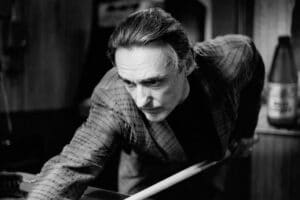
    Paul Joyce. Dennis Hopper, 1986, gelatin silver print.

    The acting role with which, of course, he will always be most identified is Frank Booth, the psychotic gangster in David Lynch’s Blue Velvet (1986). Famously, he pestered Lynch for the role repeatedly saying, “There is no problem for me in playing him, because I am Frank Booth!” Having already carved a niche for himself (in acting terms) as a serial abuser, pornographer, drug user and child maltreater, given to outbursts of contumely at any turn, Dennis delivered his star turn for Lynch. Who can forget his explosive, “Baby wants to fuck, baby wants to fuck Blue Velvet!” But even in this riveting performance as one of the screen’s most unlikeable heavies, Dennis found terrible humour, blacker than the night, in the worst of situations. It was this quality that other filmmakers turned to Dennis to supply, for instance in Speed (1994) and Waterworld (1995). In each case Dennis’ arrival served to boost a story when it was flagging, thereby dividing the audiences’ affections between himself and either the wooden Keanu Reeves, or the preoccupied Kevin Costner. In these films Dennis delivered the best performance on view.

    His other memorable appearances included the crazed photojournalist in Francis Coppola’s Apocalypse Now (1979); an alcoholic father, again for Francis in Rumble Fish (1983); another alcoholic, this time a basketball star well past his sell-by date in Hoosiers (1986) – for which he received an Academy Award nomination – and a memorable scene-stealer opposite Christopher Walken in Tony Scott’s True Romance (1993). His screen performances totalled over 200, against just eight shots as a director. One wonders if his was dissipated in this constant scrambling up a greasy financial pole erected in the cause of alimony and art purchases.

    In the midst of continuing professional crises regarding his directing ambitions, his private life seemed to be weaving an almost parallel course. In 1961 he married Brooke Hayward, the aforementioned daughter of Margaret Sullivan and the infamous Hollywood agent Leland Hayward, a union which lasted eight years. During this time, he began to collect art, almost exclusively American contemporary. He was one of the first people to purchase a Campbell’s soup can by Andy Warhol, for the princely sum of $75. Against a total outlay of just $28,000 he amassed works by Jasper Johns, Roy Lichtenstein and further pieces by Warhol, whom Dennis came to know personally. As part of his divorce settlement with Hayward, he was forced to give up his collection, which she sold for three-quarters of a million dollars (equivalent to over $50 million today). Dennis had to begin collecting again from scratch. He lost his second collection to another former wife, and now his third and final one is the subject of bitter dispute amongst family members even as I write.

    At the height of his alcohol and drug abuses, Dennis married Michelle Phillips of The Mamas and Papas, a union which lasted exactly one week (he is reputed to have said “The first six days were great”). She accused him of “unreasonable sexual demands”. Then came a string of dancers, singers, and singer-dancers ending with Victoria Duffy, who was allegedly recently spotted (while Dennis was in hospital receiving chemotherapy) slipping out of the family house with various pieces of contemporary art. Dennis’ attempt to place a restraining order on her preventing her from coming within ten feet of him was apparently ongoing at the time of his death. Sadly, his final appearances looking like a frail King Lear was probably a role he was actually close to playing in his own disrupted household.

    The work Dennis achieved as a photographer and artist has, in my view, been disgracefully overlooked, especially in Britain. However, in a typically perverse Hopper-type finale, The Hermitage in St. Petersberg gave him a one-man show in 2008. Some of the work there had been on show in LA. Dean Tavoularis (Oscar-winning Production Designer on most of Francis Coppola’s major pictures) and I made a point of dropping by the Ace Gallery on Wilshire Boulevard on a typical day, with only a few spectators present. The most shocking pieces were the enormous monochrome canvasses, some as large as 10’ x 20’, literally eating up vast walls. Knowing Dennis’s photographic work quite well, we realised that they were painted representations from 35mm frames, enlarged vastly and painted on canvas.

    Dean and I looked at each other in disbelief. The scant catalogue and information on the walls seemed to indicate that Dennis had painted them himself. Dean exclaimed, “Dennis would never have had the time or patience to paint all these!” Anyone who knew him well would have known this immediately. So how had the work been achieved? By nosing around the gallery and putting two and two together, it became clear that Dennis had employed other artists to work under his guidance. And who were these artists? Why, those painters of Hollywood signs, like the good old Marlboro Man who used to nestle alongside the Chateau Marmont on Sunset in the 1970s and 80s. Long since made redundant by laser and computer technology, these skilled craftsmen were employed because of their ability to project an image onto an enormous canvas whilst keeping perspective and proportions under control.

    What a great idea, we thought, but rather than trying to hide the work’s gestation, why didn’t Dennis use it as a way to make a virtue out of the concept, and to integrate these pieces, basically of poster art, within the tradition he was celebrating? By so doing, he would surely have appealed to a wider public, and why he didn’t explain the concept and execution of this unique new work more explicitly remains a mystery for Dean and myself to this day. So we left, shrugging our shoulders and muttering, “Well that’s Dennis for you, I guess.”

    Dennis’ involvement in the art world included strong friendships with David Hockney and Andy Warhol, amongst others, and occasional bizarre events such as the incident in a field in Houston, Texas in 1983. Dennis had been to an opening of Out of The Blue and had announced that he wanted to blow himself up. As he started to wave sticks of dynamite around – I can only assume he meant it to be an “art happening” – city officials bundled him into a car and drove him to a field well outside the city’s limits and its fire regulations. Here, with the help of a stunt co-ordinator and various assistants, Dennis entered a flimsy-looking cardboard structure covered in foil to sit himself on a “Russian Dynamite Death Chair” placed over six sticks of dynamite. There was an agonising pause while he failed to ignite three matches. Then a tremendous explosion occurred, followed by plumes of white smoke, through which Dennis emerged unscathed apart from damage to his eardrums. “Wow, man.” He was heard to mutter, “That’s worse than being hit by Mohammad Ali!” His theory was – and who can now dispute it – that the force of the explosion would be outwards, away from him, and the flimsy plywood structure would insure an even dissolution of the shock waves. Well, I guess he proved his point but he couldn’t hear properly for three months, and as far as I know, the event was never included in his canon of art works (although it can be seen in grainy 8mm on YouTube).

    This event occurred not long after reports circulated of Dennis being found wandering in a Mexican jungle, on location for a German film called Euer Weg Führt durch die Hölle — released as Jungle Fever – stark naked, and apparently trying to raise an army for the Third World War. He was detained by local police, declaring himself to be a “prisoner of war” and giving no personal details beyond his social security number. A period of detoxification followed.
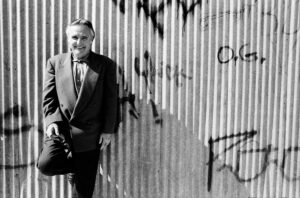
    Paul Joyce. Dennis Hopper, outside “the bunker home”, 1989 – 1990, gelatin silver print.

    VISITING DENNIS


    In the mid-nineties I was collaborating on a book with David Hockney (Hockney on Art, Little, Brown, 2000) and we drove from David’s studio just off Mullholland Drive, down to the coast to Venice for dinner with Dennis, accompanied by Hockney’s two Dachshunds propped up in the back seat. In the meantime, that corrugated fortress of a house, designed now with even more jagged extensions by Frank Gehry, was once more packed full of contemporary art, much of it vast in scale. As the living quarters resembled an aircraft hangar with steel girders and tubular walkways running all around us, this new-ish collection fitted the décor like a glove. There were works by David Sale, Julian Schnabel, Jean-Michel Basquiat, Keith Haring, and an installation by Jenny Holzer which consisted of a running statement in racing neon lights, like illuminated newsflashes in Times Square, reading, “You are so complex, you don’t respond to danger”, or something along these lines. Dinner was great; various personal assistants drifted around and about us, and I really can’t remember which if any current wife was in evidence. Come to think of it they weren’t usually at dinner, which demanded more mental than physical agility of Dennis and his guests. We had a wide-ranging conversation, mainly on art-related subjects, with a few scurrilous stories (decidedly not for publication) about friends and especially rivals. Dennis and David loved gossip, so we had lots of that.
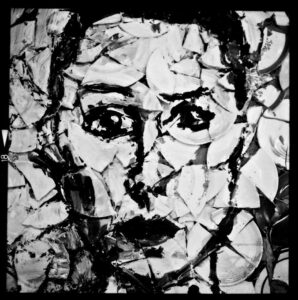
    Paul Joyce. Photograph of Julian Schnabel’s painting of Katherine LaNasa, Hopper’s wife.

    During the meal I noticed what seemed like a portrait of Dennis hanging inconspicuously on the kitchen wall, half hidden by a cupboard. It appeared to be comprised of shattered shards of porcelain. I asked Dennis what it was and who had done it? “Julian Schnabel,” came his reply, “He made it out of the broken crockery on the kitchen floor which my wife threw at me the other day!”

    During dinner we had left David’s dogs downstairs in Dennis’ pride and joy, a newly equipped screening room. On the floor between audience seating and screen was an enormous carpet, consisting of a heavily piled, one-piece, dead-white expanse of alpacka. Perhaps you have by now guessed that during dinner one of the dear little creatures had delivered an enormous dump right in the middle of this priceless virgin white field. As we descended to take our leave, David was suitably horrified, gazing around wildly for some kind of solution: of course there was none, for this was an irreparably stained, once expensive but now decidedly ex-carpet. Dennis, without blinking, continued to show us to the door without even acknowledging the disaster, a gracious and immaculate host till the end. We stumbled out, and as David shooed the yelping offenders into the back of the car, turned to me and said mournfully, “Oh dear, do you think this marks the demise of my social life in Hollywood?”

    FRIENDSHIP

    If Dennis liked you, you were a friend for life. Fortunately, he seemed to like me, as well as my work. For 20 years of us knowing each other, however, he was unaware that I was a painter as well as a photographer and filmmaker (three pillars of our lives which we had in common). During my two or three trips to LA every year, I had been working on paintings of vernacular architecture: diners, motels, “Randy’s Donuts” and the like. Three years ago, I called Dennis and asked if he would like to see them and within an hour he had driven from Venice to my studio in North Hollywood in his Jaguar XJ, Havana cigar in hand. He came in and looked at the paintings for 20 minutes without saying a word. Finally, he said, “You never told me you were a painter”. I wasn’t sure how to reply to this, (“Well you never asked?”) but he hurried on, “They’re great, you should have a show, would you like to have a show here?” Within 48 hours he had introduced me to a top Santa Monica Gallery (Track 16 at Bergamot Station), a show was arranged and he had agreed to personally curate it. That’s the kind of friend Dennis was.

    Paul Joyce. Dennis Hopper, Venice, California, 1986, gelatin silver print.

    So how will history judge this outrider of the avant-garde, our gritty long-haired symbol of simpler times, roaring down highways and lonely deserts, both real and imagined? I would guess that he’ll take his rightful place in the pantheon of late 20th century American auteurs. Floating on the water of memory, long after his dust has settled, will remain a handful of great acting performances, some wonderful films as a director, three or four incredible art collections dissembled by disputing legatees, many loyal and devoted friends, the respect of his luckier colleagues and an unmatched body of work as a photographer.

    My first reaction, after the initial shock of hearing of his death 14 years ago was to feel the irony that it was the old Hollywood he notoriously wanted to bury who ended up burying him. But Dennis, who came to love Hollywood old and new, had the last laugh. He is no longer with those vacillating Beverly Hillsians, for he took his bones to Taos, New Mexico. Spiritual (and physical) home to DH Lawrence, Ansel Adams, and Georgia O’Keefe, what better place is there for an artist to lay himself down? Rest easy, dear rider, for those who love you will surely be visiting again with you one day.
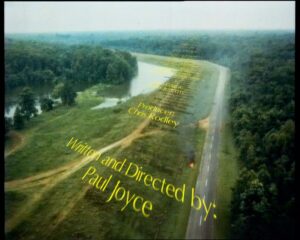
     

    End sequence of Out of the Blue and Into the Black.

    Paul Joyce is a filmmaker, photographer, artist and writer. He is the great-grand-nephew of James Joyce. Dennis Hopper appeared in a total of seven Lucida Productions (the production house set up by Paul Joyce) to the point that he was thought of as the company mascot:

    Some Kind of Genius (1986)
    Out of The Blue and into the Black (two parts) (1986)
    Motion and Emotion: the Films of Wim Wenders (1989)
    Pilgrim: The Life and Work of Kris Kristofferson (1992)
    Dark and Deadly: Hollywood and Film Noir (1994)
    Marlon Brando: Wild One (1996)
    Mantrap: Sam Peckinpah and ‘Straw Dogs’ (2003)

  • Paul Joyce on Maestro: “A Rudderless Ship Adrift on a Sea of Vanity”

    Paul Joyce


    In my decidedly less than humble opinion, the only real reason for “Maestro”, Bradley Cooper’s inconsequential biopic getting close to an awards envelope, is the astonishing power and charisma of his subject’s ability to haunt us from his grave- Leonard “Lenny” Bernstein. Here the quote that immediately comes to mind ends with “…all sound and fury, signifying nothing.” However, I would certainly not go so far as to claim his film, “Maestro”, is told to us, in the words of William Shakespeare, by an idiot, for Cooper is an accomplished actor and at his best a competent director; it’s rather that in taking on both jobs he has diluted his talents so severely as to render the whole enterprise little more than a miserable pastiche.

    Why am I being so harsh on a film which has some considerable highs alongside the overwhelming lows, included the presence of the magical Carey Mulligan as Bernstein’s all-forgiving wife and some, but by no means all, of Bernstein’s music of genius? Because a) he skirts the core cause and effect of Bernstein’s bisexuality, b) he fails to deal adequately with his Jewishness and c) the best of his wonderful music becomes rather in Cooper’s hands, a failed attempt to create a pied-piper like celebration of his unique scores, ending instead as a merely meandering and eminently forgettable soundtrack to a barely sketched-in life.

    It is not a widely known fact that Steven Spielberg was slated to direct the movie, which would have surely involved his experienced hand in the screenplay as well, but he withdrew from the project, I suspect due to the universal chorus of disapproval for his attempt at a musical with “West Side Story”;  this thankfully seems to have slipped into the equivalent of Rotten Tomatoes’ infamous tables, or perhaps is already there, as in a real list of worst movies of all time. However, I have no doubt that Spielberg’s involvement would have yielded a far more truthful and controversial film than the one that has finally appeared on our screens. Bradley Cooper is the latest in a long line of actors turned director, the usual advice for which is to let well alone, viz Angelina Jolie, Barbara Streisand and Warren Beatty to name only a few from a capacious and now overflowing pocketful of others.

    Before I proceed to the very blood and guts out of this near farrago, I should say, however, it is plain as a pikestaff that Cooper surely has his heart on his sleeve for our Lenny, but unfortunately to the point that his worst characteristics are glossed over or ignored altogether. For me, I sensed deep problems as soon as it was clear that Cooper’s putty-enhanced nose (four hours in make-up alone!). was attracting all the pre-release publicity. When the nose carries the performance before it, like a ship’s figurehead, we know that trouble will follow. Just ask those nose kings, Orson Welles, and Larry Olivier. Jeanne Moreau who starred with Welles in “Chimes at Midnight” said that Welles claimed he had lost his make-up case and was therefore unable to perform, until she found it hidden under his dressing room settee, thus shaming him into appearing with her in a scene on screen at last. Such was Orson’s fear of taking on the role of his life, Falstaff, showing that this mighty man still possessed human fallibilities. No such problems in Cooper’s case, on goes the schnozzle and on it stays. But if we all end up staring at it, what good is that to the movie itself?

    Let us now turn to the matter of more serious mistakes, omissions, blunders and directorial blindness that Cooper is prone to and ultimately responsible for. But these crimes and misdemeanours pale in the light of over-weaning vanity which smothers the whole enterprise like a cloak of untreatable plague: Bradley’s performance as Lenny.


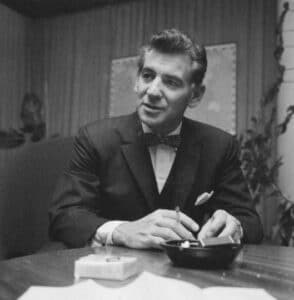
    When one has to say that his attempt to master the art of chain smoking scored a mere six out of ten, compared to Lenny’s twenty out of ten, one’s heart begins to sink. (In fact a whole fascinating documentary awaits the incautious director who undertakes to tell the story of nicotine addiction amongst creative classes. Cigarette-smoking killed both Lenny and his wife, alongside Humphrey Bogart, Nat King Cole and Robert Taylor together with a slew of stars active in the 30s, 40s and 50s.) Kurt Vonnegut was eloquent in defence of the weed, writing fascinatingly about the power of trading cigarettes for all and any kind of favour in war zones (“Starting when I was only twelve years old, I have never chain-smoked anything but unfiltered Pall Malls. And for many years now, right on the package, Brown & Williamson have promised to kill me. But I am eighty-two. Thanks a lot, you dirty rats.”)  Lennie was permitted to smoke anywhere he chose to be, otherwise he would not be there at all. To see him without a cigarette in hand was as if he appeared on the podium in boxer pants. In fact, it occurs to me now that his furious conducting, one place he was disallowed the weed, was an attempt to keep both hands occupied and therefore from reaching for the fag packet and Zippo.

    Quite apart from Cooper’s inability to deal with complex and contentious issues head-on, he embraces a dumbfounding decision to leave a crucial chunk of Bernstein’s life and work, from 1951 till the early seventies, entirely blank. These years were amongst Lennie’s most productive and open to proper critical examination, particularly in regard to the various prestigious appointments he received. There is no doubt that Bernstein was a practiced and at the very least slippery operator, playing his  50% straight hand against gay rivals with barely a backwards glance. His shamelessness was cleverly concealed and emerged, if ever at all, to the uninitiated as mere elements of an artistic temperament. With the probable exception of murder (actual or career), as opposed to character assassination, Lenny could surmount almost any obstacle in his path.

    Ultimately what Cooper was facing was the almost insurmountable task of making a film about someone heroic, universally admired, praised and very successful – in my view, a certain way to a directorial dusty death. With those flicks that do succeed, such as The Wolf of Wall Street, The Shawshank Redemption and The Aviator, most people would have difficulty in actually naming the protagonist. Who were they actually about? The question is not so much who, but what? And the answer is plain for all to see, the inevitable descent from even modest success to abject failure which cynics would maintain is the story of most if not all of our lives. Don’t almost all of us identify with the flawed hero, for in them we see a reflection of ourselves.? How much less of a challenge to make a film about failure, and here the list is far easier to assemble beginning with the greatest of all, Citizen Kane followed by such as: Once Upon a Time in America, Elmer Gantry, Aguirre, Wrath of God, and almost all of John Ford’s films starring John Wayne (with the possible exception of the earliest, Stagecoach).

    Even our greatest comedians were much better practiced in the art of failure than success: Charlie Chaplin, Buster Keaton and the joint kings of Failureland, Laurel and Hardy. In perhaps their greatest short film directed by Leo McCary, L and H only reach their nemesis by the simultaneous destruction of a neighbour’s house at the expense of seeing their new car being gradually but inevitably reduced to metal shards. In another short we see their priceless and failed attempts to get a heavy piano to the top of a steep and apparently endless flight of stairs. Two hugely successful laugh-out-loud movies depicting the paralysing nature of failure. Very well you may ask, trawling around for a film highlighting success, what about Oppenheimer?  Here, surely, is a film about one of the greatest successes of all, the making of the first atomic bomb? Gottcha! Well, actually, no, as Oppenheimer thought of himself as an abject failure in preventing the proliferation of his creation almost certainly resulting, sooner or later, in the ending of the world as we know it. Christopher Nolan’s monumental epic is a milestone in the depiction of a man who achieves all he could wish for but ends up as a fragile and intensely vulnerable man riven with doubts and regrets. Much easier than trying to show us the indefinable aspects of genius which are frankly not possible to depict:  the art of conducting (impossible); charisma (impossible); the creation of great music (equally impossible). I’m afraid Mr Cooper’s Maestro had the cards stacked against him from the start.

    All in all then an entirely hopeless, hapless case resulting in a hopeless and hapless film. But in truth I can’t think of any director with enough musical knowledge to undertake such a challenge. The only way to transmit the essence of Lenny to a contemporary audience would be to embrace a documentary format and trawl disparate materials from at least a hundred or more different archives. This would allow us to see his genius, charm, articulateness, inspirational compositions, concert-grabbing performances as a pianist, and his immense skills as a teacher to audiences of all kinds. Then, from within these interconnecting elements, you would need to put together a patchwork portrait of the man with all his charisma, wit, fire and passion that penetrated and transmitted to us through any camera lens trained upon him. He was, in my opinion, the intellectual and super-articulate equivalent of Marilyn Monroe with all her sensuality and innocent charm.  But in terms of sheer sex appeal alone, I would have to declare a dead heat. Mr Cooper, kindly leave the stage!


  • Paul Joyce: A Dr Who Dinosaur Speaks

    Photographer, artist and erstwhile Dr Who director, Paul Joyce, offers an insight into the making of the Time Lord…

    One can almost hear the sigh of relief breathed by Idris Elba when at last the young cub was painfully torn from David Tennant’s side in an awkward and over-extended CGI sequence. A nod maybe to the book of Genesis but no mention of additional ribs or, thanks be, even a glance towards the other candidate for Eve’s existence, the baculum. Rather we are presented with an athletic looking young black actor of undoubted Achillean appeal and bizarrely sporting only bone-white underpants for the remainder of the show. For my money quite a lot of fuss over barely spilt milk. Welcome to the world of “Bi-Regeneration” (as opposed to simply ‘bi’) which will allow Tennant whose Hamlet and no doubt Macbeth and Lear will all be overshadowed at least in legacy terms, by his stuttering appearances as The Time Lord. As one horrified fan just wrote: “what the f*** so what now we get 2 doctors flying about ????” It is clear our David will not leave the show lying down.

    In a hagiographic follow-up documentary aired immediately after the show’s first airing, an uncomfortable looking presenter, wielding an exaggerated Welsh accent (to remind us of the show’s Celtic credentials,) wandered around the set to demonstrate just how good the CGI is in the transmitted version. His first choice of interviewees included the 2nd assistant director, a Runner and a puppeteer. Oh yes, plus one of the producers who appeared briefly as did the show’s grandmaster, Russell T. Davies. Any documentary worth its salt covering filming of really any kind would usually figure the director at some point as being at least nominally a captain on the ship. But not here, not now, which symbolises for me the vacuum at the heart of Dr Who in its ongoing form since my brief tenure there 40 years ago. The director nowadays can be anyone more or less: in my time that might be a promoted first assistant director or junior producer eager to lap up the BBC philosophy of absolute loyalty to the crown (or in other words TV Centre). For me that view has not shifted much in the last four decades at least.

    My quite genuine admiration for the show’s initial 20 minutes or so rested, now I consider my reaction more carefully, on mainly technical excellence; these included stunning views of cities with beautiful futuristic buildings running alongside believable recreations of Soho streets 100 years ago. British TV is attempting and succeeding in matching the mighty Hollywood dollar, aided by our indigenous and unequalled Special Effects facilities. The bolted-on documentary also showed what seemed like an army of Steadicam operators flying hither and thither about the set apparently filming anything that moved. I came from an era where budgets were tiny, special effects barely obtainable, and working conditions today would be truncated overnight by a number of trade unions and government acts.

    Paul Joyce second from left with Tom Baker


    In my day I had to beg, borrow and finally steal the first truly portable camera to enter the BBC’s hallowed walls, called, as I barely can remember, an Ikigami. Added to which I faced a hostile management at the BBC eager to have me fired, and with key elements of my crew resentful of my very presence on set. In retrospect my reputation was probably firmly set on its course towards oblivion long before I took up the reins on “Warriors Gate”.

    It is important to mention that there is one crucial difference concerning a director’s authority between my time, and pre-production conditions today, and that is that he or she has no official control over casting, a major contribution to the success of any series. I like to think that my four episodes of “Warriors Gate” where I was totally responsible for casting (Clifford Rose; Kenneth Cope; David Weston, etc.), survives as well as many in those middle years, because of the strength and diversity of the talent I chose to work with. This was aided by basically a stroke of fate which left myself and the script editor, Chris Bidmead, with unworkable scripts which we had to re-write over the course of a week, thus losing valuable rehearsal time which I was not able to recover. Having altered the characterisations in our additions, this meant I had an intimate knowledge of what made my characters tick. So it was important to let my two Laurel and Hardy actors ( Freddie Earle and Harry Waters ) know that their roots had been laid down in the work of many authors such as Samuel Beckett and Tom Stoppard. A middle ranking BBC executive thrust into the role of casting director would have no notion of these, hopefully subtle, nods to familiar characters which can be traced right back to the Bard himself (aka.Rosencrantz and Gildernstern). So one crucial element of constructing a coherent show is cut away at a stroke, like nadgers from a bullock. This change from my days was not a spur of the moment management decision, but one made incrementally over time; one leading to a gradual erosion of the director’s authority, further buttressing those twin pillars of the BBC Establishment, the producer and the writer.

    A friend of mine, a well-known presenter and actor, also well informed on the history of Dr Who, said that one director had told him that British TV deliberately places an executive layer in place in order “to protect the audience from the director”. I found this a very intriguing notion and it is certainly true that the BBC keeps directors as blank as the outline posted on eBay or Instagram before you fill in your personal details. Ghostly interchangeable presences flitting from drama to drama, obedient boys and girls wedded to the great corporation and fully plugged-in to its necessary support systems. It was certainly my experience both on “Warriors Gate” and a Play for Today that I wrote and directed in Pebble Mill, that one is expected to work to a rigorous schedule which takes no account of creative differences, matters of interpretation, second thoughts or even the weather. And going over a studio session by a single minute means the plug is literally pulled. Now this practice might have changed by now, and I really hope it has, but the driving force behind BBC programming is to produce saleable product first and foremost. In the past the BBC nurtured towering talents, the likes of Ken Russell, Peter Watkins, Ken Loach and Tony Garnett, but those days are long gone, lost like traces of special-effects gunpowder on the fields of Culloden. All of the above mentioned fled from TV into the alternative minefield of film-making where the stakes are even higher but success comes to those with persistence and talent, finally rewarded by the enviable credit, “A Film by…”


    A scouting shot by Paul Joyce for Dr Who at Powys Castle

    The recent strike by film and TV writers in the US has reached an uneasy compromise but the threat of AI hangs over all of us. Mozart is already composing his 42nd symphony. But if actors are frightened of being cloned and resurrected from the dead, what about directors? Could we make one like Sam Peckinpah whenever we want a great shoot-out? Or a Spielberg for any Si-fi or underwater picture? Seriously now, I can see a time when a robot could not only organise a script, but create a workable storyboard, issue instructions to actors based on pre-ordained movements (computer checked beforehand) then supervise an individual shot; a robotic decision could then be based on a) if everything in frame was in focus, b) actors delivered their lines without hesitation or repetition c) any special effect proceeded according to plan. Voila! Direction by numbers, but aren’t we almost there already? The days of “Sorry sir, there is a hair in the gate” are well behind us now.

    There have undoubtably been fine directors on the series during its unprecedented 60 year run, but for me the problem remains, now as it actually did just as well then, how few have gone on to become true originators and in creative terms, real auteurs. In America’s golden age of live TV, mighty talents like Sidney Lumet and John Frankenheimer, Michael Mann and Robert Altman emerged and then went on to become kings in the kingdom of Hollywood films. It is difficult to come up with a complementary list here in the UK.

    I can see why more or less anyone competently trained in state-of-the-art technical capacities, particularly computer graphics and CGI generated images, could command a set of this kind today, and bow to the will of the writer’s vision. In this sense nothing has changed since “Warriors Gate” where I tried to bring at least a hint of the director as auteur to the proceedings. But I was cut off at the knees by the establishment’s twin-peaks, namely the producer and the writer. This has barely changed from the era of the show’s founding producer, Verity Lambert up to and including Russell T. Davies today. So a homogeneous product is born to satisfy the needs of voracious salesmen promoting BBC Worldwide, and where a show is judged by its longevity rather than on its individual and intrinsic merits. Who amongst us older directors can forget that the first episode of the Peter Falk TV series Columbo was directed by a teenage Steven Spielberg?

    So here we have it, an all-new, no-expense spared Russell T. Davies extravaganza with bells and whistles (literally), flying galleon ships (straight out of Pirates of the Caribbean) and a baby hungry monster Goblin (or was it Gremlin) looking like a giant overfed cowpat. What more could a child want, I asked myself, settling down on the sofa to watch with my soon-to-be teenaged granddaughter, Zsofia? She took the precaution of supplying us with large fluffy cushions to hide behind during the scary bits. Scary bits? Well, that’s another story…

    Of course, we are all watching out for the hugely talented Ncuti Gatwa to don a pair of real trousers after flouncing around in boxer shorts for his prequel introduction. And he gave us that smile as well, countless times, showing a set of teeth well capable of blinding half the audience as well as severing the appendages of any alien previous seen on the series. Looks, charisma, athleticism and even I suspect a good singing voice. What more can one ask for, except perhaps a new companion to bounce off? “Say no more”, mouths Russell T. and with a sweep of his pen, lo and behold, a companion appears as blond as he is black and as straight as he is gay. The whole world in his arms!

    So where is the problem? At the very root, I’m afraid, with the very bedrock of the programme, the script itself. Part religious analogy (baby in a manger) part time-travel with missing baby (black or white, both are there, but which is which) and a chorus of singing Gremlins (or maybe they are meant to be Goblins?). It all seemed to hinge on some kind of time warp (but unfortunately not as funny as Rocky Horror) where Ncuti rescues one of the babies who apparently develops rapidly into his next companion, a blond goddess called Ruby (Millie Gibson). All well and good but what about the story line in an episode which must have cost, in my calculation at least, the BBC about 6289 licence fees? Just one word covers that I fear, simply “cobblers”.

    After the first 40 minutes or so, when a nest of Goblins/Gremlins formed a chorus line and prepared to belt out something sounding like “Hello Dolly”. I turned to dumb-struck Zsofia and asked if she could make head nor tail of what was going on? She shook her head sadly, cushion still rooted firmly in her lap. “What’s that for then” I asked her. “Oh” she replied, “I was watching an old Matt Smith episode of some dolls in a cupboard. Really scary!” “What about this one, do you think”, I enquired gently. After a momentary pause came back the unequivocal: “Not scary enough!”

  • Paul Joyce on Mr Bates v The Post Office

    With over 50 years as a director of stage and screen, our Media, TV and Film Correspondent, Paul Joyce, casts his director’s gaze over ITV’s recent drama, Mr Bates vs The Post Office, and ponders on television’s ability to influence public opinion…

    I have taken a personal interest in Toby Jones’ career since we met, only the once and an occasion he will certainly not recall as he was only nine months old and fast asleep for the duration of my visit. His father, the legendary character actor Freddie Jones, had invited me to his London flat to discuss appearing in my first ever film, a totally illegal and unauthorised adaptation of a short theatre piece by Samuel Beckett (Act Without Words). For reasons which still escape me, Freddie had agreed to star in the film, which we were about to shoot on a rubbish tip in Rainham, Essex. After our meeting, which we in the profession would call a ‘script conference,’ even though there was to be no dialogue in the film, he beckoned me into the bedroom to inspect the young Toby, a chubby-faced baby looking much like he does now (with about the same amount of hair). Since then I have watched his career flower from the male equivalent of a young ingenue to his current crop of youthful old men.

    The recent acclaimed ITV Production of Mr Bates vs The Post Office in which Toby plays the eponymous lead, led me to speculate on the power of television and film to concentrate public opinion on real events which for many diverse reasons may have been ignored, or as in this case, swept under the carpet. Over three nights the writer took us across a total of eight cases involving death, dishonour, and most frighteningly, disbelief. Within 48 hours of the final part being transmitted, questions were asked in the House of Commons, prompting a rapid statement from our Prime Minister which indicated he agreed that the CBE given and firmly accepted by the ex-Post Office head, Paula Vennell, should be summarily torn from her grasp (she has now relinquished it).

    I have seen Toby portray, in varying shades of genius, Alfred Hitchcock, Truman Capote, Claudius Templesmith in The Hunger Games, and most impressive of all (for me at least) the lead of Gilderoy in Berberian Sound Studio, the latter being an idiosyncratic masterpiece. On TV he inhabited his role in the magnificent Detectorists with depths of feeling and emotion well beyond the ken of most sitcoms. But here, in Mr Bates he was asked to take on perhaps the most challenging role of all, to play an entirely ordinary, and frankly, one hundred percent boring man.

    And there to prove my point in countless interview was the real Mr Bates, economical of wordage, apparently unmoved by twenty-three years or so of battling variegated authorities, lawyers, committees, corporations, the Post Office and the manufacturer of the flawed software at the very heart of the story, Fujitsu themselves. And all without a trace of what Toby can bring to the table in spades: humour. So even though I have worked with and directed many great actors after Freddie Jones (Paul Scofield, Dirk Bogarde, Max Wall, John Hurt, David Warner, Prunella Scales, etc) I am left frankly bemused by his performance. Was he here at the peak of his powers, or just walking though it? Watching the real Mr Bates himself walking his way through countless interviews, answering the same questions again and again, it finally dawned on me that Toby’s performance had me truly fooled; for there in front of me in all his well-deserved glory, stood a man of honour, and as plain and boring as the day is long. In my opinion a BAFTA winning portrayal, without a doubt.

    For me, at least, television came of age as a serious medium in 1966 with the ground-breaking documentary-drama Cathy Come Home, marking Ken Loach’s entry into the path of directorial greats. Focusing on a young couple, the film pursues a trajectory where the outcome is indeed tragic, but the results of the film’s transmission on national TV was nothing short of sensational. The film follows Cathy and Reg as they seek to establish both a working relationship, and then a family in the face of indifference, hostility and finally, gut-wrenching cruelty on the part of the state. Unable to find or afford accommodation, they become basically stateless, abandoned by an indifferent establishment, despite the fact that not so long before a British Prime Minister had declared, “You have never had it so good!” A public outcry followed the initial screening and the quickly-scheduled repeat. Just months afterwards, the charity Crisis was established, bringing hope, compassion and practical help to thousands of people who, like Cathy, had lost friends, family and their children as a result of having no real place to go. Suddenly, television was not just a black and white box in the corner spewing out Match of the Day and Coronation Street. It had truly thrust itself into the modern age.

    At the same time the BBC were trying to deal with the ramifications of Cathy, they were presented with another problem, again entirely of their own making. One of their legendary staffers was a commissioning editor named Huw Wheldon who had virtually single-handedly brought the BBC into today’s world in terms of contemporary coverage of all the arts. He also had a great ability to find new and talented directors, such as Ken Russell, and especially the hero of this next tale, Peter Watkins. Watkins then was a no-holds-barred basically unstoppable TV auteur (before that phrase had even been invented) who seemed not to need sleep or even food in the pursuit of a filmic vision which time and lack of resources did not in any respect dim. He had just made an astonishing drama-documentary called Colloden, dealing with the flight of Bonnie Prince Charlie and the subsequent bloody battle, followed by his five-month scramble to keep ahead of the English forces before legging it to France. It should have been clear to the BBC, given Watkin’s portrayal of the British Establishment and especially the army, that here was a pure Republican by nature and once let loose in the BBC would undoubtedly wreak havoc in all departments.

    And this is precisely what happened. His depiction of the results of a nuclear attack in Britain was instantly impounded and banned by the BBC. This despite the fact that the Campaign for Nuclear Disarmament had only recently been formed and was already a powerful lobby, even within the Establishment itself (the philosopher Bertrand Russell was a founder member). The difficulty of even obtaining pirate versions raised the film immediately to legendary status, and although the BFI were reluctantly allowed a single screening some years later, it was over 20 years before the BBC relented and permitted its transmission. I think it would be fair to say that this film changed the nature and direction of the nuclear disarmament movement forever. Without even realising it, the BBC had taken one more step towards maturity and now, in all practical terms, had earned the keys to the front door. But to whom should they hand them?

    No ideas? Well, I have. One David Rose, a BBC stalwart who went on to found ‘Film on 4’ at Channel 4 and subsequently commission 150 films of international renown, including work from such directors as Andrei Tarkovsky and Wim Wenders. When the opening for Controller of British Regional Television presented itself to him, he grabbed it with both hands and set up his offices at Pebble Mill, Birmingham, which was to become a byword for innovative TV dramas. His earlier time at the BBC giving birth to, amongst others, Z Cars, gave him the currency to directly commission hard-hitting contemporary dramas, which he did almost immediately, establishing ‘The Mill’ as THE place to work and, at the famous bar, to be seen. There he nurtured such talents as David Hare (Licking Hitler) and Mike Leigh (Abigail’s Party) and was reprimanded for commissioning Ian McEwen’s Solid Geometry in which a pickled penis, once unstoppered, became the focus of a philosophical debate (production cancelled). In the meantime, a Play for Today slipped through almost unnoticed by a newish writer, Alan Bleasdale. Not much attention was wasted on a tale of half a dozen northern unemployables who slapped down tarmac road coatings with little thought about the longevity of their work. However, Rose saw the potential in developing the film into a five-part series, one episode concentrating on each character, which he duly commissioned and the ‘Yosser’ episode went, as they say today, viral.

    Boys from the Blackstuff came at a time when there was still a Royale Family type sense of occasion (frequently nightly) of communal TV watching, which now might be referred to as ‘binging.’ Almost immediately, Josser’s catchphrases, “Gizza’ job!” (translation: “give us a job”) and “I can do that!” became bywords and are now bedded into our contemporary English language. In 1982 on its first transmission, it was immediately re-scheduled for a repeat only nine weeks later, and in 2000 was placed seventh in the best TV programmes of the 20th Century. By concentrating on one character in each episode, Bleasdale was able to fully explore the themes of emotional and mental insecurity in an uncaring and acquisitive society where unemployment and deprivation were watchwords for most of those living north of Watford.

    The writer Dennis Potter once referred to television as the means a nation talks to itself, but here it was a single programme which did so, and which many saw as a critique of Margaret Thatcher, whereas in fact the scripts were mostly written before she became PM. In the decade before its transmission in 1982, 80,000 people had lost their jobs in the story’s setting, Liverpool, and redundancy there had reached 25%. In an economic climate which the then Chancellor, Geoffrey Howe, described as a “managed decline,” i.e the wrecking of trade unions and vandalising the public purse, Thatcher’s great ally, Norman Tebbit, described the films as “defeatist.” Well, it was not to be long before the Tory’s themselves were defeated, heralding an unprecedented time for Labour to remain in office. Thus, these are some of the destinations reached when a nation engages in a dialogue with itself.

    Before leaving this somewhat sketchy survey of key moments in TV drama history, I feel The Crown cannot go unmentioned. A series which well outlasted the very Queen who figured in most episodes, it has finally announced its imminent closure with many royal threads still wafting about in the breeze. Harry, Megan, Andrew? A great series which started as compulsive viewing and then (for me at least) morphed into a box of Quality Street into which one could occasionally dip a restless hand, or even eye. But I would not be without these decades old reminders that one’s ordinary life is really not that bad at all; at least when compared with the ex-owner of Harrods or the prince who inhabits a rabbit hutch on his brother’s estate. If you really want to understand levelling up, just press the button, and don’t forget to record and wipe interruptions, or simply pay more and cancel the ads.

    Mr Bates vs The Post Office is available to stream on ITVX. 

    The author, Paul Joyce, is a director, photographer and artist, with over 50 years in film and television. For more information, visit his website.

  • Paul Joyce: My Brush with Still Life

    Paul Joyce


    Art has always been distinguished by separate genres within its compass, but it was as late as 1669 that these were actually categorised into distinct genres. An art- theoretician called Andre Felibien ranked them in this order of importance: 1) History Painting; (2) Portraiture; (3) Genre painting; (4) Landscapes; (5) Still Lives.


    Of course, the final, casually dismissed category of Still Lives, has formed part of Art’s history from the earliest depictions made by man on the walls of caves, all the way up to the doodlings of David Hockney on his iPad. In the era before Christ, and indeed right up to the Middle Ages, the painting of objects such as fruit, as well as food of other kinds including dead animals, was not just an attempt to arrest the ravages of time. For example, in Egyptian art the placing of depictions of objects in a tomb was considered a practical aid in the journey of the soul towards heaven. It was thought the images would transform into actual nourishment to help the deceased on their travels.

    Paul Joyce, Avocado Study

    Again, in Roman art, large murals in the villas of the rich showing the bounty of nature, along with the inhabitants of those very productive fields, namely birds and small animals, demonstrated the superiority of an upper elite class and their ability to feast of the best. Pliny the Elder wrote of one artist who came to be called “ a painter of vulgar objects” as he depicted shops, animals and food. But he made it clear that the results were extremely popular and far outsold work of artists in other genres.


    Paul Joyce, Avocado No. 2


    The fact that Still Live painting is relatively easy to distinguish and therefore categorise, meant that for centuries it was associated with academic principals of depiction, with styles and subject matter being handed down from generation to generation.  An Academy, after all, is fundamentally an organ of the Establishment, usually conservative and anti-liberal. The Adademie Francaise up until the Nineteenth Century still had strict guidelines distinguishing subject matter in art, with historical, biblical or religious pictures occupying the highest category and with Still Lives (again) relegated to the outer darkness.


    Paul Joyce, Fruit Study


    However, the arrival of the Impressionists blew all previous assumptions out of the water. They were more concerned with the emotional impact of colour on the viewer and their choice of subject matter was as wide as any previously written hierarchy. The greatest exponent of this rapid emergence of new approaches to ways of seeing the world was undoubtably Van Gogh. His series of Sunflower paintings took the humble Still Life to heights of greatness he himself, dead by the age of 37, could never have imagined.  All of us struggling in his footsteps owe him an immeasurable debt of gratitude.


    So, my current attempts to come to terms with this lowest form of art is part inspired by Vincent, of course, but also very much by the “painter’s painter” Paul Cezanne as well. Cezanne famously stated that he wanted “to astonish Paris with an apple”. Well, mine is to attempt to amaze Brighton with an avocado. The images reproduced here are very much the start of a journey to investigate one of the most influential, successful and popular genres in the history of Art.  Nature can provide us with so much, particularly in terms of structures, forms and especially colours.  It is no accident that most of the best artist’s pigments come directly from actual elements culled from within our natural environment.


    I have come to understand even more than before, as I embark on this voyage of discovery, that the marked differences between the application of paint both by brush and palette knife produce totally different results. Using a conventional cotton canvas, a brush will drag across the dimpled cotton texture, frequently leaving details of the individual bristles. Whereas a knife will glide over the surface, allowing colours to mix together, sometimes in an almost magical way. This together with an attempt to use that sensuality that paint has in its very essence, itself attempts to mirror how tactile and toothsome still lives can be.  If I can literally make some viewer’s mouths water, I will feel that I have at least in part succeeded. But this of course I shall never know, unless some concerned reader tells me so.


    The writer is a celebrated artist and photographer


  • The Dinosaur’s Last Ride: Paul Joyce on why he’s still a petrolhead in the age of electric cars

    Paul Joyce


    Yes, that’s me, I’m the dinosaur. Surrounded by exhortations and ads for electric vehicles, all at what seem like heavily inflated prices, and unable to even afford to glance at a Lexus, I have to declare that I am an unabashed petrolhead. From the moment I clambered into a £25 pre-war, three forward geared Austin, I was hooked. No matter that when the £1.50 clutch plate failed, the car had to be jacked up and the gearbox removed to replace the thirty-bob part: that was all part and parcel of the fun. But the blindness of even the greatest manufacturers such as Land Rover can lead to extremely costly mistakes. Take my current vehicle which I am about to, reluctantly, part with: a 2010 Range Rover Sport. It boasts a fantastic three-litre diesel engine, capable of driving you to the moon and back with scarcely a drop of additional oil needed.

    But those clever lads at LR did not think about any kind of major engine failure; so they positioned one of the most important aspects, namely the injectors (10 or 12 of them) in a location under the rear bonnet housing which makes them nigh impossible to service, and certainly not replaceable without recourse to heavy plant equipment. Thus, a hundred pound job swiftly morphs into a grand of anyone’s money. Buyer and driver be aware that expensive cars are like, at least as I am informed, all water-going vessels, namely an invitation to open your wallet over the nearest storm drain.

    Clearly in an ideal world we should all be driving Teslas, and probably would be if they cost 15 rather then 50 thousand. But the race to obtain the plug-in option seems to me to be gathering pace at an alarming speed; this combined with an element of panic fuelled by successive government pronouncements about the damage we are all doing, consciously or unconsciously, to our precious environment.

    Contemplating the fag end of a five decade long vehicular list which, amongst others, comprised an original Mini, countless Morris Minors, Ford 5 cwt vans, something before Nissan became Nissan, a Ford Mondeo (rapidly sold due to a child’s upchuck) and pride of place, Stanley Kubrick’s ex -Mercedes S Class, should it be electric, Hybrid, diesel or petrol? Well I think by now you have probably guessed, I am way too old to change and fiddle around in crowded waystations with disconnecting APPS waiting to top up a depleted set of ridiculously cumbersome batteries. For me still the smell of petrol and the inevitable dribble of fuel onto one’s toecap any day!

    So, petrol or diesel is the likeliest option, with a brief flirtation with the notion of a hybrid, but 20k plus soon put that idea firmly to bed. Fortunately, near to where I live in High Wycombe, lies a farmhouse on the edge of town where the outbuildings seem to all be devoted to the dead, dying and damned of generations of Land Rovers: V and G Agricultural.  Standing firmly in charge of this battlefield of ancient armour, reminiscent of Napoleon at Austerlitz, stands James, a man of few well-chosen words, and his partner the loquacious Mick, thus forming a formidable double-act.

    So, with some trepidation I approach James and ask about which vehicle I should consider as my (pen)ultimate vehicle?  “Freelander 2” comes the immediate reply followed by the epithet, “bullet-proof!  That’s the kind of vehicle we like, the ones we rarely see as they are so reliable. Or rather we don’t like as we are in the repair business.”  So I ask him to perhaps look out for a replacement for my Range Rover Sports, one that will not have me tearing my hair out over replacement injector prices, or inconvenient recalls like some I am still waiting on (exploding rear windscreen housings, for example, what the main Land Rover agent says is a four day job, whilst James says “four hours more like”.)  Good enough for me, Freelander it is.

    When I was growing up in a post World War Two south London, I could tell almost every car on the road, domestic or foreign. Now I have absolutely no idea which is what, as they all seem to be following the same pursuit of slitty-eyed SUVs. Not only do they all look alike, they are alike. For example, Volkswagen own Skoda, Seat and Cupra; Suzuki and Toyota are joined at the hip; the latest Rolls Royce and the BMWX8 are basically the same underlying vehicle; Hyundai and Kia are interchangeable and Nissan own Mitsubishi and Renault.

    Once, when out for a drive in my father’s cherished Morris Minor with my childhood friend, Dennis we were overtaken at unnecessary speed by the wholly unremarkable Vauxhall Viva. Dennis quickly quipped “he’s only going that fast to try and prove that he hasn’t actually bought a piece of shit!”. But these days, buying a new vehicle is like engaging in a lucky dip, with decisions based on (probably misplaced ) brand loyalty or marginal difference in price structures. This together with the fact that many are made in China, still the world’s greatest planet polluter.

    I’m only too aware that I represent the past in all this, but I have serious concerns about the impact of digging for precious metals such as lithium on the environment.  Already tracts of Native American territory in Nevada are likely to turn into dustbowls after mighty corporations extract all they can, as soon as they can.  Our Earth can stand a little pollution but not the wholesale extraction of its basic elements. Such philosophy forms the basis of my decision to stay with an old-fashioned but proven technology, allowing me, and it, to gradually fade away in a discreet puff of smoke from a sturdy (bullet-proof) Land Rover.

  • Paul Joyce: An Artist’s Memories of Sycamore Gap

    The artist and photographer Paul Joyce considers the death of an iconic tree

    Hadrian’s Wall started construction about AD 122 and took nearly a decade to complete. It was intended to “keep the barbarians at bay” but it certainly failed to do so a couple of nights ago when the most famous tree of this legendary boundary was hacked down.

    At first a 16 year old was suspected, but currently the opinion has grown that the perpetrator was an older professional with a heavy professional chainsaw. This act of wanton destruction has provoked intense reactions not just in the UK but worldwide as at least a million foreign visitors descended on the site every year. Adult locals have been reduced to tears and police have urged people to stay away from the site, even those who genuinely just want to honour the memory of what had become for many an icon of regeneration of the natural world in the force of relentless technological advances.

    The Roman treatment of prisoners does not make for pleasant reading. Any near at hand to The Coliseum would have been tossed into the arena willy-nilly, whist others in foreign climes would have been subject to beatings, amputations, and numerous other indignities up to and including Crucifixion. Many others above and beyond Jesus Christ were accorded that privilege.

    Sycamore Gap, where the tree dominated the landscape for many centuries, has overnight been stripped of both its tangible and intangible magic. It formed a natural end point for many travellers who had just come to see it, and others who passed by as they walked the Wall, stopping to gaze at it in wonder.

    The tree has been in my own consciousness for over half a century, and I remember well visiting it one winter over 40 years ago with the photographer and artist, Chris Wainwright. We were then experimenting with photographic images of ritual fires in the landscape. Around dusk we lit flares which we carried around and across the tree, having set up a large field camera on a tripod to take time exposures. We were in our own way paying homage to ancestors who celebrated key events in their calendar with the use of fire in its various forms.

    We were of course very careful not to do any damage, or leave traces of our presence there. Whoever is responsible for this senseless act deserves, in my opinion at least, to be accorded some of the delights awaiting Roman prisoners of war. At the very least I would force them to walk the length of the wall (without shoes) picking up any litter they might find on the way.

    If I had the talent of say, a David Nash, I would suggest erecting a piece of sculpture in place of the fallen warrior. If initiated quickly, a mound could be cast from the remains of the felled icon and re-erected there as a permanent reminder of one of the most beautiful and well-loved trees in not just the British Isles, but world-wide as well.

    The fact that the totemic Gap Sycamore was felled is probably, at least in part, due to its being used by Kevin Costner in his “Robin Hood” epic and therefore its unavoidable and graphic location received world-wide exposure. As it happens, the painting which accompanies this piece was done some time before this tragic event occurred, as it is a location I always returned to when going anywhere close to the Scottish borders.

    On this particular visit, in the constructed stone circle near the base of the tree, which I took to be the remains of on old sheep pen, was a small tree growing – an almost exact replica of its bigger sister. If only that sapling had been taken care of, it would provide a perfect substitute for its now decapitated parent.

    Great British artists such as Paul Nash and Eric Ravilious would talk openly about “the spirit of a place” which would draw them to, and then in the case of Nash, in one sense through the object to a world beyond – part-mythical, part spiritual. This led them to unique and unforgettable depictions of landscapes part real but almost wholly imagined.

    As some folks would tackle the Munroe Hills or run up as many mountains as possible in 24 hours, so I would seek out these magical places in order to try and follow Nash and his circle towards my own personal Arcadia. This is in part the reason for my series of paintings of “Great British Landscapes” of which this marks the first; to share these crucially important physical touchstones and, so to speak, roll the boulder back from the cave entrance, allowing light in from a more peaceful, better organised and artistically constructed world.


  • Exclusive with legendary photographer Paul Joyce: ‘We all have feet of clay in the end”

    By Paul Joyce

    When people ask me as a photographer what my tip is, I say, “Follow and chase the light.” It’s a thing my old friend David Hockney told me: when the day is beginning to close and the sun is on the last buildings – go to those buildings. That’s what Van Gogh did. If you look at his early Dutch paintings, they’re dark interiors, and everything’s grim and brown. Then you get the wonderful Yellow Period, and it all changes.

    My subjects vary, but I’ve come to learn that celebrity has its dangers. I remember Elijah Moshinsky, who was a very fine theatre director, and who died of Covid recently, saying of Placido Domingo that he’s totally isolated from the world. Everything was done for him – he’s cut off. He never talked to ordinary people, or mixed with them.

    I’ve always photographed my subjects out of an artistic need. The only commissioned portrait I did was for Condé Nast and was of Ruth Prawer Jhabvala, the writer of Heat and Dust – a wonderful Indian lady. I took one of the worst portraits I ever took in my life and Condé Nast and I agreed it shouldn’t be published. Why was that? It was because I didn’t choose her. Even though I admired her, I couldn’t do anything with that face. You have to have the admiration for the work, and also a sense that the face is going to tell some kind of story.

    So I could never be David Bailey. I have a story of David Hockney being photographed by Bailey. Hockney was told to go to the studio and was waved in and shown his way to a white background. And David Hockney said: “Where do you want me?’ Bailey says: “Against the background.” David stands there. Bailey gives him a scarf and he says, “Make like a bat!’ And Hockney says, “What?” Bailey repeats: “Make like a bat!” And David waved his arms. Click, thank you – and that was it.

    Samuel Beckett was wonderful. I’d tried various careers including banking and estate agency, and not got anywhere. This was before film schools. They were trying to establish a National Film School. Also there was a rogue organisation called the London School of Film Technique which occupied a building in Charlotte Street which subsequently was occupied by Channel Four. The Greater London Council began to give grants, and they’d send you some money to help make films. I sold my MG, my golf clubs, banked the cheque and made a film.

    I’d seen the Royal Shakespeare Company used to do readings rather than full scale productions on a Sunday, and one was by Beckett called Act Without Words II, which was about 15-20 minutes long. I thought it was great, and I set my version on a rubbish dump. I didn’t have the rights to the film. I finished the film and didn’t know what to do. I showed it to Harold Pinter and Pat McGee, one of the great Beckett actors. The word got out to Sam I’d done this, and to John Calder, who was his publisher. They summoned me to Calder’s house.

    I set up a screen and a projector, and I went to Beckett’s Harley Street apartment. I went up, and there in the corner was this figure with a Guinness: Sam. “Oh Sam, this is Mr. Joyce,” said Calder. I set up. Beckett pulls his chair up and sits about two feet from the screen meaning all you could see was his shadow. I started the film, and I was nervously waiting by the projector. I noticed that his shadow was shaking. I thought: “Oh God, he’s seething.” But I went closer and he was laughing – shaking with laughter.

    At the end, he said: “What do you want to do with it?” Calder interjected: “You own it, Sam! This is where you negotiate.” Beckett said: “Well, Mr Joyce, what would you say to 50p?” I said: “Yes”. He said: “Would you like some Guinness?”

    As a frustrated drama director, I turned to photography as a way of surviving. You’re treated suspiciously if you wear different hats. I miss theatre directing – I’d love to do Chekhov now.

    I think back on the people I’ve photographed and it does seem unreal. Jane Fonda was wonderful. I was a callow youth on secondment to Paramount to do a documentary. I remember the Rolling Stones arrived, and looked like ruffians – that was an eye-opener.

    Henry Moore was a pretty tough, short Yorkshireman. He didn’t suffer fools. He also told me something I never knew: you can’t do decent sculptures in wood if the wood is from a tree that’s died. You have to have fresh, green wood and when I was there, there were huge lorries of wood delivered just for him.  I don’t understand sculpture really. Either it’s realist or it’s not but I suppose you could say the same about painting.

    Quentin Tarantino – we don’t keep in touch now, but I knew him earlier in his career, and he owns one of my paintings. I saw Reservoir Dogs before anyone else. He’s pretty sparky and very opinionated. Years ago, before Groundhog Day became a classic we agreed it was a classic. I think we disagree a bit about the value of such as Bollywood and horror!

    As you get older you realise, we all have feet of clay. There was only one saint I met and that was Cesar Chavez. He represented Mexicans workers who were exploited in gathering the grape harvest. He campaigned long and hard. I met him through Kris Kristofferson who did concerts for Chavez’s cause. He was in danger constantly of assassination. He was disrupting this system of relying on cheap labour.

    We have a need to deify and the need to imbue someone with the power of celebrity. It’s as if we will it on them so we can help them in some way. If they’re not powerful, what’s their use? With artists, they have a vision to transmit which is beyond what we have. It’s not saintliness, it’s not goodness, or grace or anything like that– it’s a vision, a way of looking at the world which changes our own way of looking at the world. Let that be enough.

    I met Johnny Cash through Kris Kristofferson. I never met Dylan. I think he’s one of the great authentic geniuses. I had my doubts about the poetry – but the lyrics are finally amazing poetry.

    Spike Milligan I got to know – he was lovely, difficult and mad – as you can see in this photograph. He’d come to dinner and tell us stories about how during the Second World War, they’d paint on the bombs: “Good luck boys, up yours!”

    Jane Fonda
    Henry Moore
    John Piper
    Jane Fonda
    Jason Robards
    Jonathan Miller
    Robert Redford: “At the 1994 Sundance Film Festival, I asked Robert Redford, its director, to sit for a portrait. I jammed my camera up to his face to get a sense of his middle aged visage. He wanted approval before I released the picture, but he never got it!”
    Dennis Hopper
    David Hockney