Tag: Pandemic

  • Out of office? Thomas Heatherwick on the future of the workplace

    Out of office? Thomas Heatherwick on the future of the workplace

    By George Achebe

    Will we ever return to our offices? And what will they look like if we do? George Achebe talks to renowned designer Thomas Heatherwick

    Journalists I speak to lately have begun to notice a new presence within their recordings of interviews and Zoom call presentations: birdsong. Lockdown coincided with marvellous weather; our offices became our gardens.

    And the sky on our road in Islington reverberates with the sound of spanner on metal; our friends over in Muswell Hill have replanted their garden since they spend so much time looking at it; my conveyancing lawyer tells me he may, or may not, return to the office. If so, he says, it will be used primarily as a storage space.

    There is, in other words, a unanimity about lockdown: you can be sure that your own experience can be extrapolated into the general. And yet if you ever leave your cosy home and venture to the centre of town, you’ll discover the flipside of all this neighbourliness and quiet domestic improvement.

    Soho strikes me as especially melancholy. There’s the sandwich bar I used to frequent now boarded up; a new kind of silence, not so much contemplative as eerily touristless; and with around one in ten businesses open, you have a sense that this place has insufficient residential activity to last in its current form beyond the end of furlough.

    Will these businesses return? It is dependent on what decision we make about our office arrangements. This varies from business to business of course. For a more in-depth analysis of the landscape see our exclusive employability survey which begins on page 79. But what are the implications for architects?

    Thomas Heatherwick, the famous founder of the Heatherwick Studio, explains that he has seen some positives come out of the coronavirus period: ‘The most interesting thing has been reflecting on what this means and how it’s going to change our lives. I’m wrestling with the sense that [preCovid 19] there was more and more sharing – of cars, workspaces and living spaces. The world was becoming more efficient because people were learning to live together in different ways.’

    In Heatherwick’s eyes, the pandemic represented a ‘retreat’ into the private space – a world of Victorian studies, and stockpiled toilet roll. But Heatherwick, who in person is infectiously optimistic and free-wheeling, is already solving the problem the world has set him: ‘The positive side is that people will be spending more time on their homes, and thinking on how their homes work for any situation.’ In the meantime, he says, businessowners have decisions to make about whether to redesign their office space.

    We are all aware that this is a sort of drawn-out inflection point, where the human behaviour that will dictate what solution we end up with is latent, and yet to be revealed. Furthermore, it will likely differ from country to country; sector to sector; and CEO to CEO.

    When I talk to Alan S – the CEO of a leading boutique creative agency, who also has the sound of birds in his garden – he speaks only on the condition that he remains anonymous. This is because he isn’t quite sure where his business will land and he doesn’t want to give any misleading or worrying information to his workforce.

    ‘As a small business we have always worked from a fixed office in central London and although we have let employees work from home when required we have never all worked remotely at the same time,’ he explains. ‘We did a trial run before lockdown was announced in order to iron out any issues that might possibly arise, so when lockdown happened we were as ready as possible.’ So how did it pan out? ‘The overriding response was that everyone found it productive, but missed the typical office interactions and camaraderie when seeing each other.’

    This will no doubt be a familiar experience for many. What changes has that made to Alan’s view of his existing central London office space? ‘It suddenly became a burden and we were realising that the more we worked from home, the benefits this gave to everyone [would accrue].’ And what are these? ‘Everyone would save on travel expenses and commuting time could be spent with partners and families.’ The perennial bugbear or exorbitant business rates has also been front of mind for the business. ‘The rent, rates and insurance saved by surrendering a central London office will enable us to invest in people, equipment and technology to increase our efficiency and service our clients.’

    So Alan S has to some extent made up his mind, and there are plenty of him.

    But it is by no means a unanimous view. In fact you’ll find some who argue that an imminent vaccine, most likely arriving in 2021, and distributed towards the end of that year or in 2022, will see a return to a world reminiscent of pre-Covid 19 office-centric life.

    Olly Olsen, the CEO of the Office Group, which has over 40 flexible workspaces across the UK, is one of these, although he admits it may be a way off. ‘I spoke to Network Rail, with whom I have a joint venture, and in a number of stations, footfall is down 88 percent. That’s catastrophic,’ he concedes.

    In addition, Olsen, whose livelihood is bound up in office life, also makes some admissions about the benefits of working from home. For him, they’re linked to wellness. ‘In the afternoon, I get tired with too much coffee and a big lunch and so I’ll lie down on the sofa for half an hour which is almost socially unacceptable to do in the office.’ Olsen sees it as a positive future driver of business that we’re now finding ourselves more attuned to what he calls ‘wellness fluctuations’ in each other. Workers with children are another example. ‘It used to be that if someone said “Can I make that meeting 11 instead of 10?’, you’d say: “Deal with your kids another time.” Now when a member of staff says, “I’m not feeling myself ”, I say, “Have a rest, there’s no problem. Speak to you later, speak to you next week”.

    All this is an indicator of how power has moved rapidly away from the employer towards the employee. For Olsen, it’s not that the office model needs to go; it’s that it needs to change and be adapted to reflect our new reality.

    What ramifications will this have for the buildings around us? Thomas Heatherwick agrees with Olsen, but he sees it from an architect’s perspective. For him, there has simply been too much ‘lazy place-making’, and the pre-Covid office was a case of ‘Stockholm syndrome where someone falls in love with their captor. Your employer effectively had you in a headlock.’ The new office space will have to ‘engender real loyalty’ and become a ‘temple of the real values and ethical thrust of an organisation.’

    For Heatherwick, the pre-Covid workspace ‘prioritised how [businesses] communicate to the outside world. So if you go to Canary Wharf ’ – an example perhaps of Heatherwick’s ‘lazy placemaking’ – ‘there’s a grand lobby; huge marble floors; pieces of art looking spectacular; a reception desk with great flowers, and lovely-looking people sitting looking great. But if you go inside the elevator you go up to just an ordinary place of work. The show was for the outside.’

    All this has to change now that power has moved in the direction of the employee. ‘You need to have them coming in and thinking, “Yes. I need to be here.” So the workspace will become less about being a show for the outside world. It’s about finding your voice as an organisation. The employer has to up their game which the brilliant people were starting to do anyway.’

    So how will this look? Heatherwick is a prescient artist who, it could be said, was already beginning to answer some of these questions in his previrus work. His magnificent shopping centre Coal Drop’s Yard in King’s Cross was all about creating a space which people who could internet shop in their bedrooms would still wish to visit.

    ‘Public togetherness is something which motivates me,’ he says with infectious enthusiasm. Heatherwick has always been alive to the fact that change must be built on the back of existing infrastructure: as always, the future will be built on the back of past structures. ‘We’ve got this legacy of Victorian and Georgian warehouses, which are very robust and changeable. Think how many people are living in older industrial buildings. That was the ethos which drove the Google buildings that we’ve worked on.’ Covid-19 might seem to open up onto the future, but it will also be anchored, Heatherwick argues, to what we have already.

    The first project the studio worked on for Google was the company’s offices in California. ‘Next-door to the sites we were working on there was this airship hangar – a NASA airbase,’ he recalls. ‘These are amazing spaces which are super-flexible so you can do anything you want. So our proposal to Google suggested we make really flexible space since we’re not sure whether in a decade people sitting at desks will be what we need. We’ll be manufacturing instead.’

    So in a sense the post-coronavirus requirement of flexibility might be met by the sorts of structures already around us: there shall be that element of continuity even as we change.

    But this isn’t to say Heatherwick lacks a vision of just how extraordinary the shift in architecture shall be. Round the corner from his studio in King’s Cross, Heatherwick is working on Google’s new London base: ‘It’s the biggest use of timber in a central London building. All the façades are wood.’

    What is the ethos of that building? ‘One thing we’ve spent time talking about on that is community,’ says the 50-year-old. ‘The idea that here is just a mercenary organisation doing their thing, and the employees come in eat all their food and drink their drinks, sit at their computers, and get well-paid…’

    Heatherwick trails off, then refinds his thread. ‘Given what we’re saying about really getting a deeper engagement with an organisation and it’s team: How does that really contribute to the community around? On the ground floor, you don’t just want another shop that sells ties.’

    So what would a new communityoriented architecture entail? ‘Close by King’s Cross there’s Somers Town, where there’s great deprivation and low life possibilities in terms of housing and education.’ For Heatherwick the lively pedestrianised ground floor is a way of energising the whole area.

    So while our conversation began with fears of a new individualism, perhaps we might after all find a new communitarianism emerge? Heatherwick agrees: ‘If you’re going into work two days a week you may not need to be based in London.

    Out of this may come some strong community-making away from conventional urban settings. Energy had seeped away from villages but now you could get super-villages. It’s okay to spend two hours on a train journey if you’re only doing that twice a week. I just hope we will use brownfield sites rather than consuming greenfield sites.’

    But again this seems to spell trouble for the City and, though few may lament the fact, the property development sector. Olsen admits: ‘If you ask people where they most prefer working, it’s on their own – it’s at home where it’s quiet. Not an office which is openplan with people talking, and which is smelly and so on.’

    So what’s the purpose of going to an office? Olsen is clear: ‘We’re built to connect. I can’t have guests and clients to my house and I can’t bring a team together to my home. If I do that business will fall – as it’s falling now from lack of human interactions.’

    So what kind of spaces will we see? In answering this, Olsen sounds a lot like Heatherwick: ‘It’s difficult to forecast what will happen next but I think where you choose to work will be driven by who you are and what you believe. Our places of work will become more of an extension of our social lives.

    The overwhelming impression is that we’re in a hiatus – a period of hedging, where people are living in tentative expectation of a vaccine. Olsen agrees (‘we just don’t know) but he has clarity on another point: ‘Before this happened, I would have said that all my buildings were clear, tidy, safe and healthy. Well, they’ll have to be clearer, tidier, safer, and healthier now.’

    So it seems likely we’ll be hearing the birds in the garden for a while yet. And when we get back to them, perhaps we’ll hear them in our offices too.
  • Is this the end of the boozy lunch?

    Is this the end of the boozy lunch?


    Our eyes on the restaurant industry wonders whether Covid-19 has put an end to a great institution.

    Costeau was recently talking to a grand dame of the publishing industry, publicist to a host of well-known names in the publishing world including Julian Barnes and John Banville. She recalled her first week at work in a major publishing house in the 1980s. As she told us, her start seemed to go well, but at the end of it she was summoned to her boss’ office: ‘Yes, you’ve had a good week, but there’s one problem,’ he said. ‘You don’t appear to be having enough boozy lunches with your authors. This week I want you to take yourself down to the Wolseley.’

    As much as one appreciates any efforts the publishing industry is making to rekindle that spirit, it hardly needs stating that you’d be unlikely to hear this complaint today. And the part-owner of the Wolseley, Jeremy King, acknowledges precisely a hard truth: post-2020 may well be the era when the sozzled lunch is finally put to bed.

    He told Costeau that the trend had been part-driven by America: ‘It had been eroded for a long time. I remember in LA ordering wine at lunchtime and being looked at as if I were a psychopath.’ To some extent he says, the shift was caused by an increase of women in the workplace. ‘It was always the men who would booze the most and do the least. The women were much straighter and to the point: avoid the booze, and reduce the amount of time in a restaurant.’

    This decline in wine-addled prandials was caused also by the rise of breakfast. King continues: ‘A while back, we witnessed the growth of the breakfast which was really all about avoiding the boozy lunch. It’s accepted it’s going to be 45 minutes to an hour; it’s a much more efficient way of working. And in some ways it clears space for people who do want to have a social lunch. I think there will be less business lunches in terms of Covid-19, but more boozy social lunches because people will have missed the conviviality.’

    And yet when we caught up with Sir Martin Sorrell earlier in the year, he was radiant with the thought that he didn’t need to begin his day in a meeting which he plainly views as time-wasting. ‘I actually find I’m doing more work, as there are no interruptions,’ he explains. ‘No breakfasts; no dinners; no surplus travelling. So, on balance I’m more effective and certainly learning more.’

    Of course, your future alcohol intake will depend to some extent on which industry you find yourself in. One friend who runs a recruitment business is dismayed at the thought of forgoing his champagnefuelled lunches in Bob Bob Ricard. ‘We’re still going to do it – we’re doing it now!’ he says. But there is a sense that such spirited folk represent the last bastions of the boozy lunch.

    Journalism, of course, is famous for having a few too many, and yet even here there have been some notable setbacks.

    The death of that great advocate of the alcoholic meal Christopher Hitchens at 61 to throat cancer in 2011 is set to be recalled in a melancholy memoir-cumnovel Inside Story by his friend Martin Amis, who recently in interview said he stared in the mirror and thought: ‘I look finished.’ AA Gill was another who turned away from booze – but later wished as cancer also claimed him that he had turned away sooner.

    That’s the trouble with the boozy lunch: it takes its toll, and the young, who haven’t grown up dreaming of being rock and roll stars, but of designing tech apps, are cannier about their health than their parents’ were.

    So is this a morbid culture? Jeremy King thinks so: ‘I think it is a morbid culture, and that’s potentially drained the fun, but I still think we’ll return to an approximation of what we had before.’

    It is probably a danger in any case to glamorise the whole thing. When Costeau last saw his publicist friend, the wine did indeed flow. ‘Well, this was just like the 1980s!’ she said at the end, by way of slightly slurred summary. It was, and her saying so expressed surprise as much as pleasure.

    I also think it expressed foreboding: and indeed the headache the next day made you wonder even before Covid-19 whether this old institution might after all deserve its place on the scrapheap of history.

  • How William Shakespeare navigated the plague

    How William Shakespeare navigated the plague

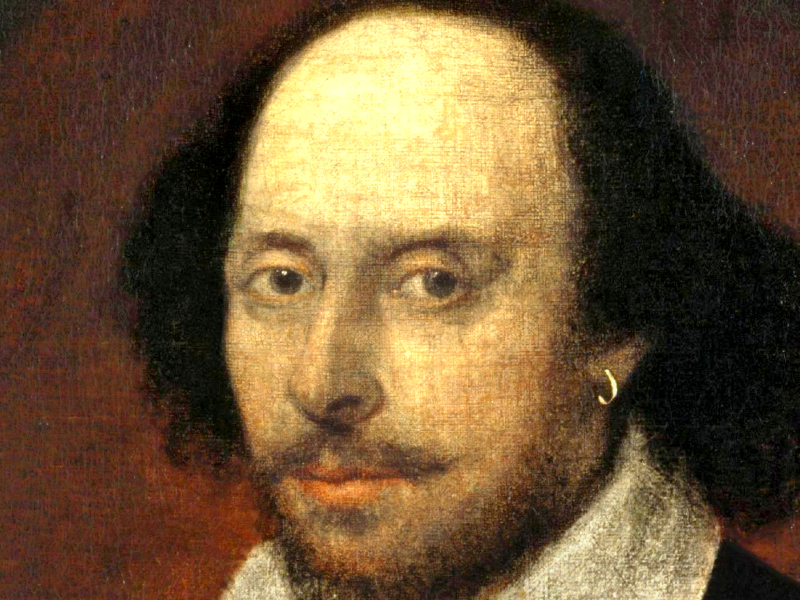
    The life of William Shakespeare has lessons for how to make the best of your talents during a time of pandemic, writes Robert Golding

    In January 1593, the Privy Council of Elizabeth I issued the following order: ‘Forasmuch as by the certificate of the last week it appeared the infection doth increase…we think it fit that all manner of concourse and public meetings of the people at plays, bear-baiting, bowling’s and other like assemblies for sports be forbidden.’

    This was bad news for many, but perhaps especially so for a young playwright who was beginning to come out of the shadow of Christopher Marlowe and forge a place at the forefront of the city’s theatre. At the time of the plague’s outbreak, a certain William Shakespeare had begun to find his voice.

    Though plague was a fact of Elizabethan life, it must have come as a setback. His life up until that point had not been without gamble. William – Will, as he appears to have been known to friends – had left his wife and family behind in Stratford-upon-Avon and embarked on a career in the slightly louche world of the contemporary theatre.

    The language of the edict with its courtly leisure – ‘it appeared the infection doth increase’ – shouldn’t blind us to the cataclysmic impact on Shakespeare and his contemporaries. Shakespeare’s contemporary John Stow – responsible for so much of our knowledge of Elizabethan London – recorded that 11,000 out of 200,000 died between December 1592 and December 1593.

    The Elizabethan plague was, of course, far worse than anything we have experienced in 2020. People died in the street, rendering death an ever-present aspect of daily experience. We might miss, for example, the force of the famous insult in Romeo and Juliet: ‘A plague on both your houses’. What is being wished here is something far more awful than we, even as we live out this unsettling year, can imagine.

    It ought to be a certain comfort to us now, to realize that Shakespeare’s life – among the most marvelous that history records – was beset by plague at every turn. And those of us who fear even a vaccine won’t put an end to our woes might remind themselves that plague was both a constant and a mutating reality for Elizabethans.

    There was a serious bout of plague in Warwickshire the year of Shakespeare’s birth; the young Will would not have been expected to survive. Whatever talk may have swirled about ‘a merrie meeting’ having precipitated the playwright’s death in 1616 at the age of 52, there is nothing to say it wasn’t the proximate cause of his death. We worry about a second wave of coronavirus – our finest poet existed within an unbaiting wave of mortality.

    Yet he continued – and not only that, time and again reinvented himself. The plays and poems which follow on from the big plague years are evidence of a profound pooling of resources and a taking stock. Love’s Labor’s Lost, Midsummer Night’s Dream and Romeo and Juliet follow on from the plague year of 1593. They exhibit a richness, and even an urgency, difficult to discern in the ghoulish Titus Andronicus or the bombastic Henry VI trilogy, written the year before the plague struck.

    But William Baker points out in his book William Shakespeare, that between 1603 and 1613, London’s theatre land was closed for 78 months. Though the poet inhabited a society without any social safety net, let alone the largesse of today’s furlough scheme, there are lessons here for today’s young people starting out on their careers.

    In 1593, Shakespeare was swift to man oeuvre when the severity of that particular bout of plague became evident. Faced with an income gap due to a sudden pestilence, he was in no different a position to an airline pilot or live events manager today.

    So what did he do? He launched himself immediately as a courtly poet. For a country boy, it was an act of tremendous gumption, under the patronage of the Earl of Southampton. We therefore have two epic poems – Venus and Adonis and the Rape of Lucrece – which might be termed plague poems. Each breathes freshness, health and life; they must have been cathartic to those reading them, and indeed these long poems were hits among the student population at the Inns of Court.

    For some times, the theory has circulated – and been brilliantly argued on the website The Shakespeare Code – that Shakespeare was using existing connections to forge his career: it is argued that Shakespeare had in fact taught and conducted secretarial work in Titchfield, where the Earls of Southampton lived, prior to the plague. This might have particular resonance for those casting around for contacts during the time of coronavirus: open that contact book. It also shows the willingness of our greatest mind to undertake menial tasks if it meant getting in close proximity to someone with the power to make a difference to his life.

    What is clear is that Shakespeare was flexible and imaginative; at the critical point, he was willing to imagine another version of his life. He also remained true to his gifts. There is a strong hint in Sonnet 111 that Shakespeare found playwriting a drudgery: ‘my nature is subsumed/ to what it works in like the dyers hand’. He seems to lament his low birth. But when the moment came, he didn’t attempt the impossible. There is a strong pragmatic streak about Will; he might seem in the stratosphere now but this was no dreamer.

    What also might chime with today’s young is that he remained patient and took the long view. He might have been forgiven for thinking in 1593 that the long-term prospects for life in the theatre weren’t good. What was there to stop plague returning and scotching year after year of possible revenue? But he appears to have kept his options open, and retained connections within theatre land even while branching out into poetry. There is a strong hint throughout his career that Shakespeare had a quiet talent both for friendship – contemporaries would refer to him as ‘sweet’ and ‘honey-tongued’ – but also for business relationships. In his last will, he would bequeath memorial rings to the actors John Hemminge’s and Henry Condell; they would repay his memory by editing the First Folio in 1623, seven years after the poet’s death.

    This was networking, as it were, from beyond the grave. The hard realities of inhabiting a plague-riddled society appear to have made Shakespeare not just a better poet but a better businessman. This has sometimes been an inconvenient fact to those who would have preferred the Bard to be more Keatsian – more head-in-the-clouds, and klutzy with money. The record shows he was anything but.

     Instead, Shakespeare continually found ways to expand not only his poetic capacity and his knowledge of human nature, but also to develop what we now call his career. In 1594, he bought a one of James I would become the King’s Men: Shakespeare saw the main chance and took it. Again, there is a hint – but no real proof – that he was utilizing his connections. It has long been rumored that it was the Earl of Southampton who loaned Shakespeare the capital. If so, we might wonder whether he wisely used his time in lockdown to deepen existing connections.

    There is an onwards pressure to Shakespeare’s life which suggests a refusal to become down-hearted from which we might learn. The year’s show him steadily more active both as a property owner in London and Stratford, as a shareholder in his theatre company, and as someone with small businesses on the side in malt dealing, in lending, even going so far as to turn a property he owned in Henley Street into a pub.

    As for the plays, it’s true that they don’t always exist within a milieu of work which we recognize, unless that milieu is the court. But once you look past that you find a good deal is implied about loyalty and about the dignity of work, and indeed a certain amount about the kind of adaptability which we can vaguely detect in Shakespeare’s own life.

    It has been said that the characters Shakespeare most admires are Horatio in Hamlet, Kent in King Lear; Cassio in Othello, and Enobarbus in Anthony and Cleopatra. These are the characters still standing at the end in the tragedies; those who will be charged with rebuilding the state. This a recurring type: the hard-working, flexible, loyal aide who becomes clearer in his moral purpose as difficulty mounts.

    These are plays written by a man thrown back continually on his own resources, and who time again rose to that situation. William Shakespeare found new things within himself – new forms of language, yes, but also new forms of life. His relevance ought not to be surprising. Every period of history has found in Shakespeare a friend and teacher – but it’s fascinating during these unsettling times to see how much his life, and not just his poetry, has to teach us.

  • Mental Health in the Age of Covid-19

    Mental Health in the Age of Covid-19

    There’s nothing quite like a global pandemic to make people across society rethink their priorities writes George Achebe

    Simon Ferrar knows exactly where he’ll be buried: he’s ear-marked a plot worth £4,500 under some rather splendid blackberry bushes in Surrey Hills. ‘As in life, it’s location, location, location,’ he jokes, looking at one of the premier positions in the cemetery.

    Except this is no conventional cemetery, and Ferrar will also die knowing that he has been responsible for the burial circumstances of some 28,000 around him. He’s the founder of Clandon Wood, a natural burial ground, and a part shareholder in it as well. ‘I created a nature reserve because we were looking to encourage a huge diversity of wildlife here. We wanted to add another little corner of the natural landscape to the Surrey countryside,’ he says.

    The funeral business is, of course, recession-proof and has even been helped by the pandemic. Natural burial involves graves made from biodegradable materials; each plot is three-feet deep and involves no vertical memorial. Ferrar explains another difference: ‘What’s unique is that we set up a trust fund. Every single person who purchases a plot here pays a one-off fee of £250 which goes into the trust. By the time we’ve sold all 28,000 plots, that trust fund will be worth in excess of £7 million.’

    We drive out in a golf cart into the plots. Some of the graves look like large scratches in the earth. In other instances, one’s memorial is simply a tree, or some wild grass. He gestures at a plot. ‘Over there, there are buried two twins. One killed himself jumping off a building, and the other couldn’t live with it. Three years later his brother killed himself too.’

    But the funeral, he says, was meaningful. ‘The mother said they weren’t meant to live long lives.’ He adds: ‘We care for the living here as well as the dead.’

    A Morbid Culture

    When the pandemic struck, it found a morbid culture. Ours is an odd, almost sanitized plague, so unlike the Renaissance and medieval counterparts: when the deaths rack up, they do so behind closed doors. We don’t see them for ourselves. And this fact has created communal space with which to discuss another crisis: our mental health.

    Ferrar views his business as a ‘throwback to a couple of centuries ago where families can take the coffin on a handcart. We’ve been burying people on this island for about 30,000 years. It’s only in the last few hundred years, we’ve got used to the kind of Victorian funerals, the moralization and the grimness of that.’

    At a time when our former structures have been removed, and we experience uncertainty as to whether our life shall return to anything like ‘normal’, Ferrar’s project can teach us perspective. As the world quietens, many have found that they had become disconnected from the real cycle of nature.

    The £65K Club

    It isn’t difficult to understand why some who have lost their jobs, or who have had their weddings placed on hold, or found themselves subject to domestic abuse, might be struggling at the present time.

    It’s harder to explain why mental health has become such a problem for FTSE250 CEOs and the superrich. But according to Marta Ra, the founder of Switzerland based clinic Paracelsus, which also has a UK branch and charges £65,000 a week, that’s exactly what has happened. ‘There’s this unconscious bias that the very wealthy are always happy. But actually, they’re often sadder than people with less financial strain,’ she says.

    For some this will be a dubious sob story – and yet it tells us something too about who we are.

    ‘All individuals have their own private fears and problems,’ Ra explains. ‘Perhaps they worry for their employees, or the fate of their companies. And so they start turning to substance abuse. Or maybe they only did social drinking before, but now they start to drink heavily. And locked down with their spouse and children, they’re just as likely as anyone to think: “Who have I married? I can’t handle this.”’

    It would seem that at a certain point the noise of life became so great – and what the Victorians called ‘the Battle of Life’ (the title of a Charles Dickens novella) became more intense. Sometimes one senses that the virus has been specifically designed to make us look again at who we are – at where we’re going.

    Ra explains: ‘People who are stuck at home have to face themselves for the first time, and really face themselves.’ She adds: ‘Our society wasn’t functioning to be in the present.’

    The depths of the forest

    But what about those people who are trying to help us with our mental health? Before the crisis, buzz words like ‘mindfulness’ and ‘wellness’ had become ubiquitous, and when I meet Ferrar, I am struck by his laid-back intelligence. His is the sort of spiritual calm which the frenetic Londoners among us tend to envy.

    Across from Clandon Wood, tucked away behind postcard-idyllic Shere, is the Forest Bathing Institute [FBI]. In May 2019 Dame Judi Dench became a patron of the organization, but it’s been more broadly on the rise.

    I ask Gary Evans, CEO of FBI to explain its origins: ‘”Forest bathing” is actually a translation from the Japanese shinrin-yoku.’ he explains. ‘In Japan in the 1980s, the Japanese government decided they wanted to get people out of big towns and into nature.’ But this wasn’t some hippie whim: it was driven by hard science.

    They were researching the health benefits of nature and woodland. When they looked at blood, they found improvements in the immune system. A prolonged exposure to nature caused blood pressure to come down in people who had high pressure, and caused those with low pressure to experience a normalization.’

    Intrigued, I head to Surrey to meet with Kate Robinson who takes me into the woods near Newlands Corner.

    Over the course of a few hours, I am asked to focus on the shapes of the trees, to explore the smells, to play with leaf litter, to share my thoughts of the forest, and to listen closely to the breeze playing in the upper canopies. The session finishes with a meditation. For a few days afterwards, I find that the wood seems to exist alongside me, in a way which it wouldn’t if I had taken a long walk.

    I recall the words of Marta Ra: ‘You can be a billionaire at 23 and still feel fear and loneliness – and the uncertainty of the virus only adds to that fear.’

     And perhaps there is something especially apt about all this. Coronavirus, after all, took us by surprise out of the wet markets in Wuhan, where to paraphrase Oscar Wilde, the unspeakable went into pursuit of the uneatable – and duly ate them. As Green peer, and former Green Party leader, Natalie Bennett recently told me: ‘The economy is a subset of an environment. There are no jobs on a dead planet.’ Perhaps part of our duty now is to think again about what surrounds us. And it might after all be that the right job revelation lies just as much on a long walk, as it does on LinkedIn.

    Drawing Together

    And yet, for some, that will seem too solitary. Others have sought their own reckoning by looking in new and exciting ways at community.

    Sally Shaw at First Site gallery in Colchester had been busy in the run-up to Covid-19 with, among other things, a landmark exhibition with Anthony Gormley. Once the virus struck, she realized she had to do something to benefit the local community. ‘The NHS approached me during lockdown. They said: “We’re worried about the virus, yes, but the next thing we’re worried about is the mental health fallout for our staff and also those directly affected by Covid-19”.’

    But that assessment proved to be the tip of the iceberg. Shaw lists the challenges: ‘Of course, they were also worried about the stress the pandemic will cause through mass unemployment, emotional pressure and not being able to grieve properly.’

    Shaw thought of a way to help. The gallery is part of the Arts Council collection, which consists of 7,000 works collected over 75 years; it’s been built up with the national legacy in mind. Shaw continues: ‘We thought what we might do is invite people to interact with that collection and pick works which represent their experiences and, with a light touch, introduce talking therapies to people’s worlds.’

    The gallery introduced a private part of the website where NHS staff in the region and care home workers can submit their stories to the portal. Shaw now plans to find ten distinct stories which will comprise a spectrum of experiences to ‘enable us to create a narrative around the different types of effects on people’s lives.’ The goal, she says, is to create a ‘creative conversation which may be an exhibition at some point.’

    That sense of community is also evident at Clandon Wood where Ferrar regularly hosts theatrical performances. ‘We have things like Music in the Meadows where I invite local musicians down, and people bring a picnic. We had four Alan Bennett plays last year, and we had Shakespeare in the Meadow too. Then we have meditation mornings plus all the other events that we have to support grieving families.’

    The Forest Bathing Institute too is looking at children’s days, in part designed to help take the burden off local parents, and give children experiences valuable to them going forwards.

    It is an image of another life – one that would have felt impossible six months ago. We inhabit for the time being a world slower, quieter and in some ways smaller – but also one with the potential to be richer and deeper than what we had before. It’s a world where time and nature feel like more precious commodities than ever before. It’s also a period when money might matter less because our mortality has been vividly illustrated to us: we all lose our possessions in the end. Ferrar explains to me that a team of archaeologists found evidence of Bronze Age occupation at Clandon Wood. ‘We talk of possession, but the land is only ever held in trust,’ he says, as we pass another unmarked grave.

    The curious thing is that this fact, which might make us despair, turns out to be a beginning of happiness. Mental health begins in being rooted in the facts. The virus, awful though it has been, has reminded us how transient we are, but in doing so thrust us back on ourselves, and forced us to renew.

  • How will film survive the pandemic?

    How will film survive the pandemic?

    Emily Prescott

    It’s a not uncommon thought during these times: “Is this reality or some awful dream?” As we queue in masked silence, told to keep two metres apart over the tannoys, our lives now feel post-apocalyptic, as if a dystopia fit for the silver screen had migrated somehow into our actual lives.

    But if the pandemic is the stuff of movies, how is it impacting the way films are made and consumed? Finito World has identified the four key hurdles filmmakers are facing over the next few months. Strap yourself into your home cinema seats: it’s going to be a bumpy ride.

    “Just keep swimming”: Keeping the momentum

    Although filming has started again, many productions are still reeling from the psychological and logistical consequences of lockdown.

    Finito World spoke to James Kent whose directing credits include Testament of Youth, starring Kit Harrington, and The Aftermath, starring Keira Knightley.

    If you’re in the middle of a project and it has to be stopped, it’s a pain to remount it,’ he explains. ‘It’s very complicated to get your actors back as many of them will be booked on to other jobs. It’s definitely a bit of a logistical nightmare.”

     But in some ways making movies is always a precarious business, he adds: “Filming is all about momentum. There’s a famous saying in the industry: You’re never sure it’s happening until you’ve got your bacon butty. The bacon butty guarantees the fact that you’re filming and until that moment comes, a film cannot happen.”

    But perhaps it’s not all doom and gloom. Rebecca Johnson, who has directed an array of shows including Call the Midwife as well as her own critically acclaimed feature film, Honeytrap, says viewers might see a rise in indie films since they aren’t so vulnerable to the loss of momentum. “What’s good about indie films is they are usually shot over a short period of time. Usually about four weeks so potentially there will be a rise in these sorts of films. Cost is going to be an issue but if people really did isolate and it was just like a hermetically sealed unit that is fairly safe and easy to maintain.”

    “Houston, we have a problem”: Keeping the crew healthy

    Keeping cast and crew Covid-free presents an ongoing challenge. It was hard not to cringe while watching films in lockdown and noticing how recklessly the characters shake hands and spread their germs all over the set. So, should we expect the latest films to be sanitised and devoid of intimacy?

    Rebecca Johnson says: “For me the most concerning thing is keeping actors apart. I just don’t see how you can do that. It’s too creatively inhibiting. There’s just too much content that you wouldn’t be able to make while keeping actors at a distance.”

    James Kent worries about the costs associated with keeping people safe. He said: “If there’s an outbreak on set then your whole crew is off, there’s a whole issue about insurance and how that’s being covered. If Chris Pratt gets coronavirus when acting in Jurassic Park they won’t be able to shoot.”

    And it looks like productions won’t be getting any financial assistance if coronavirus strikes on set. Kris Barnfather from the creative insurance broker Eggar Forrester Creative is blunt: “Without meaning to sound all doom and gloom, realistically there’s just not a way forward. Insurers are explicitly writing coronavirus cover out of contracts.

    The reality does indeed sound grim. “Some people are worried about being sued if someone catches Covid-19 on set,’ Barnfather continues, ‘so we are suggesting everyone does a coronavirus risk assessment and that they make sure people understand the risks and sign documents to mark this understanding if necessary.”

    Production companies are having to be especially careful. Actor Tyler Perry who owns studios in Atlanta was one of the first people to outline, in great detail, how to start filming amid the Covid-19 outbreak. His 30-page plan titled “Camp Quarantine” reveals the steps individuals should take. It says all luggage has to be disinfected, cast and crew should isolate before filming and they will also be required to take nasal swabs.

    “Well, nobody’s perfect”: Keeping the cast looking good

    Nasal swabs hardly scream movie industry glitz and glamour. Indeed, during lockdown, viewers watched TV presenters’ faces droop from lack of botox and saw their blonde fade to grey. So will coronavirus mark an end of polished stars?

    James Kent explains: “Makeup is a real issue, particularly for period dramas. You can get away with it in a modern drama because you’ve got your own hair but with wigs or anything that involves prosthetics, it’s impossible.”

    Sandra Exelby, who has done makeup on the sets of Doctor Who, Dad’s Army, and Bugsy Malone and now chairs the National Association of Screen Make-up Artists and Hairdressers, has been coming up with solutions to keep the stars looking good.

    She explained: “We are advising all of our artists to wear appropriate PPE. This includes aprons and a visor as well as a mask. Of course, we are saying hand-washing must be regular. We are also suggesting that makeup brushes are left overnight in a UV cabinet.”

    But hairdryers are getting the cut. She explains: “Hairdryers move air around and so they increase the likelihood of infection spreading and therefore we are saying no to hairdryers.”

    “Makeup artists cannot adhere to social distancing. They are essential on set and with the right precautions risk can be minimised,” she says.

    “I’ll be back”: Keeping people in the cinema

    We’ve highlighted the hurdles and shown, for the most part, there are ways to minimise risk. So the shows will go on. But the question is, who will dare to venture to the cinema to watch them?

    Cinemas in the UK have reopened again albeit without singalong screenings and pick’n’mix. Nonetheless, the industry is on track for its worst year since 1996, with box office and advertising revenue set to be down almost £900 million.

    Rebecca Johnson admits: “I’m not sure I’m going to go to the cinema in a hurry, to be honest. Going to the cinema feels like an unnecessary risk. I’m not that scared of getting it but I will avoid it if I can.”

    James Kent is also pessimistic: “The real problem is with film: how does anyone make any money when you can only put half the amount of people in the cinema?”

    “Oscar winning films are generally skewed towards an older demographic and they are going to be the ones least wanting to go back into the cinema. Anybody over 55 is not going to be rushing back to the movie theatre.”

    Which all sounds a bit bleak. So where’s the uplifting riding-off-into-the-sunset ending? Well, University of Exeter film professor James Lyons points out that coronavirus could encourage the film industry to consider its impact on the climate.

    He said: “The film industry is a very resource-intensive enterprise in many respects, and it needs to come to terms much more seriously and urgently with its contribution to climate change.” Looking ahead, Kent is intent on identifying the positives: “This moment is one for us to all reflect on what we have taken for granted, and adapting in the months and years to come must surely involve thinking of more sustainable ways to live and work. The film industry is no exception.”

    So hopefully in the future we will view post-apocalyptic scenes exclusively on the screen.