Christopher Jackson
I meet the entrepreneur and publisher Harry Hyman in his offices on Haymarket. He is ensconced in a corner office surrounded by John Piper prints and art which speaks to his love of theatre.
Hyman has had an interesting life, succeeding in both the healthcare and publishing sectors. I am keen to know how it all began and ask him about his upbringing: “My parents both came from an immigrant background,” he tells me. “My father’s family came from Eastern Europe between 1890 and 1900. One lot came from what was then Belarus and the other lot came from what is now Poland but both I think then were under the Soviet influence. They probably wanted to get to New York, but they ended up in London by mistake, or because they didn’t have enough money to get there.”
And on his mother’s side? “She was Anglo-Indian – and that meant nobody liking you, neither the Indians nor the British. People didn’t have very much money and so I think they were both very keen for people to do well and education was a very important part of that. It was drilled into you that education was vital.” He laughs: “I still believe that one of the few things that Tony Blair actually said that was probably right is: ‘Education, education, education’.”
And how was Hyman’s education? “I knuckled down and did very well. I went to Cambridge, and graduated there with a first class degree in geography. I stayed for one year to think about doing a PhD but felt that wasn’t for me: it was too specialist and not very exciting. It’s a weird thing that when you study geography the more you go into a particular area it becomes like another subject: so for a physical geographer you almost become a geologist; a bio geographer becomes almost a biologist; an economic geographer becomes almost an economist; and a historical geographer becomes almost a historian.”
But the year was 1979 and Thatcher was on the rise. Hyman intuited the enormity of the shift, and decided to enter the business world at perhaps one of the most opportune times in history: “I went off to Price Waterhouse and followed this quite conventional route of becoming a chartered accountant which I did very well at and I enjoyed my three and a half years there,” he recalls.
However things were about to change for Hyman – and as so often happen, due to his meeting the right person at the right time. “I met this really entrepreneurial dynamic financier called Michael Goddard who worked at a business called Baltic plc and I had 11 very enjoyable hard-working years where I learned a lot about finance and about business and about negotiation but it instilled in me a desire to do my own thing.” Around that time Hyman had also begun to take an interest in healthcare. “I got very interested in health, and was interested to take the techniques of asset finance and structured finance, which was what Baltic specialised in, and apply that to different parts of the public sector which had been starved of capital because the Treasury controlled the purse strings.” Hyman saw that Thatcher’s administration was serious about shaking things up: “Norman Lamont introduced the Private Finance Initiative and I thought that was quite an interesting turning point; it was an opportunity for the government to form partnerships with the private sector to invest in infrastructure.”
It was to be a huge success. Hyman left Baltic in 1994 to start his own company Nexus. This business set up Primary Health Properties; Hyman would manage it for 27 years, and only stopped being CEO in April 2023.
When Hyman set up the healthcare business was he partnering with government from day one? “I got very interested in the fact that GPs, although they are independent contractors, have a contract with the NHS: as part of that they get their rent reimbursed to them by the NHS and of course the NHS is part of the British government. Therefore from an investor’s standpoint although your tenant is actually a group of GPs, the payor of the rent is actually the NHS which is the government: so you have a gilt-edged income stream even though your tenant is just a group of professionals.”
For Hyman, this was a clear opportunity: “I saw that there was what I would call a yield and covenant arbitrage there and so set up the business to take advantage of that and to act as a funnel of capital back in, in order to modernise the NHS. Even today, 40 per cent of all primary care premises in the country are sub-standard and you are seeing a paradigm shift effectively away from an old-fashioned converted house where you had your polio jab on a sugar cube with a single handed GP giving it to you into a much more modern medical centre.” The beauty is that these centres are much more modern and contain ‘a raft of ancillary services’. This is, of course, also in the interests of the doctors. “They don’t want to take on the capital burden of providing a £9 or 10 million building: they are quite happy for a third party landlord like Primary Health Properties to be that partner and now our portfolio is around £2.8 billion: we have 514 centres, of which 21 are in Ireland and it’s a very interesting and safe and secure business model.”
It sounds it, and the success of the venture has enabled Hyman to diversify into publishing. “Here at Nexus we publish B2B magazines and we run events around them. Our titles are Health Investor, Education Investor, Caring Times, Nursery Management, and today we have got a small publication called Nutrition Investor and we have Independent Schools Management. The theme of those is very much health and education. Property, health and education has been my raison d’etre for the past 30 years.”
I say that publishing is a difficult sector compared with healthcare property. Why put himself through the stress? “The original reason is because I couldn’t find anything I wanted to read and so Health Investor is a B2B magazine focused on investors that are providing contracted out services to the NHS. It’s basically an events business. You obviously have to have content. I don’t think you can run the events without titles but as you know we’ve moved from a non-digital basis to a digital basis and people will pay for high quality content but it is quite hard on a lot of businesses who have really struggled with that.”
And what does Hyman think of the prospect of a Labour government? “I think there’ll be a resetting of the clock, and that will allow someone to have a slightly longer timescale. I think Covid and the political contortions of late have given governments quite a short term time horizon which is not very good in terms of ensuring that infrastructure goes in to the built environment.”
But that doesn’t mean that Hyman agrees with Labour, especially when it comes to its commitment to impose VAT on private school fees. “Will that apply to early years? Will it apply to all sorts of education? Will it apply to university tuition? Is it going to be five, eight, ten, or 20 per cent? How is that going to work? It sounds like a great manifesto commitment but I wouldn’t be at all surprised if it never got legislated for because it will push much more demand back into the state sector which is hard pressed anyway. In France everyone goes to a state school as I understand it. You are then talking about a wholesale system change.”
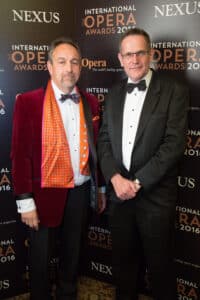
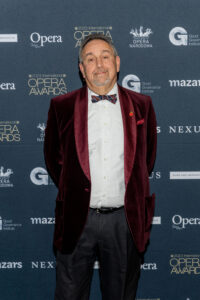
Hyman’s success has allowed him time for his passions, chiefly opera. He founded the International Opera Awards in 2012, with a view to helping the sector. What was it that drew him to classical music? “They are quite profound stories. The topics in Shakespeare are enduring and unfortunately people think it’s all DJ toffs walking round Glyndebourne. Most opera houses go out of their way to try and encourage a younger generation of opera goers otherwise the whole audience will be dead in 10 or 15 years’ time.”
The problem is that television has encroached on the economics of live performance, so it’s not an easy sector in which to pay the bills. “My shtick is to try and encourage younger people to make the grade from music college through to a proper career in opera whether they be singers, directors, musicians, or conductors – but it’s tough. Last year we gave out £100,000 worth of bursaries to 20 people: it’s not that enormous a sum of money but can make the difference between someone stopping their career and carrying on.”
The plight of even the most talented musicians is an extremely difficult one. “You go to music school and then you get your music qualification – but then you have to make it as an artist and that will require you to sing in a chorus or hope to get spotted and get a supporting role. That in itself is difficult – and if you are not from a less well-off background or if you are an overseas person, it’s even harder. We have supported some Ukrainian people who have the right to be here as a student but they don’t have the right to work.”
This interest brings him full circle back to his parents. “They were very interested in opera. I first went in 1984, and it has been a journey since. I like Wagner: his music is absolutely sensational and the stories he writes about are primeval almost. The Ring is very profound isn’t it? It’s about man’s quest for money and power and ends in disaster. They all end up regretting having it but it’s this lust that drives them.” And with that, I head back out onto Haymarket, reflecting that it’s not often you talk about Wagner and the private finance initiative in the same conversation – but Hyman is an interesting man with a broad frame of reference.
To learn more about the International Opera Awards go to http://operaawards.org