Tag: Omar Sabbagh

  • Resilience in Crisis: Dr. Pamela Chrabieh on Lebanon’s Struggles and Hopes for the Future

    Resilience in Crisis: Dr. Pamela Chrabieh on Lebanon’s Struggles and Hopes for the Future

    Dr. Pamela Chrabieh is a Lebanese-Canadian scholar, university professor, visual artist, activist, writer and consultant. Selected as one of the 100 most influential women in Lebanon (Women Leaders Directory 2013, Smart Center and Women in Front, Beirut), and ‘Most Exceptional Teaching Fellow’ in 2008 (University of Montreal)

    Dr. Chrabieh won several national and regional prizes in Canada (including Forces Avenir Université de Montréal, Forces Avenir Québec, Prix Lieutenant-Gouverneur du Québec), and her Peace Education ‘Diplomacy of the Dish’ activity was selected as one of the most innovative activities during the Innovation Week of the United Arab Emirates in 2015. Since 2017, Dr. Chrabieh has been the owner and director of Beirut-based SPNC Learning & Communication Expertise, and the Nabad (nabad.art) Program Manager since 2020.

    Here, in an important exclusive, she talks to the poet and critic Omar Sabbagh about the current condition of Beirut and Lebanon.

    Omar Sabbagh: Whether it may be common knowledge or not, Beirut and Lebanon more generally are currently in a state of crisis.  Can you tell us, to start with, what this crisis situation looks like on the ground?  

    Dr. Pamela Chrabieh: Lebanon has been going through a multiform crisis following the so-called end of the 1970s-1980s wars: social, political, environmental, sanitary, etc. The Beirut port blast on August 4, 2020, was the first straw that broke the camel’s back, and the ongoing acute economic crisis the second straw. As poverty is rising – more than 60% of the local population lives now under the extreme poverty line – people are increasingly desperate. Many (those who were able to do so) left the country, others (those who are staying) are trying to survive the financial meltdown, the aftermath of the Covid-19 pandemic, and the political deadlock.

    OS: There are many factors that constitute the fraught modern history of Lebanon.  In your view, is the current crisis another version of other crises in the history of modern Lebanon, or is the current situation of a new sort, and why?

    PC: In my opinion, the current situation is first the consequence of decades of corruption, physical and psychological wars, state paralysis, nepotism, sectarianism, foreign interferences, and a clash of ignorance. However, and contrary to what we went through during the 1980s – and that I witnessed first hand as being part of the generation of war – what we are going through today is different, as the deterioration of the country is unprecedented.

    During the 1980s, we were able to escape bombs and snipers and take refuge in a different city or village, we were still able to find food and work, and we had hope for the future. Whereas today looks and feels like a descent into hell, with most of us who still roam the land are hanging by a thread. The level of despair is immeasurable today, and that is, in my opinion, one main difference between the recent past and our present life.

    OS: The economy has suffered tremendously in recent years.  Apart from long-standing practices of corruption, there was the revolutionary movement from 2019, and the terrible blast in Summer of 2020.  How would you assess or critique the recent fate and current state of materialwell-being in Lebanon and Beirut?

    PC: Lebanon is enduring an acute economic depression, inflation reaching triple digits, and the exchange rate keeps losing value. This is still affecting the population, especially the poor and middle class. I agree with the World Bank statement: “The social impact, which is already dire, could become catastrophic”.

    I honestly don’t know how long the local population will be able to survive with one of the lowest minimum wages in the world, and when the country’s food prices have become the highest in Southwestern Asia and North Africa. People can’t even find needed medicine or pay a hospital bill. They haven’t been able to access their money in banks since late 2019, and their lights may go off starting May 15 because cash for electricity generation is running out. 

    OS: How would you assess the prospects for the young, the student body of Lebanon?  It’s common knowledge that for decades the pool or fund of human capital, of human talent in Lebanon is a kind of superlative supply for what is a nugatory demand, and that there has been for decades a brain-drain from Lebanon to other places.  Are prospects for the young just a continuation of this previous scenario or are there significant differences to the situation now, and how so?

    PC: Now more than ever, and given the compounded effect of multiple crises, the Lebanese youth is facing a lack of work opportunities, rising costs of living and unemployment rates, and the absence of any state support. Many are growing disillusioned and desperate, and we are not even at the end of our crises. We should expect worse to come and it is going to be tougher for young people to pursue their higher studies, find a job, or even secure an entry visa elsewhere. 

    OS: Lebanon is known for its fractious sectarianism.  Does this feature of the nation’s political, civil, and denominational make-up affect the young today as much as it may have done in decades past?

    PC: Most students of mine and other university students, along with countless academics, activists, and artists who have been part of the October 17 ‘revolutionary movements’, have vehemently criticized sectarianism in all its forms and offered alternative paths, ranging from a complete separation between religion and politics to mediatory approaches. This is not a new phenomenon, as many individuals and organizations stood against sectarianism in the last decades, but we are witnessing change within student bodies, especially with secular groups winning elections in some of the most prestigious universities versus traditional sectarian groups.

    OS: You have been involved at a grass-roots with the so-called ‘revolutionary’ upheavals in Lebanon and Beirut since they began in late 2019.  How would you characterize the nature of this movement?  And what do you think its effects have been and/or will be on Lebanese politics and thus on the prospects of the up-and-coming generation?

    PC: I think it is still too soon to assess the October 17 revolutionary movements. I wrote a while ago that there are many ways of approaching the study of revolution in the contemporary world. According to a narrow definition, “revolution is a forcible overthrow of a government or social order, in favor of a new system”.

    In that perspective, revolutionary dynamics in Lebanon appear to several observers (whether anti-revolutionary or skeptics) as “minor disturbances”. According to these ‘experts’, as long as the socio-political and economic systems are “unchanged”, the so-called “hirak (movement) is not worthy to be called “revolution”, and “will soon end” or it just “ended”.

    However, a different definition of “revolution” – the one I use and develop – makes it appear as an ongoing project of deep confrontation, resistance, deconstruction, reconstruction, and systemic transformation. This project has no start per se, nor a specific end. In other words, Revolution with a big R is a process, and the October 17 revolutionary movements are only but a step towards overturning existing conditions and generating alternative socio-political and economic orders.

    As I see it, “revolution” in Lebanon isn’t a static object that can either be a “success” or a “failure”. It consists of several current dimensions and historical layers simultaneously, and when it is not roaring in public spaces, it is boiling in the minds, adapting, learning, and bouncing back.

    OS: What’s it like being both a teacher and a business woman in today’s climate?  Detail, if you would, how the perspectives of your variegated work-roles have illuminated for you the current state of Lebanon?

    PC: I wear several hats: scholar, university professor, visual artist, activist, consultant, program manager, wife, daughter, mother, etc. And these hats have been both challenging and rewarding. Definitely, my studies and work experience have helped me shape my knowledge and critical thinking, but my life experiences, with my family, friends, and colleagues, in Lebanon and abroad, have marked my identity and deeply contributed to what I have become today. Most certainly, I haven’t learned about resistance and resilience in books, but through my art, the arts and culture in my country and the region, and through the many struggles I have been going through, as well as the struggles of others around me.

    OS: Given your answers to the questions above, what in your view is in store for Lebanon, and why?   

    PC: As long as there are inequalities, social injustice, exclusion, oppression, violence, war, etc., and as long as there are possibilities of change, I do not think that revolutionary movements will end. As long as our backs are to the wall and our only way is forward and through our fears, and as long as there are no limitations we choose to impose on our will, imagination, resilience, patience and freedom, we will rise again from under the rubble. 

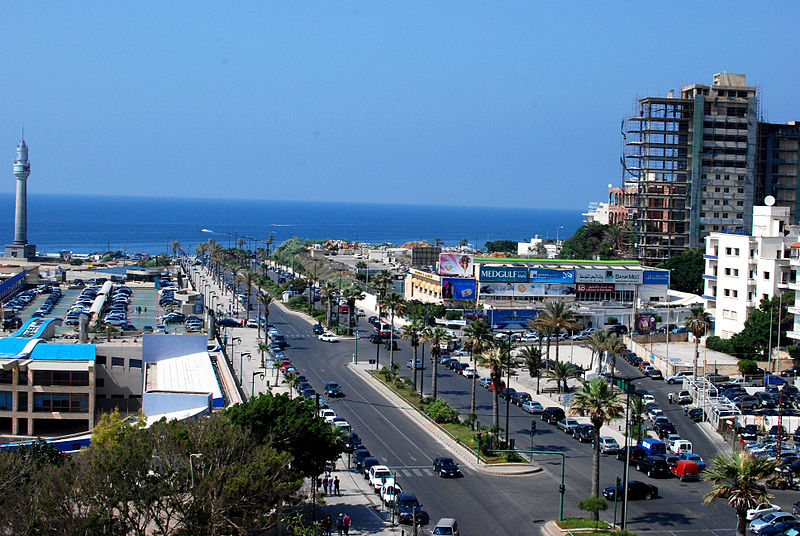
    Photo credit: the opening image was originally posted to Flickr by jiangkeren at https://www.flickr.com/photos/90475107@N00/5959474239. It was reviewed on 28 October 2011 by FlickreviewR and was confirmed to be licensed under the terms of the cc-by-sa-2.0.

  • Y Knots author Omar Sabbagh gives his advice to young writers

    Omar Sabbagh

    My first ever publication as an aspiring writer was in 2004.  I’d attended a brief course in creative writing in late 2002, at the American University of Beirut (AUB).  This was after I’d left my undergraduate berth at Oxford months earlier.  And it just so happened that a piece I wrote, ‘Benches,’ a surreal, dream-like short story written in the second person and influenced by my having recently read at the time Kazuo Ishiguro’s breathtaking but disorienting book, The Unconsoled, was scooped up by my course instructor, Professor Roseanne Khalaf for an anthology she was putting together with another editor, Transit Beirut (Saqi Books, 2004).  Since that time, I have published much work in different genres, from short fiction, to poetry, to full-length novellas, to different kinds of critical writing, devolving from scholarly papers to literary reviews and journalism.  But in October of 2023, my short fiction collection, Y Knots (Liquorice Fish Books) was published.  It collates in one volume most of my best short form imaginative prose published between 2004 and 2022.

    There are a few dovetailing reasons for the title of the collection, and they synergize in a nicely serendipitous way.  Firstly, many of the stories register and explore (if they don’t always resolve) issues of identity; and being a male, and the male chromosome being ‘Y’, the title in this sense is apposite.  Secondly, and perhaps more banal, any writer of fiction knows that stories are driven by tensions, which trigger and spur the river of narrative.  Hence the invoked concept of ‘knots.’  However, another sense, more philosophical, derives from an insight that became increasingly compelling for me as I moved from my twenties into my thirties and now, forties.

    When we are young, and I mean by this later adolescence into young adulthood, our tendency is to try to understand or comprehend all the phenomena and anomalies that surround us or interest us.  Bookish youths like myself hunger to answer each and every why-question; to as it were, necessitate our experience.  The older one gets, however, and the more of one’s expanding life-experience is seen to be or to have been unpredictable, the more complicated and entangled life gets, the more we realise how little ‘control’ (mental, as otherwise) we really do have over the course of our lives, the more the question (if now rhetorical) to ask becomes, not ‘why?’ but rather, hey-ho, ‘why not?’  This is why I think I was a lot more skeptical about things like religion in my youth.  The older I got, the more I might look at historical phenomena like the miracle of Mohamad’s message or indeed the idea that God became man and walked the earth, and so on, and say to myself (given enough experience in our topsy-turvy world), well, why not?  Why not believe that such phenomena might have truly happened?  Not, therefore, trying to reduce them or explain them away.  One becomes more accepting as one ages, I think, because there’s little other option, if one wishes to stay sane and/or bear the possibility of some kind of happiness or at least, contentment.

    And so, here’s my two pence of advice.  As a young writer with literary aspirations, you need to get in the habit of accepting rejection like a friend, because like a friend, it will, nearly always, visit you often near the start of your serious efforts.  Treat rebuffs as opportunities to hone and chisel the muscle of your writing.  And though as a writerly type you’re bound to be more of a perfectionist than others, who may be blessed or cursed with less artistic temperaments, try to always show patience with yourself.  Thinking that writing needs to be prepared to perfection in mind before you put pen to paper is a flawed way of looking at the practice of writing, because of the simple reason that you do need to be fully in the medium to fully know where you are going.  Because, in short, though thoughts may precede words, words deployed always then engender thoughts.  It’s the opposite of a vicious cycle: it’s a gladdening and exciting cycle that most writers feel emboldened by as they write.  A quest of sorts, it’s where the magic happens; and if you bear too much puritanism with yourself or with others, in the senses outlined above, your quest may be more likely to end in a cul-de-sac.


    As well as learning to accept yourself as a writer and the role that others will inevitably play in your writerly life, you need to be above all else patient.  I myself flout that bit of advice on a daily basis, but it still remains valid.  You might be in your early twenties, and feel that as a writer you need to get ahead, but the truth is that if you were ever going to get somewhere in the literary world, you will indeed get there, by hook or by crook.  I look back to my small delight in having my first piece of writing tout court published in 2004, and I know that at that time I never envisaged some of my successes, pound for pound of course.  Be patient.  There is a term I learnt from Ford Madox Ford, discussing technique, ‘progression d’effet’ (I think, like many such terms applied to prose, it originates as applied to the drama).  It indicates why in a narrative the unraveling of the plot or events or themes, or what have you, speeds-up proportionally the further you are in it.  Simply because, I suppose, the more ‘causes’ as it were laid down in prose, the more and the quicker the ‘effects’ come.  It’s actually quite commonsensical.  However, it also applies to one’s writerly career, often enough.  I have had work published in the last six or seven years that far outweighs in both quality and quantity the previous fifteen or so.  So, keep plugging away: one day you’ll look over your own writerly shoulder and marvel at what you may have achieved.


  • Friday poem: Omar Sabbagh’s ‘Searching the Horizon’

    Searching The Horizon


    I opened my eyes and my eyes opened

    the light that helped them first to arise;

    and it was as though a window had forged another window,

    working and sculpting the light to show

    the drama of sight – how a new horizon

    glanced at me, gently, knighting me with angles,

    the emanations in a cool and slaking breeze,

    and the unmastered day ahead, like a slave still

    to each refraction of hope, each ghost

    on its way to becoming the fuller filled-out flesh

    it wants to be. Lit now, gripped by delight,

    I walk among the staple daily shadows

    and feel each one sundered below my stepping feet,

    the horizon busied now with its batch of unhurt children.


    Omar Sabbagh


  • Friday poem: Omar Sabbagh’s ‘The Ghost’

    The Ghost


    In the corner of the room

    a cheap white frame; the picture inside

    shows an aged man, minted there

    with a brimming sense of achievement, calmed

    by a certain slow and quiet pride.

    My daughter kisses the picture

    now and then, scurrying to that small corner

    whenever trouble threatens.


    The man there has seen it all before,

    how each one of us holds his own white sky,

    letting it fold upwards into each one of his own dark eyes;

    how each one of us elides the fateful missive sent

    him, an opened secret from above or below;

    how each one of us living speaks

    in stillness to himself as though he were a ghost

    already, a spirit seeking to prick the fabric

    of the world he’s left behind,

    hoping to needle the place it was that long ago

    he’d signed with departure.


    And between the two,

    this framed wiseacre and my daughter,

    I see my life past each day’s silent slaughter

    turn in style between white and grey,

    framed by the two known sides of love.


    Omar Sabbagh


  • Friday poem: Arrogance by Omar Sabbagh

    The Arrogance


    Even the motes of dust he petitions

    to be friendly faces.  And the undulance

    of his desire, the dancing of the waves that mint

    the rhythm of his workaday experience,

    was always to be seen and viewed smaller

    than the truth, the world at large, like the horror

    that inhabits it – its beastly denizen – told taller.


    Even the motes of dust seem to suit him

    and the sparse girth of his calling, the drum

    of each moment in his mind the drum

    of the page that whitens as it blackens

    before him.  In short, the sum of his arrogance

    might be found in a space between dance and sense

    and sound; a poet, after all, is only a man

    in the mirror, making sense of what he can’t.

    -Omar Sabbagh

  • Omar Sabbagh: An Expat’s Impressions of London

    Omar Sabbagh


    I was born, bred, studied, then studied some more, in London (or thereabouts).  I didn’t have a full-time job until 2011, on completion of (most of) my postgraduate studies; and that first full-time job was in Beirut, Lebanon, at the AUB.  Though I returned to London between 2013 and 2014, to complete yet one more, last round of postgraduate study, from 2014 to the present I have resided and worked in Dubai, at the American University in Dubai (AUD).

    What all this means is that for over a decade, give or take, though a Londoner, growing up in a highly privileged setting, in a kind of mansion in Wimbledon, my working-life has been wholly in the Middle East.  So that, the experience of being back in London, usually over the summer holidays, is a slightly estranged experience – though of course in some ways in continuity with my childhood and youth.  For one thing I’ve a family of my own now; and a young, four-year-old daughter, the light of my life, who was also born in London in the summer of 2019.  And what I think may prove an interesting or compelling way of demonstrating the different experience of London, for me as a kind of expat now, might be to describe that change through the lens of what I observed about my daughter’s experience.  The highlights for her in London are or were the highlights for me, as I suppose they would be for any loving parent; but they also might be a nifty way of highlighting what London feels like when – if not wholly estranged – it is seen and lived anew.

    The first image that occurs, recollecting now, is my daughter jumping in puddles, much like the ‘Peppa Pig’ character she loves so much.  Yes, it wasn’t necessarily a clean-run experience, because my daughter, highly excited by the opportunity to actually jump in puddles, did have to then change her socks and shoes and some of her clothes – which can prove a task for any parent.  However, one of her favorite cartoon characters aside, the image of her jumping in puddles with such newfound glee, did I suppose emphasize in a visceral way, how long it had been since I was truly, fully, in London.  And even if it is a very ‘British’ thing to talk about the weather, it seems to me now like a kind of paradox, that the very thing that first occurs to me from a distance is the same thing landlocked Britishers also seem to be mildly obsessed with.  Indeed, looking at and living London again, but through the eyes of one’s own child, makes one feel both more distant from one’s youth, and I suppose closer, from a different vantage point.  It’s a very composite and layered kind of experience.

    When asked to her face if she ‘liked’ London, my daughter answered in the same way that she had answered at a different, earlier time, about ‘Beirut;’ that she liked it because it was ‘so dirty.’  Living in so svelte a space as Dubai, where nearly every experience is bubbled-up, bubble-wrapped and built-up; where walking down an average street is far less cluttered and far less subject, on the face of things at least, to the impacts of contingency, meant that she noticed in both London and Beirut how the very different, messier topography was in a way, for her young take on things, salubrious.  I enjoyed taking my daughter on planned visits to sites, such as the Aquarium, but the truer impression was not in specially targeted outings, but in the very press and pull and mess of daily, happenstance living.  In fact, that just is the difference, as felt.

    For us in Dubai, each outing as a small nuclear family is, and just has to be (due to the way things are built-up in Dubai, the geography and the resultant topography) choreographed in advance.  This has benefits of course, and one should never underestimate how wonderfully suited to young families Dubai is.  But what my daughter sensed, I must surmise, was the possibility of the adventures of the ‘everyday’ in London – which can seem to be somewhat foreclosed in Dubai.  At least for us.  And I must say that at a personal level, as soon as I land in London, catching a cab from the airport home, I feel a sense of relief at being ‘home.’  I have missed, you see, the ability to be surprised, even to be disappointed, in my day-to-day doings.  There is something so health-giving about the sensed unpredictability of London life.  And through the eyes of my own daughter, the eyes of a neophyte far from accustomed to London, I find myself understanding and experiencing once again the strange homeliness of London for me.  Perhaps a little or a long-borne distance, in time and space, allows one to see all that one knew so well, anew, and thereby return the lived, the youth, back to its older life.

    As for returning to London, after all the above, well, the more official exigencies of London life now seem to proscribe it for my young family and myself.  Indeed, when searching for cognate jobs, as a lecturer in literature and/or creative writing, I notice more than ever now, how inimical life at a basic economic level would be in London.  Even though I do not in any real sense work in the private sector in Dubai, where employees as much as employers can amass burly savings due to the slimness of taxation here, my job as an Associate Professor provides my family and I with a much better life, all-round.  Though the net salaries for two similar jobs, in London as in Dubai, might be relatively close, in London, quite unlike Dubai, one is not blessed as well with all the benefits (of accommodation, health insurance and coverage and/or, say, financial coverage to a certain extent of one’s children’s education) one revels in here.  So, to come full circle: yes, I have been away from London my whole working-life; and yes, I do miss it, the hurly-burly, the brouhaha of it; but in the most basic, real terms, as things stand being in Dubai, or at least, not in London at present, just works better for us.


    Omar Sabbagh is a widely published poet, writer and critic.  His latest books are, Cedar: Scenes from Lebanese Life (Northside House, 2023), and Y KNOTS: Short Fictions (Liquorice Fish Books, Oct. 2023).  His next, forthcoming poetry collection, FOR ECHO will be published with Cinnamon Press in Spring 2024.

  • Omar Sabbagh’s Letter from Cairo

    Omar Sabbagh


    It’s roughly eight o’clock in the evening and I’m seated on the balcony of my rented suite here in Zamalek, Cairo.  The muezzin in the distance sounds like a radio above the hurly-burly, as the cars rushing past in the farther or nearer distance punctuate the streets, so many commas, so many colons, so many periods.  I’m sipping a whiskey, brought from home, because to purchase glass by glass in any reputable joint would cost an arm and a leg.

    To that extent Cairo mores have more in common with Dubai than they do with that other Middle Eastern metropolis that I know, Beirut.  That said, peering from this balcony, the panning, panoramic sight that meets the eye reminds one gently of Beirut, though on a far grander scale.  The same dollops of gutted housing, the same mixture of boutique shops and those far more sundry, the same muted hysteria, the same due portion of schizophrenia.

    There’s nothing like a Middle Eastern capital for that odd mélange of oddness and the even.  The exception, like the rule, are both: exceptional and to be expected.  And strolling down the street, with a tip from my wife, more conversant with the space, I find a place to be seated for a drink or two, or three.  Without naming names, it’s a joint I find so reminiscent of others in Beirut, before Beirut’s dire downward slump.  The same mix of the swanky and refined with the everyday.  A place neither for elites, necessarily, nor for everyman.  The clientele, as far as I can gather, veering from professional types to university graduates, from the middle-aged and beyond to the nubile and life-ready.  A place, too, I notice, harboring foreigners and tourists like myself, as well as locals to the city, Cairo.  Zamalek, this particular part of Cairo, is an island, cosseted by the Nile.  It is known for its embassies and for its more cosmopolitan airs and graces.  And known, too, for its nightlife; and where I’ve ended up is a case in point.


    I speak to a few locals and the comparison with Beirut seems to be felt as a harbinger.  Though not collapsing like Beirut, the feeling seems to be similar: everyday life too expensive for the living, the local currency suffering before the almighty dollar, among other economic ills.  A young woman I met, aged twenty-four, is unemployed.  Having, with parental help, paid hundreds of thousands of dollars for a top-notch university education in Cairo, she finds herself now without a job in her field, of Marketing and Communications.  She told me that for any young woman who wants to live beyond the threshold of the family-setting, who wants to strike out on her own, the odds are always against her.  If not employed in a foreign or international company of some sort, and if not willing to bide by family-control, her only option is to be either, unemployed, or to work in a sales job at the equivalent of a call-center – something not too palatable to a relatively fresh graduate, expecting far more.


    And yet, I had fun; before me a bottle of ‘Stella,’ a beer so local to the place it harks back to Egyptian independence, standing now as an icon for the same.  The place itself, on enquiry, also dating its existence to the very early 1970’s.  Those were still well-nigh revolutionary days.  It made me think of my father, still at that time, just about, a youngish pan-Arab nationalist, a youngish Nasserite, if based in Lebanon.  And it made me think, too, of one of the lessons he’d learned and relayed to me from those times.  Many if not most of the problems of the Arab world in recent history could be laid at the door of too much hopefulness.  They, young revolutionaries, had aimed to change things root-and-branch.  And when those gambits failed, a vacuum ensued, a wide space beneath those high-billed aims.  Hence, the rise and entrance of tyrannical dictators across the Middle East, men like Saddam Hussein.  Hence, that is to say: the rigmaroles and the quagmires of the modern Arab world, nearly anywhere you look.  Had the aims been lower, had they not gone for wholesale revolution, but for steady-paced reform, my father seemed to think, then the history of our times would have been so much different.


    And yet, to repeat, I’d a very enjoyable evening.  For all its problems, the ambience of a bar or pub in a place like Zamalek, in Cairo, as in Beirut (even to this day) is dynamic.  Perhaps people are just more interesting when they’re troubled?  When all is fine and dandy, very little thinking in any real or impactful sense gets done.  Sadness and sorrow, I believe to this day, are the progenitors of originality.  And there’s something so very, dearly fresh (as well as dilapidated) about the streets of Zamalek, Cairo.


  • Tuesday Poem: Omar Sabbagh’s ‘After Van Gogh’

    The poet Omar Sabbagh gives us a meditation on the work ethic of the great painter.


    After Van Gogh


    Think of a man gone past like this:

    unschooled by any length of scholarship,

    but still seeing a path through and by

    the brimming cup and rip of his seeping madness,

    a way of doing things with paint

    and an eye, a wholly newly naked way

    of haggling with the daylight and the night,

    and then to let all the others see the whip-

    like pictures built from a mind’s priest-less cathedral.

    He made his mark on history, fusing to a trouble

    time’s wide white canvas, mimicking the rain,

    the fearsome hail-stroke of living.  What was natural

    to him, his early death, was the very letter of that

    early death spelt in the desperate, breathless color

    and might that crowned him with their feats

    and with the more halcyon golden bells of hindsight.

    He died penniless, disregarded, going under

    the earth alone; but he’d made, the while, color wonder,

    and light made to sunder the gift of light.