Tag: Offices

  • The Sound of Productivity: Clockwise COO Alexandra Livesey on music in the workplace


    Alexandra Livesey, COO of Clockwise, leading flexible workspace provider across the UK, talks about their experience in using music to create productive spaces across their spaces.


    Post-COVID hybrid working policies are now standard across most industries, and we have seen a steep rise in the need for flexible workspaces. At Clockwise, we give businesses and individuals the opportunity to come together on a flexible basis, in line with this new working model.

    This is how it works. For the days that the team do come together in an office environment, it’s important to have the right spaces to do so. We pride ourselves on creating environments that inspire and generate a sense of community, drawing together people from different industries and market sectors, while also providing spaces without distraction. We consider all senses across key member touch-points; the look and feel, the scent, the temperature and of course the music; which all impact how people experience the space. We then optimise these to support productivity.


    That can mean many things but lately we’ve been focusing on the sounds of our work spaces in particular, for which we have partnered with music specialists Music Concierge, who use science to help with their curation process. They have created bespoke playlists for our buildings that drive productivity, motivate and inspire our members throughout the day.


    We have considered many elements including the changing mood of music across our spaces at different times of the day and different days of the week. We want not only to support our members in their working life, but in their social life too, and create spaces where they can connect and create with fellow Clockwise members, something that is hugely important to us as a host to many entrepreneurs and start-ups. For example, on a Monday morning it’s all about getting your head down and into gear as opposed to a Thursday or Friday afternoon, where music can aid us by stimulating social connection.


    We have also ensured that the mental wellbeing of our members has been considered and prioritised in our work with Music Concierge, and we have investigated ways that we can enhance the mental health of our members throughout the workday through music.


    It’s fantastic to be working with Music Concierge and manipulating music in a way that creates another medium through which we can look after our members and improve their lives.”


    Rob Wood, Creative Director and Founder of Music Concierge, dives deeper into the science behind office music choices.


    “We have been working closely with Clockwise to bring their flexible workspaces to life in a way that focuses, excites, motivates, connects and calms members depending on the time of day. Clockwise offices are multi-dimensional spaces that hold a buzz of activity in so many different forms, and we use music to support this. A working day often promises meetings, solo work, reading, talking on the phone, socialising and so much more.  Spaces, times, days, specific moments and moods all come into play as we curate and streamline one of life’s greatest pleasures, to create an uplifting working environment.


    One of the first things we did when we started working with Clockwise, was to look at their different layouts and zones and how music would mirror their uses in sound format. For example, quiet workspaces require linear music that doesn’t change in pace or tempo too much, doesn’t have hugely prominent vocals, and doesn’t have too many different verses and choruses. This keeps the brain from becoming distracted, and actually stimulates our ability to focus and hone in on a task.


    In contrast, their reception area required welcoming but calming music that makes its members feel at ease as soon as they walk in door, and likely ahead of stepping into a meeting space. Whereas within a meeting room, music must be linear but can be slightly more enthused to forge a creative, collaborative environment amongst colleagues.


    Our work hasn’t just been confined to space but also the time of day is a hugely important factor to consider when curating music for a workspace like Clockwise. From the morning coffee to the afternoon cuppa or occasional glass of wine, our workdays alter in mood and activity, and we work on creating a space where music not only reflects this but supports the flow.


    As Clockwise members stroll in to embark on their day, we fill the communal spaces with invigorating music that brightens and awakens the mind, getting us ready to take on the day. As the day goes on, we fade into productivity stimulating tracks and calming tunes. When five o’clock comes around, and we begin to wind down after a hard day’s work, we start to feed in a more vibrant vibe, allowing members to decompress and let go of stress as they move into their relaxing evenings. For those connecting on a social level in the early evening, we pump connecting upbeat music through the Clockwise social spaces.


    We all know that Fridays are a whole different ball game to Mondays, and we must reflect that in the sounds we channel into the office space. We want to promote that end of the week feeling ahead of the weekend when Thursday or Friday afternoon come around.


    Music brings people together, creating a sense of community and promoting solidarity, friendship and trust. There is nowhere more important to nurture these values than the working environment, as teams work to foster a group dynamic. We ensure to choose music that motivates and connects while dropping in familiar favourites to bring people together.


    Social interaction is hugely important in a job, but it is just as important a creating an environment that stimulates and calms in equal capacities and makes for a mentally and emotionally fulfilling workday. One strategy we implement to promote this is by providing pockets of stimulation throughout the day, by creating meaningful moments. We disperse widely unknown songs throughout playlists, allowing members to discover something new that they enjoy and can revisit. It breaks up heads down work and allows a moment to decompress and step back into the moment.


    Self-care and mental wellness are instrumental to what we aim to do at Music Concierge, as we orchestrate music to work for our clients and their clients alike. This has become a large part of our work with Clockwise with it being a key value of theirs also. Motivating mindsets are a huge part of what we strive to create through our work. We also want to help people to understand ways in which they can tap into inspiring themselves through music. The next time you’re knuckling down for a hard day’s work (whether it be in the office or at home) and need that extra push, our recommendation is to queue some contemporary classical, instrumental electronica and relaxed jazz styles of music for ultimate productivity.


    Clockwise are implementing motivating music across their workspaces up and down the country and they are blazing the trail in the workplace industry, setting the standard for how offices should be run. We hope to see more businesses in the industry follow their practises to promote individual and team wellbeing.”


    Founded in 2017, Clockwise provides contemporary private offices, shared workspace and meeting rooms with flexible membership plans in key business locations across the UK and Europe. They have 13 sites across the UK and recently launched their newest site in Bromley, which is their first mixed-use site alongside a restaurant and hotel offering. Their most recent site in Europe also opened in Brussels which aids their expansion plans as they hope to grow to over half a million square feet of office space in total by next year. For more information, please visit https://work-clockwise.com/.


    For more information about Music Concierge please visit www.musicconcierge.co.uk.
     

  • Out of office? Thomas Heatherwick on the future of the workplace

    Out of office? Thomas Heatherwick on the future of the workplace

    By George Achebe

    Will we ever return to our offices? And what will they look like if we do? George Achebe talks to renowned designer Thomas Heatherwick

    Journalists I speak to lately have begun to notice a new presence within their recordings of interviews and Zoom call presentations: birdsong. Lockdown coincided with marvellous weather; our offices became our gardens.

    And the sky on our road in Islington reverberates with the sound of spanner on metal; our friends over in Muswell Hill have replanted their garden since they spend so much time looking at it; my conveyancing lawyer tells me he may, or may not, return to the office. If so, he says, it will be used primarily as a storage space.

    There is, in other words, a unanimity about lockdown: you can be sure that your own experience can be extrapolated into the general. And yet if you ever leave your cosy home and venture to the centre of town, you’ll discover the flipside of all this neighbourliness and quiet domestic improvement.

    Soho strikes me as especially melancholy. There’s the sandwich bar I used to frequent now boarded up; a new kind of silence, not so much contemplative as eerily touristless; and with around one in ten businesses open, you have a sense that this place has insufficient residential activity to last in its current form beyond the end of furlough.

    Will these businesses return? It is dependent on what decision we make about our office arrangements. This varies from business to business of course. For a more in-depth analysis of the landscape see our exclusive employability survey which begins on page 79. But what are the implications for architects?

    Thomas Heatherwick, the famous founder of the Heatherwick Studio, explains that he has seen some positives come out of the coronavirus period: ‘The most interesting thing has been reflecting on what this means and how it’s going to change our lives. I’m wrestling with the sense that [preCovid 19] there was more and more sharing – of cars, workspaces and living spaces. The world was becoming more efficient because people were learning to live together in different ways.’

    In Heatherwick’s eyes, the pandemic represented a ‘retreat’ into the private space – a world of Victorian studies, and stockpiled toilet roll. But Heatherwick, who in person is infectiously optimistic and free-wheeling, is already solving the problem the world has set him: ‘The positive side is that people will be spending more time on their homes, and thinking on how their homes work for any situation.’ In the meantime, he says, businessowners have decisions to make about whether to redesign their office space.

    We are all aware that this is a sort of drawn-out inflection point, where the human behaviour that will dictate what solution we end up with is latent, and yet to be revealed. Furthermore, it will likely differ from country to country; sector to sector; and CEO to CEO.

    When I talk to Alan S – the CEO of a leading boutique creative agency, who also has the sound of birds in his garden – he speaks only on the condition that he remains anonymous. This is because he isn’t quite sure where his business will land and he doesn’t want to give any misleading or worrying information to his workforce.

    ‘As a small business we have always worked from a fixed office in central London and although we have let employees work from home when required we have never all worked remotely at the same time,’ he explains. ‘We did a trial run before lockdown was announced in order to iron out any issues that might possibly arise, so when lockdown happened we were as ready as possible.’ So how did it pan out? ‘The overriding response was that everyone found it productive, but missed the typical office interactions and camaraderie when seeing each other.’

    This will no doubt be a familiar experience for many. What changes has that made to Alan’s view of his existing central London office space? ‘It suddenly became a burden and we were realising that the more we worked from home, the benefits this gave to everyone [would accrue].’ And what are these? ‘Everyone would save on travel expenses and commuting time could be spent with partners and families.’ The perennial bugbear or exorbitant business rates has also been front of mind for the business. ‘The rent, rates and insurance saved by surrendering a central London office will enable us to invest in people, equipment and technology to increase our efficiency and service our clients.’

    So Alan S has to some extent made up his mind, and there are plenty of him.

    But it is by no means a unanimous view. In fact you’ll find some who argue that an imminent vaccine, most likely arriving in 2021, and distributed towards the end of that year or in 2022, will see a return to a world reminiscent of pre-Covid 19 office-centric life.

    Olly Olsen, the CEO of the Office Group, which has over 40 flexible workspaces across the UK, is one of these, although he admits it may be a way off. ‘I spoke to Network Rail, with whom I have a joint venture, and in a number of stations, footfall is down 88 percent. That’s catastrophic,’ he concedes.

    In addition, Olsen, whose livelihood is bound up in office life, also makes some admissions about the benefits of working from home. For him, they’re linked to wellness. ‘In the afternoon, I get tired with too much coffee and a big lunch and so I’ll lie down on the sofa for half an hour which is almost socially unacceptable to do in the office.’ Olsen sees it as a positive future driver of business that we’re now finding ourselves more attuned to what he calls ‘wellness fluctuations’ in each other. Workers with children are another example. ‘It used to be that if someone said “Can I make that meeting 11 instead of 10?’, you’d say: “Deal with your kids another time.” Now when a member of staff says, “I’m not feeling myself ”, I say, “Have a rest, there’s no problem. Speak to you later, speak to you next week”.

    All this is an indicator of how power has moved rapidly away from the employer towards the employee. For Olsen, it’s not that the office model needs to go; it’s that it needs to change and be adapted to reflect our new reality.

    What ramifications will this have for the buildings around us? Thomas Heatherwick agrees with Olsen, but he sees it from an architect’s perspective. For him, there has simply been too much ‘lazy place-making’, and the pre-Covid office was a case of ‘Stockholm syndrome where someone falls in love with their captor. Your employer effectively had you in a headlock.’ The new office space will have to ‘engender real loyalty’ and become a ‘temple of the real values and ethical thrust of an organisation.’

    For Heatherwick, the pre-Covid workspace ‘prioritised how [businesses] communicate to the outside world. So if you go to Canary Wharf ’ – an example perhaps of Heatherwick’s ‘lazy placemaking’ – ‘there’s a grand lobby; huge marble floors; pieces of art looking spectacular; a reception desk with great flowers, and lovely-looking people sitting looking great. But if you go inside the elevator you go up to just an ordinary place of work. The show was for the outside.’

    All this has to change now that power has moved in the direction of the employee. ‘You need to have them coming in and thinking, “Yes. I need to be here.” So the workspace will become less about being a show for the outside world. It’s about finding your voice as an organisation. The employer has to up their game which the brilliant people were starting to do anyway.’

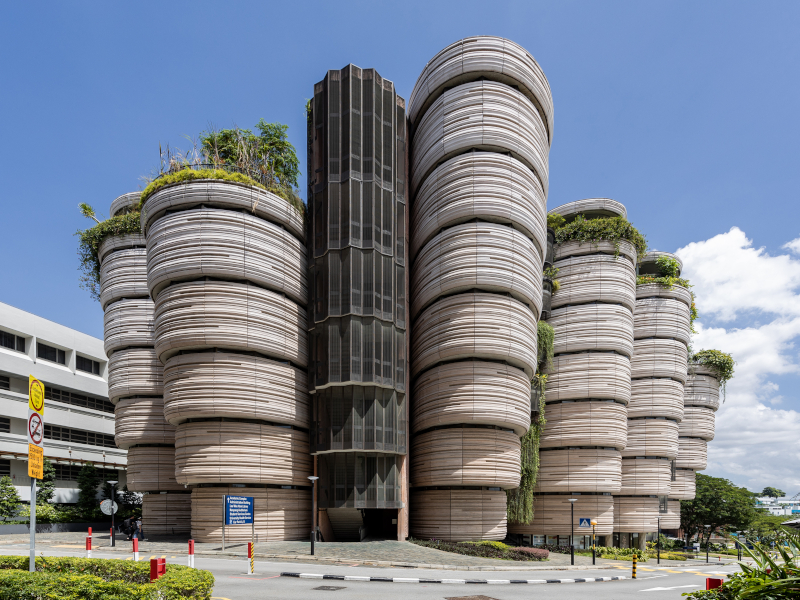
    So how will this look? Heatherwick is a prescient artist who, it could be said, was already beginning to answer some of these questions in his previrus work. His magnificent shopping centre Coal Drop’s Yard in King’s Cross was all about creating a space which people who could internet shop in their bedrooms would still wish to visit.

    ‘Public togetherness is something which motivates me,’ he says with infectious enthusiasm. Heatherwick has always been alive to the fact that change must be built on the back of existing infrastructure: as always, the future will be built on the back of past structures. ‘We’ve got this legacy of Victorian and Georgian warehouses, which are very robust and changeable. Think how many people are living in older industrial buildings. That was the ethos which drove the Google buildings that we’ve worked on.’ Covid-19 might seem to open up onto the future, but it will also be anchored, Heatherwick argues, to what we have already.

    The first project the studio worked on for Google was the company’s offices in California. ‘Next-door to the sites we were working on there was this airship hangar – a NASA airbase,’ he recalls. ‘These are amazing spaces which are super-flexible so you can do anything you want. So our proposal to Google suggested we make really flexible space since we’re not sure whether in a decade people sitting at desks will be what we need. We’ll be manufacturing instead.’

    So in a sense the post-coronavirus requirement of flexibility might be met by the sorts of structures already around us: there shall be that element of continuity even as we change.

    But this isn’t to say Heatherwick lacks a vision of just how extraordinary the shift in architecture shall be. Round the corner from his studio in King’s Cross, Heatherwick is working on Google’s new London base: ‘It’s the biggest use of timber in a central London building. All the façades are wood.’

    What is the ethos of that building? ‘One thing we’ve spent time talking about on that is community,’ says the 50-year-old. ‘The idea that here is just a mercenary organisation doing their thing, and the employees come in eat all their food and drink their drinks, sit at their computers, and get well-paid…’

    Heatherwick trails off, then refinds his thread. ‘Given what we’re saying about really getting a deeper engagement with an organisation and it’s team: How does that really contribute to the community around? On the ground floor, you don’t just want another shop that sells ties.’

    So what would a new communityoriented architecture entail? ‘Close by King’s Cross there’s Somers Town, where there’s great deprivation and low life possibilities in terms of housing and education.’ For Heatherwick the lively pedestrianised ground floor is a way of energising the whole area.

    So while our conversation began with fears of a new individualism, perhaps we might after all find a new communitarianism emerge? Heatherwick agrees: ‘If you’re going into work two days a week you may not need to be based in London.

    Out of this may come some strong community-making away from conventional urban settings. Energy had seeped away from villages but now you could get super-villages. It’s okay to spend two hours on a train journey if you’re only doing that twice a week. I just hope we will use brownfield sites rather than consuming greenfield sites.’

    But again this seems to spell trouble for the City and, though few may lament the fact, the property development sector. Olsen admits: ‘If you ask people where they most prefer working, it’s on their own – it’s at home where it’s quiet. Not an office which is openplan with people talking, and which is smelly and so on.’

    So what’s the purpose of going to an office? Olsen is clear: ‘We’re built to connect. I can’t have guests and clients to my house and I can’t bring a team together to my home. If I do that business will fall – as it’s falling now from lack of human interactions.’

    So what kind of spaces will we see? In answering this, Olsen sounds a lot like Heatherwick: ‘It’s difficult to forecast what will happen next but I think where you choose to work will be driven by who you are and what you believe. Our places of work will become more of an extension of our social lives.

    The overwhelming impression is that we’re in a hiatus – a period of hedging, where people are living in tentative expectation of a vaccine. Olsen agrees (‘we just don’t know) but he has clarity on another point: ‘Before this happened, I would have said that all my buildings were clear, tidy, safe and healthy. Well, they’ll have to be clearer, tidier, safer, and healthier now.’

    So it seems likely we’ll be hearing the birds in the garden for a while yet. And when we get back to them, perhaps we’ll hear them in our offices too.