Tag: Nigeria

  • Jim O’Neill on the MINTs, Goldman v government, and how countries become successful

    Jim O’Neill on the MINTs, Goldman v government, and how countries become successful

    former Chief Economist at Goldman Sachs and former Commercial Secretary to the Treasury Jim O’Neill

    After my paper published by Goldman Sachs coining the term ‘the BRICs’ – which referred to Brazil, Russia, China and India as crucial emerging markets – I used to engage with other countries’ finance ministers. Occasionally I’d find countries annoyed not to have been included in the acronym.

    In 2013, I coined the term the MINTs, to take into account Mexico, Indonesia, Nigeria and Turkey – all of which seemed to me interesting countries.

    Today, the country that has the biggest viable basis for being irritated that it wasn’t included in the BRICs acronym is Indonesia. It’s a very interesting place – it’s another significant commodities producer, but it has weathered the past decades better than Brazil or Russia. 

    Of course, what makes Indonesia additionally interesting is that it’s a very large Muslim country which practices reasonably openly quite a few aspects of modern capitalism. So it has very positive demographics. 

    In terms of conceptual potential, I’m also very interested in Nigeria – though there you’re talking not in the next 20 years but in the next 40. If that crazy place could have a proper economic policy framework it would become extremely big in the African context as its demographics are just incredible. It’s an extremely young population with great capacity for productivity. 

    This is where economic outcomes come down to political leadership. Brazil, Russia and Nigeria, have all been impacted by poor governance, and we’ve seen that with India this year with the virus. In 2000, I developed the Global Sustainability Growth Index, which included around 190 countries. We statistically examined hundreds of variables, and ended up including about 15 which seem especially important for economic growth. Among the things that really matter is the strength of a country’s institutional framework.

    That index today shows China scoring much higher than any of the other BRIC countries – and interestingly India scores lower than Russia or Brazil in spite of its spectacular demographics. 

    But we have our own inequality and problems here at home – I hope Boris Johnson is genuine about his levelling up agenda. He’s only been in power a relatively short period of time, and because of Covid, we haven’t even had a proper budget or multi-year spending review yet: everything’s been a policy response. Boris seems to struggle with rhetoric and the whole idea that a prime minister should under-promise and over-deliver. He’s raised very big expectations – and these are things which will take a long time to deliver on. So far, there’s very little evidence that he is delivering on it. 

    I retain a close friendship with George Osborne, and with Whitehall officials. When I worked in government, to my pleasant surprise I found the quality of the staff in the Treasury to be just as good as at Goldman Sachs – but with greater public spirit. The hard thing for me was that I wasn’t a member of the Labour Party; I was there to execute a technical role. But I was surrounded by ministers who were obsessed with where they were in terms of political horse-trading. 

    I found their motives troubling. They would decide what to support based on how it would help them in their next job which is extremely different to Goldman Sachs. Even within the same party, competing ideologies were different – often irreconcilably so. In that sense, I witnessed first-hand the ridiculous developments within the Conservative Party: I was shocked as to how crazy it was.

    By comparison, I was lucky at Goldman. They were mad enough to offer me a partnership to join – I was only the fifth. They’d taken on a lot of risk themselves. But I was daunted – then as now, the image of Goldman was intimidating from the outside. It was full of remarkably smart and incredibly driven people. They had 300 people in the place with their own views on the dollar – many of whom were smarter than me. But it really is a meritocracy in there. So long as I delivered the goods, nobody gave a damn about my background.
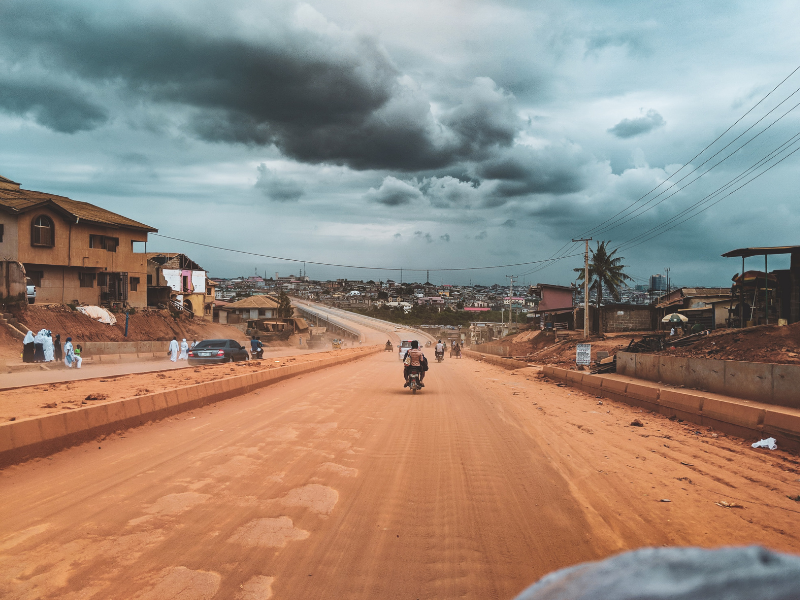
  • Chuks Iloegbunam: Letter from Nigeria

    Chuks Iloegbunam: Letter from Nigeria

    Without a significant move by the UK government, Africa’s most populous country will implode, writes Chuks Iloegbunam 

    Thanks to social media, news of the massacre of peaceful protesters in Lekki, Lagos, rapidly spread throughout the world. How did it happen that, in apparently democratic Nigeria, soldiers opened fire on their fellow citizens peacefully protesting systemic police brutality by waving the Nigerian flag and singing the national anthem? 

    Lekki needs to be put in context. Even in colonial Nigeria, massacres were commonplace. When the civil war came in 1967, it accentuated the devaluation of human life. At the war’s end in 1970, millions lay dead, finished off by indiscriminate bombing and strafing, as well as starvation and protein malnutrition. 

    It is a country which doesn’t look after its young. Youth unemployment stands at 13.9 million according to the Nigerian National Bureau of Statistics (NBS), which also states that the Nigerian youth population eligible for work is a staggering 40 million. 

    Insecurity caused by Boko Haram terrorists, Fulani herdsmen terrorists and Niger Delta militants are often cited as reasons for this, but a sizeable portion of the unemployed are also unemployable due to the lack of basic skills. The country lacks the sort of social security taken for granted in Britain and elsewhere in Europe and North America. There are no unemployment benefits. As a matter of fact, the employed are often owed unpaid salaries for upwards of ten months, even years. 

    The government also has a history of keeping this state of affairs in position – and again it does so with violence. On February 1, 1971, Kunle Adepeju, an undergraduate of the University of Ibadan was killed during a students’ demonstration against poor catering services. The Police claimed that a stray bullet from one of its guns had felled Adepeju. The nation was scandalised. The university was shut down and a board of inquiry instituted to determine what truly happened.  

    Many other examples might be cited – from the Bakalori massacrre on 28th April 1980 to the destruction of Odi on November 20th 1999. It is a long and melancholy history of government suppression.  

    Today, Nigeria boasts about 172 tertiary institutions, annually churning out tens of thousands of young men and women with little hope of employment. Only unserious societies remain blissfully uncaring about the place and disposition of alienated youths about half of whom have been trained in the sciences and have at their fingertips the knowhow to upset the applecart. 

    Graduates with intent to do business or go into manufacturing are hampered by lack of funds. The government has not created any new industries in the last five years. It has not paid any attention to setting up new refineries. 

    The national currency, the Naira, has continued to plummet in value. There was a time when the naira was superior to both the dollar and the pound sterling. But $1 today exchanges for anything between N400 and N450. 

    The displacement of whole populations that end up across Nigerian borders, or inside Internally Displaced People’s (IDPs) camps mean a devaluation of farming, grave loss to incomes and hikes in food prices. 

    But the world is changing – and Nigeria with it.  In 2015, earthmoving equipment was used to dig mass graves into which hundreds of slain Shiites were buried. But video clips of the dastardly act are in existence. Now, nearly everyone wields the immense power that is the cell phone. For this, grotesqueries like Lekki rebuff concealment. In real time, the massacre was filmed and transmitted across the globe. Official denials that it happened have been quite thoroughly discredited through credible investigations by various standards-setting organisations, including CNN. 

    Bizarrely, the authorities are hounding those thought to have led the #endSARS demonstrations, instead of addressing their grievances. They are confiscating passports, freezing bank accounts and shoving into detention people guilty only of participating in peaceful demonstrations. In this regard, informed Nigerians cannot get over Britain’s taciturnity in relation to a country it colonised and in which it still wields incomparable influence. In fact, repeated Downing Street administrations are seen as complicit in Nigeria’s determined abysmal plunge.  

    This complicity may explain why the International Criminal Court (ICC) which indicted al-Bashir has not considered a similar action on certain Nigerians whose wantonness makes the former Sudanese dictator to look like a Sunday school teacher. That is why British opinion influencers with conscience must look beyond Whitehall and systematically mobilise voices to interrogate Nigeria before it implodes. 

    Iloegbunam is a Nigerian journalist and novelist. 

    Photo credit: Joshua Oluwagbemiga on Unsplash