Tag: NHS

  • Leading nutritionist Lucy Epps: ‘We need to think about what diet can do for ourselves, the NHS, and the economy’

    Lucy Epps


    I was brought up with a really strong food ethic. My mum always worked in food, and understood its importance even before organic became trendy. She always discussed its importance for health. By my 20s, like most people, I thought I was invincible. I was working long hours in TV, often into the small hours.

    I ended up getting an autoimmune disease called Graves’ disease. With this disease, your immune system produces antibodies which attack the thyroid gland, a hugely important gland that effects practically all cells in the body. The symptoms include a very high heart rate – sometimes as high as 200 – leading to weight loss and anxiety. Sometimes my hand would shake so much I wouldn’t be able to put the phone on the receiver on my desk. I remember fearing anyone that wanted to discuss a project with me at my desk because I couldn’t point to anything on my computer screen because my hand was shaking so much.

    I didn’t understand what was going on and it was affecting my eyes –  one of them was closing and the other one was open wider than it should be. I ended up getting diagnosed via an ophthalmologist at Moorfields. I then went on the medication which suppresses you thyroid gland but obviously it doesn’t do anything to your immune system which is where the problem is. Over time I got my thyroid levels under control.

    I was feeling a lot better but always knew deep down that this was masking the actual problem. I had to re-evaluate things, and look at lifestyle. I went on sick leave, and looked into diet. I thought I knew a lot about food because of my mum, but I realised that I didn’t and there is so much science in it as well.

    My degree had been in English literature and I always thought that was how my brain worked. I didn’t think I was science-y at all. There was so much information online with all these different people telling you what to do. It was confusing so I signed up to study nutritional therapy for three and half years, which included a year of Biomedicine and clinical training. I now see clients on a 1:1 consultation basis online.

    This is a different area to being a nutritionist. In a nutshell, a nutritionist works in public health. You have dieticians who work in hospitals and for conditions such as kidney disease where patients are on dialysis or with acute cases in intensive care. I went to the College of Naturopathic Medicine. There were some amazing lecturers who were very evidence-based; as I was studying I became more and more committed to a science-based approach, which my clinical approach is informed by.

    There are a bewildering array of media stories out there surrounding food. As a general rule, if anyone is talking in a reductionist way or very explicitly about things, it’s best to be cautious about that report. The dose makes the poison with any food. For example, we know that processed meat and red meat is associated with an increased risk of colon cancer and cardiovascular disease but that doesn’t mean you can’t include them as part of a wider dietary pattern. Often the headlines will grab parts of the study: they will cherry pick something but they won’t look at the finer details of the study.

    Through diet, I managed to put Graves’ disease into remission but what I really noticed was that it’s not just about food. Your overall lifestyle is so important too, and to do with sleep, stress levels, and physical activity. These other pillars are really important alongside nutrition and are integral to nutritional therapy.

    In terms of the work landscape, once you leave you’re on your own. I am registered with BANT which is the British Association for Nutrition and Lifestyle Medicine and I am registered with CNHC – Complementary and Natural Healthcare Council. BANT are doing lots of work with NHS doctors, pharmacists and other health practitioners to get our names out there. I think it is being more and more recognised that there does need to be more of a dialogue between nutritional therapy and the mainstream.

    My practice focuses on cardiovascular health and women’s health. Sometimes men can have a more transactional relationship with food than men. If you grew up in the 90s, you had Kate Moss heroin chic. If you look back on the models they are very underweight and that is all we saw. I think a lot of women are not nourishing their bodies the way they should do because of how society views the shape of a woman’s body should be.

    Even before the 90s, you had Twiggy and Jean Shrimpton. It’s so damaging to the body, as well as to reproductive health and to bone health. Then they think they should look a certain way and in terms of exercise its cardio because they think that will burn the most calories and there is nothing about health and nourishing the body which would be resistance training.

    I knew I had to be entrepreneurial, so I began doing corporate talks for banks and law firms as well as 1:1 consultations. It’s been a steep learning curve in marketing.

    I have provided corporate talks on the relationship between diet and mental health, specifically the gut-brain connection. Deloitte estimates that poor mental health is costing employers £56 billion annually. Meanwhile, 48 per cent of workers say their workplace hasn’t checked on their mental health in 2022. It’s a very complex area and the research is really scratching at the surface of the gut microbiome but we now know there is a bi-directional relationship between the gut and the brain.

    Our guts contain trillions of bacteria and broadly speaking, high numbers of favourable or “good” bacteria and lower numbers of less favourable bacteria have been associated with healthy individuals.  When we eat fibrous foods such as wholegrains, pulses and veg, we are essentially feeding our commensal gut bacteria as they ferment these fibre and as a result produce bi-products that are known as short chain fatty acids. These fatty acids are intrinsic to the health of our colons but also have far-reaching beneficial effects of our bodies, including our hormones, skin, immune system, cardiovascular system and mental health.

    Science is constantly evolving, and we are now at the point where we can make a real difference towards our health and prevent many chronic diseases with the right dietary patterns.  We need to think about what it could do for ourselves, the NHS and our economy if we were to pay more attention to diet.


    To book a consultation with Lucy go to lucyeppsnutrition.co.uk


  • Exclusive: Matt Hancock on what he learned as Health Secretary

    As Matt Hancock emerges from the jungle, he recalls his time as Health Secretary and offers lessons to the next generation 

    In the global fight against Covid-19, there has been one group of people who have sacrificed so much and yet received such little praise – young people. I understand how difficult it has been for young people during the pandemic. From not being able to study, to not being able to see friends in person and missing out on so many exciting opportunities, Covid-19 has been extremely difficult.

    As Health Secretary, I was so grateful to young people for playing their part in the wider national effort. Because the virus is so much more deadly with age, the sacrifice made was all the more generous the younger you are. Without that sacrifice though, we simply wouldn’t have been able to suppress the virus and save lives. So from the bottom of my heart, I want to thank everyone who played their part.

    As I look back over the pandemic, some of the greatest highs I felt were when I saw young people queueing in their swathes to get vaccinated. At sports stadia, at local pharmacies, or in places of worship, we saw individuals making the conscious decision to come forward to protect others. While some said it wasn’t worth the risk for them, the vast majority of young people have been vaccinated. Speaking to some University students who got their jabs, I was struck by the sheer selflessness of this generation. I was told that while they felt it was important to protect themselves from issues that come from long Covid, the main reason why they were getting vaccinated was to protect their friends, loved ones and the wider community. The generosity and open-mindedness of these students gave me huge confidence for the future of our country.

    So, young people have sacrificed formative parts of their childhood and got vaccinated to protect others. I will not accept the failed argument that young people are lazy and selfish. In fact I think it’s quite the opposite. For me, young people have been the quiet heroes of the Covid war.

    Now it’s fantastic to see 12 to 15 year-olds coming forward to get their jab in such large numbers. Recently, we reached the impressive milestone of over one million 12 to 15 year-olds having had their jab. I urge all children who are offered to come forward and get theirs, to protect themselves, their educations, and people that they love

    Continuing in the spirit of selflessness, it shows the spirit of this generation that last year, there were record levels of applicants to medical schools, and nursing qualifications, in the UK. This is so promising for the future of our NHS, but also for the possibilities that this brings for future scientific discoveries.

    We’ve seen as a country just how valued our scientists and healthcare workers are.  For instance, a YouGov poll this year showed that scientists and doctors were the most respected professions in the UK. I was also very emotional when I saw the video of Professor Sarah Gilbert from the Oxford vaccine group receiving a standing ovation at Wimbledon. From seeing closely how hard Sarah and her team worked to create their vaccine, I couldn’t imagine someone who deserves the whole world’s gratitude more than her.

    Think about this team of scientists at Oxford University who dedicated their lives to creating the global cure for the pandemic. I gave them the ambitious mission of creating a vaccine in ten months that we were told would usually take up to 10 years. Their hard work, creativity and perseverance working alongside the great team at AstraZenea, has given the whole world the security it needs against this deadly virus – at cost price. With further improvements in technology and more funding going into scientific research, British science has fast become a cornerstone of our economy and society.

    It’s an incredibly exciting time to be working in the field of medical research. Everyone knows about vaccine development, of course. But in the UK we’ve also seen incredible scientific discoveries of drugs and antivirals for Covid-19. British scientists in the Oxford-led DISCOVERY trial found that Dexamethasone was clinically proven to save lives against Covid-19. Dexamethasone has now been estimated to save well over a million lives across the world. We’ve also seen more recently how the Antivirals taskforce, set up just in April this year, is making great progress in securing antivirals to protect people after they catch Covid. 

    As we grapple with this pandemic, with new variants as they emerge, it is the medical science that will help us through – as it has done so often in the past. 

    This is the main reason why I’m writing this piece. I hope that the brilliance of British scientists throughout the pandemic will encourage the next generation to enter into medicine. Working in medicine brings such benefits to society, but also to yourself. In very few jobs can one say that they experience both the best times and worst times in peoples’ lives. From births to deaths, those in the NHS are there for us when we need them most. Speaking to NHS workers, the principle they all have in common is the sense of reward for helping others.

    When the public were told to stay at home to save lives, they did so because they wanted to protect our precious NHS. At the same time, NHS workers and at one stage, over 35,000 medical students stepped up in the face of adversity to help look after others in their time of need. I was delighted when Her Majesty The Queen awarded the NHS the George Cross to reflect just how important their contribution was to the UK’s collective fight against Covid-19. The George Cross is awarded for “for acts of the greatest heroism or for most conspicuous courage in circumstance of extreme danger”. I can’t think of anyone more deserving of this award in peacetime.

    But working in medicine is not only about public service. Our caring professions have never been more highly thought of. While the rest of the public sector saw a pay freeze in the face of the pandemic, that was not extended to the NHS. More excitingly, medicine is at the cusp of groundbreaking changes unlocked by the insights of modern data. From genomics to the use of wearables, data is transforming how we care for people as much as it has transformed so many other areas of our lives in the past decade or more.

    So, if you are debating your career progression and want a rewarding opportunity that will give your life variety and fulfilment, I couldn’t recommend a job in science or healthcare more. You’ve got to be up for the challenges – because they are significant and tough. But the rewards are also huge: they are those of a mission-driven fulfilling life.

    One of the many lessons of the successful vaccine roll-out is that when people with passion, precision and purpose come together, we can achieve great things. That’s what happened so conspicuously in the pandemic – but it’s what happens every day and every night in medicine. With British medicine and life sciences so demonstrably a global superpower, there has never been a more exciting time to go into the world of medicine.

  • NHS nurse Izzy Howes: “It was complete madness”

    NHS nurse Izzy Howes: “It was complete madness”

    Georgia Heneage

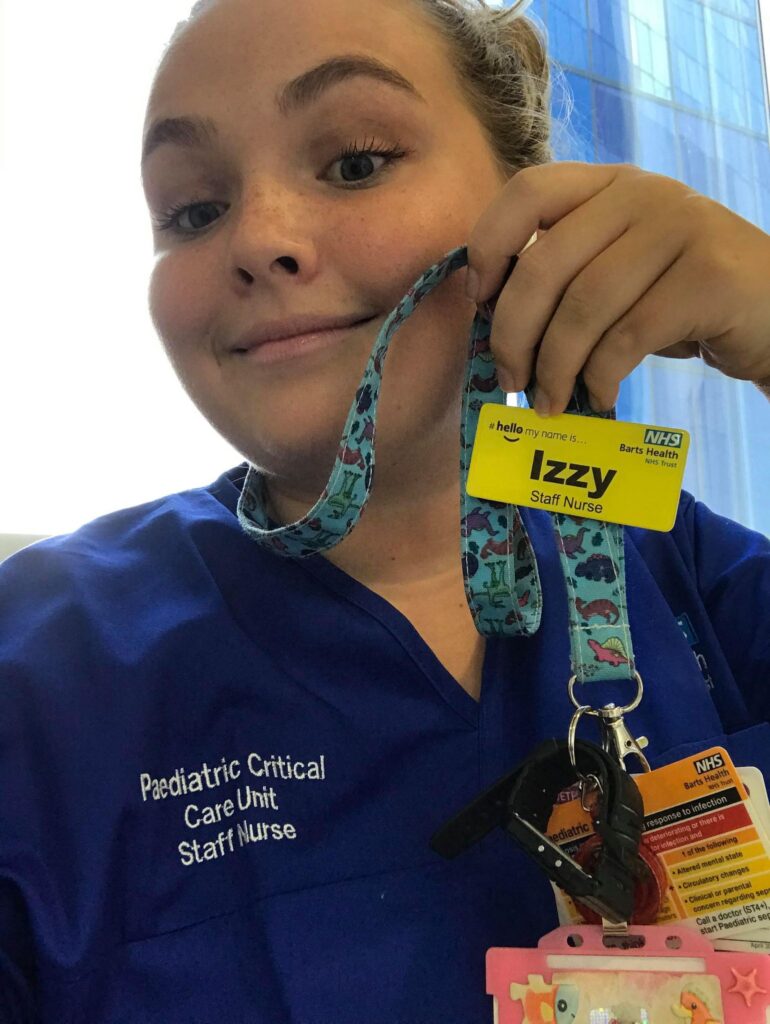
    Izzy Howes, a 23-year-old NHS nurse from London, had been working in a children’s intensive care unit for just six months when she was redeployed to a Covid ward to help tackle the mounting crisis last March. The physical and mental toll it has taken is hard to put into words, but Howes speaks openly and eloquently about the struggles of that turbulent period. Her story is testament to a darker side of the pandemic which few of us experienced, or will ever experience.

    “In my training I’d never looked after adults”, says Howes. “So it was difficult from the get-go. It’s a lot more physically demanding in an adult ward, so most of the time I was just completely exhausted.

    “I remember my first shift I was told I’d have a ‘buddy’ nurse with me, but when I arrived they were really understaffed and I was handed a patient straightaway.” Howes says that getting used to wearing PPE for hours on end was hard, but on that first day she was “grateful” for it. “I was just crying the whole time. I had a lump in my throat – the kind you get when you are completely terrified. I kept thinking: I don’t know what I’m doing. I don’t know what I’m doing.”

    Two weeks into the first lockdown, one of the surgical theatres was converted into an intensive care unit and Howes was one of four nurses tasked with taking care of 20 patients on life-support. “I remember a senior nurse looking at me and saying: forget everything you’ve learnt about nursing. Just keep them alive.

    “It was complete madness,” says Howes. “I remember one shift when they’d run out of gowns but had just enough masks for us to take one break, which meant we couldn’t drink anything or go to the loo for six hours at a time. If you went on a break you were considered as wasting PPE.” Howes recalls one horrifying experience when a senior nurse collapsed on duty: “She was taken to A&E for acute kidney failure because she was so severely dehydrated. Nobody was looking after themselves”.

    Did it get easier with time? “Once people started to accept that they weren’t going to achieve the level of nursing that they were used to, it did get easier; we were constantly telling each other that we could only do what we could do,” says Howes. “But even that was hard to stomach. I kept thinking: what if doing my best costs someone’s life? That bit I really struggled with. Every person is someone’s everything”.

    In those first few grueling months, Howes says everyone was “running on pure adrenaline” and had no time to process the suffering they were faced with day-to-day.

    And in October, when cases started piling up once again, things got harder. Howes volunteered to return to the Covid unit where the numbers were spiralling “out of control”, and her hospital became one of the biggest intensive care units in London, with usual capacity of 70 stretched to almost 200 patients. “It was organised chaos,” she says.

    Howes was better versed in the practicalities of the job this time round. But as the adrenaline wore off she had more time to reflect, and with reflection came the psychological burden of witnessing the daily reality of senseless death. “I’d just look at these patients and absorb the fact that they were dying. I can remember specific patients’ faces and the fear in their eyes when they deteriorated.”

    One of the most “gut-wrenching” parts of the job was speaking to families on the phone every day; “having to tell them that their brother, uncle, father is dying, but that they can’t see them.” Howes suffered immense guilt about her inability to give them “the patience” they deserved. “You’re so overworked and overwhelmed that you don’t have the capacity to virtually hold their hand. Grief does horrible things to your heart and soul, but there were times when family members were abusive over the phone. That was really hard to deal with.”

    A month ago, having reached her own emotional capacity, Howes suffered a nervous breakdown and was given six weeks’ stress leave. “I was supposed to be going to a nightshift, but in my car I just couldn’t move,” Howes recalls. “I was so low, and absolutely exhausted.”

    Challenges aside, have there been positives to such an intense experience? “The friendships that came out of it were incredible. We all had so much admiration for each other and it was beautiful to see so many amazing strangers coming together to support one another,” says Howes. “And it’s made me value things I didn’t before; it’s given me a huge appreciation for life. Now I’m not afraid to tell people that I love them every day.”

    On a practical level, Howes harnessed valuable skills that she’ll carry with her throughout her career: “I learned that I was so much stronger than I realised. I learned to communicate with strangers, build trust and work in a team”. Covid also gave her the opportunity to care for adults, something she wants to use “later on” in her life. And despite what she’s been through, Howes says medicine is an area she’d like to stay working in: “Being in those critical life or death moments is almost addictive. How can I compare that to an ordinary job?” she says.

    When you exist on the periphery of the Covid crisis, as most of us have done, it’s easy to underestimate the psychological toll which the past year has taken on thousands of nurses across the country. Howes’ journey is an important reminder that the traumatic events of the past year will not be forgotten in the minds of those lost in the thick of it.

    It’s also a stark reminder than Johnson’s 1% pay rise, which has provoked huge backlash across the political spectrum, has struck a harsh chord with nurses like Howes. “My anger towards the government’s handling of this crisis was building for a while,” she says. The “hero-complex” which was superimposed onto nurses, and government initiatives such as the  ‘January pay incentive’– where nurses were offered bonuses for working extra shifts – felt either superficial or counterproductive: “It was like leaving breadcrumbs out for nurses to completely overwork themselves. If they paid us properly, we wouldn’t have to do these extra shifts and the burnout would be less,” says Howes.

    So when the meagre pay rise was announced, Howes was “insulted, hurt and angry”, but not surprised: “What I’ve learnt from this year is that marginalised people will just keep being marginalised. I hoped that would have changed, but it doesn’t seem to have done.”

  • Diary: John Bercow on Joe Wicks, The Crown and ‘fascist’ Donald Trump

    Diary: John Bercow on Joe Wicks, The Crown and ‘fascist’ Donald Trump

    The former Speaker of the House tells Finito World about his life under Covid-19 and reacts to recent political developments

    Since coronavirus struck, millions of words have rightly been written about the damage to children’s education. In particular, commentators have highlighted the stark growth of inequality between students from independent schools and those from the most disadvantaged state school families. Yet precious little has been said about the 11-plus and it is time to shine a light on the subject.

    The test has long been explosively controversial but surely it should be open to the same type of scrutiny as every public exam. This is currently not so. Over 70 different 11-plus exams are taken by over 100,000 pupils every year and the results are not recorded or linked to pupil records. This extraordinary omission in an age of transparency means that we don’t know many pupils take the test every year and how many pass; the gender, ethnic and socio-economic make-up of entrants or the proportions and profiles of pupils who access grammar schools through appeals, taking a 12-plus or succeeding in a 13-plus test.

    Crucially, education researchers cannot evaluate 11-plus results against children’s SATs and GCSE grades and young people’s A levels without study of vital 11-plus data. Inclusion of this data in the National Pupil Database is of national importance and urgently required. That is not merely my view but the view of more than 20 distinguished academics specialising in education research. Led by Dr Nuala Burgess, Chair of Comprehensive Future, they have written to Education Secretary, Gavin Williamson, urging him to publish the information without delay. Come on, Gavin, let’s see your reply and, most importantly, the missing material. After all, as your old boss, David Cameron, once said, sunshine is the best disinfectant!

    If school pupils have suffered, so too have university students. I wear two hats in the sector as Chancellor of my alma mater, Essex University, and a part-time Professor of Politics at Royal Holloway College, London University (to the enormous amusement of our children). Both universities are naturally doing all they can to adapt their teaching and learning models to mitigate the disruption to students’ keenly sought education. Yet the rupture – educational, social and cultural – is obvious and undeniable. I don’t have a solution beyond superfast roll-out of the vaccine but make no mistake: my generation were lucky. I paid no fees, had a full maintenance grant and benefited from outstanding teaching and the multiple opportunities of a great campus university. Today’s students have a raw deal by comparison.

     Since time immemorial a principal British preoccupation has been the weather. Since last March friends have been asking each other ‘how are you surviving lockdown?’ Well, I own up. Until the pandemic hit the UK, I, a disgraceful technophobe, had never heard of Zoom or Microsoft Teams. Now they have become part of my life as most of my commercial and academic work has been done by that means. Sure enough, it is good to see more of one’s own family but the inability to play or watch outdoor sport for long periods I have found severely stultifying.

    Two new routines have helped me no end. First, Joe Wicks has been a lifeline. I have never met him but he is a legend. I have been doing his 20 minute workouts five times a week since 24 March 2020. He is utterly motivational. If it had been 60 minutes or even 40, take-up would have been tiny. Twenty minutes’ exercise, with our three children or sometimes alone, but always coaxed, encouraged, willed on by Joe, has made me a lot fitter. Thanks Joe. You have worked wonders for so many people who need no equipment to follow your lead and you have supported the NHS, the country’s best-loved institution, in the process. Second, since August 2020, having never been a jogger, I have taken to jogging for 45 minutes four times a week. I am now hooked on the routine and the exposure to fresh air is both refreshing and invigorating. Where our eldest child led, I have – yes, more slowly – followed.

    Netflix has over 200 million subscribers world-wide, our household included. Yet I rarely watched any of its series. In the last eleven months, I have watched several, cherishing The Stranger, The Queen’s Gambit and, above all, The Crown. Critics have carped about the latter for historical inaccuracy – it is advertised as drama, for goodness sake – but it is brilliantly acted and a first- rate, graphic and thought-provoking introduction to post-war British history. On top of drama viewing, I have read more books than as Speaker I ever had time to do. Novels, histories and biographies have all captivated me but none has surpassed my favourite political biography, Robert Caro’s four volume biography of Lyndon Johnson, a masterpiece truly jaw-dropping in scope, analysis and page-turning interest from start to finish.

    I shall sign off with reference to a triumph and a trial. The triumph was that of American democracy in evicting the most rancid, racist and repellent occupant of the White House in my lifetime. Donald Trump has been a disgrace to his country and an embarrassment on the world stage. As Speaker, believing that he exhibited fascist tendencies, I signalled vociferous opposition in 2017 to him addressing our Parliament and was condemned by reactionaries and stuffed shirts. Nothing has happened in the last four years to change my mind on the subject but much has happened to reinforce my conviction that he had not earned the honour and should not be invited.

    Joe Biden and Kamala Harris face huge challenges but they are motivated by the spirit of public service, not the service of themselves, and they will enjoy global goodwill. The trial is the misery and privation faced yet again by the people of Burma. After more than half a century of brutal military dictatorship, Aung San Suu Kyi’s National League for Democracy won a landslide election victory in 2015. Daw Suu made big mistakes. She suffered major damage to her reputation. She should learn from the experience. That said, she won overwhelmingly again in the November 2020 election. Her detention, and the theft of the election by the military from the people, is an absolute scandal. It is time for the Biden Administration, eloquently backed by the UK, the European Union and freedom-lovers everywhere, to challenge, expose and isolate the Burmese generals until they face trial. Let them do so, answering for their thuggery to the International Criminal Court.  

    Photo credit: Ieva Ābele, Saeima