Tag: next gen

  • The Future of Project Management: The Next Gen’s Guide

    Lysan Drabon, Managing Director – The Project Management Institute

    We live in a world of constant flux, where technology is rapidly advancing, society is shifting, and the climate is changing around us. Both the private and public sector are moving to adapt and react to these evolving trends, by developing new projects across sectors like infrastructure, healthcare, data, security, and utilities, as well as many more.

    Project management provides the tools to bring structure and progress to what can be perceived as chaos and help steer these change-driving projects towards successful outcomes. It is a profession which is dynamic and impactful, giving individuals the opportunity to play a part in facilitating some of the world’s most ambitious changes and shifts. Mastering project management is like gaining a superpower, equipping you with essential skills to navigate complexity, achieve your goals, and shape a better future.

    Project management is defined as “the application of knowledge, skills, tools, and techniques to project activities to meet project requirements.” This might sound formal, but it boils down to getting things done – efficiently and effectively. In a world grappling with climate change, social inequalities, and rapid technological advancements, the need for skilled project managers has never been greater. These skills are essential in virtually every industry, from developing life-saving vaccines to launching innovative tech start-ups.

    The UK, like many nations, faces a critical skills gap. Businesses struggle to find individuals with the project management expertise needed to drive innovation and productivity. This presents a huge opportunity for young people. Graduates equipped with project management skills are highly sought after, possessing the ability to plan, execute, and deliver projects that are successful. This translates into tangible value for organisations and opens doors to a wide range of career opportunities. In a competitive job market, project management skills, even from personal projects or volunteer work, gives you a distinct edge.

    And it’s not just about landing a job; it’s about thriving in your career and navigating the evolving world of work. Project management empowers you to take ownership, manage your time effectively, and achieve your professional goals. It builds confidence, develops leadership skills, and prepares you for the demands of the 21st-century workplace. In today’s digital age, with the rise of remote work and the gig economy, project management skills are even more valuable. They are essential for managing online collaboration, multitasking, and adapting to new technologies.

    The profession is also changing and adapting to a new world. Project managers are at the forefront of AI use, using it to boost productivity, effectiveness, and creativity. AI-powered platforms like Jira Align and Monday.com offer data-driven insights for better planning and resource allocation, while tools like Asana and Trello, integrated with AI, provide real-time progress monitoring and alerts. Furthermore, AI automates routine tasks, freeing project managers to focus on strategic work, and enhances collaboration through tools like Slack, which are particularly beneficial for international teams. AI is no longer a bonus, but a necessity, for a modern project manager.

    It is not only technology which is changing the profession – women are increasingly leading the charge as agents of change within the sector, driving critical initiatives across various sectors, and demonstrating the transformative power of project management. Empowering women in project management is crucial for driving innovation and economic growth. There is ample opportunity for further individuals to make their mark – the Project Management Institute (PMI) projects a need for 25 million new project professionals worldwide by 2030. This presents a significant opportunity for young people, particularly women, to enter a growing field and make a real impact.

    For young people in the UK, facing an uncertain economy and a competitive job market, project management offers a pathway to success. It’s not just about career advancement; it’s about equipping yourselves with the skills to navigate a complex world, drive innovation, and make a real impact on the issues important to you. Project management, powered by AI, is your toolkit for shaping a better future. Embrace it and unlock your full potential.



  • Jiro Dreams of Sushi Ten Years On: “Excellence is in each of us”

    As Costeau was hunkered down on lockdown eating another sushi Deliveroo, it suddenly came unbidden that the marvellous documentary Jiro Dreams of Sushi is now 10 years old.

    This proves a useful excuse to discuss what is not only the greatest movie about sushi, but perhaps one of the great movies about work. The film follows Jiro Ono, an Itamae (or sushi masterchef), in his quest to make the perfect sushi: it is a tale of waking obsession about how to get better at something. Insodoing it documents a rare work ethic, and shows us the complex business of running a great restaurant. It is a film which would be as much value to an HR manager as to a budding chef: the film shows not just how to work hard yourself but how to instil those habits in those around you.

    Interestingly, Jiro is in the Guinness Book of Records as the oldest chef to win three Michelin stars. Part of what the film shows is the importance of bedding in for the long haul. Even an apparently small corner of life like sushi turns out to be endlessly intriguing if you only look at it with the right degree of curiosity. As Jiro says at the beginning of the film: ‘Once you decide on your occupation, you must immerse yourself in your work.’

    In one sense, this feels like a peculiarly Japanese lesson. It was the Japanese painter Hokusai who said: “At 90, I will enter into the secret of things. At 110, everything – every dot and dash – will live.” Jiro is like this with sushi. Jiro is 85 in this film, has since made sushi for President Barack Obama, and is 96 at the time of writing.

    Behind every great career, there is clarity of thinking: to make a good choice, and then come in behind that choice with years of graft. This film also reminds us that at the start of our lives, we face a simple choice about whether to seek excellence or to coast. As Jiro points out, to change the world, you need to have talent. And then it’s just a question of whether you work hard.

    This film shows not just Jiro’s work ethic, but the effect of that ethic on his sons, who must struggle to follow in his footsteps. Each admits that in the beginning, they hated their apprenticeship, since their father took such a hard line, in the belief that graft is ultimately meaningful, even in its way liberating. There is the occasional hint of generational disparity as young Japanese people fail to take on the heritage that Jiro has created.

    There are amusing moments. Jiro says young people want a lot of spare time and they want a lot of money. But for Jiro, this is not the way to live: he has stated that he dislikes holidays because it makes him itch to get back to work. Some of the apprentices in the film have reportedly left Jiro’s tutelage after a very short period – sometimes after only one day.

    We are left in no doubt that it would have been better for them to stay. In one marvellous moment, we hear from Jiro’s apprentice as he learns how to whip tamago (egg sushi) after four months of continually getting it wrong. Finally, Jiro tastes his latest effort and says approvingly: “Now, that’s how it’s done,” causing the apprentice to burst into tears. The master-apprentice relationship works only if it is respected by the apprentice: it is an anecdote which shows that equality in the workplace can sometimes be profitably balanced with hierarchy.

    This is a film with much to tell us as we resume life after the pandemic, having enjoyed or endured a period of pause. Costeau is aware of a certain pent-up energy within all of us. Sometimes we don’t know quite what we should strive towards with it. This film tells you. It’s called excellence and it’s in each of us.

    Jiro Dreams of Sushi is available on Netflix

  • Omar Sabbagh’s Letter from Dubai: ‘As soon as it was safe enough to reopen, that was done’

    Omar Sabbagh’s Letter from Dubai: ‘As soon as it was safe enough to reopen, that was done’

    Academic, poet and essayist Omar Sabbagh airs his worries for the younger generation in Dubai  

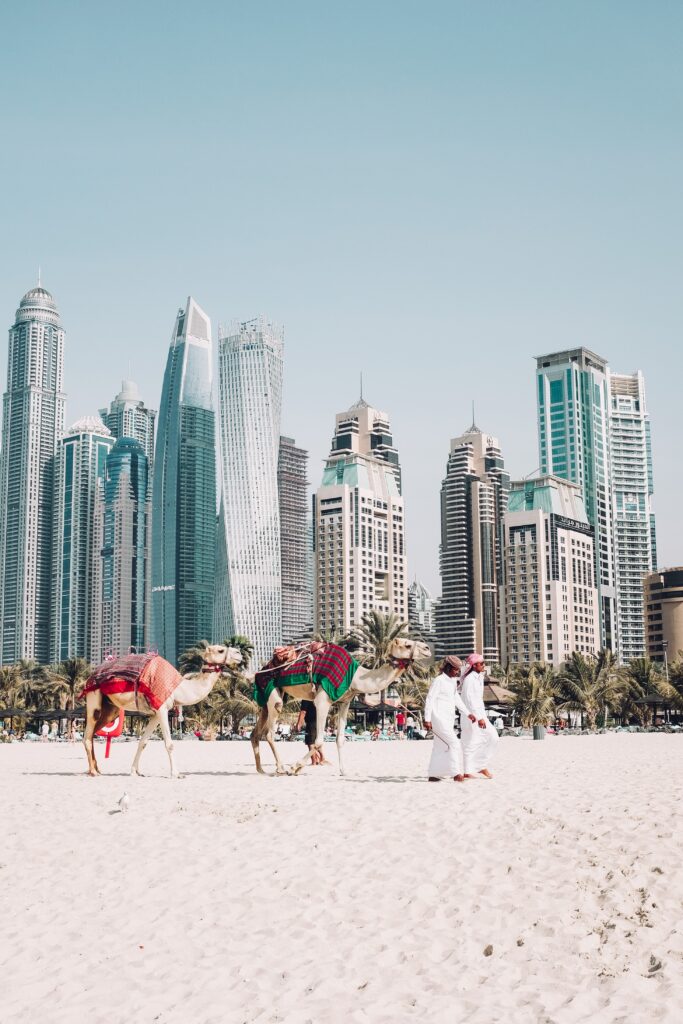
    Over the course of the last year, I have felt quite fortunate to live and work in Dubai. Whether during the period between spring and summer 2020, when lockdown regulations meant you had to apply for a permit to go from one place to the next (via a user-friendly app), or whether it was the rigors of the rules about numbers permitted in cars, taxis and social gatherings, the high levels of technological efficiency proved to be a blessing here. 

    So Dubai has been a comparatively good place to be during lockdown. Malls, for instance, immediately set up mass temperature monitors at their entrances. The university where I teach built a new gate and passageway at its entrance for this purpose. In pandemic times, a highly monitored society, with efficient avenues for top-down governmental action, puts the ‘brotherhood’ into any pat notion of ‘Big Brother.’   

    Of course, Dubai – and the UAE more generally – has suffered economically, like anywhere else in the world.  Things have contracted: shops for a long while curtailed their hours of availability; work hours in the second half of 2020 were shortened; and there are fewer jobs.  A close relative spoke of laying-off a third of his staff, and having to halve salaries in Q3 of 2020. Another was forced to take paid leave for a month from his sales job in retail.  

    That said, it was announced early on that the government would take keen action to make sure the country would be protected. Tourism – an important aspect of Dubai’s economy – has also suffered, but it was clear to all that as soon as it was safe enough to reopen that was done. I myself have travelled more than three times in the last year, needing only to follow PCR-testing regulations. Returning to Dubai, it usually takes less than 24 hours for your PCR-test at the airport to ping as an SMS on your phone. The services have always been stellar here. 

    I have been teaching, too, since spring last year, online and at times via a new ‘Hyflex’ system, whereby students can opt during registration, to attend in person or remotely, online.  For teachers like myself this involved a scramble to learn new technologies in the classroom, by which one would lecture in person but simultaneously with a camera and microphone to engage with those learning remotely. I was anxious of the burden of learning to use the technology, but the inhibition before the event turned soon to enthusiasm on my part. 

    Young people’s prospects here are good; this is one of the best places in the Middle East to study alongside Beirut and Cairo. The majority of students will end up in business, media, engineering and perhaps architecture or design. There is absolutely no sense of rebellion in Dubai. 

    That said, the students seem to have lost some of their gusto. When I see the odd stray young person on campus, he or she invariably seems to me to look lonely. It’s much easier for an academic like myself – a person who revels in a week spent on the couch reading or thinking, writing or teaching – to deal with these circumstances than for other kinds of people. It’s also much easier for a man nearing forty, too, than for someone half my age to accept the reality of the pandemic.  

    I dare not let my wife catch on, but being homebound suits me like pie and goes down like sugar.  Bookworms or not, it’s the young I feel for. Of course, they’re getting on with their lives, and many are learning by other means. But if things are concerning in Dubai, if I look across at my native Lebanon, I am forced to imagine what absolute lockdown would be like. That country is suffering from its infrastructural weaknesses, in a country which was weakened already by internal strife and corruption.  

    I remain hopeful. Perhaps when things improve, and our old outdoorsy life recommences, we will have – in a manner of speaking – gone back to the future. It might even be that this hiatus will bring forth new fruits.  To paraphrase that great fabulist Lawrence Durrell: in the midst of winter we can feel the inventions of spring. 

    Omar Sabbagh is an Associate Professor at American University in Dubai