Tag: National Curriculum

  • The Poet at Work I: Tishani Doshi

    The Poet at Work I: Tishani Doshi

    As the government seemingly reduces the importance of poetry on the national curriculum, by making its study optional at the GCSE level, Finito World is introducing this regular series aimed at illustrating the utility of poetry, and examining the relationship between literature and the workplace. Poets are asked to produce a poem which speaks to what our first featured poet, Tishani Doshi, calls ‘ideas of work, leisure, community, labour, decoration, and poetry and the space we create for it all. ‘ After we produce the poem, we then give the reader a Q & A touching on the life of the poet and their relationship with work.


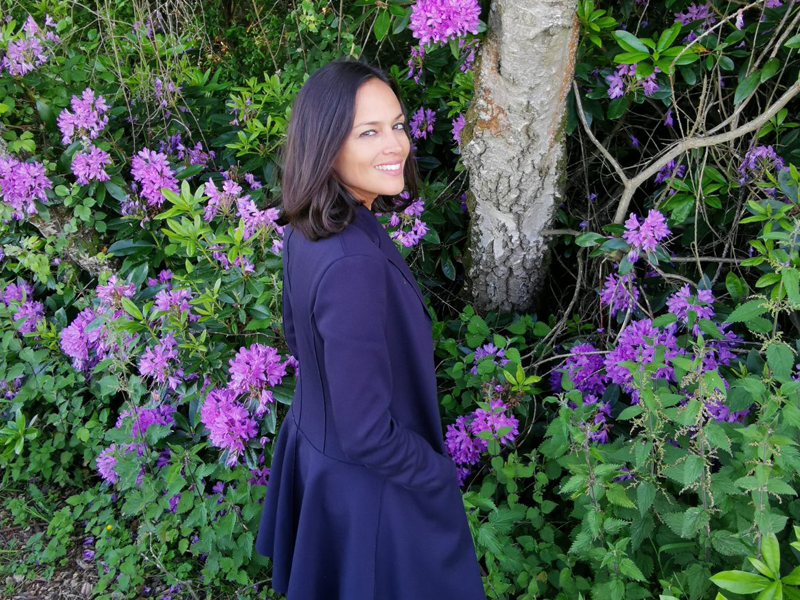
    Tishani Doshi is a poet and novelist born in what was then Madras in 1975. She has built an international reputation on the back of her poetry and novels – for which she has won many awards, including the Eric Gregory Award and the Forward Prize for Best First Collection. Her novels have also been critically acclaimed. Her most recent Small Days and Nights has been shortlisted for the Tata Best Fiction Award 2019 and the RSL Ondaatje Prize 2020.


    In ‘Postcard from Work’ readers will immediately be relieved by the exotic colours – ‘the yellow trumpet flowers’ and the ‘sunbirds…diving in and out of this den of gold.’ It is a poem which begins in a blaze of light. It is a piece ostensibly about work, but where little work is done – except the perhaps more vital work of paying tribute to the natural world, and mulling our place in it. Sometimes the best we have to offer our masters is to take a mental holiday from the tasks they have set us to do.


    Doshi knows that we were not born only to consider ‘the price of milk’ but to find ways of being which let death know we mean to ‘hold on.’ Work has to be done – and someone has to do it, and that will mean taking a break from dreaming. Doshi zooms out to show us what tasks lie unfinished around the narrator: we might be in a seamstress’ (‘someone else will tend the hem’) or even at a vet (‘someone else will pry open the dog’s jaw’). All our leisure, the moments we snatch, must be supported by drudgery elsewhere. Doshi also makes her living as a dancer, and her poems always have something of dance about them – they are miracles of rhythm and movement, and full of a joy which does what poetry should do: her poems are the antidote we didn’t know we needed until they came our way.


    Postcard from Work 


    Forgive me, I have been busy 

    with the yellow trumpet flowers.

    They dance uselessly, slivers

    of rapture. I know the dishes

    need washing but the sunbirds

    are diving in and out of this den

    of gold. Their dark purple wings

    are soft nets, intimate with the leaves.

    Beaks poised to receive nectar. There are 

    days I neglect my beard. I grow tired 

    of digging. I imagine someone else

    will tend the hem, the torn sleeve.

    Someone else will pry open 

    the dog’s jaw for his evening pill. 

    Our throats are in constant need

    of shelter.


    I’ve sublet a room   

    to a poet who does not know 

    the price of milk but is ready 

    to lay down her spear and surgical

    instruments, to worship the roots

    of this labyrinth. If there is rain

    and soil, onions will grow. After 

    a day in the field, the poet and I 

    sit around a fire to sing. It is a way 

    of letting death know we mean to hold

    on. The threshold stays warm. We flick

    at night with a fly-brush, cheat insects

    of their audience with a chorus 

    resurrected from silence. Think 

    of the performance of this lament

    as our hunger, of the armchair

    in the corner, our repose. 

    Underneath, is a footstool 

    that hides.


    What is the interplay in your life between dance and poetry? Is it an entirely fruitful one or can it be said to be in any way antagonistic?


    Poetry came first, but in a way, poetry only came into being once I had dance. They’ve never been antagonistic, unless you count yearning for one, while you’re engaged in the other? But that feels such a natural way of being in the world. Both require a kind of vulnerability and strength – the making of your own vocabulary. When I’m in a lazy mode, which is my most natural way of being, I wonder at both the worlds of poetry and dance, the capabilities we don’t imagine for ourselves. 


    How do you find the business side of your writing life? Many writers I know struggle with invoices/tax/the admin of it all? But then I think that can also be a cliché and many writers be surprisingly scrappy and hard-headed?


    I studied business administration and communications before ditching it for poetry, so I can get around economics and accountancy alright, but that’s not to say I thrill in it. I move in waves. Sometimes I’m terribly productive about everything – to-do lists and all. Other times I want to be left alone to watch the flowers. 


    The UK government has recently said that poetry should be optional at the GCSE level – a significant demotion in its importance on the curriculum. What is your view on that and what do you feel the impact will be?


    One of my first jobs was to teach an introduction to poetry and fiction class to students at Johns Hopkins University. It was a required class, most of my students were pre-med or engineering. I like to think as a result that in future dentist waiting rooms, there may be a volume of Elizabeth Bishop lying around, or that someone designing a bridge might dip into the poems of Imtiaz Dharker for inspiration. I don’t know what the UK government’s motivations for demoting poetry are, but I hope usefulness was not a factor. Everything is connected. I can’t imagine any kind of life that doesn’t need the intuition and imagination of poetry.


    What sort of role does poetry have in India – does the government encourage it sufficiently or is there tension in your country also on that score?


    Well, our current prime minister unfortunately published a volume of poems, called A Journey.  Historically, tyrants have had a thing for poetry (see Mao, Nero, Stalin, Mussolini Bin Laden), which gives poetry a bad rep. Poetry as I remember it in school was rather fossilized and distant. I think at the college level, there have been serious efforts to rejuvenate and decolonize the syllabus. In schools, I fear they may still be standing up in front of classrooms with hands clasped, reciting “charge of the light brigade.”  


    Was there a particular teacher when you were younger who turned you onto poetry?


    Yes. Her name was Cathy Smith Bowers. I took one of her classes as an undergraduate in college, and it changed my life. 


    What’s your favourite poem about the workplace?


    I read this as a work poem, because I love my work, and my work is poetry.


    Love is a Place by EE Cummings 


    love is a place
    & through this place of
    love move
    (with brightness of peace)
    all places

    yes is a world
    & in this world of
    yes live
    (skilfully curled)
    all worlds
  • Robert Halfon on poetry and the national curriculum: “We don’t want a society of Mr Spocks”

    Robert Halfon reacts to the government’s decision to make poetry optional at GCSE on the national curriculum

    I’ve been asked lately about the Department for Education’s decision to make poetry optional on the national curriculum. I don’t think poetry has as much prominence in parts of our education system as it should – in some ways that’s understandable because of all that’s gone on during Covid-19.

    I understand the government’s concerns – that children are being left behind and not learning. I also understand those who worry about the Fourth Industrial Revolution and the predictions that 28 per cent of jobs might be lost to young people by 2030. There’s a natural recognition that the curriculum has to adapt and change. 

    But what the government doesn’t understand is that poetry and literature are one and the same. In my view, you can’t promote one subject over another: literature is actually just as much about learning poetry as reading books. I hope this is just a temporary thing – though it’s undeniably becoming a more widespread assumption in our society that poetry isn’t seen as important.

    “Of course, the Department for Education will say that it’s a temporary measure, and designed to take the strain off pupils, but the danger is that a temporary measure becomes precedent. “

    It’s a good time then to remind ourselves of the value of poetry – sometimes it can almost be like a puzzle. You have to think more, and it trains your mind in a very different way. If this changes suddenly became permanent, I think that would be very worrying.

    And of course, culture – and I include poetry in this – has an absolutely important role, not just in the economy but in our society. It shapes our lives. It’s not just good for our learning; it’s good for our mental health, and expanding our horizons. We don’t want a society where everyone is Mr Spock. 

    At the same time I do firmly believe that whatever degree or study people do they should do work experience alongside. If you’re a poet, why wouldn’t you do a placement at the Robert Burns Birthplace Museum? There should be practical work experience alongside the process of expanding your intellect. 

    The reason I mentioned Robbie Burns is because I had to learn him for a school competition. I have these bad legs and I didn’t lean on anything at that time. I remember standing up and my knee cap would always shake up and down. But I remember learning the first two or three verses of A Red, Red Rose by Robbie Burns – and my kneecaps just shaking in front of the whole school. 

    I’m sometimes asked if my reading has affected my career in politics. What I read goes into my subconscious. It helps me when I’m writing articles – I may think of things and quote things, or use metaphors. I wouldn’t say it’s necessarily directed me towards change of policy. It infuses my thoughts and permeates like a kind of beautiful stew in cooking for a long time – and it always tastes much nicer on the second or third day of eating it.

    But mainly I read to relax – and I’m happy at the moment as I’ve just read some very early stuff from Tolkein – not just The Lord of the Rings and The Hobbit, but also The Unfinished Tales and The Silmarillion, which his son, Christopher Tolkein gathered together after his father’s death. Tolkein was not just a great author but also a great poet: if you read Beren and Luthien, you’ll see what I mean. 

    “There’s an unwritten story: the importance of Conservatism in 20th century art”

    But if I’m honest I don’t read enough poetry. I tend to read books more than verse. But when I do read it I like it. I particularly like poetry that tells stories and also poetry which rhymes – especially Philip Larkin, though I won’t quote my favourite poem, This Be The Verse, since this is a family publication. He was a Conservative of course, as was my other hero, the painter LS Lowry. That’s an unwritten story – the importance of conservatism in 20th century British art.

    And again work was important Lowry actually began doing pictures when he was collecting rents in Manchester. Thinking about it, Lowry and Larkin, working in the library in Hull, might almost be the embodiments of my apprenticeships agenda.

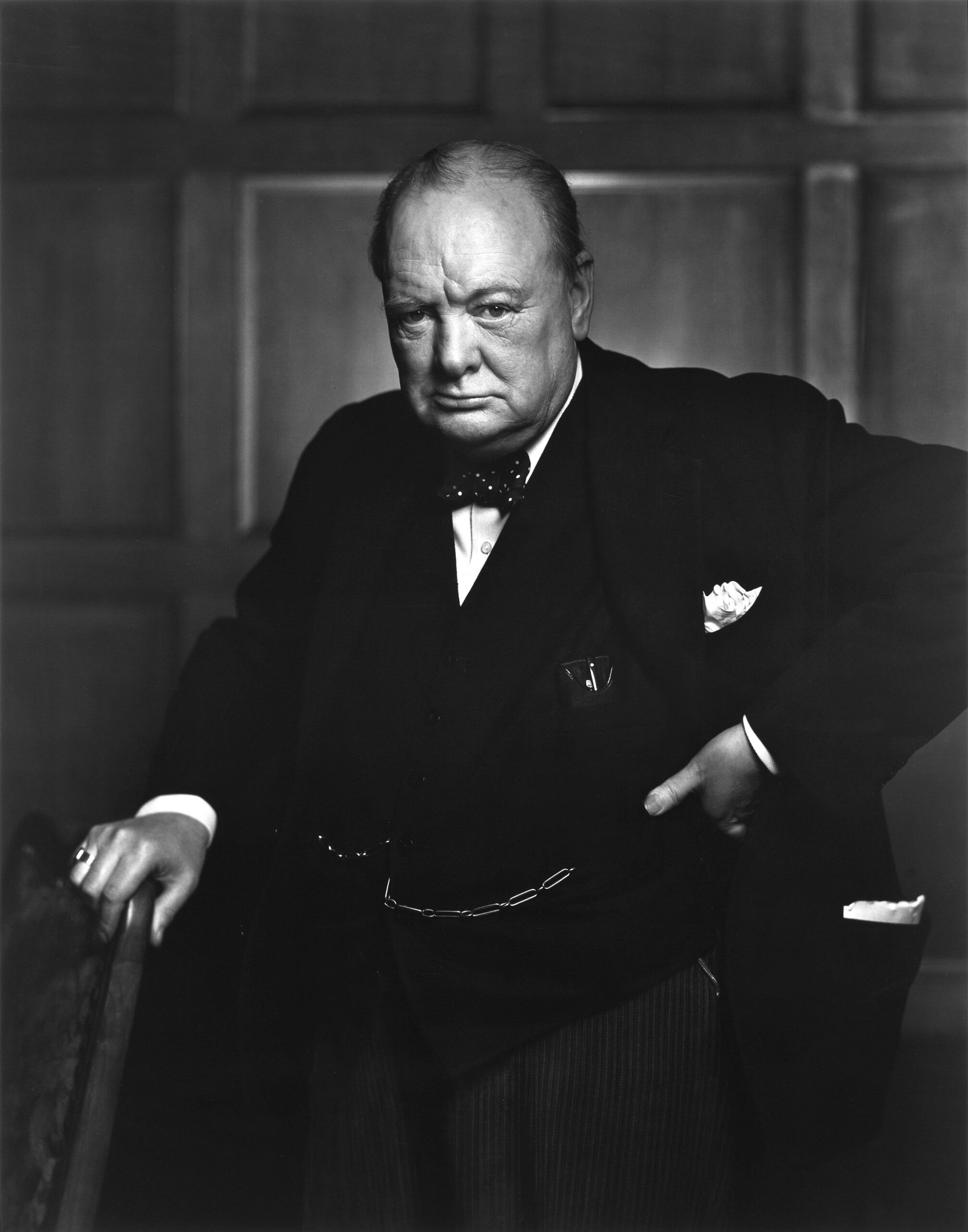
  • What Churchill’s ‘black dog’ can teach us about mental health today

    What Churchill’s ‘black dog’ can teach us about mental health today

    Sir Winston Churchill’s remarkable life is a yardstick in how we discuss mental health, writes Robert Golding 

    On 11th July 1911, Winston Churchill went to dinner with his cousin Ivor Guest and his wife Alice. Afterwards, he reported back to his wife Clementine: “Alice interested me a great deal in her talk about her doctor in Germany, who completely cured her depression. I think this man might be useful to me if my black dog returns.” 

    My black dog. In time, this phrase would become an aspect of the Churchill myth – even though, as Churchill’s biographer Andrew Roberts points out, it was a term he himself only used on this one occasion. It gives us the Churchill we think we know, who is in turn an aspect of our national story. In this telling, the former prime minister becomes not just a great leader, but one who triumphed against mental difficulty. 

    In the Covid-19 age, where mental health is an increasing concern – indeed, almost a buzz word – Churchill feels like an illuminating yardstick. His is a tale, the story runs, of heroic self-medication. He drank and he painted – above all, he worked. 

    The relevance of Churchill’s predicament continues today. When I talk to Fiona Millar, the wife of Alistair Campbell, she displays a profound understanding of the relationship between power and mental strife. Campbell, who for many years was Tony Blair’s right hand, suffered from depression; Millar now runs a support group for those co-habiting with those with mental illness. 

    When I mention Churchill, she states that there are more mental health problems in top-flight politics than we might think. “If you look at our current politicians, you’ve got to feel that there’s something going on in their backgrounds which makes them want to do it,” she says. 

    This might remind us that Churchill is not the only drinker to make it to 10 Downing Street. Alistair Campbell’s old boss Tony Blair admitted in his memoirs to drinking wine during stressful periods in office. And everybody remembers the argument and associated wine spillage in the Boris Johnson household just before the current Prime Minister assumed power.

    What does Millar think engenders pressure for the likes of Churchill, Blair and Johnson? “I think it’s just very high-pressured. It’s very competitive and it’s quite lonely. Almost certainly, there are more problems than we know about; I have Labour MP friends who have had serious problems.” 

    Do we talk about it enough? “I think we’re beginning to – but Estelle Morris was a long time ago. Estelle just said: “I can’t do it and it’s not for me.” But Millar also points to double standards, mentioning the recent case of James Brokenshire MP, who left Cabinet on account of his cancer having spread. “That’s interesting, isn’t it?” says Millar. “That it’s okay to say that – but not to say you’re giving up because you’re not functioning well mentally is deemed less acceptable.”

    Of course, Churchill lurks in the background here – the bulldog expression, the look of the fighter. Inwoven in his image is that you can fight back against depression. I mention to Millar Johnson’s regular referencing of Churchill. Millar replies: “I expect he [Johnson] probably thinks it  [mental health] is all a big girls’ game – or however he likes to phrase it.”

    But of course, Churchill was living at a time where work stress was to be handled with private stoicism. Today, we are beginning to understand the enormity of the problem. 

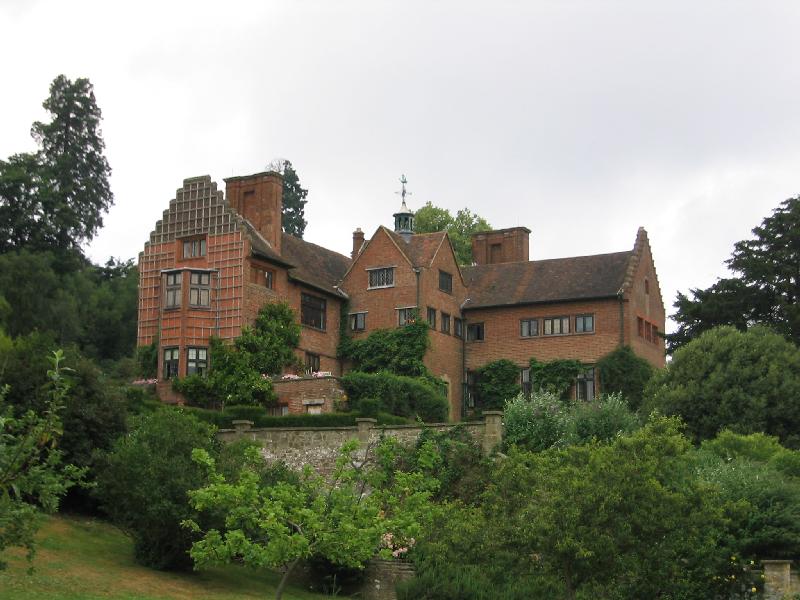
    Chartwell in Kent, where Churchill would often retreat to paint his ‘daubs’

    Dr. Konrad Hitz is a medical director at The Kusnacht Practice in Switzerland. He thinks that the pressures Churchill faced are relevant in all leadership roles. “CEOs and business leaders have many similar pressures to those in political power,” he tells me. “Making big decisions that affect many people’s lives can present an individual with huge challenges and stresses – and I think that has been magnified during the pandemic with many business closures and job losses.”

    Hitz also points to a recent study by the National Institute of Mental Health which found that 72 per cent of executives and entrepreneurs are directly or indirectly affected by mental health issues compared to just 48 per cent of non-entrepreneurs. “A psychological pandemic has been unleashed by the virus,” he argues. 

    So what can we learn from Winston about tackling this pandemic? In the first place, his biography displays strategies of coping which might seem to us less sensible than they did to Churchill’s contemporaries. 

    One of these was drinking, and everybody knows about the obligatory Pol Roger and the bottles of wine at breakfast. Sometimes, we glimpse that this took its toll on his leadership. For instance, on the 6th July 1944, Churchill got very drunk before a Defence Committee meeting. You can feel that Anthony Eden, the then foreign secretary and future prime minister, was underplaying the affair somewhat when he recalled that ‘really ghastly Defence Committee meeting nominally on Far Eastern strategy. Winston hadn’t read the paper and was perhaps rather tight…Altogether a deplorable evening.”

    Hitz thinks this is one area where we need to eschew Churchill’s example: “Individuals are now better educated about the dangers associated with heavy drinking than they were 80 years ago.” But in Hitz’s opinion we’re not out of the woods yet. “Clearly there are still challenges around alcohol,” he continues. “A recent survey in the US indicated that alcohol abuse has risen during the pandemic, with approximately 17 million over-18-year-olds now having an alcohol use disorder, with 10 per cent of children living in a home with a parent who has a drinking problem.” 

    Even so, historians are now beginning to argue that Churchill’s alcoholism may have been exaggerated – not least by him. Everybody knows the famous gag that he had always taken more out of alcohol than it had taken out of him. Andrew Roberts’ verdict feels like a corrective of the myth: “The overwhelming evidence is that Churchill loved alcohol, drank steadily by sipping, had a hardy constitution and was only rarely affected by it.”

    Either way, drink wasn’t Churchill’s only way of coping. Today, there is mounting appreciation for Churchill’s achievement as an artist, and there can be little doubt that his ‘daubs’ as he modestly called them, represented a profound alleviation of stress. 

    Susan M. Coles is an arts educator, who has long been arguing through her APPG for Art, Craft and Design in Education which she runs with Labour MP Sharon Hodgson that the arts should have broader representation on the National Curriculum. She emphasises the good that painting did the wartime leader: “For Churchill it was also an escape,” she says. “Making art is where we step off life’s conveyor belt and have contemplative moments. We use our hands as well as our mind and it’s invaluable to busy people.” This, she argues was the case for Churchill too. “His role was so pivotal in politics that the escape hatch was to making art, and as he mainly worked with landscapes, he re-engaged with nature, which is also empowering in lifting the human spirit.” 

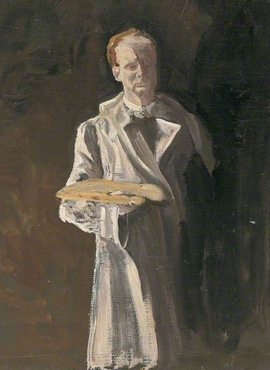
    An early self-portrait by Churchill, thought to have been painted when he was still depressed after the failure of the Dardanelles expedition. Photo credit: By Source, Fair use, https://en.wikipedia.org/w/index.php?curid=66326956

    Over at The Kusnacht Practice, Hitz agrees with Coles’ assessment, although he also points to the many other options, less applicable to Churchill, available at the clinic: “At The Kusnacht Practice, we encourage many patients to be creative and to explore a hobby or pastime that helps them to relax, slow down and remove stresses from their lives. Exercise, reading, cookery, music and art therapy activities such as painting and sculpture can be highly beneficial when employed alongside other therapies. If a patient can find a passion point like painting, that can be a useful tool in recovery.” 

    But through all this, the impression remains that Churchill’s principal remedy was work. Whatever else he crammed into his 90 years, a back-breaking schedule was the dominant fact of his life. Even in the 1930s, which we think of as his period in the wilderness, his work rate was phenomenal. Roberts reports: “In 1930 he gave sixty-one major speeches, then forty-eight in 1931, twenty-eight in 1932, forty-one in 1933, thirty-nine in 1934, fifty-four in 1935, twenty-three in 1936, fifty-five in 1937, thirty-nine in 1938, and thirty-six in 1939, not including hundreds of lesser interventions in Westminster and scores of articles.” Reading this, it’s possible to see how Winston steamrollered his way to the premiership by sheer force of will.

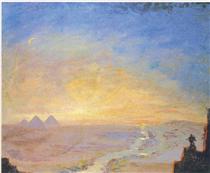
    Sir Winston Churchill, Distant View of the Pyramids, 1921

    For Alastair Campbell, work was also an escape. Millar tells me that she was always amazed at how charming and amusing her husband could be at work, reserving his low moods for her in the domestic setting. Before taking up his Downing Street role, Campbell informed Blair of his condition. “He said to Blair, ‘You just need to be aware that this has happened,” Millar recalls. “And Blair said, ‘That’s fine, I’m totally aware of it’.” Millar continues: “For Alistair, work was the way he dealt with his mental health and he did work phenomenally hard – and was very, very productive. It was a positive in that sense for the government, who were his employers, but it was never good for his family.”

    All of which makes one recall that it was Clementine Churchill all along who bore the burden of Churchill’s exceptional life. When I speak with another high-achieving sufferer Lord Dennis Stevenson, the former chair of HBOS, and co-author of a report ‘Thriving at Work’ which was warmly welcomed by the May administration, he states that he had a similar approach to Campbell: “There are some people who can cope. In my case, I’ve run large companies, and major not-for-profit things, and no one was the wiser. But it’s like walking through glue.” 

    Hitz is familiar with the condition of the workaholic: “We see a number of workaholic cases at The Kusnacht Practice, many of them entwined with other behaviours and dependencies. During the pandemic, work-life balances have been challenged and, with our leadership treatment programmes, we try to reset this balance, encouraging routines and defining clear lines between work and free time.” 

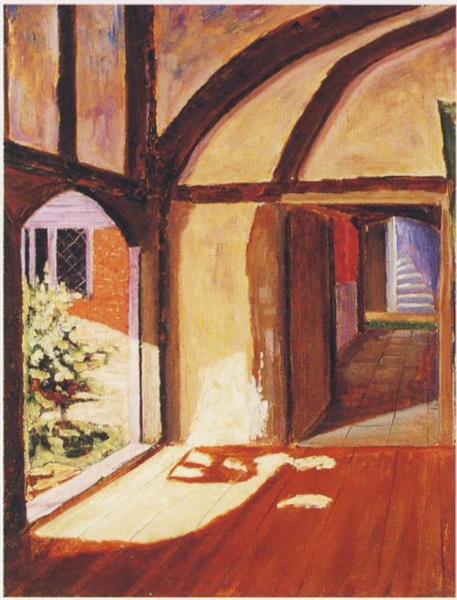
    Sir Winston Churchill, Interior at Breccles, Date uncertain

    The conversation around Churchill then, feels like a measure of how far we have come in the question of mental health. Roberts makes it clear that the the image of Churchill as a depressive has been exaggerated. It might be that this in itself should guard us against inaccurate labelling in this field where definitions are still in their infancy. 

    Even so, he undoubtedly had his low moments. And to study Churchill is to encounter someone highly resourceful, intelligent and gifted who needed to discover his own path forward whenever the Black Dog struck.

    So what conclusions can we draw about Churchill’s life? Hitz quotes Churchill himself: “Success is not final, failure is not fatal, it is the courage to continue that counts. If you’re going through hell, keep going.” Hitz adds that this mantra “is equally applicable now as we start to come out of this generation’s global crisis.” Millar, meanwhile, argues strongly for the need to create networks of support in communities, in line with her own online group which helps the partners of those suffering with poor mental health. Dennis Stevenson agrees, saying that mental health ‘doesn’t need the politicians anymore’, pointing to the momentum already established on the question. 

    But he also has some sound advice: “At first I was very bad at externalising issues and problems – and not just mental health problems. But as I got older, I got better at articulating it.”

    Stevenson’s words remind me of an early scene in Macbeth, when the hero first meets the witches in the Scottish wilderness. He asks them what they are up to, and they reply: “A thing without a name.” 

    It occurs to me that this power of naming is very strong, and that Churchill, the greatest wordsmith ever to assume the prime ministership, showed to a high degree the importance of that when he spoke of his black dog. Now that we too are embarked on that same project to address this issue, there’s much we can learn from his struggles.  

  • The Poet at Work VI: Gareth Writer-Davies

    The Poet at Work VI: Gareth Writer-Davies

    This week we feature the brilliant Welsh poet Gareth Writer-Davies. Gareth was a Hawthornden fellow in 2019 and has been repeatedly recognised for his rich, witty and reliably enjoyable poetry. As ever, we produce his work poems, kindly written for Finito World, after the Q&A.

    Tell us about the relationship between your work and your poetry.

    I would say that my various careers have given me structure, an ability to hit a deadline. Serious artists and writers know that you need to “turn up” so that if inspiration hits you have the tools to hand whether that be an easel and brushes or pen and paper. And of course the workplace provides material, not only in the people and tasks but also in the idiosyncratic jargon and sometimes the locales. I’m a big fan of poets keeping themselves engaged in other work, it makes the brain take diversions and supplies contrasting stimuli. Whether the work be a library or bank or steel mill (all places where poets have earnt their money whilst continuing to write) a writer should be part of the world wherein the people dwell.  

    Conversely, what role did your love of poetry have in giving you confidence in the workplace? 

    I always felt confident in my written work and that I can make myself understood. It also helped me to put the workplace into perspective in a way that perhaps a deeply religious person might also. Work is not nothing; it takes but it also gives and to have something beyond what might be quite a mundane series of tasks provides motivation as well as ptting food on the table! 

    The government has recently said that poetry should be optional at the GCSE level – a significant demotion in its importance on the curriculum. What is your view on that and what do you feel the impact will be?

    I don’t think is a good idea. Especially when we are surrounded by so much poetry in the form of lyrics, rap and even advertising; whilst not everything in a poem should be studied to death (the feel of a poem, something that is not quite defineable is part of its purpose and charm) these forms need to be unpacked and understood in terms of motivation and where they are leading us. These are good brain tonics, experiments in form that enhance structural thinking and teach us empathy for others. These are important in all jobs and are too important to discard.    

    Was there a particular teacher when you were younger who turned you onto poetry?

    I did not come from a bookish household, so I had to be something of a self starter. I had relatives who as working class  Welshmen would take their turn at a family gathering to recite poetry they had written, my Uncle Edwin being particularly good. He was a milkman and a teacher to me. In school there were several teachers who inspired, introducing me to Eliot, Shakespeare and Milton; their example of keeping the faith in poetry was important to me.  

    What’s your favourite poem about the workplace?

    Filling Station by Elizabeth Bishop

    WORK 

    I’ve made up mortar and laid bricks
    I wrote a poem in couplets

    I’ve torn down trees and planted seeds
    I plucked a metaphor from weeds

    I’ve tried journalism 
    I used my imagination

    I’ve been a salesman of many things
    I know meaning

    I’ve taught class and been taught a lesson
    I continue my education

    I’ve worn uniforms and three-layer masks
    I stick to my task

    These are a few of my occupations 
    They gave me this poem

    GARDENING WITH A CHAINSAW

    I wanted to tell her that chainsaws rarely work 
    spending ninety per cent of their time 

    being fed oil, the torque strengthened

    the plug scraped free of soot and the chain adjusted


    only then
    do the wood chips fly like confetti

    as trees kiss the vertical goodbye 
    waving, swaying, then crashing to the shagpile forest floor  

    the desire to cut and chop, make something from the wild
    lingers


    we gather cabbage tops, think on the big gesture of a copse
    projects 

    passed on 

    like a half-built shed or a thrown bouquet


    the chainsaw bides its time as it leaks upon the shelf   
    teeth grinding 

    upon the oily tongue of blade
    like a bull who’s just seen a cow

    I curate a smile, turn the key in the lock 

    walk out into the sudden garden of quiet devastation

  • Why poetry must not be demoted on the national curriculum

    Why poetry must not be demoted on the national curriculum

    Has poetry been demoted on the national curriculum? If so what does that mean? And do poets really know anything about work? George Achebe did a little digging 

    When Finito World spoke to former shadow schools minister Margaret Greenwood recently, she recalled an episode during the 1970s, before the national curriculum even came in. Greenwood was teaching a particularly difficult class in secondary school. “It was a real challenge, but then I hit on an idea. I was going to give them all poetry books to read to themselves, and I was going to say: ‘This is a quiet reading lesson’.” 

    It was the sort of inspiration which could be permitted to strike in those comparatively targets-free days. What’s more, it worked – though some of her fellow teachers were sceptical. “I remember one teacher looked at me askance and said ‘You’ll never get them to sit still’,” Greenwood continues. “But I went to the library and got all the poetry books and dished them out and explained that this was what we were going to be doing every Tuesday.” 

    The strategy took time to yield results. “It was fascinating. At first, there was a struggle and a bit of resistance. Then they got into it. We need to let teachers be the professionals they are.” 

    It’s a story about teaching, yes, but it’s also a tale about poetry. It posits the idea that poetry is capable of crossing boundaries, of overcoming indifference – and ultimately that a poem – even a line of poetry – can alter the course of a life.  

    And yet if you look at recent government policy, it seems rather to tend in the opposite direction. It began with a storm last year – in the world of poetry, a storm usually amounts to a single article in The Guardian. In this case – a measure of the seriousness of the issue – there were two articles in The Guardian.  

    The cause of the storm? This was to do with Ofqual’s decision to make poetry optional at the GCSE level. The ruling states that for this year students must compulsorily take a paper on Shakespeare, but that they can choose two out of three from the 19th-century novel, a modern drama or novel, and poetry. Poet and teacher Kate Clanchy summed it up: “For the first time, poetry is a choice.” 

    The indignation – in Clanchy’s article, and also evident in a similar piece by poet Kadish Morris – was open to some objections. In the first place, Shakespeare is nothing if not a poet – and has for five hundred years proven a pretty good ambassador for poetry. Meanwhile, much modern drama – especially TS Eliot – deals in verse, and its prose dramatists – one thinks of Pinter and Beckett – tend to be poets as well. So it wasn’t quite the dagger through the poetic heart which it was reported as. 

    Secondly, teachers are, of course, able to teach poetry anyhow regardless of what Ofqual says. When I spoke to a secondary teacher friend, who asked not to be named, she said, “It’s not like my children aren’t exposed to poetry; they are. All this sort of thing does is demoralise teachers.” 

    When Finito World approached Ofqual for an explanation, a spokesperson further explained that the changes are temporary and “designed to free up teaching time and reduce pressure on students”. In other words it’s a specifically pandemic-based change, which should be repealed once we return to normal. Even Clanchy seemed to admit this in her article: “Plenty of teachers will stick with the poems, especially if they’ve already studied them,” she wrote. 

    In addition to this Ofqual pointed out to us in their statement, that exam boards retain the freedom to add to the common core if they wished. Meanwhile, the Department for Education didn’t reply to our request for comment.  

    So is the whole thing a storm in a teacup? Well, not quite. In the first place, Clanchy surely has a point when she draws attention to a double standard: “The content of double science – the popular three-in-one science GCSE – is presumably also, as Ofqual says of poetry, difficult to deliver online, but Ofqual isn’t telling teachers they can pick between chemistry and biology next year providing they stick with the physics.” 

    It’s a reminder that this decision feeds into poetry’s worst fears about itself – about its sliding into irrelevance. This is probably misplaced: when we have a funeral or a wedding – that is, when we really want to say something important to one another – we tend to reach for the music and springiness of poetry ahead of prose. That will probably always be the case.  

    But there wasn’t a similar storm over the optional nature of drama or the Victorian novel to quite the same extent. In the first instance, in an age of theatres closing, drama writers are more concerned about their works being put on again than they are about their texts being studied. And the Victorian novel, regularly adapted for film, seems invulnerable.  

    Poetry is different; it feels fragile. As Alison Brackenbury, one of our greatest living poets told Finito World: “Many people only know – and value – those poems which they encountered at school, especially if they learned them by heart. If they don’t come across poetry which appeals to them in their curriculum, the one chance may be gone.”  

    The Chair of the Education Select Committee Robert Halfon MP also expressed his worries: “In some ways what the government has done is understandable because of Covid. There are worries that with the Fourth Industrial Revolution 28 per cent of jobs might be lost to young people by 2030, and so the curriculum has to adapt and change.”  

    But then Halfon pauses, thinks and delivers his verdict: ”Having said all that, poetry and literature are one and the same. In my view, you can’t promote one over the other.” He is also uncertain over whether it’s really such a temporary thing. “DfE is saying this is a temporary measure, and it’s designed to help take the strain off pupils because poetry is perceived as difficult. But temporary measures can become precedent and poetry trains your mind in a very different way. If this becomes permanent it would be very worrying.” 

    It can seem to some that since the hyperactive tenure of Michael Gove as Secretary of State for Education, aided and abetted by Dominic Cummings that “English has been shrunk, confined and battered into rote learning and stock responses,” to use Clanchy’s phrase. 

    Halfon agrees: “Culture has an absolutely important role, not just in the economy but in our society and shaping our lives. It’s not just good for our learning – it’s good for our mental health, and it’s good for expanding our horizons. We don’t want to be a society of Gradgrinds where all we want is facts.” 

    Halfon is reminding us that just at the moment when we are all looking at our mental health, the government appears to be demoting the branch of human affairs most designed to improve it. 

    Christopher Hamilton-Emery, the poet and former director of the immensely successful Salt Publishing adds that the question of poetry’s status on the curriculum is relevant also to the increasingly discussed area of social mobility: “There’s a wider context to this and that’s the way kids come into contact with poetry, or orchestral music, or ballet, or opera, or theatre. In this sense, education is the gateway, the space that gives permission to children, and in this context there’s a political and egalitarian component to this debate around poetry.” 

    But Hamilton-Emery adds, only half-jokingly: “I also recognise that poetry is a pain in the arse. Yet it’s meant to be awkward, tricksy, resistant to authority, dissonant – things that are hard to teach and accommodate, things that can’t easily be measured or controlled. Poetry provides a critical citizenship and, I think, helps form the unity of the person and offers a living communion today and indeed through history.” 

    This goes to the heart of the matter – the sense that the Conservative party represents authority, and that poetry is somehow being punished for being anti-establishment. Of course, these sorts of generalisations can never be the whole truth – even if there is often some truth in them. You could probably make a case that from Philip Larkin and WB Yeats to TS Eliot and Ezra Pound, there were more ‘great’ right-wing poets in the 20th century than among their left wing counterparts. 

    And yet one wonders whether there is a sense in which in our technology driven, factual lives we have ceased to credit marvels and insodoing come to see poetry as somehow wishy-washy, and even insufficiently grounded in the commercial. Tishani Doshi is a world famous writer and dancer who continues to make poetry the centre of her life. She speaks revealingly of the poetry and the administration sides of her being: I studied business administration and communications before ditching it for poetry, so I can get around economics and accountancy alright, but that’s not to say I thrill in it. I move in waves. Sometimes I’m terribly productive about everything – to-do lists and all. Other times I want to be left alone to watch the flowers.” 

    It is this idea that the government no longer wants us to watch the flowers which riles people so much when this kind of decision is made. But Doshi is adamant that we need a more nuanced conversation: ‘One of my first jobs was to teach an introduction to poetry and fiction class to students at Johns Hopkins University. It was a required class, most of my students were pre-med or engineering. I like to think as a result that in future dentist waiting rooms, there may be a volume of Elizabeth Bishop lying around, or that someone designing a bridge might dip into the poems of Imtiaz Dharker for inspiration.” 

    Halfon agrees: “My reading goes into my subconscious. It helps me when I’m writing articles – I may think of things and quote things and use metaphors. It just infuses my thoughts and the way I think. Something permeates like a beautiful stew that’s been cooking for a long time – and it always tastes much nicer on the second or third day of eating it.” 

    Doshi adds: “I don’t know what the UK government’s motivations for demoting poetry are, but I hope usefulness was not a factor. Everything is connected. I can’t imagine any kind of life that doesn’t need the intuition and imagination of poetry.” 

    WH Auden once wrote that ‘poetry makes nothing happen’, adding that it ‘survives in the valley of its being said, where executives would never want to tamper.” And yet in being so lofty it has made itself vulnerable to demotion.  

    Yet the poets one meets tend to be tougher than you might think – they cannot afford to be Keatsian and head in the clouds. They have to work. We’ll update on progress in a subsequent issue.  

  • Margaret Greenwood: ‘damning’ that we have seven million adults with poor literacy skills

    Margaret Greenwood: ‘damning’ that we have seven million adults with poor literacy skills

    The former shadow schools minister recalls life as a teacher and thinks there might be answers for the present in the past 

    Whenever you ask the government about exams they say it’s the best form of assessment, but that’s a meaningless comment which stands up to no scrutiny. When I started teaching secondary school, GCSE was 100 per cent course work. The exam board would ask us to put forward ten pieces of work for each student; two of those pieces had to be done in controlled conditions, like an exam. Pupils knew that every piece of work at the start of the year mattered. It meant pupils took up-front responsibility for their own learning. 

    When they brought that arrangement to an end it was like attending a wake at my school: we were mourning the passing of this as we’d seen such an increase in quality. If you have an exam at the end of the year, you’re talking about memorising things rather than developing skills. I found the old way very constructive and flexible. If you have a situation where a pupil has missed a month of school or been ill, or something terrible has happened in the family, you could say, “Let’s get on with the next thing.” 

    I’d like to move to a system where we have greater development of skills and research. In the age of the search engine, to have assessment processes in demonstrating memory seems flawed to me.  

    I once taught in an adult centre reading to adults who struggled with reading. That was quite a profound experience because you were in close contact with people who throughout life had experienced that profound deprivation of not having sufficient literacy skills to make their way in the world. Today we have around seven million adults with poor literacy skills: that’s damning in a country like ours. 

    That’s why in 2020, as shadow schools minister, I argued against the Reception Baseline Assessment. There was evidence it was causing children distress, and taking teachers away from settling children into school-based routines and developing relationships with pupils. We’ve got a similar issue with SATs. I spoke to a mother who told me when her daughter was in Year 6, she used to cry on her way into school as she wasn’t very good at maths. That’s why a broad-based curriculum is important. These decisions taken early in children’s lives affect employment outcomes further down the line.  

    If you’ve ever been to adult education centres, you learn the hunger people have for learning when they’ve missed out on it. One class I once taught was called ‘Women Back to Work’. These were women who wanted to get back into the workplace, and needed a GCSE in English to do that. One knock-on effect was the impact on their children: they would bring them into the classes with them, and proudly stand in front of the class and give a talk while their child was there, looking up so proudly at what their mum was doing. 

    When you think of women who have come out of work to look after children and then become carers, they can often lose their confidence. Adult learning is a fantastic way to open up ideas. I worry about the long-term economic impact of children who grow up in poverty. They don’t earn much, not as many go to university and they’re less likely to have good health later in life. This government has no appreciation of the scale of the problem. It was dragged kicking and screaming on school meals by Marcus Rashford, a fact which spoke volumes.  

    Part of the problem is that the status of teaching is still low in relation to what it should be. At a local level, people are still immensely grateful to their local teacher so the relation between pay and status has to come from government. When I look at what primary teachers do, their skill levels are absolutely phenomenal.  

    The Labour Party is in a process of development of policy, and have to include our membership in that. Keir’s been leader for a year or so, and because of Covid too there hasn’t been the opportunity for meetings or conference. I think it’s too early to say, but we need to look to the past for inspiration.  

    In the 1970s, we had a big pay rise and there was buoyancy because we as teachers felt valued. This was before the national curriculum and we’d teach as we saw fit, with no testing regime and more creative time. I remember we used to put on school plays and when they bought in the national curriculum it killed it dead. I think that’s tragic. We need to look at that. Exams are not the answer.  

    Margaret Greenwood is the Member of Parliament for Wirral West 

    Photo credit: David Woolfall under Creative Commons License 3.0

  • Sarah Fletcher: our education system is ‘not fit for purpose’

    Sarah Fletcher: our education system is ‘not fit for purpose’

    Sarah Fletcher

    I would like to conjure two images for you.  The first is of an imaginary workplace of the future:  there is space for quiet working and areas for meetings and collaboration too. There are powerful computers that drive new technologies and leverage augmented reality. Technology to break down geographical divisions is on display, with digital, connected whiteboards to share ideas simply and effectively.

    Teams of people, diverse in background and skills, are working together both in person and virtually.  Refreshment is readily available to break up routines, inspire impromptu conversation, seed fresh thoughts, and allow tired brains a rest. There are deadlines to work to, but it is accepted that new ideas can be messy and that there will be risk. It is better to try something and fail early than not to try it at all is the mantra; it helps to avoid unnecessary time waste and cost. There are other rooms too – places of equal importance. They are for those with the technical, computational, or practical expertise to translate ideas into practice, to prototype, and make, iterate and refine. Entrepreneurship is encouraged and valued. Respect is the overriding concern, respect for those you work with and for the wider audience you wish to reach, respect for the environment and for society too. These are the spaces in which problems will be dissected, analysed, and solved and in which the future will be created – where head, hand and heart meet.  

    Now we see an exam room: desks separated, rigidly aligned, front-facing. Collaboration is forbidden, breaks are supervised; notes and research are left at the door. Access to the outside world has been disabled with mobile devices confiscated and turned off, watches removed. Only pens, transparent pencil cases and paper can be seen. Those with dispensation to use computers are confined to another room.  The task is strictly timed to suit a fixed approach. An “off day” is not to be countenanced and there is only one chance to get it right. The questions are the same for everyone and the answers are predetermined too, with the highest reward reserved for those who most nearly hit the mark.

    The contrast is stark. There is, of course, a place for exams. The ability to work under pressure is important. They can act as a powerful motivator and memory is a muscle we need to learn how to flex. But over the past few years, and in the name of rigour, we have added and added again to the things we must learn and assess. Rote learning has taken root, and stress levels have risen inexorably. The need for mass-produced tests and the chimeric search for “reliable” grades has driven out the open-ended questions that might invite deep thinking, support a growth mindset, and encourage fresh ideas.

    We now reward conformity and fixed thinking instead – and at a time when adaptability and initiative are so necessary in the workplace. An algorithm fixes the bell curve of achievement and condemns a third of all students to fail the most basic of requirements in English and maths, a failure that impacts significantly their life chances. The favour given to academic subjects over technical, vocational, creative, and practical skills has disempowered segments of the community and diminished opportunity in precisely those occupations that are so badly needed. The EBacc is much at fault. Its myopic focus on English, maths, science, a language and a humanity has all-but driven out the creative and performing arts, and technology has been another casualty too.

    It is time we looked again at those things we value most, the skills we wish to develop, and the knowledge we want to impart. A slimmer curriculum with more open-ended questions and variety in assessed tasks would broaden opportunity for creative, collaborative enquiry, adventure, exploration, and experimentation, and would encourage students with different skillsets to shine. Technology needs harnessing to break down societal, economic and geographic divisions. Investment needs to prioritise those at risk of falling through the cracks. Partnerships between schools, both independent and maintained, with business and industry should be developed and supported.

    Meanwhile, teacher training should be advanced to meet the new demands and career development. Adaptive testing and AI could personalise learning to support and address classroom differentiation; digital resourcefulness needs embedding as the fourth “R” in the toolbox of essential skills. The classroom of the future could be an exciting place, rigorous and demanding, collaborative, creative, curious, and individually affirming and rewarding too.If employers increasingly disregard GCSEs and even A-levels as measures of future employability, and feel the need to train new employees in the basics of collaborative and complex problem-solving skills, it is in honest recognition that our current assessment is not fit for purpose in a new and changing world.

    The writer is the High Mistress of St Paul’s Girls’ School

  • The Poet at Work II: Alison Brackenbury

    The Poet at Work II: Alison Brackenbury

    As part of our regular series which looks at the relationship between poets and the workplace, Alison Brackenbury discusses her how she has managed to juggle the need to earn a living with her commitment to her art.

    Alison Brackenbury has had an unusually interesting working life. She won a scholarship to Oxford and left with a First in English. She subsequently married and moved to a small town in Gloucestershire, where she combined writing with horse-keeping, parenthood, grassroots politics and a variety of non-academic jobs. For twenty-three years, until retirement, she worked as a manual worker and bookkeeper in her husband’s family metal finishing firm.

    Her poetry shows deep respect for tradition. It has a worked-at burnish and commitment to form which reminds us of manual labour. Brackenbury is a maker, too worldy-wise not to know that a poem must reach as wide an audience as possible. There is a streak of pragmatism in her poetry, which sits alongside – and is perhaps fed by – a rare knowledge of nature.

    For Finito World, she has produced an exceptional poem ‘Metal Finishing’ which illustrates her many strengths: impeccable technique; a knowledge of the real world; the quiet humanity of her noticing. Above all, we always feel that Brackenbury, like Larkin – another poet who did actual jobs – understands that if poetry is to have any place at all in our busy lives it must be memorable.

    And that, more often than not, will mean that it will rhyme. But the point is that it is an insight that could only have been arrived at by her having once been busy herself. Brackenbury is a great advert for the idea that in order to write you first need to have done jobs.

    Metal finishing   

    Nobody worked like the West Midlanders.

    I scrambled off my bike from one sharp frost

    to find a driver dozing in his van.

    God knows when he set off from Birmingham

    to have his tooling first in Monday’s queue,

    be ‘Just in Time’, words spat by me and you

    as by steamed vats of acid or oxide

    we plated, coated, fought off rust, then dried

    laser-cut tools in our Victorian mews.

    ‘Like Dickens!’ grinned the driver while he chewed

    three o’clock lunch, then roared down our back lane.


    We quit. Accounts and knees reported pain.

    Small margins were not hard to understand,

    for decades, we wired robot parts by hand.

    There was untarnished love in this, no doubt.

    Our buildings saved us, sold, walls razed, dug out.

    Milk bottles crash. I wake. It must be four.

    I listen while the van throbs from our door.


    Notes about the poem


    Metal finishing: processes which protect metal from corrosion. I worked for 23 years in a tiny family company which spent half a century battling with rust.

    Just in Time: a production system in which manufacturers do not hold stock. Components are delivered by sub-contractors, ‘Just in Time’. It was not popular with metal finishers..


    Finito World: Metal Finishing is a wonderful poem. Whenever I read your poems I always feel: ‘This is someone who has done something else in their life other than poetry.’ Did your career empower you to write?

    Alison Brackenbury: I think that my work – especially in industry – gave me material for poems which is rather unusual in British poetry. For example, there may not have been too many poems in the Times Literary Supplement about a van driver’s narrowly averted industrial accident…

    I have always had paid jobs which had no direct connection with poetry. This did make me aware that many people are unacquainted with or even frightened of poetry. This strengthened my own desire to write poems which attempt to be as musical as possible, and relatively clear. There’s always room for a little mystery!

    Conversely, what role did your love of poetry have in giving you confidence in the workplace?

    Like many people – perhaps, especially women? – I have had to be pretty pragmatic about what I did, simply to keep the financial show on the road.

    I have had three, very varied main jobs. When I ran a technical college library, I was regarded (rather optimistically) as a source of knowledge about literature and poetry. There was (then!) just enough spare money in the budget to buy a little poetry. I was amazed and pleased to find one day that a young woman police cadet had plucked a copy of Wordsworth’s poetry from a display and was reading it aloud to some remarkably meek male colleagues… In a public sector admin. job, I again had a rather undeserved reputation as an expert on literature and language. When consulted on knotty points of grammar, I would point out blithely, that poets simply dodged such issues and wrote something quite different, invented if necessary! In my hectic industrial job, few of our sixty customers knew that I wrote. But I was sufficiently fierce about language to be unimpressed by various waves of fashionable phrases, used in larger companies. Privately, I always referred to ‘Just in Time’ as ‘Just Too Late’. Post- Brexit, I fear that this international supply system may be ‘Much Too Late’…

    The government has recently said that poetry should be optional at the GCSE level – a significant demotion in its importance on the curriculum. What is your view on that and what do you feel the impact will be?

    I have great admiration for teachers, but I’ve never taught, and my daughter is now in her thirties. So I don’t consider myself an expert on poetry in the curriculum. But I do know that many people ONLY know – and value – those poems which they encountered at school, especially if they learnt them by heart. If they don’t come across poetry which appeals to them in their curriculum, the one chance may be gone. 

    What poetry should be on the curriculum? I can only offer three observations. First, having to study one set text which is the work of a single contemporary poet may have the very unfortunate effect of turning many pupils against that poet! I’ve heard this widely reported from university lecturers, who find that most of their students are prejudiced against the major living poets on their former school curriculum. Secondly, I think that the subject matter of a poem may be more important than its period. My daughter reported from her (very mixed) comprehensive that the boys in her class were truly impressed by the poetry of the First World War. Finally, I think there is a case for studying an anthology – possibly a themed one, with poems from various periods? There’s a better chance, in that variety, that a student will find one poem whose sense speaks to them, and whose music stays in their mind.

    Was there a particular teacher when you were younger who turned you onto poetry?

    No, although I did have some very good teachers who introduced us to a range of work. I remember poetry books being available to read in the later years of primary school. I discovered much! But I could have been put off poetry for life by my first class in that small village school. Our (untrained?) infant teacher used the dullest doggerel I have ever encountered. I don’t know where she found it. I dreaded those afternoons.

    What’s your favourite poem about the workplace?

    A Psalm for the Scaffolders’, by Kim Moore. It’s a compelling – and fiercely humorous – account of a dangerous, skilful job. Technically, the poem is entrancing, with its repetitions and powerful beats: truly, a modern psalm. Kim is much younger than me, and has so far only published one collection. She is a poet to listen out for – and she had her own skilled previous career, teaching children to play the trumpet. 

    I can reveal, after hearing her read, that the man who fell thirty feet (and lived) is her father… Here are the scaffolders:

    https://www.poetryinternational.org/pi/poem/27299/auto/0/0/Kim-Moore/A-Psalm-for-the-Scaffolders/en/tile

  • Should gardening be on the national curriculum?

    Should gardening be on the national curriculum?

    Never let a casual utterance from a great man go to waste. When Sir David Attenborough expressed an interest in the idea of gardening forming part of the national curriculum, Finito World looked into the matter in more detail

    Sir David Attenborough is obviously a man used to uttering qualifiers. When we put it to him in our interview opposite that gardening ought to be on the national curriculum he expressed excited interest, but also stated that he wished to know more.

    Obedient as always to the wishes of a great man, we conducted some research for him.

    The idea chimed immediately within the gardening profession. Jo Thompson, a former teacher and four-time Gold medal-winner at the RHS Chelsea Flower Show, said: ‘In the past six months, people have started to want to develop their skills again, casting their minds back to retrieve nuggets of information once passed on by parents, grandparents, an enthusiastic teacher, an encouraging neighbor,’ she told us.

    So what good could gardening give children? ‘Coming into contact with the soil makes us feel good,’ Thompson replied. ‘Tending plants makes us feel good. Success in growing plants makes us feel good, failures teach us to learn from others what went wrong and to try again. There is a huge resource, the natural world, which surrounds us, and it’s now our absolute duty to teach others how to look after it.’

    Soon others in the profession had expressed interest in our campaign, including the legendary Piet Oudolf, who designed the gardens at the High Line in New York. But we felt the need to stress-test the idea with someone from the political classes in order to ascertain how it would be perceived by Whitehall and Westminster. Who better to speak to than the former education secretary Nicky Morgan who held the role of Secretary of State to the Department for Education from 2014 to 2016?

    Morgan replied immediately: ‘Interesting point from David Attenborough,’ before admitting: ‘As education secretary, I started keeping a list of all the things people wanted schools to do – on top of teaching the curriculum – and if we’d said yes to all of them – and most were sensible – schools would have to stay open until midnight.’

    Even so, Morgan was receptive to the idea and made the following suggestion: ‘My take on it is that there should be time in the school week to have a period when young people do something other than academic work which develops their character and supports their mental health and that could well include gardening – but would include other activities such as volunteering, enterprise etc.’

    It is noteworthy that gardening feeds into both the character agenda of the right, and ideas more usually associated with the left. The activity teaches us not only resilience and patience – attributes Morgan deems particularly important – but also a sense of citizenship and wisdom espoused by another former education secretary Estelle Morris on page 14.

    And with more teaching going on outside, isn’t this also inevitable? Green party peer Natalie Bennett concurs: ‘I’ve been asking the government questions about taking more education outside and into the natural world. We need not just biological science but contact with nature.’ For her, as for Morgan, it is part of a wider story where we need to teach children to explore ‘their creative side’.

    But isn’t there a problem also whereby urban sites will be less able to teach gardening as, say, a typical private school in Surrey?

    We put this objection to international plants man Piet Oudolf. He had little time for that reasoning: ‘It’s true that most people in cities have no gardens, but I think even in cities you can learn by what’s going on in your street and in your neighborhood. Street gardens can stimulate children and be interesting.’

    Thompson agreed: ‘Even if you haven’t got a garden space, there’s a chance you have a window sill or a front doorstep, and it’s being shown how these spaces can be transformed, bringing not only joy to the person who’s gardening but also to passers-by, engendering conversation and thus combatting loneliness and isolation.’

    Having dispensed with the likely objections, we felt we were now armed with enough to take the matter to Robert Halfon MP, a legendary campaigner in his own right, who sits as Chair of the Education Select Committee. We wrote to him, explaining that the gardening agenda would assist him in his own fight for guaranteed apprenticeships, arguing that a change to the curriculum would ‘create children unafraid of work, and able to understand that education must sit within the context of a sense of one’s wider place in the world.’

    Our next letter to the education secretary Gavin Williamson’s special advisers makes our case fully, arguing that it is the right moment for the government to signal its understanding of the way in which the world has changed since Covid-19, and also urging the government to accept that gardening is an industry with jobs, at a time when we need to seek every employment avenue available.

    Acknowledgements from Mr Halfon’s office, and from the Department for Education were received before we went to press. Mr Halfon wrote: “I really believe that outdoor practical activities are so important. I’d be interested in how it would work in practice.”

    Encouraged by this, we will update readers on progress as and when it comes in.