Tag: Narendra Modi

  • Christophe Jaffrelot on Narendra Modi: “he is a solitary figure”

    In advance of our cover story on Narendra Modi, we spoke with political scientist Christophe Jaffrelot on his book Gujarat Under Modi


    What was it that set you onto this subject matter? It’s a vast book and so an equally vast commitment! I’d love to know the story of your writing the book.

    I have visited Gujarat every year, at least twice, between 2001 and 2020. I saw the traumatic effect of the 2002 anti-muslim pogrom and started to meet and interview survivors, NGO activists, journalists, academics… I had to tell this story and the strategies of Narendra Modi to retain power. I followed the 007 and 2012 election campaigns; i saw the rise to power of Gautam Adani, in the wake of Modi; the ghettoization process of Muslims; the growing inequalities; the capture of institutions, including the police and the judiciary. I had to testify. But I am an academic and, therefore, to write a book was my natural inclination – and to do it with some theoretical framework. This is why I analyse Modi’s Gujarat as an example of ethnicisation of democracy, national populism and electoral authoritarianism – these concepts have been used in other contexts.

    The book manuscript was ready in November 2013. By then, the chances of Modi to win the May 2014 elections were very high and, therefore, the Indian publisher who had bought the rights of the South Asian edition was not prepared to honour our contract. I preferred to wait. It took me ten years, but the book is now out in India thanks to the courage of the Westland/Context people.

    It can be a real headache writing about living people. Can you talk about the challenges of that and how you navigated it?

    It was not an headache at all: I did my job by writing this book as I did with the previous ones. My arguments have been supported empirically by interviews, testimonies, secondary as well as primary sources (including statistical data). Certainly, by contrast with my previous books (for which I had interviews the main actors, Advani, Vajpayee etc.), I did not interview Modi. I did not even try: I knew that I would not learn anything more than what I knew thanks to his speeches, writings, interviews.

    How important do you think previous executive experience is when taking on national leadership? What are the transferable skills from regional leadership to national leadership?

    Narendra Modi is governing India the way he governed Gujarat. This is the main argument of my latest book. Certainly he did not have any previous national executive experience when he became Prime Minister. But he did not have any executive experience at all when he became Chief Minister. He had never been elected. He was an organisation man. Hei has invented a political style as Gujarat Chief Minister, that he has retained when he became Prime Minister.This style relied on four pillars: first, the polarization of the voters along ethno-religious and xenophobic lines, a strategy that culminated in the 2002 pogrom and that hate crimes (including lynchings) and hate speeches routinized subsequently; second, the capture of key institutions, including the police and the judiciary, a process that has been made easier by the ideologisation and the moral as well as material corruption of some policemen as well as lawyers; third, the making of a special kind of political economy implicating a form of populist welfarism relying on growing inequalities and crony capitalism – note here that the number one oligarque who grew in the shadow of Modi in Gujarat – Gautam Adani – has become the richest man of India under Narendra Modi Prime ministership; and fourth, the national populist repertoire of Modi who learned how to saturate the public space in Gujarat by resorting to social media, holograms etc. and who started to adopt a sarcastic, provocative register to cultivate emotions like fear, anger and plebeianism.

    Has your opinion on Modi’s contribution as PM changed at all since you wrote the book?

    There is one thing that I had underestimated till I wrote my two books on Modi – « Modi’s India » and « Gujarat under Modi » : his contribution to the development of infrastructure. He has prioritised the building of roads and energy plants in particular. This is a very revealing choice: in Gujarat, this investment prevailed over education and health. This is revealing of his supply side economic orientation that explains the kind of jobless growth India (and Gujarat in particular) is experiencing. India is not creating enough jobs partly because its entrepreneurs promote highly capitalistic activities and because the manpower is not sufficiently qualified.

    Which figures in history and in his life do you think have most influenced Modi? Can we speak of him as having mentors or being a mentor?

    The mentors Modi mentions occasionally are RSS men and religious figures. Unsurprisingly, as a young volunteer – he joined the RSS when he was a child – he has been influenced by full time cadres of the organisation known as « pracharaks » – before becoming one himself. This influence was particularly strong because he used to live, as a young man, in the RSS office in Ahmedabad. Subsequently, his other mentors came from religious orders, including the Ramakrishna Mission (that he discovered in Belur Math, near Kolkata) and the Swaminarayan movement (a sect of Hinduism based in Gujarat).

    Modi has disciples, but mentoring requires a certain empathy – and is very time consuming. He has always been a solitary figure and, for a long time, an organisation man. His disciples are mostly impressed by his charisma as a national-populist since the 2000s.

    What characteristics does Modi have as a leader which young people might wish to learn from?

    Those who want to become political activists may emulate his discipline – a key characteristic of the RSS – and his capacity to mobilise support: his energy, in this domain, is unbeatable – and his communication acumen inimitable. Modi does not know how to interact with interlocutors (he has not given any proper press conference) but he’s a great orator and resorts to techniques of body language as well. But I do not think his style is taught anywhere yet – certainly not in universities! Incidentally, there is some confusion about his degree: he could never produce his diplomas…
     
    What is Modi’s standing like with the young?

    He relates to the young the way he relates to others to a large extent, by inviting them to celebrate the greatness of the Indian past, culture, achievements, future… However, he speaks also to every category of the Indian society separately. Vis-à-vis the youth, for instance, he will urge them to study and will give them advice before the exams season. He uses his monthly radio program there, Maan ki Baat.

    What has Modi meant for India-UK relations?

    The main difference with his predecessors pertains to the way he has tried to relate to the Indian diaspora, and to its Hindu component in particular. Relying on the groundwork the Hindu Sevak Sangh, the local version of the RSS, the British branch of the ABVP (the students union created by RSS), the VHP-UK and The Friends of BJP, another UK-based organisation related to his party, Narendra Modi has engaged the diaspora by organising mass meetings in iconic places like the Wembley stadium. Cameron and other Conservative leaders who where Indians themselves or of Indian origin (including Priti Patel) have helped him – and been supported by Hindu voters in return. This scenario is not at all specific: the equation between Modi and Trump relied on the same modus operandi. But in the US as well as UK, other diasporas – including the Muslim and Sikh diasporas – are making things more complicated because of tensions between the Modi government and these two communities. To some extent, India has exported in the West some of its domestic conflicts, as evident from the Leicester riots in 2022.

    What chance do you think there is of a comprehensive trade deal between the two nations?

    I would rephrase the question and ask: what will be found in the FTA that both countries are bound to sign – because the stakes are too high for nor reaching some agreement… By the way, the same thing can be said about the EU-India trade negotiations. In both cases, there are big bones of contention, in the context of rising protectionism and xenophobia. The most damaging one may concern visas: India would like the europeans to give visas to many citizens of the country (including IT engineer) but in the West (the US are no exception here), anti-immigration policies are the order of the day, in the context of the rise of the far right. Let’s close on this major paradox: national-populists like Modi and Trump have a lot in common (including their rejection of liberalism), but their want their country to be great again… at the expense of the other, inevitably.
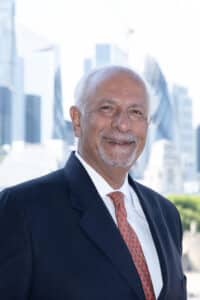
  • This will be a Promising Indian Century”

    Theresa Villiers


    I believe this will be an Indian century and if the UK is going to seize the opportunities that presents, we need to step up our engagement with India.


    In my former role as MP for Barnet, I was privileged to represent a significant British Indian community. This has left me with an enduring enthusiasm for India.


    The country has made phenomenal economic progress over recent years, with growth accelerated by reforms delivered by the Prime Minister Modi’s Government. It is already an economic superpower. It recently became the fifth largest economy in the world, and analysts predict it could overtake Germany and Japan to hit the third place spot by 2027.


    India is well-positioned to take advantage of the growing realisation in the West that over-dependence on China poses serious risks our prosperity and security. The Covid pandemic starkly demonstrated the pressing need to diversify global supply chains and reduce reliance on China. That makes India a more important partner than ever before.


    Our two countries clearly have much in common. English continues to be one of India’s most important official languages. The principle of rule of law is accepted, and the common law system in operation when India gained its independence remains in use.


    Despite these positive legacies of empire, we should not be naïve about the colonial era. In their near 200 year involvement with India, the British authorities frequently adopted approaches which would be unacceptable in the modern era. Tragedies such as the 1919 killings at Jallianwala Bagh, when soldiers opened fire on a crowd of unarmed protesters, still cause pain and grievance even today.


    But 77 years on from the departure of the British from India, the contested aspects of our shared past should not prevent us from capitalising on the huge amount that we have in common.


    We should also remember that influence has never been a one way street between our two countries. We may have left India a rail network and a legal system, but they gave us the numerals we use today, including the crucial concept of zero.


    Without Indian maths we might never have emerged from the Middle Ages in Europe. India’s massive cultural, mathematic and scientific influence on the world dates from as far back as the Greek and Roman era. There should be a much greater awareness of this, and I welcome William Dalrymple’s effort to put that right in his recent book “The Golden Road”.


    A great asset in enabling us to connect with the subcontinent is the Indian diaspora community. Often described as our ‘living bridge’, this community is one of the most successful minorities in Britain. Numbering just under two million according to the 2021 Census, it has strikingly high rates of professional qualifications and employment, and has made a huge contribution to the UK’s culture, economy and public services. Not only did the community give us our first non-white Prime Minister, the NHS would probably collapse without its British Indian doctors.


    British Indians have achieved an exemplary balance of integrating enthusiastically into UK society, whilst retaining a vibrant cultural and religious identity. This achievement is too often under-rated and overlooked.


    There are risks to be managed and hurdles to surmount when doing business in India. Despite the improvements delivered by “Modinomics”, bureaucratic processes can still be cumbersome.


    Even so, India-UK bilateral trade stood at £36.3 billion during the year 2022/23, an increase of 34.2% or £9.2 billion compared the previous year. Moreover, our universities have benefited from a rapid increase in overseas students from India.


    A striking example of the two countries working together successfully was the partnership between Oxford University, AstraZeneca, and Serum Institute of India, which delivered a Covid vaccine in record time.


    In conclusion, in a world which is becoming increasingly polarized and insecure, strengthening our ties with the planet’s biggest democracy should be a top foreign and trade policy priority.


    If the UK wants to benefit from Indian prospects and potential over the coming years we need our Government to devote real effort to this. If we don’t put in that work, other western countries will be only too happy to get ahead of us in the queue.


    We should deploy the networks of our Indian diaspora community as part of our outreach. We also need a pragmatic approach to visas, so our world class universities can continue to recruit talented Indian students.


    And we should actively promote India’s place at the top table of world affairs. Chairing the G20 summit in 2023 was a pivotal moment when India stepped up and assumed a new leadership role in relation to the Global South. As a democratic country that shares so many of our values, far better that India, not China, takes on that mantle.


    See also:


    Dinesh Dhamija: India’s 10 year reckoning

    India’s Legal Market Opening: A Game-Changer for UK Lawyers – Insights by Dinesh Dhamija


  • Dinesh Dhamija: Storm in a Beauty Spot

    Dinesh Dhamija

    It was hardly the worst provocation in the world: Indian Prime Minister Narendra Modi sitting in a chair on a sandy beach, saying how much he enjoyed his morning stroll. Yet within moments, it had sparked an international incident recalling the Bay of Pigs.

    To summarise: some Maldivian politicians took exception to Modi’s tourist snap and made rude comments about him and about Indians in general. The Maldives’ recently elected president, Mohamed Muizzu, suspended them. Indian celebrities pledged to boycott the Maldives and one major travel agent stopped booking trips to the archipelago. The chances are that the spat will blow over as quickly as a mid-afternoon tropical shower, but it illustrates a few interesting trends.

    The first is that Indian Ocean countries feel they need to push back against the country’s growing regional influence. For the Maldives, this means playing India off against China, with new president Muizzu openly campaigning on an anti-India ticket and agitating for greater independence from its huge northern neighbour. At the same time, since 25 per cent of the Maldives’ economy ($3 billion) relies upon tourism, and since Indians make up the largest part of that, he can’t afford to alienate their visitors. Hence slapping down his own party members.

    Modi, for his part, is an unashamed nationalist and will always promote Indian assets, including tourism destinations, whenever possible. And why not? The fact that the Lakshadweep islands receive just 10,000 visitors a year compared with 1.7 million to the Maldives makes the debate symbolic rather than economic. The overall Indian tourism industry is forecast to exceed $23 billion in 2024 and reach almost $35 billion within five years. With this level of growth, the Maldives can look forward to boom times for years to come, whether or not the Lakshadweep islands throw up a few five-star resorts. Indians venturing overseas enjoy Mauritius, Thailand and Dubai, but the Maldives is closer, more relaxing and the food is typically fantastic.

    The geopolitical trend is more serious and concerning, since China has become more belligerent, in the South China Sea and elsewhere, challenging India on its own borders and in relation to Pakistan. If President Muizzu were to invite the Chinese military into the Maldives, that could change the whole diplomatic balance of the Indian Ocean. Visitors to the Maldives are struck by the tranquillity and beauty of the islands, by the fabulous marine life which swirls beneath resort verandas and the gentle, welcoming nature of the local population. Somehow, these paradise-like islands also manage to harbour simmering tensions which occasionally erupt into violence, thanks to high unemployment and a widespread drugs culture. Hindu-Muslim divisions have widened in recent years, giving some Maldivians a reason to oppose Indian influence.


    Portraits of Dinesh Dhamija for Finito. 7.6.2023 Photographer Sam Pearce

    Dinesh Dhamija founded, built and sold online travel agency ebookers, before serving as a Member of the European Parliament. His latest book, The Indian Century, will be out soon.


  • Modi’s election momentum

    Dinesh Dhamija


    Almost a decade has passed since Narendra Modi became Indian Prime Minister in 2014, yet he is still setting records for electoral popularity. Barring a catastrophe, he appears certain to win next year’s general election for a third five-year term.

    Just a few days ago, his Bharatiya Janata Party (BJP) won three out of four contested state elections, taking both Rajasthan and Chhattisgarh in the north of India from Congress and maintaining hold of Madhya Pradesh for an unprecedented fifth term. Only the recently formed southern state of Telangala voted for Congress.

    The arithmetic of Modi’s dominance is striking. Prior to the recent votes, the BJP and its allies-controlled states representing 45 per cent of the Indian population. Now they control 16 out of 29 states, equal to 60 per cent of the population. No Congress chief minister has been re-elected since 2014.

    Although state and national votes are fought on different criteria, Modi enjoys such widespread support – and the BJP campaigned this time explicitly on his record – that he should sail through the ballot next May.

    What explains this lengthy run? One factor is Modi’s appeal to women. They turn out in huge numbers to vote for the BJP, thanks to policies such as the Swachh Bharat (‘clean India’) mission to improve sanitation. This has improved not only standards of hygiene across India but security for women and girls. A welfare system that delivers benefits directly to women, rather than via their husbands, is equally valued.

    These days, an increasing number of women vote for the BJP even when their husbands vote for Congress – a novel sign of independence.

    In the recent elections, Modi doubled down on policies designed to win the female vote, promising 5kg of free grain per month to 800 million people. Having boosted India’s economy, projected the country’s power overseas, his personal modesty and devotion to Hinduism is a potent asset for the BJP to which Congress appears to have no answer.

    Modi’s argument that a vote for BJP would give them a ‘double engine’ of local and national representation has persuaded many former Congress supporters to switch sides. When they see the bounties disbursed to Modi’s home city of Ahmadabad in Gujarat or his constituency in Varanasi, they want a piece of the same pie.

    Congress is at a loss to know where to go next. The latest results were “deeply shocking,” said a spokeswoman. The old aura of the Gandhi-Nehru dynasty has worn thin, after decades of economic under-performance.

    There remain plenty of challenges, not least chronic unemployment, and under-investment in India’s manufacturing sector. But on the basis of his record so far, I think Modi richly deserves to win another term.

    As I write in my latest book The Indian Century, thanks to Modi: “In international affairs, India is no longer shy or cowed by other nations. It speaks with confidence and authority and acts with the country’s own interests at heart.”

    Dinesh Dhamija founded, built and sold online travel agency ebookers, before serving as a Member of the European Parliament. His latest book, The Indian Century, will be out soon.