Patrick Crowder
When you think about Oxbridge education, grime music probably isn’t the first place your mind goes. Nevertheless, world famous rapper Stormzy looks right at home talking to Cambridge students and professors about his scholarship programme for black students. At six-foot-five, the 28-year-old towers over the crowd gathered outside the historic university buildings on a rare sunny day.
“Every time I see Cambridge students I always make it a proper point to let them know ‘you lot are sick!’, but because I’m a rapper, sometimes it can sound corny like ‘read your books guys, it’s cool to stay in school, kids!’ But genuinely, as someone who’s tried to be one of you lot, it’s f**king difficult! It was so difficult, so I know first-hand.”
As Stormzy chats with the students, it becomes clear just how much respect
he has for their achievements and what they represent. In his childhood Stormzy, then known as Michael Omari, was a high flyer in school, winning praise from his teachers and earning impressive marks. However, as he jokingly admits, he was also frequently “the one to throw a sandwich at someone’s head during assembly”.
“I’ve always considered myself to be very smart, not to be arrogant you know,” he explains. “For GCSEs I got all the grades, I got to A-levels and said ‘this is tricky’, got to A2 and it was like, pfft. School was a breeze, I smashed my GCSEs to pieces, loads of A*s, but when I went to college I was like ‘wow, this is what it’s like actually being a student’, and that transition was so difficult.”
Like many students who find school easy at a young age, Stormzy became bored of his education and did not develop proper study habits. He and the people around him always predicted that he would
earn a spot at one of the nation’s top universities, but he blames a lack of focus, complacency, and troublemaking on his failure to get a place.
“Every time I see Cambridge students I always
make it a proper point to let them know
‘you lot are sick!’”
“I did quite alright at A-levels, I got A, B, C, D, and at the time I was gutted but now looking back it’s like that’s not too bad. But you’ve got people here who’ve got A*, A*, A*, A*. I think when you get to that stage natural ability becomes second to focus, and commitment, and working hard, which is the difficult bit because you get someone like me who went through school naturally gifted, but then it’s like… that juice just doesn’t work here.”
Stormzy was expelled from Stanley Technical High School when he “put loads of chairs on another student” in what he described as “just banter”. The administration took a different view – and just like that, his shot at going to Cambridge was gone. Stormzy laughs as he explains how his early perceptions of what it takes to get into Cambridge led him to start the Stormzy Scholarship.
“When I was younger, the reason I thought I could come to Cambridge is because I just thought, ‘I’m smart.’ I didn’t think nothing else. Luckily, I wasn’t tainted by what I’d heard from people, like society and that. I didn’t even think about my criminal record!”
The Stormzy Scholarship
Stormzy has an admirable respect for learning – and so, while there’s criticism out there about him, it’s hard to escape this central fact about him. “As much as people think rappers, footballers, and celebrities are glorified, trust me – learning, education, and reading is a much more powerful and beneficial thing,” Stormzy has said.
It is no secret that the Oxbridge experience has traditionally been a white one, and a male one. Together with Stormzy, Cambridge University is trying to change that.
In 2018, Cambridge announced a partnership with Stormzy; the Stormzy Scholarship. In the beginning, the scholarship supported two black students a year, giving them full
tuition and a maintenance grant throughout their time at Cambridge. This year, 13 students have been given that opportunity. The high-profile programme aims to change the perception of Cambridge and make it clear that students from all backgrounds are welcome, and the evidence says that it’s working. Dubbed ‘the Stormzy effect’, Cambridge has seen a massive influx of black students. Between 2017 and 2020, Cambridge saw an over 50 per cent increase in the number of black students admitted to undergraduate courses, and even higher numbers of applications.
“If you’re academically brilliant,
don’t think that because you come from
a certain community that studying
at one of the highest education institutions
in the world isn’t possible.”
Jesse Panda is the President of the African and Caribbean Society (ACS) at Cambridge. He’s a first-year engineering student with some big ideas on how
to improve the black experience at Cambridge. We asked him about the so- called “Stormzy Effect”.
“I think that’s an accurate name. I think the support from someone as prominent
as Stormzy makes black students who want to come to Cambridge feel more welcome,” Panda explains. “They think, ‘Okay, there’s a system for me – maybe I won’t get the scholarship, but I can see that they’re trying to put a system in place to be more welcoming to black students.’”
The numbers show that Cambridge’s efforts to welcome black students seem to be working, but removing a centuries- long stigma is not easy. And, as Panda points out, even with record numbers of black students attending Cambridge, white students still far outnumber them.
“I think the main problem is removing that stigma – the perception that Cambridge is not a place for black students – and, to be frank, it’s still got a long way to go,” Panda continues. “I feel that I’m fortunate, but not as fortunate as I could be, if you see what I mean. I’m lucky to not be one out of 40 black students as it was in the past, but now I’m still only one out of 180 black students, whereas a white student will be one out of 2,000 or so.”
Removing that stigma is exactly what Stormzy has set out to do. “When we first launched the scholarship, I always said that I wanted it to serve as a reminder that the opportunity is there. If you’re academically brilliant, don’t think that because you come from a certain community that studying at one of the highest education institutions in the world isn’t possible,” Stormzy has said.
Jesse Panda and the other members of the ACS are doing their best through events and outreach programmes to show that Cambridge is a place which welcomes black students. However, due to the lack of diversity within both the university and the city itself, Panda says that he understands if some black students decide that it isn’t the place for them.
“We had an offer holiday through the ACS, so future students were able to see what the society was doing. It was more welcoming for them, because they could see that Cambridge is not just a space for white people, it’s also accommodating for black people as well,” Panda explains. “I think we need more opportunities like that because Cambridge is not very diverse. In the media, it is pushed that Cambridge
has no space for black people, when in reality there are spaces – but if someone doesn’t want to come here because of the imbalance, that would make sense to me.”
Despite this, Panda is optimistic about the future of black students at Cambridge, while also realising that there is much work to be done. He is enjoying his first year in the city, and
the ACS has provided a place for him to liaise with other black students and make a lasting change for the future of the university. While Panda’s experience has been a good one overall, the lack of diversity is still a large departure from his life in London.
“I think that’s always going to be there to be honest. As much as Cambridge
is taking steps in the right direction, when you look at Cambridge you still see a white environment. I haven’t been as intimidated as I thought I would be, because there are more black students than I thought there would be. But coming to Cambridge from London is still a big jump in terms of diversity.”
For Stormzy, the scholarship is a symbolic continuation of his own stalled academic journey and a way to provide an opportunity to students which he did not have himself.
“I actually look back at my school years and say that they’re the best years of my life,” Stormzy says. “I was reminded by my teachers that I was destined to study at one of the top universities if
I wanted to go down that path, but I diverted and ended up doing music so
it didn’t happen to me. But I felt like I was a rare case in the sense that I knew it was possible, which I feel like is not always the case. When students are young, academically brilliant, and they are getting the grades, they should know that’s an option.”
Grime and violence
Having secured a place as a music star known partly as a lyricist, Stormzy’s views have often been sought on education. On one occasion he responded to criticism of the message in his music in conversation with Charlamagne Tha God: “You say, ‘Let’s learn about Shakespeare’, but Shakespeare has stories of bloodbaths and murder, so I always say, ‘I am as positive as Shakespeare, I’m as negative as Shakespeare.’ Let’s get out Shakespeare stories right now and go through them one by one.”
Of course, these sort of remarks open Stormzy up to the observation that he has a long way to go before he can be said to display the nuance and poetry of the UK’s most famous writer, and some will raise eyebrows at him even making the comparison.
So that while Stormzy’s charity work is undeniably a force for good, it can be hard to reconcile this positive impact on young people with the negative impact which his lyrics are often said to have. Grime does not shy away from portraying life in underrepresented communities, which can include depictions of crime, violence, and sexism.
Katharine Birbalsingh CBE is an experienced educator who chairs the
Social Mobility Commission. She is also co-founder of Michaela Community School in Wembley, a free school which has been described as the strictest school in Britain. Birbalsingh takes issue with Stormzy’s influence because she sees his lyrics to be glorifying crime and sending young people down a wayward path.
“Yes, some love Stormzy and other drill, grime, rap etc. artists who are misogynistic, glorify violence, wear stab vests etc. They don’t care how it destroys the lives of boys in the inner city. They think it is cool. They even campaign to teach Stormzy over Mozart in schools,” Birbalsingh tweets.
She later posted screenshots of a conversation between herself and a prison officer who was commending her for “exposing Stormzy as a poor role model” and detailing the kinds of destructive media prisoners often identify with. Birbalsingh adds, “Those of you promoting Stormzy have no idea of the damage you do.
“You say, ‘Let’s learn about Shakespeare’,
but Shakespeare has stories of bloodbaths and murder,
so I always say, ‘I am as positive as Shakespeare.
I am as negative as Shakespeare”
It is worth remembering that grime is by no means the first genre of music accused of corrupting the younger generation, and it will not be the last. Even Baroque music was initially seen as an ungodly thing – a passing trend which was sure to die soon.
In the 1930s, the blues was seen as the musical root of corruption. This view of the genre was not helped by the barbaric attitudes towards race in America at the time, and the fact that it was usually performed by black people. Often slammed as needlessly violent, sexual, and profane, blues was “the Devil’s music” of the day. While accepted as a blues classic now, take the example of Robert Johnson’s .32-20 Blues:
‘F I send for my baby, and she don’t come
‘F I send for my baby, man, and she don’t come
All the doctors in Hot Springs sure can’t help her none
And if she gets unruly, thinks she don’t wan’ do
And if she gets unruly and thinks she don’t wan’ do
Take my .32-20, now, and cut her half in two
The .32-20 in question is, in this context, a powerful and then-feared handgun cartridge not dissimilar to today’s .44 magnum. So a song released in 1936 was named after a weapon and went on to describe the murder of a woman whose only crime is disobedience.
Much like in the blues tradition, grime is deeply rooted in the experiences of the artists who perform it. Stormzy has defended the violence of his lyrics on LBC, explaining that the connection between actual crime and speaking about crime is dubious at best.
“The reason why we speak about these things is that these are things which go on in our community. We’re just being social commentators,” Stormzy argues. “But it is such a far-fetched statement to say that grime music is the reason for the country’s knife crime epidemic – that is wild. How do you even get there?”
When asked if he is careful about what he says in his songs because of children listening, Stormzy makes it clear that he is aware and wary of his massive influence.
“Every time I write a lyric or make music, I have the responsibility and the duty to tell my own truths – whether they’re positive or negative,” The artist continues: “Secondly, now that I’ve progressed to a certain stage, I try to be more careful but I’m not going to put some censor on it because everything I talk about is true. It’s things I’ve done in the past, things my friends have done, or stuff that we were immersed in, so I have the responsibility to tell my own truth.”
Stormzy sees presenting a sanitised version of his life experiences bereft of uncomfortable, violent imagery as a dereliction of his duty as an artist. An artist’s duty is to tell the truth in an interesting way, and therefore some art must make the viewer want to look away. However, he now also wrestles with his duty as a public figure. Subjects which he once spoke about only to a relatively small audience of people who mostly shared his life experiences are now being broadcast to the nation. This, Stormzy says, is the root of the issue and could explain the backlash against violence in grime lyrics.
“Things like this are so easy for the public to have an opinion on. Like, ‘Oh my God, Stormzy does grime and he spoke about a gun, he spoke to a murderer!’ but our truth and where we come from is so different. I don’t even expect people to understand,” Stormzy says.
On the topic of sexism, Stormzy is somewhat of a trailblazer in terms of changing the way grime artists talk about women. In 2016, well before his Glastonbury performance, Stormzy held a Q&A at Oxford University. When called out on the genre’s troubling
lyrics about women, he appeared to have an epiphany on stage after initially attempting to defend himself.
“I’m sure a lot of MCs are derogatory towards females but we’re not as bad as the Americans. Me personally, I say the odd b-word or ‘slut’ or ‘sket’ – this sounds so bad man now I’m saying it,” Stormzy says, “I don’t know enough to give a proper comment cos I don’t want to say ‘we’re not that bad’ when we probably are. But, yeah, MCs stop cussing girls. I’ll have a word with the fellow grime massive.”
Stormzy felt great embarrassment when his mother asked him about some of his harsher lyrics towards women, which led him to take a step back and consider the message behind his music. Since he pledged to “have a word” with the grime community about sexism, he has stopped relying on the tired misogynistic tropes once typical of the genre.

Stormzy, by Mark Mattock with art direction by Hales Curtis, 2019
Portrait of the Artist
The portrait above of Stormzy gazing reflectively at the Banksy stab vest
which he famously wore at Glastonbury found a place in the Victorian Galleries at the National Portrait Gallery. I sat down with veteran photographer Mark Mattock, who made the image, to find out more about the process and what the piece means to him.
I meet the photographer at a Farringdon pub called The Eagle – “one of the first gastropubs in the 80s” according to Mattock himself. It was a fitting setting: early in his photography career Mattock took commercial photos of the food at that very same pub. Now, he returned to tell me about the difficulties and triumphs which went into creating the famous image. The first hurdle was scheduling, but Mattock says that his experience taught him not to be surprised by Stormzy’s late arrival.
“You have to be prepared for the situation you’re going into,” Mattock explains. “Stormzy was late, which I knew he would be, I knew he would come in at three in the afternoon, not ten o’clock in the morning.”
When Stormzy arrived and they began the photo shoot, realising the vision of the piece did not come easily. It wasn’t until Mattock sat down for a one-on-one with Stormzy that things began to come into focus.
“There were all the ideas that I was told, but I realised that they weren’t really coming from him. I remember on the day I could tell that he wanted to portray something, so it came down to just shooting and photographing him looking down at the stab vest, and I knew that every photo would look very nearly the same, but there was something subliminal he was looking for,” Mattock says. “There came a point where everyone was frustrated that it wasn’t happening. Stormzy and I sat down for a quick chat and he got
a piece of paper, drew a square and a simple illustration of him in that frame, and said ‘I want it to look like that’. Then we added the other elements, the Glastonbury vest, and everything else.”
After settling on a clearer direction, Mattock was able to bring in the elements which make the portrait so potent in its setting. Through classical imagery and elements of British cultural iconography, the portrait was transformed into a piece which almost subliminally causes the viewer to ask questions of history, race, empire, and royalty.
“The idea was that it would feel like a Renaissance painting. It began with having a Tuscan stormy sky in the back, and I worked a lot on that before it became the green background. And it’s almost a British racing green, so there are still subliminal elements to it,” Mattock says, “It looks Renaissance, but it’s also about the British green. The crown was added digitally, and I think it came out really well. It took a lot of tweaking to get all the exaggerations and nuances which make it look like a painting right. It’s not a single image, it’s a combination of five images.”
The final product took incredible skill in composition, vision, and digital manipulation. But for Mattock, the significance comes not from the process or the final image, but from its placement and the context surrounding it.
“I’m proud of it because of the National Portrait Gallery. It’s not about the work, it’s about the social statement being made, and that’s what I’m really proud to take part in. When I went to see it, it just became really obvious what we’d done here. It sits in a wing of the National Portrait Gallery of all the so-called greats of Britain. The only other Black person depicted in that whole wing of supposed British greats is Queen Victoria handing a Bible to a Kenyan noble. And you realise the
potency of the statement made – it wasn’t quite a brick thrown through the window, but it’s the whole language of it, and that’s what was really important.”
Stormzy says that it is “nothing but an honour” to have his portrait hung “in a gallery which exhibits so many incredible portraits of those from British history.” As a champion of black British culture, it should come as no surprise that Stormzy is happy to see the National Portrait Gallery representing a black artist.
“It’s not about the work,
it’s about the social statement being made,
and that’s what I’m really proud
to take part in.”
For the National Portrait Gallery, Stormzy’s portrait represents a shift towards a more contemporary approach to representing major figures in Britain’s history and culture. I spoke to Dr. Sarah Moulden, who is the curator of the Victorian Galleries, to learn more about the reasoning behind the decision.
“We were really interested in representing Stormzy in the gallery after his Glastonbury performance, and right before Heavy is the Head came out. When we were working with Atlantic records, there was a conversation about where it should go in the gallery, and we were quite clear that it should go in a historic gallery,” Moulden says, “We wanted to broker this interesting visual and conceptual conversation between new and old portraits, so we agreed that the most meaningful place to do that was the Victorian Galleries. Particularly, we wanted to place the portrait in the statesman’s gallery, which is mostly populated by white male Victorians. That juxtaposition provided visitors with a place to stop and think about the legacies of empire and colonialism, and the impact of people of colour on UK society.”

Stormzy portrait at the National Portrait Gallery, London
The painting of Queen Victoria and a Kenyan noble which Mattock referred to is titled “The Secret of England’s Greatness”. The now uncomfortable painting is not actually the only depiction of a Black person in the Victorian Galleries, but it is certainly the largest and most prominent. Moulden describes how, during his visit, Stormzy was drawn in by a different portrait of Croydon-born mixed-race composer Samuel Coleridge-Taylor.
“He’s such a humble person – a towering, but very humble person,
and it was so interesting to see him and his team flock to that portrait of Samuel Coleridge-Taylor. It shows that oftentimes it’s about seeing yourself in the galleries. Many visitors come through the door and say ‘I can’t see myself represented here’, and that’s what we’ve taken onboard,” Moulden says. “But seeing Stormzy and his team walk through the gallery and zero in on this one small portrait among a sea of stale, male, dead, white heads is just another example of seeing yourself in the gallery. Yes, we have gaps in our collection and we have to deal with that, but we can be clever about it, we can do interventions, and we can think about using different media as well.”
When the portrait went on display near the end of 2019, people flocked to see the new addition. Unfortunately, the NPG closed for the pandemic and began renovations, but visitors will be able to return in Summer of 2023.
Tear Him for his Bad Verses
Asked if he has a favourite line in his songs Stormzy doesn’t miss a beat when talking to The Fader: “My favourite line is: ‘All my young black kings rise up/ Man this is our year/ And my young black queens right there/ It’s been a long time coming I swear.’ [the lines come from his song ‘Cold’]. I just love the fact that I can say that on the tune, and it can resonate… with that one message it becomes bigger than me.”
An oft-quoted fun fact states that the word “rap” comes from the combination of the words “rhythm” and “poetry”, which is a nice, believable explanation. The actual etymology of the word most likely stems from the word “rapport” or “repartee”, with the “rap” we know today emerging from hip politically active circles in the 1960s, where it originally referred to quick-witted oration rather than music. No matter the term’s actual roots, perhaps “rhythm and poetry” is a good definition of rap, rather than an origin story. Since the earliest rap artists hit the scene, there has been a debate over whether the often witty, well-constructed lyrics can be considered poetry. I put this question to Todd Swift, former writer-in-residence at Pembroke College, Cambridge. His answer? Of course rap is poetry, and the debate should have been settled a long time ago.
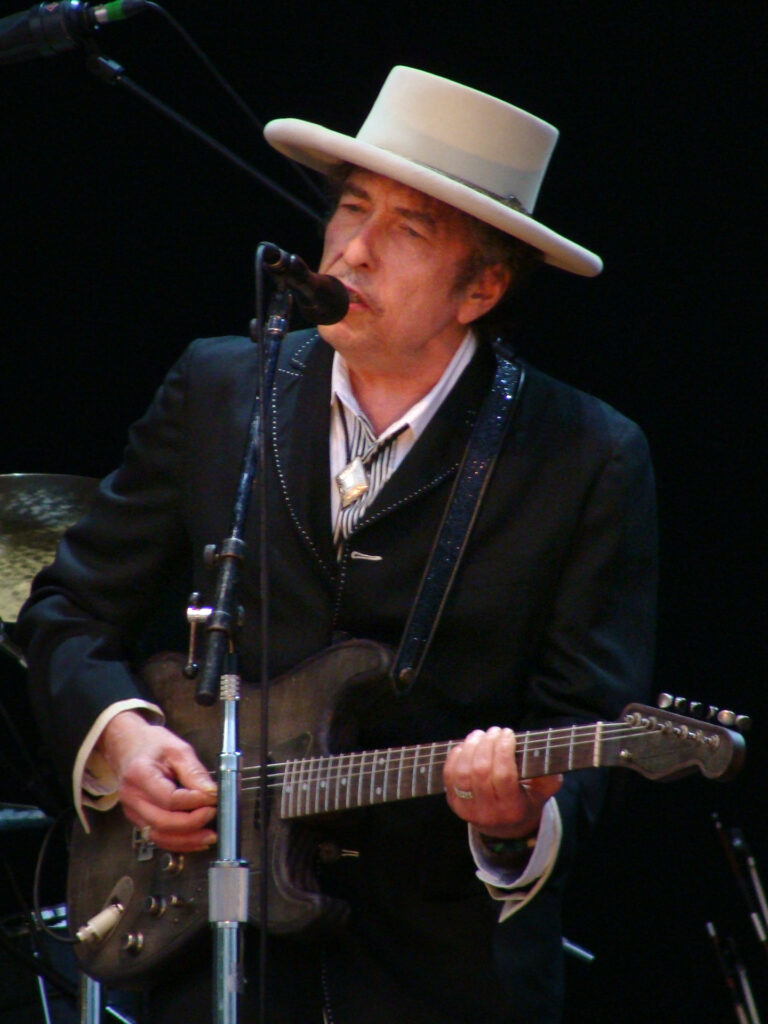
“The debate about whether or not song lyrics are ‘literature’ or ‘poetry’ – or not – should have been laid to rest after the Bob Dylan Nobel Prize, if not after the ubiquity of Leonard Cohen’s ‘Hallelujah’, which is sometimes voted the greatest song ever written. Of course, in this age of constant social media unrest, and very divided political and aesthetic sensibilities, such debates continue, though very few but the rudest or most obtuse of critics would now consider denying the power and style of rap lyrics, for instance.”
So will Stormzy be studied in the future? Swift is confident he will be: “By the standards of lyrics/poems currently taught in schools and universities, awarded prizes, published, anthologised, and performed and recorded, Stormzy
is a canonical author. Why wouldn’t he be?”
So there it is. Historical context shows that rap and song lyrics are absolutely poetry – even Shakespeare’s poems were often sung. We’ve established that Stormzy writes poetry, but does Swift think that it’s good poetry? I sent him the lyrics to “Crown” off of Stormzy’s latest album to find out. We’ve reprinted a brief selection here for context.
Amen, in Jesus’ name, oh yes I claim it
Any little bread that I make I have to break it
Bruddas wanna break me down, I can’t take it
I done a scholarship for the kids, they said it’s racist
That’s not anti-white, it’s pro-black
Hang me out to dry, I won’t crack…
Searchin’ every corner of my mind
Lookin’ for the answers I can’t find
I have my reasons and life has its lessons
I tried to be grateful and count all my blessings
But heavy is the head that wears the crown
“In this lyric/poem by Stormzy, a lot is at play – from the mid-line caesura, somewhat Beowulfish, establishing contracts and multiple options (‘any little bread that I make I have to break it’) – with the brilliant bread/break rhyme, and the many types of ambiguity, money, biblical prayer and ritual, comingling in the song’s Christian themes – the poem is a re-enactment of the manna from heaven versus Mammon from the earthly cities conflict which humans encounter. Or, the secular and the divine tussle,” Swift says.
Swift continues: “As he says: ‘two birds with one stone’ – the song will explore the challenges of his business and his spiritual paths, as a successful black man. The poem is rich in irony, actually: ‘Gotta stay around but make a comeback too’ is both a comment on the Jesus of the text, and the business model Stormzy is wrangling with.”
It is worth pointing out that not all scholars of poetry will agree with Swift’s analysis, however he makes it clear that there is a significant amount of substance within these lines. The complex biblical and literary allusions should prove to even the strongest of critics that grime can be about a lot more than drugs and violence. And, as Swift says, in the context of Stormzy’s music such criticism holds little meaning.
“Even Northrop Frye would have to admit, this single song has as many references and allusions as almost any canonical Judaeo-Christian poem by
John Donne, besides which it has the advantage of being post-colonial and post-canonical, re-saying and re-inscribing these images and themes for a contemporary, young, black audience. He is not anti-white, the text says, but ‘pro-black’,” Swift explains. “Of course, this commentary is rendered both archaic and unnecessary on arrival, given the lyrics are well-prepared for any white scholarly guff that may be thrown its way: ‘don’t comment on my culture, you ain’t qualified’. As the poem says: ‘Amen’.”

Stormzy performing on stage
Grime, Live!
For people who don’t follow grime music, Stormzy is perhaps most famous for his appearance on the Pyramid stage at Glastonbury 2019. While he had a significant following before, this was a major turning point in his career, and his performance is widely considered to be Glastonbury history. In hindsight this may seem ridiculous, but at the time Stormzy thought that he had completely blown it. “Onstage it was the worst thing ever. After about 20 minutes my sound blew and I couldn’t hear nothing… I came off stage bawling my eyes out,” Stormzy says on The Jonathan Ross Show. Thankfully, he was convinced by the recording of his performance, saying, “When I watched it I was like ‘Thank God! I can’t believe this actually went well!”
Grime has long been fraught with controversy, both over violence and drug references in lyrics, and over the genre’s potential sticking power. In 2018, the BBC had already published an article asking if grime was dead. For me and 1,999 people at the sold-out O2 Shepherd’s Bush Empire on the 11th of May, grime was alive and well.
I don’t have a background in grime music – in fact, I’m relatively unaware of the modern music scene compared to my friends and colleagues. You’re much more likely to find me at folk gigs and dad rock shows than at any
of the big festivals, but I can enjoy just about any kind of music if I’m exposed to it. That’s why, when researching this piece, I started listening to grime and liking what I heard. In fact, I came to the conclusion one Friday evening that I couldn’t honestly write about a genre without going to a show myself. Luckily, Tottenham-born rapper and grime giant Chip had a show booked for the following week.
“Most working musicians never got the capital
together to buy a house, so they don’t have any security.
That’s kind of the trade-off,
you live hand to mouth.”
The Shepherd’s Bush Empire is an ideal venue for bands and solo artists. It’s large enough to attract big names, but small enough that you don’t need binoculars to keep track of the performers. For Chip’s show, I opted for the standing tickets, which ended up being an excellent call. I must admit that I arrived with a little bit of trepidation. For the past week before the show I had been reading commentary about how violent of a genre grime is and the danger of the imagery, so I had no idea what to expect. I am happy to say that if Katharine Birbalsingh wanted proof that grime is not all about violence, she would have found it at this show.
I walked in at the opening time – 7:30 – in a show of punctuality and complete unawareness. Little did I know that Chip wouldn’t be coming on until 9:30, and the fact that I cruised through the line with ease didn’t tip me off either. However, I’m glad that I arrived early, because it gave me a chance to scope out the venue, take in the opening acts, and meet some fine folks. Contrary to the image which is often portrayed of grime music and its fans, everyone I met was extremely nice even though I looked very out of place. I dress like a 1970s dad who’s taking his kids camping in Yosemite most days, and that day was no exception. If there had been any meanspirited energy in the crowd, I would have been an easy target, but almost immediately I found myself making friends.
While looking around I saw busy lights, modern looking bars, but also charming turn-of-the-century scrollwork which reminded the audience that the place was built in 1903, and large analogue clocks with illuminated signs reading “TRANSMISSION” and “REHEARSAL” harkening back to the days when the venue was still in use as the BBC Television Theatre. But beyond the venue itself, the thing which struck me most was the amount of people required to put on the show. Everyone thinks of the musicians themselves, but becoming an artist is a far less secure way to make a living than the myriad other jobs available in live performance.
Daniel Maitland is a lifelong musician who both writes original music
and teaches students a number of instruments. His career may lead you to believe that he thinks music is a very good choice to make a living, but he takes a more realistic view when it comes to achieving great fame, or even earning decent money in the industry.
“I think there’s a danger. The truth about pursuing music is it will give you a more interesting life, and you’ll have more adventures than you would if you worked in the post office, and you’ll have a vocation which is a comfort when times are hard – but you almost certainly will be poor,” Maitland says, “Most working musicians never got the capital together to buy a house, so they don’t have any security. That’s kind of the trade-off, you live hand to mouth.”
Following one’s dreams is an admirable thing, but as Maitland describes, it is not practical to think that music is a surefire way to make a career, or to get out of poverty. From security and bar staff to lighting designers, sound engineers, and managers, there are many different people who create the atmosphere required for a stellar show. Live sound engineers have the extremely important job of making sure that the performer can actually be heard. They can make up to £40,000 a year with experience, so that’s a solid career choice for those with a passion for music and performance.
Events promoters who take charge of marketing for a gig can make around £30,000 a year, depending on venue, frequency of events, and experience. Booking agents often charge 10-20% commission for an event, so their salary completely depends on how big of a gig they’re booking for. Their job is to find people like DJ Ironik, who warmed up the crowd at Chip’s show.
DJ Ironik’s set got the crowd in a good mood, which didn’t take much considering reasonable drink prices and a strong feeling of anticipation in the air. The tunes were accompanied by a large screen displaying 90s bowling alley style graphics of CRT televisions, tumbling dice, flames, and at one point spinning igloos at a snowy arctic outpost.
When Chip took to the stage, the crowd went crazy – but that cheer was nowhere near as loud as when Chip announced that his parents were in the crowd, with good seats on the second level. He launched into his set, starting with some of his older songs, then moving on to selections from his new album “Snakes and Ladders”. He has an energetic stage presence, assisted by a mastery of the mic and a mix engineer who made it clear there was no lipsyncing going on. This was pure performance, and thanks to the work of everyone involved in the process, we were all loving it. What struck me most was the sense of community – not based on racial or social constructs but based purely on love of the music. Everyone was there to have a good time, and if you were there to have a good time too, then you were part of the furniture.

The Rags to Riches Myth
So how do artists like Chip and Stormzy make it to the top? These stories of rising from hardship to have a following on the world stage are inspiring, but is it practical, or even healthy, to tell young people that the same thing can happen to them?
To find out the connection between music, social mobility, and education, I also spoke with Lee Elliot Major OBE, who is the nation’s first Professor of Social Mobility at the University of Exeter. He is quick to warn that, as a rule, most people don’t ‘make it’ to the same level as people like Stormzy, and he stresses that more help is needed to make the music industry more accessible to people from disadvantaged backgrounds.
“Stormzy is a great exception to the rule, of course, and it’s interesting that he has kind of very publicly – generously, in some ways – committed to help people. It’s interesting that he’s chosen Cambridge for his scholarship. It’s great to try and help kids get into Cambridge, but arguably we need more support for young people to get into the music industry,” Major argues. “One of the dilemmas Stormzy will have, and a lot of artists suffer from this, is that the working-class credentials and background you have which made the songs authentic to begin with gets lost as you become successful. What do
you write about when you are suddenly rich and middle class, to some extent? You see this in many older artists, that’s part of the age, you’re just not as young and maybe in tune with some of the younger generations. But another big part of it is also your class, right? You’re just not experiencing the same real- world experiences that other ‘normal’ people will be experiencing. So it’ll be interesting to see how Stormzy evolves, and whether he retains that authenticity that he currently has.”
As artists gain fame, they often can become detached from their audiences simply because their lives begin to bear no resemblance to the everyday struggles which once provided inspiration.
For Stormzy, fame has shown him a different side of life – a side full of people incredulous at his success due to race. “You can tell they think I’m not supposed to be here,” Stormzy has said, referring to his experiences at high end establishments. “I’m going to live where I live, I’m going to have my hood up, wear all black, and I’m going to be in a first class lounge, or in this mad restaurant, or in this posh hotel and be like, ‘Oh, you didn’t think young black people could be here?’”
Whether Stormzy is going down the path of disconnection with his audience is yet to be seen, but for now, Major argues that he has more influence over young people than top politicians. I showed him these lyrics from the song “Crown” off Stormzy’s album H.I.T.H.
All these fancy ties and gold plaques
Never had no silver spoons in our mouths, we sold (crack),
Don’t comment on my culture, you ain’t qualified
Stab us in the back and then apologise If you knew my story you’d be horrified The irony of trappin’ on a Boris bike
Major replies: “I would argue that one of the main problems with low social mobility is that we have increasingly detached elites, both in the US and the UK. And that’s not a political point. Whoever the political leaders are, because they come from quite
privileged backgrounds, they really
do not understand where some of the young working-class people are coming from, so those sort of lyrics speak to that,” Major continues. “And Stormzy has more power, in many ways, in terms of influencing the young generation than politicians could ever have, because they’re just kind of out of touch with normal people. There’s two dimensions to this – one is that they come from very different social classes, but there’s also a generational divide as well which I think is very strong now.”
“Never had no silver spoons in our mouths,
we sold (crack).”
Young people often take inspiration from celebrities, and that’s not always a bad thing. We frequently hear “follow your dreams” from people who actually mean “follow your dreams but limit your expectations”. The issue is one of scale. Yes, some people will go from disadvantaged backgrounds to becoming superstars, and there’s no reason not to try and make it big. However, programmes designed to increase social mobility must be further reaching than that in order to help a larger number
of people. Major argues that Stormzy represents a type of success which only happens to a select few and offers some alternatives to affect more widespread change.
“The problem with this is that it’s almost the American Dream version of social mobility, which is very powerful, but very dangerous. And the reason for this is that only very few people do make that incredible journey. You get the same thing with elite sports, when we see the premiership players, some of whom come from working class backgrounds, who are earning incredible amounts. Now, that’s a combination of talent,
work, luck, etc. and that certainly is not the case for everyone. So I worry about narratives of social mobility that are very narrow around that kind of rags to riches transition,” Major says. “Cambridge is an incredibly prestigious, elite institution. It’s a wonderful place, but very few people go there, right? If we really want to improve social mobility more generally, then we have to try and help those kids who don’t go to university. So we’re talking about apprenticeships, we’re talking about local jobs, and those sorts of transitions are really important in the social mobility picture.”
Former Secretary of State for Education Nicky Morgan believes that the key to promoting social mobility is starting from a young age. With a focus on a return to pre-pandemic norms in the classroom and an increase of degree-level apprenticeships, Morgan says that social mobility can be greatly increased.
“Education is one of the greatest engines of social mobility and there are still too many students of all ages not getting that opportunity to change their lives through a great education,” Morgan says, “Ensuring that higher education is clearly open to everyone, including broadening the diversity at our top universities is important – but with the growth of apprenticeships this is becoming more finely balanced, and the opportunity to do degree-level apprenticeships needs to be more widely known. Post-pandemic, ensuring that the focus on high standards at schools and face to face teaching at universities are restored as quickly as possible are vital to ensuring greater social mobility.”
The Stormzy Scholarship is certainly seeking to achieve the goal of “ensuring that higher education is clearly open to everyone”, and at Cambridge the scholarship is driving a change. However, the strides being made in educational racial equality by Stormzy’s scholarship are currently only present at the highest level of university education. Based on Morgan and Major’s advice, perhaps the best way for Stormzy to increase social mobility would be to sponsor degree-level apprenticeships and raise money for early education in underfunded schools, alongside his high-profile Cambridge project.

Stormzy at Ronnie Scott’s for the MOBO Awards nominations, 2015
The question of Stormzy is a complex one. On the one hand, there’s no
doubt that in reflecting his own life experiences and those of the people around him Stormzy has produced lyrics which are at times unsettling. For Birbalsingh, the messages found in some of Stormzy’s lyrics are enough to warrant a full condemnation of the artist. But this is more than offset by what he has achieved at Cambridge, as shown by my conversation with Panda. Yes, the Oxbridge experience has a long way to go before it can be hailed as truly all-inclusive, but it is clear that Stormzy is helping to end the stigma surrounding elite higher education institutions by showing black students that there are systems in place to help them in what could be an uncomfortable environment.
Part of what makes the image at the National Portrait Gallery so interesting is that Stormzy isn’t a straightforward figure. His influence on British culture is undeniable, which is why the National Portrait Gallery chose to include Mattock’s striking portrait. Mattock and Moulden’s pride in being a part of the changing direction of the National Portrait Gallery shows that the portrait of Stormzy is not only evidence of his cultural influence but is in fact yet another example of his power to shift longstanding norms.
“It is clear that grime is both art and poetry.”
Todd Swift has assuaged any doubts I may have had about the lyrics. While not everyone will agree with the Shakespeare comparison, it is clear that grime is both art and poetry, both of which have always taken on new forms over the years. But Stormzy’s story also reminds us that we have a long way to go in terms of social mobility in this country, as both Major and Morgan explain. Without programmes which help a wide range of people from disadvantaged backgrounds, social mobility will continue to stagnate, and the rags-to-riches elevation of just a lucky few will not solve the problem. To this writer, Stormzy is an artist who is trying in his own way to use his platform for good. He recognises the weight of his role, he’s attempting to correct past mistakes, and he’s making commitments to help young people for the future. For someone who became a household name at 23, Stormzy is handling the pressures of his success far more gracefully than most.
Nobody should think that a career in music is easily achieved. On the other hand there is no doubt that Stormzy is an example of what is possible with talent, hard work, and yes, a little luck.
Read Stuart Thomson’s take on social mobility in the UK here