Tag: Mentorship

  • Fatima Whitbread: sport is “psychological warfare”

    Fatima Whitbread

    Looking back I was prepared to do whatever I could to gain an edge.

    First of all, you are what you eat. For me, when I was a competing athlete I was constantly working hard in the gym – three times a day training. I wasn’t that tall: I’m five foot three and most of my competitors were six foot. The important thing was I needed to be sure I was technically very sound.

    I realised my diet had to be right – I was losing weight from the training and needed to maintain a certain weight. In the build-up to my being World Champion I was on a diet of about 8,000 calories a day. That’s a huge amount because on average women consume 3000 calories a day – but I was burning it all off. The diet I took was properly designed for me to have lots of iron: so I took in lots of offal, and had a special drink with raw eggs, banana and milk in a blender. I made sure it was all protein-based.

    It was basically body-building and sculpting: it was about eating the right kinds of food – and then in training making sure you’re the right shape to maximise performance.

    Back then we didn’t have the tools we have now. VHS was the main recorder. I would record everything I saw with regard to technique. I could analyse the footage mechanically and technically as to the different shapes and sizes of the different athletes I was competing against. I could observe their speed and velocity, their leg movement, the position of the hand, and the position javelin. It all varies from athlete to athlete.

    For me it was all about learning in that level of detail, and I suppose I was doing it way before my time. I really did my homework. When I’m passionate, I don’t hold back.

    I always saw the javelin as a weapon of war: kill or be killed. When you step into the arena, you’re going back to Greek ancient times. The need to step on the runway was about claiming my territory: if I didn’t claim that and own that, then why was I there? The idea was to be able to know everything you needed to know and have a close affinity – a sort of love affair – with your javelin. It was a passion: to become the best in the world, you need to know everything that can be known about javelin-throwing and the disciplines you engage with.

    I started as a pentathlete in the early days and trained very hard. I would sprint with Daley Thompson: as a young man, he was incredibly dedicated to his work. My mum was a javelin coach. I also did sprint training with our then golden girl Donna Hartley. It was a fantastic era for track and field, I suppose partly because it was a period when there was a lot of trouble with football and hooliganism. We became the number one sport.

    It’s mind over matter. 90 per cent of the mind application is based on preparation and training. As an athlete I understood there are two championships going on: with yourself and in the arena himself. Rory McIlroy at the 2024 US Open when he missed that crucial putt, was battling with himself. I could always sense what was going on in the arena in terms of psychological warfare: I never let that distract me. When you’re doing sport at that level you have to have tunnel vision to keep your focus on what you’re doing.

    You’ve got six throws and every throw counts. I taught myself the skill of being able to perform as well on my last throw as on my first: I might often win a championship on my last throw. Anyone can do an amazing throw – and suddenly perform out of your skin.

    The press might tell you your number one and should win. But if you think like this, and start to wonder if you’re going to get gold, silver or bronze, you’re in the wrong mindset.

    There’s always great expectation – from friends and family, from yourself and from the public. It’s fairly easy at the start of your career when nobody expects anything of you. Then the expectation and the pressure starts to creep in. The only way to cope with that is mind application and doing your preparation and being able to fall upon your experience.


    what is fatima whitbread doing now
    C9MJNM FATIMA WHITBREAD 2012 NATIONAL TELEVISION AWARDS O2 ARENA LONDON ENGLAND 25 January 2012


    For information about Fatima’s work in the child social care space go to:  https://www.fatimascampaign.com/


  • Finito Bursary Candidate Nick Hennigan: “I Want to Do My Family Proud”

    Christopher Jackson meets Finito bursary candidate, a young assistant to a private banker, and, explains why he’s destined for great things


    I have sometimes observed that precocity creates its own challenges: being brilliant young creates expectation and pressure. In fact, it turns out that ability without the right temperament places even greater pressure on ability itself. It’s rare for the two to go hand-in-hand because the one can sometimes clash with the other. To be very talented is usually to be told you’re talented: not everyone keeps a level head.

    Nick Hennigan, 23, who recently took part in the Finito bursary scheme, has had by any measure a difficult few years. His father took his own life at the start of the pandemic, leading to unthinkable grief and shock. But to talk to him you wouldn’t know it – and in fact he only mentions it towards the end of our conversation. “As much as it is a completely negative impact on anyone’s life – within my family it was a huge blow to us all – I now see myself as my dad’s legacy. I want to go out there and do him proud and do the rest of my family proud,” he will say.

    What was his early life like? “I was born in Aberdeen and I’m very proud of my Scottish heritage. I went to a state comprehensive and after finishing secondary school, I went to join EY on a business apprenticeship, which allows young school age children to join a Big Four firm, and train up as a chartered accountant.”

    The experience was formative but in ways Hennigan might not have been expecting: it showed him vividly what he didn’t want to do. “I was in the audit division, and I didn’t find it personally or professionally stimulating,” he says simply.

    But from there, Hennigan went on to complete his university degree in international business management at the Aberdeen Business School, before heading off to study in Canada’s Mount Royal University . “That was a fantastic experience,” he tells me. “All of this has helped shape me into looking towards a career within a company that has international presence. I suppose it gave me a deep appreciation for multi-national business. ”

    Hennigan has always had a broad range of interests, and was strong at school across the curriculum. “I always did quite well in maths subjects but then I also did biology and chemistry, as well as English and geography. I like to look at things intellectually and enjoy studying and working towards qualifications.  I would say I am numerate but I am also good with my language and the written word.”

    He says this without any air of boasting – he is stating the facts. Has this range of aptitudes made it harder for him to choose a career path? “That was the observation some of the Finito mentors would actually make once I joined the scheme,” he recalls. “They said because I excelled in different areas of business and subject areas, it was difficult to rule things out.”

    But Hennigan was already standing out from the crowd and an example of this is his excellent thesis ‘Leading into the post-Covid 19 era’. This astonishingly mature piece of work has a foreword by ITV’s Chief Executive Officer Carolyn McCall DBE, who writes in the paper: “Nick’s research is considered and thought-provoking and very much chimes with what I have long believed, that personal values and purpose play a pivotal role in the type of leader an individual will become.”

    This wasn’t the only figure that Hennigan interviewed for the paper: “I would love to one day – hopefully – become a CEO – so that’s why I chose that topic,” Hennigan recalls. “I also interviewed EasyJet’s Johan Lundgren; as well as Simon Roberts of Sainsbury’s, and Paul MacDonald, the CEO of Avon Protection, and Mark Darkworth of Schroders Personal Wealth.”

    I cannot imagine the result was ever in doubt, but Hennigan secured a first for his efforts. It is worth noting that Hennigan achieved all this despite scepticism about the ambition of his approach: “My supervisor said to me it wouldn’t be possible when I proposed it and that the CEOs wouldn’t give me the time of day. This spurred me on to go and prove her wrong: that’s part of my DNA – to overcome challenges.”

    So how did Hennigan come into contact with Finito? “It happened early in 2023,” he recalls. “I have recently joined the shadow board of UMBRA International Group. Through my work there, I got to know the CEO Kate Bright well and she very kindly introduced me to Ronel Lehmann, the CEO of Finito Education.”

    Hennigan’s main point of contact under the Bursary scheme was Claire Messer. “We got on really well, and she was great at preparing me for interviews – as was Merrill Powell who coached me in presentation, and made sure I put each point across succinctly and impactfully. Amanda Brown did my LinkedIn training and Sam Pearce did my headshots. But through all this, I had Ronel who was really my main mentor.”

    So what was Lehmann’s advice? “I had breakfast with him at a time when I had just had a few rejections and close calls, where I had got down to the final stages. Ronel told me I needed to think of three areas. So we narrowed it down to PR and recruitment – but we also spoke about private banking.”

    Hennigan was initially sceptical about this third possibility: “Given my experience with EY, I was wary about going back into finance, but private banking is very different to audit, even though it’s also underpinned by numbers. It also chimed as I have always said I want to be external-facing and deal with clients.”

    Once this strategy was deemed a major possibility, the stars began to align. Hennigan recalls: “Luckily enough, Kate Bright knows the Head of Marketing at a private bank in London and Ronel knew one of the MDs. I was able to meet with both of them on the same day back-to-back.

    The meetings weren’t for a particular role but I was able to explain my situation and set out my stall. They followed up afterwards by saying there was a potential role with us in a different team as an assistant banker. Again, I had no experience in banking and I made them very aware of that but they didn’t seem to think that was a problem: I got the job.”

    Those are the four words we most enjoy hearing at Finito. When I speak to Hennigan, he has only been in position for two and a half weeks, but his early impressions prove to be overwhelmingly positive: “I am enjoying the set-up that I’ve got,” he tells me. “It’s very fast-paced and I have got a lot to learn. It’s going to be a steep but positive learning curve.

    The good thing is I am fully supported by not only the banker that I am assisting but also the team and the other assistants that we have in the bank within the team. I am in the front office and I think it’s an amazing first job. I am not going to take it for granted. I am going to work hard.”

    Of course, it is a tragedy that Hennigan’s father isn’t around to see what a remarkable young man his son is – and is still becoming. His will always be one of those stories which, despite his remarkable nature, will contain the wish that events had been otherwise. Never once in our conversation do I see any trace of the self-pity others might feel and which would be perfectly understandable.

    Hennigan says: “I suppose it’s formed my outlook on life. It’s through adversity that you end up going on and doing great things. Finito opens doors and it encourages you – but it is down to the candidates themselves to do well.  If the candidate doesn’t want to engage in the process then they are not going to get out much. I think there is maybe a misconception with Finito: people say they will just place you into a job. No, they will support you to get yourself into that job.”

    That’s something that mentors observe on a daily basis – it’s not often, however, that a mentee speaks so eloquently about the experience of the mentor. What I think Hennigan has therefore – and I expect it to catapult him in time to the front ranks of British and maybe global business – is imaginative empathy. It is an ability to place himself in the shoes of others, and yet to retain his own remarkable steel and determination at the same time. It is the mark of someone already functioning at an extremely high level. It will do no harm that he is charming, and equally skilled at numerical and linguistic tasks.

    Usually, in an article like this, we like to thank the Bursary supporters who have helped the candidate in question. In this case, the donor has asked to remain anonymous, but has been happy to offer us these thoughts: “All it took was one brief telephone call from Ronel and I felt compelled to help. He was so emphatic in his enthusiasm for a newly presented applicant in whom he saw enormous potential but who had no possibility of funding.

    Ronel gave me the basic details and story, but was careful not to reveal too much. I did not wish for anything in return, simply the expectation of hearing some good news in due course. And indeed there has been. Nick will no doubt have a bright future and successful career, made possible by Finito’s mentoring and guidance. Maybe one serendipitous telephone call really has changed a young life.”

    This generosity is an example to us all, and Hennigan expresses to me the extent of his gratitude: “This person changed my life and I hope one day I get to meet and thank this person.” The donor should also know that to have supported Hennigan is to have backed an obvious winner. I would say: “Watch this space” – but my suspicion is you won’t have to look too hard to see the impact Hennigan will go on to make.

  • Class Dismissed: Jimmy Choo

    World-renowned fashion designer Jimmy Choo came to London in the late eighties from his home in Malaysia. From his first workshop in the East End, Choo created a shoe brand which would be worn by countless celebrities including Princess Diana. Now, he has shifted focus to the next generation of fashion designers through his JCA London Fashion Academy in Hackney. There, students learn the ins and outs of the fashion world with a heavy emphasis on entrepreneurship. He now shares his journey with Finito World readers.


    How did you get your start in fashion?

    I guess it was meant to be I was born into a shoe-maker family, and that influenced my career path: I decided to follow in  Since I was young, I knew I wanted to be a designer, so I moved to London to study at the Cordwainers Technical College and three years later, in the early 80s, I opened my first shop.


    Do you have a favourite design?


    I feel especially fond of the ‘Fetto’, which is a classic sling-back style that Princess Diana wore in the 90s. She wore her first pair to a performance of Swan Lake at the Royal Albert Hall in June 1997, just a few months before her death.


    What was Diana like to work with?


    She was always very kind to me – she cared so much about other people. That’s the sign of an admirable person – when they’re good to people when you don’t have to be.

    How did your father help start your journey with shoes?


    I was immersed in the shoe-making process from a young age, and it came naturally to me to take up my father’s passion. He taught me how to make a shoe and guided me to create my first pair when I was 11, which I know seems young but I was impatient to get started well before then. You have to remember that this was before Internet and mobile phones. We did everything with our hands. I’ve been doing it one way or another ever since. Now at the JCA London Fashion Academy, I want to give back a little of what I’ve learned.

    Have you had any other mentors?


    My father was my most important mentor, although I have been able to work with some incredible designers over the years who have supported me, and back in the 80s, I was awarded a grant and mentorship from the Prince’s Trust which was very valuable to me – and that’s why I’ve decided to return now to mentoring. I know its value, because I’ve experienced it for myself.


    What advice would you give to a young person looking to enter the fashion world today?


    My biggest piece of advice would be to never give up: you’ve got to learn how to tackle adversity because that’s definitely coming to you. We all have so much potential to create something extraordinary with our talents – and it’s that knowledge which should


    So the future’s bright?


    It is if you decide to pursue your vision. If you do that, then there will always be a great future ahead: but you have to take the plunge and decide to be true to yourself, and find the ideas that really belong to you.


    For more information go to: https://www.jca.ac.uk/


  • Sheridan Mangal: Inspiring mentorship – a Q & A

    Finito World meets Sheridan Mangal, a mentor with a particular line in career change mentoring


    Can you talk a bit about your upbringing and early career choices and how they shaped your work as a mentor for Finito?

    Born in 1961, I am what many would refer to as a baby-boomer, but also first Uk-born from the ‘Windrush’ generation. Raised in East London, progressing through primary and secondary school was a bumpy ride, but was equally the origin of my developing interests and ambitions. Once I realised that being a striker for Chelsea FC required some football talent, I turned my attention elsewhere…the City.

    So how did you make your way in your chosen field?


    After doing well at Brooke House Secondary, the intent of a temporary summer job prior to sixth form education turned into a permanent career decision. A City opportunity arose and at 16 years wrapped in sharp suit, my 16 year career at the London Stock Exchange began. This presented many challenges regarding steep learning curves, but also the unpleasant social ills of the time that crept into the workplace. After some years and despite the work experience gained, It is here that I always felt few steps behind those entering via the graduate intake.

    Notwithstanding the lack of confidence, I pressed on, supported by great parents. Effectively, they were my first mentors. As my career progressed, the challenges persisted, but maturity, experience and simultaneous education enabled a response mechanism and positioned me as source of advice for others following.

    This triggered my interest in mentoring. After many years of alliances with youth charities, schools and colleges, often deploying self-designed initiatives, my interest has never waned. Hence, my involvement with Finito, where I can draw on many personal and professional experiences that equate with entry-level candidates as they build and apply their career plans.


    Did you have a mentor growing up or early on in your working life?

    Apart from parental guidance, I had no mentor as such. Indeed the concept of mentorship was unfamiliar and unrefined compared to today. I often say my professional navigation of financial markets through the 70s, 80s and 90s was predominantly by combat rather than design: responding to ad-hoc opportunities as opposed to proactively seeking the next logical step.

    Against this backdrop. I can certainly appreciate the benefits of guidance from someone who has already travelled my journey. It would have saved some considerable pain, particularly at the junctures of indecision and plain fear. The anxiety was debilitating. Hence, I am here today with Finito, offering my stories and knowledge that I trust can be useful to those who are apprehensive, lacking direction or facing obstacles that appear insurmountable.


    You’ve worked for a long time in the financial and hedge fund sectors. What is it you think that mentees ought most to know about those sectors?

    Understanding the dynamics of the securities industry is crucial. Heavily regulated and often driven on market sentiment, the financial markets space is broad and deep, with a variety of instruments and strategies for those of low to high risk appetites.

    As an entrant, my advice would be to know the target sector’s current and emerging states and trends. This includes the leaders and their respective strengths, the established and rising boutiques and the general issues the chosen sector is facing.

    This is particularly so with asset management. The adoption of AI and algorithmic strategies is pervasive as is the growth in passive investing. Regarding employment, candidates must be aligned with entry programmes including ‘off-cycle’ routes.

    Mentees should also ensure applications focus on value offered at the earliest opportunity, from the perspective of the employer. Furthermore, the objective shouldn’t be for a particular role, but to just get into the industry or sector and navigate to where your developing strengths are needed.


    It’s astonishing to see your passion for the law come through on your CV. What is it that drives your passion for the law and your desire to keep on learning?

    Further to my active interest in financial markets, I have always held a curiosity for the legal implications and general application of the law.

    Quite late in my career, I decided to take this further and embark on my legal qualifications while working, culminating in my bar exams during Covid. There were several drivers; my increasing interest in commercial law, unpicking an issue with legal reasoning and the gravitas of becoming a lawyer. More importantly, proving to myself that I could actually do it was the strongest motivation.

    The distillation of a problem into a legal case, concurs with my pattern of detailed thinking regarding outcomes, the inherent dependencies and viable strategies. Indeed I am always curious about a variety of subjects, incidents and histories, some exciting and astonishing, many quite dull, but revealing.

    Nonetheless, I have a constant thirst for learning, teaching and testing myself, albeit through new formidable social and business challenges ….or simply the latest FT cryptic crossword while on the 0659 from Eastbourne to Victoria.


    You’ve been doing a lot of mentoring for Finito. What’s the most common mistake you’re seeing when it comes to young people when they choose their career paths and start out on their career journeys?

    I have been mentoring for over 20 years, recently with Finito. Socially, I remain active volunteering within the context of addressing youths within or vulnerable to negative lifestyles.

    Concurrently, due to my varied experience and knowledge areas I am seen as a source for career advice. Within both settings however, there are similarities. Mentees often are unaware of their real value to an employer. Moreover, they know their abilities, but cannot translate them into something compelling for an employer. This shortfall often arises when networking and when writing to recruiters.

    For example, the narrative is often, “I am good at workflow mapping as seen on project x”. This is incomplete. There needs to be the outcome in terms of “and this helped the company to achieve a faster compliance process”. Another mistake is goal-setting that tends to be too narrow.

    Despite the submission of numerous applications, the candidates perceived success is the ideal one or two employers and/or seeking a post that is far too sophisticated for an entry-level candidate. This can dilute the positives and motivation for alternatives.


    Career change mentoring is a huge growth area for Finito at the moment. What’s your sense on why that is, and what sorts of trends are you typically seeing in this area?

    I look at my experience, having traversed financial markets, teaching/lecturing and the law. Also, the voluntary aspects, including mentorship. Many changes in focus, that draw on different skillsets.

    The bridges I have had to cross have not always been a choice, and the mix of excitement and trepidation was often difficult to grasp and manage guidance at these moments is invaluable.

    In my view, career change mentoring is a growing need due to the pace at which industries are changing. This stems from changing work patterns, the abundance of AI architectures and the shift to platform based solutions.

    The heavy reliance on social and professional digital media, with the near constant stream of opportunities being delivered to subscribers, also raises awareness of alternatives outside the current environment.

    Many candidates, young and more experienced are attuned to a better work-life balance and as such, are less hesitant to take a leap of faith and restart with something new. This is especially so for those wanting to start their own enterprise.

    Naturally, we also have to accept, sometimes we make the wrong decision or it just doesn’t work out. Hence, change is necessary.

    Who are your heroes who have most inspired you in your career?

    These come from several perspectives. Generally I would call on historical figures who despite immense social challenges, took the helm and instigated positive change.

    This served as a character building platform for fearlessness and pushing through. Career-wise, there were those with similar backgrounds to mine, that blazed a trail; footballer Viv Anderson playing for England in 1978 (one year after I began my City career), Baroness Patricia Scotland becoming Attorney General in 2007. Also Sir Damon Buffini in the 1990s, as a major force in Private Equity.

    The underlying inspiration from these figures was collectively, their talent, drive and belief in achieving success.

    As a child (when I was allowed to stay up late!), I was amazed by Sir Patrick Moore’s knowledge of the cosmos. He spurred my interest and explained things that were literally ‘out of this world’, many topics of which I have yet to grasp. His ‘Sky at Night’ TV program was my introduction to independent learning i.e. not connected with the school curriculum, where I would read and enquire. Since then I have remained constant learner.

    What single thing do you most wish you’d known at the start of your working life?

    A career does not always progress in an ordered, linear fashion. Hence, I have to refer to my cub scout days here and their mantra of “Be prepared”. This infers the need to plan, become aware, to investigate and know the prevailing narrative.

    Rather than just reacting or more accurately, panicking when opportunities come knocking, concentrate on being ready to act and assist. The journey may start, but know that the destination could change, many times.

    My time at the Stock Exchange entailed a variety of unrelated posts, successful and failed projects, plus the interaction with all types of personalities. Thereafter, more of the same, including redundancy, international assignments and freelance consulting.

    A career-cocktail with no prevailing recipe. If I could speak to my younger self, I may indeed champion many cliches; “Think like there is no box”, “Know your value”, etc. etc.

    Essentially, my advice would be to expect the unexpected from your preferred industry or alternative, but be ready and resilient through preparation. Further. encourage creativity and have the requisite knowledge and skills ready for deployment.


    Enjoyed this article? See our other mentor interviews:


    Meet the Mentor: Rara Plumptre, A Journey of Resilience and Kindness


    Tom Pauk: Meet the Inspirational Mentor


  • Exclusive: How Stephen Fry went from Comedian to the Nation’s Mentor


    Christopher Jackson


    Growing up is necessarily a provincial experience. It has to be: such a small proportion of the world is presented to us at that time. As a result, something like the following seems to happen: we come into the realisation gradually that our family’s experience of life, while it might be informative in numerous respects, also has to be a sort of red herring: we are not them and are not meant to be. Instead our obligation is to grow in some new direction in order to be ourselves.

    What this all has to do with Stephen Fry I shall come onto in a moment. For now it is enough to say that predicament of youth can engender bafflement, even acute forms of anxiety. It was the novelist Sir Martin Amis who pointed out that nothing is so usual as what your father does for a living. He knew that from rich personal experience, his father being the equally famous novelist Sir Kingsley Amis. But many people have the opposite sense that one’s essential narrative might lie elsewhere. If this is one’s suspicion then what you badly need are clues as to what that might realistically consist of.

    For me, growing up in rural Surrey in a good-natured suburb of lawyers and accountants, the existence of a group of comedians in the 1980s came as thunderbolts. Looking back, I realise they were also signposts. The moment I saw Rowan Atkinson on our TV screens as Mr Bean, and saw my parents crying with laughter, and felt the first true belly laughs I’d known rushing through my being, I felt a new scope rush in.

    This must be a very common experience: here we are in our quotidian home, trying our best and seeking to be good; but out there, on the screen is another kind of life, which seems so hilarious, and so silly – and therefore somehow kind, and decidedly blessed. It is the world of celebrity and laughter. When we are young, it can seem like the most desirable thing in the world – full of high definition colour, and pitch perfect performance, a sort of paradise where outcome is in accordance with aim.

    Of course what happens at that time in our lives is a broad revelation – what Philip Larkin calls ‘the importance of elsewhere’.  It’s only later that you examine its particulars; how the sheer scale of possibilities relates to oneself. When I saw Rowan Atkinson terrified to dive off the top floor of a swimming board, I didn’t, as the world can now see, decide to be a slapstick comedian.

    But I think I did decide around that time not to be an accountant. This decision was further crystallised when I saw John Cleese in Fawlty Towers, the frenetic clockwork pace of that sitcom, causing an escalating delight. It was shored up further by other experiences: French and Saunders, Smith and Jones, and later Harry Enfield.

    But then there was another pair who spoke to me in a different way, and opened up, I now see, far larger possibilities: this was a pair of Cambridge graduates called Stephen Fry and Hugh Laurie. Hugh Laurie seemed to me then – and still does – just about the most gifted person on earth. He is funny. He is a brilliant actor (see especially House). He plays piano, sings, and plays guitar beautifully.

    Almost unnoticed, he is the best comic songwriter of his generation (‘I don’t care if people laugh/I’m in love with Steffi Graff’). His novel The Gun Seller is a delight. He was also responsible for A Bit of Fry and Laurie, my vote for the greatest sketch show of all time.

    It was Laurie who made me pick up guitar and piano, and later write music. But of the two it was Stephen Fry who really interested me, and who pointed a more definite way. In this country, the trajectory is told everywhere from the life of Shakespeare to the novels of Dickens: you’ve got to get from where you are to London. And it’s from London that I write this.

    What was it about Stephen Fry? It was partly because however troubled he was, he was so obviously kind – though over time I would find out that he could be rather hard on himself. But I don’t think it was primarily that. For me, it had all to do with his use of language, which came as the most wonderful and joyous surprise of my life. It seemed astonishing to me that people could speak like this, bequeath you a vocabulary as they made you laugh.

    It was a form of proclaiming of themselves before the world – they could cause laughter in you while making you more intelligent. If you were receptive to it, it had to form you; Fry and Laurie made you want to be them, because it looked like an awful lot of fun. But not just that, it made you feel that if you could enter a little into their world, that you would know some special set of secrets. That way maybe you could build a life – one that was somehow true to a high set of possibilities.

    These sorts of suspicions can only take you so far. Because pretty soon, life happens to you. As Mike Tyson beautifully put it: “Everybody has a plan until someone punches you in the face.” What happens is that life punches you in the face – and anyway, the world our heroes inhabits nowadays has so little to do with the one we end up entering. We specialise in the vanished paradise and the discarded Eden.
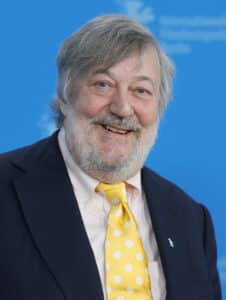
    Nevertheless my preparations for a world which would have gone by the time I got there were unusuall thorough. I think I must have been 11 or 12, when my younger brother Tim – who would have been nine or ten – began learning and performing Fry and Laurie sketches to family and friends and sometimes to perfect strangers in restaurants. One particular sketch which we performed entailed Stephen Fry as a pompous late night talkshow host, talking on and on in the most preposterous way: “Is our language too ironic to sustain Hitlerian styles?

    Would his language simply have run false in our ears?” My younger brother would play a baffled Hugh Laurie, who can’t understand what on earth the Stephen Fry character is saying. Amusingly, as I look back on it now, I had absolutely no idea what the language meant. This created a situation of considerable amusement when I performed before elderly relatives the following:


    Language is my mother, my brother, my father, my whore, my mistress , my niece, my check-out girl. Language is the dew on a fresh apple. Language is a creak on the stair. Language is a ray of light as you pluck from an old bookshelf, a half-forgotten book of erotic memoirs.


    I had no idea what any of it meant but I loved the music of it. It was the idea that language is a kind of music, that we can have fun with it, and play with it – and therefore, I suppose, that it has glorious function. It means that we can burst pomposity in this sketch, but of course, if you accept its use, then you must also admit that it can lead you onto new worlds. It can prise things open.

    As I continued my studies in Stephen Fry, I found in him an educator – indeed, a sort of a remote and unpaid mentor. The power of this mentorship seemed to me no less important simply because he didn’t know who I was, and would almost certainly never know. This didn’t matter one iota so long as I was receptive and so long as Fry continued to build his career around the communication of the things he loved.

    It is this love of things which I think defines Fry; it is a generosity in him which keeps spilling out. As I would go on in life, some people in the public eye would also give me great gifts. Amis, who I mentioned earlier, would give me Saul Bellow and Vladimir Nabokov; Julian Barnes, whose books I could never get on with, offered up Flaubert in almost every interview he gave; Gabriel Garcia Marquez recommended me Virginia Woolf and Juan Rulfo; John Updike showed me Henry Green and so on and so forth.

    It is perhaps the loveliest of all lessons for young people to know that in life, as in literature or art or music, there are a series of invisible threads to be grasped and which lead to pleasures you never could have imagined.

    But Fry, I think, was different to all these people. He loved things loved so much that he had to enact that love. He didn’t just tell you in no uncertain times that he loved PG Wodehouse; he played Jeeves on television. He didn’t just love the novels of Evelyn Waugh, he directed a film of Vile Bodies, replacing it with the far better title Bright Young Things. And then there was Oscar Wilde, who he rather resembles, and who he often seemed to embody in his chat show appearances, and then on film in Wilde, the role which he was born to play, and which he played beautifully.

    The world is a catty place and some would say that Fry has always been in some sense derivative. The argument runs that he has borrowed these personas and that there is accordingly some sort of gap within where the real Stephen Fry ought to be. The somewhat churlish columnist Peter Hitchens has called Fry ‘the stupid person’s idea of an intelligent person’.

    I dislike this remark not just because he repeats it in print regularly with a kind of calculated cruelty, but because it isn’t true. Fry didn’t write The Importance of Being Earnest, it’s true, but he has done more than anyone to proclaim Wilde’s genius at his having done so. I don’t think Fry, clever as he is, has ever made gigantic claims for himself; others have done so, seeing his value. In time, the nation reached something like a consensus around this. They loved to hear him talk – but I think they loved really to hear him talk about his loves.

    These seemed to have no obvious limit: in addition to Wilde, Wodehouse, and Waugh there was cricket, Paddington bear, nature, taxis, Abba, Sherlock Holmes, Ancient Greece, poetry, London, America. Really, we began to realise, he loves, or is capable of loving everything. This spirit, I note, is far closer to the Christian ideal than anything I have seen in the public domain written by Peter Hitchens.
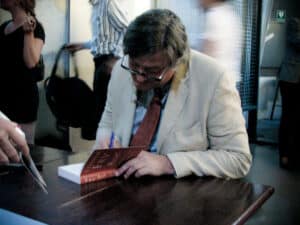
     

    Hitchens’ remark also lacks empathy. We now know what Fry was going through, and that he has suffered all his life with bipolar disorder which can lead him into manic moodswings; he has lived all his life with suicide as a realistic possibility. Here again, he has done more than anyone to raise public awareness about this health condition in his very important documentary The Secret Life of a Manic Depressive which aired in 2016, some four years before the pandemic when mental health really began to top the agenda.

    His condition, which wasn’t widely understood at the time, was most obvious when Fry famously left the cast of the Simon Gray play Cell Mates in 1994. In the days before mobile phones, there was genuine worry about his whereabouts and the fear that something appalling might have happened to him. Gray was upset at the time that his play had been, quite literally, upstaged, and wrote about it at book length in Fat Chance (1995).

    Nowadays, I doubt Fry would get to the end of his street without his whereabouts being broadly known; in those days, when he left the play mid-run, there was a genuine fear among his friends that he had vanished for good. Today, he is one of those people so famous, that he will never again be allowed to go missing.

    If I were to compile a list of Fry’s dislikes, I feel I might reduce it to one thing: cruelty. His friend Christopher Hitchens has sometimes been called the hater par excellence, but I think Fry is a greater purveyor of dismay at human cruelty than Hitchens was, because, on the flipside, I think Fry’s kindness is more active.

    The only kind of successful hate involves consistently pivoting to love, and my sense has always been that Fry is good at this. One early article which influenced me was his great defence of Freddie Mercury which is collected in his 1992 collection of journalism Paperweight, where – I am quoting from memory here since I can’t find the article online – he speaks of Mercury as having entertained with a ‘chutzpah bordering on genius’ and takes to task those who found his lifestyle immoral.

    Its tenor was really ‘judge not less ye be judged’ – and again, one feels that Fry is always actively generous in spirit in way which ties in with the Gospels far more than one might expect from a man who shared the stage in religion debates with Christopher Hitchens.

    His career grew in so many directions that it cannot easily be summarised. It has proceeded along novels (I especially recommend the first two The Liar (1991) and The Hippopotamus (1994), memoir (Moab is My Washpot (1997) may in fact be his best book) broadcasting (his best work here may be his brilliant hosting of the BAFTAS, which he did 12 times, finally giving up in 2018),

    TV shows (Jeeves and Wooster, Kingdom), a marvellous poetry handbook The Ode Less Travelled (2005) which was instrumental in my ever publishing any poetry myself, as well as a host of illuminating TV documentaries, TV interviews, podcasts, blogs, posts, tweets and many other things besides. Fame is difficult to quantify but by any measure Fry is among the most famous people in the UK today.

    My fame however is very easy to quantify: it is nil, and I am currently doing all I can to keep it so. However, just because I have ended up lucky enough to spend a lot of time carrying out interesting journalistic assignments, I must admit that it has involved meeting famous people of many different shapes and sizes all for the purpose of interviewing them. Some of them, from Sting and Andre Agassi to Sir David Attenborough, have been very famous indeed.

    Some like Sir Tom Stoppard, Clive James and Sir Anthony Gormley have a mystique to those who mind about literature or art. Others aren’t famous at all to almost everyone, though they might be revered in their field. Out of all the categories of people I have come to most dread, I would single out those who are just a tiny bit famous as the ones to watch: amid the dim lights of that particular inferno, ego can be at its most pronounced.

    At any rate, as you go through your journalistic career, you realise as you go on in your work that you are starting to meet your heroes. But even then, I never thought I’d meet Stephen Fry.

    What exactly is going on psychologically when we meet our heroes? Dr Paul Hokemeyer, the brilliant author of The Imposter Syndrome, tells me: “Our fascination with and attraction to heroes is primal and hard-wired into our central nervous system. This is because heroes become like celebrities who occupy elevated positions of prestige and power in our society. From an evolutionary standpoint, we are instinctively drawn to people who will take care of us and from whom we can learn vital life lessons to protect us from dangers and advance our station in life. Because this draw is so primal and integrated into our central nervous system it often overrides our critical and rational thinking.”

    In short, when you meet someone well known, we have a tendency to say stupid things. What is happening in the brain at such times? “As this relates to our neuroanatomy, being in the presence of a celebrity floods our central nervous system with a host of intoxicating hormones that override the intellectual reasoning found in our prefrontal cortex. Such disequilibrium causes us to say silly, often nonsensical things which place us further in a subordinate position to the celebrity.”

    And how does this all play out from the point of view of the celebrity. Put simply, it’s not great for them either. “ Too often, however, celebrities become exhausted from the weight of this elevated and never-ending dependency. People become only able to see them as resources to advance their station in life.

    They become like parasites sucking their life force and preventing them from finding any relational nourishment. In this regard, people become a source of danger and cause them a great deal of anxiety. This is one of the reasons why people of wealth, power and celebrity lead such isolated lives. They lack not just a circle of peers but also people who they can look to for nurturance and protection.”
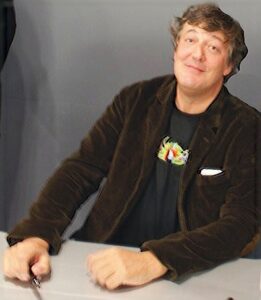
     

    What seems to happen is that a journalist – just by virtue of what he does for a living – comes into in a slightly different position when it comes to the famous. It might be that someone who isn’t battle-hardened when it comes to the sheer oddity of celebrity will meet someone, and the encounter may go badly because they will end up saying something just a bit odd in order to impress, or to draw attention to themselves. They feel the gulf between the famous person’s fame and their own obscurity too keenly and end up drawing attention to it.

    The famous person, who will be by their position, extremely experienced in this sort of mismatched encounter, will sometimes try to amend the awkwardness but at other times they won’t. This might be personal (they’re tired and/or having a bad day) or it may just be that the encounter cannot be rescued. The famous person may then resign themselves to the thought that maybe it’s just easier to spend time with other famous friends. Almost always when someone moans that so-and-so in the public eye isn’t pleasant to meet I suspect that there will be some element of this completely understandable lack of expertise which has intervened on the encounter and spoiled it.

    What’s interesting is that the way to remove the awkwardness of the encounter is not to care at all about fame, but to care about the person in front of you. This is not to say you should pretend they’re not famous as that would be to deny reality, but to treat fame as perhaps the least interesting thing about them.

    Sometimes I have seen, in the middle of an interview with someone known, the person themselves, and there one sees something deeper and truer which has nothing to do with the construct of celebrity, though it will also almost certainly give clues as to why that person was driven to become well-known and also why the public reciprocated that wish. I am not saying that I am a master of this art.

    I would not expect myself to behave with absolute equanimity if Elton John were to knock on my window as I write this, and offer up a private concert in my living-room. But it is what journalism teaches you, and it amounts to something like an inherent lesson of the profession.

    Hokemeyer explains: “What such a person is doing is modelling humanity. By pre-empting the biological calibration that occurs around the power dynamics inherent in a celebrity identity by engaging in your intellect and rational mind, a journalist is levelling the playing field. You pre-empt the hijacking of your intellect by grounding the relationship first in the prefrontal cortex and then allowing your central nervous system to catch up. For most people, the calibration of psyches occurs in reverse. The central nervous system leads. Too often the intellect never catches up and the relationship becomes fuelled by unrealistic fantasies and harmful stereotypes.”

    Quite by chance, on the 27th July 2023, I presented myself at the Oval Cricket Ground at the Micky Stewart Pavilion. I had, to put the matter as politely as possible, more or less had my fill of famous people. I am anxious here not to sound tiresomely world-weary since I have always been mindful of my luck in terms of meeting so many interesting people. However, it would be wrong to omit the fact that the encounter between famous person interviewee and non-famous interviewer is always on some level a sapping one, for the simple reason that by creating fame, and especially televisual fame, we have plainly released a set of completely crazy energies into the world.

    I wave my ticket at the security people, a piece of paper which conveys the unlikely, but true, story that today I happen to be attending the final test of the Ashes courtesy of the Duchy of Cornwall. Instead of the interrogation I half-expect, I am waved through to the Oval, scene of some of the great climaxes in Test Match history. Here in 2005, Kevin Petersen hit his magical 158, with Shane Warne bowling his heart out. It is also a place of significant goodbyes.

    Here it was that Alistair Cook scored 147 during his final innings having been short on form. Here too Don Bradman was famously bowled for a duck, when needing just four runs to end with an average above 4. Unknown to me, in a few days’ time, Stuart Broad will retire from international cricket having hit a six from his last delivery and a wicket with his last ball.

    Inside, all is cricket lore – a lesson in black-and-white pictures and old news clippings about the history of cricket. The Oval is a place where time is prised open a little, and you feel a sense of cricketing history. Perhaps it is more forceful in this respect than Lords, because the so-called Home of Cricket is always cumbrously reminding you of its importance. Here the past seeps in almost casually.

    I walk up the stairs and am asked to find my name on the guest list and sign in. As I scroll down the second page, I glimpse the names on the guest list: Sir John Major; Sir Trevor Macdonald, Chris Tremlett. My name must be on the first page, and there just down from my own, it reads: Stephen Fry.

    I am given a name tag and move through to the bar area. Now, it is important to convey a little about the Micky Stewart Pavilion. As I understand it, one of the most interesting things about becoming the Prince of Wales, and thereby coming into the possessions of the Duchy of Cornwall, is to discover all the things which one suddenly owns. One of these possessions is the Oval Cricket Ground.

    This means that if by some curious chance one is invited to the Micky Stewart Pavilion you are there to some extent because the Prince of Wales doesn’t mind you being there, or hasn’t noticed, or in my case, by a stroke of good fortune. In such places there is curious sense that everybody assumes you have some sort of validity just by being there at all.

    As I walk in Sir John Major walks by and, ever the politician, he reads my name badge and says: “Hello, Chris, it’s good to see you here.” We talk briefly about the great sadness of the weather-affected draw the week before, which certainly have meant we’d be coming into this match with the scores level at 2-2.

    I am always struck by the charm of senior politicians; I wasn’t able to vote in 1997 when Major was last on the ballot, but he has secured my vote retrospectively. We sit down for the opening session, and sit away from the bar in the stands. It only occurs to us once we have sat down that the green seats nearest the bar are for everybody to sit in. We might just as well, had we had the inclination, sat next to Sir John.

    But what is the proximity of an elderly prime minister compared to a good morning’s cricket? Australia chose to put England in, in the justified belief that overcast conditions would make the ball swing. However, England put up a spirited performance, led by a swashbuckling 85 by Harry Brook. As we head inside to the pavilion for lunch, Fry is seated next to the door and smile congenially at us – he looks like someone who, should the moment arise, wouldn’t mind a conversation.

    We head inside and there is a bit of mingling before lunch. Chris Tremlett towers above the company, looking like he could still take a wicket if suddenly summoned down to the pitch. By accident I find myself chatting to Fry, and I mention to him that my grandfather had grown up in the same village as him in Booton, in Norfolk.

    “Booton!” he cries, delightedly. I can see how much he enjoys saying the word – which is, indeed, rather fun to say now I think about it.

    I add that my great-grandfather was the rector of the church there. “Oh, I remember that cold church,” he says. “Were your family the Fishers?”

    I say they were the Jackson.

    “Ah the Jacksons!” he says, cheerfully, though I suspect that he can’t remember them and they may have been before his time.

    After lunch, we head out and find Fry sitting alone on the green seats, and in a moment of curious madness, decide to sit next to him. It is worth saying at the outset that a good place to meet your hero is at the cricket: the rhythm of the match can interweave with your conversation, and it is less adversarial than the typical interview.

    Early in our discussion, we talk a bit about our favourite Australians and I mention Clive James, who Fry knew well, and who I interviewed once towards the end of Clive’s life. I mention that I liked his poetry and that I was due to talk to him about The River In the Sky, one of Clive’s last publications. “Yes, I rather like Clive’s poetry too. He was a very good poet – when he wasn’t reading the whole of Western literature.” I mention that I was invited to Clive’s house for the launch of the book when I had committed to a press trip. Fry sympathetically winces: “That’s unfortunate.”

    We then discuss Sir Tom Stoppard and I mention how kind he had been to me when we interviewed him for this magazine. I say it is often difficult to know how much one should thank someone well-known. “Oh, you always should. Christopher Hitchens always used to say that – thank your heroes.”

    Does he miss Christopher Hitchens? “Hugely.” I ask him if Hitchens would have supported Trump or Clinton in the 2016 General Election. “It’s a well-framed question,” he smiles, “as if there was one thing for sure about Christopher it’s that he absolutely loathed the Clintons. But Trump? I think that would have been a step too far.”

    He then tells me a lovely story about Tom Stoppard at a cricket match which Fry attended. The party were discussing collective nouns – a parliament of birds, a pride of lions and so on – when Harold Pinter and Stoppard walked in. Fry wondered aloud what the collective noun for playwrights would be and Stoppard immediately replied: “A snarl of playwrights.”

    We discuss Leopoldstadt, Stoppard’s most recent play, which Fry has just been to see in New York. He asks if I have seen it and I say I have only read it but that the ending affected me deeply. Fry is wistful, no doubt thinking of the extraordinarily touching end scene, which I shan’t go away here: “Yes, I wonder what it would be like only to have read it.”

    Stoppard, Fry recalls, used to play cricket for Harold Pinter’s XI. “It was called The Gaieties which has to be the worst name for an XI of all time – and not a very Pinteresque name.” I recall to him an essay in Paperweight that he had written an essay on chess and playwrights, and how the story of styles in the 20th century theatre mirrors chess-playing styles around the same period. “Well that’s just the sort of pretentious stuff I would write.”

    I have throughout a sense of Fry which is rather touching. That is, even here, when he doesn’t need to be a performer. One senses the need to be loved, and that he is therefore always moving to make life easy for you in conversation – to make sure you’re at ease.

    Down on the pitch, Stuart Board, I note is trying to anger himself into greater pace, and this prompts a discussion on the importance of anger in fast-bowling. ‘Bob Willis is the great example there – he always bowled better when angry,” says Fry. He also quotes Mike Brearley: “Anger always brings presents.”

    As we talk, Fry explains that he is trying to do more to carve out time for the cricket, and that it was part of his motivation. “I have a lot of difficulty saying no,” he says, “which is why this summer has been so lovely.” It has been a time to pause work and spend some time with friends. “Hugh loves the cricket – he came along for a day,” Fry says.

    Talking of fast-bowling greats turns us inevitably to Shane Warne. I ask him if he’s read Gideon Haigh’s great biography of Warne, and Fry is enthusiastic. Fry has also a kindly way of finishing your sentences for you as a way of making you feel you are being listened to and understand. When I begin to say there have been times when I’ve considered getting a subscription to The Australian only to read Gideon Haigh, I find that Fry has said the last five words on my behalf. Did Fry get to know Warne? “Yes, I did a bit – a lovely man.”

    But of course you realise that however many people you might have met, Fry has known everyone. It comes with his position. Since we are here thanks to the Duchy of Cornwall we briefly discuss the Prince’s disinterest in cricket as opposed to football, Fry frowns in a comic way: “Well, yes, I have known for some time that the Prince is not especially interested in cricket. Prince George though when I saw him last talked of having ‘just been in the nets’ so perhaps things will be somewhat different in the next generation.”

    It is a lovely thing to let the conversation as the cricket changes. At one point, Fry jokes about Todd Murphy, the Australian off-spinner. “Well, he’s got the off break, and then there’s also the off break. And if that doesn’t work, at least he’s got – the off break.”

    At another point, enjoying the batting, I mention John Arlott’s description of Jack Hobbs, as what having made him great was his ‘infallible sympathy with the bowled ball’. Fry repeats it: “Oh Arlott! An infallible sympathy with the bowled ball. Marvellous!”

    There is time also to reminisce. I mention how Fry and Laurie caused me such delight as a young boy, and even tell my story of reciting his work as a boy, and not knowing what the words meant. When he asks which sketches we used to recite, I tell him: “There’s this sketch where you play a pompous interviewee on late night television. “ “Sounds like me,” Fry says swiftly.

    When I recite the sketch for me, I am able after all these years to thank him for it. To my astonishment, I see he is visibly moved to have had this impact. “We didn’t know the effect back then – it was like dropping a coin into a well. Every now and then with Fry and Laurie someone would stop you in the street – but it was very occasional indeed.”

    I had heard a story of Paul McCartney, which I mention to Fry. Apparently, when he seeks to hire someone he always gets his driver to befriend someone lower down in the organisation he wants to hire, so as to be sure that they’re kind to their subordinates. “Did you ever get to know David Tang?” Fry asks and I admit I’ve never heard from him. “I loved him he was an incredibly kind man. But he could be extraordinarily rude to his subordinates. On more than one occasion he was David was so rude to his driver, that I had to get out of the car.”

    As the often continues – and it was one of those rare giddy days in Test match cricket where wickets fall at regular intervals – I also get the opportunity to thank him for The Ode Less Travelled, his poetry handbook, without which I never would have been able to publish my own poetry books. I tell him his, and I also add that the poet Alison Brackenbury is an admirer. He is thrilled by this: “Alison Brackenbury! Well, I love her poetry so that means the world to me.”

    Later I mention this to Alison and she replies: “How wonderful! We never know where our writing goes. I do think Stephen must be fantastically well-read to have found my poems. I have tried hard over the years to scatter them in the most unlikely places, but I doubt if even the amazing Mr Fry ever read the now defunct Tewkesbury Advertiser.”

    I remind Fry that he says he writes poetry in The Ode Less Travelled, and tell him I think he should publish a volume of verse. He says: “Well, I did think during lockdown that I ought to compile that and I began it, but then I stopped.” How long would it be? He smiles: “Well that would depend on triage. Most likely it will probably have to wait for my will and then everybody will say: “What on earth was he thinking?”

    The afternoon drifts on, cricket always intertwining with talk. At one point Fry jokes that we must ‘avoid clichés like the plague.” He talks of his admiration of Rowan Atkinson (‘no one else can convey a line like him’). He spends some time on cricket trivia, reminding me, for instance that Alan Knott wasn’t a wicket keeper at first but a bowler – and that being so good at the latter craft helped him become so brilliant at the former. His beloved Wodehouse gets a mention: “Wodehouse was told that he was most read in hospitals and prisons and first thought it a bad thing but then decided there could be no greater compliment to an author.”

    And now I’m afraid I must go and do a talk in central London. He turns to me and says: “You’ve made an old man very happy.”

    And then he’s off – having made me happy too. But the curious thing is I think he means it – and I wonder about the isolation celebrity must bestow. Hokemeyer tells me: “Occupying a rarefied position in the world is incredibly isolating. There are very few people who can look through the celebrity veneer and see the human being who resides below the power and sparkle that defines a celebrity identity.” Later I think back to the look Fry gave us as we walked past him – it was the look of someone who wanted conversation.

    Do we perhaps all to some extent suffer from Imposter Syndrome? Hokemeyer explains: “Many celebrities, including male celebrities such as Tom Hanks and Ben Affleck have spoken publicly about their struggles with imposter syndrome. This is because attaining the status of celebrity on the scale that they have is akin to winning the lottery. It’s nearly an impossible goal that comes to too few. Being such a rarefied existence, their central nervous system can’t quite integrate it. As such, they live in fear that they will fall from grace and become irrelevant.”

    I don’t think this will happen to Fry, but his charm seemed to be something allied to a sort of need: I don’t think it can be external approval which he is seeking, or external love even, since he has both in such abundance. It is internal, and I think fame and celebrity have a terrible way of wreaking havoc with that. Yet who could be better to watch cricket with? They say don’t meet your heroes. In general, I’d agree with that – unless your hero happens to be Stephen Fry.


    Stephen Fry Education Timeline


    24th August 1957 – Born in Hampstead, but grows up in the village of Booton, Norfolk, having moved at an early age from Chesham, Buckinghamshire, where he had attended Chesham Preparatory School.


    1964 – Attends Uppingham School in Rutland, where he joined Fircroft house and was described as a “near-asthmatic genius”.


    1973 – Expelled from Uppingham half a term into the sixth form, and is moved to Norfolk College of Arts and Technology, where fails his A-Levels, not turning up for his English and French papers.


    1977 – Despite a brief period in Pucklechurch Remand Centre after stealing a credit card from a family friend, he passes the Cambridge entrance exams, and is offered a scholarship to Queens’ College, Cambridge, for matriculation in 1978, briefly teaching at Cundall Manor School.


    1978 – At Cambridge, he joins the Footlights, where he meets Hugh Laurie and Emma Thompson among others.


    1981 – Wins the Edinburgh Perrier Award for the Cambridge Footlights revue Cellar Tapes


    1986 – The BBC commissions a sketch show that was to become A Bit of Fry & Laurie. It runs for 26 episodes across four series between 1989 and 1995. During this time, Fry stars regularly as Melchett in Blackadder.


    1995 – Fry is awarded the honorary degree of Doctor of Laws (LL.D. h.c.) by the University of Dundee.


    1999 – Awarded an Honorary Doctorate in Letters (D.Litt. h.c.) by the University of East Anglia


    2010 – Fry is made an honorary fellow of Cardiff University,[148] and on 28 January 2011, he was made an honorary Doctor of the University(D.Univ. h.c.) by the University of Sussex, in recognition for his work campaigning for people suffering from mental health problems, bipolar disorder and HIV.

    2017 – The bird louse Saepocephalum stephenfryii is named after him, in honour of his contributions to the popularization of science as host of QI.

    2021 – Fry is appointed a Grand Commander of the Order of the Phoenix by Greek president Katerina Sakellaropoulou for his contribution in enhancing knowledge about Greece in the United Kingdom and reinforcing ties between the two countries.


    For more of our cover stories, see these links:


    Exclusive: how Emma Raducanu changed the world of tennis

    Exclusive: how Elon Musk is changing the global economy?
  • Opinion: Tony Blair’s Book “On Leadership” misses the critical point

    Tony Blair’s Book “On Leadership” misses the point.

    Finito World


    “The centre cannot hold/mere anarchy is loosed upon the world’. So WB Yeats wrote towards the end of his life. It doesn’t feel entirely irrelevant as a description of Starmer’s Britain.

    The early months of Labour’s time in government has seen some good ideas, the first signs of governmental infighting, some naivety and some poor decisions too.

    None of this ought to come as any surprise – and it would hardly be news at all if there wasn’t a mounting sense that the country needs leadership on a different scale to what we had under the Conservatives. Lord Darzi’s NHS report alone was enough to make people realise the scale of the inheritance Labour has – but that’s not to say there aren’t other problems. From education to housing, to transport and defence, to productivity and growth, the UK’s difficulties appear to be legion.

    But if the leadership we need isn’t yet evident in the Starmer government – and yet to materialise from an opposition still bruised by the recent general election’s thumping defeat – where is it to be found?

    Despite the fact that he left office nearly 15 years ago, there will be many who are still not ready to listen to the pronouncements of Sir Tony Blair. This is understandable when one considers the legacy of his Middle Eastern Wars, his awkwardly gilded post-premiership, not to mention the quangocracy which was certainly not curtailed by 14 years of Conservative-led government.

    And yet in a recent interview with The Observer‘s Andrew Rawnsley, designed to promote On Leadership, he did what Blair has always been good at: making an argument.

    Observing that the civil service is essentially unfixable, and that bureaucracy will have an innate tendency towards being bureaucratic, Blair offered the alternative: leadership from the centre.

    This is a very different thing to having a centralised system which we have come what may. Blair explained: “…unless you’re driving from the top, it [change] won’t happen. It won’t happen for several reasons. It won’t happen because the system won’t have a clear enough direction if it doesn’t get it from the very top. It won’t happen because too many issues require many departments to work together. And you need the centre to do that.”

    This is true, and seems all the more so from watching over a decade of prime ministers who couldn’t control the centre: May was a Remainer asked to enact Brexit; Johnson lacked discipline; Truss was never prime minister material; and Sunak could do the day-to-day, but lacked vision. Starmer is, so far, a sort of blend of May and Sunak.

    But if we accept this argument for strong leadership, it needn’t just apply to Westminster where it seems least likely to be successful. It can form a part of all our working life.

    It is a remarkable fact how little education there is in our society surrounding leadership. There is very little leadership education during our formative years: indeed, it might be argued that a samey curriculum tends to homogenise students – and this process is the opposite of generating the individuality which we associate with leadership.

    Of course, if we accept the need for leadership in our society then we might wonder how best to foster it. As Sir Terry Waite argued in a previous issue of Finito World, the study of history is important, especially if we can look at what made, say, Abraham Lincoln an effective leader and ask students to apply his essential pragmatism and patience to their own lives.

    Furthermore, this magazine applauds the work conducted by the Institution for Engineering and Technology in highlighting the importance of engineering on the curriculum; one attractive aspect of such an approach is that it engenders precisely the kind of problem-solving which makes for inventive leadership.

    In these pages too, Emma Roche has argued that an understanding of the original practical nature of ancient philosophy is of importance too when it comes to creating a generation which knows how to lead.

    But really it’s in mentorship that we are most likely to learn the skills needed: at Finito we believe that mentoring has a unique ability to create the knowledge base for effective leadership.

    The country in fact is in such a state that we are not in a position of being able to simply submit to the powers of some great man or woman – were that person to come along, which seems unlikely. In fact, in the shape of Starmer it might be that we have another underperforming PM.

    Instead, Blair’s book seems to spark off a series of thoughts which its author may not have anticipated. The new centre can’t be located in 10 Downing Street; it needs to be in each one of us.

  • Lumos Education CEO Johanna Mitchell on her early life and the incredible influence of her parents


    Johanna Mitchell


    I had no idea that I would work as an education consultant, until I was in my mid-30s, running a small school for the Lawn Tennis Association. The education part I got from my father and my sense of optimism from my great aunt, Pat.  My own experiences of education made me want to help other children. When parents ask me to find a ‘leading’ school or university for their children, I always ask what they mean. If it doesn’t cater to the specific emotional and social needs of their children, it’s leading them nowhere.

    My father was an academic.  A North Londoner, he attended Haberdashers, after failing the 11+. Prior to this, he was told by his prep school head that he would amount to nothing.  Like many young men, he started to thrive at aged 13-14 and went on to have a career in food technology. He was said to have developed the recipe for Quavers crisps whilst at Unilever.

    His colleagues described him as the Patrick Moore of the food science world. He was the archetypal mad professor and was often to be seen on stage, trying in vain to put his hands into the pockets of his inside-out lab coat.  His secretary remembers him telephoning her regularly from airports to ask: ‘where am I going?’.

    Whilst my father was secular, my Roman Catholic mother was the major force behind my schooling. My father confided that there were two things that filled him most with trepidation:  one was the nuns and the second was women, of a certain age, telling Peter Jones’ customer services that they were ‘cross’.  The head of my first secondary school, a convent, was the formidable Sister Mary Angela.

    At parents’ evenings, she would send my father into a spin. At Sister Mary Raymond’s funeral, an elderly piano-teaching nun with six fingers on one hand, Sister Mary Angela marched to the altar and slammed her coffin lid shut, exclaiming ‘thank God she’s gone!.’ It was pointless getting on the wrong side on Sister Mary Angela.

    A gentle soul, who didn’t hold with too much authority, my father sneaked a replacement tape player into my boarding house, right under the housemistress’s nose.  My old one had been confiscated for playing Pink Floyd’s The Wall loudly.  Later, at another school, I was expelled, with my friend Isobel, for posting questionable photographs on the head’s door in the middle of my night. My father was summoned and when Father President handed him a manila envelope, containing said photographs, my father took them out, examined them and burst into laughter. I loved him for that. Priests didn’t frighten him as much as nuns.  I’m not sure why. Perhaps it was the added female dimension. Or the veil.

    After this, I had to sit my A levels as an external candidate, at schools which had the same specialist papers.  Oakham School were very kind. My father decreed that I would have to self-fund part of my private tuition by working in a launderette and waitressing. I know how to operate a dry-cleaning machine and am a dab hand at silver service. It was a challenging period. Despite being predicted straight As, I lost all my university offers, and had to take up a clearing place. In my work with Lumos Education, I feel an affinity with children who have experienced ruptures in their education.

    Post university, I went to live in Paris for a few years, teaching English, working as a fille au pair and doing a postgraduate at the Sorbonne. I wanted to be an academic, like my father – maybe in English or French literature. He himself said he would have liked to have been a Bond hero. Or perhaps, a politician.  He saw both as more glamorous. His own father had overseen general election campaigns for Conservative Party central office.  So he had some understanding of politics.  His one and only student job was delivering Conservative Party campaign leaflets throughout Hampstead and Finchley. No launderettes for him!

    Back in London, I joined the civil service.  Sir Humphrey stalked the corridors of my first department. I remember one senior civil servant telling me that I could only handle confidential files if I put on the pair of white gloves which were in the cabinet, with said files.  I didn’t double check invites that had been printed for the Science Minister inviting his guests to the Zuckerman Science Lecture that year, and afterwards to a buffet supper. The letters went out inviting guests to a ‘buffer supper.’ Although this seemed quite appropriate, given some of the audience, the minister was, understandably, not happy.

    In London, I began to spend more time with my great aunt Pat, whom I hadn’t known well as a child.  She divided her time between London and Sydney, was from the Irish/Australian branch of the family and a real bon viveur. Unfailingly cheerful, she lunched most days at Frantoio on the Kings Road.  Three months pregnant with my youngest daughter, I arrived for a pre-lunch drink and she filled a half pint class with brandy .

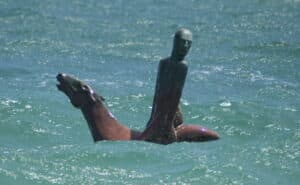
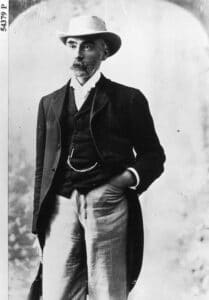
    When I refused the drink:  ‘lily-livered all your generation are!  All vegetarian’, she said.  Once her back was turned, I tipped the brandy into a pot plant (which was conspicuously absent on my next visit).  Both Pat’s sons had pre-deceased her, but she was just incredibly resilient.  Her family history was both entrepreneurial and tragic. Her grandfather, my great, great grandfather, was Charles Yelverton O’Connor, the engineer who constructed Freemantle Harbour.  He rode into the sea and shot himself after being criticised, for his work, in the Times.  There are two statues commemorating him in Freemantle.


    Commemorative statue at Freemantle


    Charles Yelverton O’Connor


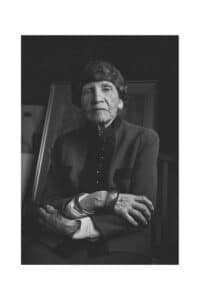
    Her aunt, my great, great aunt, was Charles’ daughter, Kathleen O’Connor, the celebrated Australian impressionist artist who defied the patriarchy surrounding women artists of her time, and lived to her 90s.  Pat had some of her paintings in her Chelsea home. My husband and my daughters enjoy painting.  Pat lived until 100 and, even in her nursing home, she shared a bottle of good red with her fellow residents every night. I learned a lot from her – mainly that your glass should always be half full.

    Credit: Richard Woldendorp


    Some of my dearest friends today are from the civil service, school and university. Interestingly, in my time there, there were a lot of civil servants who had been raised in the Catholic church. Whether or not you continue the religion into adulthood, it does give you a sense of service. I love helping families to navigate global education systems which can seem incredibly complex.  Pastoral care is so much better now and we understand more about the emotional health of the child. There are still key improvements to be made in education, but it’s far cry from my experiences in the 1980s.

    My father and aunt Pat were givers. Dad loved to help others, young academics and children whom he tutored in chess. He sponsored a young girl’s education in India and, despite being an incredibly busy man, he wrote to her regularly.  He didn’t give a fig for money, rank or power.  He always said ‘be kind, for others are fighting a harder battle.’ I didn’t understand exactly what he meant then. I do now. We have a picture of Plato on our kitchen wall, with his quote below. My daughters have stuck a moustache on poor Plato. Having both studied ancient Greek, they should know the importance of this great philosopher.

    My father was also a man of his generation, without much freedom to express his emotions.  He would have had more emotional freedom now.  I remember him crying three times:  when his first marriage fell apart, when he watched a programme on Siege of Leningrad and on the day of the Brexit referendum result.

    I’ve made so many mistakes and continue to do so.  So did my father and my aunt. It’s essential to learn from them.  And to hold ourselves accountable when things go wrong. Staying in one’s integrity, and treating people well is not always easy – but it’s the most important thing. My father understood this.  With challenge comes growth.

    Ancestral lines are not just linear. Their branches grow thick and dense with our colourful ancestors whose loves, hopes and losses were not so very different from ours. When asked, most people can’t remember the names of their great grandparents. How quickly we are forgotten. A reminder to live for now and to do our best work.


  • The civil service is a ‘truly fantastic profession’: Sir Philip Rutnam


    Sir Philip Rutnam


    I worked in the civil service from 1987 until 2020; I began by working in the Treasury and my initial expectation was exceeded in terms of the interest in the work and responsibility that I was given quite early on. There’s this erroneous idea of it being a stuffy place full of hierarchy and restrictions instead I found it was a place where you were given very clear objectives and a lot of responsibility to take them forward.

    The treasury is interesting because it’s right at the centre of government but you also realise that while the Treasury has the power to say no, it doesn’t generally have the power to make things happen: it can could refuse to provide the funding but it can’t actually usually change the system of education or healthcare.

    Did I have mentors in the early days? I had very good people responsible from management giving me direction and mentors who gave me more informal advice. Like any career you do end up having to make your own way but what’s vital is to have exposure to a range of different people who have got advice and give advice and to try to learn the best from each of them.

    When it comes to what the optimal setup is within the civil service, I definitely think you need to have people with a combination of deep specialist expertise with enough capacity as a generalist to get things done within government. In my own career I liked staying in roles for a good few years in order to try to get to grips with what was happening. By the time I was permanent secretary at the transport I feel we got the balance right.  Incidentally, I believe HS2 will get to Euston in the end – and I hope without too much delay.

    The fundamental job of the top of the civil service is to help ministers – and sometimes they will have just arrived in position – to translate their political objectives into practice. It’s a question of helping ministers identify their objectives sufficiently and then work out how they are going to be turned into reality.

    I never found it difficult to be apolitical because that’s a core part of the professional skills set. You are there to serve the democratically elected government so being impartial is a precondition for being there.

    It’s important to understand that there is an enormous variety of different things you can do in the civil service: it has about 500,000 people employed in it.   People tend to think that the civil service is all about working with ministers – somewhere between Yes, Minister and The Thick of It.  There are scientific and technical jobs of huge importance.

    In the Department of Transport working for me, there were people responsible for investigating air accidents or rail accidents; people working in and running really large operational systems like licensing drivers and vehicles at the DVLA – nearly 5000 people the single biggest employer in Swansea.   We also had really large complicated computer systems: so we had IT experts, and experts in programme and project managements.

    In fact, we had everything from policy experts through to statisticians, data scientists, social researchers, economists, lawyers, actuaries, accountants, finance experts, and specialists in estate management. This is a hugely under-appreciated: if we don’t think this message is important we won’t end up with a good civil service.

    There are also lots of different entry routes.   There are apprenticeship entry routes, and other degree entry options.   There is the fast stream with the exam, which is probably one of the smallest entry routes. You can become a specialist in HR, finance, or project and programme management or commercial management.

    The fast steam certainly means that your get more opportunity subject to performance to get promoted earlier: but once you have got to grade 7 there’s no further advantage to being on that track. It is competitive but enormous efforts are made to identity talented people from a wide range of backgrounds. It’s a fantastic profession.


  • Vet to Scientist: Dr. Vanessa Herder’s Extraordinary Journey in Academia


    The vet who became a scientist explains why academia is a great place to work


    “Kid, do what you like. Choose what you want.” This was the career advice my parents gave me during my last year at school. Ok, then. I want to become a vet. They were delighted and my mum painted pictures in her mind of me being the local vet in a small village somewhere. All neighbours would come and bring their pets to me and she could be involved in the romantic life of the female version of James Harriot. But it turned out to be very different.

    Now as a scientist, my latest research project is studying the differences in the immune response of patients with a Covid-19-induced pneumonia. We investigated in SARS CoV-2-patients which immune response determines the disease severity. This study is a large collaborative project with scientists form the UK, Malawi, Brazil, USA, France and Switzerland and published in the journal Science Translational Medicine. How can a vet be involved in this project?

    During my vet degree I realised quite quickly that my original idea of working with horses would not be happening. During my first lecture of pathology while learning about disease mechanisms in tissues my passion for studying diseases was ignited. On that day, I knew horses will always be a hobby for me. My fascination about understanding how diseases evolve in the body grew from day to day. Studying diseases does mean to understand what health is.

    How a virus infects the host, causes damage and how the body is able to fight this infection successfully is not only interesting, it is dependent on the orchestration of so many factors. It fascinates me. I finished my first PhD studying virus infections in the brain and a second PhD followed to characterise a newly emerging virus infection in animals which caused stillbirth and brain damage in ruminants.

    As a vet, I knew how close we are to our pets or farm animals, and my research always focussed on aspects of the One-Health approach:  Diseases which are transmitted from animals to humans. To strengthen my research I decided to stop doing diagnostic and teaching vet students and started a full time post as a scientist. For years, I was studying which immune reactions determine that some hosts show a severe or lethal outcome in virus infections and why some show a mild course of disease. I developed all the tools to address this question, and worked in the high containment lab with a virus, which can only be handled under these conditions.

    Then the pandemic hit, the government stopped all our virus work. Only SARS CoV-2 from now on. The joint and focussed research activities were used to study the pathogenesis of Covid-19. I applied all the skills I developed before the pandemic, including being trained for the high containment, on the Covid-19 response to contribute as much as I could. Visualising the virus in the lung, which had never been done before, was one of my tasks, and it was a tough one. It took several months. At this time, I realised how valuable it was that the PhDs I made not only taught me science.

    Most importantly, the PhD teaches grit and endurance as well as creativity. The perseverance of starting and finishing a PhD, which lasts 4 years, requires scientific depth and dealing with all the challenges along the way. In short, you need to have a very long breath. This helped me to keep going with the initially unsuccessful virus detection attempts in the tissues. I finally made it and will never forget the sunny afternoon on a Saturday during the hard lockdown, when the virus finally was visible in the lung.

    Like all projects and publications in excellent research, the people involved are key to success. Interdependence of independent people working together is the heart of the work. Only efficient priorisation with well-developed communication and the perfect alignment of different expertise’s make it happen. As in this study: Every Co-author of this manuscript did what she or he could do best and contributed it. The efforts were organised and managed from Brazil to Malawi, Switzerland, USA and France to the UK and required a smart project management system. Science connects people, cultures and experiences and this makes academia a beautiful place.

    During my time in academia I had the pleasure to work with so many driven and smart students, which is a joyful experience and which taught me so many valuable life lessons. I am fortunate to have great mentors pushing me to do the best work, opened doors for others and myself and allowed me to see further with their experience. Thanks to the diversity of my work, I know people in so many countries of the world, who became friends and part of my life.

    Science connects the dots of knowledge and unites people. And it’s the people who drive the research to the next level. The most rewarding aspect of working in academia is to be part of the career path of the younger generation, seeing them succeed and choosing the work they want. Eventually, progressing from a job to a profession leading to a passion. Each student is a special person in my life as they trusted me with being part of their academic career and there is nothing better than meeting these people after years again and reflecting together on our journeys.

    I am not living the romantic life of the female version of James Harriot. I am living the romantic life of a scientist who can travel the world for presentations and conferences, and works with researchers in places like India, Africa, Europe, USA, China and the Middle East.  Basic research is the joy of answering questions in unknown territory combined with an unparalleled work ethic. Understanding diseases is understanding life – in animals and humans alike.


  • Class Dismissed: Richard Desmond

    Richard Desmond, the successful publisher and founder of the Health Lottery on the next generation, the success of OK! magazine – and not switching off


    Tell us a little about your upbringing. What do you think parents would say if they could see your success today?

    Look, I think they’d be incredibly proud. My father was the managing director of a cinema advertising chain Pearl & Dean and he used to take me to meetings. I have been in a lot of interesting meetings since; I can tell you that.


    You left school at 15 and have fought your way to the top. Do you think the university system has become less successful at preparing young people for the workplace?


    Universities are good for some students – but I reckon they’re not always right if you want to start a business. Parents are better off carefully thinking about what kind of offspring they have: don’t just send them to university if they have entrepreneurial flair.


    Did you have a mentor in your early days of business?


    Yes, but I always made my own decisions. I have tried to inspire the next generation and tell them when they are wrong. The main reason people fail in business is just that – lack of clarity of purpose.


    What advice would you give to young people today looking to start their own businesses? 


    It is tough out there and the sooner you realise that the better. You need resilience, the ability to sell and to champion your purpose – I can tell you that business is also a hell of a lot of fun when you win.


    Why do you think OK! ended up surpassing Hello! in the market?


    We were in tune with the markets: people wanted out product and we knew it. That meant that we were able to live and breathe it, knowing that with the right we would be successful. I also think we invested in the right features: never underestimate the value of good editorial – and when you see a good story, put your money behind it.


    How do you feel about Sir Keir Starmer’s administration? 


    He claims to be the party of wealth creation. It is probably better for me not to say anything just yet, although I am known for my expletives. Sometimes the wisest course of action is for me to try and remain silent.


    What did the writing of The Real Deal teach you about yourself and your past career?


    No doubt about it – most absorbing experience of my life. I remember being very busy writing it. It’s a fascinating experience to draw it all together – the threads of your life. Some of my best friends and worst adversaries told me that they couldn’t put it down.


    The Health Lottery is a passion of yours. What community projects are you most proud of having supported because of this initiative?


    I’ve a very simple philosophy on this. Don’t do anything you’re not proud of. I don’t believe in going into any project without believing absolutely in its importance.


    How do you switch off from work? 


    I never switch off – the lights never go out here!


    What is your legacy and how would you like to be remembered? 


    It is far too soon to be thinking about that. However, allow me look back with great pride for my own part in ensuring the Battle of Britain Monument which I helped get built against all the odds!