Tag: Mental Health

  • Paracelsus Recovery founder Jan Gerber: “A lot of therapy can happen making coffee in the afternoon”

    Our collective commitment to the question of mental health might be one of the main legacies of the pandemic. Though we have now largely returned to work, the scars of Covid-19 remain, and we remain aware of our psychological fragility. This is an issue which isn’t going anywhere – and that’s good news for those clinics who are there to serve high net worth individuals in this space.

    Paracelsus Recovery was founded by Jan Gerber’s family back in 2012. “My Dad’s a psychiatrist, and my Mum’s a clinical nurse specialist,” he tells me,”so we have this boutique niche rehab clinic which focuses on the world’s UHNW population, and people in public life.” The business was founded with an important insight: “We realised there was a special need for that demographic. It wasn’t being met on the confidentiality side or on the psychological side.”

    A successful person will, of course, have a unique set of experiences – and these may amount to a specific set of struggles which need to be tackled with the very best methods. Gerber explains: “We realised that mental health is not just a question of psychotherapy or psychiatry: it’s actually much more complex than that. Treating one client at a time with the price tag we have, means that there’s budget to look at an individual from a 365 degree perspective.” So what does that entail? “We look at hormone levels, gut health, biochemical markers and so on, on top of psychological assessments and so forth. We found a lot more underlying reasons which could fuel someone’s mental health or addictive behaviour: these are rarely addressed due to budget constraints.”

    So how did the pandemic affect Gerber’s client base? “A typical CEO is an outgoing person, but sometimes with certain traits such as ADHD or bipolar which may not meet all the diagnostic criteria, but will make them very successful in the first place. But it usually also means they need direct interaction with the people around them.” Prior to Covid-19, the big meetings would still happen in person (“That’s why big corporations have private jets”) but when things changed so dramatically, it often made these high fliers struggle.

    Of course, there’s also a generational aspect to the client base. “It’s common knowledge that mental health struggles – if not addressed adequately – spill down to the next generation,” he explains. “There’s probably a genetic component to that which is still being researched but there’s definitely a component which relates to how kids are raised.”

    Of course these sorts of problems can still happen even when wealthy parents have the best of intentions. “Nannies, and boarding schools and so forth – all that can create massive problems in a child’s self-esteem,” Gerber continues. “We see it also with entertainers who are so busy with their roles that they can hardly devote time to their children. We talk about neglect at one end of the socioeconomic spectrum, but there’s neglect here too: we can call it affluent neglect.”

    In Switzerland the clinic can look after children from 14 and up; in the company’s London branch, patients begin at 18. But no matter who the clinic is treating, it always tries to bring in the whole family unit to the treatment process. “Normally after a few weeks of focusing on the person and stabilising them would be the right time to bring in family members. It’s essential that the client’s journey isn’t out of sync with the rest of the family. They need to understand the journey, and their own role.”

    What really sets Paracelsus apart is its 15:1 ratio, meaning that patients have a degree of attention which will be the envy of those who know that their problems require a deeper level of treatment than is typically possible either at the NHS-funded level or even when it comes to the sort of paid care the middle class can afford.

    “There is usually a massive cost constraint on mental health disorders,” explains Gerber. “Our patients see a psychiatrist every day for a couple of hours. We have a live-in therapist – an addictions counsellor – who stays with the client in the same residence, so they’re there for 24 hours. A lot of therapy can happen making coffee in the afternoon, or standing at the kitchen table, or going out for a walk.”

    Nutritional scientists are there to monitor gut health; bio-scientists put meal plans into place for the client. Yoga teachers, personal trainers, and massage therapists come in. Dedicated housekeepers, chefs, and drivers complete the picture. All of this is orchestrated by clinical coordinators: “It’s like Swiss clockwork,” Gerber says. “In rehab that doesn’t have that kind of close attention, often problems go by unnoticed – sometimes for many days, and sometimes forever.”

    It’s an international clinic and so I take the opportunity to ask him if he sees any national trends in the world’s mental health. Gerber replies: “One difference keeps cropping up: people from the Middle East struggle more with structure than people from the West. In the west, we tend to have meals at more or less specific hours and that puts people in the Middle East at a disadvantage when it comes to mental health recovery, as structure is very important. In some countries, such as Saudi Arabia, there’s no such thing as a schedule. You can say you have a meeting at 11am and someone mightn’t show up and that’s absolutely fine and part of life. It’s not for us to judge if that’s good or bad but it’s definitely not supportive for mental health struggles.”

    I ask if the UK’s predilection for alcohol comes up in clinical practice: “Absolutely. The biggest issue I see with alcohol is this: because it’s legal and part of our social interactions, it’s considered less harmful than it actually is. I’m not saying it should be outlawed but it can be more disruptive and destructive than many illicit drugs are. When the slippery slope starts it’s really hard to identify. If you see your friends snorting cocaine, you might think there’s an issue there, but maybe not with alcohol – even though it might actually be more harmful.”

    Gerber also points out that some addictions, like food or sex addiction, can be difficult to kick because they are part of our lives. “Sugar is quite an addictive substance and it’s a tough one to kick. Sex addiction is a tough for one as you can’t cut it out forever – you need to learn to live with it healthily, and develop a healthy relationship with that activity.”

    I ask Gerber where we are at the moment with mental health and whether there’s anything more government can do on this front. “Government has a big role and it’s a very difficult job,” he says. “It’s easy to pick on all the mistakes and lack of funding and so on, and how that’s deployed because there’s never enough, but government definitely has a role in regulating certain substances. Portugal has shown that legalisation is often the right way to go – but that doesn’t mean addictive substances should be unregulated or untaxed.”

    Gerber is clearly passionate about this issue. He continues: “There’s a big role for government in awareness work and in regulating advertising. There’s also a lot of prevention work to be done at schools and with parents. We also need to consider social media and online shopping and the way they’re designed to make people hooked in ways which can be destructive to people’s mental health. But government always lags behind because it’s a bureaucratic process, and government has a lot of things on their plate.”


    Christopher Jackson is News Director at Finito World
     

  • One in three UK employees find getting help from HR “hard or nearly impossible”, study finds

    Patrick Crowder

    How well do you know your Human Resources department? According to a new study, about half of you should answer, “not at all”. 

    Research by the HR software company Cezanne shows that only 55% of employees would definitely be able to recognise members of their HR teams if they passed in the hall. 27% of the group surveyed said that they definitely wouldn’t recognise any members of their HR teams, and the remaining people were unsure.

    This seems to represent a problem. We know that many companies have HR departments which offer solid support to their employees – that is not in question. However, the results of this survey show that some HR departments are lacking in engagement. In addition to that, one third of respondents found it “hard or nearly impossible” to get help from HR.

    The pandemic has caused a major shift in the way that people work and interact with colleagues. It has also been a time of anxiety, uncertainty, and depression for many people, so HR departments have recently had to play a much larger role in ensuring the mental wellbeing of their employees. 

    Cezanne’s study shows that, on the whole, employees were at least satisfied with their HR departments’ handling of the pandemic. In response to the question, “Do you trust your HR team more or less now than before Covid-19,” 32% of respondents said that they now have more trust in their HR departments than before the pandemic.  This is a good sign that a good number of companies engaged with their employees and helped them through the pandemic. 

    54% were indifferent, saying that their trust in HR had not changed. This may seem lacklustre but maintaining an existing relationship of trust in the face of adverse circumstances and unknowns is no easy task.

    Of the employees surveyed, 14% said that they trust their HR team less now following the pandemic, demonstrating that there were companies which mismanaged HR since 2020 leading to a drop in employee satisfaction.

    Overall, the pandemic could have been handled much worse by HR teams across the UK, and a relatively small drop in trust during that time is understandable. However, it is also clear that some HR teams are not doing enough to be accessible, understanding of, and helpful to employees. 

    HR is paramount to running and maintaining a healthy business, and the mental health needs of employees are of more concern now than ever before. The HR departments which excel often go well beyond expectations, and it’s up to those departments which are lacking to catch up fast or risk being left in the dust.

    Credit: Cezanne HR https://cezannehr.com/infographics/trust-in-hr/

  • Meet Jan Willem Poot, the founder of Yes We Can Clinics

    Finito World  meets the remarkable founder of the brilliant international mental health treatment centre in the Netherlands– and also discovers directly the positive impact it has had on young people

    Kindness is an underrated trait in business. I blame Gordon Gecko. Since Wall Street came out in 1987, it posited the notion that to be successful you need to be ruthless. I never thought this needed to be true, and I especially don’t think it’s true after having Zoomed with Jan Willem Poot, the founder of Yes We Can Clinics and the international Yes We Can Youth Clinics in Holland.

    Zoom journalism can be a tricky business; to gauge the person you’re talking with in 2D is sometimes impossible. The screen throws up too much distance. But with true kindness, the difficulty falls away: that’s because it dissolves all barriers. Generosity of spirit is essentially transparent, because what does it have to hide?

    Jan Willem is like this: engaging, thoughtful, eager to tell you his story. He is the polar opposite of arrogant.

    But I’ve also noticed that true empathy often has its origins in hard experiences. This is also the case with Jan Willem. He tells me: “To give you the story of the why of Yes We Can, I have to go back a little to my own story. My parents got divorced back when I was four or five. My Dad was happiest when he was around the world; and my mum raised me and I soon realised she was a little different to other mums: she was a heavy drinker – an alcoholic. She also took medication and never learned how to deal with her emotions without it.”

    If that sounds hard, it was just the beginning. “My stepfather came to live with us, and he was also an alcoholic. From the age of 12-13, my home was an unsafe environment – a toxic place.”

    Jan Willem began spending less time at home, and more time on the street, hanging out with people in similar situations. “We had an unspoken bond. I found marijuana and gambling to numb myself and became quickly addicted. I realised if I was stoned all day, or at a slot machine, I didn’t have to think or feel. By the age of 18, I was using cocaine and alcohol; by 19, I was using five grams of cocaine and a bottle of vodka just to feel alive.”

    Luckily, one day a careworker found him in the street and picked him up and took him to an institution in the Hague. From 19 to 27, Jan Willem moved around and didn’t find the right mental healthcare  during that time. “They were saying the right things theoretically but they couldn’t get into my heart,” he recalls.

    At 27, Poot went to Scotland to Castle Craig Hospital in Blyth Bridge, Scotland. “It was a beautiful clinic in the hills of Scotland. They took my hand and said they wouldn’t let me go until I had changed and was in recovery. Somehow, I trusted them because these people were real.”

    Jan Willem is now 17 years without drugs or alcohol: “I am having the most beautiful life I could have.” That’s because he has purpose – perhaps more purpose than I’ve ever encountered in anyone.

    Back in the Netherlands, Jan Willem began apologising (“I had 200 people I had to say sorry too”) and also paying back  people to whom he owed money. He finally made the last payments two years ago. 15 years ago he  joined a sports company, which helped young people and Poot began to feel a burgeoning sense of vocation; he would give back, and help those people similar to the person he had been. “By seeing those kids and working with the kids – and seeing the beauty of that programme – I was fascinated and I could also see the group dynamics and how positive and beautiful it can be,” Jan Willem recalls.

    Jan Willem had been there for one year when his boss came to him and asked for him to be his partner. The company grew over the next years, but during that time Poot began to realise that he craved more connection with the children, which formed a smaller part of his role than he felt he needed. These feelings were compounded by the national situation in the Netherlands. “At that moment there were 200,000 kids getting a form of youthcare. They weren’t really getting better – they were just in the system. 20,000 children had been in the system for multiple years. I knew I could start something small to see if I could change, or help. It was a dream I had.”

    Poot sold the sports company and started Yes We Can Clinics in 2011; almost immediately, he began achieving real results with children. “After two years, the Dutch government, some insurance companies, the councils, they were  coming to us and saying: “Please, grow and make this bigger because we have thousands of kids suffering because there isn’t any really effective  care.” In 2011, there were 25 beds; in 2013, they moved to a place with 85 beds; and four years ago they moved to a clinic with 160 beds. That means that every year they now treat a thousand young people who stay for 10 weeks of residential care. It hardly needs saying that this is an astonishing achievement.

    Yes We Can is now an international clinic, which makes a real difference to people’s lives all over the world, but I am keen to know more about what that impact looks like in real terms. With this in mind, I Zoom with a fellow of Yes We Can, who understandably asks to remain anonymous. For the purposes of this article, I shall call her Eve.

    When I meet Eve, I know I am going to like her, and warm immediately to her candour, gentleness, and intelligence. What I don’t expect is that I will spend a portion of the next hour fighting back tears as I get to know her story.

    Eve’s is – at least to some extent – a pandemic story. “In February 2020, I was diagnosed with anorexia nervosa,” she tells me. “I have struggled for my whole life with eating, and my behaviour around eating, but nothing was working. I was very, very stubborn and verbally abusive towards my family and not wanting to change. I became this selfish person completely compelled by my eating disorder.”

    Eve entered something like a parallel universe where the good in life seemed to her a thing almost impossible to access; her only reality was her eating disorder. “I would shout that I wanted to die, that I didn’t want to be here, and all that stuff. I completely ruled the house; I was being just disgraceful and making my family cry.”

    Curiously, COVID-19 gave her a trigger to seek recovery. “I was so afraid because nobody knew what it was like and I knew I was frail and what COVID could do to people. I didn’t want to die that way.”

    This shows, as only a casual remark can, a shocking fact: for Eve, death was very much in the equation at this point. Fortunately, Eve’s mother had heard about Yes We Can Youth Clinics. She checked Eve in on 19th May 2020.

    I take a moment to imagine how this might have been for Eve’s mother, who joins her daughter on the call. She has one of those kind faces which have also known suffering – but there is also something else written there, the perennial strength of a mother’s duty. It is the look of someone proud to be a mother, and proud to have suffered for love of her daughter, and who would do it again a thousand times. It is in itself, to use one of Poot’s favourite words, ‘beautiful’ to see.  

    There is always in the stories I have heard of addiction this almost unspoken toll on the nearest and dearest. And as Eve continues her story, my mind reverts back to Jan Willem Poot, who didn’t have a mother like this. Later, I also find myself contemplating the way in which the world gropes its way to good. It seems as if for all the pain that percolates in the world, we sometimes discover a secret remedy being administered. But this too is often an offshoot of suffering. The world has contained many people who hit rock bottom and didn’t survive. But others find that their nadir is the essential ingredient of the spiritual power they will appropriate in life. Yes We Can is an emblem of this.

    And so it would prove for Eve. But she is at pains to point out that her life didn’t change rightaway. Slowly, as the weeks passed she began to reconnect with that other self which had seemed to have gone to sleep: the one capable of being happy and taking pleasure in the simple things the world has to offer. In fact, these things had been there, now and then, all along, even during the hardest parts of her struggle. “What I realised when I was actually in my active addiction, and in the clinic – and since I’ve left – is that nature is a massive thing for me – that I love the stars. I love going on walks.”

    Even during the low point of her addiction, there were these little signs of another life – a life beyond her current predicament. “One of the things that I did during addiction was to look at the stars. That was something that I did love: before bed, I’d go outside and look up to the stars with my dad. It would be really magical, but then as soon as I went back inside, everything would be rubbish again. When I went to the clinic, it was one of the things that I would do to remember my parents and say goodnight to them. Dad would always say: “If you see the moon, and I see it, we’re looking at each other. To me, that puts everything into perspective and I say it’s part of my higher power which is something that we discover in the clinic.”

    So what was it like going into the clinic? “I was just in my own self-pity, crying and constantly homesick,” Eve recalls. “It felt very, very scary. There were people who were in their later weeks and who were in recovery. I was afraid of judgements. But it was different to places I’d been in before. The clinic is there to confront you, but it also has a feeling that this is the right place to be and I knew instinctively it was going to help me.”

    Eve’s biggest changes didn’t occur until around Week 6. “I was still in my old behaviour. Before it would be, “Just eat”. At Yes We Can no one made me eat. I was put on a meal plan, but the clinic understands that you’ve got to want it. I knew before I went that I wanted to change, but it was scary to take that step away from the safety of my addiction into something else. In a way, my anorexia was still a little high which would distract me from my relationships. But at the clinic, I began to understand why I was behaving in the way I did.”

    One important moment was when Eve, who was used to being weighed blind, was weighed and showed her weight. “When I saw the results, I swore and cried. I was confused as I felt a hundred times better, but I had lost weight. Then I went to my therapist and cried and then said: “Right, I’m going to do it.” My first meal was unbelievable. I thought: “Wow, this is incredible. How have I been missing this?”

    Eve continues to stay in touch with other fellows from Yes We Can, and is now set for a future which is immeasurably brighter than what she faced a year and a half ago. But what does she think would have happened had she not gone to the clinic? “That’s easy,” she says. “I would have died.”

    We have heard a lot these past years about mental health, and I have sometimes begun to wonder if it’s an unhelpful buzzword. One reason for this is that our current conversation seems to skim over the life and death aspect of real struggle; it can elevate difficulty to the realm of real suffering which in turn may make us turn a blind eye to those who are really in danger.

    Jan Willem simplifies the whole thing for me: “We follow the same mission for all the kids who come here, and say to us: “I’m dying.” The end result is so beautiful. You can change behaviour. You can change thinking. Young people can start to believe in life again. That gets you motivated. This is the thing I want to do for the rest of my life.”

    And you can see that he will – that he will never forget the motivation which his own redemptive story has given him. He wants that redemption for other people – and perhaps with a passion so heartfelt and true that one half-suspects him of saintliness – even over Zoom.

    Saint of not, it strikes me that the scale of Jan Willem’s achievement is to make his story not just his own – it is also Eve’s story and thousands of others we won’t be able to hear about in this article. But take a moment now to consider all the others, and try to imagine all the good that a person can do if they have the determination and the vision. If the pandemic teaches us nothing else, let it teach us this. Christopher Jackson is News Director at Finit

  • A Personal Story: How my 16-year-old son’s anger issues changed my career

    Diana Matthews

    Watching your barely 16-year-old son being handcuffed, arrested and driven off in a police car while the cul-de-sac curtains twitch is not how I imagined parenting would be.

    I’ve been close to calling police before. This was much more than a single punch and he’d deliberately smashed my only laptop which I need for work as I work freelance from home. It was a line I thought he’d never cross. I had no idea if there was worse to come.

    Society frowns on middle class professionals like us who are not expected to have problems dealing with a child with anger issues. Surely we can throw money at the problem and it will go away. It feels shameful to have a child, (adopted) who smashes through the boundaries of normal behaviour. The media is full of adults hitting children. Children beating their parents is a taboo. When there is an awkward moment in public the yummy mummies look away. Unless you live with a child with severe anger issues or a particular condition, in our case Development Trauma, craving attention and not coping if he doesn’t get it, it’s impossible to know what life is like for us.

    Weekends are spent filling holes, or getting him to, or painting walls, buying second hand play station controllers, phones, laptops. Facebook Marketplace using his Birthday or Christmas money because he doesn’t deserve a brand new one to replace the expensive one which has fallen victim to his anger. 

    Your social life dwindles. You stop inviting people to your house because you don’t know whether he’ll put his hand through a window pane while people are there. You’re ashamed of the kick marks. You pull up the drawbridge.

    The impact on your career of having an angry child cannot be underestimated. I was on the career ladder to a top job. But if your child is thrown out of after-school club, sacked by childminders and every nanny you employ gives up in desperation having a career job seems out of reach. I had to give up my London work and find work locally so I could be at the school gates at 3.30. The number of, mainly women, with a similar story to tell is depressing. After school care isn’t the only problem. When he went through a bad patch I felt I had no choice but to go part-time even though it didn’t help his behaviour. All the meetings with school and social services were eating into work time. 

    After he kicked in the windscreen as we were driving which resulted in us only narrowly avoiding a head-on collision we were both traumatised. He wasn’t in any fit state to go to school. I spent the morning crying and sorting out a new windscreen and had to cancel all meetings. You live with the unpredictability of never knowing if an angry outburst will scupper an important work event. I’ve had to miss a London book launch and celebrity office visit because he’d been so angry that by the time I’d calmed him down and got him to school I had no energy left. I just had to sit for an hour or so before I could turn my attention to anything at all, let alone work.

    After turning up to work with cuts (I hadn’t realised I was still bleeding) on one occasion my boss told me to “go home and don’t come back until you’re ready.” I was extremely fortunate but know from talking to others who have less understanding colleagues working in a high-powered job if you have an angry child is virtually impossible.

    That leaves your relationship. Unlike some other couples we know who are in a similar situation, we’re still together. But the rows we have are largely about him – you shouldn’t have said that, you shouldn’t have done that. The stress of living with an angry child who you spend every moment trying to keep calm takes its toll on marriage. 

    Phoning the police was instinctive, unplanned, borne of fear. It might have helped. He was cautioned but police made it very clear he will be charged if there is another assault. He arrived home sheepish. In spite of all he throws at us, quite literally, we love him and we want to help him overcome his anger and be happy. Calling the police wasn’t a betrayal. It was a last ditch attempt to save him.

    For many like us coronavirus will have made an already difficult family situation impossible for the child and for their family. He can’t handle being round the house all the time but his school finished for the summer break a week early and went back later than most. Just as he was about to begin term he got coronavirus and although asymptomatic couldn’t cope with self-isolation straight after a particularly long and unusually boring summer break. The final straw was arriving back for the new term straight into mock exams. He may just have snapped. He’s having anger sessions. We are living on eggshells in order to try to keep him on an even keel.

    We have sought help from social services and he’s getting one to one sessions. But it is a double- edged sword. Many have had a similar experience to us and found there is an emphasis on assuming parents are doing things wrong. There’s no handbook for our sons’ idiosyncratic behaviour. We sometimes get it wrong. But when social services are dealing with parents and children who already have low self-esteem the last thing the family needs is an approach aimed at laying the fault at the parents’ door. A better way would be commending them in the face of adversity but gently making practical suggestions. That approach would encourage far more in need to take that courageous first step and call social services rather than being too frightened to because they fear they will be blamed rather than being helped.

    After more than a decade of angry outbursts – we adopted him as a pre-schooler – and failed counselling sessions we have become less hopeful than we would like to be about the future. I will be hit again. He will kick another hole in the wall. He will throw more objects at my husband. But we are middle class. We can afford therapists, counsellors, polyfiller, paint, phones. We are the lucky ones.

    Photo credit: By Eric Ward – originally posted to Flickr as Family PortraitOriginal uploader for wikimedia was AQ at de.wikipedia, CC BY-SA 2.0, https://commons.wikimedia.org/w/index.php?curid=10101463

  • What Churchill’s ‘black dog’ can teach us about mental health today

    What Churchill’s ‘black dog’ can teach us about mental health today

    Sir Winston Churchill’s remarkable life is a yardstick in how we discuss mental health, writes Robert Golding 

    On 11th July 1911, Winston Churchill went to dinner with his cousin Ivor Guest and his wife Alice. Afterwards, he reported back to his wife Clementine: “Alice interested me a great deal in her talk about her doctor in Germany, who completely cured her depression. I think this man might be useful to me if my black dog returns.” 

    My black dog. In time, this phrase would become an aspect of the Churchill myth – even though, as Churchill’s biographer Andrew Roberts points out, it was a term he himself only used on this one occasion. It gives us the Churchill we think we know, who is in turn an aspect of our national story. In this telling, the former prime minister becomes not just a great leader, but one who triumphed against mental difficulty. 

    In the Covid-19 age, where mental health is an increasing concern – indeed, almost a buzz word – Churchill feels like an illuminating yardstick. His is a tale, the story runs, of heroic self-medication. He drank and he painted – above all, he worked. 

    The relevance of Churchill’s predicament continues today. When I talk to Fiona Millar, the wife of Alistair Campbell, she displays a profound understanding of the relationship between power and mental strife. Campbell, who for many years was Tony Blair’s right hand, suffered from depression; Millar now runs a support group for those co-habiting with those with mental illness. 

    When I mention Churchill, she states that there are more mental health problems in top-flight politics than we might think. “If you look at our current politicians, you’ve got to feel that there’s something going on in their backgrounds which makes them want to do it,” she says. 

    This might remind us that Churchill is not the only drinker to make it to 10 Downing Street. Alistair Campbell’s old boss Tony Blair admitted in his memoirs to drinking wine during stressful periods in office. And everybody remembers the argument and associated wine spillage in the Boris Johnson household just before the current Prime Minister assumed power.

    What does Millar think engenders pressure for the likes of Churchill, Blair and Johnson? “I think it’s just very high-pressured. It’s very competitive and it’s quite lonely. Almost certainly, there are more problems than we know about; I have Labour MP friends who have had serious problems.” 

    Do we talk about it enough? “I think we’re beginning to – but Estelle Morris was a long time ago. Estelle just said: “I can’t do it and it’s not for me.” But Millar also points to double standards, mentioning the recent case of James Brokenshire MP, who left Cabinet on account of his cancer having spread. “That’s interesting, isn’t it?” says Millar. “That it’s okay to say that – but not to say you’re giving up because you’re not functioning well mentally is deemed less acceptable.”

    Of course, Churchill lurks in the background here – the bulldog expression, the look of the fighter. Inwoven in his image is that you can fight back against depression. I mention to Millar Johnson’s regular referencing of Churchill. Millar replies: “I expect he [Johnson] probably thinks it  [mental health] is all a big girls’ game – or however he likes to phrase it.”

    But of course, Churchill was living at a time where work stress was to be handled with private stoicism. Today, we are beginning to understand the enormity of the problem. 

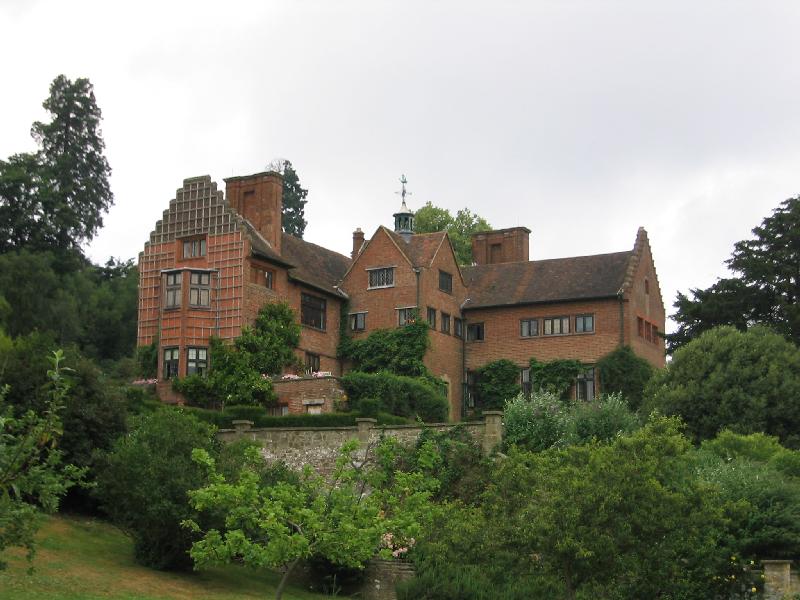
    Chartwell in Kent, where Churchill would often retreat to paint his ‘daubs’

    Dr. Konrad Hitz is a medical director at The Kusnacht Practice in Switzerland. He thinks that the pressures Churchill faced are relevant in all leadership roles. “CEOs and business leaders have many similar pressures to those in political power,” he tells me. “Making big decisions that affect many people’s lives can present an individual with huge challenges and stresses – and I think that has been magnified during the pandemic with many business closures and job losses.”

    Hitz also points to a recent study by the National Institute of Mental Health which found that 72 per cent of executives and entrepreneurs are directly or indirectly affected by mental health issues compared to just 48 per cent of non-entrepreneurs. “A psychological pandemic has been unleashed by the virus,” he argues. 

    So what can we learn from Winston about tackling this pandemic? In the first place, his biography displays strategies of coping which might seem to us less sensible than they did to Churchill’s contemporaries. 

    One of these was drinking, and everybody knows about the obligatory Pol Roger and the bottles of wine at breakfast. Sometimes, we glimpse that this took its toll on his leadership. For instance, on the 6th July 1944, Churchill got very drunk before a Defence Committee meeting. You can feel that Anthony Eden, the then foreign secretary and future prime minister, was underplaying the affair somewhat when he recalled that ‘really ghastly Defence Committee meeting nominally on Far Eastern strategy. Winston hadn’t read the paper and was perhaps rather tight…Altogether a deplorable evening.”

    Hitz thinks this is one area where we need to eschew Churchill’s example: “Individuals are now better educated about the dangers associated with heavy drinking than they were 80 years ago.” But in Hitz’s opinion we’re not out of the woods yet. “Clearly there are still challenges around alcohol,” he continues. “A recent survey in the US indicated that alcohol abuse has risen during the pandemic, with approximately 17 million over-18-year-olds now having an alcohol use disorder, with 10 per cent of children living in a home with a parent who has a drinking problem.” 

    Even so, historians are now beginning to argue that Churchill’s alcoholism may have been exaggerated – not least by him. Everybody knows the famous gag that he had always taken more out of alcohol than it had taken out of him. Andrew Roberts’ verdict feels like a corrective of the myth: “The overwhelming evidence is that Churchill loved alcohol, drank steadily by sipping, had a hardy constitution and was only rarely affected by it.”

    Either way, drink wasn’t Churchill’s only way of coping. Today, there is mounting appreciation for Churchill’s achievement as an artist, and there can be little doubt that his ‘daubs’ as he modestly called them, represented a profound alleviation of stress. 

    Susan M. Coles is an arts educator, who has long been arguing through her APPG for Art, Craft and Design in Education which she runs with Labour MP Sharon Hodgson that the arts should have broader representation on the National Curriculum. She emphasises the good that painting did the wartime leader: “For Churchill it was also an escape,” she says. “Making art is where we step off life’s conveyor belt and have contemplative moments. We use our hands as well as our mind and it’s invaluable to busy people.” This, she argues was the case for Churchill too. “His role was so pivotal in politics that the escape hatch was to making art, and as he mainly worked with landscapes, he re-engaged with nature, which is also empowering in lifting the human spirit.” 

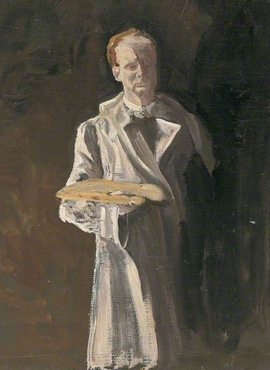
    An early self-portrait by Churchill, thought to have been painted when he was still depressed after the failure of the Dardanelles expedition. Photo credit: By Source, Fair use, https://en.wikipedia.org/w/index.php?curid=66326956

    Over at The Kusnacht Practice, Hitz agrees with Coles’ assessment, although he also points to the many other options, less applicable to Churchill, available at the clinic: “At The Kusnacht Practice, we encourage many patients to be creative and to explore a hobby or pastime that helps them to relax, slow down and remove stresses from their lives. Exercise, reading, cookery, music and art therapy activities such as painting and sculpture can be highly beneficial when employed alongside other therapies. If a patient can find a passion point like painting, that can be a useful tool in recovery.” 

    But through all this, the impression remains that Churchill’s principal remedy was work. Whatever else he crammed into his 90 years, a back-breaking schedule was the dominant fact of his life. Even in the 1930s, which we think of as his period in the wilderness, his work rate was phenomenal. Roberts reports: “In 1930 he gave sixty-one major speeches, then forty-eight in 1931, twenty-eight in 1932, forty-one in 1933, thirty-nine in 1934, fifty-four in 1935, twenty-three in 1936, fifty-five in 1937, thirty-nine in 1938, and thirty-six in 1939, not including hundreds of lesser interventions in Westminster and scores of articles.” Reading this, it’s possible to see how Winston steamrollered his way to the premiership by sheer force of will.

    Sir Winston Churchill, Distant View of the Pyramids, 1921

    For Alastair Campbell, work was also an escape. Millar tells me that she was always amazed at how charming and amusing her husband could be at work, reserving his low moods for her in the domestic setting. Before taking up his Downing Street role, Campbell informed Blair of his condition. “He said to Blair, ‘You just need to be aware that this has happened,” Millar recalls. “And Blair said, ‘That’s fine, I’m totally aware of it’.” Millar continues: “For Alistair, work was the way he dealt with his mental health and he did work phenomenally hard – and was very, very productive. It was a positive in that sense for the government, who were his employers, but it was never good for his family.”

    All of which makes one recall that it was Clementine Churchill all along who bore the burden of Churchill’s exceptional life. When I speak with another high-achieving sufferer Lord Dennis Stevenson, the former chair of HBOS, and co-author of a report ‘Thriving at Work’ which was warmly welcomed by the May administration, he states that he had a similar approach to Campbell: “There are some people who can cope. In my case, I’ve run large companies, and major not-for-profit things, and no one was the wiser. But it’s like walking through glue.” 

    Hitz is familiar with the condition of the workaholic: “We see a number of workaholic cases at The Kusnacht Practice, many of them entwined with other behaviours and dependencies. During the pandemic, work-life balances have been challenged and, with our leadership treatment programmes, we try to reset this balance, encouraging routines and defining clear lines between work and free time.” 

    Sir Winston Churchill, Interior at Breccles, Date uncertain

    The conversation around Churchill then, feels like a measure of how far we have come in the question of mental health. Roberts makes it clear that the the image of Churchill as a depressive has been exaggerated. It might be that this in itself should guard us against inaccurate labelling in this field where definitions are still in their infancy. 

    Even so, he undoubtedly had his low moments. And to study Churchill is to encounter someone highly resourceful, intelligent and gifted who needed to discover his own path forward whenever the Black Dog struck.

    So what conclusions can we draw about Churchill’s life? Hitz quotes Churchill himself: “Success is not final, failure is not fatal, it is the courage to continue that counts. If you’re going through hell, keep going.” Hitz adds that this mantra “is equally applicable now as we start to come out of this generation’s global crisis.” Millar, meanwhile, argues strongly for the need to create networks of support in communities, in line with her own online group which helps the partners of those suffering with poor mental health. Dennis Stevenson agrees, saying that mental health ‘doesn’t need the politicians anymore’, pointing to the momentum already established on the question. 

    But he also has some sound advice: “At first I was very bad at externalising issues and problems – and not just mental health problems. But as I got older, I got better at articulating it.”

    Stevenson’s words remind me of an early scene in Macbeth, when the hero first meets the witches in the Scottish wilderness. He asks them what they are up to, and they reply: “A thing without a name.” 

    It occurs to me that this power of naming is very strong, and that Churchill, the greatest wordsmith ever to assume the prime ministership, showed to a high degree the importance of that when he spoke of his black dog. Now that we too are embarked on that same project to address this issue, there’s much we can learn from his struggles.  

  • Fiona Millar on our hidden mental health crisis in the workplace

    Fiona Millar on our hidden mental health crisis in the workplace

    It’s really hard living with someone with mental health issues. I remember days when I would sit at my desk and think: “I just can’t do this.” But looking back now, it’s one of the things that made me resilient: I know that I can put one foot in front of the other no matter what. 

    One of the things I’ve always thought about Alistair’s mental health is that once he stopped drinking, he transferred his dependency, and his self-medication became work: he threw himself into that to stop himself addressing the deeper problems. He could perform at a very high level in the workplace – but then he’d come home and struggle and I would bear the brunt of that. 

    It was astonishing. We worked together at Downing Street during the Blair administration and I’d see him be amusing, engaging and charismatic with people – but then at home, he’d be good with the kids, but with me he’d crash. I’ve now started doing meetings with other people who live with those suffering mental health problems and it’s very common: people live with fear of what their friends will say, or else they feel responsible as if the problem originates with them.

    In fact, 99.9 per cent of the time it’s nothing to do with you at all. People who are mentally ill can be quite manipulative, and gaslighting is very common. Initially, I just thought Alistair was quite a difficult personality and it wasn’t until he was formally diagnosed that I was really able to say he had mental health issues. 

    Of course, during lockdown people’s working situations have been very unusual – and some people haven’t had any work because they’re self-employed in creative industries. But in general I’d say that people tend to use work as a way to take themselves out of a situation, because if your partner has mental health problems, you have to find things for yourself, otherwise you can get consumed by the other person’s illness. Work is quite a solace – although for the person actually suffering from mental health, often they can’t cope with going to work.

    Alistair was very lucky to be able to work 28 years, even though he was seriously ill, and Tony Blair was always very accommodating. Not all employers are, and there are some toxic workplaces out there. For employers who want to make the workplace a friendly environment, they need to ask themselves not only how they actually do it – but more, how do they do it on a consistent basis?

    That has to begin in an organisation’s leadership – to treat other people as you wish to be treated yourself. You’ve got to do more than talk the talk. If an employee comes to you with a family problem or a mental health concern you have to do all you can to accommodate it.

    It’s too early to say whether there’s any mental health washing in companies, as mental health has only really been a hot topic during the pandemic. What’s concerned me during Covid-19 is the way in which managers closed their office as a cost-cutting device. That was fine in the beginning – people thought it was fantastic to be working from home. But I’ve noticed of late that a lot of younger people aren’t living in particularly convenient circumstances and the novelty has worn off. Working all day in your bedroom isn’t great. It’s not healthy to have a remote relationship with your employer who, after all, is meant to be responsible for your well-being: that means there’s currently a lot of hidden mental health problems in the workplace. 

    I’m all in favour of flexible work – especially for families – but we need to get people back to some sort of physical relationship with the people they work with, otherwise we’ll see casualties from this. People started off not wanting to come to the office and now they kind of want to come back. Managing that is going to be very important, and we’re probably at the crunch point now.

    But by creating this online support group, we’ve hit on a very simple model. There’s no real cost involved, and we’ve got people coming from across the country to our group. At the moment, we’ve limited our numbers to ten or 12, and we’d like to expand it into local communities. This could be tacked onto existing organisations, and I’m hopeful we can do that. 

    To discuss mental health issues with Fiona Millar, tweet her on the Twitter handle @schooltruth

  • Zavfit founder Anna Freeman on why we need a new approach to spending

    Zavfit founder Anna Freeman on why we need a new approach to spending

    By Patrick Crowder

    Zavfit is a new tool that is designed to help you spend your money in more productive ways. Unlike other money-saving apps, Zavfit is designed not only to discourage excess spending, but to encourage you to reinvest that money in other more beneficial areas. 

    The full version of the app securely connects to your bank with view-only permission in order to monitor spending. Then, the app will ask you to rate your happiness with each purchase on a sliding scale of satisfaction. This data is used to track your wellbeing as well as to set spending and saving targets based on areas which need improvement.

    It’s all the brainchild of founder and CEO Anna Freeman. Through her background in finance, tech, and sport, Freeman found strong links between financial stability and mental and physical wellbeing.

    “I grew up competing in sport, so I’ve always had a passion for health, wellbeing, and fitness which has only grown over the years,” Freeman says. “What I hadn’t realised when I was in the tech and finance industry was that worrying about money is the global leading cause of mental health issues.”

    As mental health awareness increases, largely due to the pandemic, the finance industry has begun to take financial wellbeing into consideration. While this is an improvement, Anna believes that it needs to go a step further.

    “Most of the solutions in place are focused on the wellbeing of your finances, as opposed to actually addressing that stress and anxiety that people feel with their money,” Freeman continues. “I knew that we needed to create a health tool.”

    Zavfit offers a free “MoneyFitness” quiz, which asks the user how happy they are with various aspects of their day-to-day spending. This includes questions about post-purchase regret, satisfaction in work, social spending, charity, and physical fitness. I took the quiz myself and despite my mediocre score, the questions got me thinking about how I prioritise different aspects of my spending and how to reinvest that money on better things.

    “The stereotype of being good with money is ‘saving is good and spending is bad’, but ‘save, save, save’ doesn’t really recognise the present and taking care of yourself,” Freeman adds.

    In my case, I found that I am probably spending a bit too much on nights out and not paying good enough attention to my physical health. Rather than simply staying in and saving cash, the philosophy behind Zavfit would suggest that I invest the money saved on a fitness class.

    Freeman believes that focusing spending on healthy, fulfilling hobbies and interests can have a big impact on both financial and mental wellbeing. Freeman’s outlets are singing and sport, so she decided to put her resources into those areas.

    “I remember walking down the road in the sunshine one day and thinking, ‘I have stopped spending on anything else’,” Anna said, “and that’s because I had found those things which really took me out of my head and lifted me up.”

    The pandemic has given many people a chance to think about their wellbeing and break the cycle of habit. Freeman sees this as an opportunity to step back and make important changes moving forward. “There’s been a massive reset on everything, particularly on spending. There’s an opportunity here to think about things differently and to think ‘Okay, I’ve set out what’s important to me, I’m aware of my mental health and that it needs looking after’.”

    As the link between health and finance continues to be explored, new ideas like ZavFit can help push the conversation forward to find fresh approaches to the age-old problems of money stress and non-beneficial spending. Breaking bad habits is never easy, but ZavFit proves that this is both achievable and essential to personal wellbeing.

  • Dean Gustar of The Kusnacht Practice on addiction, the UHNW mindset and why the tone of discussion on alcohol needs to change

    Dean Gustar of The Kusnacht Practice on addiction, the UHNW mindset and why the tone of discussion on alcohol needs to change

    Christopher Jackson talks to the addiction specialist about life in the Swiss clinic – and what it tells us about our times

    Given that The Kusnacht Practice is the leading practice in the world for helping people with addiction issues, you encounter its people armed with pre-conceived notions about them. You try to imagine what the high quality of its many specialists will look like in the flesh. But reality has a way of second-guessing this – and in fact is always more interesting than what we’d pencilled in our minds. 

    Of course, the place is brilliantly staffed and well-resourced – as you might expect. But somehow you’re not quite prepared for Dean Gustar, the organisation’s Head of Clinical Operations, who has an earthy compassion and a depth of knowledge that impresses immediately. The sense is of a man who has lived through many experiences – and indeed he tells me that he has had his own struggles with addiction in the past. 

    The more time you spend with him, the more his presence at the clinic makes sense: this is a smart man, who cares deeply about his patients and understands what people are going through when it comes to addiction of all kinds – everything from gaming and alcohol, to drugs and overeating. 

    “Before I worked at The Kusnacht Practice I’ve never really been around wealth,” Gustar explains. “One of the things I’ve learned is that wealth can be very dangerous. It can be a very lonely place. For instance, it’s very hard for wealthy people to trust other people. And if something doesn’t feel right, they’re used to changing it quickly, with a snap of the fingers. That can make the challenge of behavioural change even more difficult for them.” 

    That feels like earned wisdom. Gustar has that look of unstinting compassion which you sometimes find in the healthcare sector – the look of a man who is somehow never exhausted but instead mysteriously energised by his proximity to suffering. 

    He continues: “And of course, their addiction isn’t really going to impact on them financially so that creates less of an incentive to change. Nobody’s going to come and repossess their house.”

    Gustar lives in Zurich, about 15 minutes from The Kusnacht Practice. Born in the West Country, he also used to live in Peckham, and knows that part of the world well – the sense is of a down-to-earth Englishman somehow deposited in upmarket Switzerland.  “I used to live on the Peckham Estate, and when my friends came over I used to walk them back to the station – they were in fear for their lives,” he tells me. 

    So at what stage do clients normally approach The Kusnacht Practice? “When people come to The Kusnacht Practice, generally the consequences are starting to build – often they may be way over their head with consequences. So it’s a very tough place to be where you begin to realise that one of your behaviours is causing damage to yourself or damage to your family or damage to others.” 

    In addition, patients normally come to Gustar because of a longstanding pattern of behaviour which has itself been of use – or seemed to be of use to you. “The very thing that may be causing the damage, by its nature is going to be very difficult to let go of because maybe it’s been a survival strategy for you to take drugs or drink or overeat or gamble – or whatever it might be.”

    The signs are that during the pandemic these addictions have been increasing as a result of the Covid-19 pandemic: “We’ve seen people whose drinking or drug use has increased as a result of feeling isolated, and not being able to partake in life as they used to,” he explains. And why is that? “Maybe some of the things that help regulate their alcohol use – visiting their parents or going on holiday or feeling productive in their work – have been lost, leading to an increase in other behaviours.”

    And, of course, this is the case even when we have all been less exposed to that dangerous thing, the boozy work lunch. “It’s a good point,” says Gustar. “Some of these boozy lunches, there’s this undercurrent of relationship building, where people are engaged in drinking, and where drinking is a kind of obligation.” 

    But that sense of obligation, especially in beery England, can crop up with great regularity in everyday life. So how do you combat that sense of obligation? “You have to develop your own strategies for dealing with these situations. When it comes to people who care about you or people that love you, if you tell them you’re not drinking and if you feel comfortable telling them why, they should care enough about you just to accept it and support you –and maybe even look out for you in that position.”

    And what about those pressure situations – a wedding, or when we see those friends who expect us to drink with them? “I think in those situations, if you’re starting to feel the pressure or people are applying the pressure. you have to come up with a strategy that can support you in that situation – and that could even be an escape plan.”

    Gustar is aware of the difficulty of the task he faces with those suffering with addiction, and so he is keen to perspectivise what it means to give up an addiction. “It’s very difficult to change any behaviour. So if you do manage to change from a state of dependent drinking, why would you risk it for somebody that’s just a passing acquaintance?”

    I’m reminded of Christopher Hitchens – who died of oesophageal cancer after a lifetime of too much whiskey – who remarked that he might not have drunk so much had he not had a strong constitution. He was able to file his pieces on time, and be successful. Does Gustar see high-functioning alcoholics among his CEO client base? “We do see high-functioning alcoholics and it just makes you wonder how well they would function without alcohol. But they pay a price somewhere, so it could be their relationship or their health – and they’re most likely already paying it in some respects.”

    Sometimes the price can be concealed. “As we get older our ability to sustain it decreases – you can’t easily manage a dependency above the age of 55. Alcohol is just a very dangerous substance for the human body.”

    And yet, if you look at the public discourse, Gustar points out, you wouldn’t think drink especially were particularly dangerous. “I mean – it’s just everywhere,” he says. There’s a kindly anger here – a note which only someone who knows the cost of our exaltation of alcohol could strike. “I’ve watched some of the debates in Parliament, and they’ve had these discussions about “When’s the pub opening? When are we going to get to the pub and drink that pint again?” And if you look at our UHNW clients, there is so much temptation in their lives. If I go to the airport, I mooch around and maybe go to a Starbuck’s.  They go into a business lounge, and there’s a big bar full of free champagnes.”

    To go against these trends and unpick negative behaviours plainly takes willpower – but I suggest to Gustar that willpower isn’t something that’s evenly distributed across the population. Some have it; others don’t. Gustar says: “I think it’s a bit like that Indiana Jones film Raiders of the Lost Arkwhere the sun has to be in place and bounce off here and there and then people change. A lot of things have to be aligned at the right time.” He pauses, then confides: “But you even get people who sit in front of the doctor and the doctor says , ‘If you carry on like this you’ve only got six more months.’. And they carry on doing it. Wealth can be a very lonely place, and the wealthy have a very low tolerance for discomfort.”

    Talking to Gustar is a revelation: here is a man who has taken the decision to work towards helping people. And he reminds us also that addiction is a problem more endemic in our society than we might realise – sometimes as much in the tone of parliamentary debate, and our corporate life, as it is in the pub. 

  • Lord Jonathan Oates: “However hard you try, you can’t change the world on your own.”

    Lord Jonathan Oates: “However hard you try, you can’t change the world on your own.”

    The former advisor to Nick Clegg describes how his upbringing impacts his new memoir

    I decided to write I Never Promised You A Rose Gardenat the end of the Coalition. I went to Ethiopia in 2013 with Nick Clegg, who then was deputy prime minister. That trip brought back for me a lot of memories about running away from home when I was younger. I needed to get it out of my system. 

    I’d decided that the issues around mental health were things that I’d like to share. Growing up, books were my lifeline: they were a way of realising that I wasn’t a completely dysfunctional person. Right from when I was about six or seven, I just consumed stuff. I had a big Dickens phase, a Graham Greene phrase, a Saul Bellow phase. Since my book was published, I’ve had lots of letters and emails from people. Readers say they like the cliff-hangers, and the sort of Dickensian way I have of leaving something hanging at the end of a chapter. 

    I’ve always loved language as well. The King James Bible was something I’d grown up with. My dad was modern in many respects, but when it came to language he saw the King James Bible, alongside Shakespeare, as the standard for beautiful language. 

    I’ve been asked whether my eclectic tastes and interest in language in any way contributed to my liberal political philosophy. I think the more you understand, the more you can be prepared to put the boot on the other foot. That’s why I find the Conservative Party difficult, because so few of them grew up with that understanding.

    My mum was a teacher and taught English at primary school level. She loved English, and loved language. She gave me a great gift once when she said: “There’s no such thing as a bad book. It’s a good book for you.” That helped because there was a lot of snobbishness about Enid Blyton, and the sort of books I was reading when I was six or seven.

    Later, I was in the same halls at Exeter University as Radiohead singer Thom Yorke. We clicked over a bottle of whiskey, perhaps because we were both quite intense. We ended up sharing a house. When I stood – unsuccessfully as it happens – for President of the Student Union, Thom offered to help me and said: “I’ll be your artistic director.” He was a student photographer and he played did some moody images of me which was the best part of my campaign.

    So my book is largely not about politics – it’s about a journey, and running away from home aged 15. It’s about finding that however hard you try, and however much you pray, you can’t change the world on your own by pure force of will. You can change the world, however, by standing together with other people. That means persistently campaigning and fighting and doing lots of really boring stuff: knocking on doors, fundraising and putting leaflets through doors. 

    The other thing which I think is really important, particularly for people in their 20s who are suffering increasingly with mental health problems is that you are far more precious than you’re probably willing to believe. Things can get better. Even when all the obstacles feel really insurmountable, stick with it and let people help you. One of the tendencies when people are suffering with depression or poor mental health is to push people away.

    One time in my early 20s when I was really suffering badly, a friend of mine who I used to share a house with knew I was not in a good way. He also knew that it wasn’t the moment to push me because I wasn’t ready. In the morning when I was on my way to work, I was feeling so down and depressed, and I opened up my briefcase to find he’d put a note in there which said: “Please hold your head up, and be happy. You are a very precious person.” That struck me hard. If he’d tried to tell me that to my face, I couldn’t have dealt with it at that time. That’s my message to people who know someone suffering mental health difficulties. When you feel you’re being pushed away, just find unobtrusive ways to show you’re there. 

    I Never Promised You a Rose Garden is published by Biteback Publishing, priced £20

    Photo credit: By Roger Harris – https://members-api.parliament.uk/api/Members/4549/Portrait?cropType=ThreeFourGallery: https://members.parliament.uk/member/4549/portrait, CC BY 3.0, https://commons.wikimedia.org/w/index.php?curid=86634351

  • Psychologist Melissa Nobile of The Kusnacht Practice on treating young people during Covid-19

    Psychologist Melissa Nobile of The Kusnacht Practice on treating young people during Covid-19

    To mark Mental Health Week, Melissa Nobile, a Psychologist at The Kusnacht Practice, discusses her experiences of offering care to young people during the pandemic

    Mental health has become such a ubiquitous phrase in our society that it is almost verging on cliché – all the more reason, then, to explore in detail what we really mean when discuss it. The best way to do that is to talk with someone who really understands it, and deals with these issues on a daily basis. 

    Accordingly, I Zoom with Melissa Nobile, a Psychologist at The Kusnacht Practice in Switzerland. Nobile’s academic background is at the University of Geneva and the University of California in Los Angeles; she subsequently acquired additional training and clinical experience in Thailand and Europe.

    Nobile’s role at The Kusnacht Practice is particularly relevant for Finito World readers. Nobile is especially engaged in the practice’s Youth Programme, with most of her work conducted with patients between the ages of 13 and 25. 

    For parents, this has been an anxious time. It is difficult to unpick pandemic-specific behavioural changes from developments that would probably have been scheduled to happen anyway, with or without Covid-19. Does Nobile have any advice on that score? “As a parent, it’s okay to see just a little change in your child – signs might include a bit more frustration,” Nobile explains. “But if you’re getting to the point where there’s a really concerning change, then you should seek help.”

    So how do problems tend to manifest themselves? “We look for areas where day-to-day functioning has altered,” Nobile continues. “It could be that the child is suddenly really scared of going to school. At the beginning of the pandemic particularly, children were scared of losing a parent.”

    More generally, the pandemic has been an onslaught on our sense of pleasure in the world – that’s true for young people too. The death tolls reported daily on our news sources chip away at our ability to be joyful. Is there a danger that we’ve become a morbid society? 

    Nobile says that the impact of that is especially significant on those who were already vulnerable: “In those who are predisposed to struggle with anxiety that’s obviously a problem. But it hasn’t been confined to those people: it’s also something we’ve seen in CEOs and high achievers.” That’s partly due to the uncertain time scales which are at the centre of what’s been so challenging about the pandemic: “It’s stressful for everybody. Nobody likes uncertainty for too long, as we have a sense of loss of control if we’re unable to plan for the future. A lot of people end up turning off the TV as they can’t take that morbidity.”

    The danger, of course, is that a stressed-out CEO, however wealthy, is not going to be stressed out in a bubble – in the family unit, that stress is likely to be catching and affect younger members of the family. The Kusnacht Practice is careful to see the wider picture of what may be causing strain in a young person. “We’re very focussed on the stresses that CEOs are under. It’s the difficulty of having it all on your shoulders. We have to make sure that what the parents are feeling doesn’t spread into the life of the teenager.”

    The Kusnacht Practice is a pioneer in the field of ‘individualised treatment’: “Our approach is tailor-made to each young person coming in,” Nobile explains. “In group settings, the patient comes in and has to adapt to the programme and the setting. It doesn’t work for a lot of people. What we do is listen to the person coming in, and examine their specific problems – whether it be a specific symptom, or pandemic struggles, or something else altogether.”

    Crucially, this individualised approach is matched by an equally individualised family programme. “We’ll get as many people as possible on site whenever possible – siblings, parents, grandparents, even nannies. They’re going to go back home, and back into the family system, so changing someone without changing the rest of that family system usually doesn’t work.”

    Nobile reports an increase in cases where she’s needed to orchestrate a family therapy approach. “I’m doing more and more sessions where I do parental coaching around a situation. This will sound simple in theory but in truth, it’s quite complicated. In some families it’s about going back to really good communication. Uncertainty will give room for people to imagine the worst. What we need is for parents to explain as much as possible – and in words adapted to a child – what is going on. If you don’t do that, a child may construct more catastrophic scenarios than is actually the case.”

    Nobile exhibits a profound understanding of her clients: “Children or teens are antennas,” she says. “Given that, it’s important for parents to say: ‘Listen, this is a difficult time but we’re going to be okay’.”

    So what can we all do to improve our domestic lives? Nobile advises focusing on specific family rituals so that no member of the family in question is isolated. “It’s important to have that time where you still cook or go for a walk together. That will always be beneficial. I’ve had a lot of teenagers lately where they’ve found experiences in the pandemic which are very enriching. Some have come out thinking, ‘Even when things seem terrible, I’m able to cope with it and I can talk to someone’. Some have built that vital resilience.”

    Even so, the long-term picture remains uncertain, and that creates another layer of problems. “There’ll be a minority group for whom difficulties will persevere,” Nobile says. “There’s the young student who maybe acquired a gaming addiction in lockdown – that will take time to treat. Or else there’s those young people whose parents have lost their jobs at this time. In those instances, we’re discussing a more long-term impact.”

    Career issues arise again and again, according to Nobile. “During the pandemic, we had a lot of time on our hands. That creates a lot of existential questioning, perhaps among young people who were already predisposed to that anyhow.”

    Fortunately, The Kusnacht Practice has a remarkable range of resources at its disposal. Business coaches and mentors and psychotherapists are on site, and Nobile makes sure her clients are able to explore their interests with a view to shaping their future. 

    Given The Kusnacht Practice’s rarefied level of treatment, a lot of the young people Nobile sees are dealing with issues related to having successful parents. “If you have a successful parent, what does that mean for you? That’s not always easy to figure out. You might have a lot of resources, and accordingly, a huge number of choices. Paradoxically, that can make you petrified. For every door you’re able to open, you’re going to have to close so many others. That can freeze you in place.”

    So how does Nobile manage that? “That’s what psychotherapy is all about, figuring it out in the context of each person’s life story.”  

    One might think that returning to the family unit after treatment might be difficult. But Nobile gives a nuanced reply. “It’s a minority of the youth we receive who come to us because they want to. Most of the time the parents in question have been very concerned for a while. But by accepting the need to come here, they’re sending a signal: ‘Yes, I have a problem’.  And admitting the need for help is incompatible with the normal developmental process of youth who strive for independence. After a few days they however usually realise that this is quite a nice place! They can set goals, work out problems they are facing and learn new skills – and find their voice.”

    And returning to the family – is that fraught with danger? Nobile doesn’t see it that way. “We like to see it as an opportunity. Ultimately, life is not with us – it has to be back home. But once clients leave us, we provide daily support with virtual sessions with the main therapist and they can always come back for ‘recharge weeks’.”

    It has been a difficult year for many, but it creates optimism to find people like Nobile working on the front lines, committed to the healing which all of us may feel we need after the tribulations of 2020 and 2021. 

    Nobile was to talking to Christopher Jackson. Go to https://kusnachtpractice.com