Tag: Lifelong learning

  • Brooks Newmark on Rwanda, Lifelong Learning, and His Humanitarian Work in Ukraine

    As an MP, over 25 per cent of the people who approach you for surgeries is generally about their children and their children’s education. My mum didn’t have much education – she left school when she was 12 or 13 – she was also a great believer in having a good education, and having me her eldest child going to Harvard Business School and Oxford was a proud thing for her. So the importance of education has been instilled in me from a young age.

    While I was an MP, in my second year in Westminster around 2007, I had the opportunity to work on a social action project in Rwanda. This was post-genocide Rwanda when they were still trying to rebuild the country and Claire Short, who had been Blair’s International Development Secretary, donated a huge amount of money for Rwanda. The UK at the time was the largest donor to Rwanda.

    Cameron decided this was important, and a trip was organised with eight MPs, and we worked on five different social action projects. I was in charge of a project which involved helping to fix up a small nursery kindergarten in a poor area in Kigali. There were 83 kids. I put in around £5,000 of my own money and we fixed up the school: we got electricity, we had two big water tanks, a lot of rooves and walls had holes in and we fixed that up.

    David Cameron then came over for two years to see the projects we were doing. And I remember one of the journalists who was with me came and visited me and he said: “You’re here for a couple of weeks and then leave it. What difference can you possibly make?” I explained that the infrastructure was better and so on.

    Back in the UK, six weeks later, I received a phone call saying: “Rwanda Health and Safety want to shut it down”. I said: “What do you mean?” He said: “Well there were 83 kids and now there are 343 children there in these tiny classrooms.” So I flew back and I met with the Minister of Education and I said: “Don’t close the school down. I will rebuild it.” In my head I thought it would cost me £100,000.

    I found a new site which I bought about a kilometre away, and spent two years getting planning permission, which I finally secured. We had a foundation laying and the President decided to come and I asked him why he came. He said: “Most people come to me giving advice. You came, saw a problem and put your hand in your pocket to fix it.” He added: “I would like you to do one thing: make sure there are all Rwandan teachers.”
    At that time a lot of teachers came from surrounding countries like Uganda, Tanzania and Kenya and so on. So I took that on board and we finally opened the school in January 2012. I then created a charity called a Partner in Education and we went on to build a secondary school. By 2017, we were ranked in the top three in the country, with nearly 100 per cent Rwandan teachers. At that point, I built a teacher training centre too.

    When I left Parliament in 2015, my old tutor came to see me and said: “Brooks what are you doing next?” He said: “We’ll figure out what exactly you do.” In 2016, I was sitting next to a Professor in the education department and I was asked to give a talk. I was asked to sit in on his class. I suddenly realised how little I knew about education even though I had this school.

    After three classes I asked if I could do his Masters. I passed and got in. I was 60 years old, but I always love learning. It’s never left me. I went back to university at the age of 60 and my dissertation focused on fine motor proficiency of seven year old children as a predictor of academic achievement.

    They then said I should stay on and do a doctorate. I decided to look at policy-making in Rwanda. I realised there are a lot of policy ideas which are generated without real focus on outcomes. For instance, they have this thing one laptop per child. But if there isn’t broadband in schools, or the teachers aren’t trained you won’t get satisfactory outcomes. We can’t really think about these things in a linear way.

    I decided to look at it through the lens of a systems approach and consider what enables and what constrains policy implementation. For instance, if teachers have only rudimentary understanding of English they can’t overnight suddenly be able to deliver lessons in English to children who themselves don’t speak English. It was understandable why the Rwandan government wanted to bring that in; but this top down approach wasn’t working.

    Having been in government myself, I can say with some authority that we have a habit of coming up with great ideas which in principle sound good, but we don’t think enough about who we need to bring on board to implement these things properly.

    But things happen in life and get in the way. I started my DPhil and then in 2020 Covid hit, and I couldn’t do my field research. Then, my mum got sick in 2021 and I could see from January she would pass away, which she did in May of that year. Finally I did some research in November 2021, and then suddenly the Ukraine war starts.

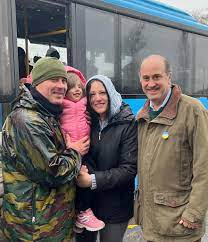
    It seems I will continue to find reasons not to work! I saw a friend of mine was on the Polish border moving people along refugee centres into Europe. I messaged him and asked if I could come and join him. Four days became two weeks. Soon, I began bringing buses into Ukraine from Lithuania, moving people from Kviv and Lviv to the Polish borders.

    As the war moved to the East, I had hubs across Ukraine, and I spent a lot of time in Kharkiv: we moved 1,000 women and children out of a Russian-controlled area. To do that we had to move 500 metres of anti-tank mines, which was an amazing achievement.

    I am torn between doing what I am doing in Ukraine and not wanting to drop the ball on my DPhil. I’m trying to navigate with my supervisors between my work with Ukraine and getting to the next stage of my DPhil.

    But the moral of the story is you’re never too old to learn. While my wife does Sudoku as a form of brain gym, I have my doctorate. Having started 40 years ago, I feel much better prepared through having had life experience in business and as an MP.


    Brooks Newmark was formerly Minister for Civil Societies

  • Why These Employability Skills Are Key to Career Success

    In today’s competitive job market, it takes more than technical expertise to stand out. While specific qualifications may get you noticed, it’s employability skills-transferable abilities like communication, problem-solving, and resilience-that truly make a difference in landing a role and thriving in it. In fact, a staggering 80% of employers report prioritising these skills over technical know-how when hiring.

    With globalisation expanding job markets, businesses now look for candidates who can work effectively across cultures, adapt to changing demands, and contribute to a positive team environment. The good news? These skills can be developed. This article dives into what core career skills are, why they’re essential, and how you can hone them to boost your career prospects.

    Why Professional Skills Are Essential for Career Success

    They form the backbone of any successful career. These skills allow you to adapt to various work demands, engage effectively with colleagues, and find solutions in complex situations. In today’s global workforce, employers value individuals who bring more than technical expertise—they seek candidates who add value, work well within teams, and handle challenges with confidence.

    Employers increasingly look for individuals who can face tough situations, collaborate effectively, and communicate across diverse settings. By developing these skills, you’ll significantly enhance your career prospects and position yourself for long-term success in a fast-evolving world.

    Steps to Develop Key Employability Skills

    Now that we know why employability skills matter, let’s explore practical ways to develop them:

    1. Communication Skills
      Communication is at the heart of every successful workplace interaction. Improving both verbal and written communication helps you articulate ideas clearly, engage in discussions confidently, and present information concisely. Whether it’s through a well-crafted email or a thoughtful presentation, effective communication is about conveying your message impactfully and efficiently.
    2. Teamwork
      The ability to work well in a team is essential in nearly every role. Being a good team player involves actively listening to others, contributing ideas, and respecting diverse perspectives. Strong teamwork skills not only improve group outcomes but also enhance your reputation as a collaborative professional who can fit seamlessly into any team dynamic.
    3. Problem-Solving
      Employers highly value employees who can assess situations, think critically, and come up with creative solutions. Strengthening your problem-solving abilities can be as simple as facing challenges directly, learning from past mistakes, and maintaining an open mind when brainstorming solutions.
    4. Resilience and Adaptability
      In today’s fast-paced world, setbacks are unavoidable. Resilience—the ability to bounce back from challenges—helps you maintain productivity and positivity even when things don’t go as planned. Being adaptable means you’re able to change course when necessary, a valuable trait for today’s dynamic job landscape.
    5. Work Ethic
      Demonstrating a strong work ethic is often what sets the best employees apart. This means showing dedication, consistency, and an eagerness to go above and beyond, even in routine tasks. With these traits, you’ll build a reputation as someone who can be trusted to deliver high-quality work, even under pressure.

    The Foundation of Professional Success

    Communication is at the heart of workplace success. It’s more than just getting a message across; effective communication involves speaking clearly, writing concisely, and listening actively. Employers prize those who can confidently convey ideas, adapt to different audiences, and reduce misunderstandings—all key to fostering teamwork and building strong professional relationships. Whether you’re pitching an idea, responding to emails, or engaging in a meeting, strong communication skills enable you to collaborate effectively, support shared goals, and make a positive impact in any role.

    The Importance of Teamwork and Collaboration in Today’s Workplaces

    One skill employers often look for is teamwork. In any professional setting, your ability to collaborate, share ideas, and listen to others’ perspectives greatly impacts team success. Whether working within a department or in cross-functional teams, collaboration helps you leverage diverse strengths to reach shared goals.

    Being a strong team player also means supporting colleagues, giving constructive feedback, and handling conflicts professionally. Your capacity to engage productively with others highlights your adaptability and enhances your employability.

    Problem Solving for Career Growth

    Problem-solving is an essential skill that can significantly impact your career development. In a world where challenges and unexpected obstacles are inevitable, the ability to approach problems with a clear mind and strategic thinking can set you apart. The most successful professionals are those who can identify the root cause of issues, develop solutions, and implement them effectively.

    Effective problem-solving is not just about finding quick fixes; it’s about using creativity, logic, and resourcefulness to tackle complex situations. Whether it’s troubleshooting a technical issue, improving a process, or managing a conflict, your problem-solving skills demonstrate your value to the team and organization. By continuously honing your ability to address challenges head-on, you build a reputation as someone who can be trusted to navigate difficult situations and contribute to the long-term success of your career

    Cultivating Resilience and Work Ethic for Sustainable Career Growth

    Resilience and work ethic are indispensable in any career. In a fast-paced work environment, setbacks are inevitable. Resilience allows you to rebound from challenges and stay motivated despite difficulties. Strengthen resilience by setting realistic goals, celebrating small achievements, and approaching setbacks as learning experiences.

    A solid work ethic complements resilience. Showing up with dedication, consistency, and a willingness to contribute beyond your job description builds a strong reputation. Over time, these qualities pave the way for leadership roles and new career opportunities.

    Never Stop Learning: The Key to Long-Term Employability

    Finally, the most important skill in your career development toolbox is the ability to keep learning. The world is constantly changing, and staying relevant means continuously evolving and adapting. Whether through formal education, certifications, or learning from experience, a commitment to growth keeps you ahead of the curve.

    Employers value individuals who proactively seek new knowledge, demonstrating dedication to their own growth and the success of their organization. By focusing on these essential transferable skills, you can open doors to new opportunities and set yourself up for long-term success.

    If you’re ready to take the next step, have a look at Finito Education. With expert guidance, tailored resources, and practical support, Finito Education is designed to help you build these vital skills and navigate the job market confidently. Invest in your future today, and make employability skills a core part of your career journey.


  • Why lifelong learning should never stop

    Why lifelong learning should never stop

    Stuart Thomson

    Too often when we think about lifelong learning, it applies only to those who have been in the workforce for some time.  The reality is that the learning journey should never stop.

    The apparent confusion about terms is partly a result of ‘lifelong learning’ being misapplied to cover only more established team members who need to update their skills or if someone needs to re-skill after losing their job.  But this is all too little, too late.

    Instead learning needs to become a fundamental part of any role from the very outset, from Day One, not simply ‘added in’ later when gaps start to appear. We must get away from the idea that learning ends, or is at best paused, after sixth form, an apprenticeship or university.  

    New employees are often subject to a world of initial training and induction to ensure that they are up-to-speed in the new role.  But once that initial period comes to an end then there is a danger of learning silence.  That person has had their allocated training and the employer moves onto the next new intake.

    Sometimes new employees are expected to impart their knowledge to more established members as a sort of quid pro quo for learning on the job. There is no doubt that such a practical element is essential but there is no guaranteeing that either party is particularly adept at helping the other.  So, it may be that something more structured and formal is required as well.

    It should not be a case of simply being thankful for whatever support you are given.  Instead, we should all be more demanding about the training options open to us, especially early on.  Problems often arise when there is a gap between an induction and then a return to training.  That gap must be filled.  The bigger the gap, the more there is to fill.

    The gap is what causes problems.  These will vary depending on the role but could include an unfamiliarity with current thinking or new technologies, or lacking the skills necessary to cope with a new challenge.

    Some employers will allocate funding or a learning budget per person but that does not always apply to everyone across an organisation.  Again, there can be an over-emphasis on more established team members.  This lack of equality across an organisation needs to be challenged.  Employers could also have a bigger role in communicating more about the potential options available.  It would make joining them even more attractive.

    But we also have a personal responsibility as well.  Even if funds are available then it is up to us to use them. That means being able to identify where our weaknesses are, what we need to improve and frankly how we can continue to get ahead of others as well (internally as well as externally).  We all need to challenge ourselves and ask how we can be a leader in our chosen field and what training support we need to achieve that.

    Looking at what others are doing and being inspired by them is a good starting point.  But also look through training brochures and check the courses available. Consider what your professional and trade bodies offer.  Maybe try and spend time with other teams in your own organisation as well.  The role of mentors too can be hugely helpful in helping identify what to address.

    There needn’t though always be a cost associated.  Many bodies offer free or low-cost options, especially to existing members.

    It doesn’t need to be all about you either.  If there is a common need across a team then employers could provide you all with something as it may be cost effective for them.  Certainly, that has been my experience when dealing with training on public affairs and reputation management issues.

    Teachers, lecturers, trainers of all types have a role in getting us into good habits focused on ongoing learning.  So too do employers.  But we must take responsibility and hold employers to account on training and remind them of the benefits – not least improved retention and loyalty.

    We need to beware of the emergence of learning gaps and think about lifelong learning as the truly continuous process it should be.

    The writer is Head of Public Affairs at BDB Pitmans

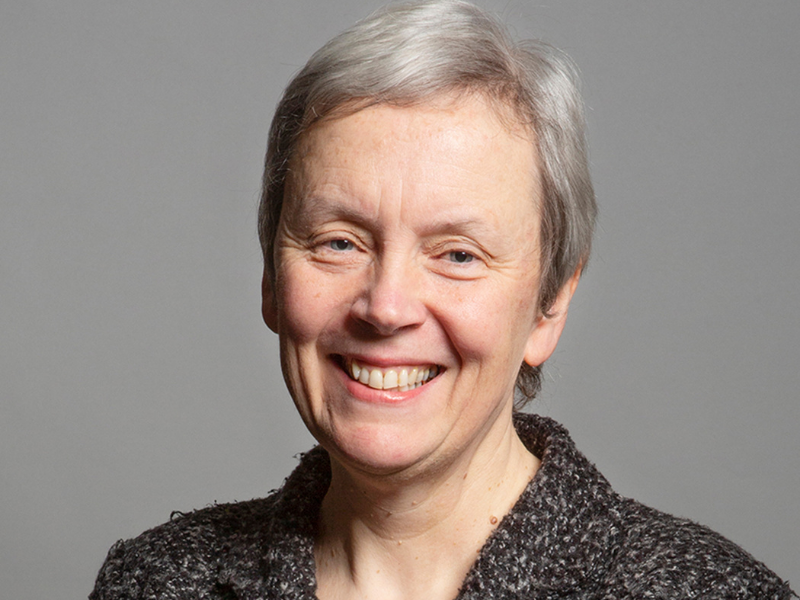
  • Margaret Greenwood: “We need to imagine another way of doing things”

    Margaret Greenwood: “We need to imagine another way of doing things”

    The former shadow schools minister on adult learning and why we need better musical education in the UK

    I’m a great believer in adult education. It’s a fantastic way to open up new ideas – especially in a good adult education centre, which creates a sort of formal environment. When these places are working well, you might see people saying, “I want to do needlework” or “I want to study chemistry”. As we move towards automation as a civilisation, it becomes more and more important that we focus on lifelong learning and that we follow through on the whole reskilling agenda. 

    The problem with this government is I don’t think they understand the untapped potential in our society or the knock-on costs of a huge issue such as child poverty. Take malnutrition – we know the impact this has on the development of the brain, and on the emotional well-being of children, and their ability to learn. Of course, you could highlight the economic impact of that – and that’s something we should do. But I’m more worried about the human impact.

    “We want a population where whatever life might throw at people, they have the agency to change”

    We need to imagine another way of doing things. For instance, imagine if we could sort these kinds of problems out earlier in life: we’d be in a much healthier place as a society. We want a population where whatever life might throw at people, they have agency to change, and to forge their own paths. What happens instead when that’s not done can be heart-breaking; there are people who feel they’ve suffered an irreversible defeat in life. I think we can be better than that.

    I’ve seen the toll at first hand. I remember when I first went door-knocking as a candidate in my constituency of Wirral West. There was a 28-year-old woman with four young children and I asked her how things were. She said: “I don’t mind it when I can’t feed myself, but I hate it when I can’t feed my children.” That’s damning. I also met a primary school teacher in Manchester and she left teaching because she was finding it too upsetting to try and feed the schoolchildren every day. She’d buy loads of bread and jam and give them milk, paying out of her own money. She didn’t mind paying for it but she found it too upsetting. Understandably she felt it was not her job. The government needs to focus on the fundamentals of poverty, hunger, and the emotional well-being of children. 

    Sometimes it can be things you might not think of which are most empowering. Education generally remains undervalued, but take the example of musical education in this country. Our access to that is very patchy indeed. It depends on the type of school you go to whether the local authority still has the money to offer serious exposure to music. 

    It should be a guiding principle in our society that every child has the opportunity to learn a musical instrument. I remember a school in Everton which made a point of making sure that everybody in the school should learn an instrument – and they didn’t just stop at the children. They also made sure that the staff, and the catering staff had access to music; they wanted to encompass the whole place in that opportunity. 

    And why might that be important? I think it’s clear. Learning an instrument develops the attention span, and creates fantastic listening skills – not to mention emotional empathy. In addition to that it encourages working with other people – and no matter what you end up doing in life, that’s going to be of crucial importance. But I think it’s more even than that. It’s about the sheer enjoyment of it, and having something you take forward in life – a kind of buffer. 

    People might also be surprised by how much music can touch you; it’s not this elitist thing. I remember going to a retail outlet to buy a hi fi. I wanted to check the speakers and I put on a Bach violin concerto. Everyone stopped. There were all these people looking at fridge freezers and things, who’d never been exposed to classical music before. This woman came over to me with a baby and a buggy and wrote down the name of the piece of music. 

    That’s what I mean by adult education. Yes, everyone wants a job and to get on in life – but we also know that life is so much more than that. We’ve a long way to go before our education system is matched to that belief. 

    Margaret Greenwood has been the Labour MP for Wirral West since 2015 and has served as shadow schools minister