Johanna Mitchell
I had no idea that I would work as an education consultant, until I was in my mid-30s, running a small school for the Lawn Tennis Association. The education part I got from my father and my sense of optimism from my great aunt, Pat. My own experiences of education made me want to help other children. When parents ask me to find a ‘leading’ school or university for their children, I always ask what they mean. If it doesn’t cater to the specific emotional and social needs of their children, it’s leading them nowhere.
My father was an academic. A North Londoner, he attended Haberdashers, after failing the 11+. Prior to this, he was told by his prep school head that he would amount to nothing. Like many young men, he started to thrive at aged 13-14 and went on to have a career in food technology. He was said to have developed the recipe for Quavers crisps whilst at Unilever.
His colleagues described him as the Patrick Moore of the food science world. He was the archetypal mad professor and was often to be seen on stage, trying in vain to put his hands into the pockets of his inside-out lab coat. His secretary remembers him telephoning her regularly from airports to ask: ‘where am I going?’.
Whilst my father was secular, my Roman Catholic mother was the major force behind my schooling. My father confided that there were two things that filled him most with trepidation: one was the nuns and the second was women, of a certain age, telling Peter Jones’ customer services that they were ‘cross’. The head of my first secondary school, a convent, was the formidable Sister Mary Angela.
At parents’ evenings, she would send my father into a spin. At Sister Mary Raymond’s funeral, an elderly piano-teaching nun with six fingers on one hand, Sister Mary Angela marched to the altar and slammed her coffin lid shut, exclaiming ‘thank God she’s gone!.’ It was pointless getting on the wrong side on Sister Mary Angela.
A gentle soul, who didn’t hold with too much authority, my father sneaked a replacement tape player into my boarding house, right under the housemistress’s nose. My old one had been confiscated for playing Pink Floyd’s The Wall loudly. Later, at another school, I was expelled, with my friend Isobel, for posting questionable photographs on the head’s door in the middle of my night. My father was summoned and when Father President handed him a manila envelope, containing said photographs, my father took them out, examined them and burst into laughter. I loved him for that. Priests didn’t frighten him as much as nuns. I’m not sure why. Perhaps it was the added female dimension. Or the veil.
After this, I had to sit my A levels as an external candidate, at schools which had the same specialist papers. Oakham School were very kind. My father decreed that I would have to self-fund part of my private tuition by working in a launderette and waitressing. I know how to operate a dry-cleaning machine and am a dab hand at silver service. It was a challenging period. Despite being predicted straight As, I lost all my university offers, and had to take up a clearing place. In my work with Lumos Education, I feel an affinity with children who have experienced ruptures in their education.
Post university, I went to live in Paris for a few years, teaching English, working as a fille au pair and doing a postgraduate at the Sorbonne. I wanted to be an academic, like my father – maybe in English or French literature. He himself said he would have liked to have been a Bond hero. Or perhaps, a politician. He saw both as more glamorous. His own father had overseen general election campaigns for Conservative Party central office. So he had some understanding of politics. His one and only student job was delivering Conservative Party campaign leaflets throughout Hampstead and Finchley. No launderettes for him!
Back in London, I joined the civil service. Sir Humphrey stalked the corridors of my first department. I remember one senior civil servant telling me that I could only handle confidential files if I put on the pair of white gloves which were in the cabinet, with said files. I didn’t double check invites that had been printed for the Science Minister inviting his guests to the Zuckerman Science Lecture that year, and afterwards to a buffet supper. The letters went out inviting guests to a ‘buffer supper.’ Although this seemed quite appropriate, given some of the audience, the minister was, understandably, not happy.
In London, I began to spend more time with my great aunt Pat, whom I hadn’t known well as a child. She divided her time between London and Sydney, was from the Irish/Australian branch of the family and a real bon viveur. Unfailingly cheerful, she lunched most days at Frantoio on the Kings Road. Three months pregnant with my youngest daughter, I arrived for a pre-lunch drink and she filled a half pint class with brandy .
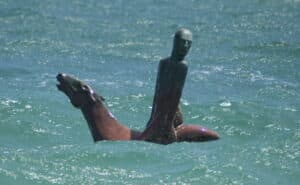
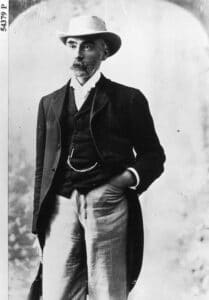
When I refused the drink: ‘lily-livered all your generation are! All vegetarian’, she said. Once her back was turned, I tipped the brandy into a pot plant (which was conspicuously absent on my next visit). Both Pat’s sons had pre-deceased her, but she was just incredibly resilient. Her family history was both entrepreneurial and tragic. Her grandfather, my great, great grandfather, was Charles Yelverton O’Connor, the engineer who constructed Freemantle Harbour. He rode into the sea and shot himself after being criticised, for his work, in the Times. There are two statues commemorating him in Freemantle.
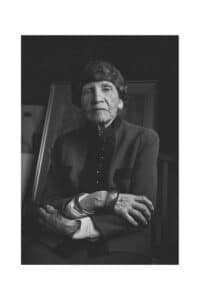
Her aunt, my great, great aunt, was Charles’ daughter, Kathleen O’Connor, the celebrated Australian impressionist artist who defied the patriarchy surrounding women artists of her time, and lived to her 90s. Pat had some of her paintings in her Chelsea home. My husband and my daughters enjoy painting. Pat lived until 100 and, even in her nursing home, she shared a bottle of good red with her fellow residents every night. I learned a lot from her – mainly that your glass should always be half full.
Some of my dearest friends today are from the civil service, school and university. Interestingly, in my time there, there were a lot of civil servants who had been raised in the Catholic church. Whether or not you continue the religion into adulthood, it does give you a sense of service. I love helping families to navigate global education systems which can seem incredibly complex. Pastoral care is so much better now and we understand more about the emotional health of the child. There are still key improvements to be made in education, but it’s far cry from my experiences in the 1980s.
My father and aunt Pat were givers. Dad loved to help others, young academics and children whom he tutored in chess. He sponsored a young girl’s education in India and, despite being an incredibly busy man, he wrote to her regularly. He didn’t give a fig for money, rank or power. He always said ‘be kind, for others are fighting a harder battle.’ I didn’t understand exactly what he meant then. I do now. We have a picture of Plato on our kitchen wall, with his quote below. My daughters have stuck a moustache on poor Plato. Having both studied ancient Greek, they should know the importance of this great philosopher.
My father was also a man of his generation, without much freedom to express his emotions. He would have had more emotional freedom now. I remember him crying three times: when his first marriage fell apart, when he watched a programme on Siege of Leningrad and on the day of the Brexit referendum result.
I’ve made so many mistakes and continue to do so. So did my father and my aunt. It’s essential to learn from them. And to hold ourselves accountable when things go wrong. Staying in one’s integrity, and treating people well is not always easy – but it’s the most important thing. My father understood this. With challenge comes growth.
Ancestral lines are not just linear. Their branches grow thick and dense with our colourful ancestors whose loves, hopes and losses were not so very different from ours. When asked, most people can’t remember the names of their great grandparents. How quickly we are forgotten. A reminder to live for now and to do our best work.