Tag: Labour Party

  • ‘Room for improvement’: Tim Clark reacts to Bridget Phillipson’s first speech to the education sector

    Tim Clark


    Last Thursday (7th November) Bridget Phillipson gave her first major speech to the education sector at the Confederation of School Trusts’ annual conference. Her speech was personal, extremely positive and encouraging but also showed hints of naivety and even a lack of realism and understanding of the current situation in schools.

    She began, as her predecessor, Gillian Keegan, always did, by talking about her own journey from a disadvantaged background to becoming Secretary of State, something to be applauded and respected. After all, what is the prime purpose of education other than to nurture, develop and to open doors for all, regardless of background and ability? Her recurring theme was “achieve and thrive”.

    She highlighted the appalling inequality that still exists in this country and the fact that where you live and where you go to school are still key determinants in your educational outcomes. This is clearly wrong, even immoral, in a modern, advanced nation: every child should be able to access a world class education. Understandably, she enthusiastically listed several decisions made by the Labour government: the fully deserved 5.5% pay rise for teachers and the £2.3 billion increase to the core schools budget (although much will be taken up by the pay rise and the inexplicable hike in employers’ National Insurance contributions).
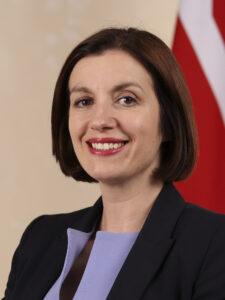
     

    Bridget Phillipson
    05/07/2024. London, United Kingdom.Secretary of State for Education,Bridget Phillipson poses for a photograph following her appointment to Cabinet by Prime Minister Sir Keir Starmer in 10 Downing Street. Picture by Lauren Hurley / No 10 Downing Street

    I also welcome her attitude to the teaching profession, “Teachers are partners not enemies” and the use of experienced professionals, rather than SPADS who have never stood in front of 30 stroppy teenagers on a wet Friday afternoon, to lead on various developments. I should have liked, however, to see a greater involvement of the profession as a whole. In my first, “Better schools, The Future of the Country” report in June 2023, I called for the establishment of a National Schools Council which would regularly and formally bring together ministers, civil servants and elected representatives from all areas of the school system. Real improvement will be dependent on the active involvement of those who successfully do the job, not those who just talk about it.

    Phillipson no doubt pleased many by offering to spend more on “crumbling classrooms”, referring to the recent Budget and the long overdue additional £550 million for rebuilding and the extra £330 million to improve the condition of our schools. We should not forget, however, that RAAC and asbestos existed at the time of the previous Labour government but rather than resolving these issues twenty years ago, it decided instead to spend the money on building a limited number of new, architectural masterpieces rather than on resolving underlying issues in all schools. Eye-catching new builds are presumably deemed more helpful at elections than a new roof here or a new staircase there.

    Clearly these are early days, but several of Phillipson’s comments do bode well for the future. The curriculum and assessment review may result in a curriculum that is more accessible and which will enable more young people to achieve and to make a positive contribution to the economy and society (but, I hope, without adopting a “prizes for all” mentality). The changes to Ofsted will, with any luck, lead to an inspection system that is far more clinical, accurate and useful to parents, schools and government, although we are yet to see what will take the place of the single, overall inspection grade. Providing early intervention for SEND pupils and of tackling the current atrocious absence rates [one in five children is deemed “persistently absent”] are both areas urgently requiring dramatic intervention.

    For all its positivity, however, there are two areas where I feel the Secretary of State’s speech lacked authority or understanding. The first is tackling the absolute crisis in teacher recruitment and retention. She made much of Labour’s manifesto promise to create an additional 6,500 teachers but, despite being an attractive soundbite, the number shows a complete ignorance of the magnitude of the problem. Last academic year, over 40,000 teachers (over 9% of the workforce) quit the profession for reasons other than retirement. In the same timeframe, only one half of initial teacher training places were filled (and only 57% in the previous year).


    This is the perfect storm – both retention AND recruitment. With over 20,000 schools in England, this equates to losing almost two teachers for every school; 6,500 new teachers is not even one new teacher between three schools. This is a crisis of extreme proportions and although Phillipson claimed she was not guilty of “a plan for happy ignorance”, much, much more needs to be done. The last administration pointed to the fact that there are in fact currently more teachers than ever before, but this ignores the fact that there are also 74,000 more pupils than in the previous academic year or that many of the additional teachers are either overseas trained (not in itself negative, but it obviously depends where and in what type of system they trained) or unqualified – hardly a recipe for dramatically raising standards. It is great teachers that change young people’s lives: until this crisis is resolved, any talk of curriculum, inclusiveness, standards or, indeed, any education topic, is simply pie in the sky.

    The area of Phillipson’s speech which has probably caused the most debate, is where she spoke about standards and the need for young people to be happy in schools. A survey has shown that one in three 15-year-olds “don’t feel happy in school. That’s worse than the average across our OECD neighbours”. Interestingly, this is the only international comparator that she chooses to quote: not the recent international reading and numeracy tests which, under the previous government, saw our comparative position rocket. Her message was clear – schools should not concentrate on academic achievement: “A*s alone do not set young people up for a healthy and happy life……This government will always be strong on standards….[but she warns against falling into]  “the trap of chasing a narrow shade of standards, structures-driven rather than child-focused”.

    Firstly, the vast majority of schools are not blindly focussed on exam results – to suggest that they are is simply insulting to all of us who have spent our careers committed to pastoral care, extra-curricular activities and to the development of the whole person. But why do some schools prioritise academic achievement? Not only is it the key to unlocking the future for every young person, it is also the metric by which schools are publicly judged – the annual examination performance tables. Phillipson makes no mention of scrapping these and they remain a central tool for how government and parents judge schools. Of course, issues such as “happiness”, ethos, the hidden curriculum and even extra-curricular activities cannot be quantified in the same way that examination results can – and nor should they. Let us understand that what makes a truly great school and gives it that special soul and feel, cannot always be defined in a league table. This is not a call for scrapping league tables, but if you chose to publicly rank schools according to their exam results, do not criticise them for playing the game.

    There is a clear criticism of previous governments in much of what the Secretary of State says: “previous governments have had tunnel vision……a sole focus on achievement is doomed to fail”. Anyone who has ever worked in a school, even briefly, knows that education is about so much more than exam results, but what she seems to fail to appreciate is that, sadly, this country is currently facing a genuine issue with academic standards.

    In recent years, England has done remarkably well in international league tables [PISA and PIRLS] but we must not confuse comparative ranking with a real improvement in standards. Yes, England has outperformed many competitors, which in itself may mean that our system has been more resilient to COVID and other pressures than that of other countries, but if you read these reports, our real terms performance in certain areas has declined at a frightening rate of knots: some maths performance is the lowest it has been since 2006; less than half of children feel confident in reading (it used to be more than half) and, what I personally find more worrying than anything else, less than one third of children going to secondary school now like reading. [And before anyone says this is the result of social media, our performance in this indicator is twenty points behind the international average.] In addition to making children safe and happy, we also need to raise academic standards as a matter of urgency and ensure that our schools produce youngsters with the knowledge, skills (soft and hard) and understanding necessary for them to contribute actively to society.

    Twenty years ago, I attended a conference which looked at the two trending education initiatives of the day, “Every Child Matters” (English) and “No Child Left Behind” (American). Unfortunately, the keynote speaker got tongue tied and called for a system where, “No child matters and every child is left behind”. The accidental slip inadvertently highlighted a very real danger – that political point scoring, that change dictated by those without knowledge or experience and that good, but flawed, intentions can seriously damage the education we provide for our young people. I have never doubted the sincerity and commitment of any Secretary of State or Minister of Education to do their very best for young people, but if the current and future incumbents want to really make a positive difference, they need to understand a few basic truths:

    ·       The very future of this country depends on how well we educate all young people, regardless of their starting point; education is too important to be a political football

    ·       A first-class education system requires significant investment.

    ·       Education is a complex matter: soundbites and a “one size fits all” approach are damaging in the extreme

    ·       The teaching profession is the most important commodity in any school system and makes the greatest difference to young people’s outcomes

    ·       While the role of elected representatives is critical, opportunity must be created to actively and meaningfully engage with those who have experience and proven success in teaching in our schools and of actually working with young people, not with advisors with absolutely no hands-on experience


    It is perfectly possible “to achieve and thrive”, but there is clearly much to be done.
  • Labour’s Ambitious Green Policies

    Labour’s Ambitious Green Policies: Navigating Challenges for a Sustainable Future, Dinesh Dhamija


    When Sir Keir Starmer took office as Britain’s new Prime Minister on 5 July, there was a sense of relief among many people in the renewable energy sector that the Conservative government, which had begun to make a virtue of its opposition to green measures, was gone.

    Instead of delaying the deadline for the phase out of petrol and diesel cars, Labour is keen to re-establish it. Rather than pandering to the oil and gas lobby, Labour will allow more onshore wind energy development. Overall, the incoming government aims to double onshore wind, triple solar power and quadruple offshore wind energy as it pursues its goal of net zero carbon power generation by 2030.

    The trouble is that the undercurrent of opposition to many green policies, which the Tories identified and tried to harness, has not gone away. Reform, which won 14 per cent of the popular vote (4 million votes), promised to do away with subsidies for renewables and instead ‘drill down’ to harness Britain’s remaining reserves of coal, oil, gas and shale. This appeals to the same instincts that Reform appeals to more generally, opposing immigration, reducing imports and fostering nationalism.


    Labour’s task is to foster nationalism of a different kind, persuading the nation that its future prosperity lies in clean energy rather than in the extractive industries of the past. There is a deeply regressive feel to this debate: in the 1980s, it was the right wing of British politics under Margaret Thatcher that sought to move the country on from its dependence on coal mining, while Labour fought to maintain it. Today, the right-wing Reform party is trying to re-introduce this dirty, polluting, climate-change-inducing (but still cheap) energy source, against the flow of history.

    Labour will face other obstacles to its green agenda, including from green activists themselves, who decry the miles of pylons that must be erected to transmit clean power around the country and from anti-immigration parties like Reform, who oppose bringing in overseas labour to help build the necessary infrastructure. Then there is the cost of the plans, which Labour kept quiet about during the campaign, fearing that any specifics would be held against them by the Conservatives, accusing them of planning tax rises.

    This is all the business of politics, making unpopular choices for the long term good of the economy and the nation. It remains to be seen whether this government has the courage to act on these instincts and face down its detractors, knowing that with every year the potential for climate catastrophe comes ever closer.

    Dinesh Dhamija founded, built and sold online travel agency ebookers.com, before serving as a Member of the European Parliament. Since then, he has created the largest solar PV and hydrogen businesses in Romania. Dinesh’s latest book is The Indian Century – buy it from Amazon at https://www.amazon.co.uk/dp/1738441407/


  • Successful Government Transition: What Happens When a New Government Takes Office?

    Understanding Government Transition, Stuart Thomson


    Government transition between one of the two main political parties have rarely happened in recent years. Since the time of Mrs Thatcher in the 1980s the baton has only been passed in 1997 and 2010 and now again in 2024. But what really happens when such shifts take place?

    After any General Election there are always a number of new Members of Parliament (MPs) that are elected. This time around the churn has been much higher. The example is often given that when everyone arrives in Westminster for the first time, it is like a fresher’s week. There are lots of new people making new friends, catching up with old ones, finding their way around, and not really knowing what they are doing!

    Then there are the logistics of being allocated an office, sorting IT, and for many, recruiting an office team as well. They are nowadays provided with some notes on what to expect and a ‘buddy’ system is in place but the government transition process can still be a daunting prospect.

    The results this time around, especially for some Labour MPs, mean that victory will have been unexpected. This means resigning from their existing jobs with immediate effect. There is also then the impact of a very different sort of working day and week. It is not 9-5 which may sound fine in theory but takes time to get used to not least for those around an MP. There can also be issues about where to live as well.

    For the Government itself the key challenge is in getting up and running as quickly as possible. Once the PM has been appointed by the monarch, there will be a speech to deliver on the steps of Downing Street. This sets the tone of everything that will then happen and many literally go down in history.

    Then there is the hard work of governing to get on with, Ministers to appoint, and briefings with civil servants as everyone gets up-to-speed in their new roles. A PM also needs to start ringing world leaders as well as engaging on national security measures.

    One of the over-riding thoughts especially for this Government transition will be the first 100 days. They will already have mapped much of that out so that they can demonstrate a clear plan, deliver some quick wins, and show that they are different from the party which has just been removed from office. There will also be a King’s Speech to finalize, setting out the new government’s legislative agenda, and I would assume a financial statement from Rachel Reeves opening up the books and explaining what a poor state Rishi Sunak and Jeremy Hunt have left them in.

    It might be thought that the size of the majority will make life easier for Starmer but trying to manage such a large number brings its own challenges. Even from the moment he appoints Ministers he has to consider party management and whether he is brewing up potential trouble in the future. Government transition, even in the event of such a successful election campaign can be wrought with dilemna.

    The Ministerial team will be appointing political and media (special) advisers, and Starmer too will be adding to the team already around him. There will be other appointments to be made as well potentially around engagement with business but we do not operate in a US-style system that sweeps out officials and replaces them with new political appointees. The British style of government is one of a smooth and seamless transition of power, rather than a sea change. The independent civil service means that a change from Conservative to Labour can happen, a new approach implemented, and new policies progressed almost as if nothing has really changed.

    Who said starting a new job was easy?

  • Opinion: Are General Elections in the UK still fit for purpose in 2024?

    Opinion: Are General Elections in the UK still fit for purpose?

    Finito World


    ‘Laugh about it/shout about it/when you’ve got to choose/anyway you look at this you lose.’ So sang Simon and Garfunkel in their song ‘Mrs Robinson’, and judging by the sheer number of people who voted for smaller parties and independents in the July 2024 general election, it would seem many feel the same.

    This isn’t about the result of the general election, which was the largest display of collective schadenfreude ever aimed at a UK government, but about process. When Sir Keir Starmer arrived on the steps of 10 Downing Street to announce that the country had voted for change, most people in the country inwardly assented. Indeed many Conservatives had been privately wanting their leadership to change tack for years.

    But then the question followed: what kind of change? Even when Starmer announced at the end of that first address to the nation as Prime Minister that he was heading indoors to get to work there was still a good deal of doubt as to what precise work he might be referring to.

    Would he empty the prisons as his new advisor James Timpson wanted him to? And how would his new Justice Secretary Shabana Mahmood feel about, having said rather different things? Would Starmer raise taxes? And if so, which ones? And to do what?

    Labour’s campaign had been a masterclass in campaigning according to Napoleon’s dictum of never interrupting your opponent while they’re making a mistake.


    The format of our general elections had meant that by and large he hadn’t had to elaborate on his plans. This isn’t good for the electorate – and it’s not ideal for the Labour Party itself which will eventually disappoint partly because people have been projecting their hopes at this vagueness. “I serve as a blank screen on which people of vastly different political stripes project their own views,” as President Obama wrote in The Audacity of Hope.

    At one point in his speech, Starmer said he would be ‘unburdened by doctrine’. This was good to hear, since we are crying out for sensible politics – but it’s difficult to think of a more ideological policy than the end to the VAT exemption for private schools.

    Starmer has said some promising things, but mainly people like the way he has said them, since that’s mostly what they have had to go on. At the tail end of 2024, positions will need to be carved out and crises will need to be responded to. Shakespeare’s Hamlet found out that there is nothing quite like events for forcing you into a display of your character which will smoke out your beliefs whether you like it or not.

    When it comes to employability, the subject of this magazine, the matter hardly came up throughout the six-week campaign – except tangentially in that there was talk of an increase in green jobs due to decarbonisation of the economy. Labour also stated that a ‘back to work plan’ would aim to increase the employment rate from 75 per cent to 80 per cent.

    The new Department for Work and Pensions secretary Liz Kendall spoke during her 2015 leadership campaign of her commitment to the living wage, and expressed support for worker representation on company boards – which Theresa May also at one time espoused. None of this is much to go on.

    In fact, the media must take a larger share of the blame for our lack of knowledge about the nature of the new government. The TV debates were once again ludicrous with the whole of the taxation or healthcare system having to be explained in 45 seconds. The manifesto coverage was slender, as were the manifestos themselves.

    The typical response from the media is that they must whittle the issues down in order to cater to voters’ dwindling attention spans. But what if there is a far greater hunger for detail than they think? One often hears its chief reporters speculating about how a certain matter is ‘only for people in the Westminster bubble’. The depth of emotion around politics at each election cycle makes on think that at 45 seconds into an explanation around tax, the people may not be tuning out – they may just be tuning in. To paraphrase Starmer, it’s time for a change.

  • Diary: Eddie Izzard on pronouns, working with Judi Dench and the plight of the street performer

    Diary: Eddie Izzard on pronouns, working with Judi Dench and the plight of the street performer

    It all started when I went on Sky’s Portrait Artist of the Year. They said: “What would you like? What pronouns?” So I was there, wearing a dress and makeup and I said: “Well, she/ her.” It was a bit like: ‘Would you like a cup of tea? Coffee? Latte?” It wasn’t set up in a big way. I wasn’t there saying: “Look, it’s in the contract, you’ve got to do this.” So they decided to do that – and when it came out there was quite a firestorm. In Britain and America, in two days everything had changed. Now I’m very happy I’ve been promoted to “she”: it’s a great honour. Some people are grumpy about this but I have given 35 years notice. 

    None of this formed any part of Six Minutes to Midnight, which I filmed with Judi Dench and released earlier this year. That was some time before the pronoun thing kicked off. I feel it’s a tripping hurdle for us, for anyone who’s trans. People get quite militant, maybe on my behalf and I say: “Look, everyone should calm down. People call me ‘he’, people call me ‘she’. It doesn’t really matter because I am gender fluid.” What’s more important is to ask whether my comedy’s good enough? Is my drama good enough? With my marathon running, am I raising enough money? Doing things in French and German, is that inspiring enough? 

    Judi Dench had a sweepstake on set about whether her wobbly tooth would fall out. I did the mathematics involved, but I never gamble because I know what the odds are! Judi doesn’t do ceremony – she’s just another person, chatting with the other girls. She said we treated her well, and it was a wonderful experience. 

    With the whole pronouns thing, at first I thought it might change my acting career. But I’ve just done something for a Netflix show up in Manchester, and there were no problems: some people were calling me ‘he’ on set, others ‘she’. I think if I were a hunk or something like that, it would be a problem, but because I’m hopefully a more versatile, quirky actor I have to create my own area. 

    Going forwards, I want to do as many films as I can. I want to set up my own films, as I did with Six Minutes to Midnight, and keep giving myself a good role, as Clint Eastwood did. I’ve got to pull more stories out of me and direct them as well. But if a by-election comes up that’s a good fit for me – or, failing that, the next election if I get chosen and win it. 

    London has made it very hard for street performers. I came from that – and it’s the reason I can do what I do – and play the Hollywood Bowl and Madison Square Gardens and the other big places. We set up the Street Performers Association in the mid-eighties in order to fight against the rules preventing people from performing. Sadly, organisations tend to look down on street performers. I think they see us as riff-raff but street performers have been doing it for years, way back to Punch and Judy and the time of Samuel Pepys, and beyond that.

    Westminster Council, in particular, is making it very tough. They did this thing where they said, ‘Let’s hear your views’. So we put forward our views and then they just ignored them all and carried on doing what they’re doing. 

    It’s also a question of language. Buskers tend to be musicians with a passing audience – and we’re street performers who actually get an audience, do a show and then the audience dissipates which is a slightly different thing. But really we’re all working together. If something goes slightly wrong, the council seems to be saying: “Well, everyone’s banned from playing here”. Police often end up having to marshal street performers: it’s just the wrong way of doing things. 

    What I find tricky with the Labour Party is when, as people who are like-minded and really on the same team, we all spend a lot of time arguing. It becomes very tiring because we keep going round the houses. Do I want to be prime minister? What I want to do is to get Keir Starmer to be prime minister, or help whoever is the leader of the Labour Party – and I am a good fighter. 

    Six Minutes to Midnight starring Eddie Izzard, Judi Dench, Carla Juri, James D’Arcy and Jim Broadbent is out now

    Photo credit: By Giuseppe Sollazzo – https://www.flickr.com/photos/puntofisso/17123311876/, CC BY-SA 2.0, https://commons.wikimedia.org/w/index.php?curid=40679228

  • Margaret Greenwood: ‘damning’ that we have seven million adults with poor literacy skills

    Margaret Greenwood: ‘damning’ that we have seven million adults with poor literacy skills

    The former shadow schools minister recalls life as a teacher and thinks there might be answers for the present in the past 

    Whenever you ask the government about exams they say it’s the best form of assessment, but that’s a meaningless comment which stands up to no scrutiny. When I started teaching secondary school, GCSE was 100 per cent course work. The exam board would ask us to put forward ten pieces of work for each student; two of those pieces had to be done in controlled conditions, like an exam. Pupils knew that every piece of work at the start of the year mattered. It meant pupils took up-front responsibility for their own learning. 

    When they brought that arrangement to an end it was like attending a wake at my school: we were mourning the passing of this as we’d seen such an increase in quality. If you have an exam at the end of the year, you’re talking about memorising things rather than developing skills. I found the old way very constructive and flexible. If you have a situation where a pupil has missed a month of school or been ill, or something terrible has happened in the family, you could say, “Let’s get on with the next thing.” 

    I’d like to move to a system where we have greater development of skills and research. In the age of the search engine, to have assessment processes in demonstrating memory seems flawed to me.  

    I once taught in an adult centre reading to adults who struggled with reading. That was quite a profound experience because you were in close contact with people who throughout life had experienced that profound deprivation of not having sufficient literacy skills to make their way in the world. Today we have around seven million adults with poor literacy skills: that’s damning in a country like ours. 

    That’s why in 2020, as shadow schools minister, I argued against the Reception Baseline Assessment. There was evidence it was causing children distress, and taking teachers away from settling children into school-based routines and developing relationships with pupils. We’ve got a similar issue with SATs. I spoke to a mother who told me when her daughter was in Year 6, she used to cry on her way into school as she wasn’t very good at maths. That’s why a broad-based curriculum is important. These decisions taken early in children’s lives affect employment outcomes further down the line.  

    If you’ve ever been to adult education centres, you learn the hunger people have for learning when they’ve missed out on it. One class I once taught was called ‘Women Back to Work’. These were women who wanted to get back into the workplace, and needed a GCSE in English to do that. One knock-on effect was the impact on their children: they would bring them into the classes with them, and proudly stand in front of the class and give a talk while their child was there, looking up so proudly at what their mum was doing. 

    When you think of women who have come out of work to look after children and then become carers, they can often lose their confidence. Adult learning is a fantastic way to open up ideas. I worry about the long-term economic impact of children who grow up in poverty. They don’t earn much, not as many go to university and they’re less likely to have good health later in life. This government has no appreciation of the scale of the problem. It was dragged kicking and screaming on school meals by Marcus Rashford, a fact which spoke volumes.  

    Part of the problem is that the status of teaching is still low in relation to what it should be. At a local level, people are still immensely grateful to their local teacher so the relation between pay and status has to come from government. When I look at what primary teachers do, their skill levels are absolutely phenomenal.  

    The Labour Party is in a process of development of policy, and have to include our membership in that. Keir’s been leader for a year or so, and because of Covid too there hasn’t been the opportunity for meetings or conference. I think it’s too early to say, but we need to look to the past for inspiration.  

    In the 1970s, we had a big pay rise and there was buoyancy because we as teachers felt valued. This was before the national curriculum and we’d teach as we saw fit, with no testing regime and more creative time. I remember we used to put on school plays and when they bought in the national curriculum it killed it dead. I think that’s tragic. We need to look at that. Exams are not the answer.  

    Margaret Greenwood is the Member of Parliament for Wirral West 

    Photo credit: David Woolfall under Creative Commons License 3.0