Tag: Johanna mitchell

  • Lumos Education CEO Johanna Mitchell on her early life and the incredible influence of her parents


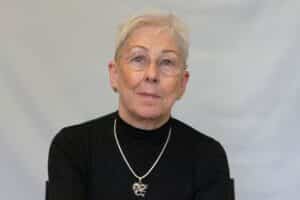
    Johanna Mitchell


    I had no idea that I would work as an education consultant, until I was in my mid-30s, running a small school for the Lawn Tennis Association. The education part I got from my father and my sense of optimism from my great aunt, Pat.  My own experiences of education made me want to help other children. When parents ask me to find a ‘leading’ school or university for their children, I always ask what they mean. If it doesn’t cater to the specific emotional and social needs of their children, it’s leading them nowhere.

    My father was an academic.  A North Londoner, he attended Haberdashers, after failing the 11+. Prior to this, he was told by his prep school head that he would amount to nothing.  Like many young men, he started to thrive at aged 13-14 and went on to have a career in food technology. He was said to have developed the recipe for Quavers crisps whilst at Unilever.

    His colleagues described him as the Patrick Moore of the food science world. He was the archetypal mad professor and was often to be seen on stage, trying in vain to put his hands into the pockets of his inside-out lab coat.  His secretary remembers him telephoning her regularly from airports to ask: ‘where am I going?’.

    Whilst my father was secular, my Roman Catholic mother was the major force behind my schooling. My father confided that there were two things that filled him most with trepidation:  one was the nuns and the second was women, of a certain age, telling Peter Jones’ customer services that they were ‘cross’.  The head of my first secondary school, a convent, was the formidable Sister Mary Angela.

    At parents’ evenings, she would send my father into a spin. At Sister Mary Raymond’s funeral, an elderly piano-teaching nun with six fingers on one hand, Sister Mary Angela marched to the altar and slammed her coffin lid shut, exclaiming ‘thank God she’s gone!.’ It was pointless getting on the wrong side on Sister Mary Angela.

    A gentle soul, who didn’t hold with too much authority, my father sneaked a replacement tape player into my boarding house, right under the housemistress’s nose.  My old one had been confiscated for playing Pink Floyd’s The Wall loudly.  Later, at another school, I was expelled, with my friend Isobel, for posting questionable photographs on the head’s door in the middle of my night. My father was summoned and when Father President handed him a manila envelope, containing said photographs, my father took them out, examined them and burst into laughter. I loved him for that. Priests didn’t frighten him as much as nuns.  I’m not sure why. Perhaps it was the added female dimension. Or the veil.

    After this, I had to sit my A levels as an external candidate, at schools which had the same specialist papers.  Oakham School were very kind. My father decreed that I would have to self-fund part of my private tuition by working in a launderette and waitressing. I know how to operate a dry-cleaning machine and am a dab hand at silver service. It was a challenging period. Despite being predicted straight As, I lost all my university offers, and had to take up a clearing place. In my work with Lumos Education, I feel an affinity with children who have experienced ruptures in their education.

    Post university, I went to live in Paris for a few years, teaching English, working as a fille au pair and doing a postgraduate at the Sorbonne. I wanted to be an academic, like my father – maybe in English or French literature. He himself said he would have liked to have been a Bond hero. Or perhaps, a politician.  He saw both as more glamorous. His own father had overseen general election campaigns for Conservative Party central office.  So he had some understanding of politics.  His one and only student job was delivering Conservative Party campaign leaflets throughout Hampstead and Finchley. No launderettes for him!

    Back in London, I joined the civil service.  Sir Humphrey stalked the corridors of my first department. I remember one senior civil servant telling me that I could only handle confidential files if I put on the pair of white gloves which were in the cabinet, with said files.  I didn’t double check invites that had been printed for the Science Minister inviting his guests to the Zuckerman Science Lecture that year, and afterwards to a buffet supper. The letters went out inviting guests to a ‘buffer supper.’ Although this seemed quite appropriate, given some of the audience, the minister was, understandably, not happy.

    In London, I began to spend more time with my great aunt Pat, whom I hadn’t known well as a child.  She divided her time between London and Sydney, was from the Irish/Australian branch of the family and a real bon viveur. Unfailingly cheerful, she lunched most days at Frantoio on the Kings Road.  Three months pregnant with my youngest daughter, I arrived for a pre-lunch drink and she filled a half pint class with brandy .

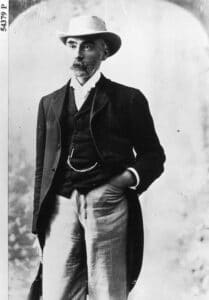
    When I refused the drink:  ‘lily-livered all your generation are!  All vegetarian’, she said.  Once her back was turned, I tipped the brandy into a pot plant (which was conspicuously absent on my next visit).  Both Pat’s sons had pre-deceased her, but she was just incredibly resilient.  Her family history was both entrepreneurial and tragic. Her grandfather, my great, great grandfather, was Charles Yelverton O’Connor, the engineer who constructed Freemantle Harbour.  He rode into the sea and shot himself after being criticised, for his work, in the Times.  There are two statues commemorating him in Freemantle.
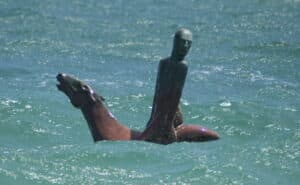
     

    Commemorative statue at Freemantle


    Charles Yelverton O’Connor


    Her aunt, my great, great aunt, was Charles’ daughter, Kathleen O’Connor, the celebrated Australian impressionist artist who defied the patriarchy surrounding women artists of her time, and lived to her 90s.  Pat had some of her paintings in her Chelsea home. My husband and my daughters enjoy painting.  Pat lived until 100 and, even in her nursing home, she shared a bottle of good red with her fellow residents every night. I learned a lot from her – mainly that your glass should always be half full.
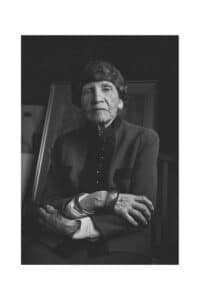
    Credit: Richard Woldendorp


    Some of my dearest friends today are from the civil service, school and university. Interestingly, in my time there, there were a lot of civil servants who had been raised in the Catholic church. Whether or not you continue the religion into adulthood, it does give you a sense of service. I love helping families to navigate global education systems which can seem incredibly complex.  Pastoral care is so much better now and we understand more about the emotional health of the child. There are still key improvements to be made in education, but it’s far cry from my experiences in the 1980s.

    My father and aunt Pat were givers. Dad loved to help others, young academics and children whom he tutored in chess. He sponsored a young girl’s education in India and, despite being an incredibly busy man, he wrote to her regularly.  He didn’t give a fig for money, rank or power.  He always said ‘be kind, for others are fighting a harder battle.’ I didn’t understand exactly what he meant then. I do now. We have a picture of Plato on our kitchen wall, with his quote below. My daughters have stuck a moustache on poor Plato. Having both studied ancient Greek, they should know the importance of this great philosopher.

    My father was also a man of his generation, without much freedom to express his emotions.  He would have had more emotional freedom now.  I remember him crying three times:  when his first marriage fell apart, when he watched a programme on Siege of Leningrad and on the day of the Brexit referendum result.

    I’ve made so many mistakes and continue to do so.  So did my father and my aunt. It’s essential to learn from them.  And to hold ourselves accountable when things go wrong. Staying in one’s integrity, and treating people well is not always easy – but it’s the most important thing. My father understood this.  With challenge comes growth.

    Ancestral lines are not just linear. Their branches grow thick and dense with our colourful ancestors whose loves, hopes and losses were not so very different from ours. When asked, most people can’t remember the names of their great grandparents. How quickly we are forgotten. A reminder to live for now and to do our best work.


  • Lumos Education CEO Johanna Mitchell on the women changing the face of conservation

    Johanna Mitchell

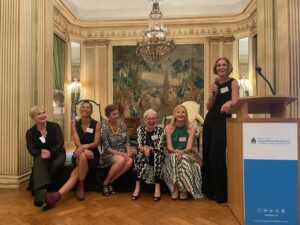
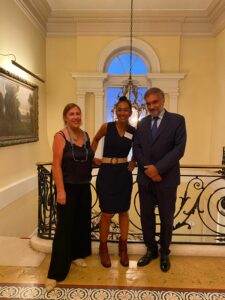
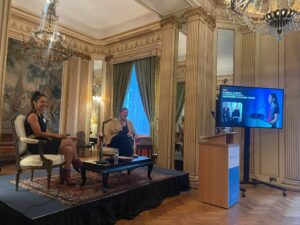
    Lumos Education was delighted to be invited to sponsor Women Powering Smart Energy’s conversation event at the Argentine Ambassador’s Residence. The evening, co-ordinated by Steve Gladman of Women Powering Smart Energy, highlighted the relationship between gender and conservation.

    The Dalai Lama has said that the western woman will save the world.  The women changemakers who spoke at the Ambassador’s Residence in September embody his prediction.  Their dynamism and steadfast commitment to preserving the environment and wildlife makes them a true beacon of hope in the sphere of conservation.


    Only a Child


    The Ambassador for Argentina in the UK, his Excellency Javier Esteban Figueroa, launched the evening.  I introduced the film, Only a Child, which was produced by Simone Giampaolo and narrated by the then 12 year old girl, Severn Cullis-Suzuki in 1992. The message, from this young child’s perspective, is that governments and communities need to act now to affect lasting change. Her compelling young voice states eloquently that ‘northern countries will not share with the needy, even when we have more than enough, we are afraid to share, we are afraid to let go of some of our wealth.’  Severn declares: ‘you grown- ups say you love us, but, I challenge you, make your actions reflect your words.’  At the end of the film, Severn, now a Canada- based environmental activist, is pictured, over 30 years after her words, as an adult with her own children. The time that has elapsed between Severn’s childhood and her growing into adulthood and raising her own family, demonstrates powerfully how much-needed changes to halt the environmental breakdown have been slow to manifest.


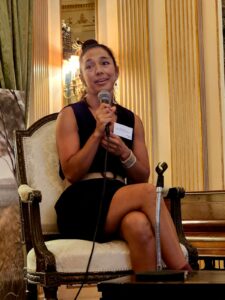
    Dr Micaela Camino


    The audience enjoyed the rich conversation between award-winning conservationist, Dr Mica Camino and the Cultural Attaché to the Argentine Embassy in London, Minister Alessandra Viaggiero.  Their discussion focused on the importance of engaging with indigenous communities, who live close to nature and depend on the local food, structure and wildlife for their own survival.  And for the continued survival of their children.  Mica spoke about the importance of understanding that, in conservation, the environment and people can’t be separated.  The two are inextricably linked.

    Dr Micaela Camino


    Mica is a committed conservationist on a mission to empower communities, defend their human rights and to preserve the fragile ecosystem of Argentina’s Dry Chaco.  Nestled in Northern Argentina, this expansive forest teams with both indigenous communities and critically endangered species, notably the Chacoan peccary.  However, the relentless advance of agricultural development threatens not only the habitat but also the very livelihoods and cultural heritage of the local people.  Mica is the recipient of the Whitley Fund for Nature (Green Oscar) 2022 for her research work to defend the Dry Chaco forest.  As a Researcher of the National Scientific and Technical Research Council of Argentina at the Conservation Biology Laboratory of Centre for Applied Ecology of the Coast and Founder and Director of Proyecto Quimilero, Mica juggles her career with mothering her young son.  Her tireless efforts exemplify the power of grassroots action and the potential for positive change even in the face of daunting challenges.


    Mary Rice 


    Following Mica’s incredible achievements, the audience listened to Mary Rice’s equally impressive contribution to the environment.  In conversation with Aisling Ryan, herself a committed conservationist, Mary described her role in bringing about the global ivory ban.  She spoke about her negotiations with governments and key players to enforce action or legislative change, often in extremely demanding political and social circumstances.  Mary and Aisling reminisced about their attendance at Kenya’s historic ivory burn in Nairobi.  Both thinking that they would stay in an hotel but, in reality, Mary camping knee-deep in mud wearing a pair of child’s pink wellies, whilst grappling with streaming the ivory burn live to the international community.

    Mary Rice


    As Executive Director of the Environmental Investigation Agency (EIA), Mary Rice’s accomplishments are simply colossal.   In addition to directing the EIA’s work on the illegal ivory trade and attending major international meetings related to the subject, Mary acts as a spokesperson and presents on the issue. Working with investigative and analytical teams to obtain the data and evidence required to support and facilitate enforcement action or legislative change, she liaises closely with stakeholders worldwide to ensure an innovative and strategic approach to what is a dynamic and global problem.

    Trained as a journalist, Mary spent 15 years working in Asia before moving to London.  She is also a  published author and photographer. “Heat, Dust and Dreams”(Struik), an exploration of people and environment in Namibia’s Kaokoland and Damaraland, was the result of three years of research and photography in what is now known as the Kunene region, home to the last viable population of black rhino outside a protected area. And one of the world’s last great wildernesses.

    Aisling Ryan


    Leading Conservationist, Climate and Sustainability Leader, Aisling, led the campaign to stop the ivory trade alongside Mary Rice. This campaign resulted in four UN resolutions and bans in China, Hong Kong, the UK, US, Canada and France   She has collaborated with the Kenyan government, EIA, WildAid, ZSL and other key NGOs. She also negotiated a pro-bono partnership with WPP to create a mass lobby campaign and with Kantar to deliver pivotal research to prove public support to ban the ivory trade. She has worked with Conservation South Luangwa (CSL) in Zambia since 2014 and continues to serve as Non-Executive Director and Trustee.

    Recognised for her contribution to sustainability and ESG, Aisling is a recipient of many awards, including the UN SDG Impact Award, Gold Cannes Lions, D&AD Pencils, the Grand Prix at The Marketing Society Effectiveness and the Campaign Big Awards. She was also acknowledged for her valued contribution to DE&I on the 2019 and 2021 HERoes INvolve Women Role Model Awards Global 100 List of Senior Executives.  Aisling pioneered the People’s Seat for the United Nations. She also drove negotiation and partnership between Sir David Attenborough, UNHQ, UNFCCC and Poland and wrote his speech for COP24.


    Millie Kerr


    Following Aisling’s discussion with Mary, Millie Kerr, US lawyer turned conservationist, author and wildlife photographer, spoke with Aisling Ryan about her distinguished career, marked by a resolute dedication to the cause of environmental preservation.

    In conversation with Aisling, Millie explained how her grandparents’ ranch had been a key influence in her childhood and served to cultivate an early love of wildlife and devotion to conservation.  Weekends and holidays were spent with the animals on their property, which included scimitar-horned oryx, rheas, zebras and other foreign species which they began introducing in the 1970s.

    Millie Kerr

    After working for a prominent London international law firm, her career trajectory took an unexpected turn during a sabbatical to Namibia, where she undertook a role at a wildlife conservancy. This experience kindled her passion for documenting and advocating for wildlife and nature conservation. On returning to the United States, a brief stint at the Federal Communications Commission preceded her relocation to New York City, where she continued to write while employed by the Wildlife Conservation Society/Bronx Zoo.

    Asked by Aisling how she would advise Londoners looking to make a difference, she suggested a rewilding a small garden, emphasising that even with the shortages of outdoor space in London, this is perfectly possible and incredibly rewarding.

    Based in London, Millie is a freelance multimedia journalist. Her writing on travel and wildlife conservation has been featured National Geographic Traveller, The New York Times, and The Wall Street Journal.  Millie’s debut nonfiction book, “Wilder: How Rewilding is Transforming Conservation and Changing the World,” published by Bloomsbury in August 2022, enjoys acclaim and endorsement from celebrated conservationist Jane Goodall. This volume, characterised as a fusion of popular science and memoir, surveys rewilding projects worldwide, highlighting the individuals defining the evolution of conservation.

    Professor Genoveva Esteban

    Distinguished academic, Professor Genoveva Esteban (Bournemouth University, UK), specialises in microorganisms in fresh water and marine environments.  Having completed her PhD in Spain, Genoveva came to the UK as a postdoctoral student and has worked here even since.   She has juggled her research and conservation work, with her family commitments.   During her career, Genoveva has pioneered ground-breaking research into the diversity of free-living microorganisms to help us to better understand ecosystems.  She explains how, as some microorganisms eat bacteria, they benefit the environment.  And as foundations of the food chain, microorganisms help to conserve the environment, essentially safeguarding bigger animals by protecting the little ones.

    Dr Genoveva Esteban


    Genoveva agrees that there is a gender imbalance in the way that men seem to be seen as more credible, in the world of conservation, but she says things are starting to change.  She is currently looking to develop a project, with fellow academics in the UK and on mainland Europe, to see how the different freshwater environments and habitats can be connected.  This project is about habitat connectivity in a fragmented world.

    Genoveva has infused the younger generation with her passion and knowledge.  Her students around the globe, including in Poland the US and Spain, are continuing Genoveva’s work in their own labs.  She says that, in her experience, the younger generation want to use science to help conserve the environment because they know that the planet is under threat.  They are interested in understanding how science works and how to use the scientific knowledge they have gleaned encourage conservation.  As well as working with students at her university, Genoveva also works with children in her local community to promote STEM subjects.  She runs science family days at her local museum to promote science and the importance of cherishing the environment.

    As well as encouraging and inspiring the next generation, Genoveva’s has built and nurtured deep and lasting partnerships with colleagues from Government departments, research centres and wildlife trusts.  She sends 15 students every year on a work experience placement to work with researchers in those institutions.

    The depth and richness of the contribution that these women have made to the environment and conservation is simply extraordinary.   In a world that, with the pace of environmental damage, and inability of governments to take urgent action, often seems hopeless, these women offered hope.  I know I, and all of my Lumos Education colleagues and partners who attended, poured out into the London evening feeling inspired, humbled and hopeful.

    Ronel Lehmann, of Finito Education, recently told me that a many of his young university leavers are keen to follow careers in the fields of conservation and the environment.

    Micaela Camino, Mary Rice, Millie Kerr, Aisling Ryan and Genoveva Estaban are blazing a trail for young women- and men- to follow.


    Johanna Mitchell is the Founder and Director at Lumos Education

  • Johanna Mitchell on the US families relocating to the UK

    Johanna Mitchell on the US families relocating to the UK

    The global pandemic has sparked an increase in our cousins from over the pond relocating to London. Why?  To access in-person schooling for their children. In the US, in both 2020 and to date in 2021, education provision has been in flux.  When UK schools were re-opening in September of 2020, US schools remained firmly closed, with most operating some form of online learning. 

    With the advent of Covid-19, it dawned on every parent and employer how much their livelihood and sanity depended on institutions placed too often in the background:  the nation’s schools.  

    For parents with flexible workplaces, deep pockets, or those able to open an arm of their existing US-based company in the UK, relocation to London for their offspring’s schooling was a no-brainer. For some families, this will be amount to a sojourn of a year or so, until their US schools are fully open again.  Others will stay longer.  As in the UK, US parents found it tough to juggle home-schooling with the demands of work and career. Families buckled under the strain that online learning had placed on the mental health of their children, and themselves, and a move to London schools was a welcome relief. 

    US families value London’s broad offering of schools and curricula.  Although the American School in London (ASL) in St John’s Wood is the holy grail for many US families, many are opting for British schools or English/ French bilingual schools.  This is particularly true of families with younger children, who are less concerned about changing curriculum and whose children are not close to exam years.  International schools offering the International Baccalaureate (IB) are sought after, not least because the IB has become the go-to curriculum for students on the scholarship route to US universities. All US colleges, including Ivy League, value the IB’s emphasis on research and its multidisciplinary focus. Some US colleges are offering top IB students a fast-track option to skip a year of their course, a huge draw for parents hoping to save a year of prohibitive college fees.  

    As we have a shared language, it is often assumed that the UK and US education systems are similar. This is not the case. The UK has more nationally-assessed exams and the early years approaches are different.  For children from aged four upwards, the US system is more play-based, whereas the mainstream UK system is focused on learning to read and write at a young age. To guard against culture shock, we recently placed the five-year old daughter of a family relocating from Los Angeles in a Montessori school in Hampstead.  The gentler Montessori approach was more aligned with her early years’ US education experience.   

    As I write, the expectation is that all US schools will be opened for the Autumn of 2021.  This current academic year has been inconsistent. Some schools opened, others operated a hybrid model (part in-person teaching, part online), some only offered remote learning. Generally speaking, the more “conservative” states, such as Texas, have been focused on maintaining, or even mandating, in-person instruction, while the more “progressive” states have offered hybrid options and made in-person learning optional. For example, on Long Island, most schools returned to some form of in-person instruction, but it was rarely mandatory and often hybrid with some online component.  

    A year later, the Covid-19 pandemic has changed education in America in lasting ways. Although most US families expect a return to the uniform, in-person teaching model for the coming academic year 2021/2022, some US school districts are developing permanent virtual options in the expectation that, post-pandemic, families will plump for remote-learning – even for their younger elementary/primary school offspring.  

    Relocation to London to access British schools has been the preserve of an élite, well-heeled tranche of US society. But we cannot ignore the reality that Covid-19 has been a tragedy for many students, especially those from disadvantaged backgrounds. Stories of kids who have melted away from education, dropped out of college, or gone hungry abound equally in the UK and US. We have been forced to question the efficacy and relevance of our existing education systems.  The pandemic has unleashed a wave of accelerated change in education. This wave will continue to ripple out and to have a permanent and transformative effect on education systems in both the US and the UK.   

    The writer is the Director of Lumos Education in London.  

  • Global education faces the ‘largest disruption in modern history’

    Global education faces the ‘largest disruption in modern history’

    Johanna Mitchell

    I worked as a career civil servant in Whitehall before moving into education consultancy.  My opposite numbers at the Russian and Chinese embassies liked to speak with me about their children’s education, eager for advice on selecting schools, or universities.  I’d sit in meetings thinking, “We’re supposed to be in a bilateral discussing UK/China science policy.  But here I am explaining the British education system.” After a spell as head of a small private school run by the Lawn Tennis Association, I set up my own company.

    Education consultancy combines a love of people, travel, languages with a desire to share my education expertise.  A careers advisor may not have this as an obvious choice. I have to be a counsellor, psychologist, diplomat and problem-solver all rolled into one. There is also instinct involved. Where would the family be happiest, thrive and achieve their potential?  People need to trust you.  

    Our clients often feel beleaguered, especially during the pandemic, and need help navigating UK and global education systems.  It feels good that we are able to mitigate this stress.  It is fascinating to see what drives another person, the life path they have chosen and what led them to this place – whether it be parental influence, inherited wealth or a childhood which may have been characterised by early hardship. Our experiences are primarily formed by the culture and political situation in which we and our nearest ancestors lived. 

    For instance, I have an enduring memory of a Russian client, now a dear friend, at the Lotte in Moscow saying ‘Johanna, what is it with you British? When you’re in your 20s and 30s, you just want to have a nice life and be happy.  In Russia, we work hard in our 20s and 30s.  And if we’re miserable, so what?  But when we’re 40 and have achieved the pinnacle of financial success, only then can we relax and enjoy it.”

    Covid-19 has changed our view of global mobility. Since my business is so international in flavour, working with families based from London, to New York to Azerbaijan, I’ve had to adapt. We have three distinct client groups: London-based families; families with homes in multiple jurisdictions; and those relocating to the UK for work or education. For the two latter groups, especially, we’ve overcome fresh challenges, negotiating changing travel corridors, specific visas and a combination of online university lectures, schooling and specialist tutors.  

    Despite the pandemic, British education is still in great demand, especially for families who are able to move easily to the UK. For instance, with US schools closed for a long period in 2020, we saw a rise in relocating US families. One family moved to Kensington prior to the US election, with their four young children. As one spouse worked from home as a stock trader, the family could live anywhere with reliable internet. London, with its top schools, was an attractive proposition.  Another US couple have enrolled their daughter in a London school for a year, while they take time to enjoy the city and study for an MA in Art History at UCL. 

    With several families moving from Europe, we also trained one firm’s senior management team to recognise differences in British and French work culture. The company is delighted with their new employee, who keeps them well-stocked with French wines and cheese. Our next challenge is to support a group of families from Hong Kong who will be taking advantage of the British National (Overseas) visa to settle in the UK. They will access UK schools and universities for their children. Pastoral care and access to nature now feature highly on wish lists of relocating families.

    I’ve been consistently impressed by how well the schools and universities with which we work have adapted to organisational and economic challenges. They have embraced EdTech and adjusted to offer an inclusive community – both in person and online – to combat the social isolation experienced by both students and their parents. Parents, more than ever, are looking for a high quality mix of one-to-one tutoring and school-based learning.  

    We are living with the largest disruption to the global education system in modern history.  The pandemic has been a catalyst to education change in the UK. While we are not yet in a position to see exactly where the cards will fall, I am certain that schools and universities will continue to evolve to provide outstanding education opportunities for both UK and international students.