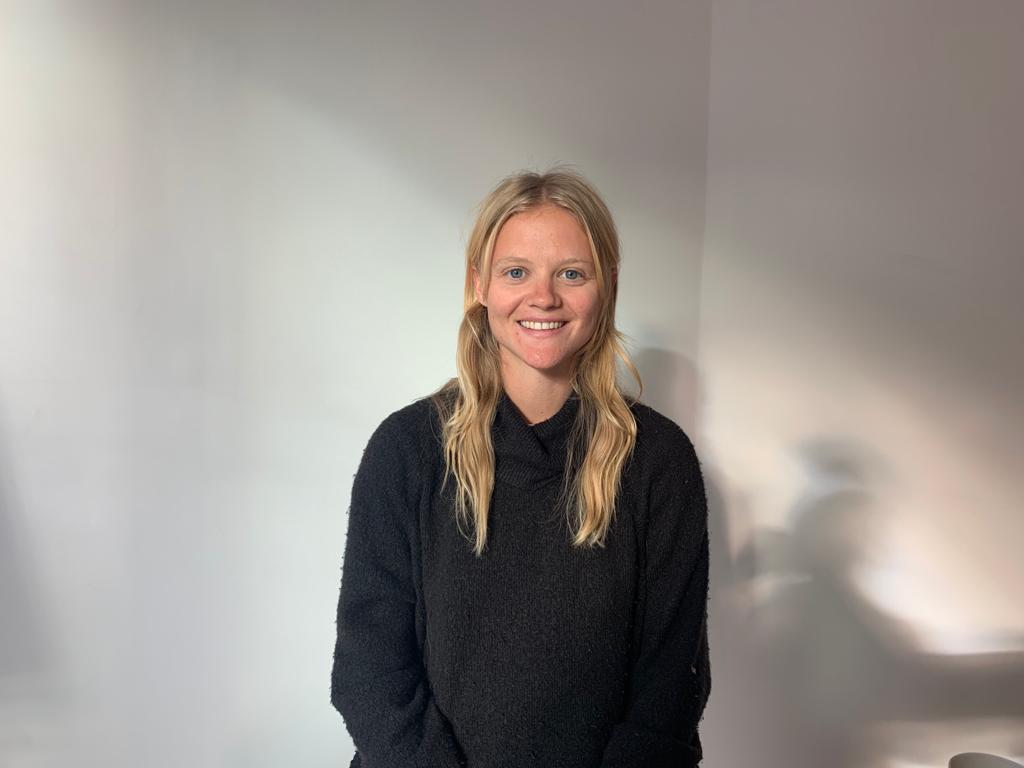
Georgia Heneage
If you scour the internet for ways to get yourself noticed, you’ll likely land upon generic advice about pumping up your CV, calling recruiters or improving your skill sets.
But the fiercer the competition, the greater the need to stand out. And sometimes, these are just not enough.
It turns out that’s especially so during global pandemics. The arrival of coronavirus has caused economic woe such as we’ve not seen since the Great Depression. Increasingly, employers are looking for that bit extra in their candidates. But what’s heartening is that there is an increasing number of instances where employees are providing just that.
Trevor Walford, a 63 year-old former butler for the royal family, had been working on a cruise ship when he was let go of following the first lockdown in March. In order to find a new job, he sent out over 700 applications. Having had no luck, he came up with the idea of standing outside the railway station in Leeds with a cardboard placard advertising that he was looking for a job. It worked. He was picked up by the executive of a restaurant group, and is now working as its training and development manager.
While the story of Walford is heartwarming, it’s also a sad reminder of just how competitive the job market has become. The explosion of the internet and social media has made it especially hard to stand out, and competition for entry-level jobs in particular has swelled alarmingly.
Amber Shrimpton, an HR consultant at Centrica energy, sees the trend of job-seeking stunts as part of a wider socio-economic context. The current economic situation, she explains, has engendered a ‘loose labour market’ where there are more people looking for jobs than employers offering them. She points out that there is a high number of applicants with university and other qualifications, meaning that jobseekers have more need to distinguish themselves.
“It’s the jobseekers who needs to make themselves more attractive,” Shrimpton tells Finito World. “My work in talent resourcing has shown that when you have 500 applications which look the same, having something which stands out is probably going to work in your favour.”
So is this trend born of desperation? “More and more jobseekers feel they have to do that extra”, continues Shrimpton. “It’s not okay anymore to just have a good degree. There has to be something else, and that’s the impetus behind it.”
Like marriage proposals, many eager and frustrated job seekers have resorted to unusual means of public advertisements. Liz Hickok strung up fairy lights to spell out ‘My wish- HR job’ and her LinkedIn handle, which landed her four interviews; Pasha Stocking used a billboard plastered “Hire me!: Unemployed and Seeking Employment” which gained her the media coverage to start her own PR company (which ironically specialised in helping people rent billboards). There was also high-school student Josh Butler who auctioned himself on eBay. His post went viral, landing him several interviews. He is now a successful city broker in London.
Even more creative examples might be cited. Lithuanian marketer Luka Yla found a job in his new home of San Francisco by dressing up as a courier to deliver a box of doughnuts to the companies he admired. The boxes carried the following inscription on the inside: “Most resumes end up in the trash. Mine—in your belly.” And, after writing a three-minute music video in place of a CV and cover letter, Alec Biedrzycki got his dream job at a marketing agency.
These success stories suggest that unusual methods of jobseeking may be the way forward for the millions currently facing unemployment. It might just be a question of changing one’s attitude towards what has become, in most industries, a deeply standardised and homogeneous application process.
When Lucy Martin, a 23 year-old graphic designer from London, first started searching for a job, she fell victim to this relentless process.
“I was at a point last summer when I was applying to so many jobs that I was becoming a number in the application process,” she said. “You just see thousands of people who are applying for the same job. I knew I just needed to get noticed in some way.”
This desire to stand out led Martin to pull a stunt in her application to the highly competitive advertising firm Saatchi & Saatchi.
Having got through to the second round of the application process, Martin was given a brief to come up with a design solution to the slogan “nothing is impossible” and told that she’d be notified if she’d been “picked”. Martin decided to take the second point quite literally. As well as fulfilling the brief, she headed down to her local sweet shop, bought a bag of pick ‘n mix, personalised some love hearts with her name on them, stuck a note inside saying “I hope you pick me”, and sent it on to the CEO of Saatchi.
“The concept was that he had no other option than to pick me- there was no one else in the bag apart from me,” says Martin, who got through to the next round and then finally got the job. “They really liked it. They thought it was really awesome” she added.
Part of Martin’s creative ingenuity came from her graphic design course at Edinburgh, where her tutors encouraged her to do “ridiculous things” to get noticed, and to “think outside the box”.
“I did this art installation where I froze flowers in ice cubes, and my tutor said I should go and give them to every single person I wanted to work for. There’s such a sense of urgency, because you’ve got a melting ice cube in front of you,” says Martin. “With any job, sending something physical is really effective, even if it’s not a creative job.”
It might seem like creative industries are better equipped (or more likely to be impressed by) such stunts. But across the job spectrum, people are finding they are having to think creatively when it comes to job applications.
Last year, Jack Nugee was working on an application – one of hundreds he’d produced that month – while listening to a cricket podcast. He decided to go off-piste and write his cover letter as a narration of an Ashes innings by Jack Leach innings, which had then acquired a kind of cult status, particularly in the cricketing world.
“I thought it would be interesting to try and relate my job experience to cricket, which I’m really interested in,” says Nugee. In an ‘Ode to Jack Leach’ he wrote: ‘I ask you to please engage your imagination as I attempt to equate myself to the English spin bowler Jack Leach’s innings in Headingly, highlighting, through his actions, the skillset at my disposal that align me perfectly for the account executive position.’
In response to the letter, the employer said she wanted to speak to someone “weird enough to write a full page on a cricket innings, even though she’d never watched cricket in her life,” says Nugee. “She said it was the kind of thing they were looking for.” Having had no advertising experience at all, Nugee got to the final two and says “they were going purely off character based on the application.”
Though he didn’t get the job, Nugee’s current position was won through writing a similarly off-beat poem which begins; ‘I would like to apply for the role of Account Executive sat in the account management team/ You will find this application has a rhyming theme.’
Though the need to be outlandish is more apparent now than ever, standing out doesn’t have to entail an eccentric application. It can come in the form of being proactive and presenting yourself to the bitter outside world.
Tibi Hodgson, a 23 year-old fashion stylist from London, never went to university and the sense that she lacked the right qualifications meant that she lacked confidence when first embarking on her job hunt.
Having had no experience in styling and facing rejection after rejection, Hodgson decided to contact someone she admired in the industry directly. “I said I felt an innate connection to her work and I could work for her at the drop of a hat.”
Hodgson says she didn’t know any of the “lingo” around styling and was launched straight into the deep end. She learnt the process just through doing it, and was soon styling high-end models like Adowa Aboah and Suki Waterhouse.
After her employer left for the US and Hodgson began working in a gallery, she kept an eye on her old job. “I was still being kept on the email loop and I noticed that some dresses and shoes hadn’t been returned properly,” says Hodgson. “So I volunteered to go pick them up myself. After that I just began going to different shops in Mayfair after work and seeing if there were items she needed to return, without her asking me to.”
Hodgson says that through doing this she made her own contacts in the industry, and this has led to other jobs. Now a seasoned stylist, Hodgson is a case in point that experience, qualifications and traditional means of job searching aren’t necessarily the be-all and end-all.
“I feel like with these unconventional ways it’s all about luck and for luck to happen you need exposure. So the more ways you can expose yourself, the better,” she says.
And, of course, the need to be outlandish applies not just to those seeking a job. The emergence of a gig economy and the sheer number of freelancers competing against each other is ensuring that freelance workers need to find alternate means to stand out from the crowd as well.
Rahoul Baruah, a freelance software developer from Leeds, was at a meet-up social with some fellow workers when he met a guy called Jamie who was “sort of famous in our world”.
Chatting over some beers, Jamie seemed excited because he’d just set up this agency called ‘Made in London’. The next day, “just for a laugh”, Baruah decided to set up a spoof of his website called ‘Maid in London’, featuring a picture of a barmaid with Jamie’s face and a link to the real company’s website.
The prank website ended up getting Jamie’s original company loads of business, and three months later Baruah was offered a year-long contract from them.
“I basically got a year’s work- which was really good pay- from just putting up a prank website,” says Baruah. “Me and my group of friends have always said that to stand out you’ve got to do stupid stuff.”
These stories all show that difficult economic circumstances can be traversed by imagination. You don’t always need to get noticed via outlandish means: it’s about putting yourself out there – whether that’s via personalised love-hearts, a cricket match for a cover letter or, like Baruah, just taking the time to show up. It’s about being bold and fearless in the face of the unknown.
“If you want something so badly, you have to make sure you respect it more than the next person,” says Hodgson. “You have to be that person who goes that extra mile.”