Tag: jewellery

  • Sarah Cobden-Ramsay on her ground-breaking jewellery charity Rhino Tears

    Sarah Cobden-Ramsay

    It was during a visit to the Kariega Game Reserve in South Africa in 2016 that I encountered a remarkable rhino called Thandi. This was not just a wildlife sighting; for me it was a life-altering event.

    Thandi was a living testament to survival. She had suffered a horrendous poaching attack, her face had been savagely disfigured to extract her horn. Despite the physical trauma, her indomitable spirit shone through. Not only did she survive this gruesome assault, Thandi has become a symbol of resilience, mothering five calves – Thembi, Colin, Mthetho, Siya and Zolani. The horribly scarred, yet serene Thandi, grazing quietly with her first, 18 month year old calf, Thembi, was a turning point for me. I had to contribute, even if in some small way, to help fight this dark canvas of brutal poaching and support the incredible work so many do in rhino conservation.
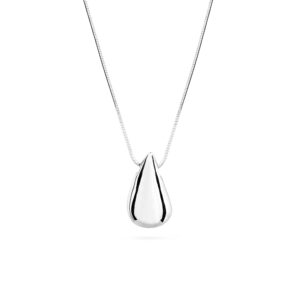
    I had several years of experience as a jeweller, a skill honed under the tutelage of Jinks McGrath in her Sussex workshop. With Thandi as my inspiration and my passion for jewellery, I embarked on the journey of creating ‘Rhino Tears’, firstly designing a unique piece of jewellery Thandi’s honour and hopefully a way in raising awareness and those all-important anti-poaching funds.

    Each piece is designed as a delicate solid gold, or silver tear, and carries an engraved hallmark on the back – a triangle with a ‘T’, in homage to Thandi. For me, for every sale, it becomes more than just a piece of jewellery; it becomes a tangible symbol of strength, survival, and hope.

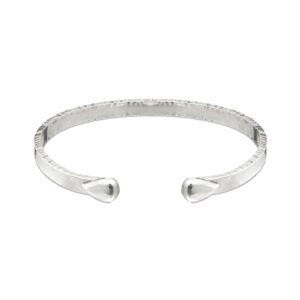
    Happily, my charity Rhino Tears, has gone from strength to strength, the product has evolved to include earrings, cuffs and bracelets and particular commissions with diamond inlay in both silver and gold, pendants and earring across the range.
    This has resulted over the years, in considerable donations to a few carefully chosen charities. Importantly for me, these game reserves in South Africa and Kenya are passionate about the conservation of rhinos in their natural habitat, as well as raising awareness and enabling local communities in supporting their heritage for the future.

    The monies raised have gone to help in several areas, primarily anti-poaching units, the purchasing and training of tracking dogs, tracking collars, cameras, the sad but essential de-horning of rhinos and the successful rewilding of orphans. Rhino Tears has also been able to proudly fund eight local interns through a year’s training in wildlife conservation and protection. They are now full- fledged rangers at the Kariega Game Reserve. Although most of my sales are done online, due to popular demand, I have been thrilled to provide Rhino Tears’ jewellery to several outlets, including the Curio Shop at Kariega, Ant’s Nest in the Waterberg and Auckland Zoo.

    My journey from the plains of Kariega Game Reserve and a jewellery workshop in Sussex, I hope will inspire, and show that we can all find a small part to play in preserving our planet’s rich biodiversity and ensure the rhinos may roam freely and safely on the plains of Africa.

     

    Go to rhinotears.org
  • Legendary jeweller Elizabeth Gage on her education, work ethic and friendship with Lauren Bacall

    Christopher Jackson


    Even for people such as myself who wouldn’t necessarily count themselves as knowledgeable about jewellery can see that the creations of Elizabeth Gage possess an unusual degree of intricacy and beauty. Gage strikes me as a little like those high achievers whose endeavours cross over easily to the layman: non-tennis fans used to tune into Federer; non-readers got through Harry Potter; and even I, who has only ever worn a wedding-ring, can still find myself pausing at an Elizabeth Gage creation, wondering about the dedication behind such outstanding creations.

    So what kind of an upbringing did she have? “I did have a creative family,” she tells us. “My mother painted and my grandmother was a painter. I therefore did not want to be a painter but rather wanted to find my own creative calling. I had always been creative as a child, making clothes for my paper dolls. I started out writing but realised that writing wasn’t for me.”

    But her life was about to change “One day I went to the British Museum and that is when everything changed for me,” she recalls. “The sun was shining, and I distinctly remember the sun flooding one big square case, I looked over and saw a set of Roman rings, and the rest is history. From that moment onwards, my heart was set on making jewellery which was imbued with history, to bring the past into the present and make it wearable.”

    That’s part of what sets Elizabeth Gage apart – her commitment to meaning in her work. Perhaps it’s partly this which makes me pause always at her work; I’m being asked not just to look and take delight in her works, but to think as well.

    Another aspect is attention to detail, and Gage is humorous about the demands of that: “I am a patient person when it comes to achieving the piece that I have designed as I never cut corners and want to make sure that each piece is a work of art in its own right. However, once the piece is being made I am impatient to see it finished!”

    Gage describes her early education: “I went to Chelsea School of Art but my experience there swiftly transitioned to Sir John Cass College, which shaped me and my career. I had been advised time and time again to pursue a career as an artist but I had other ideas.” Like many successful people, Gage picked her battles, and she knew what she had to do: “One day, at 12 ‘clock whilst everyone was out at lunch, I went into a classroom at The Sir John Cass College to find Mr Oliver. I had been told that there was no more admission of students for the Goldsmiths course but I would not take no for an answer. I told Mr Oliver that I wanted to learn how to make jewellery and asked if he could fit me into his busy class, to which he responded by making a space for me. He then taught me for eight years, a wonderful experience culminating in me asking to make something in gold, to which Mr Oliver responded “absolutely, but you must buy your own gold.”

    Despite Mr Oliver’s obvious influence, Gage adds: “I never had a mentor. What guided me was my love of making things and learning about how to master the art of jewellery.” There is wisdom here: quite often, we think the responsibility for our success might lie with some third party, but it always lies within.

    Gage is seems to be expert at letting the world come to her, and teach her to decide what to do next. Her first commission came from Cartier was, she says, ‘very unexpected’ and she is refreshingly matter-of-fact about the genesis of her business which will this year see its 60th anniversary.  “It just happened,” she tells us. “Freshly out of school I received a commission from a friend’s father who had asked me to make rings for his daughter and his girlfriends. He had been very shrewd as, being a designer fresh out of school, I was much cheaper than an established jeweller.” So what were the joys and challenges of starting out? The joys were knowing that what I was creating, people loved. There were always challenges that cropped up but I just knew that I needed to get on and continue doing what I loved and not letting any obstacles get in my way.”

    Of course, over time things have changed – not least Gage’s business has straddled the Internet revolution, a development she views very positively. “It has been wonderful in that people from every corner of the world can now see my work online and even buy online if they so wish,” she explains. “We only have our one exclusive store in Belgravia, London so having that virtual vitrine into our world and jewels is terrific.”

    Gage’s success can in part be measured by the famous clients she has amassed, most famously Lauren Bacall. About Bacall, Gage says: “We worked very well together. She loved what I do and I always involved her in whatever I was doing for her. It was very easy. She once brought me a beautiful bejewelled camel which I set into a brooch.”

    So what would be Gage’s advice to a young designer starting out? “Find what you love doing and that will give you direction of what you must do. It is no good just liking it, you need to really love it.”

    Gage has now been decorated with an MBE (“I never thought I would ever receive something as wonderful as that”) and her goal, even at the age of 85 is “to charge onwards and constantly to be inspired”. Of course, in taking that attitude, she’s also inspired us in return. We are all the beneficiaries of the work of Elizabeth Gage.


  • Lessons from the Etsy Boom

    Lessons from the Etsy Boom

    Patrick Crowder

    While it might not seem like the best time to start a traditional business, smaller non-traditional operations are thriving. Many craft businesses have seen success on websites such as Etsy selling jewellery, wallets, cross-stitches, and of course facemasks.

    Jennifer Brown started her online jewellery business Mezzanine Resin in early February this year. She says the idea came after she was let go from two jobs in 2020.

    “I realised I’d have to rely on myself more for a steady income, rather than a corporation that would drop me at the start of every lockdown,” Brown says. “My mum suggested I start selling my earrings online and it just trickled from there!” 

    Brown’s products – which include small statues, vases, homeware, and all manner of jewellery – are all hand-made from resin one at a time. She says that her designs are “influenced by nature” with “tonnes of stone, forests and minerals” replicated in her products.

    Etsy began seeing major success during the pandemic as artists, hobbyists, sculptors, and seamstresses began selling their handmade goods online. ETSY stock has grown by over 400% since 2020 began, raising from $44 (£31.68) to it’s current price of £188 (£135.35).

    Brown currently sells on Etsy, but she is considering making the switch to Instagram. She already advertises on Instagram and says that her friends and followers have been “intrinsic in helping get the word out” about her brand. She hopes to move into more direct sales once her brand has grown: “I’m waiting for the day that I see someone on the street in my earrings. I hope the business turns from a side hustle to something that I can supply into boutiques.”

    Starting any brand is a daunting task, and Jennifer says that she would not have succeeded without the support she has received.

    “My mum of course inspired it, my grandad pitched in to make me the stands that my pieces hang on in product photos, and my fiancé encouraged me to spend time perfecting my stuff – rather than fretting about money, which was, of course, a luxury not everyone has,” Brown says.

    As lockdowns lift, we will see if the phenomenon of craft-made products lives on. For now, things seem promising.

    Growth in hobby and craft sales are not exclusive to Etsy or Instagram. Hobbycraft, for example, had to close its physical storefronts, but continued to see massive customer demand online. The company saw an 8.9 per cent increase in revenue to £193.6 million, driven by a 19 per cent increase in e-commerce. For Brown, this means increased competition, but she is confident about the future of her business.

    “My friends bought some of my early pieces,” Brown admits. “I’ve told them to hang onto them as they’ll be worth millions in a few years when I’m a big-time designer.”

    Photo credit: Lucielle Jewell on Unsplash