Tag: International Development

  • Nimco Ali: “A young campaigner should educate themselves as broadly as possible”

    Nimco Ali

    I’m proud to say I’m the granddaughter of a freedom fighter – a man who defended his country against Somalian dictatorship. I grew up with a passionate understanding of the rule of law. I was the victim of female genital mutilation (FGM) and this background has given me valuable context for my fight.

    The fact is that there are 200 million people with experiences similar to mine. Some happen to be incredible writers and mentors such as Nawal El Saadawi who wrote about her experiences of FGM in The Hidden Face of Eve (1977). This book showed me that FGM was not to do with my race or my faith: it was about my gender. There are similar cultural narratives in the UK around domestic abuse. It was this realisation which helped me find my voice.  

    That book changed me. Being able to have the space to educate myself meant I could understand FGM as part of a broader conversation around FGM: it then became about taking the whole topic out of a cultural cul-de-sac.

    What advice would I give to a young campaigner? I’d say you can talk to anyone, regardless of political affiliation. Sadly, because of our first-past-the-post system we have two political parties, and you should always be open to talking to both. I’d also say you have to make an emotional appeal built around hope and not around sadness.

    I’ve found that it’s not just women who are able to hear such an appeal. My message appeals to anybody who has had a traumatic childhood experience – that, in turn, has allowed me to avoid being tribal. That’s a legacy also of my understanding of the civil war in Somalia, where tribalism was the problem. I try to find commonality with those in power.

    My legal education – I studied law at Bristol – has helped me too. But I think a young campaigner should educate themselves as broadly as possible. The humanity subjects are very important too: history, drama and literature are the foundation of where things came from and where they’re going. These things can make you a better activist.

    Of the 200 million women affected globally by FGM, most are on the African continent. Another 70 million are at risk between now and 2030. My message to people is that we can save those girls, but to do so we need to invest in women. That means focusing on their education and their employment opportunities; we need to create economic independence in them.

    We’ve sometimes lapsed into an aid mentality which makes Africa unable to go through the Industrial Revolution. Africa mustn’t be seen as a poverty-hit continent but as a strategic partner which can elevate itself. That’s never been the attitude of the US and the UK. This has created a gap and enabled China and Russia to rob Africa of its natural resources.

    As things stand, girls are being raped and murdered instead of being given the power to make choices for their communities. People often don’t see the climate change link here. Of all the places where FGM is rife, 40 per cent is hit by drought or some other global warming impact. Furthermore, if you want to save the elephant or the other big five animals, you have to slow down the population growth in Africa.

    China’s wealth is built on the manufacture of things its gets from Africa. You won’t hear an African leader ever asking for aid: what they’re asking for is to change the relationship. Really, they’re asking to be a capitalist country and to work for a living and not receive handouts. The trouble is that aid makes people dependent, and that only two per cent of aid actually gets to grass roots women.

    In addition to that, our foreign aid giving arm is too scared of being seen as wasting money which means they can sometimes give in a too restricted manner. Likewise, Save the Children and Oxfam have both been in positions where they hold the power in African countries, and they end up abusing that power, and stymie the people they’re meant to be helping.

    So there’s a lot that needs to change. But most of all we need to not define women by their trauma. The first step is to find a new way to talk about the problem – and perhaps that alone would change more than we think.
  • Chuks Iloegbunam: Letter from Nigeria

    Chuks Iloegbunam: Letter from Nigeria

    Without a significant move by the UK government, Africa’s most populous country will implode, writes Chuks Iloegbunam 

    Thanks to social media, news of the massacre of peaceful protesters in Lekki, Lagos, rapidly spread throughout the world. How did it happen that, in apparently democratic Nigeria, soldiers opened fire on their fellow citizens peacefully protesting systemic police brutality by waving the Nigerian flag and singing the national anthem? 

    Lekki needs to be put in context. Even in colonial Nigeria, massacres were commonplace. When the civil war came in 1967, it accentuated the devaluation of human life. At the war’s end in 1970, millions lay dead, finished off by indiscriminate bombing and strafing, as well as starvation and protein malnutrition. 

    It is a country which doesn’t look after its young. Youth unemployment stands at 13.9 million according to the Nigerian National Bureau of Statistics (NBS), which also states that the Nigerian youth population eligible for work is a staggering 40 million. 

    Insecurity caused by Boko Haram terrorists, Fulani herdsmen terrorists and Niger Delta militants are often cited as reasons for this, but a sizeable portion of the unemployed are also unemployable due to the lack of basic skills. The country lacks the sort of social security taken for granted in Britain and elsewhere in Europe and North America. There are no unemployment benefits. As a matter of fact, the employed are often owed unpaid salaries for upwards of ten months, even years. 

    The government also has a history of keeping this state of affairs in position – and again it does so with violence. On February 1, 1971, Kunle Adepeju, an undergraduate of the University of Ibadan was killed during a students’ demonstration against poor catering services. The Police claimed that a stray bullet from one of its guns had felled Adepeju. The nation was scandalised. The university was shut down and a board of inquiry instituted to determine what truly happened.  

    Many other examples might be cited – from the Bakalori massacrre on 28th April 1980 to the destruction of Odi on November 20th 1999. It is a long and melancholy history of government suppression.  

    Today, Nigeria boasts about 172 tertiary institutions, annually churning out tens of thousands of young men and women with little hope of employment. Only unserious societies remain blissfully uncaring about the place and disposition of alienated youths about half of whom have been trained in the sciences and have at their fingertips the knowhow to upset the applecart. 

    Graduates with intent to do business or go into manufacturing are hampered by lack of funds. The government has not created any new industries in the last five years. It has not paid any attention to setting up new refineries. 

    The national currency, the Naira, has continued to plummet in value. There was a time when the naira was superior to both the dollar and the pound sterling. But $1 today exchanges for anything between N400 and N450. 

    The displacement of whole populations that end up across Nigerian borders, or inside Internally Displaced People’s (IDPs) camps mean a devaluation of farming, grave loss to incomes and hikes in food prices. 

    But the world is changing – and Nigeria with it.  In 2015, earthmoving equipment was used to dig mass graves into which hundreds of slain Shiites were buried. But video clips of the dastardly act are in existence. Now, nearly everyone wields the immense power that is the cell phone. For this, grotesqueries like Lekki rebuff concealment. In real time, the massacre was filmed and transmitted across the globe. Official denials that it happened have been quite thoroughly discredited through credible investigations by various standards-setting organisations, including CNN. 

    Bizarrely, the authorities are hounding those thought to have led the #endSARS demonstrations, instead of addressing their grievances. They are confiscating passports, freezing bank accounts and shoving into detention people guilty only of participating in peaceful demonstrations. In this regard, informed Nigerians cannot get over Britain’s taciturnity in relation to a country it colonised and in which it still wields incomparable influence. In fact, repeated Downing Street administrations are seen as complicit in Nigeria’s determined abysmal plunge.  

    This complicity may explain why the International Criminal Court (ICC) which indicted al-Bashir has not considered a similar action on certain Nigerians whose wantonness makes the former Sudanese dictator to look like a Sunday school teacher. That is why British opinion influencers with conscience must look beyond Whitehall and systematically mobilise voices to interrogate Nigeria before it implodes. 

    Iloegbunam is a Nigerian journalist and novelist. 

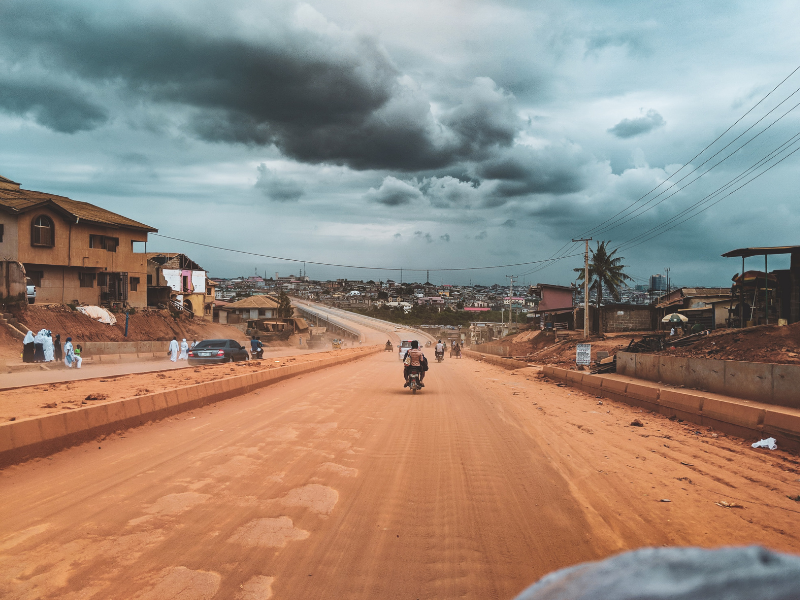
    Photo credit: Joshua Oluwagbemiga on Unsplash

  • Layla Moran on International Development: ‘It beggars belief that the government isn’t listening’

    Layla Moran on International Development: ‘It beggars belief that the government isn’t listening’

    Georgia Heneage

    When Boris Johnson decided to cut the Department for International Development (DfiD) in June of last year, his reasoning was, unsurprisingly, based on safeguarding British needs over others. He said that UK overseas aid “has been treated like a giant cashpoint in the sky, that arrives without any reference to UK interests”.

    Since Rishi Sunak’s heavy cuts to Yemen aid announced on Wednesday – a near 60% slash – the government’s insular approach towards international world affairs has once again been brought to the fore and prompted heavy criticism from ex PMs such as David Cameron.

    Neither instance of UK isolation are isolated events; they seem to be part of a wider pulling-back of responsibility from tackling the world’s issues. We saw this with the government’s cuts to foreign aid in January from 0.7% to 0.5%, and we’ve seen it with Brexit. On a philosophical plain, the right-wing, Britain-first rhetoric of Brexiteers seems to be in play here: that, over and above all else, our government should prioritise domestic needs over international ones.

    Layla Moran, Lib Dem Spokesman for Foreign Affairs and International Development, sees it differently. “Fundamental to Lib Dem values is that global problems need global solutions; just because someone else is somewhere else in the world doesn’t mean we don’t have a duty of care to them, especially if they are at risk of starvation,” she says. Moran sees the cut to Yemen aid as “an embarrassment” and hopes that the “sharp contrast between what we are doing and what the Americans are doing will serve to remind people of what Boris Johnson’s agenda actually is really about.”

    Moran says that the government’s approach towards international affairs has changed considerably since the time of the conservative coalition, when “there was a real sense at the time that all the parties were pulling together in the same direction”-which explains why three previous PMs have criticised Johnson for his approach to foreign aid. In its place, says Moran, has risen an “enlightened self-interest”, which stops the progression of economic migration and encourages others to bear the brunt of climate issues.

    “The Tories have reneged on their manifesto pledge. More importantly they’ve reneged on their promise to the world’s poorest, and I’m deeply concerned about the consequences of this,” Moran says.

    These narrowing interests have had a huge effect on the charity sector: according to NCVO’s UK Civil Society Almanac report in 2020, the proportion of charity income that comes from government was at its lowest point in a decade ahead of the coronavirus pandemic.

    The pandemic added fuel to the fire: a study last June showed that nearly half of UK charities for developing countries were set to close within 12 months following the first lockdown due to lack of financial support. The catch-22 has been that whilst 72% have seen increased demand due to the pressures of Covid on developing countries, 68% received absolutely no government funding at all.

    “We rely on Save the Children and other smaller charities for a lot of the work that we do,” says Moran. “They are now in a moment of crisis: the proportion of charities potentially going under is enormously high.

    “I’m seriously concerned about that: as soon as an organisation folds you lose that institutional knowledge. We really will struggle to get those links back up and reestablish the important role they play in both civil society in the UK and also abroad”.

    “That could be one of the unintended causalities of coronavirus. If smaller charities start to go under, then I think we’re in real trouble”. One answer, says Moran, may be to alter the charity model post-Covid. “It’s now time for charities to join their voices together; I think we need a coordinated response to raise public awareness”.

    As an MP of Palestinian descent- the very first, in fact- Moran says her background and life experiences have shaped her view of the part we must all play in helping those less lucky than us.

    “It does make you appreciate the world in a different way”, says Moran. “We were taught to appreciate everything we had- as a refugee, my mother had almost nothing growing up and she had to develop enormous resilience.” Moran still has family in Palestine who are living in segregated circumstances, and says it’s “heartbreaking” to hear the stories from back home.

    Her father’s job in the diplomatic service for the EU meant that Moran grew up living in war-torn countries like Ethiopia and Jordan. “Those very early memories were so important”, says Moran. “I remember when I was about five we were living in Ethiopia in the midst of its war with Eritrea. I was exposed to huge levels of poverty- literally on my doorstep- and constant military parades outside our house for months.

    “I remember asking my father why this was happening, and he explained to me that the dictator who ruled at the time wanted to exert his own power and chose to spend money on tanks over feeding starving people. It became a huge driving force on why I care so much about these issues.

    “You can talk about geopolitical shifts and you can speak philosophically and esoterically about world politics, but in the end it all comes down to real people. I keep those individuals in the front of my mind- that’s my motivation and everything else stems from there.”

    I point out to Moran that if an unintended causality of Covid-19 has been reduced attention to world issues, then a welcome one might be that it forces us recognise the importance of thinking laterally rather than locally. But she says the way the UK government has approached the vaccine roll-out has only served to highlight our innately “insular” nature: “We haven’t appreciated that no one is safe until everyone is safe. There are parts of the UK where 50% of people are vaccinated- which is an extraordinary achievement- but there are places in the world where not even a handful of health care workers have had the jab.

    “It’s important that we help to tackle the world’s problems together. It beggars belief that the government isn’t listening.”