Tag: Homelessness

  • News: Charity warns thousands of children will be homeless this Christmas – as it raises £850,000 to combat the issue

    Finito World


    A homelessness charity has warned that thousands of British children face a “bleak Christmas” with a record number of youngsters set to spend it without a secure place to call home.

    Recent figures revealed that the number of children in the UK currently living in temporary accommodation has soared to 139,000.

    Now CEO Sleepout has called for those in power to “put the brakes” on the country’s rapidly worsening homeless problem.

    The charity has raised a record £850,000 this year to be distributed to over 100 different causes working to help those most in need. Since launching a decade ago, CEO Sleepout has raised over £4.2m.

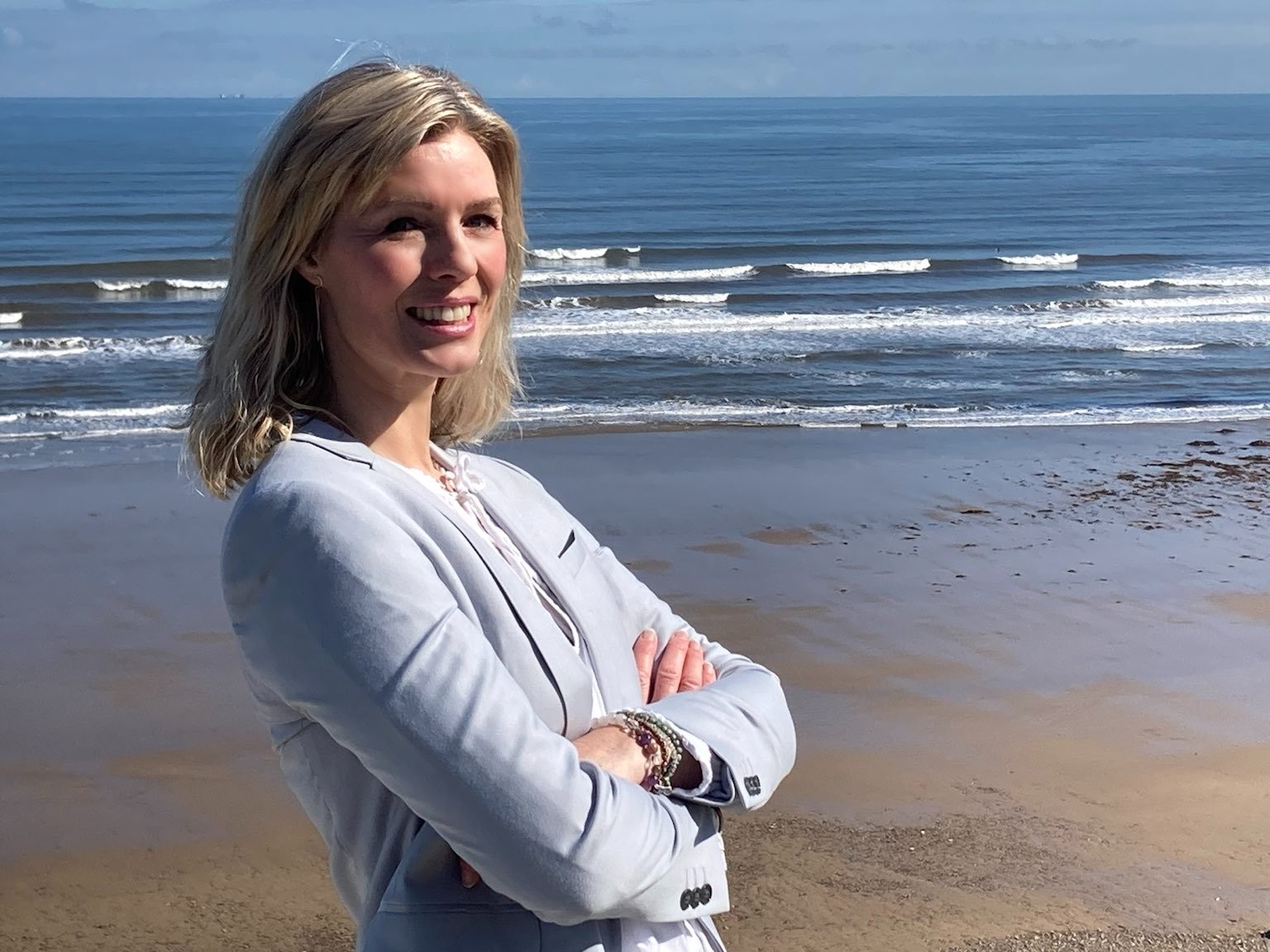
    Yet despite unwavering public support, the charity’s CEO Bianca Robinson said the problem is only getting worse and has become a “national shame”.

    “The number of children without a safe and secure roof over their heads this Christmas could easily fill the London Olympic Stadium twice over – that’s a disgrace and something we must all address,” she said.

    “Nobody in this country should have to spend Christmas in this situation, and that’s especially the case with children.”

    She’s now urged the public to donate the cost of a selection box to try and help as many families and vulnerable people as possible ahead of what has already been a bitterly cold winter.

    “We’ve staged 16 different sleepouts this year, and the support and determination of everybody involved has been simply awe-inspiring,” added Bianca.

    “Some of our 850 participants literally slept out in deadly storms to raise this money, so it is disheartening to see that despite all their efforts, rates of homelessness are reaching record highs.

    “Heading into 2024, that trajectory must change. We would love a world where our charity didn’t need to exist, and that the support our most vulnerable needed was already in place.

    “Unfortunately, that doesn’t look like it is going to change, so these families and children will still be forced to rely on the generosity of the public to help them get through Christmas and beyond.”

    CEO Sleepout is now issuing a final fundraising drive ahead of winter, which is almost the hardest time of year for those sleeping rough.

    Office of National Statistics (ONS) data last year showed revealed 741 homeless people died – a figure that’s over 50 per cent higher than when CEO Sleepout launched in 2013.

    To donate, please visit www.ceosleepout.co.uk/get-involved/donate/


  • 2022 Highlights: Second Shot Coffee founder Julius Ibrahim on homelessness and entrepreneurship

    Julius Ibrahim


    Julius Ibrahim, founder of Second Shot Coffee, discusses homelessness, leadership, and finding solutions.

    When I was 16, before I started university, I was part of a leadership academy which included a two-day residential course where you learn all about problem solving techniques, local group exercises, trust exercises, and team building – it was amazing. One day I was sitting down at breakfast with a mentor, who was from Future Foundations, and he told me about the amazing things that he was doing at Enactus KCL to tackle knife crime in London. That talk left me so inspired, and it sent me on this journey.

    When I joined my Enactus team it was day one of freshers so I was super excited, and I was lucky enough to join immediately as a project leader of a consultancy project where we were helping a local community centre restructure to enable them to become financially resilient and continue all of the amazing things that they were doing. Thankfully, within a few months, we were able to turn them around. Straight away from there, I became team president. In that role I was facilitating impact, so I was advising team leaders, and doing that kind of work more than being actively involved in the day to day running of the projects. Sometimes I found it super frustrating because I wasn’t involved in the actual day to day activities, and we had so many projects that I wanted to have a handle on, but I wasn’t quite able to. For me, it was always a priority for myself and my team to have an impact within homelessness. We had a few projects that didn’t quite reach our desired impact level, so I decided to take it upon myself to see what kind of solution I could come up with.

    I am of the belief that whatever solution you’re coming up with, whatever social enterprise you want to launch, you personally have to be able to execute it. It doesn’t matter how innovative or revolutionary it is if you can’t personally put it up, so place your strengths. For me, I’ve always loved hospitality. I worked in restaurants from the ages of 12 to 17, and I was that kid at school who would bake cookies and brownies to sell. I was also the head chef at a street food place when I was at university, so I felt comfortable that I could launch something in the hospitality space and make it successful. While going through the planning process, I realised that I could open a coffee shop which retrained and employed people affected by homelessness, and that idea became Second Shot Coffee.

    There is no such thing as a homeless person, only people who are experiencing homelessness, and it can happen to so many of us at different points in our lives. Victor was 51 years old when, five days after moving to London, he found himself alone sleeping on the street. He didn’t have great English skills, and he was one of those people stuck in that unenviable position of isolation. He was homeless. But what Victor did have was an unrelenting belief that he could really improve his life, and that he deserved better than what life had given him so far. Victor was someone with an incredible work ethic, a super warm personality, determination, and perseverance. He was able to find temporary housing, and then he found Second Shot. When he started working with us, he stopped being all these negative things in other people’s eyes. He became a barista. He became a hub of his community, a person that people could look forward to seeing and sharing a conversation with every single morning.

    Our concept, and the concept of our logo is that we’re trying to help people who are on one path get to a higher, more prosperous path. But there’s always this overlap between when one journey ends and another begins. It’s up to you to decide how you want the next phase of that journey to kind of pan out.  Whether you’re working on projects now, thinking about launching a social enterprise, or working in an industry, you must know how to place your strengths, trust the process, show your resilience, and know that you can create amazing things and create an amazing impact.

    Julius Ibrahim speaking to Enactus students at the ExCel Centre, London

  • 2022 Highlights: Opinion – What does the business leader of the future look like?

    2022 Highlights: Opinion – What does the business leader of the future look like?

    By Bianca Robinson

    In my role as CEO of CEO Sleepout UK – a charity whose mission is to unite business leaders around a call to end homelessness for good, I see all kinds of leaders who want to make a difference, who want to see a fairer, more equitable society, and a kinder, more compassionate world. 

    They come to a CEO Sleepout for one night, sleeping out on the hard ground, braving the noise and cold at Lord’s Cricket Ground, or Emirates Old Trafford in Manchester, or St James Park in Newcastle (and many more venues across the UK) – and we unlock a deeper understanding of what it means for a person to be homeless.

    My message for each and every business leader or exec who takes part is that they have an immense power and the opportunity to use it to help create the world they want. They can choose to lead with purpose. 

    Leading with purpose means bringing your personal values, particularly those that relate to environmental and social responsibility to the heart of the organisation and embedding them with baked-in policies, procedures and activities that allow them to live and breathe through everything you do.

    This type of leadership – or stewardship – means you assume responsibility for your patch and to make sure that it leaves a robust and thriving footprint that enriches society rather than depletes it.

    So why is it so crucial that we see leaders with purpose emerging now? I always make a point of letting my business audiences know that it’s fantastic to enjoy the fruits of their hard work, blood, sweat and tears – and savour every success. But I ask them to challenge the definition of success: if success has come off the backs of low-paid workers, or at the expense of the environment, then can you really call it success?

    Leaders like Dan Price, the CEO who cut his pay by a million dollars so all workers could make at least $70,000 per year is one of a cohort of leaders demonstrating a collaborative version of success – success that returns value to a number of stakeholders: the workforce, the families of those workers, the community, society and the environment.

    Right now, we’re seeing a convergence of market forces conspiring to make a step-change in the way we do business. Of course we have the global climate emergency, but the pandemic has also highlighted the question of front line workers, who are traditionally the lowest paid, but are now more highly valued than ever before. We’re also seeing global growth rates peaking and AI on the cusp of obliterating a swathe of traditional jobs.

    All this is taking place as a new generation – the first to be digital native, comes to the fore. Young people born between 1995 and 2000 (Gen Z) make up 25 per cent of the workforce. They are natural problem-solvers. They are socially conscious and values-orientated having grown up with the world’s problems, causes, disruptions and social movements surging through their veins via the device at their fingertips.

    Coming of age during the global financial crisis of 2008, Gen Z has a healthy dose of scepticism when it comes to how businesses interact with society. They have higher expectations for the businesses they support and work for than any previous generation. 

    Gen Z is already spending and their spending power is growing rapidly:. They are looking for leaders who model honesty, accessibility, accountability and transparency. This means our leaders must use the power they have to rise to this opportunity. Young people are a vital market force driving a fairer, more equitable and more sustainable world.

  • Under One Sky – a talk with charity CEO Mikkel Iversen

    Patrick Crowder


    Under One Sky became a registered charity only a few months ago, but they have been helping the homeless for over ten years. The idea came to founder Mikkel Iversen near Christmas of 2012, when he invited a few friends to walk around Central London handing out food and supplies to people sleeping rough. That has remained the format for the organisation, but now it has a far wider reach. I spoke with Iversen to find out how the charity has grown.

    “Up until the pandemic we were a very small pop-up organisation. We would do three to four events every winter, go out, serve 300 to 400 people during that winter period, and then like a circus we’d pack up our stuff, go out of town, and come back next season,” Iversen says, “When the pandemic hit, a couple of guys on our team said, ‘why don’t we go out and have a look at what’s going on?’ That was a week before lockdown. What we found out was that all the services which normally provide support had shut down. We met people who hadn’t eaten for up to a week. They were confused and angry because they didn’t know what the hell was going on, and so at that point we then said, ‘Okay, we need to do something.’”

    In the beginning, Under One Sky functioned almost as a guerrilla operation. WhatsApp groups organised volunteers, support on crowdfunding websites provided the funds needed to buy supplies, and distribution was based on the need that people saw on the ground. This is still how Under One Sky works, just on a larger scale, but Iversen knew that they had to get the word out and expand their efforts. Iversen says that gaining traction was nearly impossible, until a breakthrough came in the form of an article in The Guardian.

    “About three to four weeks into lockdown we had a journalist from The Guardian with us. She wrote an article and when that article broke, all hell broke loose for us, because it was the most read article for the day. It was shared about 13,000 times, so suddenly we had 600 new volunteers in about two days and loads of funding from our crowd funder,” Iversen says, “Before that, we tried to get the media to actually pay attention to the issue, but we didn’t really get any pickup whatsoever. We also wrote Sadiq Khan, we wrote Boris Johnson and said, ‘Listen, guys, there’s hundreds of people who’ve just been left, they have nothing’ and we didn’t get any response to that either. But then after the Guardian article, we had media crews every day for about two weeks. On the busy days after that we’d serve about 600 people a day.”

    Now, Under One Sky operates 10-15 outreach walks a week, which they call skywalks. Small teams of volunteers walk around in a set area – Victoria, Waterloo, King’s Cross, etc. – handing out food, hot drinks, and supplies including clothing, personal grooming items, and sanitary products. I had the pleasure of joining them on one of their Waterloo walks.

    The volunteers I walked with were extremely kind and welcoming, and they let me know what to do at each stage of the process. Not only were they providing food and comfort to people in need, they were also forming genuine connections from seeing them week after week. Speaking to Iversen, I found out that this connection is far more important than the material side of things in his eyes.

    “The premise of all of it is around the power of human connection,” Iversen says, “I think that power is hugely underrated in society. We take it for granted, it’s just something that’s part and parcel. And for me, Under One Sky was born out of out of a spiritual journey, so that’s part of the reason why connection is the foundation layer of what we set up. But also, if we look at people on the streets, we always think about how they need food and clothing. But the point is that if people have lost their hope in life the likelihood that they’re going to succeed is very, very slim. The most important job out there is to look after the flame of life in each person, because that is what’s going to make them succeed and get out of the predicament they’re in.”

    With the urgency of the pandemic mostly over, Under One Sky is looking to expand their operation through their fresh charity status. Now, they are able to apply for grants which were previously unavailable, and the status means that businesses are also able to get on board. They are also looking at the long term. As Iversen explains, getting young people involved in this sort of charity work can shape the future of the country.

    “We have 1400 volunteers, and a lot of them are in their 20s to early 30s, but we also have people who are in university. We, for example, had some volunteers who studied at Durham University, and they were going to they were going to pilot an Under One Sky up there,” Iversen says, “We’re currently working on a documentary, and part of the impact campaign for that is also to get it into schools and get it into universities. With the younger audience, we see our work as a way of helping to create more conscious leaders by engaging them in the impact work that we do.”

    For details about how to get involved, visit UnderOneSkyTogether.