Tag: future of education

  • ‘Room for improvement’: Tim Clark reacts to Bridget Phillipson’s first speech to the education sector

    Tim Clark


    Last Thursday (7th November) Bridget Phillipson gave her first major speech to the education sector at the Confederation of School Trusts’ annual conference. Her speech was personal, extremely positive and encouraging but also showed hints of naivety and even a lack of realism and understanding of the current situation in schools.

    She began, as her predecessor, Gillian Keegan, always did, by talking about her own journey from a disadvantaged background to becoming Secretary of State, something to be applauded and respected. After all, what is the prime purpose of education other than to nurture, develop and to open doors for all, regardless of background and ability? Her recurring theme was “achieve and thrive”.

    She highlighted the appalling inequality that still exists in this country and the fact that where you live and where you go to school are still key determinants in your educational outcomes. This is clearly wrong, even immoral, in a modern, advanced nation: every child should be able to access a world class education. Understandably, she enthusiastically listed several decisions made by the Labour government: the fully deserved 5.5% pay rise for teachers and the £2.3 billion increase to the core schools budget (although much will be taken up by the pay rise and the inexplicable hike in employers’ National Insurance contributions).
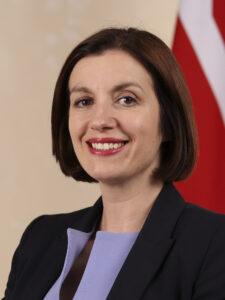
     

    Bridget Phillipson
    05/07/2024. London, United Kingdom.Secretary of State for Education,Bridget Phillipson poses for a photograph following her appointment to Cabinet by Prime Minister Sir Keir Starmer in 10 Downing Street. Picture by Lauren Hurley / No 10 Downing Street

    I also welcome her attitude to the teaching profession, “Teachers are partners not enemies” and the use of experienced professionals, rather than SPADS who have never stood in front of 30 stroppy teenagers on a wet Friday afternoon, to lead on various developments. I should have liked, however, to see a greater involvement of the profession as a whole. In my first, “Better schools, The Future of the Country” report in June 2023, I called for the establishment of a National Schools Council which would regularly and formally bring together ministers, civil servants and elected representatives from all areas of the school system. Real improvement will be dependent on the active involvement of those who successfully do the job, not those who just talk about it.

    Phillipson no doubt pleased many by offering to spend more on “crumbling classrooms”, referring to the recent Budget and the long overdue additional £550 million for rebuilding and the extra £330 million to improve the condition of our schools. We should not forget, however, that RAAC and asbestos existed at the time of the previous Labour government but rather than resolving these issues twenty years ago, it decided instead to spend the money on building a limited number of new, architectural masterpieces rather than on resolving underlying issues in all schools. Eye-catching new builds are presumably deemed more helpful at elections than a new roof here or a new staircase there.

    Clearly these are early days, but several of Phillipson’s comments do bode well for the future. The curriculum and assessment review may result in a curriculum that is more accessible and which will enable more young people to achieve and to make a positive contribution to the economy and society (but, I hope, without adopting a “prizes for all” mentality). The changes to Ofsted will, with any luck, lead to an inspection system that is far more clinical, accurate and useful to parents, schools and government, although we are yet to see what will take the place of the single, overall inspection grade. Providing early intervention for SEND pupils and of tackling the current atrocious absence rates [one in five children is deemed “persistently absent”] are both areas urgently requiring dramatic intervention.

    For all its positivity, however, there are two areas where I feel the Secretary of State’s speech lacked authority or understanding. The first is tackling the absolute crisis in teacher recruitment and retention. She made much of Labour’s manifesto promise to create an additional 6,500 teachers but, despite being an attractive soundbite, the number shows a complete ignorance of the magnitude of the problem. Last academic year, over 40,000 teachers (over 9% of the workforce) quit the profession for reasons other than retirement. In the same timeframe, only one half of initial teacher training places were filled (and only 57% in the previous year).


    This is the perfect storm – both retention AND recruitment. With over 20,000 schools in England, this equates to losing almost two teachers for every school; 6,500 new teachers is not even one new teacher between three schools. This is a crisis of extreme proportions and although Phillipson claimed she was not guilty of “a plan for happy ignorance”, much, much more needs to be done. The last administration pointed to the fact that there are in fact currently more teachers than ever before, but this ignores the fact that there are also 74,000 more pupils than in the previous academic year or that many of the additional teachers are either overseas trained (not in itself negative, but it obviously depends where and in what type of system they trained) or unqualified – hardly a recipe for dramatically raising standards. It is great teachers that change young people’s lives: until this crisis is resolved, any talk of curriculum, inclusiveness, standards or, indeed, any education topic, is simply pie in the sky.

    The area of Phillipson’s speech which has probably caused the most debate, is where she spoke about standards and the need for young people to be happy in schools. A survey has shown that one in three 15-year-olds “don’t feel happy in school. That’s worse than the average across our OECD neighbours”. Interestingly, this is the only international comparator that she chooses to quote: not the recent international reading and numeracy tests which, under the previous government, saw our comparative position rocket. Her message was clear – schools should not concentrate on academic achievement: “A*s alone do not set young people up for a healthy and happy life……This government will always be strong on standards….[but she warns against falling into]  “the trap of chasing a narrow shade of standards, structures-driven rather than child-focused”.

    Firstly, the vast majority of schools are not blindly focussed on exam results – to suggest that they are is simply insulting to all of us who have spent our careers committed to pastoral care, extra-curricular activities and to the development of the whole person. But why do some schools prioritise academic achievement? Not only is it the key to unlocking the future for every young person, it is also the metric by which schools are publicly judged – the annual examination performance tables. Phillipson makes no mention of scrapping these and they remain a central tool for how government and parents judge schools. Of course, issues such as “happiness”, ethos, the hidden curriculum and even extra-curricular activities cannot be quantified in the same way that examination results can – and nor should they. Let us understand that what makes a truly great school and gives it that special soul and feel, cannot always be defined in a league table. This is not a call for scrapping league tables, but if you chose to publicly rank schools according to their exam results, do not criticise them for playing the game.

    There is a clear criticism of previous governments in much of what the Secretary of State says: “previous governments have had tunnel vision……a sole focus on achievement is doomed to fail”. Anyone who has ever worked in a school, even briefly, knows that education is about so much more than exam results, but what she seems to fail to appreciate is that, sadly, this country is currently facing a genuine issue with academic standards.

    In recent years, England has done remarkably well in international league tables [PISA and PIRLS] but we must not confuse comparative ranking with a real improvement in standards. Yes, England has outperformed many competitors, which in itself may mean that our system has been more resilient to COVID and other pressures than that of other countries, but if you read these reports, our real terms performance in certain areas has declined at a frightening rate of knots: some maths performance is the lowest it has been since 2006; less than half of children feel confident in reading (it used to be more than half) and, what I personally find more worrying than anything else, less than one third of children going to secondary school now like reading. [And before anyone says this is the result of social media, our performance in this indicator is twenty points behind the international average.] In addition to making children safe and happy, we also need to raise academic standards as a matter of urgency and ensure that our schools produce youngsters with the knowledge, skills (soft and hard) and understanding necessary for them to contribute actively to society.

    Twenty years ago, I attended a conference which looked at the two trending education initiatives of the day, “Every Child Matters” (English) and “No Child Left Behind” (American). Unfortunately, the keynote speaker got tongue tied and called for a system where, “No child matters and every child is left behind”. The accidental slip inadvertently highlighted a very real danger – that political point scoring, that change dictated by those without knowledge or experience and that good, but flawed, intentions can seriously damage the education we provide for our young people. I have never doubted the sincerity and commitment of any Secretary of State or Minister of Education to do their very best for young people, but if the current and future incumbents want to really make a positive difference, they need to understand a few basic truths:

    ·       The very future of this country depends on how well we educate all young people, regardless of their starting point; education is too important to be a political football

    ·       A first-class education system requires significant investment.

    ·       Education is a complex matter: soundbites and a “one size fits all” approach are damaging in the extreme

    ·       The teaching profession is the most important commodity in any school system and makes the greatest difference to young people’s outcomes

    ·       While the role of elected representatives is critical, opportunity must be created to actively and meaningfully engage with those who have experience and proven success in teaching in our schools and of actually working with young people, not with advisors with absolutely no hands-on experience


    It is perfectly possible “to achieve and thrive”, but there is clearly much to be done.

  • Tim Clark on the Future of Education

    Tim Clark


    “If you judge a fish by its ability to climb a tree, it will live its whole life believing that it is a failure”.

    Commonly, but probably wrongly, attributed to Einstein


    The Challenge

    How do we prepare young people for the future and “future proof” our education system?

    In 2017, the shocking assertion was made that, “around 85 per cent of the jobs that today’s learners will be doing in 2030 haven’t been invented yet”.  [“The next era of human/machine partnerships” published by Dell Technologies and the Institute for the Future] As a consequence of revolutionary changes in the jobs market, the same report controversially highlights the need for far more “in-the-moment” learning so that, “the ability to gain new knowledge will be valued higher than the knowledge people already have”. Transferable skills and the appropriate mindset will, therefore, be paramount.

    The Historical Context

    Sadly, the history of technical, vocational and practical education in this country has been one of neglect and missed opportunities.  In 1918, the Fisher Act (which raised the school leaving age from 12 to 14) recommended the introduction of “continuation schools” for those who left school at 14: pupils would be required to attend for 320 hours each year whilst holding down jobs. Many provisions of the Act were, however, cut owing to the post war depression. In 1926, the report by Sir W.H. Hadow, had, as its ideal, “the awakening and guiding of the practical intelligence, for the better and more skilled service of the community in all its multiple business and complex affairs……It has been amply shown that for many children the attainment of skill in some form of practical work in science, handwork or the domestic arts may be a stimulus to higher intellectual effort”. The need for a broader curriculum was repeated by the Norwood Committee in 1941:

    “At the primary stage the main preoccupation lies with basic habits, skills and aptitudes of mind…. It is the business of secondary education, first, to provide opportunity for a special cast of mind to manifest itself, if not already manifested in the primary stage, and, secondly, to develop special interests and aptitudes to the full by means of a curriculum and a life best calculated to this end.”

    Despite the dated language, the demand for a curriculum that recognised both that all pupils are different but also that all could and should benefit from schooling, is manifest. Such reports, of course, envisaged the use of “selection” and the provision of different types of school for pupils of different abilities and aptitudes. It is one of the tragedies of post-war education that very few technical schools were built so that in most areas the existence of only two types of secondary school, grammar and secondary modern, reinforced the idea of pass or fail rather than of “selection” for the most appropriate type of school.

    There is, however, absolutely no need to return to the idea of providing different types of school: wide ability schools should simply be able to offer courses that are appropriate for all their intake. This was recognised by the seminal Butler Act of 1944 (which raised the leaving age from 14 to 15 and to 16 as soon as was “practicable” – eventually enacted in 1973) which did not insist on selection but simply required Local Authorities to ensure that schools were “sufficient in number, character and equipment to afford for all pupils opportunities for education offering such variety of instruction and training as may be desirable in view of their different ages, abilities and aptitudes”. Although most LA’s did opt for selection, the Act was permissive and allowed for both selective and comprehensive systems.

    The Current Government’s Action

    In recent years, the prime manifestation of the government’s commitment to skills has been through the development of the apprenticeship programme and this commitment has, without doubt, been impressive. To date, 691 “standards” (ie approved apprenticeships) have been offered, ranging from 12-18 month Level 2 (GCSE standard) qualifications, through to Level 7, degree level qualifications, lasting up to six years. The various routes or disciplines include agriculture, catering and hospitality, construction, digital, education, engineering and manufacturing, health (up to and including becoming a fully qualified doctor), legal, finance and transport.

    Unlike traditional school/college-based courses, apprenticeships permit students to learn on the job in the workplace, to earn a salary but to also spend at least 20% of their working hours training or studying. To complete the course, apprentices must undertake both ongoing assessments and end-point assessments. One major and very positive organisational change is that from 2024 students will be able to apply for an apprenticeship through UCAS, the charity currently responsible for undergraduate degree applications. This “one-stop-shop” will help youngsters to compare the full range of occupations, training and education opportunities open to them. It will also help to build parity of esteem between technical, vocational and academic career paths. John Cope, Executive director at UCAS and board member of IfATE [Institute for Apprenticeships and Technical Education] has commented that, “AT UCAS, we know over 50% of those who set up their account with us are interested in doing an apprenticeship, while data from IfATE shows 84% of those who become an apprentice feel they made the right choice. This new partnership will boost numbers and make sure more people are making the right choice.”

    Two Areas for Consideration

    The current and recent governments’ drive to increase practical, technical and vocational opportunities is to be much applauded. Two aspects of current policy should, however, be challenged. Firstly, to start an apprenticeship, students must be at least 16 years old: much less is currently being offered to broaden the curriculum pre-16. Secondly, there is amongst some, a misunderstanding of the term “skills”.

    1.     Pre-16 Education

    The insistence on waiting until 16 before a pupil can commence most practical courses is unhelpful, not least because for most who embark on some form of apprenticeship, this only becomes an option after they have “failed” traditional academic subjects at GCSE. Every year, over one quarter of teenagers fail to attain basic passes at GCSE (a Level 4) with many of them knowing one or two years before they even get into the exam room that they are not going to be successful. What incentive is there for a young person to work hard, to behave or even to attend if they know at the end of the course, they will achieve little? As I have argued many times before, this is definitely not a call for “prizes for all” but it is a simple recognition that by having a broader Key Stage 4 (14-16 years old) curriculum we shall be able to engage far more youngsters in their learning, see many more achieve worthwhile outcomes (rather than a string of poor GCSE grades) and, most importantly, prepare them much more effectively for the uncertain and ever changing world of employment. The other, often overlooked, consequence of moving away from the one size fits all GCSE approach is that we could also raise standards in traditional academic subjects as programmes of study and examinations could be targeted more to those who are academically able.

    “We are not indulging in the fallacy of supposing that there are two types of pupil, the able and “academic” and the less able and “practical”; but we do strongly believe that many, though not all, of our average and less than average pupils may find through practical activities a sense of achievement which can energize the rest of their work.


    The pride and pleasure of a measurable achievement is considerable.

    There can be, too, an intense creative satisfaction in making and doing which is especially important for those who do not easily achieve expression in words.”

    “Half Our Future”, 1963, Sir John Newsom, a report into the education of 13-16 year olds “of average and less than average ability”


    2.     What Are “Skills”?


    The whole skills vs knowledge debate is one of the most puerile and unnecessary arguments in education. Education must be based on knowledge otherwise we are in the realms of fiction or make believe, but knowledge is only really important when it leads to understanding and when the student has the skills necessary to use and apply the knowledge. Unfortunately, for some, “skills” are seen purely as practical, hands-on skills, whereas every subject, including (and perhaps, especially) the traditional academic subjects such as literature and history, require skills – the skills of comprehension, application, manipulation and evaluation. A minister stated a few years ago that he was “in favour of Shakespeare and skills”, completely missing the point that the skills required to study Shakespeare are equally important to, but different from, the skills required to programme a computer. Society and the economy require a wide range of skills and examinations should be geared even more to the application and use of knowledge rather than the pure Gradgrindian retention of facts (although the process of changing the nature of examinations has been evident for some time).


    “Knowledge is essential for learning. It underpins all higher order skills. If we want our pupils to be able to analyse and evaluate, we must first ensure they know and understand what they are analysing or evaluating.”

    During the weekly subject quizzes at Michaela School, the questions pupils are asked “force them to think about, apply and manipulate their knowledge.”

    Katherine Birbalsingh, “The Power of Culture”, Headmistress of Michaela School


    The continuation of traditional academic subjects, at least to a basic level, is also essential to avoid a utilitarian approach to education and to ensure that every young person has at least some understanding of the country and world in which we live. Every child should also, regardless of background or ability, be exposed to high culture: Shakespeare, Dickens, Mozart and Monet should not be the preserve of the rich or academically able.

    The need for a broader range of skills was reinforced by the World Economic Forum’s “The Future of Jobs” report published in 2020. It argues that by 2025, the top fifteen skills needed globally include:

    1. Analytical thinking and innovation,

    3. Complex problem-solving,

    4. Critical thinking and analysis

    9. Resilience, stress tolerance and flexibility [“soft” skills]

    “Soft skills” are life skills that are not subject specific, but which are essential for young people to become active and valuable members of society. Skills such as resilience, stress tolerance, teamwork, leadership, creativity, enterprise, critical thinking, problem solving and the ability to be flexible should be taught from the sandpit onwards and, again, are successfully inculcated through traditional academic subjects as well as through sport, music, drama, school trips and activities such as the Duke of Edinburgh Award. They are most successfully ingrained when they are part of the whole school ethos – what used to be termed the “hidden curriculum” – whereby pupils are immersed in an environment which challenges (but equally, supports) and which develops character as well as specific knowledge and skills.

    This need for the development of broader, more generic and transferable skills was also identified by Carl Frey and Michael Osborne of University of Oxford in 2013. Their research into “The Future of employment: How Susceptible Are Jobs to Computerisation?” considers the impact of AI, technological developments, computerisation and sophisticated algorithms on employment. “Our findings thus imply that as technology races ahead, low-skill workers [interestingly, earlier technological advances tended to impact on skilled workers] will relocate to tasks that are non-susceptible to computerisation – i.e. tasks requiring creative and social intelligence. For workers to win the race, however, they will have to acquire creative and social skills.”

    As I argued in “Better Schools – The Future of the Country”, the introduction of a non-academic leaving certificate at 16 or 18, which records and evaluates attendance, punctuality, behaviour, attitude, application and commitment to extra-curricular activities and to school life, would raise the importance of such soft, but crucially important, skills. It would also remind youngsters that they, and no one else, are accountable for their attitude, behaviour and work ethic. What could be better preparation for adult life than the teaching personal responsibility?


    Tim Clark has had a very distinguished career in education. He was a teacher for 32 years and a Head for 18, firstly of a grammar school which he led to be “outstanding” in all areas and to be one of the highest performing schools in the East Midlands. Latterly, he took over an out-of-control academy in the London Borough of Hackney, sited on one of the largest and most deprived council estates in the country. In the words of Ofsted, he “transformed” the academy and left it as a well-disciplined, high performing school of first choice. In 2019 he moved into education consultancy and professional development training, working with schools across the UK and abroad, most recently in Nigeria and Spain. He stood for parliament against David Blunkett in 2005 and remains an active member of the Party.