Tag: football

  • Rafael Nadal: a member of “the elite of the elite of the elite”

    Why is Rafael Nadal so important? As the great tennis-player retires, it is clear he inhabits very rare company, writes Christopher Jackson


    It is the humility of Rafael Nadal which is part of what makes him so magnificent. Retiring from professional tennis in mid-November 2024, he described himself as ‘just a kid who followed his dreams’.


    He was that, of course. But his great rival Roger Federer came closer to the mark when he wrote in his moving statement marking Nadal’s departure from the sport: “You made Spain proud. You made the whole tennis world proud.”


    In fact, Nadal – like Federer himself – comes from a very small group of sportspeople who make the whole world proud. They are a credit to their species. Part of living in an era whose defining obsession is sport is to find a dramatic increase in the type which we might call the elite of the elite of the elite.
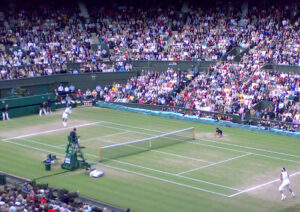
     

    Why is Rafael Nadal so important?
    The 2008 Wimbledon final. Federer is serving for the third set


    The group I am describing is not made up of No.1’s – though all of the people I would put forward for this category have been at one time or another the best in the world at what they do. But being no. 1 in the world doesn’t get automatically get you entry to this club. Being the best in the world here is a mere starting point to being perhaps one day somewhere near this conversation.


    Anyhow, you need to be World No. 1 for a long time to qualify. You have to be world no.1 over and over and over – but even that doesn’t get you there. Rory McIlroy has been the no.1 golfer time and again, but he isn’t in this category: he isn’t actually particularly close. The English swing bowler James Anderson is closer, but not quite there either.


    To be in the elite of the elite of the elite you need to do things nobody else can do – in fact, you need to perform at a level to which nobody else has ever performed. And you need to do it in a certain way. We can call this genius, or magic.


    In the first place, it has partly to do with ease of doing – or apparent ease. When we watch Simone Biles performing her floor routine we can see that she is doing much more than the relatively prosaic thing of winning her gold medal. She is reinventing that sport: she is qualitatively different. The same used to be true of Federer when he would waltz through a Grand Slam without dropping a set. It wasn’t just the ease with which he did this – it was the beauty with which he did it.


    Usually the elite of the elite of the elite express themselves in memorable moments – moments where time itself might seem to slow down, to expand, or to become elastic in some way. Furthermore, these moments will usually be tied to some form of necessity: they therefore represent necessity surmounted, or responded to with unusual skill and awareness.


    These are the moments which send a shiver. One thinks of Michael Phelps in the Beijing Olympics in the 100m breaststroke. Going for his seventh gold medal – to tie the Michael Spitz record which he subsequently beat – he was looking tired coming down the stretch against Milorad Cavic.


    Then something happened. Nearing the finish, Phelps summoned some last ditch strength, and rose out of the water with a sudden show of speed, to tap 0.01 seconds ahead of his rival. He rendered himself above an impossible moment.


    Tiger Woods was able to do the same. At the 2005 US Masters, Woods needed a birdie on the famous 16th hole. His drive went left down a precipitous slope. Viewers at home tend not to know how difficult the greens at Augusta National are: it’s like putting on glass.


    Woods, as every golf fan knows, lofted the ball up and it ran down the slope. It teetered on the edge of the hole then toppled in. Woods went on to win the tournament. He needed to do something nobody had ever done before and he did.


    The presence of someone who is in the elite of the elite of the elite doesn’t always need to come in moments when their backs are to the wall. It can also show itself with a certain ease of doing which can lend itself to a sort of inverse drama: it is the drama of things not being close at all.


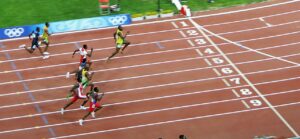
    In this category one thinks of Usain Bolt at the 2008 Beijing Olympics already celebrating about 80 metres in as he broke the world record by a vast margin. He looked almost as if he was flying. Nobody else has ever looked like that. In Bolt’s case it was tied together with a sense of theatre which in retrospect had to do with an extra awareness about the nature of the occasion: the nature of the occasion being that he was very likely to win and so could afford to lark about a bit.
     

    Michael Jordan is another example. When we watch reels of him hanging in the air before dunking a ball, it really can seem as though he has a different relationship to the essential physical structures of life to everybody around him.


    In team sports sometimes we find a certain heightened sense of strategy and inventiveness – the ability to conduct surprising situations with a certain innate virtuosity. In this category we find the great footballer Pele. I have always been fond of the last pass that leads to Carlos Alberto’s goal against Italy in the 1970s World Cup Final.


    Pele looks like he’s playing against children. He collects the ball with his left foot, cradles it briefly, and then with a kind of infinite laziness sends it off to Carlos Alberto, who rifles into the net.
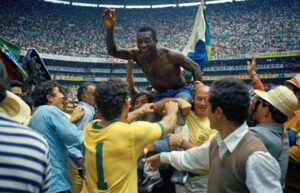


    Some of my favourite Pele moments have almost a kind of silliness to them. The attempt to score from behind the halfway line against Czechoslovakia in the group stages of the 1970 World Cup. The ball misses, but its sheer audacity opens up onto a whole realm of possibilities about how we might play football.


    Similarly, in the same tournament against Uruguay, Pele is running towards the box and the keeper coming towards him, both towards a cross coming from the left wing. Instead of trying to poke it past the keeper, Pele lets the ball go and circles back on himself while the goalkeeper flounders. That he then misses the goal doesn’t matter: he’s shown that there are another set of possibilities for the people to come after him to explore.


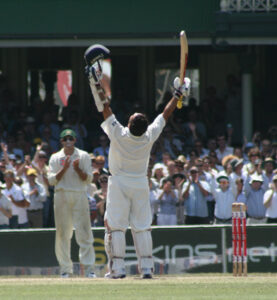
    Sometimes the elite of the elite of the elite can create moments which enter national folklore: inherently patriots, they can have a heightened sense of what their country requires of them. In 2008 Sachin Tendulkar, batting against England in the wake of the appalling Mumbai attacks, needed to produce a century to lift his country’s spirits, and he did. There can be something solicitous about the elite of the elite of the elite: they do what we need to them to do on our behalf.


    Clive James used to tell a story of Joe DiMaggio towards the end of his career. One of the greats of his sport, he was asked why he was warming up so hard when the game didn’t matter all that much in the context of a hugely successful career. “Because there’s a kind out there who hasn’t seen me play before,” came the reply.


    When this top flight of sportspeople are obstinate, their obstinacy can take on infinite proportions. Shane Warne, another member of the elite of the elite of the elite, was once asked who was the best batsman he’d ever bowled against. He replied: “Tendulkar first, then daylight, then Lara.” Asked why, he recalled how during one particular tour Tendulkar had found himself getting out to the cover drive. Unprepared to accept this reality, he simply cut the shot out of his repertoire all day long. Warne was shocked and delighted at the sheer determination of the man.


    Warne shows another example of the way this rarefied group can respond to circumstances. In Warne’s case, everything he did was characterised by a certain adventurous humour. During the 2006-7 Ashes, Warne was provoked by Ian Bell’s sledging to produce his highest test score. Bell, who Warne had been calling the Shermanator throughout the series, chose to answer back.


    Warne pointed his bat at Bell who was in the slips and said: “You mate, are making me concentrate.” Warne went on to score 71 from 65 balls. The implication is that he was so good he could stand in the great arenas of his sport, and not need to concentrate. But if you ever provoked him to do so, he could be as much a batsman as a bowler.


    Nadal reached these heights not because it was easy for him, but because he managed to balance extraordinary effort with profound humility. It was this which made him seem, as commentators frequently said, of another planet.


    That perhaps is what really unites these great sportspeople: they feel separate from us – they seem to resemble gifted visitors. One is sometimes left with the impression that the gulf between us and them is too great for it so be possible to learn anything from them.


    And yet at other times, it seems as though they have everything to teach. What makes it all a little easier to swallow is that time and again they teach the same sorts of things: hard work, humility, endeavour, a mysterious depth of commitment and even humour. We will need all those things in our own lives: that’s we won’t go far wrong if we make the Nadals and the Federers of this world our mentors.


  • An interview with James Connor: Millwall F.C. footballer turned wealth manager

    Robert Golding


    James Connor isn’t exactly your traditional idea of a footballer – but then he’s not necessarily what you’d expect from a wealth manager either. But great businesses always have a certain generosity about them – whether that be a generosity of spirit or energy or imagination. But in the case of Connor Broadley, one senses a central kindness which comes back, you suspect, to Connor himself.

    “I come from a working class family,” he tells us. “Dad ran his own heating business and for most of his career was a one-person firm, with mum as his secretary. If the phone went when we were having dinner, it could be a new client and so you’d have to answer the phone.”

    The family business did well enough to send Connor to the Mall in Twickenham. As I get to know Connor I will note how he tends to see the best in situations and in people, and this is the case with his schooling: “I like to think I had the richest upbringing. I did have a really working class family: we used to congregate at my nan’s house every day up until the age of 13, with uncles and aunts and cousins. But Zak Goldsmith was in my class at school, and there were a number of high-profile actresses and actors who had sent their children there. That gave me a sense of self-confidence.”

    As it turns out Connor would have plenty of reasons for self-confidence – but I never get a sense while talking to him that he has a shred of arrogance. Early on, he realised he was good at sports, although initially there was scepticism from his teachers as to whether football – which in time, would be his chosen sport – would ever pay. “I remember being told: ‘James, you’re good at sports but it will never be a career for you’. This was the pre-professional era, and money hadn’t come into football then.”

    In time, Connor would attend Hampton, a former grammar school, where his passion for football deepened. Initially, after unluckily breaking his arm on the night of Republic of Ireland v Romania during Italia 90, Connor thought he had lost the chance to pursue his dream. “But as luck would have it, my nan had moved to Aldershot – which was 92nd in the football league out of 92 clubs. She heard they were doing a last chance saloon trial day, offering seven apprenticeships at the end of it.” Connor secured one, but decided after breaking his arm to do his A-Levels at the same time. When the club folded, Connor again thought a football career might not happen.

    Good fortune struck again however, when his former Aldershot manager called the Connor family while James was interrailing in Europe to say he’d moved to Millwall and he’d like him to join the trial. Connor was on the training pitch 48 hours later. “I saw the career that I could have,” he recalls. “Millwall had one of the best youth academies at the time, and it was well known for building the best youth players and selling them, and there were internationals in the youth team there. That was August. By November I had signed a five year contract, a PFA representative came to see me. Dad encouraged me to buy my first house at 18 which is where my interest in personal finance came from. Only Garth Crooks and Paul Gascoigne at that point in history had been offered a five-year contract.”

    Connor was a quiet player, and the only privately educated player on the team. Mick McCarthy was the manager at that time. “We were doing a drill – and Mick was a very strong person, and reminded everyone that I wouldn’t be shouting for the ball,” Connor recalls. In this, he also draws a parallel with his current role in wealth management: “I’m much better operating one to one, since this job is about intimate conversations and relationships: it’s not a job which involves talking to large numbers of people. I like to go about my business discretely and be respected for being good at what I do.”

    There were other skills which Connor developed at Millwall F.C. “One of the great things about football at all levels is that it attracts a real social mix. And you just love it and embrace it for what it is. Your team mates are all equals. Similarly, entrepreneurs come from all walks of life.”

    These skills meant that Connor was better prepared than he perhaps realised at the time, when his career ended through injury. You sense that this was a challenge even for someone with his innate optimism. “It was the defining point in my life,” he says. “It left me so determined to make it at something else. Football is a brutal industry and there’s no support network for people once you exit the game.”

    But again Connor would be fortunate. The then chairman of Millwall was Peter Mead – the Mead in the UK’s then largest advertising agency Abbot Mead Vickers. He took Connor under his wing. “Difficult as it was not doing what I wanted to do at 21, being thrust into the creative advertising scene was an amazing education in itself,” Connor recalls.

    Gradually, Connor’s career began to evolve. Everything kept coming back to an interest in personal finance, which had been planted in him by his father. “In my twenties, I found myself going to buy the Sunday newspaper to read the personal finance section. By the age of 27, I realised it would play to my strengths. I took a 90 per cent pay cut then but I knew it would suit me and I was prepared to do it.”

    It would turn out to be a masterstroke, and again, Connor draws a comparison with football: “One thing you have to have in sport is a good instinct. I find it eyebrow-raising when I hear people making career moves when they have no natural segue into it.”

    At first Connor was, in his own words, “just a bag carrier”. He loved the work and built an impeccable reputation, but when a fraud scandal occurred in the firm, Connor decided that he had to preserve his hard-won reputation. Though the scandal had had nothing to do with him, he started his own firm to avoid being tainted by it. “A number of people said: ‘Don’t be implicated in any way. Go and set up your own company and we’ll come with you.”

    Again, Connor’s experience in football was formative. “I’d noted as a footballer that when I was approached by financial professionals there was such a lack of integrity – and there is still is in some quarters. We wanted to be respected from day one. We didn’t try and entice previous connections over; we waited for the phone to ring. Our first client fee was £250 and we felt like we’d won the lottery at that point.”

    This commitment to integrity sometimes meant giving advice which was in contradiction of their own personal interests. “Our first enquiry was from a longstanding accountancy connection. She’d lost her husband and there was a tabled investment proposal which she didn’t think was in her interests. We were asked to take a look. We had to explain we were in our first few days of business. I took one look at the lady in question and realised she was in no fit state to make a decision as she’d been through a life-changing event – and I know about life-changing events. We told her to stick the money into a bank account to take stock of her life and to talk to us when things had calmed down. She’s now been a client for 15 years.”

    The approach has worked. Connor Broadley now has an AuM of £500 million – with an expected £100 million increase to come this year alone. But Connor insists it’s not about the numbers: “Growth at Connor Broadley should come as a consequence of looking after clients, giving them advice and underpinning it with a personal service: it has to be the right kind of growth. Word is spreading and we continue to grow: we attract nice people – people that appreciate a longer term relationship genuinely.” That word ‘genuine’ is overused but it certainly applies to Connor.

    So how do you become a client? “The entry point is £1 million of eligible longer term money if we’re going to commit to providing them with an ongoing service.” The firm has a cautious approach. “The way we invest clients’ money is geared to growing purchasing power of our clients’ money by a specified amount above inflation after fees are taken into account across a number of different risk profiles. We don’t purport to be a wealth manager that’s offering double digit returns from one year to the next. We want to look after the wealth people are dependent on to live comfortable lives.”

    This is a firm set to grow in the next years, as it brings – starting at the top – some much-needed integrity into the difficult-to-navigate world of wealth management.