Tag: Etiquette

  • Diary: Liz Brewer on etiquette, presentation – and meeting Guy Ritchie

    Liz Brewer


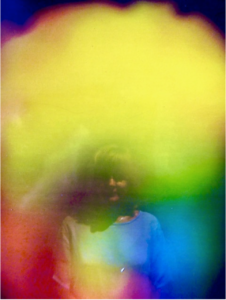
    Life is  all about presentation. You have to realise that when you walk in that room, in front of the interviewer or panel of people, they’re going to make an instant decision. They don’t know they’re doing it, but it happens automatically, and it’s all to do with your energy. And so when you walk into a room, you have to take a deep breath and turn your energy from whatever it is, whether you’re frightened, or worried, or having a bad hair day, into positive energy. If you ever been to the east, and you’ve studied Kirlian photography, you know that they can photograph your aura. You have to make that aura – that energy – positive. So you take a deep breath, think positive thoughts, and you go in and your energy will hit them, and they’ll sit up and they’ll say, ‘right, what have we here?’


    The thing about communicating over Zoom is that you never manage to judge energy. The whole idea of meeting with people is eye contact, it’s energy contact, and it’s feeling. We are animals, and although a lot of people don’t understand that, we train ourselves to be able to judge people – to know whether this is someone that I can trust and rely on. A lot of people now judge people’s mannerisms and the way they behave to determine things like whether they’re telling the truth or not. It’s happening more and more, and people who have the ability to do that have either spent time realising that have that ability, or they’ve actually studied people. When I started the first discotheque club in Portugal, for over ten years I had a rule for myself that I never danced. I would watch people and I would watch their behaviour, and I must have automatically picked up the ability to be able to read people. And it’s something that you can train yourself to do. A lot of people are unaware of other people, they’re too busy thinking about themselves or looking at everything around them. But just studying people, how they speak, and how they make eye contact is something that we’re going to have to learn to do better and better as this world becomes even more competitive.


    I’m in my element with outside living and through my many sojourns in Africa, mainly exploring Zambia, was frequently lost along the Zambesi, having missed a confluence along the way and getting stuck on sandbanks in the middle of the river!  So camping, cooking and eating outside are always an integral and exciting part of my life. I was a pleasure then to be invited recently to join Guy Ritchie and his enthusiastic team in his creation, the alfresco lifestyle WildKitchen on a lake at his Somerset Estate, Ashcombe. The WildKitchen is quite an amazing structure: a copper topped 12 seater WildTable, containing two ingenious fire boxes covered by clear lids, so you could witness the cooking, both burning wood or charcoal and generating heat and light without smoke. Having seen Ritchie’s 2019 film The Gentlemen I was amused that product placement cleverly made its mark on several occasions.


    Guy Ritchie’s sense of humour turns out to be a delight. After finger-eating the succulent steak, he’d cooked to perfection, I asked if I could have a finger bowl. Without hesitation he reached up to the halo of tools hanging above for a suitable dish, and having added water he added a tablespoonful or two of olive oil, explaining apparently t’was the necessary ingredient for a finger bowl.  Who was I to argue?


    What’s happened in today’s world is, because of technology, everything is speeded up. We can do ten times more nowadays than we could, say, 15-20 years ago. Because of that, we’ve speeded ourselves up, and we overlook things like saying ‘please’, and ‘thank you’, and ‘hello’, and remembering that the person on the till who’s taking our money is a human being. When you’re with another person, that is now precious time, and if you then have your phone out, it’s an interruption. Time is a luxury, and it’s often very special and limited.


    Wherever you work, you have to have your own self-esteem. So when people have said, ‘Oh, well I can’t be bothered to dress up, I’m in the back room packing boxes’, I tell them that how you feel about yourself is a reflection of the way you present yourself. If you catch sight of yourself in a window or mirror, and you’re looking dishevelled with your shoulders hunched down, it doesn’t do much for your self-esteem, in which case, it doesn’t do much for you yourself.


    Life is for living. You never know what’s going to happen from one second to the next, so the way you dress, how you walk, and how you present yourself makes people immediately think, ‘right, this person has respect for us, and they have respect for themselves’. You have to take pride in what you’re doing. If you don’t bother to make yourself look good in the morning, that’s how you’re going to continue during the day. When they’re training people to be soldiers, it’s very important that your shoes shine, it’s very important how your belt is buckled, and how your suit is presented. It’s a question of not just discipline, but it’s a question of actually giving the best of yourself. That’s what it’s all about.


  • Liz Brewer’s guide to etiquette in a changing world

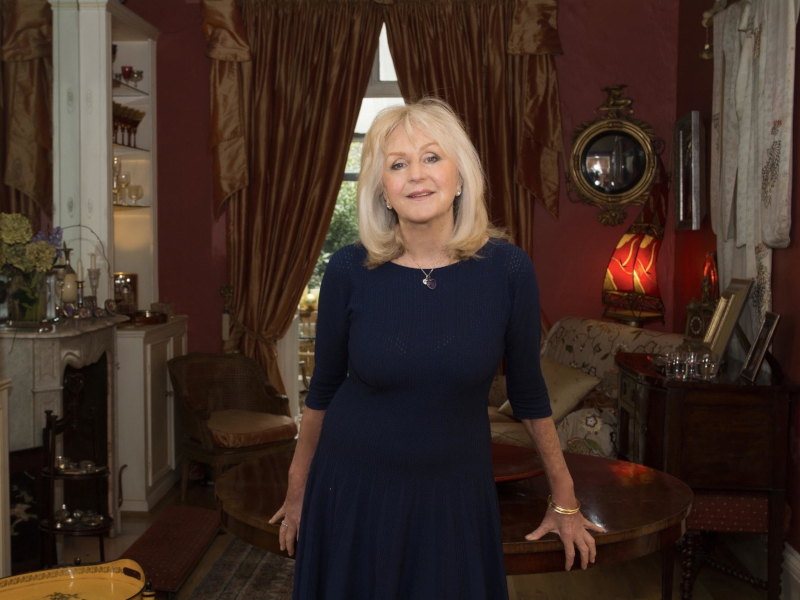
    Etiquette expert and Ladette to Lady star Liz Brewer talks job interviews, presentation, and how technology is changing the way we communicate.


    It’s all about presentation. You have to realise that when you walk in that room, in front of the interviewer or panel of people, they’re going to make an instant decision. They don’t know they’re doing it, but it happens automatically, and it’s all to do with your energy. And so when you walk into a room, you have to take a deep breath and turn your energy from whatever it is, whether you’re frightened, or worried, or having a bad hair day, into positive energy. If you ever been to the east, and you’ve studied Kirlian photography, you know that they can photograph your aura. You have to make that aura – that energy – positive. So you take a deep breath, think positive thoughts, and you go in and your energy will hit them, and they’ll sit up and they’ll say, ‘right, what have we here?’

    Kirlian photograph showing Liz Brewer’s aura

    The thing about communicating over Zoom is that you never manage to judge energy. The whole idea of meeting with people is eye contact, it’s energy contact, and it’s feeling. We are animals, and although a lot of people don’t understand that, we train ourselves to be able to judge people – to know whether this is someone that I can trust and rely on. A lot of people now judge people’s mannerisms and the way they behave to determine things like whether they’re telling the truth or not. It’s happening more and more, and people who have the ability to do that have either spent time realising that have that ability, or they’ve actually studied people. When I started the first discotheque club in Portugal, for over ten years I had a rule for myself that I never danced. I would watch people and I would watch their behaviour, and I must have automatically picked up the ability to be able to read people. And it’s something that you can train yourself to do. A lot of people are unaware of other people, they’re too busy thinking about themselves or looking at everything around them. But just studying people, how they speak, and how they make eye contact is something that we’re going to have to learn to do better and better as this world becomes even more competitive.

    What’s happened in today’s world is, because of technology, everything is speeded up. We can do ten times more nowadays than we could, say, 15-20 years ago. Because of that, we’ve speeded ourselves up, and we overlook things like saying ‘please’, and ‘thank you’, and ‘hello’, and remembering that the person on the till who’s taking our money is a human being. When you’re with another person, that is now precious time, and if you then have your phone out, it’s an interruption. Time is a luxury, and it’s often very special and limited.

    Wherever you work, you have to have your own self-esteem. So when people have said, ‘Oh, well I can’t be bothered to dress up, I’m in the back room packing boxes’, I tell them that how you feel about yourself is a reflection of the way you present yourself. If you catch sight of yourself in a window or mirror, and you’re looking dishevelled with your shoulders hunched down, it doesn’t do much for your self-esteem, in which case, it doesn’t do much for you yourself.

    Life is for living. You never know what’s going to happen from one second to the next, so the way you dress, how you walk, and how you present yourself makes people immediately think, ‘right, this person has respect for us, and they have respect for themselves’. You have to take pride in what you’re doing. If you don’t bother to make yourself look good in the morning, that’s how you’re going to continue during the day. When they’re training people to be soldiers, it’s very important that your shoes shine, it’s very important how your belt is buckled, and how your suit is presented. It’s a question of not just discipline, but it’s a question of actually giving the best of yourself. That’s what it’s all about.

  • The Finito World guide in How to Zoom

    The Finito World guide in How to Zoom

    How do you get the most out of the new technology? Finito World spoke to business leaders and society etiquette expert Liz Brewer to find out

    If you want to know the essence of an era, look at its new word-coinages. This year, which has been so seismic in every way, saw a wealth of new words enter the vocabulary. These include, of course: Covid-19, corona, lockdown, social distancing and flatten the curve.

    But the word ‘Zoom’ is perhaps the most commonly used of these. Like Covid-19, it is ubiquitous and liable to be used many times a day, as all our meetings accrue. But like social distancing it can be used both as a noun and as a verb: we are ‘on Zoom’ but we also ‘Zoom’.

    Perhaps of all the words in the language it most resembles ‘Google’ in the way a company name has so suddenly entered proverbial usage – and with gratifying results for founder Eric Yuan who has seen his company’s value skyrocket to near the $50 billion mark.

    This new technology isn’t going anywhere. So here in seven easy steps we explain how to make it work for you:

    Get the lighting right

    Liz Brewer is a world-renowned events organiser and expert in social etiquette who has thought long and hard about how to present herself in a call. ‘This is a visual medium so check how you appear on screen and adjust height,’ she says. ‘Position yourself so you’re seen not sitting too close, too far, high or low, with a suitable background.’ This rings true: we’ve all misjudged the lighting once in a while and found ourselves sitting in shadow like James Bond villains – but that’s not a good look for an important meeting or a job interview.

    Don’t be vain or distracted


    Brewer also argues that it’s ‘best to turn off self-view’. Vanity exists in most of us and it’s easy to spend an entire call sneaking views of yourself rather than engaging with the person in front of you. It is best not to give yourself the option of assessing the calamity of your Covid-19 haircut, or that special lockdown exhaustion etched on your features. In the same way, Brewer advocates turning off everything else on your computer: ‘You are on screen and will be observed so it’s important to close or minimise all other distractions, screen windows and silence mobiles,’ she says.

    Embrace the possibilities of the medium…

    Many of us have now seen the interiors of one another’s homes, and thus have a sense of how people live. ‘I enjoy the informality,’ says the MP Robert Halfon, and even encourages the presence of children on a call. For some that can create a sense of camaraderie that can progress an understanding of the person you’re talking with. For many the informality is to be embraced and might even create deeper relationships.

    But realise its limitations…

    When we catch up with the architect Thomas Heatherwick, he argues that the medium is unhelpful in at least one respect: ‘Video conferencing doesn’t create new relationships. You can sustain a connection, but you don’t grow a deep connection.’ And so while it’s important to embrace Zoom now, we should all have an eye to those we connected with during lockdown: make sure you meet face to face with people you felt you had a connection with once it’s safe to do so.

    If you’re a CEO, check in on your team separately

    ‘We’re all so tired with Zoom call after Zoom call,’ says Carol Leonard of the Inzito Partnership, and argues that we need to think beyond Zoom. ‘Think who might be vulnerable in your team. At Inzito, we have little informal social programmes to check in with people, and we do mindfulness virtually twice a week.’ Thomas Heatherwick agrees: ‘It’s amazing how stressful these calls are.’ So don’t think all the company’s HR needs have been taken care of by that one collective Zoom.

    Remember the emotions of your co-Zoomer

    Thomas Heatherwick realised after a while that he was tired of what he calls ‘flat half people’. He adds: ‘If we met people face to face I would never sit facing that person: it would be too confrontational. Instead I’d sit at a slight angle. Even before we’d begun talking, we’d have a sense of each other and the peripheral vision can see how confident a candidate is when they walk in.’ So though it feels like your talking to an avatar, always remember the humanity of the encounter.

    Remember to laugh

    Collective behaviour doesn’t quite happen on Zoom,’ Heatherwick observes. ‘it’s ping pong. You press a button and you’re next in the conversation. You don’t chuckle together or cringe together.’ Brewer says that it is up to the host to make sure this gap is closed. But she also recommends other things like running ‘speed tests to avoid freezing moments’ and ‘bluetooth headphones’ to ensure that the sound quality facilitates the conversation.

    And if all else fails…

    ‘Well then you can always excuse yourself,’ says Brewer. And for many of us that’s the best part of any Zoom call.