Tag: Education

  • Sir Anthony Seldon on why Sir Keir Starmer has blown it already

    Sir Anthony Seldon on why Sir Keir Starmer has blown it already

    by Sir Anthony Seldon

    It’s ten years since David Cameron and Nick Clegg stood in the Downing Street Rose Garden at the beginning of the Coalition.

    But from the perspective of universities, and our wider education system, it was a man who wasn’t at that press conference who would really go on to change our education system.

    Michael Gove arrived in Great Smith Street with a strong agenda. Assisted by Dominic Cummings, he would have an extraordinary impact on how schools conducted themselves: his was a tenure ambitious for all students regardless of background. It’s hard to point to many other education secretaries who have made such a significant difference – Tony Crosland perhaps, who served under Harold Wilson, and launched a campaign for comprehensive schools. Whether he’s at DEFRA or heading up the Cabinet Office as he does today, Gove’s energy remains remarkable: any department that he comes into is very quickly overhauled. In any cabinet, Gove is always one of the most erudite. Peter Mendelsohn held a similar distinction during the Tony Blair years.

    As education secretary, Gove accelerated free schools and continued with academic, building on the Andrew Adonis years. Adonis and Gove are comparable: each had the same ambition for schools, and a similar desire to bring in external energy and remove schools from local authority control. But I would say Gove arguably had a clearer agenda around school standards.

    Cameron deserves some of the credit for the achievements of those years. Margaret Thatcher was probably the last prime minister who didn’t see education as a major part of her job. All prime ministers since Tony Blair have had a major interest in education, and Cameron was no different, though it’s probably true to say he didn’t involve himself greatly.

    One thing Cameron did do was to invite the heads of independent schools into the Cabinet room, and seek to persuade them to start academies. It wasn’t very successful, but he was always supportive of Michael Gove. He knew when to leave someone to it.

    A decade later, there are remarkable continuities. In Keir Starmer, we have a leader with deep roots right down to his Christian name in the left movement, as Brown had. And it hardly needs saying that we have an old Estonian in Number 10.

    A comparison of Brown and Starmer yields intriguing thoughts: both are very bright people, and both have legalistic minds and a superb grasp of detail. But their disparities may in the end prove crucial. Starmer is untested as a leader. Brown, when he came to become prime minister, had been for ten years the longest serving Chancellor of the Exchequer, and had a formidable knowledge of how government operates. Whereas Starmer today is the younger man on the rise; Brown, in 2007-10 was arguably at the peak, or beyond the peak, of his energy.

    As for David Cameron and Boris Johnson, they’re very different. Cameron had a vast appetite for detail, but he was primarily interested in foreign policy, leaving economic and domestic policy to George Osborne. Johnson tends the other way: he’s not interested in foreign policy, but in the domestic side. He has a far shorter attention span, not the same work ethic, and is still relatively new to Westminster politics.

    How it plays out remains to be seen, but I certainly wouldn’t give Labor high marks for their handling of coronavirus so far. Starmer didn’t do enough to stand up to the unions, and the party gave the impression that it was far less interested in children – including the socially disadvantaged and those with mental health challenges – than in their own membership. Accordingly, they have lost moral authority, and shown intellectual weakness. They had an opportunity to seize the high ground but they blew it.

    The quality of the opposition always matters but especially so now. The next years will see real difficulties for universities. I certainly don’t subscribe to the belief some on the right hold, which is to let the poor universities and those that don’t compete internationally go to the wall.

    That position is about as intelligent as saying, ‘Let schools that don’t come top of the league tables collapse.’ In reality, it’s those in the middle and at the bottom that are adding most to the attainment of young people. It’s simply that the quality of the raw material they proceed with is much less high academically. Besides, if you let the universities in the middle or bottom disappear, you will be stripping northern cities, as well as cathedral and rural cities of their economic dynamism and vitality, and doing irreparable damage to the social cohesion of the country.

    So ten years on from the outset of the Coalition, some themes are recurring. But as Heraclitus knew, we never step into the same river twice. The success of this administration will be in identifying what a crucial moment this is and not just for universities but for our entire education system.

    Sir Anthony Seldon is a historian and biographer who recently stepped down as the vice-chancellor of the University of Buckingham

  • Should gardening be on the national curriculum?

    Should gardening be on the national curriculum?

    Never let a casual utterance from a great man go to waste. When Sir David Attenborough expressed an interest in the idea of gardening forming part of the national curriculum, Finito World looked into the matter in more detail

    Sir David Attenborough is obviously a man used to uttering qualifiers. When we put it to him in our interview opposite that gardening ought to be on the national curriculum he expressed excited interest, but also stated that he wished to know more.

    Obedient as always to the wishes of a great man, we conducted some research for him.

    The idea chimed immediately within the gardening profession. Jo Thompson, a former teacher and four-time Gold medal-winner at the RHS Chelsea Flower Show, said: ‘In the past six months, people have started to want to develop their skills again, casting their minds back to retrieve nuggets of information once passed on by parents, grandparents, an enthusiastic teacher, an encouraging neighbor,’ she told us.

    So what good could gardening give children? ‘Coming into contact with the soil makes us feel good,’ Thompson replied. ‘Tending plants makes us feel good. Success in growing plants makes us feel good, failures teach us to learn from others what went wrong and to try again. There is a huge resource, the natural world, which surrounds us, and it’s now our absolute duty to teach others how to look after it.’

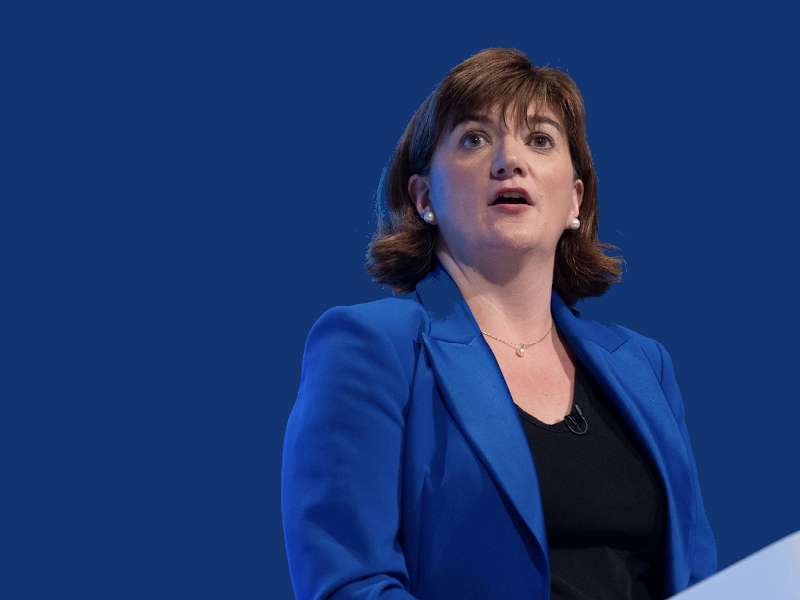
    Soon others in the profession had expressed interest in our campaign, including the legendary Piet Oudolf, who designed the gardens at the High Line in New York. But we felt the need to stress-test the idea with someone from the political classes in order to ascertain how it would be perceived by Whitehall and Westminster. Who better to speak to than the former education secretary Nicky Morgan who held the role of Secretary of State to the Department for Education from 2014 to 2016?

    Morgan replied immediately: ‘Interesting point from David Attenborough,’ before admitting: ‘As education secretary, I started keeping a list of all the things people wanted schools to do – on top of teaching the curriculum – and if we’d said yes to all of them – and most were sensible – schools would have to stay open until midnight.’

    Even so, Morgan was receptive to the idea and made the following suggestion: ‘My take on it is that there should be time in the school week to have a period when young people do something other than academic work which develops their character and supports their mental health and that could well include gardening – but would include other activities such as volunteering, enterprise etc.’

    It is noteworthy that gardening feeds into both the character agenda of the right, and ideas more usually associated with the left. The activity teaches us not only resilience and patience – attributes Morgan deems particularly important – but also a sense of citizenship and wisdom espoused by another former education secretary Estelle Morris on page 14.

    And with more teaching going on outside, isn’t this also inevitable? Green party peer Natalie Bennett concurs: ‘I’ve been asking the government questions about taking more education outside and into the natural world. We need not just biological science but contact with nature.’ For her, as for Morgan, it is part of a wider story where we need to teach children to explore ‘their creative side’.

    But isn’t there a problem also whereby urban sites will be less able to teach gardening as, say, a typical private school in Surrey?

    We put this objection to international plants man Piet Oudolf. He had little time for that reasoning: ‘It’s true that most people in cities have no gardens, but I think even in cities you can learn by what’s going on in your street and in your neighborhood. Street gardens can stimulate children and be interesting.’

    Thompson agreed: ‘Even if you haven’t got a garden space, there’s a chance you have a window sill or a front doorstep, and it’s being shown how these spaces can be transformed, bringing not only joy to the person who’s gardening but also to passers-by, engendering conversation and thus combatting loneliness and isolation.’

    Having dispensed with the likely objections, we felt we were now armed with enough to take the matter to Robert Halfon MP, a legendary campaigner in his own right, who sits as Chair of the Education Select Committee. We wrote to him, explaining that the gardening agenda would assist him in his own fight for guaranteed apprenticeships, arguing that a change to the curriculum would ‘create children unafraid of work, and able to understand that education must sit within the context of a sense of one’s wider place in the world.’

    Our next letter to the education secretary Gavin Williamson’s special advisers makes our case fully, arguing that it is the right moment for the government to signal its understanding of the way in which the world has changed since Covid-19, and also urging the government to accept that gardening is an industry with jobs, at a time when we need to seek every employment avenue available.

    Acknowledgements from Mr Halfon’s office, and from the Department for Education were received before we went to press. Mr Halfon wrote: “I really believe that outdoor practical activities are so important. I’d be interested in how it would work in practice.”

    Encouraged by this, we will update readers on progress as and when it comes in.

  • Carol Leonard: ‘Journalism is not a career to retire in’

    Carol Leonard: ‘Journalism is not a career to retire in’

    London’s top headhunter and former Times journalist tells Finito World about the gentle art of career leapfrogging 

    I’d recommend a career in journalism to anyone but it’s not a career many people get to retire in. You do it for a decade – maybe even for two or three – but then you do something else.

    At The Times, when I was leaving in the 1980s, there was a retirement notice posted to the door of one of the longest-serving editors. I remember thinking that it was the first time I’d seen someone at the paper reach retirement age. Of course, there is a career path in journalism – from local newspaper to national newspaper, then on to columnist, or into broadcasting and editor. None of those appealed to me. I’d have paid to do my job, and that’s the trouble with those sorts of jobs – as a consequence you tend not to be paid very much doing that kind of work.

    But if you work in journalism, you acquire important skills, and then you can progress and earn something a bit more livable-with. As the Times City diarist, I was my own boss. As a representative of an august organization, I had a lot of access. I did about 150 profiles of captains of industry over three or four years. It was hugely demanding physically and emotionally; each was a kind of mini novel. I started to wonder whether I had the energy to go around the block again.

    I asked myself what I liked. I liked meeting people, and I knew how the business world interconnected. Then it happened. I had profiled a man in the headhunting world called Roddy Gow. Miles Broadbent – a competitor of his – was incensed that I’d portrayed Gow as being the top of the profession. Miles asked me to come meet him. Even then, I made the effort to meet with people face to face. It’s important to look people in the whites of the eyes.

    Three months after our first meeting, he rang me and said, ‘Can you have lunch with me at the Savoy Grill?’ In the 1980s, that was the power-broking dining room. When we sat down, he said right away: ‘When are you going to become a headhunter?’ I replied that it’s not something I’d ever thought of. No-one grows up thinking of becoming a headhunter!

    He said, ‘Have a think about it. If I haven’t heard from you in three months, I’ll call and ask you again.’ Afterwards, my then father-in-law said: “Why didn’t you bite his hand off? This is the main chance. You only get two or three. Make the most of it.”

    When I began headhunting, I found I’d picked up so many skills at The Times. I’d learned to become self-sufficient, and I’d long since stopped being nervous cold-calling people. When you ring up as a journalist, the person on the other end of the phone can panic; as a headhunter you’re talking about a role and that makes it easier. The wider skillset is also similar to financial journalism. It’s all based on long-term relationships, trust, listening to people, interviewing people, reading between the lines, note-taking – and recording data.

    What fascinates me now in my work is the question of what makes people tick. There’s usually something in childhood that gives the successful that extra piece of drive – an insecurity which makes people work harder than those who didn’t have the kinks. Most people who do very well have sacrificed a lot both personally and health-wise. These people will get Alzheimer’s when they’re older – it all comes at a price.

    Now, with Covid-19 the world has changed all over again. Video interviewing is pretty good actually – perhaps 90 percent as good as face-to-face. Obviously where you have a FTSE 100 CEO down to the final preferred candidate stage then you’ll want to meet, and the offer is unlikely to be on anything other than a draft basis otherwise. But I’ve seen non-exec roles offered and accepted without the parties having met one another. This time is brutal for people out of work, but actually the businesses which do emerge will be stronger, leaner, and fitter.

    To young people looking for a job now I’d say that personal relationships are more important than ever. And I would remember always to be open to new experiences. When I think of my decision to leapfrog careers, I think it came from a confidence given to me by those teachers who believed in me.

    There’s something special in all of us, but you don’t have to limit your career to that special quality: it can be a springboard to believing in yourself more generally, and then someone in a position of power will notice it. That can lead you to different spheres – it can make a headhunter out of a journalist.

    Carol Leonard is the CEO of the Inzito Partnership, an ex-Times journalist and a visiting fellow of the Said Business School

  • Lee Elliot Major: ‘There’s a real volunteering spirit among the young’

    Lee Elliot Major: ‘There’s a real volunteering spirit among the young’

    The UK’s first social mobility professor spoke to Finito world on the eve of securing vital public monies for tutoring 

    I am very careful to be apolitical with my views on social mobility as I think it’s a cross party issue. This might be a naïve belief but my view is that you have to present evidence behind what you’re proposing.

    There are huge questions around why we have a social mobility problem, but what I’ve been trying to do is come up with pragmatic solutions to problems. When I was a trustee at the Education Endowment Foundation, we looked at what works in the classroom in terms of improving learning for disadvantaged pupils. What’s hard is to find approaches that can be consistently scaled up. We’ve done hundreds of trials and reviewed literally thousands of studies on what we think are our best bets for learning. One thing that surfaced was classroom-teacher feedback, the core of all good schooling.

    Alongside that, we found strong evidence of the effectiveness of one-to-one tutoring. I’ve always felt that that was something we could utilize more to help the disadvantaged learn. Tutoring is simple to scale up. The idea is that wherever people live they have access to tutoring support. We found the existence of this patchy; in some areas there are charities – as in some areas of London – but there are other areas where there’s no support at all. Then, when we turned to the question of addressing inequalities during the Covid-19 crisis, we talked about establishing a National Tutoring Service. I began observing a boom in private tutoring – surely now was the time to level up the playing-field.

    It feeds into something else I’ve noticed: there’s a real volunteering spirit among the younger generation. These are people who like to give back and have a strong sense of social justice. It was fantastic when the Johnson administration gave money to the idea.

    There’s also, of course, huge inequality in the workplace. When you look at studies about who gets on in work, you often find that someone senior and experienced champions someone junior in the organization. This tends to happen predominantly to people from privileged backgrounds: if you’ve gone to the same school, or if there’s some sort of familial connection.

    It could be possible to create a more formal mentoring program that could be part of a national service, whereby senior people could champion people from disadvantaged backgrounds. At the moment, they feel lost in the culture of the industry. For instance, I know a lot of people around the creative industries. At the moment, it doesn’t matter how talented you are, you’re struggling to progress in the early career phase. The cultural assumptions can be quite alienating if you’re not a part of that: if you’re outside London, it can be hard to get into London.

    But as ever you come up against the practicalities. The question is, how idealistic do we want to be about this? It would be difficult to deliver a national mentoring program. Another critique would be that a mentoring service would assume that in-built cultures and inequalities in industries would remain. We can so easily get caught between ideologues on left and right. On the one hand, those who say: ‘All we need is to make things equal.’ And on the other, those who say: ‘All we need is economic growth.

    One of the reasons government looks at education even though it’s become a market-led sector, is that in this area you can at least try and do something: the taxpayer is paying a lot for that delivery. Once you look at labor and economy policy you’re suddenly dealing with private companies and the levers that government have are less direct.

    But what’s interesting is that during the coronavirus crisis, that has changed. The government is now paying the salaries of a lot of people. So although this time is tragic, it’s very exciting from the policy perspective. It’s challenged the old stereotypes and preconceptions about what’s left and what’s right. This is the most interventionist government I can remember. And the question for someone like me is: ‘Do some of these things remain in five years’ time? Is it a permanent readjustment about profound social issues? Or do we slip back into the assumptions of neoliberal global politics?’

    I hope it’s the former. I think we can find a better balance and a fairer system. I think we were heading for a reckoning before this crisis. When society doesn’t give people a fair go over several generations then at some point down the pecking order, people will think there’s no way to change society other than by revolt. I don’t know whether we’re there yet, but I hope the government grabs this moment. It’s time for a branded national tutoring service.

    Professor Lee Elliot Major’s new book is What Do We Know and What Should We Do about Social Mobility? Published by SAGE

  • Sir Michael Barber: ‘Most prime ministers don’t care enough about education’

    Sir Michael Barber: ‘Most prime ministers don’t care enough about education’

    The great educationalist on Blair, the Office for National Students and lessons learned in international education

    Secretary of State for the Department for Education Gavin Williamson recently asked me to chair a review on digital poverty. We’ll publish in February and we’ll look at what universities have been doing in this area and we’ll make some recommendations both for the next academic year 2021-2 and for the long term.

    A lot of people think that ‘digital poverty’ means I haven’t got a laptop but there’s a lot more to it than that. It’s also: ‘Have you got the hardware? Have you got appropriate software? Have you got a teacher trained to teach online? Have you got connectivity and reliability and rapid repair if needed? If any one of them isn’t functional, you’ll be losing out digitally’.

    When I was working with Tony Blair, he always used to say about education: ‘This is much more important than anything, even than the Middle East.’ Most prime ministers don’t care enough about education and it was great to know when the spending review came round that the PM would want to increase the education budget. And to be fair to Gordon Brown he was also a big fan of education. It’s not their fault but the new government has been completely overwhelmed by the coronavirus crisis.

    In my most recent role as head of Office for Students, I’m always aware when I’m dealing with universities that these are institutions under immense strain because of the coronavirus situation. But because of what’s been happening with Black Lives Matter, we’ve been very careful to make sure we hold their feet to the fire on making sure the numbers stack up on underprivileged children, especially those from minority backgrounds.

    Pakistan is a country I’ve grown to love. I’ve been there 50-something times. It’s a tough place to work and I’ve grown to love the people. Delivery Associates, the firm I chair, focused on primary elementary school and on getting kids into school and making sure they’re learning. We made some significant progress. There are 100 million people including 13 million children, and we had a wide range of initiatives, including vouchers for lower income families getting their kids into school.

    Travelling around the world I’ve had the opportunity to work with some brilliant people. For instance, Barack Obama had a Secretary of State for Education called Arne Duncan. The US federal government is a relatively minor player in the US, as most is funded at local and state level. But Duncan got a big pot of money as a result of the legislation passed in the aftermath of the financial crisis. Another person might have just shared out the money by state according to population but he didn’t do that. He did a Race to the Top competition whereby any state lifting the cap on the number of charter schools and introducing an individual student level data system could play. The traditional thing would have been for the education department in Washington to pick and choose among state proposals and be lobbied endlessly by senators from states. Duncan got panels of experts to interview state teams. They reported back to him and he placed the interviews between experts and state teams on YouTube. That worked well, as it was a wholly transparent process.

    The turnover in our civil service is too high. When I was working in the Blair administration, I would typically say to the permanent secretary in the education department, on an important issue: ‘This is an important priority of the prime minister. Would you please make sure this person is a) good at their job and b) likely to be in it for a while? Otherwise, I knew nothing would get done.’

    There’s another perhaps deeper issue, which is institutional memory over a long period. People forget the history. Nobody forgets the 70th anniversary of the NHS; in 2018 everyone celebrated. Now we have the 150th anniversary of state education in this country, as a result of the Education Reform Act passed in the first Gladstone administration, and no one knows about it. But in September, after some pressure from me, the Foundation for Education Development [FED] was persuaded put on an event.

    Employability is a big issue universities need to look at.

    Too often the careers department is tucked away in some backwater of the university and nobody knows to go there. We need to take a leaf out of Exeter University’s book where the careers department is this very visible building in the Centre of campus.

    I don’t know truthfully what will happen as a result of coronavirus, but I hope some surprising and positive things will come out of it. One thing will be the use of digital techniques including not just lectures and individual tuition online – all of which happened very rapidly once lockdown occurred – but also things like virtual reality. For instance, if you’re training to be a pilot, you’re not in a plane most of the time; you’re in a simulator. Things like that will be accelerated.

  • Definitely Digital: how to improve your online presence

    Definitely Digital: how to improve your online presence

    Clair Marr

    When I was asked to write about this subject back in April, no one had any idea just how big an impact the pandemic would have on our lives.

    Businesses are already looking to redefine digital ways of working as staff continue to work from home. Graduates are naturally concerned that the current circumstances will severely impact career opportunities leading to greater competition in the job market*. How can we help to boost confidence amongst graduates impacted by the loss of opportunity, internships and work placements?

    Effective online reputation management for those starting out on their career path is about building and maintaining trust between you and your potential employer.

    Rachel Botsman, in her Ted talk, explores how the model of trust has changed historically. We began by trusting those in our local communities and that trust could be damaged or built based on our actions and reputation. As settlements grew larger, this model of trust could not scale up; living in a city, it was no longer possible to interact with every single person and our trust evolved into an institution-based model, placing our collective faith in law, government, banks and insurance.

    We now live in a digital age where our lives and decisions are played out online. Institutionalised trust models have become as irrelevant today as local trust models once were. Trust is now atomised, managed and distributed by individuals to a global audience. Wherever we go, we bring our digital presence with us. For some individuals this can be a real asset, while for others it’s a hindrance.

    Covid-19 has given us time to reflect and think about how we can present a trustworthy online profile of ourselves to potential employers. For graduates, this can be an exciting opportunity to develop new online strategies to help ensure that future stakeholders are engaged, impressed and inspired.

    Google Yourself

    The first step is to Google your name. Are you happy with the results that appear on page one? Is there enough information about you? If you have little or no Google presence, you can be vulnerable to commentary from other sources. Google bases its opinion of you from the information fed to it. It is your right to change that perception.


    Put Yourself Out There

    Holding digital assets in the major ranking positions on Google page one improves the likelihood of your personal brand acting as an antidote to any negative commentary. The more positions you hold, the more you consolidate Google’s perception of you.

    Google the names of prominent thought leaders in the industry that you would like to work in. Take a look at what is held in each position; A quick glance at Richard Branson’s Google page one results shows Wikipedia, Virgin website, social media accounts as well as Forbes contributor page. What could you learn from the positioning of a thought leader? Is there an industry publication that you could contribute to? There are many online blogs, websites, magazines and journals that are hungry for content. Boost your visibility by asking them how you can contribute. Build an association with a particular topic area. This indicates to Google the type of information that is relevant about you. Creating content offers you a solid digital footprint and gives you highly relevant or topical information to promote or share on your social media.

    How do I find out what content publishers are looking for?

    When we talk about ‘ranking’ in SEO (search engine optimisation), we refer to the relative position of a website or other web pages in the search engine results pages. For example, a natural rank in position one in Google is most desirable as users are statistically more likely to click on this. Publishers are hungry for content and keen to become the de facto resource for any subject area as high-quality, niche and high-volume output brings consistent traffic to their website. Trending topic areas can help convert new visitors to click on a website which can help to drive revenue for a publisher.

    Keywords and key-phrases refer to the actual words or phrases that you input into Google search.They’re really important as they help Google understand what that content is about. If what it sees is deemed highly relevant and trustworthy then Google will rank it well and often. These keywords should therefore be embedded into the structure of any content you create. Visit the MOZ blog for the beginners guide to SEO. This shows how to integrate these words and phrases into article content to help boost the visibility and relevancy.

    Beware!

    Pay attention to what you feed Google. If this information is not relevant, or shows several student nights out with friends, it can paint a picture of you that does not accurately represent your character. Audit your digital profile and ask those close to you to form a picture of you based on what information they find about you.

    When you think about shaping your narrative, consider whether the information already out there about you is positive, neutral or negative. By developing those positive and neutral points that already exist, Google feels that it is being fed information naturally and organically and will rank those pages favourably. Highlight charity work, host a Just Giving page, create a Facebook event, blog about your volunteering work in the local community. Ensure that there is a clear link between you (this could be for example your name or a link to your LinkedIn profile) and these projects and that it is clearly visible to Google. Tweet or post on LinkedIn, write an article about what you learned from these projects. Show that you have many different facets to your personality.

    Remember, the process of change is a gradual one and authenticity reigns supreme.

    It takes both sustainable effort and time to make an impact. Google can take three months to adequately index content so be patient and build your profile in a natural way. If you are unsure about something you have posted, delete!

    Adopt a joined-up approach across social media and websites. Try not to be everything to everyone. Focus on growing content across multiple related topics and link to each other. Opinions can change quickly on social media so regularly audit your social media presence and remove any content that you do not feel comfortable with. If the information is publicly available, revise content that needs an update in line with evolving conversations.

    Life, as we are now all too well aware, can be unpredictable; make sure that your online profile is as adaptable and flexible as you are.


  • The Finito World guide in How to Zoom

    The Finito World guide in How to Zoom

    How do you get the most out of the new technology? Finito World spoke to business leaders and society etiquette expert Liz Brewer to find out

    If you want to know the essence of an era, look at its new word-coinages. This year, which has been so seismic in every way, saw a wealth of new words enter the vocabulary. These include, of course: Covid-19, corona, lockdown, social distancing and flatten the curve.

    But the word ‘Zoom’ is perhaps the most commonly used of these. Like Covid-19, it is ubiquitous and liable to be used many times a day, as all our meetings accrue. But like social distancing it can be used both as a noun and as a verb: we are ‘on Zoom’ but we also ‘Zoom’.

    Perhaps of all the words in the language it most resembles ‘Google’ in the way a company name has so suddenly entered proverbial usage – and with gratifying results for founder Eric Yuan who has seen his company’s value skyrocket to near the $50 billion mark.

    This new technology isn’t going anywhere. So here in seven easy steps we explain how to make it work for you:

    Get the lighting right

    Liz Brewer is a world-renowned events organiser and expert in social etiquette who has thought long and hard about how to present herself in a call. ‘This is a visual medium so check how you appear on screen and adjust height,’ she says. ‘Position yourself so you’re seen not sitting too close, too far, high or low, with a suitable background.’ This rings true: we’ve all misjudged the lighting once in a while and found ourselves sitting in shadow like James Bond villains – but that’s not a good look for an important meeting or a job interview.

    Don’t be vain or distracted


    Brewer also argues that it’s ‘best to turn off self-view’. Vanity exists in most of us and it’s easy to spend an entire call sneaking views of yourself rather than engaging with the person in front of you. It is best not to give yourself the option of assessing the calamity of your Covid-19 haircut, or that special lockdown exhaustion etched on your features. In the same way, Brewer advocates turning off everything else on your computer: ‘You are on screen and will be observed so it’s important to close or minimise all other distractions, screen windows and silence mobiles,’ she says.

    Embrace the possibilities of the medium…

    Many of us have now seen the interiors of one another’s homes, and thus have a sense of how people live. ‘I enjoy the informality,’ says the MP Robert Halfon, and even encourages the presence of children on a call. For some that can create a sense of camaraderie that can progress an understanding of the person you’re talking with. For many the informality is to be embraced and might even create deeper relationships.

    But realise its limitations…

    When we catch up with the architect Thomas Heatherwick, he argues that the medium is unhelpful in at least one respect: ‘Video conferencing doesn’t create new relationships. You can sustain a connection, but you don’t grow a deep connection.’ And so while it’s important to embrace Zoom now, we should all have an eye to those we connected with during lockdown: make sure you meet face to face with people you felt you had a connection with once it’s safe to do so.

    If you’re a CEO, check in on your team separately

    ‘We’re all so tired with Zoom call after Zoom call,’ says Carol Leonard of the Inzito Partnership, and argues that we need to think beyond Zoom. ‘Think who might be vulnerable in your team. At Inzito, we have little informal social programmes to check in with people, and we do mindfulness virtually twice a week.’ Thomas Heatherwick agrees: ‘It’s amazing how stressful these calls are.’ So don’t think all the company’s HR needs have been taken care of by that one collective Zoom.

    Remember the emotions of your co-Zoomer

    Thomas Heatherwick realised after a while that he was tired of what he calls ‘flat half people’. He adds: ‘If we met people face to face I would never sit facing that person: it would be too confrontational. Instead I’d sit at a slight angle. Even before we’d begun talking, we’d have a sense of each other and the peripheral vision can see how confident a candidate is when they walk in.’ So though it feels like your talking to an avatar, always remember the humanity of the encounter.

    Remember to laugh

    Collective behaviour doesn’t quite happen on Zoom,’ Heatherwick observes. ‘it’s ping pong. You press a button and you’re next in the conversation. You don’t chuckle together or cringe together.’ Brewer says that it is up to the host to make sure this gap is closed. But she also recommends other things like running ‘speed tests to avoid freezing moments’ and ‘bluetooth headphones’ to ensure that the sound quality facilitates the conversation.

    And if all else fails…

    ‘Well then you can always excuse yourself,’ says Brewer. And for many of us that’s the best part of any Zoom call.

  • The Chair: Robert Halfon interview

    The Chair: Robert Halfon interview

    The Chair of the Education Select Committee tells us about his latest fight for guaranteed apprenticeships and why universities need to up their game to survive.

    It doesn’t matter how good policy is, unless there’s genuine evangelisation it doesn’t make any difference. When I die – which hopefully will be a long way away – I’d like it on my grave that I was a campaigner.

    The big thing in politics is relentless repetition: it takes about ten years to get people to notice what you’re saying. I liken it to pizza delivery. How many times do you get a Domino’s leaflet through your letterbox? 99 times out of 100, you’ll throw it away. But it’s when you have no food, and you’re knackered, and you have no food in the fridge, that you suddenly remember that pizza leaflet.

    In politics it’s the same. I push my ideas in every forum I can: in committees, in articles, speeches and interviews. I’ll raise things in parliament in questions, debates, and Commons motions, and try and keep what I’m working on at the time in the prime minister’s mind, and in the minds of his advisers.

    This year, it looks like they’ve picked up my pizza leaflet. It’s been an exciting time. In June, I met with Prime Minister Boris Johnson before the Liaison Committee, and I used the phrase ‘apprenticeship guarantee’. A week later, he repeated the whole phrase in a speech. What that signifies is that policy-makers in 10 Downing Street are clearly looking at this, and I hope as Chair of the Education Select Committee, I can move the policy forward. It’s the best offer we can make to young people.

    My hope is that one day 50 percent of students will be doing apprenticeships. So, for instance, if you are doing English you should be working during your degree in a publishing house or alongside an editor – and that should be part of your degree. A history graduate should be working in a museum or alongside an archaeologist. I also think work experience should be compulsory, or at least be encouraged as much as possible by government.

    I had the best time of my life at university. But I’ve always worked doing summer jobs – and that’s the advantage of apprenticeships.

    You do your degree and get academic experience. You go to the student bars, but you also learn about office work and about teamwork. And of course, if you do a career apprenticeship you get paid, so there’s no loan. It’s a no-brainer to me and now’s
    the time for the government to act.

    We’re hopeful we won’t have the usual battle with the Treasury on this. There’s a £3 billion skills fund in the manifesto,
    which has now been confirmed by the Chancellor Rishi Sunak in his most recent budget. But I think at some stage, we’ll need to consider skills credits for businesses. We might structure a policy whereby the more disadvantaged and younger people a business has taken on, the bigger their skills credit.

    I’m sometimes asked how to stop the golf club mentality of people giving jobs to their friends – or more likely their friend’s children. That’s human nature. But businesses will have to change because the world has changed. We’ve got the 4th Industrial Revolution and jobs will be affected by it. That trend has only been exacerbated by coronavirus. We’ll have lots of redundancies, but if people have the right skills and get good qualifications and on-the-job training, it will make a huge difference.

    That’s why I want government incentivising every company in the country to work with universities. I also think grants to universities should be conditional on whether they have a significant number of degree apprenticeships. It depresses me that Oxford has closed its doors to any kind of apprenticeship at all. I think they’re snooty, and seem to think university is about research and nothing else. Meanwhile, Cambridge to their credit at least kept the door open.

    Fortunately, there are amazing universities – Warwick especially springs to mind – doing wonderful work. We look at the whole idea of an elite university the wrong way round: an elite university to me should have a lot of people from  isadvantaged backgrounds, brilliant graduate outcomes, and should embed work experience in the curriculum. Many universities are trading on their marketing.

    It’s a long road, but we have a PM who’s a vision person. The doom-mongers will say it can’t be done but one of my favourite
    quotations is from Sir Nicholas Winton: ‘If it’s not impossible, there must be a way to do it.’

    The Rt Hon Robert Halfon MP for Harlow and political director of Conservative Friends of Israel.