Tag: Education

  • Photo essay: The Teachers’ Strikes

    Christopher Jackson


    I’ve often thought that spring has its secret pitfalls, but in 2023, when the season turned, it seemed to have more than usual. Every time the moment of the clocks going forward comes round, I always think, remembering Shakespeare’s Julius Caesar: “Beware the Ides of March.” And it was TS Eliot who wrote of April as ‘the cruellest month’ when the promise of spring cedes instead to rather a different reality.

    So it went in 2023. I woke to Budget Day on the 15th March to what seemed on the surface good news: the government would extend the free 30 hours of childcare to those with children aged one and two. However, given that I have a daughter who has just turned three, this development put me in mind of the Philip Larkin couplet: “Sexual intercourse began in 1963/ (which was rather late for me)”. Many parents woke to news that the money which had essentially constituted a second mortgage was not money they’d have had to spend had they elected to have children a few years later. As Kurt Vonnegut put it: So it goes.

    Even so, the policy won’t come in until 2025. While it’s not immediately clear whether a Keir Starmer administration would keep to a promise made by the other lot, the suspicion remains that he’d be hard-pressed not to. The policy is a generous one, representing a possible alleviation for many households where the incentive to work is dramatically reduced by the cost of nursery fees. When my daughter turned three, I filled out my forms with Southwark Council with the sort of passion and alacrity which, to put it mildly, I never attack my annual tax return.

    I should add that the policy, announced by Jeremy Hunt, also represents a personal triumph for the brilliant MP for Stroud Siobhan Baillie; Baillie was rightly thanked in the Chancellor’s speech.

    But progress is always incremental. While the policy was delayed until 2025, there was another irony in play. The commitment by Chancellor of the Exchequer Jeremy Hunt was aimed at encouraging work, since the 30 free hour entitlement is available only to households where both parents work.

    But on the day of the announcement, the teachers’ strikes meant that for those with children in reception or higher, it was another day – after so many during the pandemic – where work needed to be set aside by at least one parent in order to create a day for a child – or children – not in school.

    And so what do working parents feel about the strikes? It’s possible to imagine a world where there is widespread moaning about the fact that teachers have secure jobs, and that if they have elected to enter the profession then they ought to be there for the children.

    Most people, including the teachers on strike, know that striking is undesirable, even wrong. For many teachers it’s the lesser evil; the greater evil being not to speak up about an intolerable lack of funding in the system. But, in general, when parents give vent to resentment it isn’t aimed at teachers so much as at the situation itself: pandemic parents might rightly feel that they have just had too many bad breaks these past few years.

    But more often than not the mood on the front line is overwhelmingly pro-teacher. Most parents learned when homeschooling during the pandemic that they are useless teachers. It follows from here that teaching, far from being something that anyone can do – as the tone of the public discourse leads you to expect – is, in fact, a highly specialised profession. When you get magnificent teachers – as my children luckily do – everything about your family life is better. These are people whose excellence is told in patience, intellect, decency, and commitment.

    That’s why the parents I speak to worry about the effect on their children’s education of their teachers being in a state of anxiety over wages. At our children’s school in South East London we adore our teachers, and though we sometimes do experience stress because of the strikes, we are also aware of what it’s like when bills go up but wages remain stagnant: there is a helplessness to that situation when you work in the public sector which, in theory at least, you don’t have if you work in the private sector where there is meant to be more elasticity on salary.
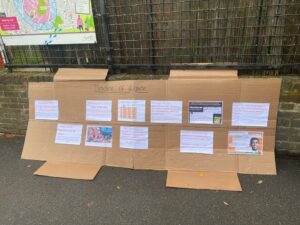
    What also doesn’t get reported is that for the teachers strikes were never only about salary – very far from it. In fact, it was to do with disquiet about how the government for much of 2023 expected their own salary rise to be met. The government’s initial position was for those increases to be largely met out of schools budgets, and it was their ceding this point which led to a settlement which might have been there much earlier in the year – at far less cost to education, and less strain to parents and teachers.

    Schools budgets and children’s well-being are essentially synonymous and there’s not a teacher I’ve spoken to who would ever have wanted more money at the expense, say, of after-school club provision. Such provision is the beginning of a child’s encounter with the riches of civilisation: art, music, sport, theatre, dance. No teacher, believing as they do in the development of children, wants extra money to come to their bank accounts at so high a cost to the pupils they care about.

    But of course, the misery of the situation extended beyond the plight of teachers and children. It was also about parents who are on zero hours contracts and so really couldn’t manage a strike day in the same way which many workers, typically those in the middle classes, with understanding bosses could. It’s also about the whole ecosystem of the school which, underfunded as it sometimes is, is still the heart of the life of the community.

    As always when hardship comes along, there are heartening stories. Some parents managed friendship-deepening play dates in central London – but again they were the lucky ones who have flexible jobs, understanding employers, and the funds to do so.
     

    Near where we live, East Dulwich Picturehouse screened cartoons throughout the strike days on 15th and 16th March at affordable prices. Many parents also became engaged in thinking of creative ways to help their community; whether it be through playdates, fund-raising activities, or just simple words of support to teachers. Many joined them on the picket lines.

    Of course, the private schools remained open throughout this year, and this led to an acute sense of a two-tier system where children from backgrounds who can’t afford it are being left behind unable to learn. Meanwhile, fee-paying schools can be seen continuing as usual: the lines are drawn vividly on strike day between the haves and the have nots. One sometimes wonders if the future is already being won and lost on such days, even if you have very young children, as I do.

    Of course, while there’s life there’s hope, and a strike day can be as good as a school day if you can take your child to a museum, or some other activity.

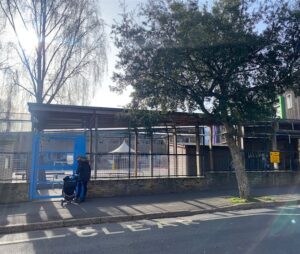
    Even so, all these problems seemed so intractable that they are crying out for the clarity of photography. In the photographs which accompany this essay we hope to cut through the complexity to arrive at images which show the simple truth of our times. We see the empty classrooms where light from a beautiful spring day falls not on the faces of children but on empty furniture; we see the thoroughfares of a local school, usually frantic with parents in the rush for drop-off now vacant, the trees almost seeming to ruminate on an unexpected quiet; we see a lone parent doing nursery drop-off, as testament to the way in which schools and nurseries sometimes feel like separate ecosystems in our society.

    It is an image of a struggling country. Gillian Keegan – a likeable and impressive Education Secretary – deserves credit for the eventual settlement, but it should have come sooner, and some of the fault lines which the strikes showed remain with us today. And with that it isn’t Shakespeare who springs to mind, but Yeats with his line that; “Things fall apart/the centre cannot hold.” This is a country which hasn’t fallen apart, but there is the sense that without smart moves from the Sunak government, it soon could.


  • Class Dismissed: Dame Mary Richardson

    Photo credit: BBC News


    The legendary educator discusses HMS Dasher, teaching and finding a meaningful career


    We’re at the 80th anniversary of the sinking of HMS Dasher. What’s next in the quest for answers?


    Dasher went down on 27th March 1943. The funeral was 3 days later and 23 bodies were buried, 13 in Ardrossan cemetery. Officially no further bodies or body parts ever came ashore. However a week later on 6 April 1943 Admiral Eccles sent a signal, a copy of which we have, saying that ‘bodies are being washed ashore, identified and buried along the coast.’ We have many testimonies from survivors who say that they helped to identify up to 40 bodies laid out in rows. So we know beyond doubt that more than 23 bodies came ashore.


    The hunt for these sailors’ unmarked resting places will go on. But LIDAR and geophysical surveys are needed. I have funded these so far but cannot afford any more. So the next step is to get enough money to fund surveys of the areas which we have been told are possible unmarked graves.


    What were your parents like and how did their work and example affect your own life choices?

    I hardly remember my father and the work on Dasher is not for him alone.  When they were brought ashore the 149 survivors pitifully asked ‘Where are the boys?’ It is The Boys, all 359, we seek.

    My mother was left with 2 small children and had to find her first ever job, which she did at the UKAEA. Her resilience, lack of self-pity and her ambitions for her daughters have always inspired me.


    Tell us about your first job – what was the interview like and can you remember your first day?

    I took my degree and teaching qualification but I wanted to be an officer in the Women’s Royal Army Corps which necessitated 3 days of psychological and practical testing, and interviews. I was amazed to learn that I had passed. On my first day, and many subsequent ones, I was terrified that I would not reach the expected high standards.

    What’s the best day’s work you’ve ever had?


    The birth of my children. That is an enduring achievement and blessing.


    We all have our heroes in life and work – who are yours?

    I have had some iconic bosses and learned so much from them: the Commandant in the army; the Chairman at HSBC and the Chaplain when I was a Head. EQ and integrity are keystones.

    What is your single greatest achievement and how did it come about?

    I have been lucky and throughout my life people have been very generous giving me their advice and guidance.


    If there’s one piece of advice you’d give the younger generation what would it be?


    All actions have consequences.

    What book has most changed your view of education?

    ‘The Persistence of Faith’ by Chief Rabbi Lord Jonathan Sachs. It brought home to me the fundamental importance of making a school a community in which all feel they belong. In that security, they can thrive.


    What would you say to parents whose children are struggling to find a meaningful career?

    Reach out for expert help. The workplace has changed and parents and grandparents may not be able to guide and provide opportunities as they once did. I find the online applications in which you have to pass increasing difficult tests, to be unhelpful, particularly when no feedback for either success or failure is given. Get help!

  • The English Teacher: A poem about mentorship by Diego Murillo


    The English Teacher


    There is always one latent in your life,

    who will shape you to your own advantage.

    Mine was Balkwill. Chaucer-fat. Quotation-rife.

    Flushed with good booze, and dying in a rage.


    Rushing to complete his time, he came in

    for the lesson, ranted in despair about his death.

    The next day he swept through, played Beethoven –

    the Ninth – from start to finish. Nodded – left.


    In those days, it meant little. How could we see

    past youth to bear witness to him dying in such glory?

    We told ourselves it was how the world was framed:

    to the wise came decay; to the brilliant, shame.


    Yet to suspect all this – the passion he held

    in that last summer of his, though dissolving in his palm,

    was to long to join him in whatever he loved,

    and do it ongoingly. This is how we all link arms:


    When he died we knew that we’d been chosen.

    In his each and every fantastic literary whim –

    Hardy, Shakespeare, Coleridge, Wilde, Owen –

    he’d lived. We would too – and if we could, live like him.


    Diego Murillo

  • Georgina Badine: Exploring university options

    Finito World’s own Director of Admissions Georgina Badine has studied in Geneva, Paris, and London. Through her experience, she explains the myriad options available to prospective university students.

    Firstly, I can compare Paris where I studied at the Sorbonne to Imperial College, which is very different. The Sorbonne was very structured, and challenging the lecturers wasn’t really welcome. Whilst it was very competitive, it was a lot more formal than in the English system. In the English system we worked a lot more in groups, and while you had the lectures you also had the seminars, whereas in Paris, it tended to be just more lectures. It was a less open forum than in the British system.

    On top of that, in the French system you might study economics or finance, for example, and then go on to work for a bank. The English system is much more flexible in that you could study history, or politics, or literature, and then you could go on and work in finance or another field. In terms of the way you study, there’s a lot more group work and flexible thinking in the UK. In the US it’s another completely different system, even when you’re applying. The essay is a lot longer, and that surprises a lot of UK students. Here it tends to be a very concise personal statement, and then it could depend on A Levels or to whichever level you’ve studied, and then you get a contextual offer. In the US, people tend to do advanced placement and the application process is much more rigorous.

    The class sizes in the US are much larger in the US as well, depending on the college there could be 600 people in a lecture. However, you do have much more campus life in the US. In the UK it really depends on where you are studying, but if you study in London, you don’t really have much of a campus. You’re kind of right in the middle of the city, whereas if you were to go to Scotland or something like that you might have more of a campus life. Those are just a few differences between France, the US, and the UK, but if you look at Switzerland it’s a completely different system altogether. Switzerland employs something called the elimination process, in which they’ll tend to eliminate about 30% of the intake during the first year. In contrast, the entry requirements are quite easy, but then they start to eliminate people. Unfortunately that drives like a lot of bad behaviour because some people then get so competitive that they will give you the wrong information on purpose, which is really horrible. That’s the main reason why I chose not to go to university in Switzerland.

    When attempting to navigate all of the different systems with all of their distinct traits, as well as complex application processes, it helps to have someone helping you who’s been through it. That can be someone like an older sibling or someone like a Finito mentor. That’s why I get a lot of people coming to me and saying, “Can you help my son or daughter? They want to apply to uni, but they don’t know what they’re doing.” It helps to have an older sibling who’s gone through it, but if you don’t have that, it’s all about being well connected and knowing someone somewhere in your network. I think there’s a real gap in the market here for people to actually help others because currently I don’t think there’s much guidance available. Schools need to prepare their students better for that. The process goes like this: What would you want to study? Why are you choosing that particular course? And what system do you think will fit you best as a student? The answers to these questions will vary from person to person, but anyone who can answer all three honestly and confidently is on the right track.

  • Ian Walmsley on his role as Provost of Imperial College London

    Patrick Crowder

    Many students make their way through university without coming into contact with any of the people in charge, and the roles in university management can be difficult to understand. We spoke with Ian Walmsley, who serves as Provost of Imperial College London, to help explain the duties of top university officers. After a long career in physics, he’s now in charge of Imperial’s academic vision and the delivery of that vision. His experience also helped him face the unknowns of maintaining academic excellence during the pandemic.

    “My job as Provost is to make sure the academic mission is delivered to high quality. To that end, I oversee all of the faculties and have to interpolate between them. I work with all of the Student Support and the Student Educational Services, I work very closely with the Student Union, and I work with HR and Finance to make sure the resources are allocated in order to deliver that mission. So it’s partly setting the vision for what the academic trajectory is going to look like, and then it’s working with the deans, the Vice Provost, and all of the heads of service to make sure that’s properly delivered,” Walmsley says.

    Though the President and Provost model is becoming increasingly popular in the UK, some readers may be more familiar with Chancellors and Vice-Chancellors. While quite similar, the role of Vice-Chancellor is more of an all-rounder compared to that of Provost, who focusses mainly on academic delivery. Walmsley explains how this comparatively new system is taking hold, and the advantages that it brings.

    “The President and Provost model is, in fact, very much an American model. In its sort of full-blown American form, one might roughly say that the President is responsible for the outward facing things; selling the university, raising the brand, fundraising, alumni, etc. while the provost is responsible for the academic mission. That includes all the education, research, innovation, activities, setting the budgets to enable that, and allocating resources. The UK has sort of adopted that model, but the Vice-Chancellor model is much more prevalent. The Vice Chancellor model, I think, grew more from a provost-like activity, but recently they’ve had to do a lot more outward facing activities because there’s a lot more work with government, there’s a lot more work with alumni, and there’s a lot more work with donors,” Walmsley says, “So the UK has evolved a little more toward the American model, and I think at Imperial we have a system that looks perhaps as most like the American one as any in the UK. That’s partly because first president who worked under that model was from the US, so she understood what that was model was about.”

    As Provost, Walmsley was tasked with what at the time seemed impossible: how to deliver an excellent academic product during the pandemic. All universities faced this same challenge, some more gracefully than others, but it took a keen sense of vision to make it work.

    “The pandemic was a hugely stressful time for everybody, especially for students, and the students have been really resilient in coming through that. But with that in mind, everybody pulled together in a very positive way to make sure that our education was still being delivered to the students, students were still being supported, and the calibre of what we were providing was absolutely top notch. And I think that got recognised – we ended up getting a number of awards, Times University of the year, University of the Year for Student Experience, our NSS scores went up dramatically, and we got the Queen’s anniversary prize, partly for research that helped inform how the pandemic was managed at a national and indeed international level, and partly about how we delivered our educational mission as well. The Imperial name synonymous with high calibre research and world leading education, I think, improved dramatically,” Walmsley says.

    It is evident that university administrators at the top levels, while often overlooked, do play a vital role in the continuing success of a university, and when hard times come, it’s up to them to rally the team and come up with quick, effective solutions.

    “There were various ways in which we supported students at home. Part of that might have been providing IT equipment if they needed it, in certain cases, and a more general one was that some of our laboratory technicians were very creative,” Walmsley says, “They came up with ways in which they could construct laboratory experiments, pack them in a box, send them off to students and students could do that work at home. And that lab in a box concept was a highly original one that came from our community members who were really thinking about how to support students in those circumstances.”

  • 2022 Highlights: How the Finito Bursary scheme changed my life

    Tushar Kumar


    As I sat in the carriage of the train watching the Midlands countryside go by, I couldn’t believe how excited I was about my future. I had just spent the day having lunch as the guest of Finito Education in a private members’ club in London. Only a few months before, I could remember being anxious and worried about how my future would turn out.

    A year or so earlier I had been working hard at school. My A-levels of Biology, Physics and Chemistry were aimed at getting me into a career in medicine, but for numerous reasons that turned out not to be the case. As a student at the Landau Forte College in Derby I, along with a small handful of other Upper Sixth Form students, were asked to attend a briefing on Finito Education. It was there I met Andy Inman, one of the mentors from Finito. He was there to describe the service that they give in mentoring and networking on behalf of their clients and mentees. Normal clients of Finito have to pay for this significant advantage in life, and here we were in an inner-city school in central Derby being offered the opportunity to become the first bursary mentees of Finito.

    Knowing that it would be daft not to take the opportunity, I volunteered along with a number of my school friends and was later introduced to my first business mentor Robin Rose. He had been mentoring for many years, and he was very patient and kind while taking me through regular Zoom video call sessions explaining how recruitment would work as I left education. Robin set up a number of opportunities for me. However, because of distractions that I was facing at home I didn’t make the most of them. Sadly, one of my A-level grades meant that my aspirations for a career in Medicine were not going to happen, and floundering around a little I grasped the idea of becoming a pilot.

    Finito works with a broad network of mentors, and because of my pilot career suggestion I was handed back to Andy Inman who had briefed me and several of my school friends a few months beforehand. He had 30 years’ experience as a military pilot, and over the course of several Zoom sessions he opened my eyes to the possibilities of becoming a pilot while also being realistic about the harsh realities involved in getting there, both financially and in how long it would need my concerted effort. He introduced me to several people, from the Senior Instructor at a local airfield to newly qualified pilots working towards airline jobs. He also put me in touch with the head of the Royal Air Force pilot training system at RAF Brize Norton. I was amazed at the breadth of the network that Finito was able to introduce me to, and even more so by the time and effort that those I was introduced to were willing to spend on helping me.

    Tushar Kumar on the Finito Education Bursary Scheme

    “Finito took time to work out what was making me tick.”


    It was at this point that I really started to lose hope about what the future might hold for me. A serious medical condition as well as family disruption at home meant that I dropped out and stopped returning the calls from Andy. I remember the last message from him via WhatsApp saying he would give me some space for now, but the door would always remain open for getting back into the mentor scheme.

    After a few months my home life became more stable and I decided it was important to re-engage with Finito, so I contacted Andy and asked if it would be possible to start afresh. It was clear from his response that he was delighted I was coming back to the fold, and we started regular chats about how to progress things while I was applying to go to Nottingham University later in the coming year.

    Finito took time to work out what was making me tick. It was clear that I had an entrepreneurial spirit – a couple of years earlier I had made a successful business from selling sneakers online. I had a strong work ethic and Andy dug down into what I enjoyed, where my skills lay, and how that would fit into a future working career. I was shown how to craft emails to companies, how to conduct myself in an interview and how to best come across in a telephone call.

    At the same time, the wider Finito system kicked into action. I was introduced to a professional CV writer who helped me craft the most amazing CV, and I was invited to London to have my photo taken by a professional photographer to put on that CV, all as part of the bursary scheme.

    As part of that visit I was invited to lunch with Christopher Jackson, News Director at Finito, at the House of St Barnabas. The private members’ club is invested in creating a fair and equal society, but I was still nervous as I arrived. I remember looking at the door and thinking it was like something from Harry Potter. The interior certainly was; there were so many rooms it was like a maze, all with separate personalities and themes. I met Christopher in a lounge room near the garden. My hands were sweating, knowing this was another massive opportunity to gain knowledge and experience. We chose to start with lunch but only after he showed me around some of the different rooms.

    I remember walking into a room that looked like a church hall, another that was warm with colours and paintings, and the corridors were narrow and brimming with art.

    John Cahill

    “I will be forever grateful to The Stewarts Foundation, and in particular its Chairman John Cahill.”

    Everything was out of my norm – a peaceful professional environment that was not like anything I had experienced in my normal life in Derby. We arrived at the restaurant, a hall again adorned with art with polite guests and staff. Christopher asked me about my interests and where I see myself going with Finito. I was interested in his story too, and I learned about his experiences and work. After lunch Christopher walked me through the bustling streets of Central London back to the station. The weather was perfect, and as we walked and discussed more deeply each other’s stories, Christopher was drafting ideas in his head for experience placements for me. That day was more than just a trip to take photos. I was generously given the chance to see London, learn so many new things and create contacts with two lovely people at no personal expense – something that would never be possible without Finito.

    It was from that meeting that Christopher approached a contact within his network, Daniel Whomes, the Chairman of the Oyster Partnership, who organised an interview for me to join the company for some work experience in the Summer. Recruitment wasn’t a career that I knew anything about, but it was the experience
    and wider knowledge of the Finito mentors that married my salesmanship, entrepreneurial desires and my hard work ethic to the idea of becoming a recruitment consultant. Having just had the interview I’m delighted to report that I will be spending time with that company soon. The opportunities that I know this work experience will bring would not have been available to me without the help of the Finito Bursary scheme, and I will be forever grateful to The Stewarts Foundation, and in particular its Chairman John Cahill, for their financial contribution towards my work journey. I’m excited for what the future holds for me and will always know, wherever life takes me, that I received a life-changing opportunity just when I most needed it.

  • 2022 Highlights: Sir David Lidington – ‘History trains the imagination’

    2022 Highlights: Sir David Lidington – ‘History trains the imagination’

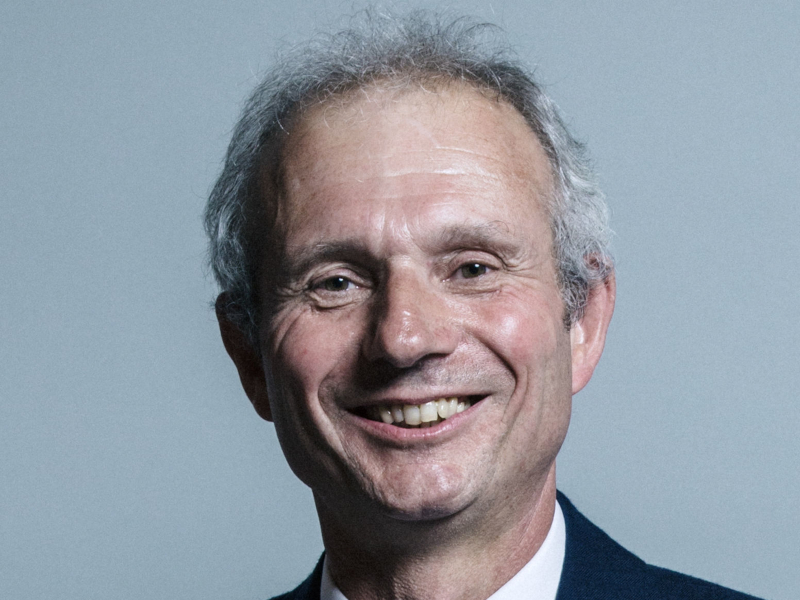
    Sir David Lidington, the former de facto No. 2 in the May administration, talks about how a history degree has helped him in his political career

    Certain traits define an aptitude for elected politics, and I’ve tended to find they can be aided by a study of history. One useful aptitude would be fascination with human beings – what makes them tick, and how power is exercised. Secondly – regardless of whether you come from the left, right, or center – almost everyone I’ve met in politics starts with a commitment to changing things for the better in their country. To do that, it helps to know what injustices have existed in the past.

    There’s a third thing, and I would say it also separates the natural politician from the civil servant: a certain zest for the theatre. Politics involves a willingness to take risk, and to be prepared to stand on the stage at the end, and not know whether you’ll have a standing ovation or a bag of rotten tomatoes slung at you. The natural civil servants shy away from that but what’s interesting is you sometimes see a politician who’s really a civil servant – and then a mandarin who’s really a politician. The thespian is striving to get out there.

    The wonderful thing about history is that it trains the imagination: when you start to really delve into history – and read deeply as well as widely in a particular era – you find people in the past had various assumptions and moral codes that can be very different from how we operate today. For example, for people living in 1800 or 1850 the idea that there was going to be this industrial revolution, and transformative migration of people to cities, and a growth of urban conurbations – that’s something which some might have predicted, but by no means everyone. Training of the imagination is important.

    History also teaches you how to use and assess evidence. Particularly in postgraduate study, you have to go back to original source material and assess the reliability of it. You look at state papers, which by and large deal with high politics and the people at the top. But if you go to legal records, there you find out about yeomen and merchants – the people who went on Chaucer’s pilgrimage to Canterbury all crop up as plaintiffs or defendants.

    Another applicable aspect of history was borne in on me when I was Europe Minister. I visited about 40 countries from Russia and Turkey, to the South Caucasus and Iceland. If you want to understand today’s political outlook you have to understand what happened in the past. What are the demons they still fear? What are the experiences that have shaped the outlook of a particular society today?

    For instance, I have long felt that the tension that has always existed between the UK and the EU derived in large measure from contrasting experiences and lessons in the mid- 20th century. For most of Europe this was a period of disaster when national institutions all failed in the face of tyranny, invasion and ethnic hatred. From the EU perspective, therefore you have to build up those institutions to stop anything happening again.

    Another example would be China. I remember a few years ago, I met Xi Jinping’s number two, and he started out with this recital about the Opium Wars and how China had been attacked in the 19th century because it was weak and the European powers had exploited her. Hearing that, I began to understand why they see the world as they do today. They feel a need to put right the century of humiliation and to restore China’s place as a global power. One needn’t necessarily agree with that – but you have to understand how the other side thinks.

    So history is a real asset in politics because you learn how human beings interact with each other, how relationships and power is mediated through institutions, and what lies behind the motivation of countries and individuals. How a Tudor court operates is good for understanding all about access in No.10 Downing Street. Now you have your special advisers rather than Grooms of the Stole or royal pages. Think about Elizabeth I. Who was it who could actually get in to see the monarch and be sure you got your bit of paper in front of her? Likewise, today – who can get something in the prime minister’s box? Patterns reproduce.

    One of the most difficult things for government or for the man or woman who’s prime minister is finding time to regenerate yourself and your government while in office. There are always things pressing in. For me the great prime minister of the 19th century was Robert Peel: he was prepared to change his mind when the facts had changed. If you look at how he moved on Catholic Emancipation and on the Corn Laws and trade you can see that he took decisions based on what he thought was right for the country even at the fatal cost to his own political fortunes. Disraeli was vastly entertaining, but Peel was the greater man and the greater prime minister.

     David Lidington was deputy prime minister under Theresa May and is now Knight Commander of the Order of the Bath

    Read Sir David Lidington’s advice on handling the stress of a high-pressure job here

  • Opinion: Afghanistan is a case study in why education matters

    Garrett Withington

    Looking at photos of Afghanistan during the 70s induces melancholy. You see the faces of smiling women, liberated in their dress, books in hand, with a demeanour seemingly unaltered by decades of war. Afghanistan’s liberal period may not have been as hedonistic as its American counterpart, without the free love and drugs, and the skirts not hiked quite so high, but old photos show a happier liberalising society. For those that grew up following the War on Terror these images have never been within your psyche.

    The recent past shows an astonishing fluctuation when it comes to freedoms in regards to women’s educational rights. It is a sad cycle of improvement, followed by repression, improvement – and now, following Biden’s decision to withdraw, the return of that repression.

    During the years of monarchy, before the existence of the Taliban, there was hope which we need to learn from now. Reformist kings such as Abdur Rahman Khan, followed by his son, Amir Habibullah Khan, drove through reforms that would liberalize not only Afghanistan’s education system, allowing women to study, but also abolish other long held customs such as forcing a woman to marry her deceased husband’s next of kin.

    Afghanistan’s sprawling and mountainous landscapes, however, have not only been the bane of armies who have sought to conquer the country – earning it the title of ‘the Graveyard of Empires’ – it has also made it difficult to form coherent governments to exert control over all territories. Due to its mountainous terrain, Afghanistan has tended to be split between its urban progressive centres, and the rural tribal Mullahs which favour tradition. The Mullahs see liberal reforms in regards to women as a threat to their culture, where the state’s interference within education and marital institutions are interpreted as a challenge to their power-base which is ultimately based on a patriarchal system.

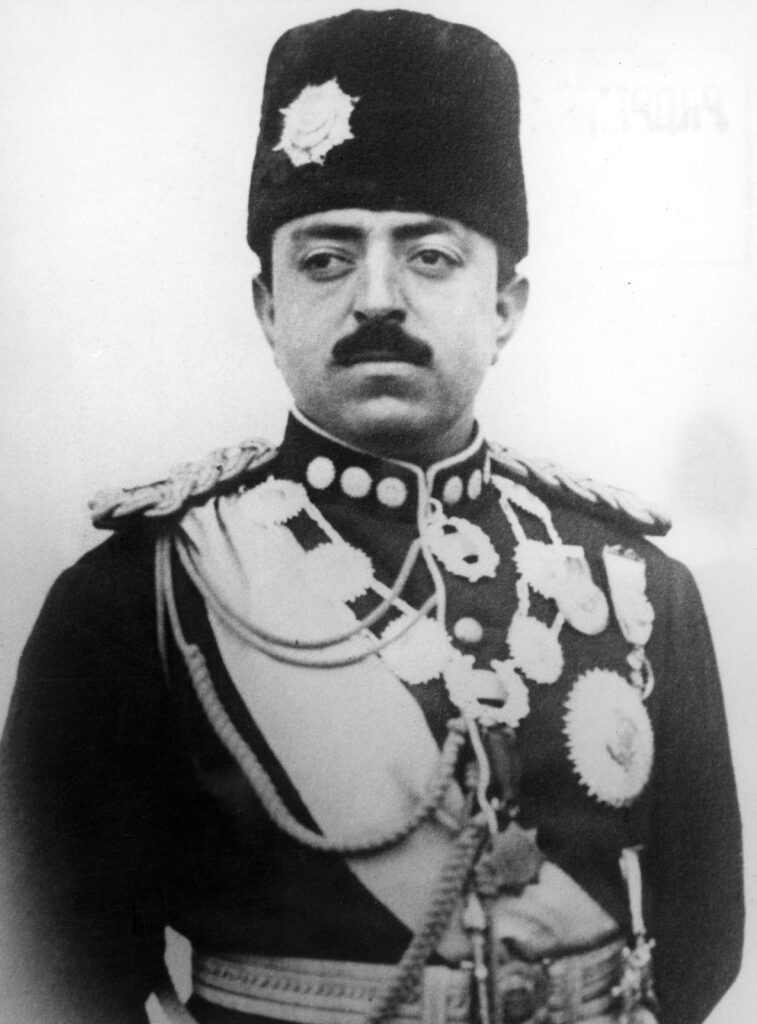
    It is easy to forget how long this oscillation between the two has been going on. A period of liberalisation was begun by Habibullah Khan until his assassination in 1919. Before his death he achieved much, bringing modern medicine and technology to Afghanistan. His son, King Amanullah Khan continued the liberalisation in 1919 as sovereign of Afghanistan, but then was forced to flee the country in 1929.

    King Amanullah Khan fled the country in 1929

    Khan’s reign is a reminder of the uneasy relationship Afghanistan has always had with modernity. There is, for instance, the story of Queen Soraya ripped off her veil following her husband’s suggestion that Islam did not require women to wear a face covering, inspiring other dignitaries wives to follow suit. A trip to Europe and Turkey inspired the royal couple who had taken many of their initiatives from the west, but images which made their way home proved too much for the rural tribal leaders who once again felt their power being diminished, and a new culture forced upon them.

    It is telling that many of those who sought reform were well travelled, inspired by their visits to Europe, understanding the benefits of the most basic rights in liberal societies. It was those that were threatened of their own position that clung to archaic notions of the bride price and iron clad control over women.

    So it was both a story of East v West, but also a story of urban v. rural. Kabul became a cultural centre, and developed modern notions from other cultures, but these developments have never been popular beyond the cities. Despite reforms, education remained far less common in rural areas than it ever did in the capital. Regardless, in the 1920s, schools for women once again closed across the country.

    It would not be until the Soviet installed puppet government in the 1970s that a programme of mass literacy for women encouraged education to the extent that women might contemplate joining the workforce. But again, progress was piecemeal. Women were stalked and threatened, with reports of women in western clothes being shot as tribal chiefs saw compulsory education, especially for women, as not only going against the grain of tradition, but also as an essentially irreligious challenge to male authority.

    Following the Soviet invasion in 1979, the mujahideen gathered forces, forming the revolutionary army, with the main purpose of preserving their traditional culture. Backed by a Coalition led by the United States, they would be installed in government only to later be overthrown by the same coalition due to their barbarity. As the world now knows, their successors – the Taliban – would prove to be worse. Here began the true apartheid of women within Afghan culture that we are all familiar with. Radio Sharia played in the streets; face coverings and beard lengths were enforced. Worse, all educational facilities were shut to women. That now included secret private institutions.

    The 2001 invasion and occupation by Allied forces would again see a reprieve and much progress was achieved during that time. But in 2021, when the Afghan army disintegrated, images soon flooded the news sites showing the Taliban enacting brutal reprisals on all those who worked against them. What will happen to women’s education? Who knows, but you can have a pretty good guess.

    The sound of silence has once again swept across Afghanistan with the banning of music and the closing of music shops. There have been reports of intimidation as well as reports of murder of artists. The well-known folk singer, Fawad Andarabi was executed in the Baghalan province. Meanwhile, comedian Khasha Jawan was murdered in Kandahar. This makes any predictions – such as those put forward by Boris Johnson – that the Taleban have changed hollow indeed.

    In addition, according to UN High Commissioner for Human Rights, Michelle Bachelet, beheading have returned. This shows that the Taliban are flagrantly willing to break their promise not to enact reprisals against those who worked against them. Thieves who are caught are treated with medieval justice, having their hands cut off. 

    Despite promises of respecting women’s rights, Sharia law has returned. Women have been told that they can only have ‘low-level’ jobs in government, within the civil service. Female students must now cover their faces again, and classrooms are now segregated again in classes.

    Afghanistan’s women’s cricket team have been disbanded with Ahmadullah Wasiq, the deputy head of the Taliban’s cultural commission saying that women’s sport was not considered necessary or appropriate, and would be banned.

    It is a miserable situation, but one which reminds us of the importance of education. Why is it that we feel such grief for those who are excluded from it? It is because education allows to develop the skills of independent thought. It is surely fromthis that the deeply patriarchal Taliban society fears: female education is a challenge to their dominance.


    In some ways, America created the conditions for this reaction. According to US government reports, $787 million was spent on gender studies. This didn’t lead in and of itself to the fall of Afghanistan but it certainly demonstrates how America operated in way antithetical to the traditional beliefs which governed much of Afghanistan. 

    So the situation in Afghanistan demonstrates not only the necessity of education for women but for all. Though the Taliban have promised some educational rights for women, early reports suggest that they are to be limited to religious teachings -making it more akin to indoctrination. This will not be as General Sir Nick Carter called it “an Afghanistan inclusive for all”. Afghanistan has never been like that – and it’s only now that we can gauge the grief of the Biden’s administration’s botched evacuation.

  • Entrepreneur Sabina Ranger on founding her new beauty business BELLA

    Sabina Ranger


    Beauty has always been an area of interest for me. During my parents’ journey together, I would watch the transformative effect, both aesthetically and emotionally, when my mother would apply her make up and the confidence it would give her to pull through on the most difficult of days. Ending every regime with a flick of mascara (now our hero product), she would set off as an empowered woman ready to conquer her day ahead.

    Thus, from an early age I realised that beauty is incredibly powerful. Once we feel our best the world is limitless, no matter what our circumstances are. This, coupled with my understanding of how to produce quality products, is what gave birth to BELLA, which features vegan, cruelty-free and clean focused products made to empower you, solve beauty problems and outperform what is on the market.

    Quality products have always fascinated me. I grew up in a family business that specialised in producing high quality consumer products that would outperform those available on the market.

    For example, a leading air freshener had 0.5% fragrance in it and was not long lasting, but it was being sold at a premium price. My father created one with double the scent and different technology to make his longer lasting so that customers could use less to gain more, and at a price that is right.

    I watched the business grow from a £2 operation in a shed in Hayes to a world class company winning an unprecedented five Queen’s Awards for International Trade and exporting to over 130 countries, and it was all because of the quality of its products and the reputation that proceeded them.

    Product quality and innovation has always been in my DNA, so a career centred around this was a natural path for me to follow. After spending 5 years developing products in the business, creating brands, and getting these onto the shelves of retailers, I was inspired to venture into an area of passion; beauty. There I was able to innovate and make an impact by solving a problem that I and 97% of women face, which is pain, discomfort, and inconvenience when wearing false eyelashes. After 3 years of development, WANDERLASH mascara was born, and I officially entered the beauty industry.

    When I founded BELLA, I wanted to create a platform for positive change through my journey. I think it is really important to always give back, so it was never just about starting a business for me. We all have mental health & need to look after it and each other. As many as one in two, or officially one in four people are suffering from a mental health challenge of some kind. I feel that beauty is a powerful industry which touches almost everybody and can really help reduce the stigma & shine a light on mental health.

    My formal education took place at LSE, which taught me how to think outside of the box, work under pressure and critically evaluate situations. It is a very inspiring place where you are surrounded by many budding entrepreneurs with revolutionary ideas along with a track record of many great people who have made history – it is hard not to want to follow suit in some way. I also undertook many internships, and they all taught their own lessons, but I think the most important learning was how to work with different people and adjust to different personality types. The importance of feeling part of a team, all striving towards a common goal and how to multitask many different work streams are crucial lessons.

    It is also important to realise that I was not alone on my journey, nor am I alone now. I think mentorship is invaluable, having someone to guide you through life is powerful and life changing. What took them years or even decades to learn, they can share with you over a coffee. I am grateful to have a few mentors whom I can meet with regularly & learn from, on different areas of the business but also about life in general. If I could give some advice to my younger self, I would tell her to have more confidence and not look for anyone else’s validation for happiness or success. I wish that I had realised the importance of learning to love myself more without worrying if I was ‘good enough’ based on other people’s behaviour.

  • Pharmacist Liam Beadman on where a pharmacy degree leads

    Liam Beadman

    When I graduated, nearly 20 years ago from Nottingham University with a Master’s degree in Pharmacy there were only really two settings in which to undertake the requisite pre-registration year and launch my career. These choices were between a large teaching hospital and a chemist shop. Whichever was chosen would heavily influence the path of my career as a pharmacist: on the one hand the clinical, hospital-based route; on the other, the more business-focussed, working in community pharmacy approach.

    In the end, I began working at a large, teaching hospital before moving into community pharmacy after a few years, attracted more by business opportunities than patient-focused work. Today, I find myself working for a Clinical Commissioning Group, more by luck than judgement and in a non-pharmacy role.

    For today’s pharmacy graduates, there are now more options for how they can use the extensive knowledge and experience gained from the four year Master’s degree. The majority of pharmacists begin training to become independent prescribers of medication soon after they complete their pre-registration year. The traditional careers in hospital and community pharmacy still exist, but their scope has been broadened and there are now other opportunities to work with patients in the community and also to get involved with the commissioning of health services at a regional or national level.

    Pharmacists, along with other allied health professionals such as physios and dieticians are being recruited in large numbers to join GP teams working in primary care. These roles often involve the pharmacist taking a special interest in a certain disease area (e.g. diabetes, high blood pressure) and being the main healthcare professional who sees this patient group on an ongoing basis; monitoring the progress of their disease and adjusting and optimising their medication over months and years. A primary care pharmacist will also form an integral part of the multi-disciplinary team of the Primary Care Network or PCN – a collaboration of GP practices, within a local neighbourhood who work closely together.

    The role of the high street chemist has changed dramatically over the last 20 years too. Gone are the days when this role would almost solely involve deciphering the hand-writing of the local GP and dispensing medication to patients. Community pharmacists undertake reviews for people on long term medications, advise on inhaler technique & operate weight management clinics. More people with minor ailments such as coughs, colds, eye infections, back pain and more are being directed to their local pharmacist rather than the GP as a quicker and more convenient way of dealing with these types of issues. Community pharmacies have also been administering the annual flu vaccine for over ten years and have been crucial to the continued successful roll out of the Covid-19 vaccines and supply of lateral flow tests.

    There are also roles that straddle hospital and community work and some primary care pharmacists have roles which involve working in chemist shops as well as the local GP. These links between organisations that were once quite separate is helping to drive the government’s vision for the better integration of care via the creation of Integrated Care Systems.

    My opportunity to work for a Clinical Commissioning Group (CCG) came via the post of prescribing adviser. This office-based job retained some clinical elements from my previous roles, including answering specific medicines queries from local GPs, but also brought in more strategic, commissioning tasks such as setting incentives to improve the quality and effectiveness of prescribing at a borough level, undertaking audits of prescribing, and developing local policies that would benefit the local population. Commissioning roles afford the opportunity to make beneficial changes to whole populations of people rather than at an individual level. There is also exposure to how public resources are allocated and how government policy decisions are translated into something workable on the ground. Joining the CCG has given me opportunities to work in primary care more broadly and opened up avenues to move across to NHS England or the Department of Health & Social Care in the future.

    The career of a pharmacist has changed dramatically over the last ten years, with more varied roles within the traditional hospital or community pharmacy based jobs and a greater array of new positions, both clinical, patient-facing ones and more strategic, office-based jobs. In short, there are more roles for pharmacists now, involving a broader scope of tasks that make better use of the breadth of knowledge acquired during the degree.