Tag: Education

  • Baroness D’Souza: seeing education “gladdens my heart”

    Baroness D’Souza

    What one doesn’t realise is how avid girls are for education. What we do at Marefat is to make sure that every now and then we have a Zoom meeting with our pupils in Afghanistan. We run empowerment sessions which are run by Aziz Royesh from Washington and the girls crowd into their rooms.

    Recently we had the girls speak about what a difference being able to access education has made to them. It was emotional and heart-warming. These are girls aged 14 and 15, and they said things like: “We thought our lives were finished and we were going to be married off.” Now they have hope – and they know that hope is tied to education.

    Our goal is to get these girls educated at secondary level and then put them up for scholarships, some of which is funded by Lord Dennis Stevenson. The goal of Marefat is to educate a whole cohort of women so that they can come back and be in the major professions: Afghanistan needs journalists, lawyers and surveyors. In fact, quite a lot of them want to do engineering too.

    Since the Taleban came back we’ve been teaching in cells – or cluster education as it’s called. That’s quite difficult – and it’s especially difficult to teach science. The girls gather at abandoned schools. It’s very cost-effective because we don’t have expensive school buildings to maintain but we do need textbooks and to pay the teachers. Our budget for the four year period is £8 million – and we need to meet salaries for teachers.

    But we keep going because education is the magic bullet of development. If you can educate girls, you get development in terms of later marriage, and fewer children. Wherever you see education beyond the primary school level of girls you see significant change in that society.

    Of course, the events of 2022 were devastating for these girls. But all is not lost. What some of these girls are doing is teaching their parents or their younger siblings how to read. If you educate a child, you educate a village.

    More broadly, if you help someone, you don’t just help that one person: you help that entire ecosystem. We should be enjoining development agencies to support those strategies which people employ in vulnerable societies at times of hardship: these are typically highly intelligent and based on attuned survival instincts.

    Often what we see in these societies is diversification of income. A woman I’m aware of makes beer, grows crops and makes baskets for the market. She sends her children off to work and builds transactional relationships with relatives in nearby towns. This creative thinking and pluckiness serves them in good stead.

    We need to have respect for what works. We understand that it’s very important in these countries to teach the practicalities of life. What first attracted me to Marefat was its vocational training: there has always been this emphasis on mechanics and electrical engineering as there were some who didn’t go onto academic careers.

    It’s important that we learn the lessons domestically. In the wider world, we should all be supportive of apprenticeships. We must ask ourselves what the point is of our children going to a minor university and doing a degree in media studies. The experience of university might be useful, and it may teach you how to think. But it’s so much better to be an apprentice.

    It really gladdens one’s heart to see children being able to take pride in creating things, and making things. We don’t have enough emphasis on this. Fashioning a ceramic pot is useful and non-useful. One thinks of the beauty of some pots – the attention to detail and the way the clay is treated. It is exciting to think about all there is to learn.

    I sometimes think about how we teach beauty. Sometimes you see something and it’s complete and beautiful: everything’s in its right place. The world isn’t like that, as we know – but my passion is to do what I can to make it better.

  • Brooks Newmark on Rwanda, Lifelong Learning, and His Humanitarian Work in Ukraine

    As an MP, over 25 per cent of the people who approach you for surgeries is generally about their children and their children’s education. My mum didn’t have much education – she left school when she was 12 or 13 – she was also a great believer in having a good education, and having me her eldest child going to Harvard Business School and Oxford was a proud thing for her. So the importance of education has been instilled in me from a young age.

    While I was an MP, in my second year in Westminster around 2007, I had the opportunity to work on a social action project in Rwanda. This was post-genocide Rwanda when they were still trying to rebuild the country and Claire Short, who had been Blair’s International Development Secretary, donated a huge amount of money for Rwanda. The UK at the time was the largest donor to Rwanda.

    Cameron decided this was important, and a trip was organised with eight MPs, and we worked on five different social action projects. I was in charge of a project which involved helping to fix up a small nursery kindergarten in a poor area in Kigali. There were 83 kids. I put in around £5,000 of my own money and we fixed up the school: we got electricity, we had two big water tanks, a lot of rooves and walls had holes in and we fixed that up.

    David Cameron then came over for two years to see the projects we were doing. And I remember one of the journalists who was with me came and visited me and he said: “You’re here for a couple of weeks and then leave it. What difference can you possibly make?” I explained that the infrastructure was better and so on.

    Back in the UK, six weeks later, I received a phone call saying: “Rwanda Health and Safety want to shut it down”. I said: “What do you mean?” He said: “Well there were 83 kids and now there are 343 children there in these tiny classrooms.” So I flew back and I met with the Minister of Education and I said: “Don’t close the school down. I will rebuild it.” In my head I thought it would cost me £100,000.

    I found a new site which I bought about a kilometre away, and spent two years getting planning permission, which I finally secured. We had a foundation laying and the President decided to come and I asked him why he came. He said: “Most people come to me giving advice. You came, saw a problem and put your hand in your pocket to fix it.” He added: “I would like you to do one thing: make sure there are all Rwandan teachers.”

    At that time a lot of teachers came from surrounding countries like Uganda, Tanzania and Kenya and so on. So I took that on board and we finally opened the school in January 2012. I then created a charity called a Partner in Education and we went on to build a secondary school. By 2017, we were ranked in the top three in the country, with nearly 100 per cent Rwandan teachers. At that point, I built a teacher training centre too.

    When I left Parliament in 2015, my old tutor came to see me and said: “Brooks what are you doing next?” He said: “We’ll figure out what exactly you do.” In 2016, I was sitting next to a Professor in the education department and I was asked to give a talk. I was asked to sit in on his class. I suddenly realised how little I knew about education even though I had this school.

    After three classes I asked if I could do his Masters. I passed and got in. I was 60 years old, but I always love learning. It’s never left me. I went back to university at the age of 60 and my dissertation focused on fine motor proficiency of seven year old children as a predictor of academic achievement.

    They then said I should stay on and do a doctorate. I decided to look at policy-making in Rwanda. I realised there are a lot of policy ideas which are generated without real focus on outcomes. For instance, they have this thing one laptop per child. But if there isn’t broadband in schools, or the teachers aren’t trained you won’t get satisfactory outcomes. We can’t really think about these things in a linear way.

    I decided to look at it through the lens of a systems approach and consider what enables and what constrains policy implementation. For instance, if teachers have only rudimentary understanding of English they can’t overnight suddenly be able to deliver lessons in English to children who themselves don’t speak English. It was understandable why the Rwandan government wanted to bring that in; but this top down approach wasn’t working.

    Having been in government myself, I can say with some authority that we have a habit of coming up with great ideas which in principle sound good, but we don’t think enough about who we need to bring on board to implement these things properly.

    But things happen in life and get in the way. I started my DPhil and then in 2020 Covid hit, and I couldn’t do my field research. Then, my mum got sick in 2021 and I could see from January she would pass away, which she did in May of that year. Finally I did some research in November 2021, and then suddenly the Ukraine war starts.

    It seems I will continue to find reasons not to work! I saw a friend of mine was on the Polish border moving people along refugee centres into Europe. I messaged him and asked if I could come and join him. Four days became two weeks. Soon, I began bringing buses into Ukraine from Lithuania, moving people from Kviv and Lviv to the Polish borders.

    As the war moved to the East, I had hubs across Ukraine, and I spent a lot of time in Kharkiv: we moved 1,000 women and children out of a Russian-controlled area. To do that we had to move 500 metres of anti-tank mines, which was an amazing achievement.

    I am torn between doing what I am doing in Ukraine and not wanting to drop the ball on my DPhil. I’m trying to navigate with my supervisors between my work with Ukraine and getting to the next stage of my DPhil.

    But the moral of the story is you’re never too old to learn. While my wife does Sudoku as a form of brain gym, I have my doctorate. Having started 40 years ago, I feel much better prepared through having had life experience in business and as an MP.


    Brooks Newmark was formerly Minister for Civil Societies

  • From Ukraine to London: how the Finito bursary scheme helped Ukrainian refugee Valeria Mitureva

    Christopher Jackson reports on the moving success story of Valeria Mitureva from Ukraine and her experience of the Finito bursary scheme

    Very often mentoring can deal with minutiae – the creation of a LinkedIn profile, the process of CV-writing, and all the small steps which, taken together, move a job hunter into the category of employee. These things are very important, of course, but they can seem to be a long way from the daily drama of news headlines. But everything we do in this life has a historical context; we can’t escape history even if we’d sometimes like to.

    This truth was brought home to us at Finito by the arrival on our bursary scheme of refugee Valeria Mitureva from Ukraine. Valeria grew up in eastern Ukraine and says of her upbringing: “I grew up as a curious child. From early childhood I was interested in books, other countries and cultures. At school everything was interesting, so in my youth I was faced with the fact that it is very difficult to choose one thing and move in that direction.”

    Valeria’s instinct was towards broad enquiry and international travel, and in ways which she couldn’t then predict, these wishes would indeed be granted. But initially, she decided that it would be better to specialise. “I decided to enrol in a technical specialty at the university – technical information security systems,” she recalls. Characteristically, she didn’t leave it there. “I additionally studied French and English in my free time,” she recalls. This latter decision would prove useful, again in ways she couldn’t have imagined at the time.

    So what happened after university? “I accidentally got into IT in the sales field while finishing my bachelor’s degree,” she recalls. “But I was still ready to explore the world and decided to change my career to the design sphere, and I am glad to have been doing it for four years now and I see incredible opportunities for my development,” she says cheerfully.

    All this might have proceeded upon the expected track, and Mitureva would have continued her progress towards a design career within Ukraine. But, as the world knows, Vladimir Putin was gearing up for his 2022 illegal invasion of Ukraine – that appalling violation which would upend so many lives, including Valeria’s.

    Valeria recalls the terrible ructions which took place a year ago. “I did not plan to move: everything happened very tragically and quickly. A full-scale invasion of the Russian Federation into the territory of Ukraine began in February 2022. We call it full-scale, because in 2014 the Russian Federation already occupied part of the Eastern region of Ukraine, where I grew up, and where my home is.
    Therefore, for my family, this is already the second war.”

    Valeria was proactive during that terrible spring. “I read about the Homes for Ukraine program and decided to apply. I contacted my future sponsors (my British family!), packed my suitcase and all that was left of my courage and landed in Heathrow on April 30th.”

    It is impossible to imagine her emotions on being forced to leave her homeland and making the leap into the unknown. So what were Valeria’s initial impressions of the UK? “It felt as if it was my second home. The culture is familiar through books, films, music. It’s also a very friendly and open people, with incredible stories – and, of course, I was shocked in a good way by the incredible support of the British people. You have a beautiful country and incredible people.”

    When Valeria refers to her British family, she is referring to the family of Amy le Coz, the founder of Digital Media Services, who immediately took to Valeria’s infectious and optimistic spirit. “In those first few weeks when she lived with us, my husband and I were immediately very impressed and delighted with her work ethic and proactive attitude both for her job for her Ukrainian employer, as well as around the house,” Le Coz recalls. “We were both also profoundly moved by all that she had had to endure and at such a young age.”

    By good fortune, Le Coz met Finito Education Chief Executive Ronel Lehmann at The Spring Lunch which raises money for Conservative Marginal Seats and Women2Win soon after Valeria’s arrival in the country. Valeria recalls: “My sponsor met Ronel at the event, who explained to him that they were hosting a Ukrainian woman and he immediately offered his help. I was impressed with the approach, professionalism and, most importantly, the structure of the organisation. Finito has a huge team of mentors with a wide variety of expertise. It was indeed like a guiding light for me at that time.”

    Le Coz recalls that Valeria was “buzzing with excitement” upon hearing of the opportunity – and it was certainly one which she took with both hands.
    Valeria worked mainly with three mentors: “I worked with Robin Rose, Claire Messer, and Kate King. I’m grateful for their support, ideas and that they let me work it out myself, rather than tell me exactly what to do. Sometimes we would discuss my hobbies – so, for example, Robin gave me links to music events, which was helpful for a person who had just moved to a new country.”
    Mentorship is sometimes really a kind of friendship. But the pair also got down to work.

    Initially, Rose held two Zoom meetings in order to get himself up-to-speed on Valeria’s situation, and began to carve out a plan. “We needed a workable strategy to find her a role in web or graphic design at a level which matched her experience and which would provide sufficient income for her to fund an independent lifestyle,” he recalls.

    But there were initial headwinds, partly due to the uniqueness of Valeria’s situation. “Valeria had had a good education and relevant training throughout her career in Ukraine. She is personable and speaks good English,” Rose continues. “However, recruiters and HR people were unlikely properly to appreciate her potential from just seeing her CV when evaluating her documentation against other candidates particularly at junior or entry level. She had sent off over 50 applications and had had just one video interview.”

    Rose looked hard at the situation, and made the following assessment: “This shotgun approach was unlikely to return any result for the time invested and continuous rejection was likely to sap her confidence even further.” Rose saw that the starter salary jobs in the sector – typically around £20,000 per annum weren’t a fair reflection of Valeria’s experience in Ukraine: “I felt that Valeria was, in reality, better experienced and should have been competing for jobs in the £30-40K bracket. She had, however, an understandable confidence issue with this approach.”

    This meant that Valeria needed confidence training: “She needed to re-establish her belief in her own abilities. We needed to set up exploratory meetings with people working in the industry so that she could see how she would be of value. I thought that this activity in itself might lead to opportunities.” Rose also suggested that the pair conduct web research to identify at least four organisations she’d like to work with.

    In time, Rose worked closely with Valeria to make more targeted approaches, and provided her with a list of London-based creative agencies. Meanwhile, Valeria was also paired with another Finito mentor Claire Messer, who worked with her in August 2022, casting an experienced eye over her CV.

    Messer says: “I explained to Valeria that recruiters look at CVs for an average of six seconds, and so it was important to make sure we had complete clarification over what kind of visa Valeria had obtained, right down to the number of hours a week which she was able to work. I also worked on clarifying the CV, and making sure that her work experience was tailored to the companies she was applying to.”

    Valeria was beginning to realise that she didn’t want to work for a large company but for a smaller graphic design or creative agency. Claire explained to Valeria the valued of LinkedIn Premium, and showed her mentee how direct messaging of creative agency owners might be to her advantage: “I suggested that messaging owners and CEOs might have traction,” Messer recalls. “This is because some smaller agencies tend not to use recruitment companies as the fees are too high for them. I told Valeria they tend to work by word-of-mouth referrals.”

    In time, Valeria was put in contact with another Finito mentor Kate King, and this led to her first interview. “She felt that the interview went well but that the actual role was outside her technical skill,” King recalls: “It was a great practice interview and helped her to increase her confidence.”

    Her confidence had in fact been transformed and Valeria was then well-prepared when she had the interview with the design studio where she now works, as she had hoped she would: “I’m currently working as a graphic designer at a company called Spark,” she tells us. “I mostly do packaging design but also I do some motion graphics and am learning to use new software as well.”

    Most of all, she feels part of a team. “I am participating in design studio brainstorms and I learn from my experienced colleagues how to deal with nontypical issues. I am happy to have the opportunity to be involved in most of the projects the studio creates. I simply love what I’m doing now as there are a lot of training and a lot of challenges.”

    So how does Valeria see her future now? “The main task is to keep enjoying my job and do everything possible for it. I want to be a worthy professional and to be proud of my projects. For now I’m concentrating on feeling more confident in my role in the UK, studying the culture, the people and concentrating on developing as a designer.”

    For Ronel Lehmann, Chief Executive of Finito Education, this has been an important mandate: “I myself finally got to meet Valeria in person at a Women2Win Business Club dinner in Fenwick of Bond Street. The guest speakers were Gillian Keegan MP, who was at the time Minister for Care and Mental Health and Virginia Crosbie MP. It was particularly apt to be able to listen to two Parliamentarians speak about overcoming adversity. I felt that it resonated with Valeria who is simply inspirational”.

    The support which our bursary scheme has given to Valeria would have been impossible without the generosity of one donor in particular.

    We would therefore like to thank Dr Selva Pankaj, the CEO of Regent Group, who says: “As CEO of a UK education group, I fully appreciate how difficult it can be to take those first steps onto the career ladder, especially in the volatile landscape during and after the pandemic. Hopefully, by supporting this initiative, we can help more individuals find the path that is right for them.”
    That’s certainly the case with Valeria, who now has a bright future ahead of her. We will continue to help her in her career journey and report back in these pages on any developments.


    Interested in our bursary? See these other stories:


    2022 Highlights: How the Finito Bursary scheme changed my life

    Finito Bursary Candidate Nick Hennigan: “I Want to Do My Family Proud”

  • Lee Elliot Major – The Good Parent Educator: Book Review (2024)

    The Good Parent Educator by Lee Elliot Major, a review by Evgenia Lazareva

    I have been following Lee Elliot Major’s inspiring work for some time now. A global leader in his field, he advocates for social mobility and empowering parents. The captivating title perfectly defines a new era of parents post pandemic, which we all became involuntarily. Raising a young child in London puts immense and constant pressure to get it right education-wise, despite me working in the industry, so as soon as I saw the book, I clicked order.  

    It was just what I needed. A comprehensive step by step guide, an insightful education roadmap – from birth to workplace. Backed up by solid and thorough research, yet so easy to read, it is cleverly structured, with fascinating facts, key takeaways, and useful bits of advice. You can independently explore each area and dig deeper thanks to helpful additional reading and references provided at the end of every chapter. The author speaks as a parent and educator, thus making it very relatable.

    It also could not have come at a better time: emerging from lockdowns, still slightly traumatised by home schooling, it’s the right time to be rethinking education entirely. As parents, we desperately try to get our children ahead in this turbulent reality. We are also exhausted, confused, and some even consider relocating to the sunnier climates and leaving this “educational arms race” behind (I know I am). Wherever you end up, the information that Elliot Major presents in this book is applicable to any family. 

    It compels the reader to “reflect on what you think education is for”. It is not “just grades”, but the fact remains that certain university degrees result in much higher earnings. Do you then aim for Oxbridge, or look at the bigger picture? “Parents are the single biggest predictor of children’s life outcomes”, says Elliot Major. No pressure then. It is about balance, finding out what matters most to your child and using available resources and information. The good news? “Most things turn out to be ok in the end”.

    So how do you become a good parent educator? If you do only one thing, “instil a love of reading” in your child. Ok, I think I have nailed that one. If you are struggling, Elliot Major offers practical and realistic tips to succeed. The section on choosing schools struck a (painful) chord. It completely consumes parents and often is a significant expenditure. Read that chapter very carefully before going to any school visits, and you will be well equipped.

    Unfortunately, parents can’t solely rely on schools to deliver results. The evidence in the book states that “what happens outside, not inside, the school gates” and “stable and supportive home background” are key for academic success. Work needs to be done at home, and not just the homework (which is more important in secondary than primary). Children need help with their mindset, motivation, and efforts, and to “light the creative or sporting spark.” Elliot Major believes that “children should devote as much time to arts and sports as to scholarly study” as they are “central to human development”. I could not agree more and instantly felt better about myself as a parent educator by the end of chapter seven.

    The research on attainment of summer born children was eye opening. It is disappointing that our rigid system needs that much challenging. But there are things that can be done: in particular, don’t be afraid to become your child’s advocates. Elliot Major further explores tutoring, digital exposure, learning styles, assessments, and a few other significant areas that parents must be aware of.

    The book culminates at life after school: apprenticeships, universities, Oxbridge, and venturing into the job market. Once again, Elliot Major stresses that no matter which path you choose – and there is a case to be made for each of them – “nurturing essential life skills’ is crucial when stepping into the real world of work (and avoiding your adult children living with you).

    Wherever you are on your child’s educational journey, the knowledge and advice in this book are valuable. There is even a little quiz at the end for readers, which took me completely by surprise, but I did well. I will be re-reading this book as my child grows and in moments of parenting doubts, and will continue to empower my inner Good Parent Educator.

    The writer is the co-founder of Collab Education

  • Taylor Swift course at Basel University: Dr. Andrew Shields (Course Convener)

    Christopher Jackson interviews the course convener of the new Taylor Swift course who tells us how he became a Swiftie – and why the singer is worth studying


    Popularity and cultural importance and not always attributable to the same things. Bob Dylan is plainly popular and culturally important; Queen were popular but not necessarily important in quite the same way. Similarly, a whole range of unpleasant people become culturally significant, from Aleister Crowley to a range of unlovely politicians, without being in the least bit liked.

    The question of Taylor Swift has partly become so gigantic because there is a growing consensus that she seems to be both. Some are in denial about this: there are still people prepared to say that her phenomenon is somehow the product of a gigantic misunderstanding and that her essential talentlessness will reveal itself in time. But they are in opposition to a growing number of devotees who now include Prince William, Sir Paul McCartney and Hugh Grant – and millions of others.

    One thing which happens when you’re culturally important is that the universities begin to take you seriously, as they have long done Dylan, culminating in that Nobel Prize for Literature in 2016. Whether Taylor Swift will one day get the call from Stockholm remains to be seen but the ground is already being prepared. Dr Andrew Shields is the co-convener for a course in Taylor Swift studies at the University of Basel, and has worked at the university for 29 years. He tells me about his journey towards becoming a cerebral Swiftie.

    What is it that makes people sceptical as a lyricist of talent arising out of her particular milieu? “If people are treating her as someone who comes from pop, there’s some sort of history to the idea that popular music doesn’t have much going for it in the way of lyrics. But the actual milieu which Taylor Swift emerged from is country, and that all has to do with storytelling – and storytelling was one of the first things I noticed about her.”

    So when did he first hear Swift? “The first song I noticed was when a friend of mine played a cover of it at a gig in Switzerland in 2012. He played ‘We Are Never Ever Getting Back Together”. I didn’t know it was by her but I saw immediately that it had brisk and vividly sketched characters.”

    A few years passed until Shields’ next encounter with Swift. “Later on, one of my daughters showed me a video of Swift’s song ‘Mean’. Recently I stumbled on how she said that the grain of sand that catalysed the song was a particularly nasty review of her performance at the Country Music Awards. I was bullied at school and so I like an anti-bullying song. Later when I stumbled on ‘Blank Space’, I came to understand that she was writing fiction. Even in songs where you think she may have just sat down and versified her biography, even there, there’s still fictionalisation.”

    I ask him if any specific lyric struck him. “In her song called ‘Mine’ there’s this amazing line: ‘You made a rebel of a careless man’s careful daughter’. Today, when Swifties ask me what my favourite line is, which happens a lot, I say I will tell you the song, and you have to guess: they know immediately which line it is.”

    So how did the course itself come about? “By the time Folklore came out, I was on the way to being a Swiftie – I like the way that album has much more space. There’s room to think and make the music meander. I also noticed there were many more good lines in that album. When I got the email last year as to what I wanted to teach in the spring, I said maybe Taylor Swift, and then the email came back: “Great idea.”

    So did Shields and his co-convener Rachael Moorthy need to advertise the course? “I had to write a course description and that was posted in December in the list of courses.” The interest was immediate. “Some were Swifties who said: ‘This is awesome’. Others came to us and said, ‘I’m not an English student, but can I take it?’ We reached a peak where 180 people had signed up for the course, and we had a room originally for 90.”

    The course itself looks at Swift purely from the literary criticism perspective – it doesn’t cover her exceptional business decisions down the years. “People said to me, ‘You’ll be able to explain why she’s such a megastar!’ Well, she writes good texts and that’s an explanation!” Shields says.

    So how is the course structured? “Throughout the semester, we address one album per week, after an introductory session on Swift’s early song ‘Tim McGrath’. That seminar was about rhetoric and ambition, and Rachael spoke about her song ‘The Lakes’ where she described the relationship between that song and the Romantic poets’.

    In one interesting week, Shields landed on perhaps Swift’s most famous song ‘Cruel Summer’. Shields recalls: “I picked that song because of the line: ‘What doesn’t kill me makes me want you more.’ I ended up talking about aphorism. That’s because Swift is here playing with a Nietzschean aphorism. I then talked about how her texts themselves become aphorisms out of which her fans make new aphorisms by playing with them.”

    For Shields, the way in which these songs have entered our collective consciousness and then been toyed with by us all, is testament to the quality of the work. “The way the Swifties work with the language shows the quality of her texts – and the quality of her writing does play a role in the sheer scope of her success.”

    This scope is indeed extraordinary and at time of writing seems to know no particular bounds. So what will students who take this course go on to do careers-wise? “People who study English in Basel often end up as High School teachers,” says Shields, “but I also have a whole bunch of former students who are journalists.

    Two of the people who interviewed me this term about the course were former students. Others also go on to fill roles in the HR space. We also have a lot of psychology students take the course who now get the chance to see what it’s like to delve into literary texts as literary scholars and push beyond and really leave behind the issue that it must be because people can identify it that’s what makes it good.”

    What is wonderful about talking to Shields is his sheer enthusiasm, which is a lesson in itself about how we learn, and we decide to with our lives. It is one, of course, shared by Swift – and by all those who achieve success in life.


  • Michael Gove on how the Tories can win the next election

    Michael Gove


    When I hear the pessimistic talk about the upcoming General Election, I think back to the 2017 vote during which the Conservatives went more than 20 points ahead in the polls. Everyone thought that it was going be a landslide. In fact by the time we got to election day, we ended up forfeiting our majority and managing to govern with the support of the DUP.

    At the moment people are telling you that the next election is a foregone conclusion since Labour are 20 points ahead, and that there is an automatic inevitability regarding what will happen in the next election. However, there’s a lot we can still do: we can ensure that Labour are facing the kind of scrutiny that they have managed to evade for the last four years and see that the holes and weaknesses in their policy prospectus are held up to effective attack.

    Of course, if we are going to do that, we have got to move the conversation on from some of the introspective chatter to which Conservative MPs can sometimes be prone. We need to start by being proud of our achievements.

    For instance, the education reforms that we brought in in the early years of Conservative-led government were bitterly contested. We were told that those reforms would make no difference and that we were on an ideological jolly that would end in tears. Thirteen years later, and we have seen a decisive move towards higher standards for all of our children and for those of us who care about social mobility. One of the most striking things, is that it’s not just the case that school standards have improved – it’s also the case that the poorest children have benefitted most.  When we came to power in 2010, more boys from Eton went to Oxford and Cambridge than boys eligible for free school places. Now we have a dramatically increased number of children from disadvantaged backgrounds at our best universities than at any time since the Second Wold War.

    It is not just strength and confidence in our record that we need. We also need to make sure that we go into the next election with a manifesto which is based on hope. We have to show that as a party that believes in capitalism that the next generation has the chance to acquire capital and a chance to acquire the homes that they will grow their families in and pass on to the next generation. We also need to make sure that we have policies on the provision of infrastructure – on liberating industry and enterprise, on having a tax structure that makes sure that people will put in that extra effort in order to make this country great.

    Thirdly, we need to make sure that people understand the risk of Labour as well. In many areas Labour are weak, where their policy mixes are either entirely toxic or entirely absent and it is our responsibility to make sure that at the next election rather than it being simply a referendum on this government, it becomes a choice between the chance to extend opportunity and a Labour party who will put everything that we have achieved in the last 13 years in jeopardy.

    Let’s take the welfare system as an example. Under the Conservatives this has been reformed though universal credit, and this was another policy which was vigorously contested by the opposition. It has resulted not only in operational success but it also meant that during the Covid-19 pandemic we were able to get help to those who most needed it remarkably quickly. Under Labour between 1997 and 2010, a million more people became unemployed. By stark contrast, we have created more than a million new jobs while we have been in power. To my mind the best thing that any government can do is to provide people with a route to independence; ultimately, the enduring way of tackling poverty is to ensure that people have the skills and the support to make their own life and make their own choices, rather than being dependent on the state.

    One of the problems that we have sometimes as Conservatives is that we risk being seen as administrators and not evangelists. That’s a criticism which is often levelled at ministers. The word narrative is overused, but politicians do need to tell a story. They need to explain why it is that we are taking this difficult decision, or moving in that particular way. We need to have a vision of how individuals can flourish in the country we want to build and that means being able to respond instinctively and coherently to new challenges.

    Everybody in Westminster is fascinated and interested by politics.   Most people in the public at large are wise enough not to waste too much time paying attention so when we do have their attention during a General Election campaign, we have got to be clear. During the Brexit referendum, the “Take Back Control’ slogan encapsulated a set of arguments which you could then unpack in a variety of areas which allowed you to then make the arguments that you needed to make. The best simple sentences are the product of careful thought and the careful thought can then be unpacked once the simple sentence is valid.

    Of course, we need to do all this while also facing inflation. It is simply the case that as inflation increases, interest rates increase, and access to capital becomes more difficult for people. That has ramifications in my Department: house builders themselves will build fewer homes during an economic downturn because they want to keep the price of the product that they are selling from falling too far. We should not be passive in the face of those challenges. Firstly, we have to make the planning system work, and balance the desire that people have to protect the quality of life which they have in particular communities. One of the big challenges that we have in England particularly is that our cities – which is where many young people, of course, want to live and work – are much more geographically spread out than comparable cities in Europe or in the US. There are a huge number of brownfield sites and buildings which are suitable for turning into new housing. Many of these are currently either prevented from being turned into new homes by the obstruction of the Mayor of London, or by difficulties with the effectiveness of the planning system.

    In tackling all of these things, we have got to have a series of solutions that deal with the geographical challenges that the housing market faces in different parts of the country. More than that, we also need to change some of the incentives: at the moment the incentive is very much for many local authorities to turn down housing. We need them to welcome it by making sure that they get a bigger share of uplift that comes from planning permissions being granted: it’s only when you create those incentives that you can begin to let local politicians and local people see the double benefit that comes from new development.

    An emphasis purely on quantity is the biggest problem. If you have someone who is thinking about a new development – whether that is digging an existing brownfield site in one of our great cities or expanding a settlement – if they think about that development in terms of making it beautiful then it gives real life to a community and creates an attractive destination. Take Poundbury as an example, which I’m aware not everybody likes. But the King deliberately set out to build a new suburb with Leon Krier who is a very distinguished neo-classical architect to help. He got in landscape architects like Kim Wilkie and he thought: “We are going to make it beautiful.” As a result now, even though it was derided by the fashionable end of the architectural community, houses in Poundbury fetch more on the open market than houses in Dorchester itself.  It is rare that you have a new development attached to an existing town where the new homes are more attractive and more valuable.

    We managed to do this in Edinburgh in the 18th century. We managed to do it in parts of London. We have been less good at it recently but it seems to me that while not everyone would wish to live in Poundbury and it’s not necessarily to everyone’s taste it is certainly far more to their taste than many of the developments that have been created elsewhere.

    We have time now to reflect on some of the mistakes we have made, and be honest with the electorate about what they are. But we also need to be clear about what we have achieved and what our values are. We don’t have much time but we do have just enough to be able to do that and for me it’s bracing to think about the essence of the argument. Keir Starmer does not have a programme or a platform. He does not have a thought-through sense of where he wants to take this country.  So this election will be tough but we are absolutely capable of winning it.

  • Katharine Birbalsingh on the problem with government

    Katharine Birbalsingh


    I am sometimes asked if there’s any danger of children being put off by reading Shakespeare. Our children at Michaela Community, some of them start here at 11 years old and they’ve got the reading age of a seven year old and so we are just trying to get them to read at all – especially in the age of phones and Internet and so forth.

    You might have a few kids in the top set who might read. When I do assemblies and take copies of Julia Donaldson and ask who’s read The Gruffalo and so on, a few children from the top sets might put their hands up, but most won’t. So they don’t really know books at all. For us, it’s not a question of should we do Ian Fleming instead of Shakespeare. It’s much more fundamental than that.

    In our library we have speed reads, what they are books written for six and seven and eight year olds, we don’t want them to feel they’re written for younger children. The idea of them being voracious readers isn’t accurate, apart from a few children in the top set. One of them we say when families come into Year 7, is we want children reading half an hour every day – that’s additional to their English lessons. For some of them, we say, they can do ten minutes a day.

    But in their lessons, they love Shakespeare. In their lessons they really enjoy it – they understand him, they can access him, and it’s dramatic. But our families have never heard of Hamlet – not only do the kids not know, but the parents don’t know. And the few who have, certainly don’t talk to them about it at home.

    We’re trying to get families to talk to their children – and it could be about anything. Many middle class people without knowing it are in on this secret club without knowing it where everyone knows how to teach their children. They mention Hamlet, or they count how many peas are on the plate, or the daily news, or they teach them who the prime minister is, and to ask how their day is. They know how to do it and it’s naturally.

    I’ve worked my whole life with people who don’t know much about their children. The question then is how to change this. The problem is that education moves very slowly. What’s a good today can be a bad school in three years’ time. The Education Secretary changes every couple of years and if you set up a new school it takes five years before you have results but by then you’ve had two education secretaries. It takes a while for things to change.

    People in government I know from working in the Social Mobility Commission, they’ll change every few months – somebody new joins, and trying to find consistency is really hard and and that’s why there’s no institutional knowledge. I don’t know how you fix that – you’d have to change the way government works.

    I suspect it’s a problem across government. It’s one of the things which makes the state weak. The people at Apple have been at Apple for years and year. Of course, they’ll bring in new people and lose people, but at any point time you’ll find that the core people have been there for at least eight to ten years. In government, you’ll often find that people have been there for that period, but the system they’ve been moving around within government doing different roles.

    It’s not that they leave government, or that they’re not paid enough, it’s just the way the government is set up. Those who work there like the variety. I bought all my team of the Social Mobility Commission to Michaela Community to show them what’s possible, but it takes a long time to get them on board. And then you get them on board and they go off to some other part of government.

    I’ve never chaired a commission and I’m not giving up just yet. I’m at the stage where I’m persuading people, and people are coming on board and I’m hoping people will stay and they won’t move. I’m hoping they’ll stick with me because they’ll have been inspired by what they see and hear.


    Katharine Birbalsingh is the headmistress of Michaela Community School 


  • The Baroness and the Mujahideen: the remarkable tale of Marefat school in Afghanistan

    Christopher Jackson


    Vladimir Putin’s Russia launched a special operation against Ukraine on 24th February. This episode had the appalling ramifications which we have been seeing all year: appalling casualties, displaced peoples and incalculable economic damage. But it also had another effect. It made us forget the people of Afghanistan.

    Our lives are both cosy and frenetic. These two things can feel interlinked. We note the latest crisis but, too busy with our gym memberships and our latest Netflix addiction, there is the suspicion that we can’t quite enter into the distant misfortunes of others as we should. We are lucky, but luck by definition cannot really comprehend the unfortunate. And so we move swiftly onto the next thing, expressing our heartache for the Ukrainians, but suddenly without room to mind too much about what’s happening in Kabul.

    It goes without saying that this isn’t how it should be. But every now and then, things snap back into place and we understand that history is about nothing if it can’t take into account the long haul.

    Last year I was meeting with Lord Dennis Stevenson, the former chair of HBOS and now a cross-bencher in the House of Lords, who began telling me about a school in Afghanistan which he had been involved in. The school, he said, was called Marefat. I don’t think I caught the name at the time, and wouldn’t learn the word’s meaning until much later: Marefat roughly translates as ‘knowledge’ or ‘wisdom’. It is a kind of sacred word. This is fitting: this is a sacred story.


    To the House of Lords


    Stevenson outlined the story for me. The school, he said, had been the most astonishing success and, during the period of American occupation, provided a beacon for Afghan girls when it came to education. I asked about the prospects of the school now that the Americans had left.

    Stevenson was surprisingly optimistic. “The coverage in the media is appallingly simplistic,” he told me. “The Taleban is deeply divided and we want to see if something can still be salvaged.”

    I asked him if he would wish to talk more deeply about it. “Well, for that you need to talk to Baroness D’Souza. She’s the one who really knows about it.”

    That’s why a few months later I find myself entering the miniature airport security of the House of Lords, to be greeted by Frances D’Souza, who served as Speaker of the House of Lords until August 2016.

    Armed with rather good parliamentary coffee in the House of Lords canteen, we begin talking about Marefat, and how it came to be. “I’ve had a long love affair with Afghanistan,” D’Souza explains. “It’s a very extraordinary country. If you look at the topography, it’s not possible to think of it being controlled by a central government. That was demonstrated amply by the Russian occupation, when the Soviets in all their mighty power had to fight province by province and valley by valley.”

    D’Souza was familiar with the country even before she visited it. She had produced a study in the early 1980s on the threat of famine in Afghanistan. Once the Twin Towers came down on September 11th 2001 – an event which, post-Covid, suddenly seems a long time ago – the country was open to visitors.
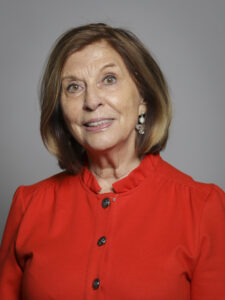
    For D’Souza, it wasn’t an opportunity to pass up. Having entered the House of Lords as a Lord Temporal in 2004, she was ideally placed to do so. She recalls: “It was once again considered a safe place to be, and loads of refugees returned from Afghanistan and Iran. I was then a governor of the Westminster Foundation for Democracy, which was an All-Party Parliamentary Group looking at political funding. We went out to Afghanistan to see what we could do.”

    This is how the world changes – by fortunate coincidence, yes, but also because good people also tend to be curious. If you fast forward 20 years it is possible to see thousands of girls who have been transformed by this decision.

    But if Frances D’Souza had simply gone to Afghanistan, the world would not have been nudged so decisively in the direction it was. Instead, she had the good luck to encounter Aziz Royesh. By their ensuing encounter a generation of girls have found their way into that most valuable thing of all: a first-rate education.

    “I was introduced to him in Kabul, in Shahr-e Naw, close to the presidential palace,” D’Souza recalls. I note now a special note in her voice – something encompassing awe, affection and deep respect. I begin to sense I am about to hear about someone I need to hear about – that we all should hear about. “He was an extraordinary man,” D’Souza continues. “About five feet tall but a force of nature. Sometimes you come across people who are born leaders. It was clear to me immediately that he was.”

    So what was Royesh’s story? “He and his few friends and brothers had started some sort of school when they lived as refugees in Pakistan, which had the simple aim to teach children to read and write. But before that Aziz’d been a Mujahid during the Soviet occupation. He had arrived back into Afghanistan, essentially into a desert. It looked like Berlin after the war, and it was completely razed to the ground.”
    Aziz’s situation was complicated by the fact that he is a Hazara, meaning that he is part of the Shia minority rather than the Sunni majority. In the complex world of the Middle East this created obstacles for Aziz: “The Hazara affinity is predominantly to Iran, which is a Shiite country. The Taleban war in the 1990s – a really vicious war – ran right through the Hazara area.”

    A Momentous Meeting

    The scene was set for what D’Souza describes as a ‘momentous day’. The pair of them talked all night: “Aziz had taken over one building, and put a tarpaulin over the top in April. It was still very cold, although the snows were beginning to melt. There were no windows and it was a tiny hut divided in two with a sheet.” So how was Aziz structuring the educational process? “He and his colleagues had two classes, and three shifts where they could take 12 students at a time. There was basically no space, no blackboard. But Aziz’s passion in life was to educate girls.”

    Aziz couldn’t have met anyone more likely to appreciate his project than D’Souza. “Having come from a development background, I firmly believe that the magic bullet of development is this: if you educate girls you get development,” D’Souza explains. “He started talking to me, and though his English wasn’t that good, we talked all night – about philosophy and feminism. I was very impressed with him. He had girls who were doing weaving in his rundown flat – that was the only income refugees could earn. So he had little seven-year-old girls doing carpet-weaving. Meanwhile, middle-aged women wanted to learn geometry so they could divide up their land.”

    This was education in a raw and exciting form. In its urgency and its authenticity, it wasn’t the sort of encounter you could push to one aside.
    When D’Souza returned to the UK, she leapt into action. “I thought the best thing I could do was raise money for him – because I trusted him. But I also thought that a lot of money at that time would be the kiss of death so I tried to raise small amounts and see what he did with it. I wrote to 30 friends and colleagues and said: ‘Would you be prepared to give £30 a month for six months?’ People did. Dennis was the only one who came back to me and said, ‘That’s fine, but wouldn’t you like more?’. I said: ‘No’.”

    So what did Royesh do with the money? “He selected one of the larger buildings in this bombed-out patch of land and he put a roof on, windows in – and, really importantly, he put a heater in. That meant that by the time autumn came round, and all the firewood had gone, it was the only place for miles around which had heating. And so everyone came. It was an opportunity for Aziz to explain to mothers and fathers what he was trying to do, educating the girls and persuade them that it was safe.”

    And the notion of education being unsafe was, of course, an inheritance of the Taleban. “When girls went to school they had been whipped in the street by the Taleban. They needed quite a lot of persuading,” D’Souza says.
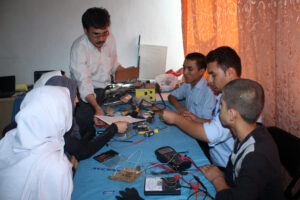
    But Royesh, it turns out, was persuasive. “Over the years, it grew,” recalls D’Souza. “I started raising money. We had fundraising events, and Aziz set up a model school where teachers and students got training simultaneously. They also had vocational training. They taught mechanics and engineering and tailoring so that those who left at 14 or 15 could go and have jobs.”

    In spite of this, Royesh’s interest remained academic. “Aziz had had a very impoverished background with virtually no education. He’s one of these people who reveres education so he reveres those who have education.” It is a precious insight into how valuable that commodity is. And it was this passion which drove the expansion of Marefat.

    Over the years, D’Souza made repeated visits. “I went to Afghanistan with these brown paper bags. He asked me to bring English copies of Bertrand Russell’s books which I did.” Again, the detail is significant. A true passion for education is often irrationally omnivorous – we feel the doors of the world fling open and want to rush in and grab everything we can, often in no particular order.

    But always it was the girls who Aziz was prioritising. “His focus was on getting the girls into twelfth grade and then onto tertiary education,” says D’Souza. “As an example of what he managed, the school got up to nearly 4,000 students.” As astonishing as this achievement was, what really mattered was the quality of the education. “The Asian University for Women, a renowned university in Bangladesh, offered 15 scholarships every two years and girls applied from India, Bangladesh, Sri Lanka, Pakistan and Nepal. Our girls won 11 of them.”
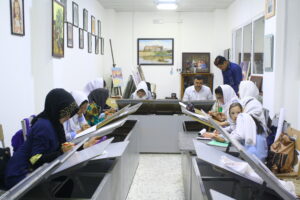
    It seemed that nothing could stop their success. Marefat had become an educational phenomenon: “We went on raising, and Aziz eventually built a whole new building, and an auditorium. To this day, I remain so proud he named that after me. The school became the St Paul’s of Kabul.”

    I am so swept up in the success of the story that for some reason – though I know what happened in 2021 – I am unprepared for D’Souza’s next sentence: “It was a thriving school, and then August 15th came.”


    Force of Nature


    Yes, August 15th – the day of the Americans’ botched withdrawal.

    Aziz was in a very difficult position. He had dedicated his life to a project which had achieved success beyond his wildest imaginings, and yet he was in undeniable danger. D’Souza outlines the severity of Aziz’s predicament: “Aziz, by virtue of the fact that he’s Hazara and educates girls, was particularly vulnerable to the Taleban and had had brushes with them before. He felt he had to get out: he had a son in California. So we got him to America.”

    I realise I need to meet Aziz. A few days later I’m on a Zoom call looking at a kindly man beaming back at me. He explains that it’s his habit to wake at four in the morning – a detail which conveys his separateness from Western rhythms, linking him to the desert somehow. It is a reminder too that you can leave Afghanistan in person but never depart it in spirit.

    Of course, Aziz’s story is like D’Souza’s but seen in reverse perspective – it is like an education version of Kurosawa’s Rashomon, where all the participants remember something different about key events.

    For instance, Royesh gives his version first meeting with D’Souza, and recalls his views on education as they were communicated to her at that time. This time around you can hear the quiet and authentic adamance which swayed Frances all those years ago: “The core of the problem in Afghanistan was this patrimonial vision that you have – of a male-dominated vision of the community. Just educating the male members of the community cannot change everything: there will be a vacuum as you’re missing the vision of half of that community – the female side.”

    Aziz also makes an interesting distinction: “I never felt the need to march on the slogans of woman rights: I just wanted to go with education, because this by itself can bring all these other developments. I think it was that which really sparked Frances’ interest.”

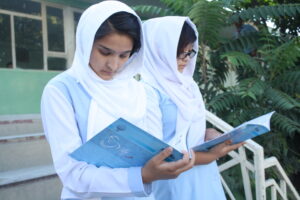
    Royesh also recalls Frances D’Souza entering Marefat for the first time – meaning that I get to see her through his eyes. Even at this distance Royesh is moved by the memory of D’Souza’s first entrance into the life of the school: “One of my first impressions of Frances D’Souza is that she was the first to come in. She entered that murky corridor and in the midst of that darkness, she saw these beautiful well-dressed girls that had blue, you know, shirts and they had white scarves. And they stood to greet her and suddenly she ran out and shouted: “How beautiful they are!”

    It is a moving image – these girls standing there in all their potential, suddenly confronted by the person who really will help them. Perhaps it even has a dreamlike quality.

    Royesh also remembers what it was like when D’Souza’s first money came in – and again there are some telling details: “I received a call from an Afghan friend of mine. This person said that he had come from the UK and he had some gifts for me. I went downtown, and saw that there was an envelope with Frances’ beautiful handwriting. I opened that and there was £2000 which had been raised by her ‘Evening for Marefat’ fundraiser at her home. I remember all those notes, in fives, tens, twenties and hundreds. Next year, she visited again and had brought £6500. She insisted that we should go and buy a plot as she said it would give prestige to the school, and boost its credibility.”

    With that money Aziz was able to afford a site in the desert. It wasn’t immediately promising as a location. But then an amazing thing happened: “We went there and started laying the foundations,” Royesh recalls. “We laid the cornerstone and began building the mud walls. This ignited a kind of interest among the community. Suddenly, people came and kept buying the plots around that and building their houses.”

    I also hadn’t realised until I spoke with Aziz what heights D’Souza’s fundraising eventually obtained. In 2010 alone, D’Souza raised £253,000. Aziz recalls: “She sent that money and we used it for the building, and we established a very big auditorium that later was named after Frances. When she visited the school in 2016-17 she was known to the students as ‘Auntie d’Souza’. “At the beginning, the families, the students, and especially the girls, were in love with her.”

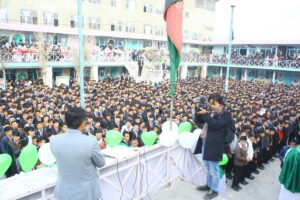
    As it happens I have seen this auditorium in a recording of a Zoom call, which took place earlier this year. It is a large, airy space, and the children are ranged obediently in it. I see kindly teachers compering the call, while D’Souza takes notes in her study, and Aziz stands before a white wall, peering down at his creation – and also in some way at his past.

    Sat here in London, it is difficult to imagine how it would look in its architectural context. But I imagine it must soar and be visible for miles around. It ought to fill the heart of every person in that area with hope. But no doubt, it also infuriates the Taleban.


    Abroad Thoughts from Home


    So what does the astonishing story of Marefat have to tell us about education? Royesh’s methods are, in their essence, simple. This in turn opens up onto the possibility that here in the UK, we have made the simple complicated – to our own detriment. It might be, for instance, that we have prioritised pouring money into the schools system over promoting Marefat-style effective educational methods.

    Royesh tells me: “If you want transformational education, you don’t need many facilities. You just need a good way to talk to the people and to help them perceive something and customize that with their own real life. We didn’t wait for the professional faculty. We didn’t wait for the equipment – and we didn’t wait for the infrastructure. We just started.”

    And if you get that right, the effects can be catching. “For around five years or six years, we were the only private school in Afghanistan mainly with civic and girls-catered education. In 2021, there were more than 163 private schools just in these three districts of Western Kabul. Education had become a norm and communities were changed. There were hundreds of cultural centres, art centres, sports clubs. People embraced the idea, they stepped forward. The children were 95 per cent illiterate in early 2002. By 2021, 95 per cent of the population had become literate. Violence, especially violence against women had eradicated in the entire Hazara community. Street harassment was not seen in the Dashti Barchi area of western Kabul. Furthermore, not a single member of the clergy talked against democracy, human rights or girls’ education. It seemed that an entire community of seven million people had been transformed.”

    This was a mass grassroots movement without parallel. It should give heart to anyone who feels change happens too slowly. Sometimes perhaps we are lobbying for the wrong kind of change, and have forgotten to bring our activism back to first principles, as Aziz did.

    And yet, of course, we cannot avoid the tragic aspects of the story. Aziz tells me that the events of 2021 didn’t come out of the blue. In 2009, Marefat experienced the first backlash from the fanatical clergy. Pupils from Marefat had protested publicly against legislation which had violated numerous women’s rights, and their prominence as protestors led to terrifying scenes at the school. These now seem in retrospect like precursors of the still more tragic events of 2021.
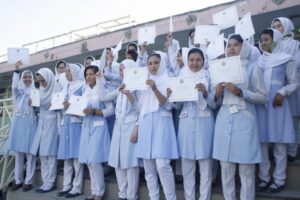
    Royesh recalls: “The clergy attacked; they sent their mob supporters. We had just sat down to class and they stormed the school. They were shouting, and raising slogans against me as a person, saying that they would execute me as an infidel. They said I was preaching Christianity, or that I was preaching secularism and liberalism. They charged the school with being a centre of espionage and prostitution.”

    The school sustained physical damage. “They broke the glass of the school, and they called for its destruction. They called for the execution of the administrators and the faculty and especially myself. That was really a harsh thing.”

    Royesh has a way with understatement. It sounds terrifying beyond contemplation – but then we inhabit cosy lives and Aziz is hardened to the sterner realities of life under the Taleban.

    But in that awful instance again, an astonishing thing happened: “We had just one gate. So the students came and they made a human chain behind it – and they closed the gate, so the mobs couldn’t enter the yard. Thousands of people gathered around the school, most of them the parents of the students who were worried about their children or those who had shown up just to watch.”

    Eventually a special force from the Ministry of Interior relieved them. Royesh continues the story: “The attack was on Wednesday. The school remained closed on Thursday. On Saturday, we reopened the school, just with the hope that if 15 per cent of the students returned it would be a victory for us. But surprisingly, more than 95 per cent of the students returned back hand-in-hand with their parents. That was really a very emotional moment for us. They came, and they showed their support for the school. They were the parents of more than 3,500 students.”

    If anybody doubts that education is a spiritual right which people will defend with their lives, then they need to hear this story.


    2021 and all that


    Sadly, even this superb victory came to have a temporary feel in 2021 when the Americans left, and things really did unravel. D’Souza takes up the story: “It was incredibly difficult for him. If you’re a Hazara and the Taleban are after you…” her voice trails off, as if unable to imagine how that must be.

    She continues: “I don’t blame Aziz for going at all. There are individuals at risk and we shouldn’t discount that. The school closed. My immediate concern then was for my daughter [the journalist Christa D’Souza] to try to evacuate the girls. They got over 200 of them out, and got a deal with the Canadian government. They then got another 207 out who have been waiting in Islamabad since October, languishing in a hostel. We’ve raised enough to get them visas through the government.”

    And Marefat today? “Dennis and I are interested to see what we can do to enable Marefat and its unique educational experience to continue. We think we can’t do that until we go. Once we’ve got most of our girls out, our priority should be to get the school going again.”

    And Aziz? He is currently writing his History of Marefat, and is vague about future plans. D’Souza has her suspicions: “It’s clear to me that Aziz has very high political ambitions, and wants to be the leader of the Hazaras – and maybe of the Afghan people as a previous Hazara man was in times past. He was also extremely close to Ashraf Ghani during the presidential elections, and even wrote Ghani’s manifesto. Ghani, though is a very curious fellow, and once he won the presidency, completely ditched Aziz, he treated him very badly.”

    A Royesh presidency? Every presidency is a long shot before it happens – but just to imagine it is to realise that hope remains.

    But what about the girls? Here D’Souza is understandably emotional: “The brightest and the best have left the country, which is a huge responsibility which we all feel. The only thing which is a mitigating factor is that it’s quite common with Afghans to return to their country, so I think a lot of them will. One thing one shouldn’t underestimate is that for 20 years we had this flawed but democratic process: a huge number of people became accustomed to it. They’re unlikely to give that up in a hurry.”

    If you want a measure of what was achieved at Marefat then you have to hear the girls themselves. Their security is paramount and so we will not be revealing any names or locations. But here are some voices, translated from the Persian by Aziz, of girls talking on a recent Zoom call. This is the authentic sound of education, but also of liberation.

    One girl says: “We study. We continue our education. Because we know that interrupting the course of education means our death and I am not ready to die now.”

    An optimist might say that a girl who has learned to talk like that can never die: it is the voice of irreversible enlightenment. Here is another: “We understand the Taliban. Most of them have not lived in the city and they are not familiar with the characteristics of urban life. I hope they understand us too. We will continue our education and I am sure that we will eventually introduce the Taliban with the urban life and culture too.”

    There is a note of defiance here which is utterly at odds with what we think we know about Afghan women – bowed down by the patriarchy, and almost without agency. It makes us realise that Royesh, D’Souza and Stevenson have created a new kind of educated woman.

    A third girl adds: “We call our resistance a ‘constructive resilience’. We not only resist, but also think about the constructive aspect of our resistance. We think that in ten years or twenty years from now, we will make our culture better and more humane, and our politics better and more democratic. This is the purpose of our education.”

    This is in fact always the purpose of education – and sometimes it takes someone who knows education’s value to tell you that. That will almost always be someone who until recently was deprived of it.

    This, then, is the story of Marefat. There isn’t another story like it, and it’s one we at Finito World will continue to follow. It tells us that education is sacred, and reminds us that it changes lives.
  • Secretary of State Gillian Keegan on Sir Keir Starmer, Rishi Sunak and how Shirley Williams wrecked the education system

    Gillian Keegan


    I spent most of my career in business and am a bit of a Johnny-come-Lately to politics; I got elected at the age 49. I am the first former apprentice to be Education Secretary – and I’m also the only degree level apprentice in the House of Commons.

    25 years ago, growing up on the outskirts of Liverpool in Knowsley, there weren’t that many opportunities. For me, an apprenticeship was a golden ticket; I was so delighted at the time. But it’s been quite a shock at the Department for Education when everyone looks down on you as if you’ve come up with soot on your face.

    I’m sometimes asked who was the person who most destroyed the education system and I’d say Shirley Williams. I was on a trip with a Lib Dem MP, going to St Mungos to visit a homeless shelter; we were on a Public Accounts Committee together. She spent the entire train ride telling me how fantastic Shirley Williams was, and all about the comprehensive system. Having been a beneficiary of this system, where 92 per cent of students were without any qualifications, I was confused by her enthusiasm. Then I found out on the return journey that her education consisted of the International School of Brussels and Roedean; she’d never been anywhere near a comprehensive school.

    That’s the whole point: theory and practice are very different. Rishi Sunak understands that and it’s one of things which makes him a fantastic prime minister. He has the most extraordinary talent; he’s very detailed and strategic and kind. I look at him and think that he’s got that stardust, and a lot of space to grow: I think he will be a world statesman.

    Rishi is very encouraging but also gets things done. Look at the Windsor Framework: when you consider the column inches which were devoted to this, and the question of whether it was any good or not, and whether it was practicable: he got it through. Look at the way he’s handled the health unions and the teaching unions.

    Education will be a big part of the story we tell to the electorate next year, when it comes to our achievements over 13 years. In 2010, we inherited a lot of problems in our education system. The attainment of children wasn’t up compared with other countries; for instance, in the PISA rankings the country had fallen back nine points over the 13 years of the Labour government. That’s quite a lot. We had fewer schools deemed ‘Outstanding’.

    We also did a lot in childcare in our budget earlier this year. In 13 years of Labour government, all Labour introduced was 12 and a half hours for three and four year olds. That was it. Since then we’ve introduced 30 free hours, and now we’re doing nine months to five years, which leaves Labour nowhere to go.

    You’ve also got to look at what Michael Gove and Nick Gibb did in setting up academies; they’ve transformed academic outcomes and opportunities for kids. Having grown up in Knowsley, I know there are large numbers of very bright children who don’t get the chance to go to an outstanding school or to university. Social mobility is not a slogan with me.

    We’ve also done a lot to be proud of when it comes to universities, and in relation to skills. That’s a nice thing about my current role: it’s where I started as a skills and apprenticeships minister. I can now get stuff through which I wanted to do then and which everyone overruled me on at the time.

    One such thing is medical apprenticeships. I started to think: “How do we get parents to want their children to do apprenticeships?” I thought about what parents want for their children: they want their kids to have a good profession and a stellar career. When it comes to medical apprenticeships for 18 year olds, the courses are five years long. That means you can come at 18 and be a doctor in five years. It’s the sort of thing which shows you that this is a government focused on delivery.

    From my seat on the front bench I have a good view of the Leader of the Opposition. The only time Sir Keir Starmer has ever energised a room is by leaving it. It’s quite a good vantage point on the front bench. I think: “You’re making a massive miscalculation. What are you going to say when we deliver all this!” Margaret Thatcher always used to say, if you’re not ten points behind then you’re not doing enough. This is going to be a historic fifth term.


    Gillian Keegan was talking at the In and Out Club 


  • James Jensen: A career in tennis

    James Jensen is a renowned tennis coach with years of experience on the court. After competing in the Juniors as well as the professional tour, Jensen began coaching and launched a highly successful series of video tutorials. He is now the in-house coach at Pierpont Racquet Club, located in Ventura, California. He holds the qualification of USTA High Performance Coach and is also a USPTA Certified Elite Professional.

    Tell us about your career?

    I grew up playing tennis. I started when I was eight years old. From there I started playing the junior tennis tournaments. I was trying to play in college, but ended up playing college football instead. And then I played tennis on the pay to play tour. Tennis is really difficult when you get out and try to make it on the tour. You pay your entry fees, and you’ve got a lot of costs involved just to get to a tournament. And then in a lot of the lower-level tournaments, the open tournaments that are money tournaments, you don’t make any money unless it’s the semis or the finals. You go and pay to play a lot, and you sink all the cost into it upfront. I’ve been at this club now for about almost three years. Before that we spent several years over in Hawaii, I was the director of tennis at the Turtle Bay Resort. Before that, I did instructional videos back when it was going from VHS to DVD. So back in the early 2000s. I did two sets, one set of six, and then another set of six under the pro tennis lessons, and they did really well worldwide actually.

    How was the pandemic for tennis?

    It was nice here because everything’s outdoors. The pandemic in general helped tennis because that was one of the few things that people could do. It was said that tennis and golf were the two lowest risk things to do and tennis was even lower than golf. A lot of people came out and tried it during the pandemic, and the club did very well.

    What is the tennis industry like to work in?

    It’s an interesting industry. During college, I was teaching tennis as well making money as I was trying to finish my college up. In the US in order to get into tennis and be a certified professional there are two main certifying bodies. One is the PTR, professional tennis registry. They’re located back East. And then the USPTA, the United States Professional Tennis Association, and that’s the one I’m associated with. They were in Texas, and now they’re kind of between Texas and Florida. In order to be an actual teacher, that’s what you should do is go and get yourself certified. Some people get certified by both, but you really only need one. The other main thing that it does for you is it gives you liability insurance, so if someone gets hurt on your court, you’re covered.

    What is your experience with tennis teaching techniques?

    For the kids, you’re basically trying to teach them proper technique, proper footwork, all that up front. We want to do that with the adults, but a lot of times adults have built in some pretty bad habits. Depending on how far they want to break back down to build them back up, it kind of depends. I teach anywhere from four years old, up to my oldest I have right now 80. She comes out once a week. It’s something you can do your whole life, you just keep doing it. And that’s the main thing is there’s always something going on for all the different levels. That’s what’s nice. Once someone starts playing, I get them into clinics and they start building some abilities up, and then when they’re ready they start playing some USTA league matches and that kind of stuff, just to get used to the competition site and see if they like it. Some people like it, some people don’t want to really compete, they just want to have their little group and play each week and be good with that. So, but then if they do that, then they start seeing the areas that they need to improve and then move on from there.

    What is the pathway to pro for a teenager?

    At 17-18 most likely it’s their parents that are paying for it. It’s somewhat still a rich man’s sport. Because of that, the ones that have the ability to pay for lessons, the ability to pay for travel, pay for tournament entries, have a step up. The tennis industry itself and a lot of non-profits are trying to kind of push money towards helping everyone to have that opportunity. But bottom line is that sometimes this comes down to the fact that you need the opportunities to be put in situations to succeed.

    How can you tell as a young person if it’s realistic to pursue a rise to the level of someone like Raducanu?

    You can tell somewhat based on how they come out and their hand-eye coordination, their athletic abilities. But I mean, Raducanu’s situation was really situational as well. It was during a pandemic, her and Leylah Fernandez, the two that were in the finals that year. They’re still good and up there in the score, but they’re not pushing as far – but that’s part of it too, they got thrown into that fame, Naomi Osaka, same thing. It’s a lot of pressure to put on these young kids. And depending on where they’re from, I mean, they could be the breadwinner for their whole family. And that puts a lot of pressure on the ones that are out there trying to make it as well. So you’re hoping that if they have that ability, that they’re at least tied into the USTA, where they’re helping send out some coaching, helping do some of the different clinics to help them get the ability and get the training that they need, and then give them opportunities, wildcards in the different tournaments. Then it comes down to them making the most of those opportunities. As far as making it as a living, it’s not easy at all. It’s very difficult, the top couple 100 in the world make really good money. Beyond that, you got all these other guys that are out there, just scrimping and scraping and like I said it’s pay to play. It’s not an easy route. But the teaching side of it can be, if you’re not able to make it out there, there’s money to be made in teaching. Plus, it’s very rewarding as well. You’re outside all the time, you’re on the court, you’re outside, you’re not stuck behind a desk, and you build some great relationships. And for kids, you are able to mentor. They look up to you. And so, tennis in general from that standpoint is really good for the kids, because most of the kids that are playing it are from good families, they’re good kids. They’re good in school. So normally grades are real good as well, so  you’re putting your kids around other good kids as well. So from that standpoint, it’s a great sport for that as well because it is something you can do your whole life once you play at a somewhat decent level. And then if you’re playing at a high level, if you’re a former junior player that doesn’t make it on the tour, but still a really good player, how many business deals are made out on a tennis court or on a golf course? When you’re good at something, it just gives you that “wow” factor.

    Tennis does not require that much expensive equipment at the most basic level. Where does the “rich man’s sport” side of things come in?

    The barrier to entry is not much at all. You have a couple balls and a couple rackets, andhere in the US, you have free courts in most cities, so you have an opportunity to get out there, and at least begin. The competition is what requires money, but as far as playing it and enjoying it, my feeling with tennis is that you can find one other person at the same level as you whether you’re just a beginner, or you’re super high level, and you’ll have a great time. It doesn’t have to be that you’re both phenomenal players. You guys can be just starting out but you’re out playing, and we have guys at the club who have just started playing their first club tournaments and they’re hooked. It’s changed their family’s life. The kids now are involved and the parents are both now involved playing tournaments, playing USTA Team Tennis. I’ve watched this one gentleman who has lost 80 plus pounds, just from coming out and playing. Now he’s out hitting on the ball machine all the time, coming to my clinics, he’s out playing with other guys during the week, they play as a family. He’s sent me some texts and things saying “You don’t understand how this sport has changed my family’s life.” So it’s great for that. You really can just grab someone else and get out there and have a great time, hit and giggle.

    What makes a good teacher?

    I try to keep it as simple as possible. I think sometimes we as pros, one, we’ve played it so much that certain things just happen without us thinking it through. So when you take it back… when I did my instructional videos, this producer was about a 3.0-3.5 level tennis player. And he was able to go back and when we’d be explaining something he’d say, “What about this?” And then I would be able to go back into explaining things as simplified as possible. It’s basically the Magnus force. It’s basic physics that we deal with. Once you understand those and understand how certain things happen to the ball, then you can make little adjustments and it doesn’t have to be changed in a million different things. Keep it to one or two things at a time.

    What has tennis done for you?

    Controlling emotions is probably one of the greatest things the sport has done for me. In pressure situations you’re able to learn how to really calm yourself down keep as even keeled and in line as possible when situations get tough, and that does translate over into other parts of your life, for sure.