Tag: DAVID CAMERON

  • Remembering Lord David Young: Tributes from David Cameron, Theresa May, and More

    Former prime ministers and business royalty pay tribute to the remarkable businessman, politician, and philanthropist who sadly died in 2022 at the age of 90

    There are successful business people, successful politicians, marvellous philanthropists and then there’s David Young. He is one of those very few who seemed equally at home in all three worlds. He was also, of course, at the start of his career, a lawyer, and to the many people who came forward to contribute to this special Finito World tribute, a loyal and valued friend, mentor and confidante. His death in December 2022 was met with the dismay and remembered affection which always accompanies the passing of an unusually productive life.

    Young was born in 1932 to an orthodox Jewish family near Minsk in what was now Belarus; his family fled a pogrom there and Young’s father prospered in business, as his son would do. Naturally, he never forgot these circumstances; in her moving tribute Wendy Levene remembers his profound commitment to the Jewish Museum later in life.

    David Young was admitted to be a solicitor in 1955, but it was business – or enterprise, as he would later refer to it – which was his real passion. Even in his early 20s, he was an executive at Universal General Stores. Not all successful executives can successfully found businesses but Young found he could, creating a series of companies in property, construction and plant hire, eventually selling his interest in June 1970 to Town & City Properties plc. The rest of that decade followed on a similar track; it was a tale of considerable success in business.

    When Margaret Thatcher said that other Cabinet ministers came to her with problems and that Young came to her with his achievements, she didn’t add that these were numerous. But then she didn’t have to; Young, who served in her Cabinet for most of the second half of her Downing Street tenure, was always a favourite of Britain’s first female Prime Minister.

    Young served successively in Thatcher’s Cabinets as Minister Without Portfolio, Secretary of State for Employment, and  Secretary of State for Trade and Industry, and President of the Board of Trade. In the latter role he found his metier, racking up air miles on behalf of UK plc. His passion for business was just as relevant to that role as it was in the business world itself.

    Though he would return to government to advise David Cameron on enterprise (perhaps the happiest period of his life), he also had a superb final chapter outside of government in business with Simon Alberga (who writes movingly about his friendship in these pages), and in philanthropy. By this point in life, he was a sage. People continually sought his advice; and he continually found time to offer it. His death was a sadness to all of us at Finito World. We have done our best to preserve, the example of his remarkable life is preserved in this pages.


    Former Prime Minister David Cameron
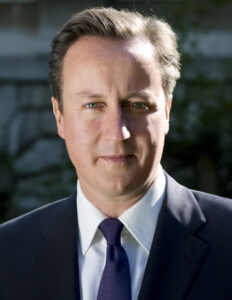


    I first met David in 1988 when I worked in the Conservative Research Department covering trade, industry and energy. This meant following his department, the Department for Trade and Industry. David was famously one of Thatcher’s favourite Ministers, and you could see why. I was a 20-something researcher; he was a Secretary of State with many years’ experience. Yet he treated me with great warmth and kindness, inviting me to his weekly ‘Ministerial prayers’ meeting, where his top team discussed the challenges of the day.

    Fast forward to 2010 when I became Prime Minister and one of my biggest challenges was bringing down the barriers to business that were preventing our economy from growing. I knew exactly who I wanted to help me in this endeavour. I called up David Young and invited him back into government as my Enterprise Adviser. Fortunately, he agreed. From his office in 10 Downing Street he produced report after report which led to concrete reforms, such as start-up loans, that truly helped to kickstart growth in our country.

    David was my oldest adviser, but he was one of the most dynamic. It was wonderful having him around No10 and being able to call on his advice and wisdom. His legacy lives on in all those businesses he helped to get off the ground, all the policies he helped to drive forward, and all the people – like me – who he inspired during his four decades in public service. He will be much missed but very fondly remembered.


    Former Prime Minister Lady May
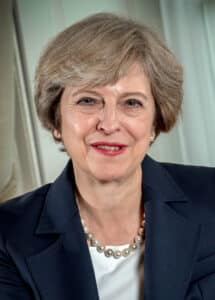
     

    Image ©Licensed to i-Images Picture Agency. 01/08/2016. London, United Kingdom. Prime Ministers Official Portrait. Picture by Andrew Parsons / i-Images


    David Young was a remarkable man, constantly enthusiastic and brimming with ideas. Crucially these were ideas that led to action which improved the lives of people here in the UK. He was a consistent champion of enterprise and an invaluable adviser to a number of Conservative governments and Prime Ministers. I never met David without him coming up with a new proposal for boosting the economy, encouraging new business or helping young people. His energy and interest in others, together with his passion for enterprise, were infectious and have left a lasting legacy for so many. It was a privilege to have known him.


    Lord Cruddas, businessman and philanthropist
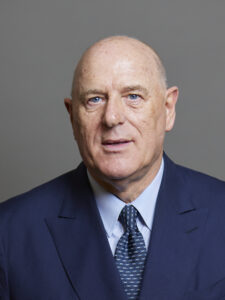
    I met Lord Young when he was Chairman of the Trustees for the Prince’s Trust; it was around 2006. I had created the Peter Cruddas Foundation and I wanted to donate to good causes. At that point, I met Lord Young and instantly took a great liking to him – partly because of his political background. I’m a big Margaret Thatcher fan, because of the way in which she transformed the country. As I knew David had been in her Cabinet, I was awe-struck to meet him.

    But he turned out to be charming – a lovely man, and very down-to-earth. I donated to the Prince’s Trust. Here was a man who was willing to sit down, talk to me, help me, guide me, and mentor me. We became great friends. I invited him to be the Chairman of my Foundation and he introduced me to the lawyer Martin Paisner who helped also.

    Over time, our friendship developed. I went to his house in Graffham and became friends also with his lovely wife Lita, Lady Young. At his house in Graffham, there was a Spitting Image puppet of David himself in his study which his family had managed to get hold of, and which I thought was very funny.

    David also introduced me to opera. When you come off a Hackney council estate, you don’t often go to the Royal Opera House in Covent Garden; he took time to explain the music to me, and today, whenever I go to the opera, I think of him.

    He was very smart on technology. I remember at his 80th birthday party, one of his grandchildren gave a speech saying that he was one of the few grandchildren who go to their grandfather for technological advice: David could fix anything. Imagine being in your eighties and embracing all this new technology – mobile phones and computers and so on. You always learned about technology from Lord Young.

    I’m very sad that he has passed away. But I take comfort in the thought that he had a good and rewarding life. I’m proud to say he was one of my dear friends. But really it was more than that: he was like the father I never had.


    Ronel Lehmann, Chief Executive of Finito Education

    Lord Young was a legend. David was often to be seen at high-profile business, political, charitable and other community events. He was the one person that every entrepreneur queued up to meet, either to seek his opinion, share news about a deal or development or just to shake his hand. He had time and always made time for you. He always reached out to those who need a helping hand, the old-fashioned way.

    I remember when I was thinking of setting up Finito in 2016, I made an appointment to see him at his offices overlooking Regent’s Park. He liked the purpose that we had set ourselves to help young people find their meaningful career before reminding me of his own passion for the Enterprise Passport, a digital record of activities which he championed for young people to help underpin their own career prospects.

    It was a genius idea never adopted by Government to record pupils through school and beyond about their career development for prospective employers seeking proven employability skills. Earlier this year, we remembered his contribution and paid tribute to his vision at the launch meeting of the AAPG on The Future of Employability.

    We first met many years before when Lord Young was appointed Chair of the British Israel Chamber of Commerce (now UK Israel Business). He penned a letter to his fellow long-standing Board of Directors thanking us all for our service and then asking us for our immediate resignations. I replied, “Dear David, No, Yours, Ronel,” and then continued to serve under his stewardship for many more years. David retorted that he liked to sort the wheat from the chaff. We laughed about it every time we met, and I took pleasure reminding him.

    He had an office at 10 Downing Street under David Cameron’s Premiership and relished holding meetings there to discuss the latest business topics. On one occasion, we sat there drinking the worst coffee ever, but he was so engaged about the issues, it never mattered.

    In his last email exchange with me, I shared with David a letter I had submitted to The Times, praising his idea of the Enterprise Passport. Sadly, it had been rejected, but I wanted to share the letter, and so wrote to him copying in his niece Imogen Aaronson, to whom David had recently introduced me.

    His response was characteristically funny and kind.  “Thank you very much for the thought, pity the Letters Editor did not have your taste and judgment! I am not sure what you two are plotting together but you both are in good hands. Take care and stay safe.” I will miss his smile and bow tie.


    Sir Lloyd Dorfman CVO CBE
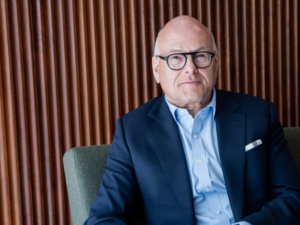
     

    One of David’s catchphrases was “Life’s a bicycle – stop peddling, and you fall off!” It was a phrase I often quoted and it encapsulated the man. Well after the point most people have retired, he continued to combine a dizzying mixture of commercial, public service and charity commitments.

    My relationship with David straddled social, charity and business worlds. It reflected the diversity and depth of his life and work. Over time, he became a mentor and a friend, and I always valued his advice and opinions on any subject.

    Whilst I knew David a little from the 1970s, it was really through my involvement in Jewish Care starting in the 1990s that I came to know him better. The charity is the Jewish community’s largest welfare organisation. David was its President and I joined the Board in 1997.

    It was through the Prince’s Trust, however, that I became much closer to him. I was invited to join the charity’s Development Board in 2002, which he chaired. I soon learnt what a pivotal figure David was in the Trust’s evolution. Whilst the charity had been founded by the then Prince of Wales in 1976, David had helped accelerate its growth.

    He was supportive of the charity enabling young people from underprivileged backgrounds find jobs and also start businesses. As Secretary of State for Employment and then for Trade and Industry in the 1980s, he famously devised a matched fund-raising scheme to support the Trust’s enterprise work. The government ended up committing millions of pounds, much more than had been imagined, to the surprise even of his Prime Minister Margaret Thatcher.

    When David stepped down from the Board in 2007, he recommended I should take his place. I went on to become Chairman of Prince’s Trust and Prince’s Trust International. Overall he played a pivotal role in the growth of the Trust to become, what is today, the King’s oldest and largest charity.

    The charity links did not stop there. I served alongside David on the Board of Community Security Trust, which protects British Jews from antisemitism. David and I also ended up in business together. He brought me an opportunity to invest in an oil technology business. His enthusiasm for dynamic businesses with growth potential never dimmed.

    Over the years, Lita and David became cherished friends. They joined us on one particularly memorable group holiday to the Galápagos Islands. It was the first trip there for all of us. David was an especially keen photographer and took great pride in presenting everyone with a fabulous photo album at the end of the trip. Another lovely social memory was joining him and the family for his 80th birthday weekend at his family home in Sussex.

    This coincided with the end of his time as Chairman of the Chichester Theatre, yet another cause David had poured his energies and talents into, originally rescuing it from closure. David enjoyed the arts and particularly loved coming to the Royal Opera House. When I became Chairman last year, he was characteristically very supportive.

    On social occasions, you saw the side of David as a devoted family man. It was clear how much Lita was a rock for him, and how much he adored her. He would not have had the impact he had, without her constant support.

    David was a loyal friend and an exceptional man, with so many dimensions. His legacy is his family and friends, and the many causes and charities he supported with his leadership, charisma and passion. The world will be a lesser place without him.


    Simon Alberga
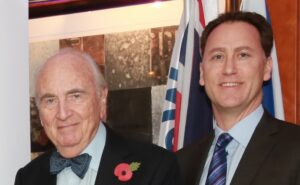
    David Young lived an extraordinary life. Through my close association with him in business and communal matters over the course of 26 years, the word I would most closely associate with David is positive. Whether in the realm of business, community affairs or politics, David always approached life with a can-do attitude. In my view, this is a hallmark of successful people and a significant part of the reason David achieved so much in his life. Rather than dwelling on potential impediments to success, David always focused on the art of the possible, and invariably he was a driving force behind making things happen. David believed in the power of one’s actions to effect positive change in the world.

    In the world of business, David was a committed risk-taker, and he always believed success would come through a positive approach to working with good and talented people, despite the inevitable risks associated with business ventures. He was often – though not always – right, though he was right often enough to achieve great things in business. It was, however, in areas which were particularly important to David, such as education and skills development, that he understood the need to think and act positively.

    David was passionately determined to help less fortunate people advance in life. David was a big part of the reason I became involved in the Jewish charity ORT, which helps people across the world with education and skills training to gain employment and provide for themselves, their families and communities. David was also a great communicator with extraordinary interpersonal skills. He was affable, generous, good-humoured and cultured. People loved to be in a room with David, chat with him and, if they were lucky, work with him.

    I will always cherish the 26 years of friendship, mentorship and support I received from David Young. He has left a great void in many of our lives, though if we can take forward his legacy of positivity, then we may also be fortunate enough to achieve some of the great things he achieved during the course of his extraordinary life.


    Wendy Levene

    Both Peter and I knew David and Lita over a number of years, meeting at charity events, mutual friends’ occasions and occasional dinners. We have regularly enjoyed each other’s company and have mutual respect for one another.

    I really got to know David well when I invited him to become Chairman of the Jewish Museum London. Admittedly, it took some persuasion but I won him over and he agreed. That was in 2010.

    We were in desperate need of leadership, integrity and funding. David had all of those qualities. He brought in amazing contacts and raised large amounts of funding to keep the Museum afloat. He had also been involved in other very worthy charities, Coram Trust, Chai Cancer Care and Chairman of the Chichester Festival Theatre – all remarkable institutions to which David devoted much of his time.

    What was so apparent to me was that David loved the Museum and the role it played in the community. He was so proud of his Jewish roots and was determined to acknowledge the role that the Jewish people had played in this country. In his ten years as Chairman of the Museum he and I formed a great working relationship. He teased me mercilessly and always claimed it was all my fault that he was Chairman of the Museum! He loved the Museum and took the Museum out of a difficult period into much better times. David didn’t tolerate fools but admired hard work, dedication and integrity.

    David is very much missed by me and many many people – he left an indelible mark on our lives. Rest in peace.


    Lord Leigh of Hurley

    Lord Young of Graffham was a role model and mentor for me having known him for literally all of my life: he was a friend of my late father –and my grandparents. I remember clearly when he first entered Government how unusual it was in those days for a businessman to be catapulted in to high office.

    His first day in the House of Lords he spoke on training for young people, a passion for him along with tech. Then, shortly afterwards, he had to answer four questions and their supplementaries in a row: that would have been longer than PMQ’s.

    I was always struck by his great humility. Despite rising to great distinction under a number of Prime Ministers, he never needed or sought praise. He knew what he was doing and he knew where he came from, always remembering and respecting his background and his community with enormous acts of philanthropy. He will be deeply missed


    Chelsey Baker, Chief Executive & Founder, National Mentoring Day
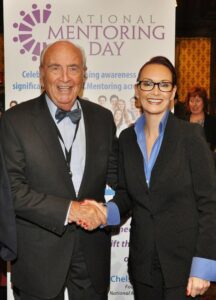
    I first met Lord Young back in 2012 when I was a lead mentor for the government backed Start Up Loans scheme, which Lord Young conceived to boost entrepreneurial spirit in the UK. Entrepreneurs were given a mentor alongside a start-up loan to launch their business. Lord Young firmly believed in the value of mentoring citing, ‘The mentor is far more important than the money! That’s what made all the difference to me when I was starting out.’

    I saw the impact that mentoring had on the lives of these young entrepreneurs and came up with the idea to launch National Mentoring Day to increase mentoring for all ages. Lord Young was my first choice to become our Patron. We shared a similar passion for supporting entrepreneurship and a vision for mentoring to be at the forefront of business and education.

    During the inauguration of National Mentoring Day at the House of Lords in 2016, Lord Young gave the opening speech declaring, “I had a mentor when I started my first business, and he saved me more than once. I hope that National Mentoring Day will encourage more people to act as a mentor.” His words certainly left an indelible mark on everyone.

    Last year saw our biggest National Mentoring Day on record. Lord Young believed in my vision to elevate all forms of mentoring and championed our mission to ensure everyone has an opportunity to reach their fullest potential with access to mentoring. For this I will be forever grateful.

    Lord Young loved his bow ties and loved mentoring. The world has lost a truly great mentor, but his legacy will live on not only as our founding patron but in all the lives he touched.


    Michael Hayman MBE
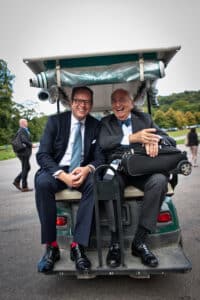
    As he did for a great many, David Young brought solutions to my life and never problems.

    What a privilege to have a friend who lived life to the full and made such an immense contribution to public and business life. He was one of the greats and for all of the right reasons.

    We worked together on the start-up agenda during his time as enterprise advisor to the then Prime Minister David Cameron. He encouraged me and others to have a go at making a difference. The result was the national campaign for early stage firms, StartUp Britain.

    As well as its contribution to UK start-ups, it would, on a personal level, usher in a great and defining friendship between us.

    We had many adventures and for me it was also an opportunity to watch a master at work. I self-styled myself as his ‘bag carrier’, an incredible apprenticeship working with someone with the skill, judgement and attitude to bring people together and get things done.

    He had the greatest of hearts and its pulse pumped with enthusiasm, fun and energy. It brought out the best in you. He was like instant sunshine.

    That attitude I think made all the difference and was key to his incredible track record. If you look at the list of achievements in enterprise policy since 2010 you will see the hand of David Young in all over them.

    He told me that those years in the run up to his retirement from government were among his happiest. Given his career roll call it was a quite a thing to say. But the reason was that it allowed him to focus on small firms, his life passion and mission to see succeed.

    He would often compare and contrast with the recommendations of the Bolton report in the 1970’s that predicted a corporatist future of very large companies with little room for entrepreneurs. It was a view he did not share.

    Fast forward to today and the UK is a small firms economy – five million of them and some 800,000 business registrations every year. That this is so, says much about David’s gift of prediction but also his proactive contribution to making change happen.

    I interviewed him on his last day in Downing Street and remember his words: “We’ve got a good thing going unless we mess it up.” They are words that this generation of politicians would do well to heed in their appreciation of entrepreneurs when it comes to the growth of the economy.

    I often find myself asking: “What would David do?” He’d probably tell me to get on with it. As he told me: “My definition of wisdom is the accumulated memory of past mistakes! “

    And he also said this: “If we all focused our efforts on the journey rather than the destination the world would be a far better place.”

    It was why he believed in action and lived a life vested in the defeat of problems and the pursuit of solutions. I miss my friend immensely.


    Michael Hayman MBE co-founded the national campaign for early stage enterprise, StartUp Britain and chairs the Small Business Charter.
  • Exclusive: David Cameron and the plight of the former Prime Minister

    Robert Golding reports on David Cameron’s post-premiership and what it can teach us about the meaning of success


    It’s not quite clear if David Cameron is taller than you might expect, or whether you’ve given him extra height just by paying him more attention. It is as if fame has its own laws of perspective.

    But the word ‘fame’ doesn’t quite encompass the experience of conversing with a former prime minister. In the first place, power is a very specific subset of fame. A David Cameron or a Tony Blair didn’t rise to our notice through artistic popularity or some kind of scientific or commercial ingenuity. In fact, if we are being mindful of our democratic inheritance, we might feel a certain sense of ownership over the likes of Cameron: after all, we put him there.

    That fact makes us feel all sorts of thing we don’t necessarily feel with, say Elton John or Timothy Berners-Lee. It is possible – perhaps it is even quite likely – for a UK prime minister to achieve considerable sway over our lives and at the same time for him not to have done a single thing we cherish. Even Cameron’s achievements – with the possible exception of civil partnerships – aren’t necessarily loved.

    But it’s the quirk of democracies that you often find that British people reserve their right to moan about a prime minister behind their back but to be in awe of them when in their company. A prime minister is therefore the recipient of mixed messages which might amount almost to gaslighting: respect and ridicule dovetail through their lives upon assuming the position, and the oddity of it all won’t let up once they’ve left office. It takes a death to exit the weirdness of Cameron’s level of fame.

    We caught up with Cameron at a Grapevine event in Oxfordshire where Cameron was discussing his post-premiership priority – Alzheimer’s Research – with Lord Finkelstein. So whatever made him think he’d be a good prime minister? “Very good question. I was elected in 2001. From 1997 to 2000 we’d made virtually no progress at all. We were just in a terrible position. And so I think everyone was asking themselves, what is it the Conservative Party and what does it need to do? I took the more radical end of things and said, ‘Well actually, we’ve got to change a hell of a lot of things’. And the more I looked at the other people who were putting themselves forward, I didn’t think any of them were radical enough in saying what needed to change.”

    What he means by this is really cultural change – a shift in the party’s attitude to gay marriage would lead to the Civil Partnerships Act 2004, and Cameron notes that his ‘hug a huskie’ stance on the environment continues to resonate today. “It’s fantastic that we have had COP 26 in Glasgow, and a Conservative Prime Minister who’s seen as one of the world leaders on the environment. That’s a great thing, and it’s because the Conservative Party decided it was a proper topic for us.”

    As I listen to Cameron speak, I find myself thinking of the sheer strangeness of the role of prime minister – and then the even greater oddity of being a retired prime minister. The role itself – recently described by Sir Anthony Seldon as The Impossible Office – is unique. Let us toss partisanship to one side for one moment and admit that you have to be intelligent to secure the role in the first place. Once you have done that, an unusual array of interesting experience and information comes your way and you have to develop ways to sift and sort that information.

    To hear Cameron talk is not just to be reminded of Tony Blair – as has always been the case, sometimes to the distress of people who would suspect Cameron of not being a true Conservative – but of Gordon Brown and Theresa May too. It’s a sense that they know how the world works and this lends their opinion on anything unusual credence – more so than a former Cabinet minister, or even than a former permanent secretary.

    Members of the Royal Family meanwhile, though they might develop lengthier experience at the top, may experience a shielded version of reality which keeps from them the real difficulties which lie at the base of decision-making. Prime ministers are the people who have climbed, in Disraeli’s words, ‘to the top the greasy pole’. Princes – for all the respect they sometimes engender – are merely placed in palaces.

    So what sort of skills does a prime minister develop – and how can they be deployed to solve problems once the individual has left Downing Street? Cameron is thoughtful in his reply: “I would say the first is the experience you gain in chairing a Cabinet, when you have quite a lot of people who support you and quite a lot of people who don’t support you, and you’re trying to corral people in the same direction – that is a useful skill.”

    These skills, developed at the highest level, are, one suspects, somewhat wasted in chairing the comparatively small operation of a private office once one departs. But Cameron has done much more than that, and is throwing himself particularly now into his role as President of Alzheimer’s Research UK.

    Cameron continues: “Furthermore, all the connections that you make, in terms of life sciences, business, philanthropy make a difference. We’ve got Bill Gates now involved in the fight against Alzheimer’s: he’s funding the early detection project. His father had Alzheimer’s, and he’s bringing billions to play into it. So I think all those things bring people together.”

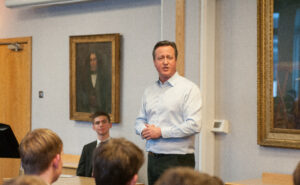
    David Cameron, former Prime Minister of the United Kingdom, speaking at City of London Schoo.. 13.2.2020 Photographer Sam Pearce / www.square-image.co.uk


    Cameron adds that as Prime Minister, you get used to figuring out ways to actually get things done: “Now, I’m not a scientist myself: I was forbidden from doing physics and chemistry because I wasn’t good enough. But one of the reasons I got interested in this was because when I was in government, I got my science team around the table and asked them what were the most promising avenues for a big breakthrough in terms of science. They pointed me to the 100,000 Genomes Project, which has been hugely important in cracking Covid-19. They also pointed me towards Alzheimer’s because of the costs of the disease on the UK economy. Those sorts of skills – money raising, bashing heads together, getting things done – all help.”

    Whatever you think of Cameron’s premiership, or his decision to grant the European referendum which made that premiership unravel with such dramatic swiftness in 2016, this is plainly a formidable set of skills.

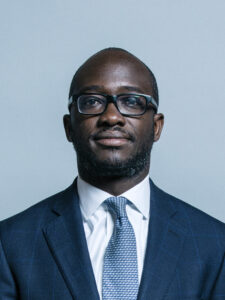
    And it turns out I’m not the only one to think they’re not being put to good use. Sam Gyimah held a range of ministerial posts under Cameron, and remains close to the former prime minister. He laments this sense that departing prime ministers are, in effect, put out to pasture: “Very few people have that unique experience and perspective but we don’t use them properly once they leave office,” he tells me.

    I remind Gyimah of Bill Clinton’s lament that he felt he was leaving just as he had learned how to do the job. Blair, after 10 years, sometimes gave the same impression. But Gyimah, who now works in the corporate sector in many roles including as a non-executive director at Goldman Sachs International, is philosophical. “My life now is all about turning ideas into reality and I particularly like ideas where there’s a positive social impact. It’s not politics – but some of the things which attracted me to politics still apply. It’s just that I’m dealing with an investment response instead of a government response to problems. If you can unlock capital at scale then it can do wonderful things.”

    So there is life after politics – but still, the life after politics for a prime minister can seem strangely limited and truncated. Surrounded by their security teams, with just the past for company, they must sometimes feel a strange mixture of solitude and frustrated irrelevance. It reminds me of a story once told to me by the photographer Graham Flack who remembers going to photograph David Cameron in respect of the famous writing-shed Cameron had installed in his garden at his Oxfordshire home. He and the journalist in question were early and waited for a while in a layby down the road from Cameron’s residence. When they arrived, they mentioned this to Cameron’s protection unit who replied: “Yes, we know, we were watching you.” The photograph itself had to be shot and reshot because one particular tree made the team worry that a viewer of the photograph would be able to locate Cameron’s house.

    It doesn’t sound like much of a life – and yet perhaps these limits are a small hardship for the enormous privilege of having been caught up in history. During the on-stage Q&A, Finkelstein asks Cameron whether being Prime Minister has altered his perspective on great historical figures? Cameron relishes the question: “I think it makes you realise how the little decisions you’re making aren’t black and white. It’s not presented every day as “Here’s an important issue Prime Minister, but here’s the right decision and here are two wrong decisions. When are you going to make the right decision?” Cameron continues: “Many of the decisions you make are degrees of bad, and you’re trying to avoid the worst – and some of them you will get wrong. I think you do feel a greater sympathy for people who make the wrong decisions. What that does is give an enormous respect for those prime ministers who have the very biggest decisions to make. When you think of what Churchill did in May 1940, specifically the decision to fight on against Hitler, you’re more aware of the enormity of those really big decisions. Today, we’ll look back and think: “Well, of course we should do that”. But at the time, Churchill was surrounded by people saying, “No, we’ll get destroyed, the British Empire will be lost, we’ll never hold out.””

    And yet those people who make the really big choices nowadays leave office with plenty to offer – and yet there seems to be little by way of structure once they do depart. Is the UK missing an opportunity here? Might it be that we should have some kind of Council of Elders, consisting of former prime ministers who might advise the sitting prime minister, as a sort of version of the weekly audience with the Queen?

    When Cameron is asked about those weekly meetings with the Queen he is effusive: “One of the best things was going to see the Queen. It was an enormous treat, because you’re literally spending an hour with the world’s greatest public servant. I remember when I was at Eton, the Queen used to come to the carol service. The first year she came, I read the lesson. I got to the podium and forgot to say: “Thanks be to God at the end”. I looked at the podium and at the Queen and said: “Oh shit.” So I had the unique position 30 years’ later to ask the Queen: “Do you remember me saying that?” While I can’t reveal any of that conversation, my head stayed on my shoulders.”

    One can easily imagine regular contact with previous prime ministers having a similar effect: surely it is salutary to have contact with your predecessors, as both a source of empathy, but also as a sort of memento mori, that your time in the spotlight shall recede swifter than you expect?

    So has Cameron been back since? “Not very often. But we did have a very entertaining dinner for the 2001 intake, where Sir Bill Wiggin and I tripped off to London. It’s interesting going around the office and seeing people who worked with me and people I remember from around the building. And actually the mood was good. You felt like there was someone in the job who really enjoys it – but there’s no point in doing the job if you can’t relish the challenges.”

    Cameron also remembers the humour of the job: “I had Nicolas Sarkozy in – actually the first person who visited me at 10 Downing Street. And obviously he brought his beautiful wife Carla Bruni. I remember this particularly well, because my private secretary was with me as they were driving up Downing Street. I said to my private secretary: “I shake his hand. Do I kiss Carla?” He said: “Yes, I think you should kiss Carla, she’s French.” I said: “How many times should I kiss Carla?” My private secretary: “As many times as you can get away with!”

    Amused by this, I decide to catch up with Sir Bill Wiggin and ask him about his friendship with Cameron, and what the proper place is for a prime minister after their premiership is over.

    “They should all go to the House of Lords,” Wiggin says, without missing a beat. “That is the right place for them and this trend to not go there is really worrying.”

    Wiggin also points to the uniqueness of prime ministers: “They’ve all held the nuclear codes. When they talk about nuclear weapons, they’ve thought about it really hard. These guys have a hideous responsibility. They also get exposed to huge amounts of information from the best experts.”

    So what’s the history of this? Wiggin explains: “If you’ve been Prime Minister, you are entitled to an earldom, and Clement Atlee was the last to take it. I’d like to see that change.”

    Wiggin – who recently received his own knighthood – also links the case of Cameron and others to a wider need for House of Lords reform: “The House of Lords is really important, and we currently have the wrong people in there. We need to stop placing Olympic champions in the Upper Chamber. If you’ve won a gold medal, you’ve already been rewarded and it makes the honours system superfluous. Our system should focus on public service and delivery.”

    Of course, there is other provision in place. According to the Public Service Act 2013, a former prime minister is entitled to an annual pension ‘equal to one half of their final salary when they left that office, regardless of age or length of service.’ Cameron actually waived this upon departure from office in 2016, unlike Tony Blair who didn’t.

    Of course, this decision – gallant as it appeared at the time – didn’t necessarily end well, as all those who followed the Greensill Capital affair know. This episode, which for many has tarnished Cameron’s legacy, is symptomatic of a broader problem: there is still an abiding sense that prime ministers don’t know what to do with themselves. In fact, the happiest of the living former prime ministers seems to be Theresa May, who retains the parliamentary structures of life by remaining an MP – a job she is manifestly good at.

    Is there anything to be learned from the American system? In the first place you have the great fandango surrounding presidential libraries which appears to keep former presidents busy, while also regenerating an area economically. Likewise, the big bucks memoir – though it probably has a Churchillian origin – has a sort of American tint to it these days. Cameron’s For the Record is rather a good one, and better than either Brown’s or Blair’s. May’s we still await.

    But there is also another abiding image of former presidents gathering together for photo ops to work on cross-party hurricane relief for the good of the country. This occurred during the Hurricane Katrina in 2006 when the world was informed of the friendship between Bill Clinton and George H.W. Bush.

    Is this something the UK should emulate? If Cameron were to be given some kind of government Alzheimer’s portfolio only the most timorous betting man would think he would be unable to achieve results. Cameron explains the problem: “Dementia is caused by diseases of the brain of which Alzheimer’s is the most significant. Just as we’re cracking diseases like cancer or heart disease, we should be focusing on this. When I was premier, I became more and more convinced that this was an area that needed proper government attention for scientific tests, for more research. It was way behind cancer research, so that became quite a priority of mine as prime minister.”

    Cameron’s role now as President of Alzheimer’s Research UK includes raising money for the organisation as well as chairing the Board of our Early Detection of Neurodegenerative Diseases Initiative, an ambitious project which seeks to develop a digital tool to help detect the diseases that cause dementia years before the symptoms start.

    Even so, Cameron still remembers his time in Number 10 fondly: “One of the great things about being Prime Minister is you can really put your shoulder to the wheel on some sort of slightly second order issue, and you can move things really quickly, really rapidly. The fact that a prime minister decides to make dementia a priority with the G8 really does make a big difference because the rest of the world goes “Oh well, we all want to think about that”.

    And yet how frustrating to have had that power, to have achieved the knowledge of how to utilise it, and then, over an unrelated referendum to be deprived of the ability to solve those problems. Of course, this is democracy, but it still feels as though an opportunity is being missed somehow.

    So what did Cameron most learn while in Number 10? “When you think of Number 10 you think it must be this enormous power. Actually, I think the greatest surprise about it is not how much power you have – but how little.” How so? Cameron explains: “The other departments you’re dealing with are ten times the size of 10 Downing Street, and they often quite literally don’t do what they’re told. Anyone in business reading this will be familiar with the idea that your finance manager didn’t respond to your command, and that does regularly happen. As a tiny example, I wanted to empty our prisons of Jamaican offenders by using a budget to build a prison in Jamaica. It was agreed we were going to do it, and spend the money. Six months later, I asked “How’s my Jamaican prison?” Literally nothing had happened. So you have to remember that in Number 10 you lead by building a team and making it work with you and for you.”

    And, of course, we all need to do that. Prime ministers are unique in having been placed so severely under the microscope. But they teach us about human flaw and potential in equal measure. In particular, studying the lives of former prime ministers has something to tell us all about what we really want, and what success ultimately means for each of us.

  • Iain Dale: ‘I know what politicians don’t want to be asked’

    Iain Dale: ‘I know what politicians don’t want to be asked’

    The LBC presenter on the art of the interview and his complicated relationship with David Cameron

    If you appear in the media, everyone imagines that you must be a complete extrovert. 

    Of course, even in an interview there is a little bit of ham-acting involved, particularly if you’re in television. But most radio and TV presenters have a shy side to them. Perhaps shy people tend to be a little bit more empathetic.

    Shyness is more common than you might think. I knew somebody who was a conservative parliamentary candidate who would literally throw up before every speech. But I don’t get nervous. Having said that, I recently interviewed former FBI director James Comey, and had little time to prepare. Thankfully, my approach to interviews is normally not to do a lot of preparation because I like to think of them as conversations – and the more preparation you do, the more stilted it is. I never have a list of questions, for example. I try to listen to what the answer is. If you have a list of questions, the temptation is just to go through them one by one and ask them. Well that’s fine, but it’s not very rewarding.

    We are all human beings, and this is what sometimes people forget about people in the media – or more to the point, politicians. We all have the same human reactions as everybody else. If an interviewer starts asking really aggressive questions right from the start., it’s no surprise that the politician puts the shutters up and thinks, “Well if you’re going to be like that, then I’m not going to give you anything.” There has to be a degree of mutual respect. 

    Interviewing prime ministers is interesting. In 2003, I was asked to write an article about who will be the ten people at the top of politics in ten years’ time. I remember writing in that article that David Cameron hadn’t really made a mark on parliament. The week after the article was published I sat next to him at a dinner. When I raised it, he said, “Yes, I did see it. I asked my staff to leave the room and I put my feet up on the table, and I just sat there for five minutes thinking: “He’s right. What have I achieved in two years in Parliament?”’ That was a brilliant way of defusing a potentially awkward social situation. 

    Later, when I was running for parliament he drove up in his Skoda to campaign with me and we had a brilliant day together. And when he was prime minister, I did three interviews with him. I was poacher turned gamekeeper, and understood where he was coming from. This is one of the advantages of having been involved in politics, and then moving into journalism and broadcasting. As an interviewer, I have an advantage over people who haven’t been involved in politics: I know how they think, and what they don’t want to be asked. 

    Boris Johnson wrote the foreword to my latest book. He said yes immediately and then of course COVID happened. I got in touch in July 2020, and told him I’d understand if he couldn’t do it, and that there was no need to write 20 pages or anything like that! And it came on time. 

    But it was interesting to see the reaction. Some people on social media said,  “I wanted to buy this book but I’m not buying it because you’ve got Boris Johnson in it.” I thought: “If Jeremy Corbyn had won the election I would have asked him!” 

    It’s quite difficult to come to a judgement on a prime minister who’s still in office. Boris’ reputation in history will depend on how quickly the country gets back on its feet and how many people are actually out of a job. But most prime ministers are known for one thing in history. He wanted to be known as the Prime Minister who ‘got Brexit done’. He has got it done. But I suspect he’ll be known as the Covid Prime Minister.

    I used to find it very difficult to interview people that I know well. Now I just go in for the kill. Brandon Lewis and David Davis, who are my two closest friends in Parliament, say that they find me the most difficult interviewer. They think it’s because I’m overcompensating for the fact that everybody knows that. I don’t think it is. I just get more out of people by having a conversation with them. 

    Iain Dale’s latest book is The Prime Ministers, £25 from Hodder and Stoughton

    Photo credit: Steve Ullathorne