Tag: Covid-19

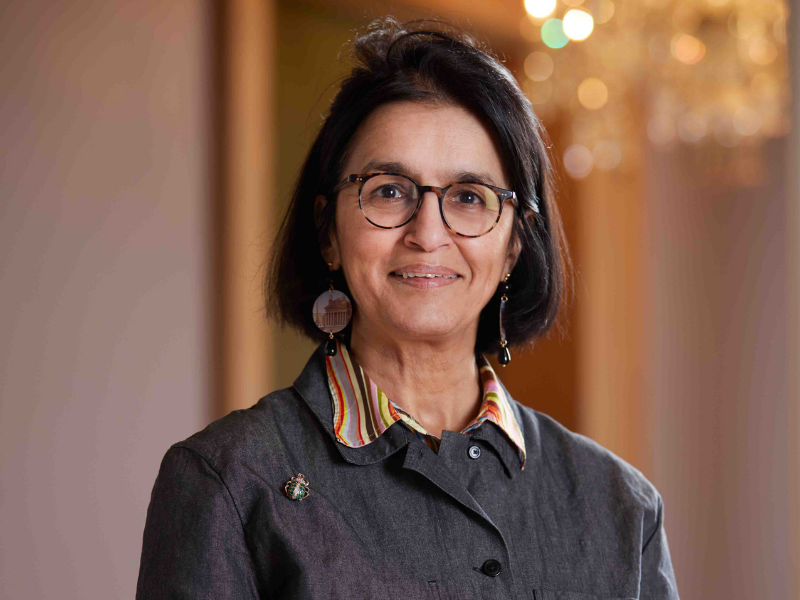
  • The Archbishop of York Stephen Cottrell on Covid, Zoom, and how we alter our work patterns

    The Archbishop of York Stephen Cottrell on Covid, Zoom, and how we alter our work patterns

    I began my ministry during lockdown and compared with the sufferings of the world, having to move at that time is a small thing. Nevertheless, it’s not the way anyone would choose to leave on job and start another.  

    A little maxim which has helped sustain and guide me through my working life has been that good decisions arise out of good relationships. You want people to share your vision, and ask them to help you design it. Zoom has been very good for sustaining existing relationships – and even for transacting business – but it’s not so good for making new relationships. Actually, if you think back to before the pandemic, it’s the things that happen in the car park after the meeting, or over coffee, which are really valuable to oil the wheels. In that sense, it’s been a challenge. 

    The Christian way of ordering the world has got terribly out of sync. We’ve become frantic and evermore busy. Although you know there’s nothing good about COVID, it doesn’t mean some good can’t come out of it. Perhaps it will cause all of us to reflect on the very unhealthy ways in which we were living and working – and not just unhealthy for us, unhealthy for the planet. So my great hope is that as we emerge from this, we won’t just go back to how we were, but we’ll think about patterns of living and working which are much more life-giving. 

    Work is good – we are made for work. Work itself can be an offering to God. So we need to use our time purposefully and creatively, but we need to do it in a way that is healthy. That requires us to see that the first thing we should consider is time for refreshment and prayer. That should be our first consideration, not our last.

    Some people ask what an archbishop does, if I am perhaps the equivalent of a CEO of a business. Well, not really. The business of the Church is the business of the Gospel of Jesus Christ, so an Archbishop is much more like a pastor than a CEO. The Church is fundamentally a community.

    Of course, I have responsibilities for the leadership and oversight of that community because it’s a large community which also needs organisation. And there’s all sorts of infrastructure organisation that goes with it. We employ a lot of people, but we have lay officers who help and support with that. So my day-to-day work is to care for the clergy and to be a voice – and sometimes a face – for the Christian faith, particularly in the Diocese of York, where I serve. As an archbishop, there’s also a national responsibility to guide the vision and hold us to these values. So there are of course parallels with leaders of other organisations – but I don’t see myself in that way.

    Of course, there are hundreds and hundreds of clergy across my diocese, so I can’t meet with them all regularly. On a normal Sunday morning, I will be joining in with the life of a parish or local church. Much of that, of course, in the past year has been online and the church has done amazing things in transferring its life online. But of course, we’re now beginning to meet in person again. Yesterday morning, I was in a place called Loftus which is near Saltburn-on-Sea on the North-East coast with a local church, joining in their life. This evening I’m meeting with a whole group of clergy, and lay leaders, to discuss the life of the church.

    For me the piece of scripture which has spoken to me most in the last year is the story of the woman with the haemorrhages who comes to Jesus. As readers will probably recall, she doesn’t touch him directly – and of course the reason she doesn’t touch him is a kindness. In her understanding of the cleanliness laws, if she as an unclean person touches him a clean person, she makes him unclean. But nevertheless she believes that he has the power to heal. So she touches just the hem of Jesus’ garment. 

    But we’re told Jesus feels the power go out of him. He says to the disciples: “Who touched me?” They say, “You’re having a laugh. You know the great crowd of people around you – everyone’s touching you.” But he notices.

    The reason I found that story so helpful is because we have lived through a year without touch, and without embrace –and without the familiar things of the Church which usually sustain us. Particularly in the Anglican tradition, without being able to receive Holy Communion, which has been the kind of staple diet of Christian worship. All those things have been taken away from us. Does that mean Jesus is not present with us? No, he’s still just as absolutely present. I feel we’ve had a year of touching the hem of His garment.
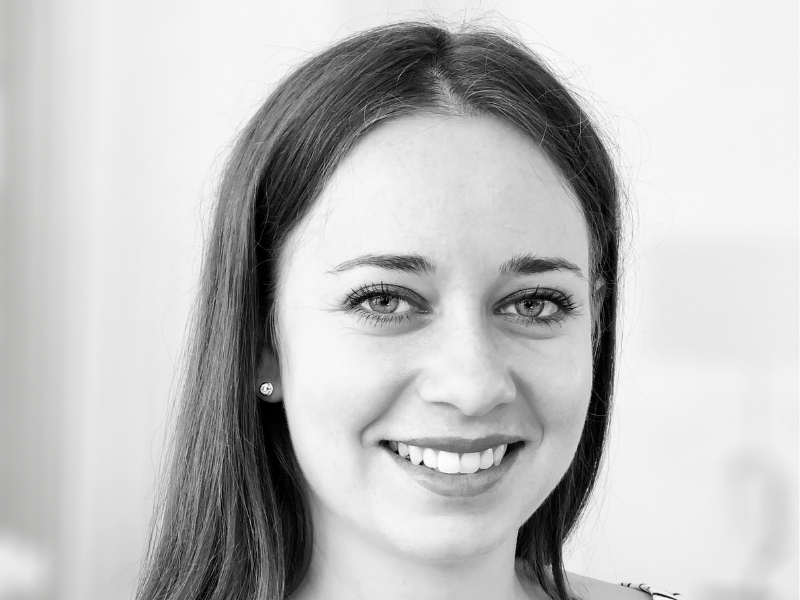
  • Psychologist Melissa Nobile of The Kusnacht Practice on treating young people during Covid-19

    Psychologist Melissa Nobile of The Kusnacht Practice on treating young people during Covid-19

    To mark Mental Health Week, Melissa Nobile, a Psychologist at The Kusnacht Practice, discusses her experiences of offering care to young people during the pandemic

    Mental health has become such a ubiquitous phrase in our society that it is almost verging on cliché – all the more reason, then, to explore in detail what we really mean when discuss it. The best way to do that is to talk with someone who really understands it, and deals with these issues on a daily basis. 

    Accordingly, I Zoom with Melissa Nobile, a Psychologist at The Kusnacht Practice in Switzerland. Nobile’s academic background is at the University of Geneva and the University of California in Los Angeles; she subsequently acquired additional training and clinical experience in Thailand and Europe.

    Nobile’s role at The Kusnacht Practice is particularly relevant for Finito World readers. Nobile is especially engaged in the practice’s Youth Programme, with most of her work conducted with patients between the ages of 13 and 25. 

    For parents, this has been an anxious time. It is difficult to unpick pandemic-specific behavioural changes from developments that would probably have been scheduled to happen anyway, with or without Covid-19. Does Nobile have any advice on that score? “As a parent, it’s okay to see just a little change in your child – signs might include a bit more frustration,” Nobile explains. “But if you’re getting to the point where there’s a really concerning change, then you should seek help.”

    So how do problems tend to manifest themselves? “We look for areas where day-to-day functioning has altered,” Nobile continues. “It could be that the child is suddenly really scared of going to school. At the beginning of the pandemic particularly, children were scared of losing a parent.”

    More generally, the pandemic has been an onslaught on our sense of pleasure in the world – that’s true for young people too. The death tolls reported daily on our news sources chip away at our ability to be joyful. Is there a danger that we’ve become a morbid society? 

    Nobile says that the impact of that is especially significant on those who were already vulnerable: “In those who are predisposed to struggle with anxiety that’s obviously a problem. But it hasn’t been confined to those people: it’s also something we’ve seen in CEOs and high achievers.” That’s partly due to the uncertain time scales which are at the centre of what’s been so challenging about the pandemic: “It’s stressful for everybody. Nobody likes uncertainty for too long, as we have a sense of loss of control if we’re unable to plan for the future. A lot of people end up turning off the TV as they can’t take that morbidity.”

    The danger, of course, is that a stressed-out CEO, however wealthy, is not going to be stressed out in a bubble – in the family unit, that stress is likely to be catching and affect younger members of the family. The Kusnacht Practice is careful to see the wider picture of what may be causing strain in a young person. “We’re very focussed on the stresses that CEOs are under. It’s the difficulty of having it all on your shoulders. We have to make sure that what the parents are feeling doesn’t spread into the life of the teenager.”

    The Kusnacht Practice is a pioneer in the field of ‘individualised treatment’: “Our approach is tailor-made to each young person coming in,” Nobile explains. “In group settings, the patient comes in and has to adapt to the programme and the setting. It doesn’t work for a lot of people. What we do is listen to the person coming in, and examine their specific problems – whether it be a specific symptom, or pandemic struggles, or something else altogether.”

    Crucially, this individualised approach is matched by an equally individualised family programme. “We’ll get as many people as possible on site whenever possible – siblings, parents, grandparents, even nannies. They’re going to go back home, and back into the family system, so changing someone without changing the rest of that family system usually doesn’t work.”

    Nobile reports an increase in cases where she’s needed to orchestrate a family therapy approach. “I’m doing more and more sessions where I do parental coaching around a situation. This will sound simple in theory but in truth, it’s quite complicated. In some families it’s about going back to really good communication. Uncertainty will give room for people to imagine the worst. What we need is for parents to explain as much as possible – and in words adapted to a child – what is going on. If you don’t do that, a child may construct more catastrophic scenarios than is actually the case.”

    Nobile exhibits a profound understanding of her clients: “Children or teens are antennas,” she says. “Given that, it’s important for parents to say: ‘Listen, this is a difficult time but we’re going to be okay’.”

    So what can we all do to improve our domestic lives? Nobile advises focusing on specific family rituals so that no member of the family in question is isolated. “It’s important to have that time where you still cook or go for a walk together. That will always be beneficial. I’ve had a lot of teenagers lately where they’ve found experiences in the pandemic which are very enriching. Some have come out thinking, ‘Even when things seem terrible, I’m able to cope with it and I can talk to someone’. Some have built that vital resilience.”

    Even so, the long-term picture remains uncertain, and that creates another layer of problems. “There’ll be a minority group for whom difficulties will persevere,” Nobile says. “There’s the young student who maybe acquired a gaming addiction in lockdown – that will take time to treat. Or else there’s those young people whose parents have lost their jobs at this time. In those instances, we’re discussing a more long-term impact.”

    Career issues arise again and again, according to Nobile. “During the pandemic, we had a lot of time on our hands. That creates a lot of existential questioning, perhaps among young people who were already predisposed to that anyhow.”

    Fortunately, The Kusnacht Practice has a remarkable range of resources at its disposal. Business coaches and mentors and psychotherapists are on site, and Nobile makes sure her clients are able to explore their interests with a view to shaping their future. 

    Given The Kusnacht Practice’s rarefied level of treatment, a lot of the young people Nobile sees are dealing with issues related to having successful parents. “If you have a successful parent, what does that mean for you? That’s not always easy to figure out. You might have a lot of resources, and accordingly, a huge number of choices. Paradoxically, that can make you petrified. For every door you’re able to open, you’re going to have to close so many others. That can freeze you in place.”

    So how does Nobile manage that? “That’s what psychotherapy is all about, figuring it out in the context of each person’s life story.”  

    One might think that returning to the family unit after treatment might be difficult. But Nobile gives a nuanced reply. “It’s a minority of the youth we receive who come to us because they want to. Most of the time the parents in question have been very concerned for a while. But by accepting the need to come here, they’re sending a signal: ‘Yes, I have a problem’.  And admitting the need for help is incompatible with the normal developmental process of youth who strive for independence. After a few days they however usually realise that this is quite a nice place! They can set goals, work out problems they are facing and learn new skills – and find their voice.”

    And returning to the family – is that fraught with danger? Nobile doesn’t see it that way. “We like to see it as an opportunity. Ultimately, life is not with us – it has to be back home. But once clients leave us, we provide daily support with virtual sessions with the main therapist and they can always come back for ‘recharge weeks’.”

    It has been a difficult year for many, but it creates optimism to find people like Nobile working on the front lines, committed to the healing which all of us may feel we need after the tribulations of 2020 and 2021. 

    Nobile was to talking to Christopher Jackson. Go to https://kusnachtpractice.com

  • Denmark: Europe’s forgotten Covid-19 success story

    Denmark: Europe’s forgotten Covid-19 success story

    Patrick Crowder

    Denmark’s schools reopened on May 6th, alongside other indoor spaces including gyms, theatres, and some music venues.

    Restrictions on basic outdoor gatherings have been raised to allow up to 75 people, but there are no plans to allow large outdoor festivals or concerts with more than 2,000 attendees.

    Denmark’s cautious but fast-moving strategy has allowed them to greatly slow transmission of the virus while still keeping children in schools and the economy running, albeit at reduced capacity.

    Denmark’s primary schools were the first in the world to be reopened on April 15th 2020. By limiting the number of students in class and establishing small bubbles, Denmark’s schools were able to run in-person without causing an increase in Covid-19 cases.

    Students were instructed to wash their hands hourly and could not socialise with any other students outside their four-person playground bubble. Classrooms were split down the middle to help with social distancing, which meant that teachers had to deliver each lesson twice.

    Older primary school children over 14 years’ old were initially not allowed to return in order to keep the number of students on campus low and reduce the risk of spreading the virus. Now they will be able to return to class.

    These re-openings are mostly thanks to Denmark’s December lockdown efforts which allowed the country to avoid a third wave of Covid-19. The country is in some respects ahead of the UK which didn’t lock down over Christmas; the developments will bring home to some the costliness of the government’s policy-making in November and December 2020.

    Alongside social distancing measures and lockdowns, Denmark was the first to integrate a Covid passport system into its reopening strategy.

    A smartphone app which translates to “MyHealth” (MinSundhed) can be used to access nonessential businesses such as hair salons, restaurants, and museums. The app provides proof that the user has either been vaccinated, had Covid-19 in the past, or had a negative Covid test in the past 72 hours.

    The UK has dropped the idea of using Covid passports for non-essential businesses, reserving the possibility for larger events.

    The re-opening has been agreed upon at the same time that the Danish Health Authority has decided to pull the Johnson and Johnson (J&J) vaccine from circulation over concerns that it causes blood clots. While the risk of a vaccine-related blood clot is low, the Danish Health Authority stated that the “benefits do not outweigh the risk”. They did not rule out using the J&J vaccine at a later date if necessary.

    But the country isn’t ahead by every metric. According to Reuters, Denmark has vaccinated 17.5% of its population, compared to 37.5% in the UK and 44.9% in the US.

    Photo credit: Nick Karvounis on Unsplash

  • Q & A: Grange Park Opera CEO Wasfi Kani

    Q & A: Grange Park Opera CEO Wasfi Kani

    Can you tell us about your reaction to the Covid-19 pandemic at Grange Park opera and how you sought to navigate the last year?

    Exactly a year ago (and a week beforethe Government announced a belated lockdown) we cancelled the 2020 Season. When I’d finished faffing around doing refunds, it immediately struck me that people were allowed to go to work, if they couldn’t work from home and why shouldn’t we create new performances . . . but film them. Thus, we created the Found Season involving 108 artists in 15 new events, eight filmed from the stage of the Theatre in the Woods. Other appearances included Bryn Terfel, Roderick Williams performing Schumann, piano virtuoso Pavel Kolesnikov playing Chopin and Beethoven and a pas de deux from English National Ballet.

    Covid-19 has actually given us a unique opportunity to share the magic of great musical experiences – which are original, stimulating and food for the soul – with as many people as possible around the world. After the Found Season, we have created the Interim Season – employing more artists.

    How many people do you employ at Grange Park? 

    During the season we employ 350-400. The core team is only 14. Well, it was 14 until all this happened.

    Did you take advantage of the government furlough scheme?

    Yes

    Did you benefit at all from the DCMS’ funds for charities? 

    No, we didn’t apply for it! This was because I thought smaller charities with less access to London wealth should get the money. Little did I realise that it was a free for all. Some classical music agents applied for money and got it! Yet a singer who has earned £55k pa has no access to any money.

    Overall, do you feel the Government response was satisfactory?

    If you mean the Government response to the pandemic overall, I would say it was catastrophic (a) locking down so late in March (b) not having any checks on arrivals in the UK … there were 15k per day UNTESTED in any shape or form (c) eat out to help out (d) locking down in November . . . opening for two weeks partly . . . then allowing anyone to do anything over Xmas. I could go on and on.

    Questions must be asked why so many people have died in the UK. And it isn’t over.

    Tell us about your work with the Romanoff Foundation.

    This is a new collaboration. Normally there would have been fascinating talks about the two Russian operas in this year’s season (Ivan the Terrible, The Life and Death of Alexander Litvinenko) but uncertainty is limiting what we can do.

    Just how terrible was Ivan the Terrible?

    Well, he loved his son. And he was probably damaged by his own lack of a father figure – his father died when Ivan was 3. I’ve been studying a long history of Russia and it seems that what happened before Ivan was there were bunches of gangs going round Russia proclaiming ownership of territories. Ivan tried to unify the country but at a cost to its people and long-term economy.

    Has your audience become more global during the pandemic?

    Our extensive filmed output has had 120k views. Some are in far-flung corners. However, when they will be able to get on a plane and visit the Theatre in the Woods . . . who knows??

    Owen Wingrave sounds a fascinating project. Do you think you might continue to explore film as an avenue post-pandemic?

    On Saturday 20 March we launched another filmed opera: Ravel’sL’heure Espagnole – filmed in a clock shop in Kensington. I am already planning more for the autumn. It’s a great way to keep close to the Grange Park Opera family.

    What do you think we most miss about the live experience?

    Feelings. Having a collective emotional experience.

    Is there anything about the online music experience that is superior that you’ll want to keep once we’re all fully vaccinated?

    I’ve been listening to a lot of the oldies playing the piano – Michelangeli, Lipatti and so on. 

    People are fed up of looking at screens. They are flat. That says it all.

    It’s fascinating to see that you worked in the City designing computer systems – did you miss music during that time? Is there tension between the businesswoman and the artist in you?

    While I was in the City, I continued to have an active music life, playing the violin in orchestras and chamber music. I used to practice in the lunch break. I know some of my computer colleagues thought I was a bit nuts. 

    Do you have any mental health concerns about people in the arts? In what ways have you reached out to support artists, musicians and those in your sector affected by the pandemic?

    We have an Artist in Need fund and have distributed nearly 200k and our filmed projects are often the only performance work that an artist has been offered for a year. Even someone like Simon Keenlyside whose diary is absolutely full. Empty diary. One cancellation after another. What does it do to your mental health? Artists have to learn to live with rejection so some will be more resilient than others.

    What would be your Desert Island Discs?

    • Michelangeli playing something
    • Brahms string sextet – either of them
    • Rimsky Korsakov Scheherazade
    • Verdi Don Carlo
    • Wagner Tristan

    It’s a secret. I’m waiting for the phone call.

    Goethe, looking back on his life, made a good and bad column. Totting it all up, he decided that music was what made the difference and had made his life worth living. Is there a listening experience that really changed you?

    I love music – it gives my life another dimension. And I have a bond with people who feel similarly. Those that don’t . . . I want to open that door. The greatest gift of my life is being able to play a Mozart string quartet.

    Was there a music teacher who really had an impact on you?

    Probably my first piano teacher Gillian Stacey. She died about a year ago and I saw her in hospital the week before.

    What character traits do you particularly look for in young employees?

    Hard work. I don’t want to see them waiting for 5.30 and rushing out of the door. 

  • Global education faces the ‘largest disruption in modern history’

    Global education faces the ‘largest disruption in modern history’

    Johanna Mitchell

    I worked as a career civil servant in Whitehall before moving into education consultancy.  My opposite numbers at the Russian and Chinese embassies liked to speak with me about their children’s education, eager for advice on selecting schools, or universities.  I’d sit in meetings thinking, “We’re supposed to be in a bilateral discussing UK/China science policy.  But here I am explaining the British education system.” After a spell as head of a small private school run by the Lawn Tennis Association, I set up my own company.

    Education consultancy combines a love of people, travel, languages with a desire to share my education expertise.  A careers advisor may not have this as an obvious choice. I have to be a counsellor, psychologist, diplomat and problem-solver all rolled into one. There is also instinct involved. Where would the family be happiest, thrive and achieve their potential?  People need to trust you.  

    Our clients often feel beleaguered, especially during the pandemic, and need help navigating UK and global education systems.  It feels good that we are able to mitigate this stress.  It is fascinating to see what drives another person, the life path they have chosen and what led them to this place – whether it be parental influence, inherited wealth or a childhood which may have been characterised by early hardship. Our experiences are primarily formed by the culture and political situation in which we and our nearest ancestors lived. 

    For instance, I have an enduring memory of a Russian client, now a dear friend, at the Lotte in Moscow saying ‘Johanna, what is it with you British? When you’re in your 20s and 30s, you just want to have a nice life and be happy.  In Russia, we work hard in our 20s and 30s.  And if we’re miserable, so what?  But when we’re 40 and have achieved the pinnacle of financial success, only then can we relax and enjoy it.”

    Covid-19 has changed our view of global mobility. Since my business is so international in flavour, working with families based from London, to New York to Azerbaijan, I’ve had to adapt. We have three distinct client groups: London-based families; families with homes in multiple jurisdictions; and those relocating to the UK for work or education. For the two latter groups, especially, we’ve overcome fresh challenges, negotiating changing travel corridors, specific visas and a combination of online university lectures, schooling and specialist tutors.  

    Despite the pandemic, British education is still in great demand, especially for families who are able to move easily to the UK. For instance, with US schools closed for a long period in 2020, we saw a rise in relocating US families. One family moved to Kensington prior to the US election, with their four young children. As one spouse worked from home as a stock trader, the family could live anywhere with reliable internet. London, with its top schools, was an attractive proposition.  Another US couple have enrolled their daughter in a London school for a year, while they take time to enjoy the city and study for an MA in Art History at UCL. 

    With several families moving from Europe, we also trained one firm’s senior management team to recognise differences in British and French work culture. The company is delighted with their new employee, who keeps them well-stocked with French wines and cheese. Our next challenge is to support a group of families from Hong Kong who will be taking advantage of the British National (Overseas) visa to settle in the UK. They will access UK schools and universities for their children. Pastoral care and access to nature now feature highly on wish lists of relocating families.

    I’ve been consistently impressed by how well the schools and universities with which we work have adapted to organisational and economic challenges. They have embraced EdTech and adjusted to offer an inclusive community – both in person and online – to combat the social isolation experienced by both students and their parents. Parents, more than ever, are looking for a high quality mix of one-to-one tutoring and school-based learning.  

    We are living with the largest disruption to the global education system in modern history.  The pandemic has been a catalyst to education change in the UK. While we are not yet in a position to see exactly where the cards will fall, I am certain that schools and universities will continue to evolve to provide outstanding education opportunities for both UK and international students.  

  • Bulletin from the Pandemic Front Lines

    Bulletin from the Pandemic Front Lines

    Liam Beadman

    My role working for a London Clinical Commissioning Group during 2020 has been dominated by COVID-19. Responding to the first wave of the pandemic we enabled our local GPs to continue to be able to care for their patients by rolling out phone and video consultations and worked with clinicians to make sure that appropriate infection control procedures were in place to ensure that those that needed to be seen face to face, either in the surgery or at home, could be seen safely. The summer saw a shift to ‘recovery’ – trying to catch up with all the people who had not been in touch with their GP during the first lockdown, either through not wanting to be a burden or simply from fear of catching the corona virus.

    From October and into November the anticipation that vaccines would be approved before Christmas started to become a reality and so my days since then have been spent trying to work out how we can administer life-saving vaccines to as many vulnerable people as quickly and safely as possible. I’m fortunate to work with some really brilliant people at all levels within my organisation and also at the local GP surgeries. The oft-maligned ‘NHS management’ has performed its role well in allowing clinicians to convert policy into a clinical model and then doing everything possible to ensure the model could be mobilised. Everyone has pulled together, working over and above already long hours, with a spirit of “we must do this for the good of our patients and the whole country”.

    At the start of December, we were written to by NHS England stating that they would give us 10 days’ notice of our first delivery of vaccine and low and behold on 4th December an email pops up in my mailbox – 975 doses of Pfizer vaccine will be delivered to our first site on Monday 14th December. This was closely followed by an email three days later stating that we would be getting the same delivery to our second site. The small details like taking delivery of a fridge, syringes, needles, computers, sanitiser etc. would be communicated to us in the coming days. Time to start calling staff and patients!

    975. This magic number would consume all of our thoughts for the following weeks. The high tech, mRNA vaccine from Pfizer must be stored at minus 70 degrees centigrade. It is then defrosted en route to the vaccination centre and upon delivery, we have around 3.5 days to get it into the arms of nearly 1,000 octo- and nonagenarians. Speed would be of the essence to ensure good patient ‘flow’ through the premises and enable us to maintain social distancing and infection control procedures to keep these vulnerable people as safe as possible. Many of them hadn’t felt able to leave their homes since March and most would not have been around so many people at one time since then either.

    After the first few clinics had bedded in and we had a better idea of the staffing requirements – use fewer doctors and more pharmacists to do the jabbing; make use of all the local people willing to volunteer – I decided that I would volunteer at the sites as often as my day job would allow. Expecting to do some stewarding, I was immediately thrust into the role of operational lead, which was a bit of a shock, but I took inspiration from the people around me and got stuck in.

    Throughout the sessions I’ve worked I’ve really been struck by the gratitude of all the residents who have attended for their vaccine. There’s a real sense of hope pervading the building accompanied by the occasional, very British, suppressed shout of “YESSS!!” from our particularly outgoing patients. I hear that in New York they have spontaneous applause, tears and whoops of joy, but the quiet gratitude and good humour of all of our patients is enough for me.

    Working at the vaccination hubs is thankfully, generally, uneventful. The early shift normally brings a few patients arriving at 7:15am for their booked appointment at 8am, happy to wait for 45 minutes until we’re ready to start. We have been let down only a couple of times by the National IT system for recording vaccinations, frantically writing down peoples’ details on paper forms to stop the queue outside in the snow from getting too long. The late shift at one of our sites culminates in a race to shut the doors before the local fox decides she wants to spend the night in the building. 

    I found myself doing a stint on the reception desk recently with one of the regular volunteers, Spirit. She had been working in a very sociable shop before the pandemic and had only been able to go back there when restrictions allowed. I could tell that she was really feeding off the energy of all the patients and we confided in each other that that was one of the many reasons for volunteering. In a selfish kind of a way it’s been really good for me too. I’m fortunate to be of an age and in good enough health that COVID-19 is less of a worry for me, but I have been confined to my house and the surrounding parks with my young family for 9 months now. It’s fantastic to be around lots of people again and to be able to have a chat with strangers (remember that?).

    Writing this shortly after the 15thFebruary target has been met to offer the vaccine to the 15 million people over 70 years old and the clinically extremely vulnerable gives me an enormous sense of pride. The government’s handling of the pandemic can only be properly assessed in the fullness of time. There have been elements that they probably could have done better, but the vaccination programme has been a massive success. New data coming out of Israel is giving firm evidence that the decision to delay the second dose of the vaccine to 12 weeks was indeed the correct one, allowing the maximum number of people to get a good level of protection against the virus. There was also very welcome news with the government’s recent announcement that surplus vaccines would be donated to Covax for use in developing countries, showing that the United Kingdom is still a respected leader in the international community.

    Having spent many long hours and expended large amounts of energy on inoculating our most vulnerable with a first dose of the life-saving vaccine, the programme continues. Those aged 65 to 70 years old and adults with underlying health problems are next, along with planning for the second doses for the 15 million vaccinated already. Uptake so far has been really good, but I’d like to finish with a call to action for our friends, colleagues and fellow citizens from black and ethnic minority backgrounds (BAME) to come forward for your vaccinations too. Uptake in these groups, particularly in people with African and Caribbean heritage is much lower than for the rest of the population, whereas they have disproportionately suffered the ill effects of COVID-19. It’s down to all of us to encourage our friends, parents and grandparents to take up the offer of vaccination in order to save lives and end the pandemic.

    Photo credit: CDC on UnSplash

  • Covid-19: What is the real cost for school children?

    Covid-19: What is the real cost for school children?

    Georgia Heneage

    A report from the Institute for Fiscal Studies (IFS) has revealed that school children are likely to lose as much as £40,000 each from their yearly salary in the future, due to repeated school closures during this second lockdown.

    The figures are not plucked from thin air, but are based both on estimations from the World Bank that a year of schooling increases earnings by on average 8% and that loss of face-to-face teaching could result in a total of £350bn lost earnings for 8.7m students across the UK. The £40,000 statistic is based on the average yearly salary in the UK.

    The disadvantages and even dangers of homeschooling and isolation have been widely discussed in the past month; remote learning has been seen as an inferior model of education to face-to-face contact, especially at a younger age, and continual isolation from peers is already having a knock-on effect on children’s mental health.

    But seeing the wider ramifications of school closures on children’s future career prospects and income puts the cost of the pandemic in an even bleaker light; the IFS’s figures are more applicable to those from lower socio-economic backgrounds, so the loss in yearly salary will worsen the already-huge fissure in education and later on in class pay gaps.

    Professor of Social Mobility Lee Elliot Major sees the UK as being at a ‘tipping point’ in terms of social inequality, which begins at the level of education. He says it’s become “near-impossible for young people from poorer backgrounds” to move up class and career ladders. If the onset of the pandemic added “extra weight” to this imbalance between class opportunities, these latest figures are likely to tip the scales even further.

    On Twitter this morning MP and Chair of the Education Select Committee Robert Halfon called the figures the fourth pillar of the “four horsemen of the school closure apocalypse”, the other three being “big loss of education attainment, huge rise in mental health problems, significant safeguarding hazards”.

    As ever, the cost is hard to quantify and these figures are mere estimations: but they play an important part in opening our eyes to the indelible effect school closures will have on the lives of what Halfon has called the ‘lost generation’.

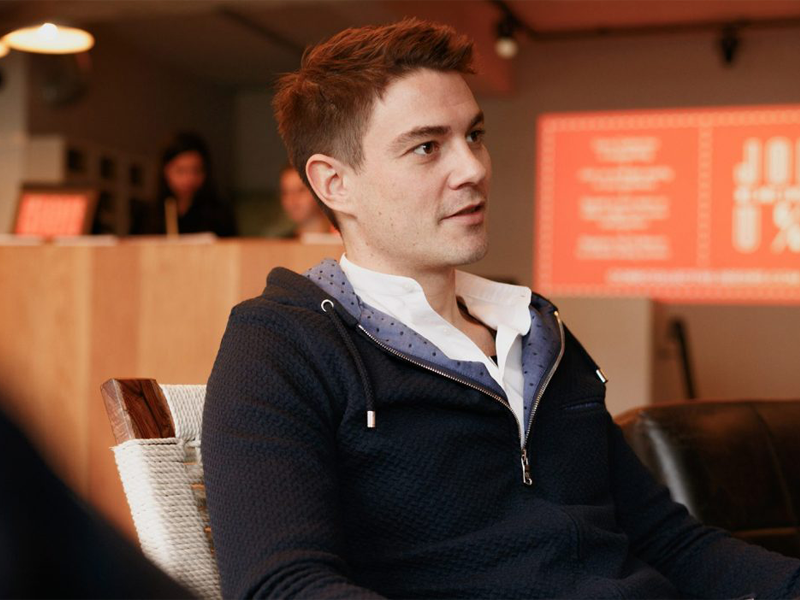
  • CEO Jason de Savary on the future of gyms

    CEO Jason de Savary on the future of gyms

    Alice Wright

    The gym sector has been acutely hit by government restrictions in the response to the coronavirus pandemic. I spoke to Jason de Savary the CEO and founder of Core Collective Gyms, a company which has sites across London in Kensington, Knightsbridge and St John’s Wood, as well as pop-up fitness classes at Soho House. We discuss the ways in which fitness businesses have been forced to get creative, as well as how the industry will look to evolve going forward. 

    Core Collective has an on-demand online service, as well as a whole library of online videos and live classes delivered via Zoom. “We have seen an uptake for online provision,” he says. “I do think people prefer to be at the gym but it is a useful thing to have if you’re stuck in your house 23 hours a day. We find the live ones are particularly popular. People like to feel that someone is watching them or that they’re there with other people, it keeps them a bit more accountable.” 

    So what is it that draws people to the gym? For one thing, it means people feel they are being held accountable for their exercise. But there are also social and safety concerns to exercising outdoors which make people prefer to join up with an organisation like de Savary’s. Of late, women in particular have started to speak out about the safety limitations lockdown in winter poses to their ability to exercise. 

    Many women who used to go to the gym now can’t exercise as frequently, when before and after work it is too dark to safely go for a run or to do exercise in a park. 

     “There are people who are at home and exercise has crept onto their radar; I hope that’s something they will need to do after the virus, and that they’ll come out to the gym,” de Savary explains. “There is a big social side to it that you don’t get at home. Just being in one place can feel imprisoning, you eat at home, work at home and exercise at home. It can be very depressing.” 

    Core Collective also sells equipment packages to provision people for their home workouts. Has there been an uptake there too? “There has, but people got quite organised in the first lockdown to be honest. We have also been renting out some of our more expensive kit to help people out, so they can have a rowing machine or a bike at home.” 

    As with a lot of gyms, Core Collective works with freelance trainers, and many freelancers have found it difficult to access government support. “It’s tricky,” de Savary admits. “The reason they’re freelance is because they have their own personal training businesses and other incomes so we can’t do anything for them, but they do seem to be coping well. We do weekly check-in’s and group workouts together.” 

    Has the government support for the businesses themselves been sufficient? “We are in the most acutely hit sector there is, I think even more so than hospitality. While they got VAT cuts, we had to stay shut for another month. The government support has never been there in the way it needs to be, and it’s waning now. Come March we supposedly have business rates coming back in and we won’t have even been open then so many businesses will be forced into bankruptcy the moment they open.” 

    This pandemic has altered consumer habits in a myriad of ways. I ponder whether the restrictions will affect customers’ habits long-term for the gym sector. “What we saw in the first relaunch was that people were coming back a few more times a month and spending a bit more money,” de Savary recalls. 

    “I think the things people really miss are going to gyms, going to restaurants, as opposed to the things they could avoid like buying an extra handbag. It’s turboed up the direction we were already heading in, which is people valuing experiences and their health more.”   

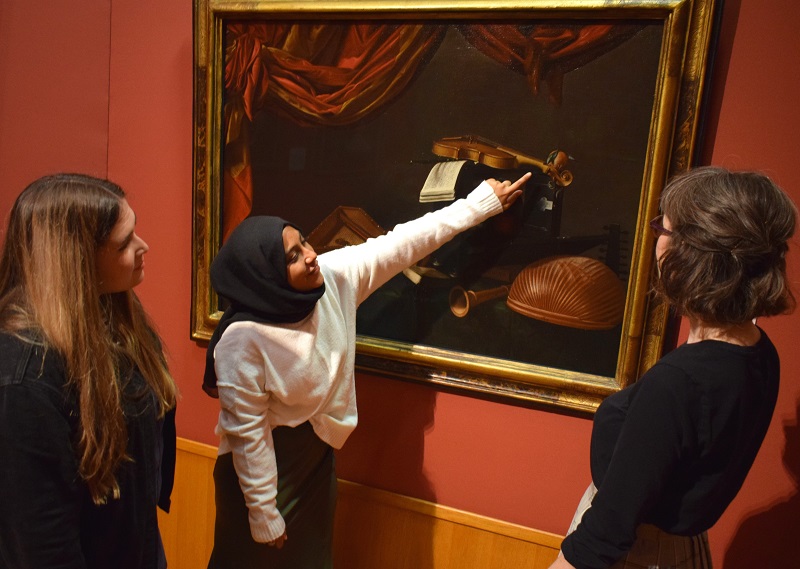
  • Barber Institute becomes first ever museum with ‘Nurse in Residence’

    Barber Institute becomes first ever museum with ‘Nurse in Residence’

    by Alice Wright

    In an original response to the ongoing coronavirus pandemic the Barber Institute of Fine Arts, founded in 1932 by Lady Barber, is set to become the first ever museum with its own ‘Nurse in Residence’. 

    In a creative twist on the familiar concept of the artist-in-residence the Barber Institute will welcome Jane Nicol, Senior Lecturer at the University of Birmingham’s School of Nursing and a registered nurse who has specialised in palliative and end of life care.  

    With the £40,000 received from the Art Fund’s Respond & Reimagine scheme, the Barber will work with Nicol for twelve months as part of the new initiative, Barber Health. Nicol explains that she will be looking at the Barber’s collection through her unique experience in healthcare “to rethink the role the arts have in the education of our future healthcare professionals and in promoting the sustainable health and wellbeing of our wider community. 

    This ambitious project has four interconnecting strands: a Nurse in Residence, Death and Dying Community Conversations, Care Home Outreach and a Social Prescribing pilot. Students from the University of Birmingham’s College of Medical and Dental Sciences will contribute through volunteering and placements.    

    “We felt we had a responsibility [to] use our collection and our engagement programme to address some of the big issues Covid has created. The Art Fund have given us a unique opportunity to address these questions in real time over the next year” said Jen Ridding, the Barber’s Head of Public Engagement.   

  • Opinion: It’s time for us all to praise the unsung heroes of the pandemic – students

    Opinion: It’s time for us all to praise the unsung heroes of the pandemic – students

    by Diana Blamires

    Students have been blamed for spreading coronavirus and pilloried for having parties during lockdown but there have not been headlines trumpeting the good they’ve been doing in the pandemic.

    Medical students and student nurses from universities across the country have been helping on the frontlines and many have now volunteered to help with the mass vaccination programme.

    Academic staff are also lending a hand. Coventry University Assistant Professor Steph Coles, a paramedic who herself was ill with coronavirus last year, started working at West Midlands Ambulance Service over Christmas as soon as the academic term ended because she wanted to support her healthcare students who had taken on roles helping the NHS.

    In Northern Ireland, medical students and nurses were fast-tracked into roles helping out with the pandemic as soon as their university courses finished. Our healthcare students are among the unsung heroes of this pandemic working long hours to play their part in saving lives.

    This is a far cry from the proliferation of headlines blaming students for spreading coronavirus and censuring those who have been arrested for holding parties. As always, the few spoil it for the many. The vast majority of students are following very strict guidelines. International students who are stranded on campus are strolling or running on their own or with one other student. Shopping trips for food are predominantly alone. The overwhelming majority of students are loyal to the communities in which they live and want to play their part by not spreading the virus.

    Contrary to headlines about isolated students with no university support, some universities have gone to great lengths to focus on the welfare of students during the pandemic. The University of Buckingham is even enabling students to take therapy dogs out for their daily exercise. A student is allowed to go for a walk with one member of the welfare team and the dogs. In normal times the university’s two black therapy cockapoos, Millie and Darcie, are available to help homesick freshers who are missing their pets, and relieve anxiety for stressed students. Walking and cuddling them calms students at exam time. Research indicates a few minutes spent petting animals, especially black dogs, helps to reduce the stress-inducing hormone cortosol.

    Furthermore, most universities are offering virtual sessions simply for students to chat and air concerns. A number of smaller ones are arranging for students to be phoned regularly. Counselling sessions are available online.

    There are the many students who have helped with Oxford University’s world-leading vaccine programme and other such research projects who have quietly played their part while the university grabs the limelight.

    Although headlines are shrieking about students paying rent while living at home a significant number of universities managed to offer face to face sessions on campus right up until the end of last term when the government announced lectures must be online only. Many universities managed one to one or very small group meetings in person. Students at universities with face-to-face and good online provision are not asking for their money back for tuition fees as they feel their university did the best it could in the circumstances.

    The estate departments of universities went to enormous lengths to ensure in-person meetings were in safe environments and cleaners were deployed to guard against the spread of coronavirus as a result of those sessions.

    Student unions also pulled out all the stops to come up with imaginative ways of enabling groups of six to meet outdoors including barbecues and outdoor workouts as well as picnics and organised walks.

    Whilst inevitably in some student cities the virus thrived when students first arrived, in the autumn many stopped the spread in their local communities thanks to huge efforts by staff and students. It is vital that we appreciate our students for the positive and vital role they are playing in this pandemic rather than simply berating them as superspreaders when the vast majority have played by the rules and had a very challenging year at university as a result.

    Photo credit: Micurs