Rebecca Walker talks to the Who Singer and Teenage Cancer Trust patron about his new craft ale, the music industry and his new solo tour
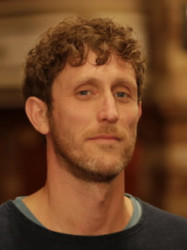
RW: So tell us about your new beer?
RD: It was something that I started with my son-in-laws and my son during lockdown because we were all sitting on our hands and unlike the civil service we got off our butts and did something. Beer is the new wine. There’s so much wine in the world you could bathe in it. Everybody’s doing vineyards but the craft beers they are fantastic and we’ve managed to find a really great brewer. We’re wiping our nose every week. We haven’t made any profit yet but you know, it’s exciting to do it. I never realised how good beer could be when you’re drinking he mass produced stuff it’s not like a craft beer at all. It’s totally different it’s like a really good claret.
RW: You’ve been quite vocal about the state of the music industry. Do you have sympathy for young musicians.
RD: Musicians were very poorly treated in lockdown, most of them are self-employed. They couldn’t be furloughed: They were being crucified. I planned to put it together last year and I could smell the way the wind was blowing with a new wave of Covid and our so called scientists and their models which are so inaccurate. If you bought a car with that many faults you would take it back immediately and never buy another car of that model but there you go.
RW: It seems as though streaming services preclude musicians from earning a proper living?
RD: They do. It’s a huge problem. The whole record business has been stolen by overseas huge conglomerate record companies and the streaming companies and of course they’re all working on the model that was made when they were taking sensibly or reasonably 75 per cent of the income because they had to produce it they had to distribute it, they had to you know promote it so the artist was quite happy to take a very small cut. The streaming companies pay so little per play that what’s left for the artist is you can have a billion streams and you’ll earn about 200 quid. That ain’t fair. If that’s your yearly take home play you might as well be a welder.
RW: Is there anything Parliament can do?
RD: They are examining it but the trouble is they don’t understand about the music business – they’ve never understood it. We’re always a pain in their ass. This country leads the world in popular music and that claim now is not coming to this country, it’s going abroad. Our industry it’s all going abroad.
RW: What’s your take on social media?
RD: The younger generation want to be careful of the world they’re creating. All of this micro brain management – I don’t think it’s very good for us. I’ve never been a fan of the internet: I think Twitter and social media has got its good points but it seems to have brought out the worst in sections of society. It feels like it’s the end of civilisation to me.
RW: You don’t strike me as very impressed with the state of science behind climate change?
RD: One thing you have to remember: All these scientists doing all this stuff –whether they’re right or wrong I’m not commenting on that – all I’m going to try and say here but all the scientists giving out all of these predictions are the same kind of scientists that gave out the Covid predictions. How wrong were they. Is there enough scrutiny going on?
RW: Back to music, you’ve been vocal about the government needed to come up with coronavirus insurance schemes?
RD: We’re not asking the government to pay anything: we’re asking for the standard insurance which we would pay for. We would be covered for the expenses we incur in starting a tour: by the time we go on tour this time we’ll be about a million and a half dollars in debt and if they say we’re locking down again, that’s a huge problem. All we’re asking is that if they closed us down they would cover our costs. I think that’s fair.
RW: And how are you healthwise?
RD: I’m as deaf as a post, eyes are going, ears are going but the voice is alright. I haven’t quite gone the full Tommy.
The latest ONS labour market figures show a general recovery, with employment increasing slightly, and unemployment decreasing. Average total pay also increased, growing 4.8% between November 2021 and January 2022.
Joanne Frew, who is Head of Employment at the global legal business DWF, explains how the labour market is holding on.
“The latest ONS labour market figures show a continued recovery of the market. The highlights for the period between November 2021 and January 2022 show an estimated UK employment rate of 75.6%, 0.1% higher than the previous quarter. The UK unemployment rate was estimated at 3.9%, 0.2% lower than the previous quarter and significantly returning to pre-pandemic levels. The figures represent a relatively challenging period in the journey of the pandemic with the Coronavirus Job Retention Scheme closed and the Omicron variant leading to tighter restrictions. The labour market has yet again demonstrated its resilience,” Frew says.
As we have seen with the pandemic, world events have a massive effect on the labour market. Thankfully, Covid-19 vaccinations have proved effective even in times of increased case numbers. Frew explains how other world events, such the war in Ukraine, could also have an effect even if the downturn caused by the pandemic is mostly over.
“Although there are some peaks in the number of people contracting Covid-19 across the UK, hospital number remain relatively low. As far as the impact of Covid is concerned, as we adapt to the next phase of living with Covid we would expect the labour market to remain stable in the short to medium term,” Frew says, “However, the war in Ukraine and subsequent potential increases in costs of material may yet have an impact on the UK labour market and there could be more challenging times ahead.”
While the labour market continues to show signs of recovery, job vacancies have still risen to record heights, reaching 1,318,000 in February of 2022. Frew explains how employers are facing this challenge.
“For now, many employers are taking the opportunity to consider the next step out of the pandemic carefully as restrictions are eased and there is a move to personal responsibility. A recent survey from the Chartered Management Institute found that 84% of firms had adopted hybrid working. With retention and recruitment difficulties continuing, employers are having to think of new and innovative ways to attract the best talent, as well as the more traditional route of increased pay.”
For now, the recovery continues, and the upward trend shows no sign of stopping. The impact of the pandemic is slowly coming to a halt, but as we have seen, new challenges can often be unpredictable.
The pandemic has caused major losses for businesses across the UK, particularly in the retail sector. While we have not yet seen further lockdowns, the threat of Omicron looms and could spell danger for companies already struggling to stay afloat during the pandemic.
Research from Wholesale Clearance UK, which specialises in selling bankrupt and surplus stock, shows the areas of the country where the retail industry has been most affected, which could provide clues as to what will happen if Omicron continues to spread.
Through FOI requests, they were able to see how many retail businesses in each region of the UK became insolvent, or were unable to pay their debts, from March 2020 to September 2021.
Norwich was most affected, with 49 insolvencies in the region, meaning that 8.27 out of 100 retail businesses closed their doors. Norwich suffered most during Winter of 2020, when high case numbers sent them into Tier IV closing down non-essential businesses.
Newcastle upon Tyne was also heavily affected, with 33 retail insolvencies during that same period. However, the proportion of insolvent businesses was significantly lower than that of Norwich, with 3.36 out of 100 retail businesses unable to pay their debts.
Rapidly changing lockdown restrictions led to much of the decline in retail businesses, as shoppers and business owners were not confident in terms of what kind of retail was safe or legal to engage in. Wholesale Clearance’s Managing Director Karl Baxter explains the issue.
“With strict lockdowns forcing temporary closures and subsequent changes to guidelines, this has no doubt devastated a once thriving industry and put fear into once confident shoppers,” Baxter says.
Despite the overall decline in retail, research from Pollinate suggests that the pandemic has led more people to support their local shops in an effort to keep the high street afloat. In an international survey, 53% of people stated that shopping locally was more important than before due to the pandemic.
It is not yet clear if more restrictions will come in light of Omicron, but as Baxter explains, it is essential to shop local if your high street is to survive.
“In the new year, hopefully, restrictions aren’t to blame for subsequent insolvencies,” Baxter says, “However, to help your favourite shops from closing down, we must support the high street and local businesses.”
Last week, Finito World published a report on high numbers of retail insolvencies in the UK, which showed the most affected areas. Norwich and Newcastle upon Tyne saw the highest number of retail businesses shut down, and high streets across the UK have suffered greatly. Now, CEO Karl Baxter of Wholesale Clearance UK shares his strategies for keeping the high street alive.
Data from Statista reveals that 75% of people bought primarily online throughout 2021, which is a jump from the previous level of about 40%. Clearly, online retail options have been essential to the survival of high street companies throughout Covid-19, but they are not the only way to keep the doors open.
Baxter suggests that community involvement is essential to fostering customer loyalty and getting some much-needed foot traffic in empty stores. Many shoppers will already be aware of the need to support their local businesses throughout the pandemic in order for these businesses to survive. For those who need a bit more incentive, Baxter suggests offering a unique customer experience, as well as special promotions similar to the 2020 ‘Shop Local Week’, and the British Independent Retailer’s Association’s ‘#shoplocal’ campaign.
Another way to boost local business is through social media engagement. Baxter points out that, while large companies can run national ad campaigns, local businesses have a deeper understanding of their customer base which allows for more targeted advertisements which reflect the community. Research from Smart Insights shows that 74% of shoppers use social media to guide their purchasing decisions. People generally trust their neighbours, so good interactions on Instagram and Facebook. or even a mention on Nextdoor from a satisfied customer can help get people in the door.
Despite the removal of restrictions, many shoppers are still not comfortable with in-person retail, which is completely understandable. Therefore, while Baxter maintains that in-person shoppers should remain a top priority, a digital presence is essential to staying afloat. Click and collect services and same day delivery can beat the larger companies in terms of how quickly customers can receive their goods. This can another practical reason to shop local, which is powerful when coupled with the awareness that supporting small businesses is a noble cause.
Baxter also suggests extending your company’s personal brand to the website. Shoppers will no doubt be craving an experience different from the bland, general sites of the online retail giants, so offering a personal experience even online can help to build and maintain a customer base.
The pandemic has fundamentally changed the way that people shop, and it doesn’t look like these changes are going anywhere. To survive, businesses must adapt, and inventive, entrepreneurial small businesses are up to the task.
How well do you know your Human Resources department? According to a new study, about half of you should answer, “not at all”.
Research by the HR software company Cezanne shows that only 55% of employees would definitely be able to recognise members of their HR teams if they passed in the hall. 27% of the group surveyed said that they definitely wouldn’t recognise any members of their HR teams, and the remaining people were unsure.
This seems to represent a problem. We know that many companies have HR departments which offer solid support to their employees – that is not in question. However, the results of this survey show that some HR departments are lacking in engagement. In addition to that, one third of respondents found it “hard or nearly impossible” to get help from HR.
The pandemic has caused a major shift in the way that people work and interact with colleagues. It has also been a time of anxiety, uncertainty, and depression for many people, so HR departments have recently had to play a much larger role in ensuring the mental wellbeing of their employees.
Cezanne’s study shows that, on the whole, employees were at least satisfied with their HR departments’ handling of the pandemic. In response to the question, “Do you trust your HR team more or less now than before Covid-19,” 32% of respondents said that they now have more trust in their HR departments than before the pandemic. This is a good sign that a good number of companies engaged with their employees and helped them through the pandemic.
54% were indifferent, saying that their trust in HR had not changed. This may seem lacklustre but maintaining an existing relationship of trust in the face of adverse circumstances and unknowns is no easy task.
Of the employees surveyed, 14% said that they trust their HR team less now following the pandemic, demonstrating that there were companies which mismanaged HR since 2020 leading to a drop in employee satisfaction.
Overall, the pandemic could have been handled much worse by HR teams across the UK, and a relatively small drop in trust during that time is understandable. However, it is also clear that some HR teams are not doing enough to be accessible, understanding of, and helpful to employees.
HR is paramount to running and maintaining a healthy business, and the mental health needs of employees are of more concern now than ever before. The HR departments which excel often go well beyond expectations, and it’s up to those departments which are lacking to catch up fast or risk being left in the dust.
Epidemiologist is one of those words that has unfortunately been thrust into everyday parlance. Along with, ‘furlough’, ‘coronavirus’ and an ‘R number’, in 2019 you would be forgiven for not knowing the respective definitions. Of course, you can’t get away with that now. In fact, many of us have even transformed into epidemiologists from our armchairs. But other than looking concerned on the television, what does being an epidemiologist actually involve and how do actual epidemiologists feel about the public discourse surrounding the virus? We caught up with three epidemiologists – a PhD student, a doctor and a professor – to find out.
Epidemiologists could colloquially be termed ‘disease detectives’ as they investigate public health problems. They will search for the cause of a health issue, identify people who are at risk and then determine how to control the spread or prevent the problem from recurring. But PhD student Florence Walker says that despite the pandemic, many people still don’t understand what an epidemiologist does. “I thought at least now everybody will know what an epidemiologist is and actually it’s still the case that I’ll tell people, ‘Oh I’m an epidemiologist’, thinking they will go ‘oh that’s so cool, that’s amazing,’ and instead I get a ‘What’s one of them then’ or an ‘Oh, I’ve got a problem with my skin, let me tell you about it’.”
After graduating with a Masters in epidemiology from the London School of Hygiene and Tropical medicine, Florence has been looking into the consequences of people not taking medication properly as part of a PhD at the University of Edinburgh. As a student epidemiologist, she admits she finds some of the conversations around lockdowns frustrating. “Some people say the restrictions are ridiculous but you know, we have 75% fewer cases of flu this year which means that the lockdown is working.”
She adds: “It’s been a long time since anybody thought that the miasma theory (the theory that bad air is the main cause of every disease) was correct. We’ve got germ theory. We know that you can’t get infected unless you are able to transfer pathogens.”
Florence Walker: ‘We have 75 per cent fewer cases of flu this year which means lockdown is working’
“People say oh well it’s just like a cold, well it is just like a cold for a lot of people but the problem is the percentage of the population for whom it will not be like a cold, it will be a life threatening if not life taking illness, is enough to overwhelm our national health service. We have to protect the NHS,” she sighs.
Florence herself has had coronavirus and as a consequence, she lost her sense of taste. “I put a spoon into a bottle of Colmans mustard and ate it and it just tasted like powder.” Thankfully it is back now.
For people who are considering getting out of the armchair and doing a PhD in epidemiology, Florence says: “The only bit of advice I could give anybody who wanted to go and do a PhD is “find your supervisor”. “PhDs are really lonely and I know lots of students who speak to their supervisor just twice a year, I have a call with my supervisor three times a week,” she says.
But Florence warns the pandemic has caused a sharp spike in the amount of people looking to do similar PhDs. “When I got mine my supervisor met me at the school and she was just asking everybody ‘do you want to come and do a PhD?’… But this year she advertised for a PhD student and there have been well over 100 applicants. It’s getting fierce.”
Dr Thomas Churcher, who teaches at Imperial College in London, also told us about the spike in interest in studying epidemiology amid the pandemic. “Clearly epidemiology is very fashionable at the moment but that will clearly wane.” He says that an older colleague recalled the wave of interest in epidemiology surrounding the HIV epidemic. “Don’t be attracted to it because you see a lot of epidemiologists on the news. All the hard graft is done between those events,” he says.
Dr Churcher was drawn to epidemiology through an interest in disease after he caught malaria while travelling. He says: “The thing I like about epidemiology is you have to get to a broad understanding of everything that’s going on. It’s the really holistic approach that I find interesting.
Dr. Thomas Churcher explains that epidemiology in involves a holistic approach. “You have more diverse experiences coming in.”
“In the past epidemiologists were very much born from the kind of maths and stats background but as understanding of the discipline has increased you have more diverse experiences coming in which is exactly what it needs. It doesn’t need to be just hardcore mathematicians doing it, it needs to be social scientists, it needs to be everything because it is a society based problem.”
Since the pandemic, Dr Churcher has focussed on the impact COVID is having on malaria, to avoid “a double pandemic”. He says while he is pleased the public has a greater awareness of epidemiology now but is frustrated that there’s still an “awful lot of rubbish being talked by an awful lot of people” when it comes to the virus.
Meanwhile, Professor Sarah Lewis, who is a Professor of Molecular Epidemiology at the University of Bristol, says she worries about the relationship between Twitter and epidemiology.
“I keep getting sucked into Twitter. I should stay away from it really but it’s a very good one for finding out new information because obviously data’s generated so fast at the moment. Normally in epidemiology, it will take us months to write a paper and then it will go out to peer review and that can take several more months and then you’ve got to wait for the publication.
“Because policies are being based on the research, everything is coming out so fast and lots of it hasn’t been peer reviewed and it’s posted up on Twitter and you find the latest information there really or in press releases which is quite different. Some of it has dubious quality but before anyone has had a chance to assess the quality it’s gone round hundreds and thousands of people,” she warns.
Professor Lewis says aside from the obvious frustrations at the moment, working in epidemiology is a very satisfying career path. “If you get involved in epidemiology you can apply the methods across a whole load of different subjects.”
“I normally work on using genes to identify risk factors for cancer but also cleft lip and palate and mental health, as well. So that’s quite diverse already. But then, with the pandemic, a lot of the methods that I’m familiar with apply to analysing data relating to COVID as well,” she explains.
She concludes: ”It’s a fantastic field if you’re broadly interested in health and you want to make a big impact on populations. Obviously a doctor will treat a single patient but an epidemiologist could identify a risk factor which could have an impact on thousands of people.”
Brexit still infuses everything. For instance, in the papers, a person’s conclusion about the HGV driver shortage is seemingly an extension of how they voted in the 2016 referendum. Remainers blame the lack of European drivers coming from the continent, whereas Brexiters chalk it up to Covid-19’s interruption of the international supply chain. Unusually, however, this time they are both right.
Many headlines seemingly place the blame at the feet of Brexit, or emphasise it as the leading cause, but a quick look at driver vacancy numbers suggest the decision to leave the European Union isn’t wholly to blame. Reports show that there are around 100,000 vacancies for HGV drivers, yet only 14,000 European drivers have left the country and relocated to the UK permanently. That still means a deficit of 86,000 drivers. Few have sought to further question whether drivers are refusing to return due to the pandemic and the UK’s association with the Delta variant, instead conflating assumptions as answers.
Seldom mentioned is that shortages have not been localised to the U.K; in fact, it’s a global phenomenon. America has reported huge shortages and the EU may face its own HGV crisis with the potential shortfall of 400,000 drivers across the block. It’s not just Nando’s that’s running out of chicken.
In reality, the pandemic has caused chaos to the global supply chain with port closures across the world reducing shipping. Within the chaos and lockdown there has been an inability to train new drivers, with 40,000 tests having reportedly been missed. This has then been exacerbated by the exodus of European drivers who went home, either because of Brexit or because of the pandemic.
But of course there is a third aspect to this. The driver shortage is an issue a decade old, with the discussion over what is to blame simply covering up the repeated failures of the government to find a solution. Previous concerns led to a government inquiry in 2015. That same year, there was an estimated shortage of 60,000 drivers with a possible 150,000 shortfall by 2020 if immediate action wasn’t implemented. Government action did slow the pace but ultimately a shortfall has always remained. What is less discussed has been the issues that led to the shortage which has been compounded by recent events. That issue: wages.
To some degree, those who insisted that EU immigration depressed incomes have been vindicated. Wages have been a longstanding issue in driver retention, and many drivers point to EU immigration and their willingness to work for less as key in driving down pay. With a median gross hourly pay of £11.03 in 2016, it is easy to see why drivers do not associate the extremely unsociable working hours with fair pay, especially those who need to support a family. Enticement through better wages has been the short-term solution of some major retailers, with Tesco offering a £1,000 signing bonus and Dixons offering £1,500. Hopefully this attitude could be applied to other low paying sectors such as hospitality, who in paying a respectable wage may obtain more dedicated staff.
The effects are beginning to be felt. Supermarkets are reducing their variety of strawberries from three to one. Meanwhile McDonalds has removed the milkshake from their stores in many locations. Instead of companies themselves looking to solve the issue, they are lobbying the government to relax immigration rules once again so they can hire cheap labour. If drivers are to be hired from outside then it should only be seen as a temporary, but the danger is that this lobbying will be successful and a short-term measure will come to be seen as a permanent solution – especially as foreign drivers are put on a shortage occupation list waving visa restrictions.
It is this solution that Unite, the U.K’s largest union, has rallied against instead demanding higher pay for fair work. Currently HGV licence holders have power in their negotiations due to demand for drivers, but opening up the job market to foreign competition may once again reduce their bargaining power. The question going forward should be: what value do we place on jobs that are critical to our domestic life, that run in the background, and are often looked down upon as unskilled and working class? Is it not time that these jobs demand higher wages? The issue should not just be about what has impacted consumer convenience, but instead a debate about what a fair wage should be in a post-Brexit and post-Covid Britain.
Encouraging words from the Secretary of State for Business, Kwasi Kwarteng, have encouraged firms to ‘hire British’ but future actions may make these words empty gestures. Streamlining the test to get an HGV licence will hopefully solve the structural issues that have plagued the industry for years, but as Christmas looms, shortages on shelves may look politically untenable. Whether the government will buckle, only time will tell.
In 2021, I embarked on a study of the perceptions, experiences and viewpoints of UK law students in the time of COVID-19, and would like to share my findings with Finito World readers. Some of the results of the study are not unsurprising and echo findings in other education contexts. The findings are grim in places, and include the impact on student mental health; the perception of 2020/21 being a ‘lost year’ for undergraduates studying at the height of the pandemic; and student dissatisfaction with the reduced socialisation. The role of technology in facilitating learning, brought many benefits but was not without its challenges.
Unsurprisingly, students expressed fears about the infection and its impact on their studies. The fear of illness was interesting as it centred much more on the negative impact of being stuck in a tiny room in isolation than fear of the disease itself, which was logical given the age and risk profile of those students studying at undergraduate level.
No student discounted the significance of the health crisis or said that they did not adhere to the imposed lockdown and social distancing regulations. The impact of the pandemic on mental health was recounted by all students. This is not surprising and consistent with other studies, such as those conducted by Al-Rabiaah in 2020, and Khalid in 2016, which link epidemics with fear and high levels of psychological distress. This pandemic was especially stressful in that it has occurred suddenly and under circumstances where the participants have little control. Here then are some of my findings, with some anonymised quotations from the students themselves, detailing for readers relevant experience.
The study was conducted in March -May 2021 and developed as a pilot to inform more detailed qualitative research, based on ‘free form’ responses to a questionnaire. The questions included: (1) what were students’ expectations of studying before COVID-19; (2) what were students’ experiences of studying through COVID-19; (3) what were students’ concerns about studying through COVID-19; (4) what was students’ use of technology; (5) what were students’ perceptions on the impact on employment and career progression; (6) what were students’ perspectives on how higher education institutions can best support students studying remotely Participants in the study were students studying for a qualification in law (or a subject with a law-related module component) at four higher education institutions in the UK. The institutions reflected a range of organisational formats including traditional campus-based and one which offers exclusively online tuition as well as mixed online and face-to-face courses.
Students have shown admirable resilience
Pandemics tends to present a risk of students withdrawing from their studies altogether. The good news is that there was no overwhelming evidence among the small sample reviewed that students were disengaged with their studies and students showed resilience in dealing with the situation. One student did however note that they had decided to defer – though in this instance, had done so optimistically.
The results also indicate that students are divided on the highs and lows of studying in the pandemic. Accepting the sombre context of the study, students were able to appreciate some positive elements. Some were grateful for their universities providing agile online support, compensatory tuition or additional social activities. Others illustrated an ability to focus on other dimensions of university life particularly peer collegiality, and they focused on fostering a sense of community during a difficult time. Some reflected on greater contact with family; efficiencies from remote studying; and an affirmation that studying in the pandemic was an achievement in itself.
The in-person experience is missed
On the other hand, there were some real lows – most regretted the lack of a full university experience. This was especially acute where students were told by others who had studied in more normalised times that they were missing out. This in turn seemed to occur along two lines – the lack of freshers’ experiences which students had been looking forward to, and the imperfect experience of remote learning. Many of course experienced both of these anxieties simultaneously.
“Online teams meetings work well but there is no substitute for meeting a tutor in person and having a lively discussion.
“I was expecting / hoping to meet more students and tutors face to face in tutorials and be able to have discussions with them in tutorials and outside of tutorials. The pandemic resulted in all contact being either audio only (or in some students’ cases, text only) with no use of the video facility.”
Many students put community before self
Throughout my research, the students’ own value and belief systems were apparent. Many told me that they had engaged in pro bono activities, as part of a recognition of the need to put others before self. I often found myself impressed by their courage.
Remote-learning was largely viewed positively, but not universally and the digital divide is a problem
Technology as a learning tool was largely viewed positively. Students recounted their investments in technology to deal with the pandemic as well as online support from their institutions. This issue in turn raises a question of the digital divide where some students may not have adequate financial resources to access technology. While online learning has developed in ways which may have been scarcely credible pre-pandemic, some students however expressed preference for in-person examinations. The role of technology outside the curriculum was also significant as a partial substitute for student-led initiatives to achieve a sense of community and maintain their social networks.
“While studying through COVID-19 I have been concerned about my mental health while also dealing with the mental fatigue of having to work and study from the same space for long periods of time with limited outdoor access.”
Many students are concerned for their futures
In spite of the point above, many students voiced concerns about the impact of the pandemic on achievement in examinations linked to the online environment. Even so there was a repeatedly expressed silver lining here: many students saw the experience as fostering skills that would be transferable to the workplace. Some felt it would develop resilience, others that it engendered new skills or interests.
Many students are worried about the availability of suitable work experience and opportunities
A recurrent theme was the impact on work experience opportunities caused by limited access to networking opportunities, the reduced benefits of online internships and more general limitations of interacting online. Of course, this was also linked to the impact on students of difficulties in the global economy, leading to a smaller pool of jobs than has been typical. Even so, the experience of post-graduate students was largely neutral on career progression for the simple reason that such students tend to embark on study more for the intellectual content of the course than for purely employability reasons. In such instances, the qualification was an end in itself.
“Further, if this had been my undergraduate degree, when the “experience” was more important to me, I would have been disappointed to have been part of the generation that attended university during the pandemic.”
The quality of institutional response was mixed
Opinions were divided as to how well institutions supported students through the pandemic. Prompt interventions in providing online support and continuity were applauded and students praised their tutors in dealing with the situation and adapting their delivery and materials. Where criticism was voiced, it was more targeted at the faculty or institutional level. This manifested variously as a need for greater sensitivity to mental health concerns and complaints about a lack of effective communication.
Value for money is a primary concern
While most students demonstrated a philosophical approach to the situation one respondent highlighted a concern with the level of university fees. Although this was not addressed directly in the written responses I observe that the issue of paying for rent for unused accommodation has been very galling for many students. There is a belief that students didn’t receive value for money and this imbalance will affect those who are least able to pay:
“While understanding that the costs of running the university largely virtually are high, it is nonetheless frustrating that university fees remain the same/are rising when students are unable to make full use of the facilities and may not even be on campus for much of the time. This will also be the harshest on those who are already suffering more from the pandemic itself.”
There’s a lot we can do to improve the system
As far as I am aware this is the first qualitative study in the time of COVID-19 that has been undertaken involving law students. Throughout the study it became clear to me that while lawyers tend to develop throughout their careers to a remarkable extent, a lot of this resilience is developed in higher education environments. This raises the stakes and makes me surer than ever of what we need to do to protect students and ensure the future health of the next generation of lawyers and our profession, now and for the longer term.
I would like to hope that this modest study may serve as a catalyst to inform research that can contribute to the design of student support strategies and provide a more effective learning environment during and after a time of crisis. To facilitate better understanding to inform evolving strategies, it is important to have a comprehensive insight into students’ dynamic perceptions, feelings and experiences in a crisis. This study could also be an incentive to education institutions and the academic community to undertake further research in this area in the UK and elsewhere.
A series of recommendations, emerging from students’ own responses are outlined in the box opposite.
Box: How to Improve Law Student Experience in a post-COVID World
Provide effective online support
“Replicate what [Institution] is doing, especially with [online] library access.”
“I think it’s best to make sure everything required is online.”
Institutional flexibility in assessment methods
“I think [Institution] was very supportive in providing [assignment] extensions. I never used one but it gave me confidence that it is there if needed.”
“Answer emails quicker, as I missed many assignments and an [examined assessment] due to being overlooked at one of the worst points of my life.”
Support students’ mental health
“Higher education institutions can make it known to students what kind of support is available so that students are aware of the support while they are in difficulty rather than when they are in crisis.”
Greater sensitivity to special needs including disabilities and carer responsibilities
“The only thing I feel is a shame is that the [final examinations] were cancelled. I felt there was no need to do that as we had plenty of time to complete them. I was working from home, trying to home school 3 children, one of whom has special needs and none of whom have English as there first language.”
Assistance with tuition fees that targets genuine need and a long-term view of investment in learning and development
“If possible, financial support for those who require it.”
Greater preventative measures including planning, response strategies and preparedness in relation to health crises
“The uncertainty experienced by students would be well remedied by having events to look forward to: I think the lack of structure and non-academic events to look forward to has been one of the failures of universities generally.”
Consideration of the needs of international students with remote-learning better reflecting disparities caused by time-zones
“Prominent examples [of lows] would be having to return home instead of staying at university accommodation due to governmental regulations.”
Greater opportunities for face-to-face contact where permitted by public health regulations
“Have as much face-to-face time as possible and perhaps once a week drop in sessions where students can talk about things that they need help with rather than having to wait for emails.”
Greater coordination of centralised and decentralised institutional communications
“The best way universities can support remote study is good communication.”
“Communication from “the top” has been poor. It would have been better for those at “the top” to have held a meeting earlier on with students in order to set out their views and thereby help to steer the ship in the right direction, including by preventing any misinformation from spreading.”
Student engagement in decision-making which affects them
“It is also important for HE institutions to regularly check in with students as for many institutions this form of working is new and it is more useful to catch any gaps in their approach early, but it also allows students to feel more in control of their experience as they have a say in next steps.”
If you want to know more about these summary findings, and further research projects in the area, as well as upcoming publications, contact Suzanne Rab (E. srab@serlecourt.co.uk; M. +44(0) 7557 046522).
Professor Suzanne Rabis a barrister at Serle Court Chambers specialising in regulatory and education law. She is Professor of Commercial Law at Brunel University London, a law lecturer at the University of Oxford, and Visiting Professor at Imperial College London. She is an expert panel member of the UK Regulators Network, a member of Council of the Regulatory Policy Institute and a non-executive director of the Legal Aid Agency.
There is no doubt that young people have been hit hard by Covid-19. Unless businesses and government take immediate and decisive action then the long-term consequences will be enormous.
The All Party Parliamentary Group on Youth Affairs recently held an inquiry into the economic impact that Covid-19 has had on young people. It found that young people have felt the impact on their financial, emotional, and vocational wellbeing. The report highlighted the educational disruption and financial pressures alongside an impact on mental health. Alongside this pretty bleak picture, they provided seven key recommendations including:
“Provide additional support and opportunities for young people and employers to ensure that they are “work ready” on leaving full time education, and equipped with the skills to manage, training and support new workers”.
The emphasis may often be placed on schools, colleges and ‘the government’ to help equip people but it should also apply to all types of roles across the public and private sectors. In other words, the problems are being encountered by everyone. There are no exclusions.
Some employers may have support systems and mechanisms in place, but they are not always designed with the needs of young people or the types of damage inflicted by Covid-19. Maybe the emphasis on support for younger employers is new. Financial support is, for instance, often more about pensions and savings and not always totally relevant to new entrants.
The APPG report noted that some employers are delivering ‘upskilling’ so there are good examples out there. It also says:
“The Government should pay particular attention on how both educators and businesses can be active partners in providing opportunities for young people.”
But there is nothing to stop this sort of link-up happening at a local level as well and it may better reflect the needs of the local labour market. Too much emphasis on central government may deflect attention from more effective action.
‘Educators’ should also include universities as well. The higher education sector is not always viewed favourably by this government. The 2019 Conservative Manifesto proposed plenty of changes. If universities are looking for ways to better support their students and improve their reputation with government then the post Covid-19 environment could be ideal.
There are organisations out there providing support to employers to help rectify the impact on the young of Covid-19. None has to go it alone which would be completely daunting especially for small businesses. Big businesses often have the teams in place but the wide range of advice and help available will be especially needed by small businesses. And maybe they are better placed to help post Covid-19 because of the speed at which they can move?
Government has put schemes in place – traineeships, apprenticeships, and the Kickstart programme – but membership and representative bodies, recruitment consultants, and other groups have come together to help deliver and prepare for work.
But young people themselves can see where they need help and support as well. It is not just about getting people into work, although that is critically important, but also about helping them in the workplace.
Younger employees are going to make sure they don’t lose out as organisations work out what their own new working arrangements are. On one level it is understandable why organisations will focus on the vast majority of their more established team members. But they are potentially undermining their futures if they ignore this key group. It would also be counter to the types of support many proclaim loudly so there is a reputation aspect they need to be aware of as well.
The competition for the best talent could become even more fierce after Covid-19, those best prepared and with the experience that will be even more sought after. But we also need to ensure that the crisis does not allow some employers to fall back on old discredited behaviours, those of ‘who you know’ or the tendency to exploit when firms themselves are under significant cost pressures.
We all have a role in helping the young to recover from the impact of Covid-19.
We live in a time of stolen moments and as human interactions are increasingly restricted and often frowned upon when witnessed, little pockets of old city traditions raise their hands and prosper. The butchers, bakers, greengrocers and fishmongers who have survived the almost all encompassing tentacles of the supermarkets find themselves propelled into the spotlight, shining lone but defiant strip lights on otherwise shuttered streets.
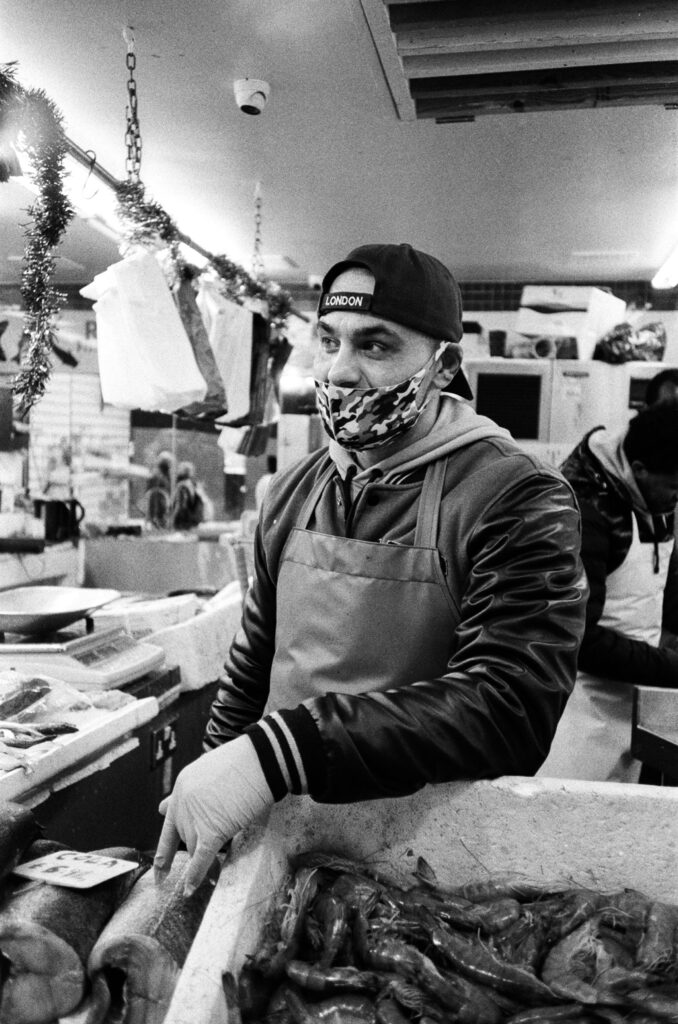
The triangle of roads surrounding Electric Avenue in the heart of Brixton bustle with a respectful defiance, flourishing in the celebration of old village style traditions. Surrounding businesses and individuals inspired to adapt and succeed are a refreshing positive during these times of change.
Part homage, part documentary, these photos hold a candle to the prosperous little pockets of normality where human interaction remains joyful, bartering still exists and wheeled shopping trolleys and reusable bags are yet to be replaced by the delivery vans that lurk in the shadows on residential roads from dawn until nightfall and beyond.
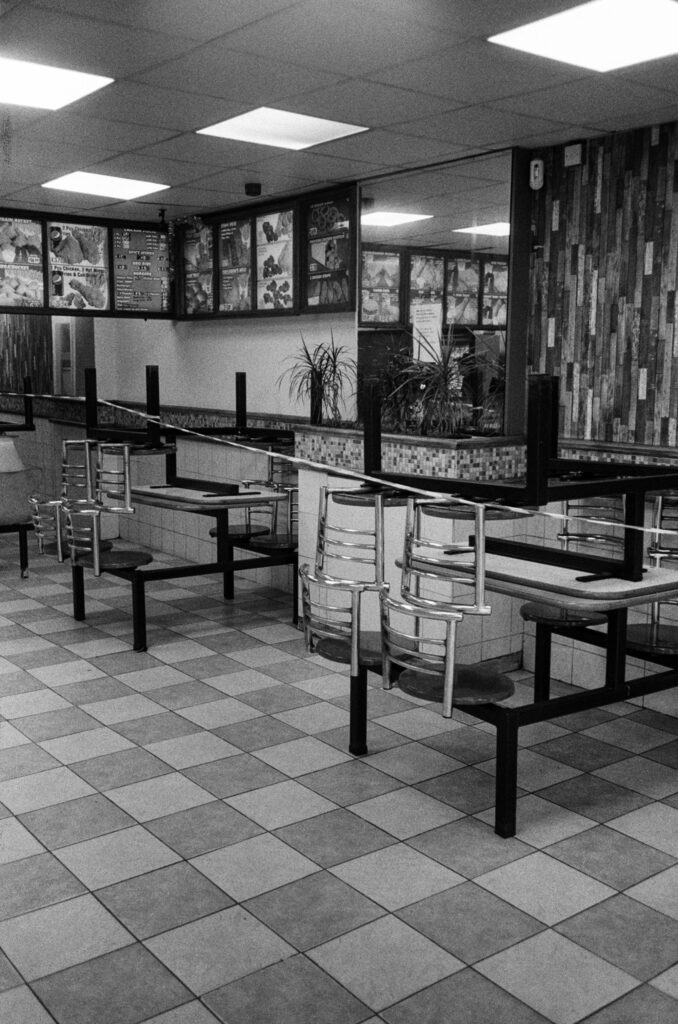
Whilst a local fishmonger in South London won’t make headlines for continuing to serve the community their thriving independence is reflected in other businesses across other sectors, especially in the hospitality industry. Chicken shops on high streets have taped off their tables to keep the takeaway side of their businesses alive and as larger pubs tied to breweries mothballed their taps and closed their doors, independent owners used the rules to stay open and keep their heads above water. In becoming take away establishments for their neighbourhoods they have created little pockets of considered normality in these abnormal times.
Just as businesses have pivoted and changed direction to survive over the last ten months so individuals affected by the pandemic have had to change direction and embrace new adventures and careers.
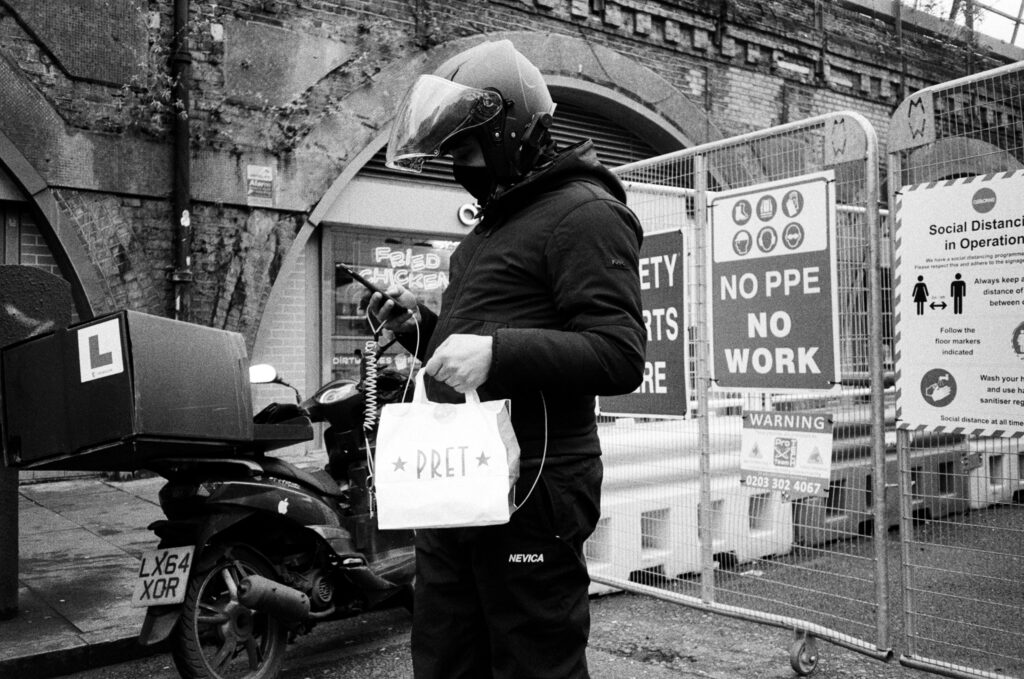
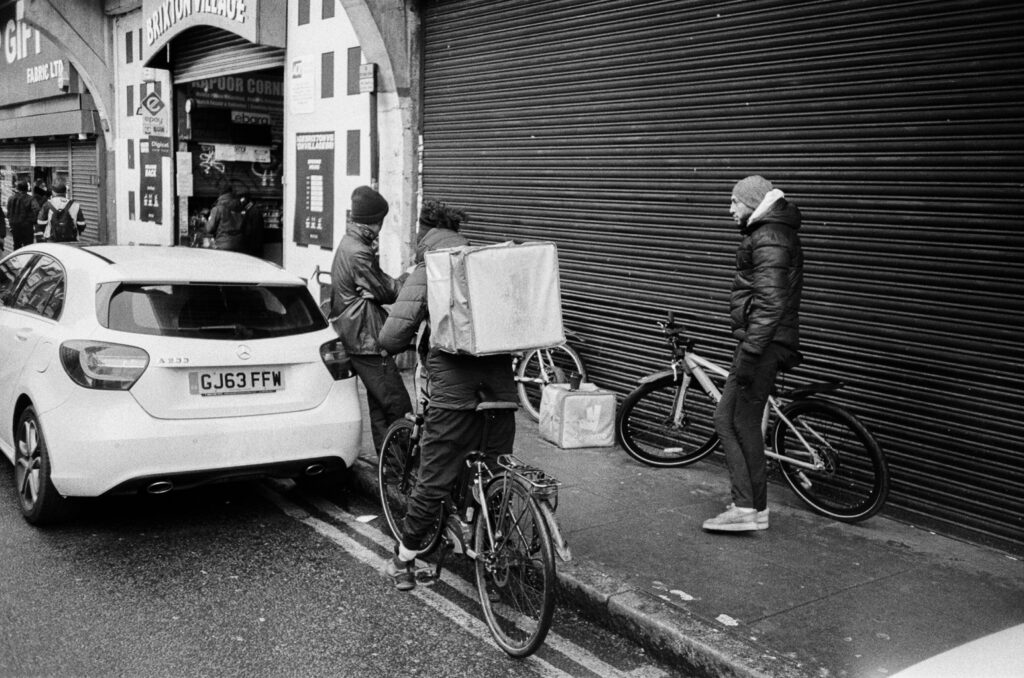
From becoming Deliveroo drivers instead of going to University, learning new technology to keep previously cash dominated businesses alive to rediscovering local shops and regrowing previously lost relationships with neighbourhood suppliers these portraits also reflect a changing community that has often had to pivot to survive and in some cases now thrive in the new now.
The images were shot on both 35mm film and a Leica SL modern digital camera. The small unassuming Olympus Mju 35mm film camera I find not only to be a great conversation starter but also much less imposing than a larger digital body and puts more subjects at ease. What is lost in mega pixels I find is more than made up for in warmth and openness.
A local luggage salesman with his shop half shuttered turns to ‘click and collect’ and uses Whatsapp to confirm sales and stay open during Lockdown 3A local greengrocer wearing multiple layers and a face mask during a long shift in mid winter is typical of the current situation we find ourselves inDerek’s Tropical Fruit and Veg is a wondrous establishment made up of fruit and veg boxes and a single gazebo that come rain or shine sits proudly in the middle of Electric Avenue A local fishmonger wearing his London pride front and centre, wraps up warm against the winter chill. There is a real satisfaction in people taking the wearing of masks and gloves seriously in the food industry, protecting everyone along the chain from supplier to eater.A greengrocer uses her phone and a card reader to minimise contact during sales and ensure that previously preferred cash transactions are not lost in this brave new technological world.A Deliveroo driver collects someone’s lunch surrounded by signs of the timeA group of three Deliveroo drivers grab a break and a chat as they wait for their next order. After finishing education and with traditional job paths curtailed by the pandemic, joining deliveroo has become a good, if slightly longer than intended, stop gap.A chicken shop on Brixton Road tapes off the seating area and continues to trade as a takeaway only.