As an MP, over 25 per cent of the people who approach you for surgeries is generally about their children and their children’s education. My mum didn’t have much education – she left school when she was 12 or 13 – she was also a great believer in having a good education, and having me her eldest child going to Harvard Business School and Oxford was a proud thing for her. So the importance of education has been instilled in me from a young age.
While I was an MP, in my second year in Westminster around 2007, I had the opportunity to work on a social action project in Rwanda. This was post-genocide Rwanda when they were still trying to rebuild the country and Claire Short, who had been Blair’s International Development Secretary, donated a huge amount of money for Rwanda. The UK at the time was the largest donor to Rwanda.
Cameron decided this was important, and a trip was organised with eight MPs, and we worked on five different social action projects. I was in charge of a project which involved helping to fix up a small nursery kindergarten in a poor area in Kigali. There were 83 kids. I put in around £5,000 of my own money and we fixed up the school: we got electricity, we had two big water tanks, a lot of rooves and walls had holes in and we fixed that up.
David Cameron then came over for two years to see the projects we were doing. And I remember one of the journalists who was with me came and visited me and he said: “You’re here for a couple of weeks and then leave it. What difference can you possibly make?” I explained that the infrastructure was better and so on.
Back in the UK, six weeks later, I received a phone call saying: “Rwanda Health and Safety want to shut it down”. I said: “What do you mean?” He said: “Well there were 83 kids and now there are 343 children there in these tiny classrooms.” So I flew back and I met with the Minister of Education and I said: “Don’t close the school down. I will rebuild it.” In my head I thought it would cost me £100,000.
I found a new site which I bought about a kilometre away, and spent two years getting planning permission, which I finally secured. We had a foundation laying and the President decided to come and I asked him why he came. He said: “Most people come to me giving advice. You came, saw a problem and put your hand in your pocket to fix it.” He added: “I would like you to do one thing: make sure there are all Rwandan teachers.”
At that time a lot of teachers came from surrounding countries like Uganda, Tanzania and Kenya and so on. So I took that on board and we finally opened the school in January 2012. I then created a charity called a Partner in Education and we went on to build a secondary school. By 2017, we were ranked in the top three in the country, with nearly 100 per cent Rwandan teachers. At that point, I built a teacher training centre too.
When I left Parliament in 2015, my old tutor came to see me and said: “Brooks what are you doing next?” He said: “We’ll figure out what exactly you do.” In 2016, I was sitting next to a Professor in the education department and I was asked to give a talk. I was asked to sit in on his class. I suddenly realised how little I knew about education even though I had this school.
After three classes I asked if I could do his Masters. I passed and got in. I was 60 years old, but I always love learning. It’s never left me. I went back to university at the age of 60 and my dissertation focused on fine motor proficiency of seven year old children as a predictor of academic achievement.
They then said I should stay on and do a doctorate. I decided to look at policy-making in Rwanda. I realised there are a lot of policy ideas which are generated without real focus on outcomes. For instance, they have this thing one laptop per child. But if there isn’t broadband in schools, or the teachers aren’t trained you won’t get satisfactory outcomes. We can’t really think about these things in a linear way.
I decided to look at it through the lens of a systems approach and consider what enables and what constrains policy implementation. For instance, if teachers have only rudimentary understanding of English they can’t overnight suddenly be able to deliver lessons in English to children who themselves don’t speak English. It was understandable why the Rwandan government wanted to bring that in; but this top down approach wasn’t working.
Having been in government myself, I can say with some authority that we have a habit of coming up with great ideas which in principle sound good, but we don’t think enough about who we need to bring on board to implement these things properly.
But things happen in life and get in the way. I started my DPhil and then in 2020 Covid hit, and I couldn’t do my field research. Then, my mum got sick in 2021 and I could see from January she would pass away, which she did in May of that year. Finally I did some research in November 2021, and then suddenly the Ukraine war starts.
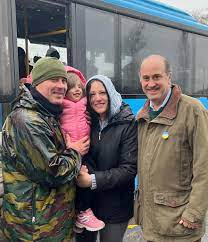
It seems I will continue to find reasons not to work! I saw a friend of mine was on the Polish border moving people along refugee centres into Europe. I messaged him and asked if I could come and join him. Four days became two weeks. Soon, I began bringing buses into Ukraine from Lithuania, moving people from Kviv and Lviv to the Polish borders.
As the war moved to the East, I had hubs across Ukraine, and I spent a lot of time in Kharkiv: we moved 1,000 women and children out of a Russian-controlled area. To do that we had to move 500 metres of anti-tank mines, which was an amazing achievement.
I am torn between doing what I am doing in Ukraine and not wanting to drop the ball on my DPhil. I’m trying to navigate with my supervisors between my work with Ukraine and getting to the next stage of my DPhil.
But the moral of the story is you’re never too old to learn. While my wife does Sudoku as a form of brain gym, I have my doctorate. Having started 40 years ago, I feel much better prepared through having had life experience in business and as an MP.
Brooks Newmark was formerly Minister for Civil Societies
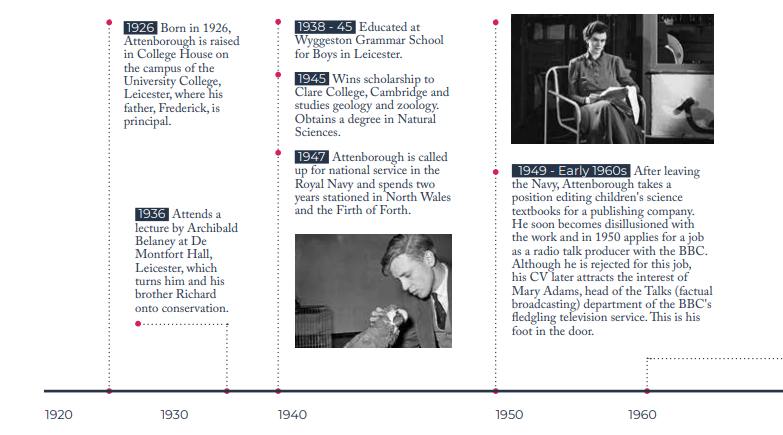
This week Sir David Attenborough’s new series Asia airs. We look back at Robert Golding’s exclusive interview with the great man at the start of the pandemic
‘This is a man who answers his phone,’ a mutual friend has told me, and Sir David Attenborough doesn’t disappoint. He picks up after just one ring.
The voice at the other end of the phone is the one you know. But it’s gravellier and without quite that voiceover theatricality it carries on Blue Planet. Those are performances; this is real life.
This is Attenborough on down time, conserving energy for the next program. His work schedule might seem unexpected at his great age. But Attenborough, 94, exhibits more energy in his nineties than many of us do in our forties. ‘I’ve been in lockdown, and it does mean I’ve been a bit behind on things. But I keep myself busy.’
To interview Attenborough is to come pre-armed with a range of pre-conceived images. Part-benevolent sage, part-prophet of doom, is this not the unimpeachable grandfather of the nation? Perhaps only Nelson Mandela towards the end of his life had comparable standing within his own country.
In 2016, when the Natural Environment Research Council ran a competition to name a research vessel, a very British fiasco ensued whereby the unfunny name Boaty McBoatFace topped the poll. This was plainly unacceptable, and so in time the competition reverted, with an almost wearisome inevitability, to the RRS David Attenborough.
Which is to say they played it safe and chose the most popular person in the country. One therefore has some trepidation in saying that these assumptions don’t survive an encounter with the man. It is not that he is rude or unpleasant; it’s just that he’s not as one might have expected.
‘Yes, this is David. What would you like to ask me?
Perfectly Busy
Though he has agreed to talk to us, the tone is adversarial. But there are strong mitigating circumstances to this. This is a man who is aware of his mortality: our conversation has a not-a-moment-to-lose briskness to it. He could also be forgiven for sounding somewhat tired. He can also be especially forgiven for having long since grown weary of his National Treasuredom. Throughout our call, he will refer to the claims on his time, of which I am one of many. ‘I get around 40 to 50 requests a day,’ he explains, adding that he seeks to hand-write a response to each. ‘I have been shielding during lockdown and am just coming out of that.’
But there’s another reason he’s busy: habit. The stratospherically successful enjoy a pre-established momentum, and continue to achieve just by keeping up with their commitments. So what has he been up to? ‘I decided to take this as a moment to write a book on ecological matters and I continue to make television programs,’ he says, referring to A Life on Our Planet: My Witness Statement, but not in such a way that makes you think he wishes to elaborate on either. He refers to a ‘stressful deadline’ and when I ask for more information about the book, he shuts it down: ‘Just ecological matters.’ There is a hush down the phone where one might have hoped for elaboration.
Nevertheless, Perfect Planet, one of his upcoming programs, is being filmed in his Richmond garden, and it has been reported that he is recording the show’s voiceovers from a room he made soundproof by taping a duvet to the walls.
Generation Game
In his courteous but clipped tone, he asks about Finito World and I explain that it goes out to 100,000 students. ‘I am often heartened when I meet the younger generation,’ he volunteers. ‘Their attitude to the climate crisis is very responsible.’
This is the paradox of Attenborough: a man of considerable years who has found himself aligned with the young. He’s that rare thing: an elderly revolutionary.
Perhaps we underestimate the sheer importance of his presence within the landscape. He is the benevolent sage who its bad form to disagree with, and he’s single-handedly made it harder for anyone in power to pitch the climate change question as a quixotic obsession of the young.
But he’s a revolutionary only in the face of drastic necessity, and refuses to be drawn on the question of our sometimes underwhelming political class. ‘I wouldn’t necessarily say that: we actually have some very good politicians.’ He declines to mention who these might be – but it suggests that Attenborough doesn’t want to ruffle unnecessary feathers. Instead, he wants progress.
Transparent Medium
‘The thing about David is he prefers animals to humans,’ says another person who has worked with Attenborough for years. I ask him if the coronavirus situation will accelerate change. Again, he is careful: ‘I don’t know about that. On the one hand, I can see that our skies are emptier now and that’s very welcome. I suppose the extent to which the aviation sector will return will depend on the price points the airlines come up with.’
I suspect that some of his reluctance to be drawn into detailed discussion is that he doesn’t wish to claim undue expertise on areas outside his competence. There’s an admirable discipline at work, alongside a refusal to please
Bewilderingly honored – Attenborough has a BAFTA fellowship, a knighthood, a Descartes Prize, among many others – he has learned that the only proper response to fame is self-discipline. At his level of celebrity – up there with prime ministers and presidents but with a greater dose of the public’s love than is usually accorded to either – he is continually invited for comment, and has learned when to demur.
‘I am sometimes asked about the well-known people I’ve come across in this life – the presidents and the royalty.
I’ve been lucky enough to meet,’ he says. ‘I say, “Look, if you saw my documentary with Barack Obama then you know him as well as I do.” Television is very intimate like that. My job is to create transparency.’
So instead of what one half-hopes for – backstage anecdotes at the White House or Buckingham Palace – one returns time and again to the climate crisis. This is the prism through which everything is seen, and our failure to follow his example, he says, shall ultimately be to our shame.
He will not be drawn into negative comment on Boris Johnson or Donald Trump. Instead, he says: ‘Overall, I’m optimistic. All I can say is we have to encourage our political leaders to do something urgently about the climate situation. We have to all work hard to do something about this.’
The Fruits of Longevity
For Attenborough everything has been boiled down to raw essentials. And yet his career exhibits flexibility. His success must be attributed to open-mindedness about a young medium which others might have thought it beneath them. It would be too much to call him a visionary. But he was in the vanguard of those who saw TV’s possibilities.
Fascinated by wildlife as a child, he rose to become controller at BBC Two and director of programming at the BBC in the 1960s and 70s. ‘Television didn’t exist when I was a young man, and I have spent my life in a medium I couldn’t have imagined. It has been a wonderful experience,’ he says.
The very successful glimpse the shape of the world to come, seize that possibility and enlarge it into something definite, which they then appropriate and live by. What advice does he have for the young starting out? ‘My working life has taken place in television. I don’t know how we will see that change over the coming years as a result of what’s happened. Communication has proliferated into so many forms. It is very difficult to get the single mass audience, which I had something to do with creating, thirty or forty years ago.’
There is an element of well-deserved pride about this. Attenborough’s original commissions at BBC2 were wide-ranging. The included everything from Match of the Day to Call My Bluff and Monty Python’s Flying Circus. One can almost convince oneself that he was a BBC man first and an ecologist second. ‘The world has become very divided in a way,’ he continues. ‘We prepare for a world when we’re young that’s gone by the time we arrive in it. To that I say, ‘It depends what your life expectancy is!’
But all along it was nature that thrilled and animated him. Attenborough is one of those high achievers who compound success with longevity. His is a voice that speaks to us out of superior experience – he has seen more of the planet than any of us. He speaks with a rare authority at the very edge of doom – his own personal decline, as well as the planet’s.
Urgent Warnings
He says: ‘Whatever young people choose to do with their life they must remember that they’re a part of life on this planet and we have a responsibility to those who will come after us to take care of it.’
I ask him what we should be doing to amend our lives and again he offers a simple thought: ‘We’ve all got to look to our consciences. Inevitably, some will do more than others.’
He sounds at such times very close to washing his hands of the human race. But then everyone in their nineties is inevitably about to do just that.
What Attenborough has achieved seems so considerable that one wishes to ask him how he has managed it. ‘I am sometimes asked about how I manage to do so much, but I don’t particularly think of it like that. I just reply to the requests that come my way: you can accomplish a lot by just doing one thing after the other.’
Again, the simplicity of the answer has a certain bare poetry to it: Attenborough is reminding us that life is as simple as we want to make it. Interviewing him at this stage in his life is like reading a novel by Muriel Spark: no adjectives, no frills, just the plain truth.
In his curtness is a lesson: there is no time for him now for delay, but then nor should there be for us. We must do our bit – and not tomorrow, now.
He is interested in Finito World and very supportive of our new endeavor: ‘This is a time when the circulations of magazines and newspapers appear to be falling. A lot of newspapers are aware of the climate emergency and the way in which we disseminate ideas has diversified.’
A thought occurs to me that stems from my lockdown time with my son, where we have been in our gardens like never before. Should gardening take its place on the national curriculum? ‘It’s obviously very important,’ he says, although he also adds – as he does frequently during our conversation – that he knows little about the topic. (Opposite, we have looked into the matter for him.)
Hello, Goodbye
I will not forget this interview with a man whose voice will always be with us. Part of Attenborough’s power is that he continues to warn us in spite of ourselves. He deems us sufficiently worthwhile to continually renew his energy on our behalf.
I mention that we watch his program with our four-year-old in preference to the usual cartoons on Netflix when possible.
At that point, perhaps due to the mention of my young son, he sounds warm: ‘Thank you very much, sir. It does mean a lot when people say that.’
It’s a mantra in journalism not to meet your heroes. Attenborough in extreme old age is brisk and sometimes even monosyllabic. This in itself tells you something: the world is full of the canonized but in reality saints are rare. Conversely, I have met those whose reputations were fairly low, but who turned out to be generous beyond expectation. We should never be disappointed when the world isn’t as we’d expected. It is an aspect of the richness of experience to meet continually with surprise.
But age will come to us all. If it finds me in half as fine fettle as David Attenborough I shall be lucky indeed. Furthermore, if it finds me on a habitable planet at all that shall also something I’ll owe in part to him. ‘Good luck,’ he says as he puts the phone down. This isn’t the man I had expected to meet. But I can persuade myself that he means it.
‘David prefers animals to humans’. Afterwards, it occurs to me that he saw me not so much as an individual, but a representative of that foolish ape: man. While Attenborough has been acquiring hundreds of millions of viewers, what he really wanted – and urgently required – was listeners.
The vet who became a scientist explains why academia is a great place to work
“Kid, do what you like. Choose what you want.” This was the career advice my parents gave me during my last year at school. Ok, then. I want to become a vet. They were delighted and my mum painted pictures in her mind of me being the local vet in a small village somewhere. All neighbours would come and bring their pets to me and she could be involved in the romantic life of the female version of James Harriot. But it turned out to be very different.
Now as a scientist, my latest research project is studying the differences in the immune response of patients with a Covid-19-induced pneumonia. We investigated in SARS CoV-2-patients which immune response determines the disease severity. This study is a large collaborative project with scientists form the UK, Malawi, Brazil, USA, France and Switzerland and published in the journal Science Translational Medicine. How can a vet be involved in this project?
During my vet degree I realised quite quickly that my original idea of working with horses would not be happening. During my first lecture of pathology while learning about disease mechanisms in tissues my passion for studying diseases was ignited. On that day, I knew horses will always be a hobby for me. My fascination about understanding how diseases evolve in the body grew from day to day. Studying diseases does mean to understand what health is.
How a virus infects the host, causes damage and how the body is able to fight this infection successfully is not only interesting, it is dependent on the orchestration of so many factors. It fascinates me. I finished my first PhD studying virus infections in the brain and a second PhD followed to characterise a newly emerging virus infection in animals which caused stillbirth and brain damage in ruminants.
As a vet, I knew how close we are to our pets or farm animals, and my research always focussed on aspects of the One-Health approach: Diseases which are transmitted from animals to humans. To strengthen my research I decided to stop doing diagnostic and teaching vet students and started a full time post as a scientist. For years, I was studying which immune reactions determine that some hosts show a severe or lethal outcome in virus infections and why some show a mild course of disease. I developed all the tools to address this question, and worked in the high containment lab with a virus, which can only be handled under these conditions.
Then the pandemic hit, the government stopped all our virus work. Only SARS CoV-2 from now on. The joint and focussed research activities were used to study the pathogenesis of Covid-19. I applied all the skills I developed before the pandemic, including being trained for the high containment, on the Covid-19 response to contribute as much as I could. Visualising the virus in the lung, which had never been done before, was one of my tasks, and it was a tough one. It took several months. At this time, I realised how valuable it was that the PhDs I made not only taught me science.
Most importantly, the PhD teaches grit and endurance as well as creativity. The perseverance of starting and finishing a PhD, which lasts 4 years, requires scientific depth and dealing with all the challenges along the way. In short, you need to have a very long breath. This helped me to keep going with the initially unsuccessful virus detection attempts in the tissues. I finally made it and will never forget the sunny afternoon on a Saturday during the hard lockdown, when the virus finally was visible in the lung.
Like all projects and publications in excellent research, the people involved are key to success. Interdependence of independent people working together is the heart of the work. Only efficient priorisation with well-developed communication and the perfect alignment of different expertise’s make it happen. As in this study: Every Co-author of this manuscript did what she or he could do best and contributed it. The efforts were organised and managed from Brazil to Malawi, Switzerland, USA and France to the UK and required a smart project management system. Science connects people, cultures and experiences and this makes academia a beautiful place.
During my time in academia I had the pleasure to work with so many driven and smart students, which is a joyful experience and which taught me so many valuable life lessons. I am fortunate to have great mentors pushing me to do the best work, opened doors for others and myself and allowed me to see further with their experience. Thanks to the diversity of my work, I know people in so many countries of the world, who became friends and part of my life.
Science connects the dots of knowledge and unites people. And it’s the people who drive the research to the next level. The most rewarding aspect of working in academia is to be part of the career path of the younger generation, seeing them succeed and choosing the work they want. Eventually, progressing from a job to a profession leading to a passion. Each student is a special person in my life as they trusted me with being part of their academic career and there is nothing better than meeting these people after years again and reflecting together on our journeys.
I am not living the romantic life of the female version of James Harriot. I am living the romantic life of a scientist who can travel the world for presentations and conferences, and works with researchers in places like India, Africa, Europe, USA, China and the Middle East. Basic research is the joy of answering questions in unknown territory combined with an unparalleled work ethic. Understanding diseases is understanding life – in animals and humans alike.
For anyone looking to be famous, one possible route seems to be to truncate your name into a snappy word: the strategy has worked for Beyoncé, Banksy, Madonna and plenty of others. Perhaps in a busy world we don’t have time for multiple syllables anymore. Were Warhol alive today he might just be Andy.
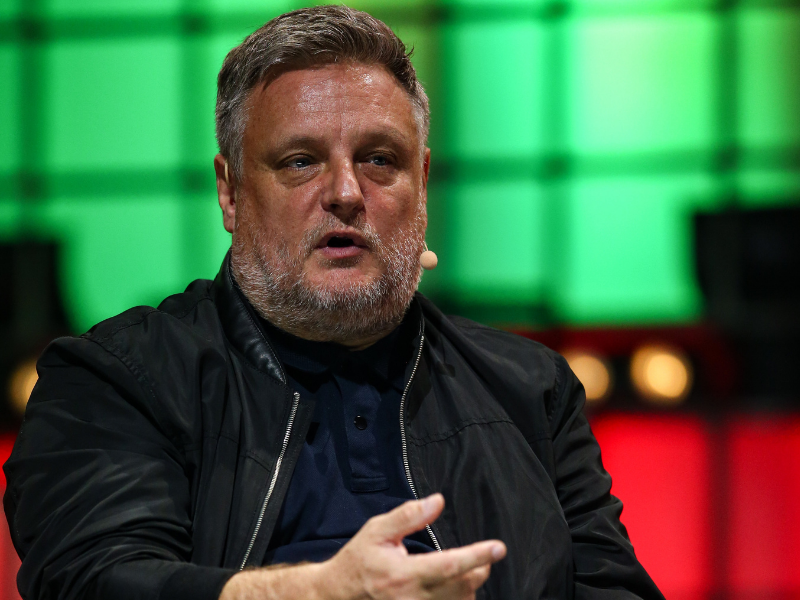
The photographer Rankin is shorthand for John Rankin Waddell: as the founder of Dazed and Confused the globally distributed magazine, photographer of Kate Moss and Her Majesty Queen Elizabeth II, and with long ties to the music industry, the 54-year-old photographer is now at the summit of his profession.
So how did he get started? His early education looks at first inauspicious: Rankin studied accounting at Brighton Polytechnic, before dropping out in order to study photography at Barnfield college in Luton. He subsequently relocated to the London College of Printing. In time, his reputation as a fashion and music photographer grew.
But he really owes his start, he tells us to Icelandic pop star Bjork: ‘Bjork was brilliant. It was literally my first ever shoot for a record label. She’s one of the most era-defining musicians because aesthetically she’s so unique and original, and she’s very in control of her image.”
What did he learn from her? “What I loved about her was that she just let me do my thing. I have to be honest; there was a moment in the shoot where I was trying to do something that was a bit derivative of another photographer, and she gave me the confidence to just not do it. She was like, ‘You don’t need that shot, stick to what you’re doing’.”
So did that make a difference in terms of his subsequent career? “She kind of set me up in a way, because very few people have ever surpassed her collaborative approach.” Collaboration is a leitmotif in Rankin’s career. It was only upon meeting Jefferson Hack at London College of Printing that he felt able to launch Dazed and Confusedin 1992.
Fast forward to 2021, and Rankin is still productive – and still collaborating. His latest book How to Die Wellis produced in partnership with Royal London, the UK’s largest pensions company. So how does he think this book will help people in these death-conscious times? “Death scares people, and that discomfort is the main barrier to talking about it,” he says. “The hardest part is getting started, but once you push through the fear – those conversations become a lot easier.”
This tracks with my own encounters with those who’ve been around death a lot – from nurses and doctors to undertakers and funeral directors, they seem not to have the expected heaviness, but instead a certain lightness of being.
So has compiling the book helped Rankin face his own mortality, and the mortality of his loved ones? “Making this book has definitely helped me to deal with my own grief, as well as confront the idea of dying,” he admits. “And it’s so important that we do, because having these kinds of discussions means that when the time comes, our loved ones are prepared.”
It’s been an extraordinary time. For over a year now, we look at our media and see the death toll writ large.
Have we become a morbid society? “I’m not sure the pandemic has made us, as a society, any better at having these conversations. The shock and size of the grief has been overwhelming,” Rankin says. “I think it’s going to take a long time for people to process what has happened. But it has certainly presented us with the undeniable reality of death.”
And yet How to Die Wellisn’t a serious book by any stretch of the imagination – it’s full of anecdotes, lightness of touch, and charm.
How did he go about compiling the book? “We interviewed a broad selection of people who shared their experiences of grief – and also told us what they’d like their funeral to look like. There were some absolute corkers. From unusual song choices, to outrageous outfits, to hilarious last words. Death is just like life: there are ups, downs, laughs, lots of crying – and more than a few funny bits.”
Consider this. The background at Kensington Palace looks no different to a luxury hotel. A fern behind Prince William’s blue-blazered right shoulder cedes to another plant over his right. Between The Duke and Duchess of Cambridge, there is a picture which might be Prince George although the photograph blurs slightly – a suggestion of the room’s scale. Normally, in Zoom calls, in our smaller homes, you don’t have this kind of receding perspective. In the distance a mirror reflects back the high window which must be sitting ahead of the couple: it is a room full of light.
The Duke of Cambridge says: “Something I noticed from my brief spell flying the Air Ambulance is when you see so much death and so much bereavement – it does impact how you see the world. That is what worries me about the frontline staff at the moment – you’re so under the cosh and seeing such high levels of trauma and death, that it impacts your own family life.”
I have seen the two of them many times – as we all have. Their prominence in our lives makes them paradoxically difficult to comprehend. But I’ve never looked at them like I’m looking at them now.
The Duchess of Cambridge adds: “Mental health is so important. For people in the front line it’s needed more than ever. Often you forget to take care and look after yourself.”
To be seen and not to be looked at; to be considered morning, noon and night but never to be understood: this so far has been the fate of this couple.
For this cover story, Finito World engaged extensively with the mental health community. We spoke to those who have known the couple, to those who have worked with them, and – most importantly – those who have been involved in working on their central passion: mental health. Kensington Palace has also been extremely helpful with this piece, verifying facts where we had our doubts, and providing us with vital information which has helped us immeasurably. We would like to take this opportunity to thank them.
What emerges is, like all stories about the Royal Family, as much a tale about our collective identity as it is the story of these two people who everybody is meant to have some kind of opinion about.
On 23rd July 2020, the Duke and Duchess of Cambridge announced that the Royal Foundation would give £1.8 million to various mental health charities as part of its Covid relief fund. The ten named organisations were: Mind, Hospice UK, the Ambulance Staff Charity, Campaign Against Living Miserably, Best Beginnings, The Anna Freud Centre, Place2Be, Shout 85258, The Mix, and YoungMinds. Finito World approached each for comment for this article, and received a range of replies which inform this piece.
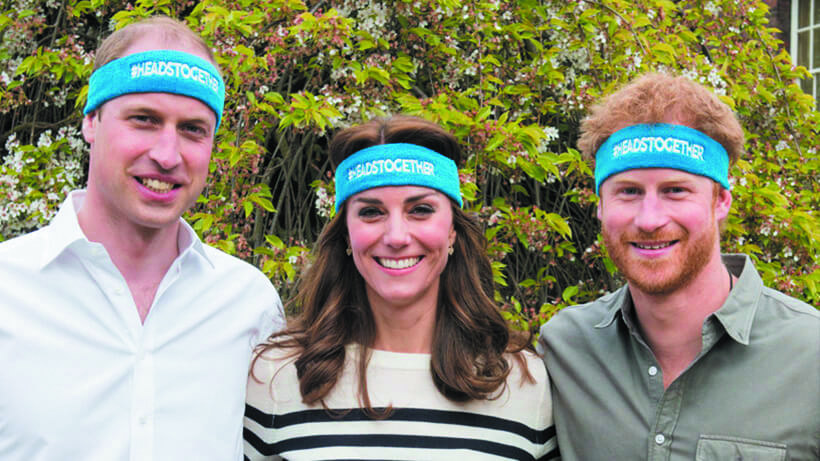
In order to understand what is being achieved now, it is worth going back to the formation of the Heads Together campaign which was embarked upon at a time when Harry and William were still working closely together.
The Line of Duty
One former member of the Royal Household recalls that it was a ‘small tight-knit household’ which formed the original decision to focus on mental health. Led by Miguel Head, the then private secretary to the Duke of Cambridge, who is now a senior partner at communications advisory firm Milltown Partners, the household reportedly worked in a “highly collaborative” fashion. At that time, before the advent of Meghan Markle, the private secretary to the Duchess of Cambridge Rebecca Deacon (now Rebecca Priestley) and the private secretary to Prince Harry, Ed Lane Fox worked as a quartet, alongside the then Head of Communications Jason Knauf.
Another former member of the household recalls the sense of necessity which permeated Kensington Palace at that time. “The Royal Foundation was set up really with the wedding funds, the booty and the gifts which had come out of the wedding. What’s interesting is you have to do something with it and we kicked ideas around. There was a sense of ‘We’ve got this charitable vehicle – now what do we do with it?’”
The inner circle cast around for examples, and turned to William’s father for inspiration. “Everyone was saying: “The man on the street knows what Clarence House stands for. It’s the environment basically, and sheep farming. But what do we stand for?”
The answer came piecemeal but, once arrived at, would prove remarkably durable. “The first tranche was on wildlife conservation, and another was to do with sport and the community. And Harry had his inner city kids up in Nottingham. But it was a bit tentative – everybody was looking around for a good idea.”
The Wedding Fund was administered by The Royal Foundation and distributed grants to a number of charities. These were selected by The Duke and Duchess of Cambridge.
The first major grants awarded by The Royal Foundation were to ARK (an education initiative) and Fields in Trust (protecting green spaces for young people to play). The first major initiatives of The Royal Foundation of The Duke and Duchess of Cambridge and Prince Harry were Coach Core – (2012) launched at the time of the Olympics, Endeavour Fund (2011) and United for Wildlife (2013).
It was mental health which ended up joining up the dots. Another former member of the Household remembers: “Mental health was bubbling in the arena at that time. But I think it was William’s work with the air ambulances which made the crucial difference. It chimed also with Harry’s work with Invictus.”
Important insight came from the private secretaries. “It was Miguel Head who said, ‘Yes, we’ve got these communities like wounded servicemen who have mental health issues, but actually there’s a broader message here.’ One statistic I remember being trotted out was that the biggest cause of death in men under 30 was suicide.” It chimed with everyone: with William and Harry because of their experiences in the military, and with Miguel – or “Mig” as he was known – and Jason Knauf who also took a keen interest in the issue.
J20K7Y The Duke and Duchess of Cambridge with runners representing the charity ‘Heads Together’ before officially starting the Virgin Money London Marathon in Blackheath.
But whatever the contribution of the staff, all are agreed that the Duchess of Cambridge played a critical role. The issue chimed with her. “She soon got to know those issues, with things like post-natal depression – all that side of it she could relate to – and her morning sickness too.”
In fact, it was The Duchess of Cambridge who proposed mental health as the common thread that united all their work. The Duchess had previously worked extensively on mental health through her work with patronages Place2Be, The Art Room, Anna Freud Centre, and in her work with Action on Addiction’s MPACT Programme. A naturally empathic individual, it was the Duchess who recognised the common theme running between each of Their Royal Highnesses’ work. She seized the initiative and today is rightly credited by all the principals as a vital driver of a campaign which has had remarkable success.
At the launch of Heads Together, William would give his wife appropriate credit: “It was Catherine who first realised that all three of us were working on mental health in our individual areas of focus. She had seen that at the core of adult issues like addiction and family breakdown, unresolved childhood mental health issues were often part of the problem.”
Of course, contingency also played its part. When the opportunity presented itself through The Royal Foundation of being charity of the year for the London Marathon, it was time to act. Their Royal Highnesses instructed their Private Secretary Team to work on mental health. A campaign had been born.
Cause Célèbre
This time the room is non-descript and the pair seem to be staring down from an odd angle. They’re more casually dressed – Kate in a zebra-striped top, and William in a turquoise sweater and blue shirt.
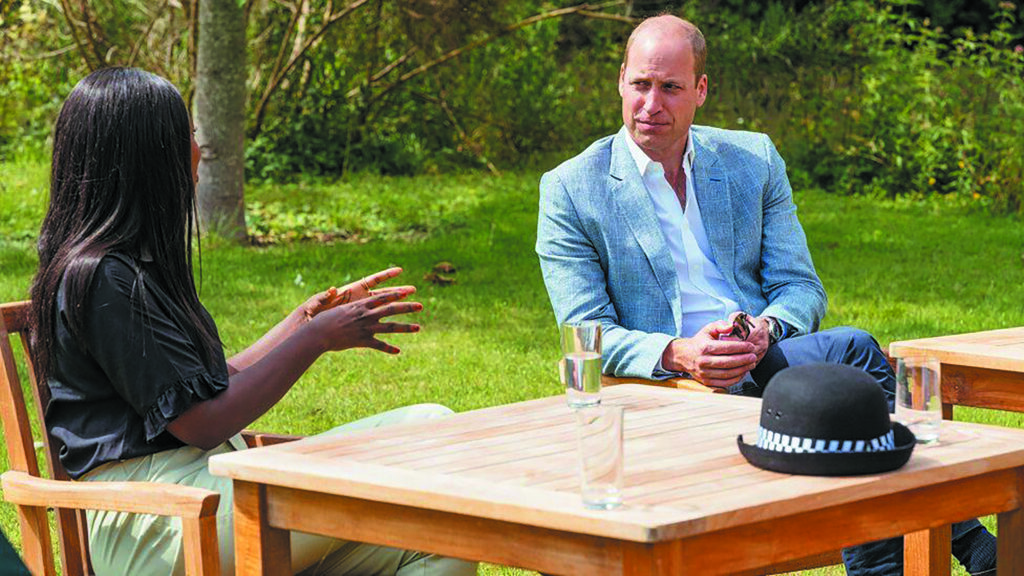
William says in relation to the pandemic: “A lot of people won’t have thought about their mental health – maybe ever before. Suddenly this environment we’re in catches up quick. The most important thing is talking – it’s been underestimated how much that can do.”
It is the day of the pledge on mental health and it’s notable that one of the least palatial rooms in the palace has been chosen. With William, whenever he talks of trauma it is with real authenticity. We all know what he has suffered.
He continues: “Trauma comes in all shapes and forms and we can never know or be prepared for when it’s going to happen to us. People will be angry, confused and scared and those are all normal feelings, and unfortunately all part of the grieving process.”
When Kate is asked about how she handles childcare there is also an air of authenticity about her: “You don’t want to scare them or make it too overwhelming. I think it is appropriate to acknowledge it in simple and age-appropriate ways.”
Of course, the way in which we hear these straightforward remarks has been altered by media coverage, with some sections of the media taking a perverse pleasure in trying to twist their lives into a tale with greater jeopardy in it than it can likely bear.
That’s not to say everybody is completely sold on mental health – and some of those we spoke with raised legitimate questions around royal involvement in charitable causes. When I speak to Lord Stevenson, one of the leading thinkers in this area, who submitted the Thriving at Work report alongside Mind CEO Paul Farmer to May administration, he initially laughs that he doesn’t like to get too involved in anything the royals are doing, feeling that it is a case of “good intentions.” He continues: “I remember Prince Harry giving money to charities involved with the army. Presumably it was based on the presumption that serving soldiers have worse than average mental health. Curiously enough, the evidence is that they don’t.”
And yet these misgivings are expressed lightly, and with a certain humour: they are not intended to cut very deep. They are instead a cheerful warning which might be levelled at anyone thinking about wading in to this area without deep understanding. Stevenson also explains in his exclusive essay in this issue that the area has benefited from some “strong royal patronage”.
Meanwhile, the journalist Toby Young argues that the mental health crisis is ‘complete balls’ but will not say more than that because he considers it “a good stick with which to beat governments over lockdown”. But another lockdown sceptic, Emily Hill, who writes regularly for the Mail and whose novel Love and Late Capitalism publishes next year, says: “I can’t quite believe that Toby Young – of all people – thinks there is no mental health crisis due to Covid and lockdown. People are still so terrified they are wandering about in the open air wearing facemasks as if the virus exists in the air. If that isn’t evidence of a mental health crisis I don’t know what is.”
This shows that the couple has found a cause which resonates across every section of society. They have been successful in alighting on the cause célèbre of our time.
The Inner Circle
So what has been the reaction? It’s remarkable how popular and durable the campaign has already proven, and across the political spectrum. Paul Farmer, the CEO of Mind, and co-author with Stevenson of ‘Thriving at Work’ tells us that “The Duke and Duchess of Cambridge do an incredible amount of charity work, raising awareness for important social and health issues, and we are delighted that they have chosen mental health as an area to which to lend their considerable profile.”
Victoria Hornby, the founder of Mental Health Innovations which powers Shout 85258 told us: “The support we have received from the Duke and Duchess of Cambridge has been phenomenal. Not only are they both passionate advocates for mental health, their continued dedication to Shout has helped to raise awareness of the service as a vital lifeline for anyone in the UK who is struggling to cope.”
Tom Madders, Director of Communications at YoungMinds wrote to us: “As a children and young people’s mental health charity, it is really important for their voices to be heard and the Duke and Duchess have spent time with us as a charity to really understand the issues that young people and their families face. Stigma around mental health can prevent young people from getting support or recognising when they are struggling. The profile of the Duke and Duchess means we can reach more young people and parents and make a real difference.”
R1586P The Duke and Duchess of Cambridge attend the first Global Ministerial Mental Health Summit. The summit is being co-hosted by the UK Government and the OECD. Featuring: Prince William, Duke of Cambridge, Catherine Duchess of Cambridge, Catherine Middleton, Kate Middleton Where: London, United Kingdom When: 09 Oct 2018 Credit: John Rainford/WENN
Alistair Campbell and Fiona Millar meanwhile, who worked on Heads Together, tell us: “The younger royals’ focus on mental health is a good thing. We were involved in Heads Together and know, from the reaction that we got, that it gave people a lot of confidence to speak out about their own mental health issues when they hear others in the public eye (royal or not) doing likewise. Mental health issues can touch people from all backgrounds.”
Millar continues: “I particularly respect the Duchess of Cambridge’s work on the early years as the impact early childhood has on later mental health is too often overlooked. I believe she got criticised by some for getting involved in an area where there is already a lot of expertise, but if she can raise the profile of that vital phase, then we should only be pleased.”
Finally, there are those who have been in government who praise the royal commitment. Baroness Nicky Morgan, who has served as both Education and Culture Secretary, and now chairs the mental health charity The Wellbeing Café Project in Loughborough, tells us: “Their patronage, particularly of an issue like mental health which we really didn’t hear anyone talking about just a few years ago, is a real game changer and very welcome.”
Marlborough Light
Of course, in another sense, the campaign dates further back to the creation of two highly empathic individuals who might choose mental health as their chief charitable cause. The Duke and Duchess of Cambridge are the same as the rest of us: they cannot be separated from their past, which means that their story is impossible to divorce from their education.
This isn’t just the case because they met in an educational setting, but because both individuals were shaped in similar educational environments – William at Eton College and Catherine at Marlborough College.
There is, of course, a marked difference in their two educations. At Marlborough, which Kate Middleton attended in the mid-1990s, nobody who knew her then particularly thought to notice her, for the obvious reason that nobody imagined they were going to school with the future Duchess of Cambridge. Whereas from birth, William has never known anonymity – and he will not know it. As Miguel Head told The Harvard Gazette in 2019: “The princes took the view that they were going to be in the public eye from the moment they were born to the moment they died and with that level of interest in them, the only way of coping with that would be to detach themselves from much of what is said about them.”
But among the old Marlburians we spoke to for this piece, some found it hard to remember Kate at all – and you get the sense that they’d been racking their brains ever since. Those who did, remembered a kind and unshowy girl, who fitted what Marlborough was turning into more than what it had been.
Oliver Osgood, 41, now an entrepreneur, explains that when Kate Middleton attended the place it was in transition: “At that time, the school had moved away from its spiritual philosophy of fun, freedom of expression and individuality. It had begun its shift from a sex, drugs and rock-and-roll approach in the 1970s to a ‘we’ve-got-to-get-great-grades approach’.”
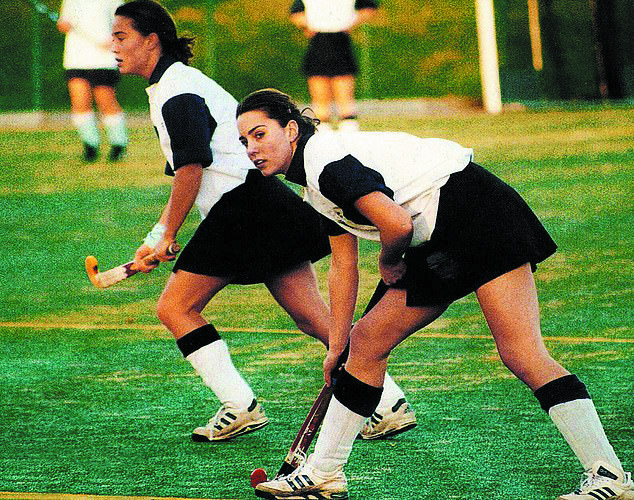
Rosemary Cochrane, 40, who is now successful in healthcare recruitment at Oyster Partnership, feels that the shift took a little longer to come about: “There was nothing about mental health in those days. It was still a very druggy school, and wasn’t particularly academic. It was about building an all-rounder.” And how did Middleton fit into this? “She was definitely in the sporty gang. She was perfectly nice, and pretty – as was her sister, Pippa, and it makes them perfect for what they do today. She was just a very nice girl who played lacrosse, and who you didn’t come across at nightclubs. She was very lovely. She was never going to be loud and never put herself out there too much and would never be too in your face, or too loud – and never drunk. She’s not outspoken; she just does everything subtly.”
Sport remains an important aspect of the couple’s bond. Middleton was well-known for her athleticism. One former colleague recalls long car journeys with William where football was the predominant topic of discussion. “It wouldn’t occur to him to ask if you’re interested in the topic; his background makes him assume you are.”
Interestingly, sport plays an important part in any vision of a mentally healthier society. Mental expert Dr. Paul Hokemeyer, the author of Fragile Power: Why Having Everything is Never Enough, explains its relevance: “Leisure is critically important to our emotional and physical well-being. This is especially important for people who live in the intense heat of the public spotlight. Leisure, and sports in particular, provides us with an opportunity to get out of ourselves and to connect with a community of other human beings around a common interest and goal. This is because mental illnesses thrive in isolation, but retreat when we find meaningful relationships with other people and our natural environment.”
What most strikes you about the reminiscences of Old Marlburians is that even those who had little natural affinity with her do not talk ill of her. One, who asks not to be named, says she attended parties with Kate but “never got to know her”. It is a note of unknowability which might be deemed, along with her kindness, the leitmotif of her life.
An instructive simplicity comes across. Later on, people would paint her and her family as ruthless for falling in love with William – but it feels significant that they never do when they knew her beforehand. If she ever had peculiar plans of a royal marriage in those days which meaner elements of the press would come to imagine, then she hid them very well at the time.
Eton Mess
Over at Eton, William had a similar experience. Eton, despite its apparent pre-eminence, is an ecosystem interlinked with the other great public schools – particularly Charterhouse, Harrow, Repton and Marlborough. We might say that when the couple met they would share a set of common assumptions.
The unanimous view of contemporaries is that the school changed fundamentally once William arrived. Xavier Ballester, a contemporary of William’s, who now works in angel investment, recalls the shift: “He had about 28 bodyguards on different rotations – but in spite of that, he was integrated. He would be in the classes but there would be guards standing outside. They were always checking the bins, checking for bombs, and all this kind of stuff.”
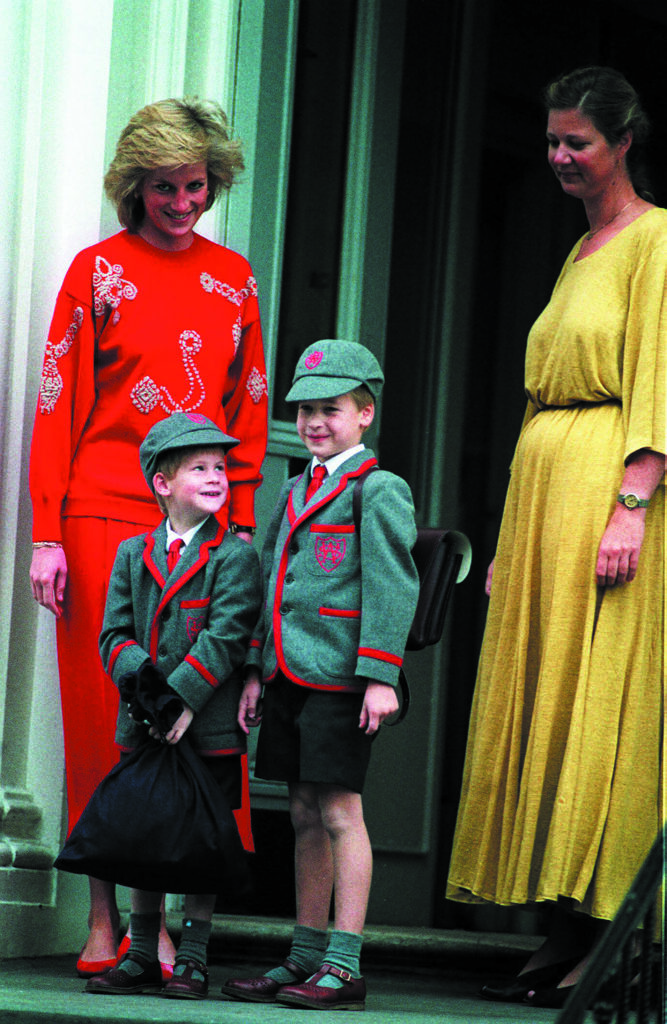
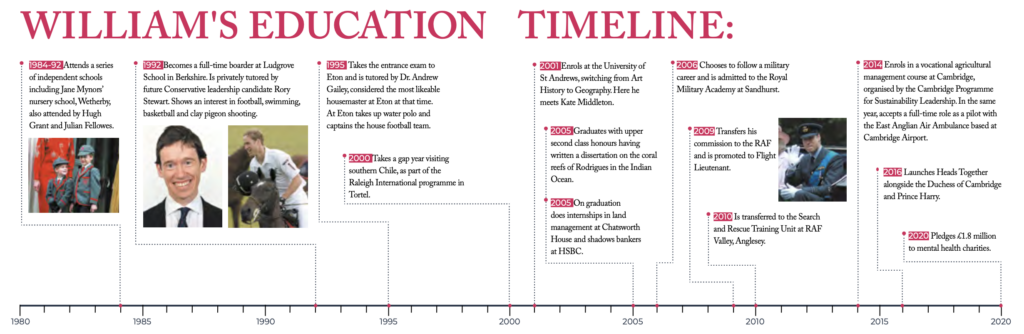
2G1B097 File photo dated 15/09/1989 of Prince Harry (left), five, joins his brother Prince William, seven, on his first day at the Wetherby School in Notting Hill, West London. The young princes are pictured with their mother, the Princess of Wales (left), and the school Headmistress, Frederika Blair-Turner. The Duchess of Sussex gave birth to a 7lb 11oz daughter, Lilibet Lili Diana Mountbatten-Windsor, on Friday in California and both mother and child are healthy and well, Meghan’s press secretary said. Issue date: Sunday June 6, 2021.
Mike Lebus, who now works with Ballester at the Angel Investment Network, agrees: “It sounds strange saying it now, considering that he was obviously going to be our future king, but we genuinely did just see him as one of our housemates – another guy to chat with, watch TV and play sports with.”
Ned Cazalet also recalls the shift in the school. “We had prayers one evening where the housemaster also reads notices out, and a kid had pulled out a water pistol while walking behind Prince William and almost got himself shot. And throughout the school at that time, there was police and CCTV. It was a big shift.”
But what kind of an effect did Eton have on William? “It had an effect on him – it had an effect on everyone,” Ballester says. “It gave him confidence. He was a protected kid – and to make your way there you have to develop some confidence no matter how protected you are.”
What most emerges from all this is that in environments against which young people are inclined to rebel, neither William nor Kate did. In William’s case, one might initially think that there’s no mystery as to why William didn’t do so; he felt he couldn’t. But of course the example of Prince Harry – and before him, the examples of Princess Diana, Princess Margaret and the Queen Mother – makes one realise that it is perfectly possible for people to possess a privileged position and develop character traits which might not fit the expected pattern.
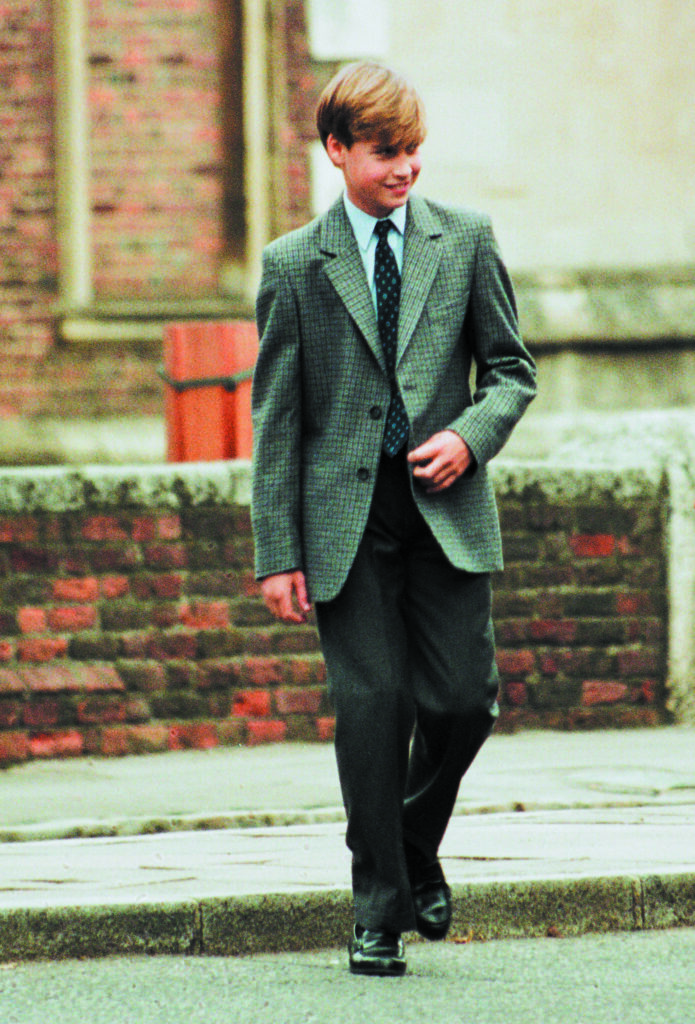
EN980E Prince William arrives at a photocall before his first day at Eton College Public School. 6th September 1995.
Cazalet also perceptively notes how the experience of public school is often impacted by who your housemaster is. In this, William was particularly lucky. Cazalet recalls William’s mentor the author and historian Dr. Andrew Gailey. “I remember he was quietly spoken. He seemed to have affection for his students. Some of the housemasters were chaotic, others were drunk, or tired or bored, or had some chip on their shoulder. But he was one of the best ones.”
Another old Etonian describes Gailey: “He was an excellent housemaster, a wonderful man and someone who I will respect for the rest of my life. He ran the house with a fine balance of responsibility and accountability that allowed us boys to thrive. He gave us enough of a leash to develop ‘autonomy’ but if this was teetering out of control he was excellent at recognising this and reining in. He was supportive and passionate. Andrew also taught me history at A-Level, but it is the way he led us in Manor House that I will forever be grateful for. I am sure my experiences of Eton would have been very different had I been in another house.” William couldn’t have found a better mentor.
Today Marlborough College has become focused on mental health. There is a tab labelled ‘Pastoral’ on its website with a ‘mental health and well-being’ sub-heading in the dropdown. In this the text reads: “We…believe that the skills which young people learn in adolescence, in terms of sustaining good mental health AND in terms of taking appropriate action when things go wrong, are skills which can be taken forward into university and well beyond, into adult life.”
One notes the capitalised ‘and’ which perhaps conveys a certain desperation to be on the right side of an issue which nowadays – and partly due to the most famous Old Marlburian – you can’t afford to be on the wrong side of. In a sense the school today has been Middletonised.
One former pupil, who was asked to leave due to a drink and drugs problem, told us: “I definitely think if my case came round today they would have got me counselling, and sought to look at why I was behaving as I was, rather than punishing me.”
Similarly, many of the old Etonians we spoke with continue to be shadowed by the bullying they saw, or experienced. One Etonian recalls: “You are in a very class-obsessed place where you have to tread carefully to not be exposed as a pleb and then derided for it. I was lucky in that I got a small scholarship and was in the top sets with others who had money off their fees too. I was also good at sport which helped a lot but some people were sent to Eton and got mercilessly tormented (a northern guy in my year springs to mind).”
Cazalet gets to the heart of the chilliness of the place: “Years later, when I decided to leave university early, my father said: ‘I hope you didn’t do anything to reflect badly on Eton’.” Another bemoans the presence of “casual, classist bullying” – although, all added that they were talking about the Eton of William’s time and that things might be better today.
We can see how sensitive young people like the future Duke and Duchess of Cambridge wouldn’t forget what was lacking in their schooling – even if that schooling was the best that money could buy at that time.
Dog Days
On Catherine’s side, there are other possible areas of motivation. The Middleton family, though it has sometimes been unfairly portrayed as grasping, has a strong compassionate streak.
Emily Prescott has interviewed Kate’s brother James Middleton about his work as a mental health advocate and feels that having a brother with depression may be a source of Kate’s inspiration in tackling the issue. “It was very moving to talk to him,” she recalls. “I can imagine that having that passion for dogs [Middleton is an ambassador for the charity Pets as Therapy] across the family dinner table must have had an impact on her outlook.” Prescott remembers discussing a famous quote by Milan Kundera during their conversation: “Dogs are our link to Paradise. They don’t know evil or jealousy or discontent. To sit with a dog on a hillside on a glorious afternoon is to be back in Eden, where doing nothing was not boring – it was peace.” Prescott adds: “He sounded almost in tears as he spoke about his dogs. He was a very sensitive person. Once I told him I wasn’t asking about Kate he seemed relieved.”
This sensitivity is also to be found in the Windsor family. One former member of the household who worked closely with William for many years, when asked what makes the royals special, tells us: “You’ll see the Duke and Duchess at a function, let’s say for families of those who have fallen in Afghanistan or Iraq. You can see them do the line-up, or circle the room, and you know that each person will have only 45 seconds with them as it’s a crowded gathering. And you’ll know that they all need something from that encounter. What’s amazing is that they always get that something. Everybody comes away feeling better, and lighter somehow. It’s a gift, and I think William and Harry both have it from Diana.”
We have to remember that Diana was there at the beginning of William’s schooling – but tragically, not at its end. Lebus recalls: “I remember his first day at school when he moved into the house. My sister and I passed his mother on the staircase while she was carrying a plant up to his bedroom, and it was surprisingly (but refreshingly) normal. We just smiled at each other and said “Hi”, as you would with anyone else’s mum and dad.” It is a touching image, especially in light of what would happen subsequently.
Hungry Gaze
Two media appearances by Kate Middleton. In one she is standing on stage, and launching the Heads Together campaign. “We know mental health is an issue for us all, children and parents, young and old, men and women of all backgrounds and all circumstances. What we’ve seen first hand is that the simple fact of having a conversation – that breaking the silence – can make a real difference. But starting a conversation is just that, it’s a start.”
Starting a conversation. That is a difficult thing to do when everybody is gawping at you. In a famous – and much-misread – article, which also contained some discussion of Kate Middleton’s predicament – the novelist Hillary Mantel recalls seeing Queen Elizabeth at a function at Buckingham Palace: “…the queen passed close to me and I stared at her. I am ashamed now to say it but I passed my eyes over her as a cannibal views his dinner, my gaze sharp enough to pick the meat off her bones…and such was the hard power of my stare that Her Majesty turned and looked back at me…”
And how does Elizabeth look when she turns back to Mantel? Does she look regal? Does she look different to how we would look if we were being stared at? No, she looks human, or as Mantel says, “as if she had been jabbed in the shoulder; and for a split second her face expressed not anger but hurt bewilderment. She looked young: for a moment she had turned back from a figurehead into the young woman she was, before monarchy froze her and made her a thing, a thing which only had meaning when it was exposed, a thing that existed only to be looked at. And I felt sorry then. I wanted to apologise. I wanted to say: it’s nothing personal, it’s monarchy I’m staring at.”
It is a novelist’s insight – that the paraphernalia of monarchy may in the end, whatever the tenor of our national discourse, amount to far less than we might imagine. And the Duke and Duchess of Cambridge are in the same predicament.
After that speech by the Duchess, there was some criticism that she had mumbled – and yet on the YouTube video she speaks perfectly clearly. Whatever she says or does, there will be criticism from some quarter or other.
Miguel Head continued to the Harvard Law Review: “It was actually quite liberating, because it meant that we as a team could concentrate on what we wanted to say about them. In essence, what we were trying to do was focus the interest in them on particular aspects of their public life, of their work in their early 20s as they were beginning to find their feet and experimenting with different topics, different careers.”
And yet it cannot only be liberating. This experience must also be suffocating. Furthermore, we cannot absolve ourselves from that since, as Mantel implies, it is us who are doing the suffocating.
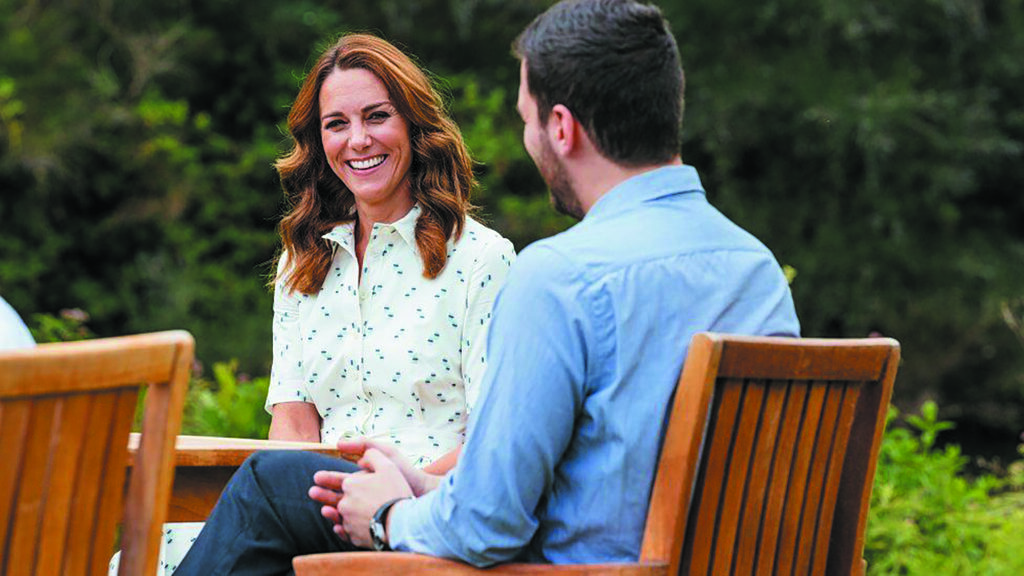
The second appearance is on the podcast Happy Mum, Happy Baby, which aired in February 2020. The presenter Giovanna Fletcher says she is nervous after her introduction and the Duchess says: “Don’t worry -I’m nervous too.” For the listener, as for Fletcher, a gap is closed, a common humanity noted.
Later in the interview, the Duchess continues: “I had a very happy childhood, I was very lucky. I have a strong family. My parents were very dedicated. They’d come to every sports match and would be on the sidelines shouting.”
Some reminiscences ensue with Fletcher about her own childhood visits to Curry’s, and Kate interposes with a kind of agile empathy, “How about you? What was your childhood like?” This leads to a brief discussion of the bullying Fletcher experienced as a child. It is a very simple thing, you might think, when you’re being interviewed to mind at all about the life of your interviewer. Except to say that, in the experience of this interviewer, very few do – and many of them have far less profile than Catherine does.
Whenever you speak to anyone who knew Kate or William growing up the tone is different. It is matter-of-fact – above all, it is sane. The respondent almost seems to pity you for wanting to know – because if you have known them, there is no mystery. But for those who haven’t known them, there is the mystery of our looking so much to so little purpose. What we are peering at is our own frustration. Like Mantel at Buckingham Palace, we are somehow unable to accept that we are looking on human material, and that the answers to all the questions we might have about the couple do not lie outside us; they’re within, in our very need to know.
And the couple’s mental health campaigns seem to open up onto the idea that we could all do with a dose of sanity in our own lives, not just in relation to what we’re dealing with, our own strains and stresses – but in relation to them.
A Scotland Romance
This sense is brought home for me when I begin to look at the couple’s time at St Andrew’s University. I speak with Stephanie Jones, now a successful brand manager, who attended St Andrew’s at the same time as William and Kate – and in taking art history, did the same course as both, though William subsequently changed to geography.
“It was all discreetly done,” Jones recalls. “I remember walking down the street and tripping and then looking up and seeing Prince William quite near and thinking that this wasn’t the impression I wanted to make! But he had no bodyguards around him. I remember seeing him in the pub too and if he had a security detail it was entirely made up of hopeful girls!”
Of course, this isn’t the whole truth. If things seemed normal to contemporaries, they sometimes seemed to be spinning out of control. Around this time, once the relationship broke, Middleton became ‘Waity Katie’ in the media – a horrible moniker. And of course, there is nothing to make you think about the question of mental health quite like running into the reality of the tabloid press.
It is as if St Andrew’s, in its size and remoter location, were better able to accommodate William’s arrival than Eton had been. Jones says that the principal change she remembers with William’s arrival at St Andrew’s was that the year William joined, there was a marked increase of blonde American girls: “But whenever I saw him, he seemed normal. We all felt this responsibility to sort of let him get on with it, and enjoy the university and not feel hounded.” Once again, we near the suspicion that William may not only be projecting normality – that he may actually be “normal”.
The Diana Effect
But of course, there is one area in which William isn’t normal and this is in the terrible fate that his mother met on 31st August 1997 in the Paris car accident.
Jones continues: “We were protective about what happened with Diana. I would walk past charity shops and see books about her in the window and think how tacky that was and how hard it must have been to walk past if you were William. His pain was being commercialised.”
This is empathetic – and today, we still feel it. An observer of the palace who has known William for years says that it infuses coverage surrounding the boys. “They’ll always on some level be the boys traipsing behind the coffin.”
So grief enters the story – a wound so painful that we almost think it might be an impropriety to discuss it. But Dr. Paul Hokemeyer argues that we cannot avoid it when discussing William and Kate’s mental health campaigns. “Prince William is a brilliant example of the healing power of two key psychological traits known as resilience and grit,” he explains. “The first, resilience, refers to our capacity to make meaning out of tragic events and to move ourselves and the world around us in a repairative direction after the event.”
This feels relevant as it is something like this “repairative direction” in which William now seeks to steer us all with his mental health campaigns.
And the second trait? Hokemeyer is clear: “Grit enables us to tolerate short term discomfort to attain a long term goal. As this relates to Prince William, he had to sit not just with the crushing pain of losing his mother, but with also being an obsession of the public; and he had to do this without devolving into a tragedy himself. His capacity to do this with dignity and grace is exceptional. Not only has he navigated that terrain brilliantly, he’s gone on to create a family that reflects the class, dignity and nobility of decades of British royalty.
Hokemeyer continues: “The trauma of losing a mother at an early age sets a child up for a journey down the path of meaning and repair (resilience and grit) or of wandering through the brambles of life, lost and emotionally alone. The individuals who travel on the first path have what is known as a robust ‘internal locus of control’. They’ve internalized a healthy sense of self. As this relates to picking a life partner, people with a healthy internal locus of control pick mates who compliment them in their journey of healing and providing hope to the world around them.”
Another psychologist, Dr. Jonathan Garabette, a private consultant psychiatrist who also specialises in mental health, is less sure about the whole question: “Our choice of partner is a complex and enigmatic area. I think it’s important to consider that we are living in the internal world just as much as (or even more than) we are living in the external world and our internal worlds are populated by memories, relationships, people, infantile childhood, adolescent and different parts of us and all of this exerts a much greater effect on our psychology and our choices than we may consciously be aware of.”
And how may that have affected William? “Many people, especially after being affected by trauma, are searching for a relationship that provides meaning, and a sense of safety and connectedness and we will each find this in different ways in different aspects of others. It’s also important to remember that what we see on the surface, particularly on public figures, is just that – it’s a surface impression and we should remind ourselves that they and their partners are complex three dimensional human beings and the connection that people may have between them may not be easily apparent to those on the outside.”
So is there anything we can say about the choice of life partner someone might make who has been through trauma? “When I speak to people, especially those who have been traumatised, about how they came to end up with their partner, it’s often because that person has managed to touch upon a very deep and intimate part of that person that others might not even have had the opportunity to be aware of.”
Trauma and grief make William an immensely plausible campaigner for mental health. It is possible to imagine him in his current role without the awful loss of his mother, but hard to imagine him being so effective in it. Garabette’s remarks sensibly distance us from William and Kate, and indeed they remind us of the essentially unknowable nature of other people.
This fact, so simple and non-negotiable, is something about which contemporary commentators of the couple seem in denial: a typical Mail or Tatler article today is full of a bogus desire for an insider’s light bulb moment which will suddenly open everything up – hand them to us on a platter. This cannot happen; and shouldn’t happen.
But Garabette also reminds us that their internal worlds are similar to ours and that if we really want to know what they think, we need to know what we think. It isn’t too much to suppose that this is one aspect of the conversation the couple wants to start with their campaigns. Again we return to the notion that a really wide-ranging national conversation surrounding mental health would also necessitate a fundamental restart of our relationship with them.
Action Figures
But as the couple has pointed out, it isn’t just a conversation that needs to start; action has been pledged. The £1.8 million which the couple pledged to charities is already making a tangible difference to some of the charities under discussion. In the box opposite we highlight some of the work that has already been done with the money pledged by the Royal Foundation.
But how does the allocation of funds work in practice? One former colleague, who attended numerous meetings at the beginning of the process, explained the ethos surrounding the mental health campaign: “The Duke and Duchess are very private necessarily, but absolutely committed and passionate about their work. Their initiatives take a long time to evolve as they don’t want to put their name to anything that will fizzle out. It has to be long-term and sustainable across a large swathe of society, so they can get their teeth into it.”
This feels, then, like a new approach to royal patronage? “It is a bit of a departure,” the former household member continues. “Look at the Queen. She has 900 patronages, and it used to be that as long as you weren’t doing anything stupid you’d get a patronage. Now they’re careful about what they want to get behind: it’s there with you for life, and they’re very keen to make sure their causes are followed through on.”
So what happened? It’s important to note that in giving the monies, the Duke and Duchess haven’t become patrons of those charities. The £1.8 million was granted by the Royal Foundation through a bespoke fund set up as part of the organisation’s response to COVID-19: it included, but was not limited to, support for Heads Together partners. Decisions on allocation of funds was taken by The Royal Foundation, whose current CEO is Jason Knauf, in line with expectations of Their Royal Highnesses, donors and trustees.
The impression then is that this was a team effort, with Their Royal Highnesses demonstrating real leadership. Others Finito World spoke with also praised the wisdom of private secretaries past and present and the role of trusted people in the sector, such as Paul Farmer, now CEO of Mind, and Victoria Hornby, who runs Mental Health Innovations.
It has been an extremely fruitful and productive relationship: Hornby would be instrumental in establishing Shout 85258 in 2017 with the Royal Foundation’s largest ever grant of £3 million. Meanwhile Mental Health at Work was established in partnership with MIND. Other projects also came to fruition, most notably Mentally Health Schools in concert with The Anna Freud Centre, Place2Be and Young Minds. This is no casual dabbling in the sector, but a profound engagement with a societal problem.
All those we spoke with emphasised the personal commitment of the principals. Hornby explains that the Duke “went above and beyond when he became a Shout Volunteer. After undertaking rigorous training, he joined our army of 2,800 volunteers who provide anonymous, in the moment, mental health support to people in urgent need of support. Our volunteers were absolutely thrilled when Prince William revealed, via a video call, that he was on the Shout platform with them.”
Farmer also spoke to Finito World extensively for this piece. We asked him what impact the Duke and Duchess’ campaigns had had: “Heads Together has sparked millions of important conversations about mental health” – again the importance of starting conversations – “and the Royal Foundation has raised money to support innovative projects to tackle the challenges we can all face in talking about, and seeking support for, our mental health in the workplace,” he explains.
But Farmer also highlights areas for improvement. In particular, he argues that the country needs to think fundamentally about the nature of the workplace: “All employers – including government – should be reflecting on how work can be undertaken moving forwards. Within many workplaces, the sources of poor mental health at work are often cited as including unrealistic demands, excessive workloads and problematic relationships with colleagues and other stakeholders.”
And how has the pandemic altered these causes of stress? “They were prevalent even before the pandemic, but research suggests mental health among staff has worsened further. Data from 40,000 staff working across 114 organisations taking part in Mind’s Workplace Wellbeing Index (2020/21) found two in five (41 per cent) employees said their mental health worsened during the pandemic.”
Farmer is also disappointed that, after the Theresa May administration welcomed the Thriving at Work report, its recommendations haven’t been properly implemented by the Johnson administration: “They have failed to improve protections from discrimination in the workplace in the Equality Act 2010 for people with mental health problems. Although they consulted on making improvements to Statutory Sick Pay (SSP), including phased returns to work and expanding SSP to the lowest paid workers, last month the UK Government announced they would be making no changes to SSP.”
When we asked Farmer to describe the effect of this recalcitrance, he was blunt: “As a result, many people with mental health problems have been left without access to the protections they need, and risk being pushed out of the workplace. We believe that the UK Government can and should do more – in the case of SSP, this is a recommendation that four years on, has still not been actioned.”
A spokesperson for the Department for Work and Pensions said: “The pandemic was not the right time to introduce changes to the rate of Statutory Sick Pay (SSP) or its eligibility criteria. This would have placed an immediate and direct cost on employers at a time where most were struggling and could have put more jobs at risk. We instead prioritised changes to the wider welfare system which is the most efficient way of providing immediate financial support.”
The spokesperson added: “As part of our £500 million mental health recovery action plan we are also helping people with a variety of mental health conditions, including though the expansion of integrated primary and secondary care for adults with severe mental illness.”
Asked for positives, Farmer had this to say: “We’ve now seen over 1250 organisations – including most Government departments – sign the Mental Health at Work Commitment, demonstrating their commitment to better protecting, supporting and promoting the mental health of their employees.” This is a tangible achievement and shows the impact of which Kensington Palace is capable.
But the failures of the Johnson administration on this front open up onto the thorny question of Kensington Palace and its relationship to government.
Nicky Morgan, a former member of Finito’s advisory board, who has deep experience of government, explains how she never worked with the Royals while in office – and this turns out to be the norm, even among senior experienced politicians. Asked what government could do to help on mental health, Morgan said: “As the founder and now Chair of Trustees at a small mental health charity and social enterprise in Loughborough, I can say that keeping on top of all the paperwork is quite a task and we have really had to make sure it doesn’t distract us from the mental health support work we do and the activities we provide.”
The Turning of the Key
So is there a role for government in this area? “I definitely think it should be left to local communities and groups to identify where charitable support is needed and that this shouldn’t be coordinated by government,” Morgan continues. “The one area government could help is in encouraging the NHS to work in a more systemic way with local charities: too often at the moment it is purely down to whether local individuals happen to meet and can build good working relationships.”
Fiona Millar adds: “From my own time working in government, and subsequently as an activist, I would say that focussing on one specific issue and becoming “expert” in that issue is much more effective than dipping in and out of different causes.”
There is food for thought here. Dennis Stevenson tells me that ‘mental health doesn’t really need government at all anymore”. On the other hand, the likes of Farmer are clear that there is more to do.
The likelihood is that Kensington Palace will continue to work its own terrain. One former member of the Royal Household, who worked for the couple around the time of the London Olympics, recalls: “We might work with government a bit on the sport side of things, and have Hugh Robertson (the then Minister for Sport) to the Palace. But, in general, for big projects, if we wanted guidance on the NHS, say, in relation to mental health, we wouldn’t go to the Health Secretary but to the NHS itself. In general they prefer to keep politics out of it.”
Another source agrees with this and adds that this attitude is to do with “wariness about how the Prince of Wales was drawn over the coals for black spiders and so forth. Kensington Palace now wants to make it clear that what it’s doing is completely apolitical.” The source adds: “The role the Palace really plays is the power of convening. Everybody will take a meeting, and so they can get different people together in the room.” With their mental health campaigns, that’s exactly what the couple has done.
Band of Brothers
Government turns out not to be a thorny issue at all compared to two things which have turned out to be particularly headachey. The first is Harry, and the second is the press. But the more you look at that problem, the more they come to seem one and the same thing.
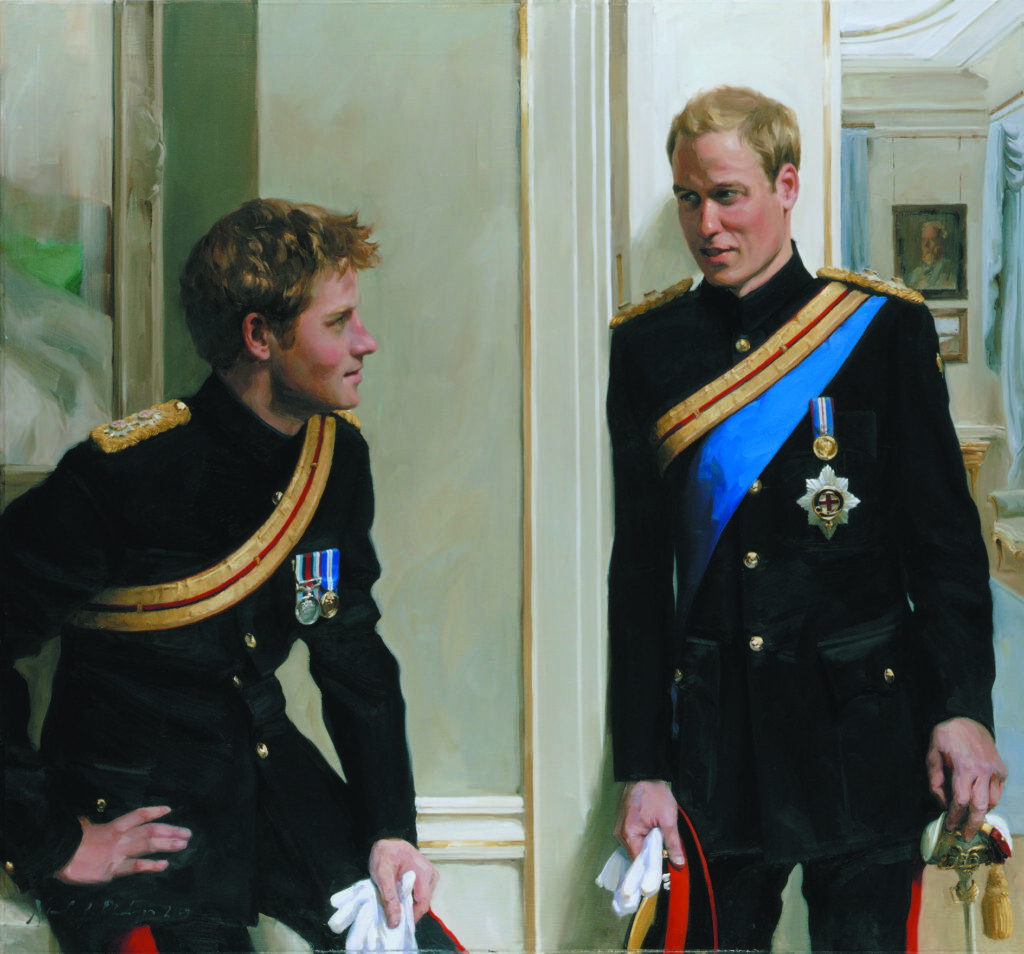
In the first instance, I speak to Nicky Philipps, the brilliant society portrait painter whose picture of William and Harry hangs in the National Portrait Gallery. Philipps recalls painting the commission with great fondness, although she admits that the picture was painted under considerable pressure. “It was very nerve-wracking – until I met them,” she tells me.
Again, the sense arises that these people we think about so much, turn out to be so much like ourselves up close. “Harry was so sweet. The person I knew is not the man in California whingeing about his setup. I don’t know what’s happened now. He was so lovely.”
Philipps explains some of the complexities of organising a royal portrait: “The light is all wrong at Clarence House,” she recalls. “I was determined to have proper north light, but the sun was pouring through and changing the colour and causing havoc so I asked if they could come to my house.”
And what was that like? “They organised it and the police came.” (Again, the police: harbingers of the royal presence). But when the principals arrived, everything changed. “They were just like everybody, very natural and fun together and they created their own pose. I didn’t have much to do – they arranged themselves.”
Today Philipps, who has also painted the Queen on three occasions, looks back on that 2008 sitting and says she’d have liked more time. “They were in uniform so I had to take photographs of the uniform and the medals and couldn’t get much down there. I had five sittings – which sounds a lot but it isn’t when you’ve got to do two heads.”
It’s worth looking at this painting closely. Over time, the picture has changed – one thinks of Oscar Wilde’s Picture of Dorian of Gray, where a picture changes because the world around it cannot remain static. “What’s quite weirdly prophetic,” continues Philipps, “is that I couldn’t find a way to arrange them with William in a doorway and still have Harry to be looking at him. There’s this lintel going down the middle, and I have an awful feeling it’s slightly off centre. Now I look at it and it’s the Great Divide.”
If you look at the picture, it’s true – the two princes are looking at each other fondly, but they are also irrevocably separated, each inhabiting separate fields of energy, as they sadly do today in real life.
“Never in a million years would I have thought it would have ended like this,” Philipps continues. “Harry was more casual, and William was more on it – but they were one. They were lifelong friends so far as I was concerned.”
There seems little doubt that the press must bear some of the blame for the deterioration in their relationship. One person who used to work at Kensington Palace was worried at the time about the drip effect of negative stories about the princes: “They would definitely get hurt by what they read in the press about each other.”
Philipps has also painted the Duchess: “Kate’s absolutely sweet and extraordinarily graceful. I never met anyone who carries themselves so well and is so patient.”
Nicky Morgan is among those who understands the difficulty ranged against the couple when it comes to the media: “You have to learn to ignore much of the commentary directed at you, decide whose opinions really matter to you, and realise that social media is both a great way of communicating a message about your work but can also be a source of great abuse and distraction.”
Tattling Tales
None of this will be remotely news to William and Kate, who deal – and will deal forever – under a greater scrutiny than any Cabinet minister. But the dynamics are the same – and again they always work against narratives of simplicity and happiness, since it has been decided that such stories lack the ghoulish jeopardy which we apparently expect from our newspapers.
Once again, there is a simpler interpretation of their story. Philipps adds: “I think it’s been a fantastic revelation to see how a middle class family can be so cohesive. Although the Royal Family is a very solid block in a way, I think to be taken under their wing would be a lovely thing to experience.”
This brings us to the unpleasant story in Tatler which published earlier in the year under the headline ‘Catherine the Great’. This story, run under the editorship of the Duchess’ contemporary at St Andrew’s Richard Dennen is an example of the kind of journalism – full of insinuation and straightforward unkindness – which this publication opposes. Dennen appears to have befriended the Duchess of Cambridge while at St Andrew’s, and is remembered by Old Carthusians as a shy boy, whose subsequent transformation into a society gadfly has always caused considerable perplexity.
The story posits a Duchess who is tired of the stress, when her work ethic according to those we spoke with is impressive. Meanwhile Carole Middleton appears as a snob, when the reality is different. A source said: “Nobody reading that Tatler article who knows the family would recognise the description of Carole which it contains. In reality she is a straightforward decent person. In my experience successful business people do not have time to be snobbish – they’re too busy. And Carole is very successful and has been a great role model for the Duke and Duchess of Cambridge. There was never any need to spin any of this negatively.”
The Throne of Reason
What should the Royal family do in relation to the media? Michael Cole, who formerly worked for the BBC as royal correspondent, tells us unequivocally: “The British media are not the enemy of the Royal Family. As I have said to more than one royal personage, the time for the Royal Family to worry about the media is when the media is no longer interested in the Royal Family because that will mean the game is up because the Great British Public is no longer interested either.”
It will indeed be a sad day when a belief in good journalism departs Kensington Palace, although Miguel Head is among those who attests to Prince William’s belief in the enduring importance of the Fourth Estate when it is doing its job properly.
But Cole’s remarks also overlook the possibility that the onus may lie with us to look differently, as I suggested at the beginning of this article.
Covering William and Kate, one begins to sense that too often we overcomplicate life. Their story is simple just as their mental health campaigns are admirably straightforward. They were born into well-to-do families, and fell in love, and one of them was set to be the King of England – and in our system someone always will be monarch. In time, the pair found that if they were to do good it must come out of the gift each had, and which each had seen in the other: empathy.
And so it went. “Too often, people feel afraid to admit that they are struggling with their mental health,” the Duchess of Cambridge has said. “This fear of judgment stops people from getting the help they need, which can destroy families and end lives. Heads Together wants to help everyone feel much more comfortable with their everyday mental wellbeing, and to have the practical tools to support their friends and family.” It is a perfectly simple message, and we might call it bland – but equally we might call it true.
Perhaps in the last analysis, the couple’s mental health campaigns ask us to correct our attitudes to class and to celebrity. If we were to do away with our obsession with the trivial, we might find we suddenly have room for what really matters: the creation of meaningful lives where we don’t seek to tear one another down, but to look out for one another.
As Matt Hancock emerges from the jungle, he recalls his time as Health Secretary and offers lessons to the next generation
In the global fight against Covid-19, there has been one group of people who have sacrificed so much and yet received such little praise – young people. I understand how difficult it has been for young people during the pandemic. From not being able to study, to not being able to see friends in person and missing out on so many exciting opportunities, Covid-19 has been extremely difficult.
As Health Secretary, I was so grateful to young people for playing their part in the wider national effort. Because the virus is so much more deadly with age, the sacrifice made was all the more generous the younger you are. Without that sacrifice though, we simply wouldn’t have been able to suppress the virus and save lives. So from the bottom of my heart, I want to thank everyone who played their part.
As I look back over the pandemic, some of the greatest highs I felt were when I saw young people queueing in their swathes to get vaccinated. At sports stadia, at local pharmacies, or in places of worship, we saw individuals making the conscious decision to come forward to protect others. While some said it wasn’t worth the risk for them, the vast majority of young people have been vaccinated. Speaking to some University students who got their jabs, I was struck by the sheer selflessness of this generation. I was told that while they felt it was important to protect themselves from issues that come from long Covid, the main reason why they were getting vaccinated was to protect their friends, loved ones and the wider community. The generosity and open-mindedness of these students gave me huge confidence for the future of our country.
So, young people have sacrificed formative parts of their childhood and got vaccinated to protect others. I will not accept the failed argument that young people are lazy and selfish. In fact I think it’s quite the opposite. For me, young people have been the quiet heroes of the Covid war.
Now it’s fantastic to see 12 to 15 year-olds coming forward to get their jab in such large numbers. Recently, we reached the impressive milestone of over one million 12 to 15 year-olds having had their jab. I urge all children who are offered to come forward and get theirs, to protect themselves, their educations, and people that they love
Continuing in the spirit of selflessness, it shows the spirit of this generation that last year, there were record levels of applicants to medical schools, and nursing qualifications, in the UK. This is so promising for the future of our NHS, but also for the possibilities that this brings for future scientific discoveries.
We’ve seen as a country just how valued our scientists and healthcare workers are. For instance, a YouGov poll this year showed that scientists and doctors were the most respected professions in the UK. I was also very emotional when I saw the video of Professor Sarah Gilbert from the Oxford vaccine group receiving a standing ovation at Wimbledon. From seeing closely how hard Sarah and her team worked to create their vaccine, I couldn’t imagine someone who deserves the whole world’s gratitude more than her.
Think about this team of scientists at Oxford University who dedicated their lives to creating the global cure for the pandemic. I gave them the ambitious mission of creating a vaccine in ten months that we were told would usually take up to 10 years. Their hard work, creativity and perseverance working alongside the great team at AstraZenea, has given the whole world the security it needs against this deadly virus – at cost price. With further improvements in technology and more funding going into scientific research, British science has fast become a cornerstone of our economy and society.
It’s an incredibly exciting time to be working in the field of medical research. Everyone knows about vaccine development, of course. But in the UK we’ve also seen incredible scientific discoveries of drugs and antivirals for Covid-19. British scientists in the Oxford-led DISCOVERY trial found that Dexamethasone was clinically proven to save lives against Covid-19. Dexamethasone has now been estimated to save well over a million lives across the world. We’ve also seen more recently how the Antivirals taskforce, set up just in April this year, is making great progress in securing antivirals to protect people after they catch Covid.
As we grapple with this pandemic, with new variants as they emerge, it is the medical science that will help us through – as it has done so often in the past.
This is the main reason why I’m writing this piece. I hope that the brilliance of British scientists throughout the pandemic will encourage the next generation to enter into medicine. Working in medicine brings such benefits to society, but also to yourself. In very few jobs can one say that they experience both the best times and worst times in peoples’ lives. From births to deaths, those in the NHS are there for us when we need them most. Speaking to NHS workers, the principle they all have in common is the sense of reward for helping others.
When the public were told to stay at home to save lives, they did so because they wanted to protect our precious NHS. At the same time, NHS workers and at one stage, over 35,000 medical students stepped up in the face of adversity to help look after others in their time of need. I was delighted when Her Majesty The Queen awarded the NHS the George Cross to reflect just how important their contribution was to the UK’s collective fight against Covid-19. The George Cross is awarded for “for acts of the greatest heroism or for most conspicuous courage in circumstance of extreme danger”. I can’t think of anyone more deserving of this award in peacetime.
But working in medicine is not only about public service. Our caring professions have never been more highly thought of. While the rest of the public sector saw a pay freeze in the face of the pandemic, that was not extended to the NHS. More excitingly, medicine is at the cusp of groundbreaking changes unlocked by the insights of modern data. From genomics to the use of wearables, data is transforming how we care for people as much as it has transformed so many other areas of our lives in the past decade or more.
So, if you are debating your career progression and want a rewarding opportunity that will give your life variety and fulfilment, I couldn’t recommend a job in science or healthcare more. You’ve got to be up for the challenges – because they are significant and tough. But the rewards are also huge: they are those of a mission-driven fulfilling life.
One of the many lessons of the successful vaccine roll-out is that when people with passion, precision and purpose come together, we can achieve great things. That’s what happened so conspicuously in the pandemic – but it’s what happens every day and every night in medicine. With British medicine and life sciences so demonstrably a global superpower, there has never been a more exciting time to go into the world of medicine.
A look back at when Patrick Crowder spoke with Be Military Fit – and even tried a military fitness class himself
To make things clear from the outset, the writer of this article is no paragon of physical fitness. I generally eat what I want, and I spend much more time in the snooker hall than the gym. So when it came to talking to the good people at Be Military Fit, I initially felt intimidated and wondered whether it would be for me.
So first up, what as it? Well, Be Military Fit – or BMF as it’s known – is an outdoor fitness program designed to get people in tip-top shape while building a community of support and encouragement. Two thirds of their fitness instructors are veterans who bring their experience and resilience to the table, encouraging members to push themselves to reach their goals.
It’s also got star power. Survival expert Bear Grylls co-owns BMF, and during the lockdowns he kept the nation moving with livestreamed fitness classes. As a veteran of the SAS, Grylls is proud of the company’s military heritage and regularly engages with members of the BMF community.
Be Military Fit is a success story of the pandemic and now trains around 30,000 members every year
In addition to training around 30,000 members every year, BMF provides training to new army recruits through a partnership with Capita, which handles army recruitment. First, I talk to Ivan Rowlett, who was an officer in the British Army and served in the Parachute Regiment for 12 years before taking his expertise to BMF. He describes for me the way the company’s training programme gives recruits the edge they need to make it through.
“The program we designed for them covers three aspects – mental resilience, performance under pressure, and motivation to train,” he tells me. “The physical component looks at basic conditioning, how to operate via heart rate thresholds, which a lot of these kids aren’t used to, and how to eat to perform.”
Rowlett points out that the mental side of training is just as important as the physical side when dealing with recruits from many different backgrounds: “Often people misunderstand and think the recruits will all be hyper-fit and motivated – but many of them come from tough backgrounds, some from privileged backgrounds, and it’s actually about building that confidence and teaching them how to perform.”
Bear Grylls is proud of the company’s commitment to the welfare of veterans. Photo credit: By Jamie Gray from Englandwww.jamiegrayphotography.co.uk – Bear Grylls, CC BY 2.0, https://commons.wikimedia.org/w/index.php?curid=30276624
This team-building mindset is fostered by the instructors who have formed communities which have been able to survive many obstacles.“We’ve seen very low attrition rates, even throughout Covid, and a lot of that comes from the more intangible qualities the instructors have in terms of how they lead, inspire, and motivate their members. Those human aspects help develop that team ethos which runs through – they don’t just work out together, they socialise together and change their lives,” Rowlett explains.
We’ve seen very low attrition rates, even throughout Covid, and a lot of that comes from the more intangible qualities the instructors have
Ivan rowlett
The success of the programmes has been extraordinary. According to Rowlett, recruits who trained with BMF were 30 per cent more likely to succeed than a control group which did not undergo the training. They perform trial assessments for new recruits and are currently focused on training more women to succeed in army fitness tests.
So how exactly does it work? BMF holds classes in outdoor spaces across the UK, training thousands of people in sometimes adverse conditions – unless it’s a genuine safety concern, they go out no matter the weather. Eager to know more, I talk with Chairman of the company, Chris St. George, who was an officer in the British Army serving with both the Parachute Regiment and the Coldstream Guards. Now he takes his experience to the world of fitness training.
“I think there’s something around the nature of training – it’s around building teams,” St. George says. “When you train together and endure the weather and conditions outdoors, you get something that you don’t get from a conventional gym or fitness business.”
So much of the value of this training comes from the experiences of the instructor. St. George believes that veterans are well-equipped to help others form communities and train to a higher standard: “I believe the veteran skillset is extremely compatible with the workplace,” he continues. “The very dogged mindset, the discipline and training you learn in the military, and also the ability not just to learn but to train and educate others is something which enables former soldiers to be really great employees.”
When you train together and endure the weather and conditions outdoors, you get something that you don’t get from a conventional gym or fitness business.”
CHRIS ST. GEORGE
The company is an impressive employer having secured 3,000 veterans jobs over the years
The scale of the operation is also impressive. BMF has employed over 3,000 veterans over the years, and many of their franchises across the UK are veteran-owned. St. George and Grylls are committed to maintaining a strong military connection with BMF while also recognising the need for expansion.
“BMF is invested into by veterans, owned by veterans, run by veterans, for veterans, so there’s a real community here,” St. George explains. “We have franchisees in the network who’ve done the hard yards in Iraq and Afghanistan, joined us as trainers on a pretty low salary, then a year or two later become managers. A number of them went into franchise, and now you have some members of the network turning over £50,000 a month whereas a year of two ago they were on a salary of £25,000 – £30,000 pounds.”
According to St. George, the key to a successful shift from military life to business is dependent on how veterans are exposed to the intricacies of the industry. “Sometimes the commercial business mindset can be overwhelming for an ex-military guy, but I think if it’s explained in his language and culture by people who understand him he can move very quickly into business.”
You do not have to be a veteran to be a BMF franchise owner or instructor, and they offer training to new instructors to help them understand the firm’s mindset. The company believes that as BMF expands the best results can be achieved by having a healthy mix of veteran and civilian business partners.
The company aims to connect veterans with entrepreneurs and create community spirit
“I’ve been out for just over two and a half years, and I hopefully bring a lot of quality experience to the business, but I’ve still got lots to learn about the commercial world. So I think you want a healthy balance of military and commercial people working together,” St. George adds.
A community mentality is at the centre of BMF’s mission. By using physical fitness as a medium to create strong bonds between members, BMF is much more than just a fitness class. The goal is to improve the lives of members in a holistic way which is not purely physical: “For us, although it is a fitness and training business, the vision was always about improving the lives of the members. The training we do outside is only 50 per cent of it. There’s a huge community where people socialize together, and particularly during Covid, there was an incredible network of support. People would show up online for their fitness sessions to see the same hundred faces they would see in the parks and say ‘Judy, how are you doing?’ ‘John, are you hanging in there?’ so it’s certainly very different to businesses which are only about training. People join BMF as a family.”
BMF has something for everyone. It’s not only for the hardcore, extreme fitness fanatics; it’s a way for people of all fitness levels to come together and improve as a unit. So in spite of my slightly lackadaisical approach to fitness, I couldn’t in good conscience tell readers that anyone can do a BMF fitness class without first trying one for myself.
“Take things at your own pace, stop if you need to,” Graeme said. “We’re not trying to kill you!”
The instructor for the day was Graeme Barr, a funny, charismatic man who immediately put my fears at ease. I introduced myself and told him that I was an absolute beginner.
“Take things at your own pace, stop if you need to,” Graeme said. “We’re not trying to kill you!”
Thankfully I wasn’t the only newcomer there, and the environment was welcoming and encouraging. My breathlessness after the warm-up run, on the other hand, was not so encouraging, but I persevered.
After the first run, we lined up in two files for bodyweight exercises which covered the back, arms, legs, and abs. Graeme demonstrated each exercise clearly – even the ones you might remember from school – and he provided encouragement and advice when we strayed from the path.
To accommodate different levels of fitness, there are three groups: blue, red, and green. We all ran to the same places and performed the same exercises, with more advanced groups having more repetitions or laps to cope with.
Throughout the class, Graeme was conscious of varying abilities, often suggesting substitute exercises when members couldn’t perform a particular one due to previous injuries. He told me of a time when he coached a person with total visual impairment through the same exercise regimen we had just completed, describing each move in detail to accommodate their needs.
During the small amount of down-time between exercises, I had a chance to get to know a few of the members. They were very friendly to us newcomers, and I never detected a hint of ego once during the one-hour session.
Before I knew it, we were doing our cool-down stretches. I had survived. Not only that, but it actually felt good! Granted, some parts were quite difficult, but I never felt that I was being pushed too far outside my comfort zone.
As I nurse my slightly sore legs, I can safely say that anyone who wants to improve their fitness, work on their confidence, or just prove to themselves that they can achieve something should try a trial class with BMF. In fact, I think I’ll go back next week.
Go to www.bemilitaryfit.com.
Check out Patrick Crowder’s piece on the HR industry here
As the travel industry continues to confront headwinds, James Lohan tells us about what the life of a travel executive is like during a pandemic. First published in February of 2021.
Monday1st February
The overnight dreams that preface my working week are of a world where travel has made a triumphant return (flying, literally) and the pandemic is yesterday’s news. Then I wake, read the actual news on my Kindle, and wish I was still asleep. Turmoil in the US, the NHS at breaking point, flooding across the UK…bleak doesn’t really do it justice. I’ve been lucky enough to have escaped the virus and many of its direst repercussions. But for someone who spends most of his waking (and sleeping) hours either dreaming of or actually in far-off destinations, the enforced domesticity of lockdown is a perverse kind of cruelty.
After digesting much of the daily news cycle, I check the company’s daily booking stats. Unfortunately, these usually confirm that I should have opened that article on Brexit – another car crash that would’ve made for happier reading. Then I’m up and out to walk Ziggy, our working Cocker Spaniel, to clear my mind. Or I consider filling it with yet another inspiring podcast to make me feel like I haven’t achieved enough lately. Gunnersbury park is fine but I’m starting to feel like a lion at Longleat: I want some bigger plains to roam.
After two cups of coffee, a refreshed To-Do list and an inbox clean-up, it’s straight into a “thrilling” ops-board meeting to discuss cancellations, amendments and furlough rotas (again). After that, it’s my direct team catch-up to decide what can get done during their limited flexi furlough hours. Furlough has been a great financial help but it’s hard to run the business when your team is so part-time. Funny how we’ve come to view the scheme: it used to be a dirty word, some colleagues interpreting it like they’d been benched. Others have loved it, seeing it as time to rest and contemplate their futures. By now, though, everyone understands how important it is to help us survive the next few months.
Tuesday 2nd February
Tuesday mornings it’s yoga, 8am, to keep my ageing joints moving in the right direction – even if right now the business isn’t. On this particular Tuesday we’re bracing ourselves for another surprise announcement from No.10 Sesame Street, before which we hold our breath and wonder what Big Bird Boris and Kermit Hancock are going to spring on us next. I have no problem with lockdown – an absolute necessity in response to the crisis. What’s so difficult for us is the lastminute.com nature of the decision-making that’s causing chaos for agents like ourselves who have to pull rabbits out of hats as we yet again cancel or amend our members’ holiday plans – with less than 24 hours’ notice. It’s a nightmare, too, for hoteliers who might be rueing that enormous food order and wondering, for instance, what they’re going to do with 200 turkeys. But while it’s soul-sapping for our team, I’m proud of the way we’re doing our very best as a business to keep our members and hoteliers happy.
Wednesday 3rd February
The thing I do like about working from home is the commute: very convenient indeed. That said, it’s an odd sensation when the day’s big ‘outing’ is a shopping trip to the local greengrocer and butcher in Chiswick – in a mask and at a safe two-metre distance. But cherished time away from my desk it has most certainly become. Wednesday also means a meeting with my main team to discuss sustainability and what we’re doing to integrate such practices throughout the business. We’ll shortly be announcing our efforts in supporting the Blue Marine Foundation and the World Land Trust, two vital conservation charities with goals to protect the earth’s precious assets on land and sea. And we’re adding a more dedicated sustainability section on each page of our 1,400-strong collection to help our members find and book the planet’s most forward-thinking hotels. I’m certain that an important by-product of the pandemic will be people’s greater awareness of the climate crisis and how our travel choices impact it.
Thursday4th February
Yoga day two, where I try to pretend I’m on a beach in Bali doing my downward-facing dog, but the rumbling of the E3 bus keeps breaking my shavasana in our front living room where I’m practicing. It’s nearly the weekend, which as a concept begins to mean less and less – just with fewer meetings and emails. What to do with the kids to keep them off their computers is the weekend challenge, and explaining that we can’t see Grandma and no you can’t have a play-date and yes we will be walking the dog again and yes it will be in the same location as yesterday…it’s tough for them. Home-schooling and even just making three meals a day for us all is not an easy gig. I never thought I’d miss my Pret a Manger lunchtime sandwich so much, which was just a few minutes’ walk from our office in Shepherd’s Bush.
I sit next to my wife (our CEO) in our home office and it’s a constant juggle to agree on who’s speaking or who’s muting during the various online meetings so we don’t create feedback for the other poor Zoomers on our call. We’re both going slightly mad as we’re also forced by proximity to hear each other’s individual calls, and the ‘how’s-Covid-working-out-for-you?’ chat that precursors every conversation nowadays. That said, a couple of very nice new partnership meets means the day has been a success, and all wins – however big or small – are gratefully received right now.
Friday5th February
Thank God: the day of wine. I don’t drink during the week, so Friday has become a celebration of, well, my midweek abstinence. And as I’m drinking a little less, I’m spending a little more on each bottle – and I can’t wait for Friday to come around to pop open my next treat. Work slows on a Friday, too, as so many of the team is on furlough, so it’s a good time to tidy up loose ends so Monday feels a little less daunting. Our flight has just been cancelled for February half term to what would have been our first curation trip / holiday (always mix business with pleasure) in nearly a year. Gutted. It gets to midday and I’m already thinking about cracking open the wine but I still have a couple of meetings left so better hold off.
Friday is also when WhatsApp group texts with mates seem to explode into life, gaining more momentum throughout the day as people clock off one-by-one and begin mixing their G&Ts. How strange that socialising has been reduced to this, although the novelty has very much worn off by now. Tentatively, we all discuss getting together for a group holiday in a villa when lockdown ends and I’m quizzed on predictions for travel opening up again and where best to go. There’s no doubt in my mind that 2021 will eventually end up being a good year; I just wish we could get on with it sooner. Patience has never been the trait of an entrepreneur – so I’ll just have another glass and remind myself: we’ll get there. Cheers.
A look back on Sophia Petrides’ exploration of the problems CEOs faced during the pandemic. Originally published June of 2021.
By Sophia Petrides
Over the last three months I have beenspeaking with CEOs, leaders and entrepreneurs about leading through the pandemic and lockdowns of 2020 and 21. It will probably come as no surprise that the results show that the 50 leaders I spoke to all reported new challenges as they explored new ways of working remotely. They had to learn, as if from scratch, how to manage teams, and engage with clients and how to manage the group of CFOs, CTOs and CFOs sometimes know as the C-suite. The leaders I spoke to head up small, mid and large cap organisations across financial services, technology, healthcare, sports, consumer brands and manufacturing. I am grateful that they gave their time during a period when – as you will see – that is a commodity more valuable than ever.
Encouragingly, all of them shared an overwhelmingly positive outlook for their organisations and each expects to see a strong global economic recovery once our vaccination programmes are fully in place. At the same time most of these business leaders acknowledged that we are unlikely to return to pre-Covid-19 workplace norms anytime soon, if ever. All these CEOs took part on the understanding that my findings would be reproduced anonymously.
When it comes to the specifics of how they approached the lockdowns, it is clear that the direction of travel over the last decade towards a more people-centric employee experience, better communication across organisational hierarchies and more inclusive company culture has been greatly accelerated by the pandemic and the needs of working remotely. As one CEO put it, “The pandemic has a silver lining. It’s an opportunity to do things differently, with the time pressure needed to overcome complacency with the current way of doing things.”
Digital headaches
We asked the question: “What are your frustrations and challenges that prevent you from being a better leader?” and it yielded some interesting answers which show the most important friction points during the pandemic. These will likely also affect us all going forwards too. The results can be seen in Fig.1 below.
The fact remains that digital leadership is difficult. A large part of the leadership challenge has always been aligning the company and its stakeholders around a clear vision. However, in the age of virtual meetings such as Google Meet, Zoom, and other online meeting platforms it has become a more significant challenge. In many respects, engaging with teams digitally underpins most of the major frustrations of the CEOs I spoke to – the problem is the loss of those unplanned moments of interaction that are so important to create a sense of momentum and social cohesion behind the leadership team. There’s no office buzz online, and that informal energy is essential to align teams behind the leadership vision.
Another major headache – around 19% of issues – was retaining new talent in an age when many of the new hires hadn’t been able to meet their management and colleagues in person, or participate in any of the usual social, informal onboarding experiences that are a normal expectation of everyday working life. However virtual meetings were noted as providing positive experiences too, in that they also give a safe space where younger professionals can voice their views with confidence.
As one CEO put it, “I miss walking around the floor and connecting with people at all levels. You can’t connect on a human level through virtual meetings, there’s no spontaneity, no chit chat, no watercooler moments. People struggle with burn out, home schooling and not being physically together, you need to find a platform to support innovation because it is lost when people are 100% working from home.”
Also in relation to Figure 1, I found that around 11 per cent of leaders felt that reaction to the pandemic had caused a shift to short-term strategies and away from the big picture plans in place before. There was a sudden need to have a Covid-19 response, and this in turn triggered a slew of new HR policies. 22 per cent blamed the sudden disruption for the loss of normal KPI reporting and measurements, along with the loss of travel and sales activities, for reducing revenues and growth. One leader told me: “You are challenged by balancing staff well-being and HR policies with Return on Investment (ROI) and frustrated because you can’t spend time with clients like you used to.”
NO BOARDROOM BLUES
Secondly, I asked CEOs what support mechanisms they had found themselves seeking out during Covid-19. These results are displayed in Figure 2. One interesting – and unexpected – result of the survey was the overwhelmingly positive response to online board meetings. Over 68 per cent of my survey group immediately said their boards, trustees and non-executive directors were providing an extremely high level of support. This was attributable to the pandemic, as another unexpected silver lining, not just in providing support to CEOs, but offering mentorship and support to the organisation at a higher level than ever before. One leader was particularly enthusiastic about the reaction of their board: “Pre-Covid-19, it was challenging to get the board of trustees visible and engaged with the team. Now there’s 100 per cent visibility and presence through online meetings, which means the board has moved closer to employees.”
For those without a traditional board structure to fall back on, there was a fairly even split between two other kinds of support network. Firstly, many leaders sought out colleagues at a similar level who they could talk to about the challenges they were facing off the record. Secondly the role of friends – and in particular, family – in their lives became of increasing importance. In many cases, the opportunity to work from home came hand-in-hand with the chance to make a meaningful change to their work-life balance. Spending more time with the family has proven to be a positive way to recoup lost energy and online meeting fatigue.
The Human Side
Thirdly I asked what the CEOs in question had done to humanise their workplace. There was a follow-up in the question whereby I also asked what the surveyed individuals had done to improve the employee experience. These results are collected in Figures 3 and 4.
The results were clear. Covid-19 has accelerated the importance of the employee experience. When I asked how to humanise the workplace there was a split between those who felt the emphasis should be on designing a better employee experience (62 per cent) and those who felt that what was required was more effective two-way communication across the traditional company hierarchy (38%).
When I delved into what an elevation of the employee experience might look like to these business leaders, many interesting initiatives were listed. These ranged from holding nutrition and exercise sessions for employees by providing free access to online personal trainers through to ensuring each employee took a scheduled 45-minute mindfulness break daily. A number of workplaces also prioritised in-office working options for people who were feeling lonely or isolated working from home. One CEO confided: “We delivered fresh food hampers, gym kit, games for kids and Amazon vouchers. It was about paying attention to mental and physical needs and connecting with everyone no matter what level.”
Leaders also emphasised the importance of creating a culture of fun within their teams. Many added that this required more organisation in the virtual meeting world, and included everything from introducing fun icebreakers in meetings to organised weekly virtual events. However, the most significant aspect of all the employee experience initiatives was limiting working hours, not sending emails over the weekend and ensuring staff took breaks throughout the day. Another CEO explained: “Burnout is an issue. There’s a temptation to work longer hours, but it’s not all about hours – it’s about your output, and that suffers if you don’t get the balance right.”
In addition, many leaders discussed the importance of making themselves accessible to all levels of staff, including scheduling one-to-one sessions weekly with new recruits to ensure they are settling in. This was especially on the mind of one CEO: “I am very conscious to have regular calls with the team. We have to bring all levels of people closer together and be more approachable and available 24/7.”
The Question of Morale
There are, of course, many different tools available to leaders for improving employee experience. The primary one was focusing on company culture (37 per cent) and trying to build better bonds between team members through the kinds of employee experiences we see outlined above. It is important to note that there are two other broad categories of tool for improving employee experience.
One is Continuing Professional Development (CPD). This is an essential aspect of making sure employees are staying true to their ambitions. This need for training and continuing development for teams represented 23 per cent of answers. As another put it: “Training and development are vital for sustaining a cohesive team and understand how they fit within an organisation.” There is a clear role for training to make employees feel respected and empowered, and many CEOs related this need to team performance. Another said: “Empowered means people who make better decisions more cohesively, without the need for constant supervision.”
In addition, 20 per cent of respondents talked about giving people the space to make their own digital processes, chats, support channels and online activities to boost team morale. 13 per cent suggested that the best employee experience was being on a winning team, and being rewarded as part of a growing business. However, there was a general sense that while digital was essential, automation had a negative effect on team experience because it isolated people during previously social activities like training. Another CEO confided: “We invest billions in making computers more human and making humans more automated. Then we spend billions more trying to humanise humans. Person-to-person contact is impossible to replicate.”
Hinges Off
It is fascinating to look back at the lockdown year and consider how much we have learned about working digitally. It brings new challenges in terms of burnout and a lack of team dynamism. The workplace spark, the spontaneity, the atmosphere of a team environment has not digitised effectively. However, there are clear benefits – and arguably greater long-term gains to come – not least in the way digital working has refocused leaders on authentic communications, a flatter hierarchy and better employee experiences.
It seems fitting to end on a quote from one CEO, who succinctly explained the need for better comms and experiences, as well as the advantages of working together in the same place. These remarks suggesting a new home-work hybrid might offer a renaissance for the modern workplace: “On my first day, I literally took the door to my office off its hinges. I needed to make a statement that everyone is welcome. Everyone deserves time and empathy. It is vital to feel the pulse of the employees, because that’s the pulse of the business.” It is a pleasant thought that, cooped up in our houses as we’ve been, that we might soon inhabit a working world which has become richer as a result of the pandemic.
Eddie Vincent built a 22-year career in finance after studying at Newcastle University. Now, he has left that job behind to make metal furniture in his village of Hambledon. We spoke to Vincent to find out how and why he made the switch, and how a career making physical things differs from office life. According to Vincent, the catalyst for the change was he and his wife’s separation.
“Before this, I was doing asset management and finance as a fund manager. I’d been doing that for 22 years. I worked at Goldman Sachs for 10 years, and then then in a smaller company. At the start of the pandemic, my wife told me that she wanted to separate. So long story short, about eight months later, I moved out,” Vincent says, “I ended up with a workshop here, which I didn’t have before, so I bought a welder. I was doing some little hobby jobs and stuff like that, but when the lockdowns came in around Christmas I started making fire pits. I probably sold around about 12 fire pits, which is not a huge amount, but this is when I was first starting out.”
In the beginning Vincent viewed his newfound skill as a hobby, but he quickly saw that there was a market for his work and started posting his projects on Instagram. Facing competition from large companies such as Amazon, he has branched out from fire pits and now makes custom furniture which cannot be bought elsewhere online. His current speciality is making fender seats, which are the upholstered rails which go around the sides of a fireplace.
“I realised quickly that fire pits weren’t really the thing that I wanted to do because you can buy them on Amazon, and trying to compete with Amazon is virtually impossible of course. All these companies have huge economies of scale. So I sort of started thinking ‘I need to do something that’s a little bit more niche and a bit more bespoke’, and I’m still kind of there at the moment,” Vincent says, “This week I made a big upholstery table for someone who makes curtains, and you can’t buy that online. I mean, it’s a huge table, it’s over three metres wide when it’s fully extended, and it was a big learning process to try to get that right. But really where I’m going at the moment is making fender seats. There aren’t many people who make them. You can buy them online, but every fireplace has totally different measurements so you need to get them custom made.”
By producing metal goods which either need to be custom made or which are not mass manufactured, Vincent has been able to find niche markets for his work. Having no prior experience in the field, Vincent has learned many of his skills on YouTube, including how to price his work. Because he is currently a one-man operation, Vincent has to factor in not only his time and cost of materials, but also the cost of powdercoating, upholstery, and delivering his pieces.
“Trying to work out how to charge for things you can’t really find online is actually quite tricky. You can work out what your shop rate is, and I tend to look at a lot of YouTube videos that are really helpful for that kind of stuff. I don’t have any overheads apart from my utility bills, because my workshop is at home, so from that perspective, apart from buying tools and things like that, I don’t have any other sundries that I have to pay. I’ve ended up doing a lot more driving than I thought I would, so that’s one thing which I’m starting to factor in,” Vincent says, “I’m still kind of undecided about which way the business is going to go. I love making the fender seats. I basically like doing anything that combines materials, whether it’s with metal, wood, or glass. These are things where I feel that you can charge a design fee on top of it, whereas if you’re doing something like fixing someone’s vents or doing some railings, it’s very easy to try to get competitive on that, and I don’t really have any interest in doing that. Most people seem to always say yes to my prices, which probably means they’re a little bit low. And that’s another part of the learning curve. I think, in a way, you want to have a few people say no to your quotes, rather than everyone saying yes, because it probably means you’re being a little bit cheap on yourself.”
Many people dream of leaving the office life behind for more tangible work, and the pandemic has made many of those dreamers take the leap. For Vincent, the choice to make a change has proved to be the right one, and he says that the satisfaction he gets from his new job makes up for the pay cut he had to take to start his new venture.
“I think the catch of it is that I’ve taken a massive pay cut at the moment, and I don’t imagine I’m ever going to get up to what I was earning before. I found that in my old job you had thousands of people doing the same thing, whereas with this, yes I’ve taken a pay cut, but when I dropped that table off the other week the client’s face lit up and they said ‘Oh, I just love this, this is amazing!’ and that’s a huge thing,” Vincent says, “I commuted for eleven years three or four times a week, so I was getting up at 0530 and not getting home until 1930 at night. And I’ve seen all these people well into their 60s still doing that, and I knew that’s not what I wanted to do.”