Tag: Columns

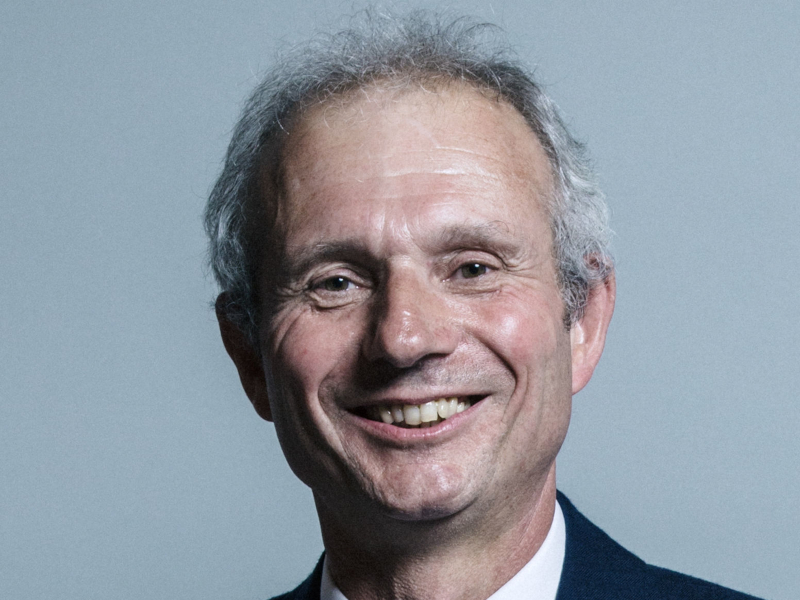
  • 2022 Highlights: Sir David Lidington – ‘History trains the imagination’

    2022 Highlights: Sir David Lidington – ‘History trains the imagination’

    Sir David Lidington, the former de facto No. 2 in the May administration, talks about how a history degree has helped him in his political career

    Certain traits define an aptitude for elected politics, and I’ve tended to find they can be aided by a study of history. One useful aptitude would be fascination with human beings – what makes them tick, and how power is exercised. Secondly – regardless of whether you come from the left, right, or center – almost everyone I’ve met in politics starts with a commitment to changing things for the better in their country. To do that, it helps to know what injustices have existed in the past.

    There’s a third thing, and I would say it also separates the natural politician from the civil servant: a certain zest for the theatre. Politics involves a willingness to take risk, and to be prepared to stand on the stage at the end, and not know whether you’ll have a standing ovation or a bag of rotten tomatoes slung at you. The natural civil servants shy away from that but what’s interesting is you sometimes see a politician who’s really a civil servant – and then a mandarin who’s really a politician. The thespian is striving to get out there.

    The wonderful thing about history is that it trains the imagination: when you start to really delve into history – and read deeply as well as widely in a particular era – you find people in the past had various assumptions and moral codes that can be very different from how we operate today. For example, for people living in 1800 or 1850 the idea that there was going to be this industrial revolution, and transformative migration of people to cities, and a growth of urban conurbations – that’s something which some might have predicted, but by no means everyone. Training of the imagination is important.

    History also teaches you how to use and assess evidence. Particularly in postgraduate study, you have to go back to original source material and assess the reliability of it. You look at state papers, which by and large deal with high politics and the people at the top. But if you go to legal records, there you find out about yeomen and merchants – the people who went on Chaucer’s pilgrimage to Canterbury all crop up as plaintiffs or defendants.

    Another applicable aspect of history was borne in on me when I was Europe Minister. I visited about 40 countries from Russia and Turkey, to the South Caucasus and Iceland. If you want to understand today’s political outlook you have to understand what happened in the past. What are the demons they still fear? What are the experiences that have shaped the outlook of a particular society today?

    For instance, I have long felt that the tension that has always existed between the UK and the EU derived in large measure from contrasting experiences and lessons in the mid- 20th century. For most of Europe this was a period of disaster when national institutions all failed in the face of tyranny, invasion and ethnic hatred. From the EU perspective, therefore you have to build up those institutions to stop anything happening again.

    Another example would be China. I remember a few years ago, I met Xi Jinping’s number two, and he started out with this recital about the Opium Wars and how China had been attacked in the 19th century because it was weak and the European powers had exploited her. Hearing that, I began to understand why they see the world as they do today. They feel a need to put right the century of humiliation and to restore China’s place as a global power. One needn’t necessarily agree with that – but you have to understand how the other side thinks.

    So history is a real asset in politics because you learn how human beings interact with each other, how relationships and power is mediated through institutions, and what lies behind the motivation of countries and individuals. How a Tudor court operates is good for understanding all about access in No.10 Downing Street. Now you have your special advisers rather than Grooms of the Stole or royal pages. Think about Elizabeth I. Who was it who could actually get in to see the monarch and be sure you got your bit of paper in front of her? Likewise, today – who can get something in the prime minister’s box? Patterns reproduce.

    One of the most difficult things for government or for the man or woman who’s prime minister is finding time to regenerate yourself and your government while in office. There are always things pressing in. For me the great prime minister of the 19th century was Robert Peel: he was prepared to change his mind when the facts had changed. If you look at how he moved on Catholic Emancipation and on the Corn Laws and trade you can see that he took decisions based on what he thought was right for the country even at the fatal cost to his own political fortunes. Disraeli was vastly entertaining, but Peel was the greater man and the greater prime minister.

     David Lidington was deputy prime minister under Theresa May and is now Knight Commander of the Order of the Bath

    Read Sir David Lidington’s advice on handling the stress of a high-pressure job here

  • Michel Roux Jr: ‘Le Gavroche is more than the food’

    Michel Roux Jr: ‘Le Gavroche is more than the food’


    As part of our regular series examining the impact of family relationships on careers, we spoke to the La Gavroche chef about keeping the family flame.

    If ever you’re lucky enough to eat at Le Gavroche, your good fortune is likely to be compounded once you’ve had the excellent food. It’s Michel Roux Jr.’s habit to do the rounds after lunch, and perform a friendly tour of the room. Roux will pose for photographs and laugh genially as the complements accrue. ‘I love being able to provide a total experience for our guests,’ he tells us. ‘I love meeting out guests, whether regulars or new.’

    As a result of this tactileIf ever you’re lucky enough to eat at Le Gavroche, your good fortune is likely to be compounded once you’ve had your food. approach to the business, you’d think lockdown might have been difficult. Roux strikes a cheerful note. ‘I’ve been incredibly busy during lockdown, not least with the arrival of our first grandchild, which is really wonderful.’

    So another Roux enters the world, no doubt stocked with the genes of a master chef. Roux has followed in the footsteps of not just one but two famous relatives. You might think that his father might have been Michel Roux Sr., who died in March of this year, but you’d be wrong: in fact, his father is Albert Roux, and Michel Jr. was named after his uncle. Le Gavroche – which opened in 1967 – was the first UK restaurant to obtain three Michelin stars, and Michel took it over in 1993. How did it feel to be following in the footsteps of famous relatives? Roux recalls: ‘Of course, it was a massive responsibility when I took over the reins at Le Gavroche, nearly 30 years ago now. But if my father hadn’t thought I was ready, he wouldn’t have handed them to me. There is no question I feel a commitment to maintaining the Roux flame, whether in the restaurants or through our Roux Scholarship competition.’

    One often feels for the children of famous parents: it must be hard to achieve anything in your own right. Martin Amis frequently complains about the Kingsley comparisons, and Euan Blair cannot discuss his own original (and unBlairite) views on education without having ‘education, education, education’ returned to him.

    So did it take a while for Michel Jr. to arrive at his own identity as a chef? Roux explains that he’s moved with the times: ‘Over the years, the food at Le Gavroche has evolved to embrace the requirements of modern diners, so a meal at Le Gavroche will be a lighter one than when the restaurant first opened, but the essence of French classicism is very much there.’

    It’s a good point: we might sometimes strive to differentiate ourselves from our parents’ achievements in the workplace, but usually time will do that for us anyway, and ensure that we inhabit a different moment in history. One example where that’s proven the case with Michel Jr. is in his highly visible TV career.

    So how does he think shooting will be in the post-lockdown era? ‘I was lucky to be involved in the production of ‘Hitched at Home, Our wedding in Lockdown’ for Channel 4, which was definitely TV for lockdown. It was very different to the usual filming set-up.’ How so? ‘It’s going to be incredibly difficult to make the same sorts of shows as before, even with one meter social distancing.’ But Roux adds that he’s ‘seen a lot of creativity: talking heads, and getting family members to film over longer periods using professional equipment at home.’

    Interestingly, the Roux tradition is already being continued in the next generation. Emily Roux and her husband Diego Ferrari have their own restaurant Caractère in Notting Hill. So what would Roux say to young people mulling a hospitality career? ‘Front of house and in the kitchen, hospitality can offer an amazing career. You’re always learning, you have the opportunity to experiment and be creative, and it’s incredibly satisfying to provide good service. But it is hard work, and you need to put in the time to learn the craft.’

    And how has lockdown been for Le Gavroche? ‘The most important thing for me is to make sure our staff are doing as well as they can. It was frustrating waiting for the government to come up with their guidelines for the hospitality industry.’

     Roux chose not to home deliver (‘Le Gavroche is more than the food’) and instead kept in touch with regulars through newsletters ‘to keep everyone engaged.’

    Despite his obvious love of his work, the question persists. One can’t help but wonder whether the family name hampers people like Roux, and whether some other career might have been possible had there not been the need to keep it in the family.

    But Roux doesn’t feel this way. ‘I never considered anything else. Food is in my DNA, and I love working in the industry.’ Parfait and bon appetite.


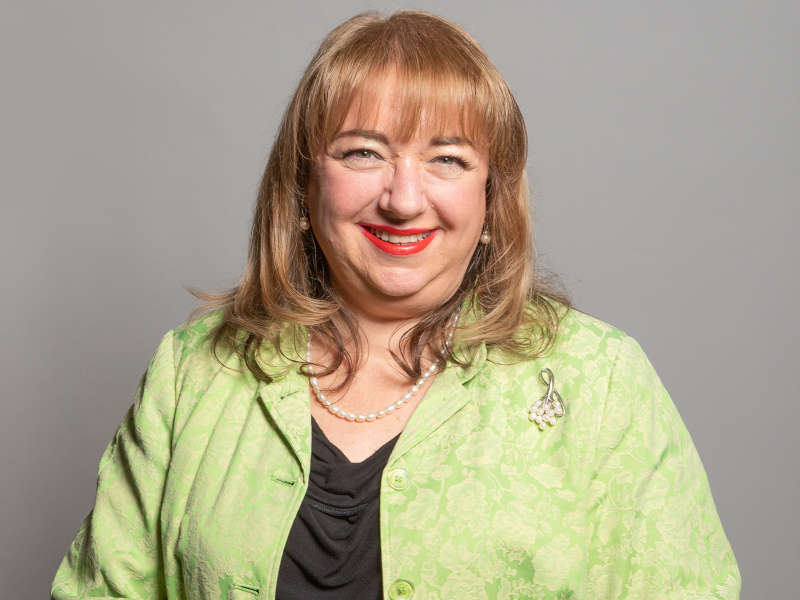
  • Sharon Hodgson on why we need to renew our focus on the arts in education

    Sharon Hodgson on why we need to renew our focus on the arts in education

    The Shadow Minister for Veterans Sharon Hodgson explains how a broader arts-based curriculum could transform our economy.

    It was Jeremy Corbyn who first came up with the idea of an arts pupil premium that might be used to close the gap for disadvantaged children. Myself and Susan Coles – with whom I set up the All-Party Parliamentary Group on Arts Education – were excited when we heard the announcement. It seemed the right thing to do: if you grow up in households where the arts are appreciated that just happens. Usually it’s poorer households that don’t get that cultural capacity.

    School is meant to be a leveler and an equalizer. Lockdown has shown that when you take school out of the equation it really does lay bare not just the inequality in economics but cultural inequality. A whole generation of people are then going to be the best part of a year behind. Some will have had an amazing lockdown education, but overall the cultural gap will have widened.

    You hear a lot from the Conservatives about character in education, but it’s my belief that the arts are the best teacher of resilience and confidence: in the arts, you tend to try and fail before you get it right. That’s definitely what you need in an employee when they get into a workplace, no matter what work is conducted in that place. If all you’ve got is someone filled with knowledge and the ability to pass exams, then they’ve got no capacity to think outside the box.

    They’ll have no capacity for innovation or freedom of thought; they might only have been told what’s right and what’s wrong. They lack the creative freedom and too often seek instruction from their employer.

    That’s why the Chinese have started looking here for our creative education – and the same is true in Singapore and South Korea. Those countries have tended to churn out people who are good at passing exams. The irony is that just as they’re looking to learn creativity off us, we’re leaving creative learning behind in our state sector.

    What’s really required is a broad and balanced curriculum. In Wales from September 2020 there’s been a new curriculum with arts and well-being taught as a mandatory part of the curriculum. The same is true in Scotland, where the arts are also valued. What we are aiming for is for the arts to be elevated to that extent in England.

    Some people have criticized the idea of the arts pupil premium as being all about ephemeral away days – trips to the theatre and museums, and so on. There’s nothing wrong with away days, but it needn’t be only that. Imaginative teachers could use it for a whole host of things. Under Corbyn, we imagined that if we did have an arts pupil premium we might give guidance to make sure teachers understood the range of things it might be used for: it could be used to buy fantastic art materials, to recruit amazing teacher specialists, or to bring artists into the school setting.

    The argument is clear – and if anything, it’s been brought into sharper focus by the pandemic. More and more children under lockdown are having troubles with their mental health – and we know that art is able to help with that. I’m not saying that Math and English don’t give joy, but our spare time as adults is usually spent around the arts but in school that seems to have been left to one side, by people like Nick Gibb especially.

    The irony is that the creative industries are valued by the Treasury but not so much by the Department of Education. There’s no joined-up thinking across government. We’ve had five education secretaries in ten years, and unfortunately Nick Gibb has been around for a lot longer than I would have liked. I don’t wish him ill – I just wish him into another job. He doesn’t have a background in anything to do with arts and education. He has fully bought into Michael Gove’s ideological stance.

    It’s because of Gove that our APPG was formed. The EBacc has been especially problematic in terms of its unintended consequences for the arts. Gibbs came to our APPG and we told him he needed to acknowledge the effects of the EBacc. We had 80 experts in the room and Gibbs simply stated that he had an ‘alternative set of facts’.

    The trouble with academies is that they create a system of ‘postcode luck’ with regards to whether you have access to the arts. Sometimes the free school system allows schools to be innovative but at others they detract from what should be a standard. We may have to look at governance again and consider getting schools back under local authority control.

  • Euan Blair: ‘Diversity has become existential for companies’

    Euan Blair: ‘Diversity has become existential for companies’

    The tech entrepreneur on White Hat’s new approach to getting young people into work

    As a business looking to build an outstanding alternative to university and create a diverse group of future leaders, the coronavirus has made our offer front of mind for schools and companies. The pandemic has shown the need for digital skills accelerate by two to five years over the last few months. Meanwhile, universities have been in a crisis defined by lack of capability and lack of will: they’ve been unable to deal with this new reality. Some are doing remote courses that are not particularly great and with no social experience, which is one of the main reasons why people go to university.

    Meanwhile, companies have massively growing digital skills needs and an acceptance that they need to get skills from other sources. Through the work of Black Lives Matter, diversity has become existential for them. What we have is an open discussion about racial inequality and structural barriers in society. CEOs are thinking: “Do I have the skills mix to succeed over the coming years? And how do I make sure I’m doing my part on diversity and inclusion and making my organization accessible to people?” Perhaps the final piece in the puzzle is that employers are asking themselves how they keep employees engaged at home.

    All this has made it clear how valuable our apprenticeships program is. We aim to create a frictionless barrier for diverse talent. We’ve been growing really quickly over the past few months. We had to transition everything online almost overnight. There’s a big difference between remote learning, which is taking something you deliver in person and lifting and shifting it online, and actual online learning, which is in a different cadence and requires a different style of instruction. We invested early in making sure our curriculum is suitable for online learning.

    I appreciate the government’s sentiment regarding the recent movement on apprenticeships guarantees. It’s top of the agenda for government worldwide. The Singaporean government is subsidizing 80 percent of apprenticeship wages. In the US, the federal government just announced they’re going to ban the use of college degrees for the hiring process and instead hire people based on skills. This is a gradual global groundswell and there’s a lot to be said for making apprenticeships a priority: it lays the gauntlet down to schools and parents to be seriously exploring these alternatives.

    Having said that, you can’t do this without employers. And the bigger piece is we need employers to think: “We don’t need a graduate because although they might come with a degree, they don’t come with any of the skills I need and I want someone who has the right mindset to learn.” At White Hat, we also understand that over a 50-year career, a shot of learning at the start isn’t going to be sufficient. You’re going to need to keep learning.

    Our programs range across areas. For instance, we did the first ever apprenticeship in legal project management with Clifford Chance. We also do programs with KPMG where we reskill members of their teams in data analytics; this is driven by their clients but also by their internal needs. At Google, they’re training digital marketers and software engineers. We’ve also had a focus on military veterans working with Citi Group and returning to work mothers.

    Reskilling is a major area. There are many individuals within organizations with amazing residual knowledge of that organization and deep loyalty to it. They’ve worked somewhere for a significant period of time, but their role is changing. After doing the same job for five to ten years, they want to do something different and take on a new challenge. We’re about giving those people a route.

    Companies are very aware that Generation Z have a host of skills that they know they need to address. What they’re increasingly realizing is that there is very little difference between the skill level of a graduate and the skill level of someone they can hire as an apprentice. If you’re relying on elite universities to fulfil your hiring needs, you’re going to get very similar people.

    With the virus, all this has become absolutely urgent and critical. As often happens when you have huge shocks to the economy, it brings into sharper focus a lot of things that people had already realized to some extent, but they didn’t necessarily have a burning platform on which to act. Well, now they do.

    Euan Blair is CEO and co-founder of White Hat, a tech startup which seeks to democratize access to the best careers.

  • Thomas Heatherwick: ‘Before Covid, the idea of having a study sounded so Victorian’

    Thomas Heatherwick: ‘Before Covid, the idea of having a study sounded so Victorian’

    by Thomas Heatherwick

    At the Heatherwick Studio, we’re trying to be growers of more human place making: what’s crucial is the experience dimension of the person using the building. That might sound obvious, but I sensed even as a kid that we’re too often led astray by other forces and not by the needs of the person using a structure.

    Some big positives can come out of this strange and tragic situation we’ve all been living through. There’s been a chance to think from new angles. That’s partly because you need to, given the new context. But it’s also welcome: I always thought it would be very hard for me to take a sabbatical, and I envied those around me who could do that. Of course, it was a partial envy – I’m so lucky to have the diverse rollercoaster of impressions I have. My studio is about embracing change and finding ways to adjust. That’s what excites me. The most interesting thing has been reflecting on what the virus means – and how it’s going to change our lives. Before the pandemic, there was more and more sharing – cars, workspaces and living spaces were becoming more efficient because people might live together in different ways. I was saddened at the outset of coronavirus: it felt like a kind of retreat into an understandable self-preservation and selfishness.

    Before all this happened, people didn’t think they needed an office in their home – the idea of having a study sounded so Victorian. Throughout lockdown, people have been cowering in their bedrooms and trying to pretend it’s not their bedroom: so people will be making their homes better in advance of a possible second wave, and investing in any eventuality. Post-Covid homes will be better homes.

    But public togetherness is what motivates me in the different projects we work on. Take our shopping center Coal Drop’s Yard for example. What motivates me isn’t getting people to shop. What’s exciting is that it’s an excuse at a time when governments don’t invest in public place making to create an interesting space. I wish the government would do more: they had their fingers badly burned in the 1960s and 1970s by terrible architecture, and so they retreated and let the private sector come in.

    I’ve always made very tactile buildings and though obviously Covid-19 will change the extent to which we touch things, I think you also touch things with your eyes. The way light falls off a computer screen, for instance, is very dead and simplistic.

    But light falling across more complex detail and texture is something that you absorb. If you’re in the mountains you can’t touch them, but you can still feel their form.

    We’ve got 200 people here, and I’m thankful for being an older organization. Many of us have worked together for a long time, and we can sustain that over digital communication. There are unexpected benefits. The world’s been conspiring for the last two decades to get us to this point. The digital revolution has been setting us up to do this; it’s astonishing how effective we’ve managed to be at home.

    But I don’t think in aggregate its better. There’s no real substitute for being in the studio. Our studio is full of models and memorabilia: it’s our collective memory. It’s important to see your failures, your test pieces, your experiments, and your thought-triggers. We all think we have a flawless memory – but we don’t.

    We’re working with one new organization, rethinking large amounts of workspace. I think people are aware this has long ramifications for everybody. It spreads across everything. We just finished a Maggie’s cancer care center in Leeds. It’s a relatively small project but it’s trying to engage with the issues someone with a cancer diagnosis might face. How do you support that health journey? If you look at hospitals today it’s as if the emotional condition doesn’t impact their physical journey.

    Looking back at the Garden Bridge, it was a manifestation of this urge to try and make everything connect more to people. A bridge doesn’t just need to be getting from one side to the other: the middle of a bridge is one of the most incredible places you can be. Maybe one day the politics will support our intention to create a new garden for Londoners.

    Thomas Heatherwick is the founder of the Heatherwick Studio.

  • Sir Anthony Seldon on why Sir Keir Starmer has blown it already

    Sir Anthony Seldon on why Sir Keir Starmer has blown it already

    by Sir Anthony Seldon

    It’s ten years since David Cameron and Nick Clegg stood in the Downing Street Rose Garden at the beginning of the Coalition.

    But from the perspective of universities, and our wider education system, it was a man who wasn’t at that press conference who would really go on to change our education system.

    Michael Gove arrived in Great Smith Street with a strong agenda. Assisted by Dominic Cummings, he would have an extraordinary impact on how schools conducted themselves: his was a tenure ambitious for all students regardless of background. It’s hard to point to many other education secretaries who have made such a significant difference – Tony Crosland perhaps, who served under Harold Wilson, and launched a campaign for comprehensive schools. Whether he’s at DEFRA or heading up the Cabinet Office as he does today, Gove’s energy remains remarkable: any department that he comes into is very quickly overhauled. In any cabinet, Gove is always one of the most erudite. Peter Mendelsohn held a similar distinction during the Tony Blair years.

    As education secretary, Gove accelerated free schools and continued with academic, building on the Andrew Adonis years. Adonis and Gove are comparable: each had the same ambition for schools, and a similar desire to bring in external energy and remove schools from local authority control. But I would say Gove arguably had a clearer agenda around school standards.

    Cameron deserves some of the credit for the achievements of those years. Margaret Thatcher was probably the last prime minister who didn’t see education as a major part of her job. All prime ministers since Tony Blair have had a major interest in education, and Cameron was no different, though it’s probably true to say he didn’t involve himself greatly.

    One thing Cameron did do was to invite the heads of independent schools into the Cabinet room, and seek to persuade them to start academies. It wasn’t very successful, but he was always supportive of Michael Gove. He knew when to leave someone to it.

    A decade later, there are remarkable continuities. In Keir Starmer, we have a leader with deep roots right down to his Christian name in the left movement, as Brown had. And it hardly needs saying that we have an old Estonian in Number 10.

    A comparison of Brown and Starmer yields intriguing thoughts: both are very bright people, and both have legalistic minds and a superb grasp of detail. But their disparities may in the end prove crucial. Starmer is untested as a leader. Brown, when he came to become prime minister, had been for ten years the longest serving Chancellor of the Exchequer, and had a formidable knowledge of how government operates. Whereas Starmer today is the younger man on the rise; Brown, in 2007-10 was arguably at the peak, or beyond the peak, of his energy.

    As for David Cameron and Boris Johnson, they’re very different. Cameron had a vast appetite for detail, but he was primarily interested in foreign policy, leaving economic and domestic policy to George Osborne. Johnson tends the other way: he’s not interested in foreign policy, but in the domestic side. He has a far shorter attention span, not the same work ethic, and is still relatively new to Westminster politics.

    How it plays out remains to be seen, but I certainly wouldn’t give Labor high marks for their handling of coronavirus so far. Starmer didn’t do enough to stand up to the unions, and the party gave the impression that it was far less interested in children – including the socially disadvantaged and those with mental health challenges – than in their own membership. Accordingly, they have lost moral authority, and shown intellectual weakness. They had an opportunity to seize the high ground but they blew it.

    The quality of the opposition always matters but especially so now. The next years will see real difficulties for universities. I certainly don’t subscribe to the belief some on the right hold, which is to let the poor universities and those that don’t compete internationally go to the wall.

    That position is about as intelligent as saying, ‘Let schools that don’t come top of the league tables collapse.’ In reality, it’s those in the middle and at the bottom that are adding most to the attainment of young people. It’s simply that the quality of the raw material they proceed with is much less high academically. Besides, if you let the universities in the middle or bottom disappear, you will be stripping northern cities, as well as cathedral and rural cities of their economic dynamism and vitality, and doing irreparable damage to the social cohesion of the country.

    So ten years on from the outset of the Coalition, some themes are recurring. But as Heraclitus knew, we never step into the same river twice. The success of this administration will be in identifying what a crucial moment this is and not just for universities but for our entire education system.

    Sir Anthony Seldon is a historian and biographer who recently stepped down as the vice-chancellor of the University of Buckingham

  • Carol Leonard: ‘Journalism is not a career to retire in’

    Carol Leonard: ‘Journalism is not a career to retire in’

    London’s top headhunter and former Times journalist tells Finito World about the gentle art of career leapfrogging 

    I’d recommend a career in journalism to anyone but it’s not a career many people get to retire in. You do it for a decade – maybe even for two or three – but then you do something else.

    At The Times, when I was leaving in the 1980s, there was a retirement notice posted to the door of one of the longest-serving editors. I remember thinking that it was the first time I’d seen someone at the paper reach retirement age. Of course, there is a career path in journalism – from local newspaper to national newspaper, then on to columnist, or into broadcasting and editor. None of those appealed to me. I’d have paid to do my job, and that’s the trouble with those sorts of jobs – as a consequence you tend not to be paid very much doing that kind of work.

    But if you work in journalism, you acquire important skills, and then you can progress and earn something a bit more livable-with. As the Times City diarist, I was my own boss. As a representative of an august organization, I had a lot of access. I did about 150 profiles of captains of industry over three or four years. It was hugely demanding physically and emotionally; each was a kind of mini novel. I started to wonder whether I had the energy to go around the block again.

    I asked myself what I liked. I liked meeting people, and I knew how the business world interconnected. Then it happened. I had profiled a man in the headhunting world called Roddy Gow. Miles Broadbent – a competitor of his – was incensed that I’d portrayed Gow as being the top of the profession. Miles asked me to come meet him. Even then, I made the effort to meet with people face to face. It’s important to look people in the whites of the eyes.

    Three months after our first meeting, he rang me and said, ‘Can you have lunch with me at the Savoy Grill?’ In the 1980s, that was the power-broking dining room. When we sat down, he said right away: ‘When are you going to become a headhunter?’ I replied that it’s not something I’d ever thought of. No-one grows up thinking of becoming a headhunter!

    He said, ‘Have a think about it. If I haven’t heard from you in three months, I’ll call and ask you again.’ Afterwards, my then father-in-law said: “Why didn’t you bite his hand off? This is the main chance. You only get two or three. Make the most of it.”

    When I began headhunting, I found I’d picked up so many skills at The Times. I’d learned to become self-sufficient, and I’d long since stopped being nervous cold-calling people. When you ring up as a journalist, the person on the other end of the phone can panic; as a headhunter you’re talking about a role and that makes it easier. The wider skillset is also similar to financial journalism. It’s all based on long-term relationships, trust, listening to people, interviewing people, reading between the lines, note-taking – and recording data.

    What fascinates me now in my work is the question of what makes people tick. There’s usually something in childhood that gives the successful that extra piece of drive – an insecurity which makes people work harder than those who didn’t have the kinks. Most people who do very well have sacrificed a lot both personally and health-wise. These people will get Alzheimer’s when they’re older – it all comes at a price.

    Now, with Covid-19 the world has changed all over again. Video interviewing is pretty good actually – perhaps 90 percent as good as face-to-face. Obviously where you have a FTSE 100 CEO down to the final preferred candidate stage then you’ll want to meet, and the offer is unlikely to be on anything other than a draft basis otherwise. But I’ve seen non-exec roles offered and accepted without the parties having met one another. This time is brutal for people out of work, but actually the businesses which do emerge will be stronger, leaner, and fitter.

    To young people looking for a job now I’d say that personal relationships are more important than ever. And I would remember always to be open to new experiences. When I think of my decision to leapfrog careers, I think it came from a confidence given to me by those teachers who believed in me.

    There’s something special in all of us, but you don’t have to limit your career to that special quality: it can be a springboard to believing in yourself more generally, and then someone in a position of power will notice it. That can lead you to different spheres – it can make a headhunter out of a journalist.

    Carol Leonard is the CEO of the Inzito Partnership, an ex-Times journalist and a visiting fellow of the Said Business School

  • Lee Elliot Major: ‘There’s a real volunteering spirit among the young’

    Lee Elliot Major: ‘There’s a real volunteering spirit among the young’

    The UK’s first social mobility professor spoke to Finito world on the eve of securing vital public monies for tutoring 

    I am very careful to be apolitical with my views on social mobility as I think it’s a cross party issue. This might be a naïve belief but my view is that you have to present evidence behind what you’re proposing.

    There are huge questions around why we have a social mobility problem, but what I’ve been trying to do is come up with pragmatic solutions to problems. When I was a trustee at the Education Endowment Foundation, we looked at what works in the classroom in terms of improving learning for disadvantaged pupils. What’s hard is to find approaches that can be consistently scaled up. We’ve done hundreds of trials and reviewed literally thousands of studies on what we think are our best bets for learning. One thing that surfaced was classroom-teacher feedback, the core of all good schooling.

    Alongside that, we found strong evidence of the effectiveness of one-to-one tutoring. I’ve always felt that that was something we could utilize more to help the disadvantaged learn. Tutoring is simple to scale up. The idea is that wherever people live they have access to tutoring support. We found the existence of this patchy; in some areas there are charities – as in some areas of London – but there are other areas where there’s no support at all. Then, when we turned to the question of addressing inequalities during the Covid-19 crisis, we talked about establishing a National Tutoring Service. I began observing a boom in private tutoring – surely now was the time to level up the playing-field.

    It feeds into something else I’ve noticed: there’s a real volunteering spirit among the younger generation. These are people who like to give back and have a strong sense of social justice. It was fantastic when the Johnson administration gave money to the idea.

    There’s also, of course, huge inequality in the workplace. When you look at studies about who gets on in work, you often find that someone senior and experienced champions someone junior in the organization. This tends to happen predominantly to people from privileged backgrounds: if you’ve gone to the same school, or if there’s some sort of familial connection.

    It could be possible to create a more formal mentoring program that could be part of a national service, whereby senior people could champion people from disadvantaged backgrounds. At the moment, they feel lost in the culture of the industry. For instance, I know a lot of people around the creative industries. At the moment, it doesn’t matter how talented you are, you’re struggling to progress in the early career phase. The cultural assumptions can be quite alienating if you’re not a part of that: if you’re outside London, it can be hard to get into London.

    But as ever you come up against the practicalities. The question is, how idealistic do we want to be about this? It would be difficult to deliver a national mentoring program. Another critique would be that a mentoring service would assume that in-built cultures and inequalities in industries would remain. We can so easily get caught between ideologues on left and right. On the one hand, those who say: ‘All we need is to make things equal.’ And on the other, those who say: ‘All we need is economic growth.

    One of the reasons government looks at education even though it’s become a market-led sector, is that in this area you can at least try and do something: the taxpayer is paying a lot for that delivery. Once you look at labor and economy policy you’re suddenly dealing with private companies and the levers that government have are less direct.

    But what’s interesting is that during the coronavirus crisis, that has changed. The government is now paying the salaries of a lot of people. So although this time is tragic, it’s very exciting from the policy perspective. It’s challenged the old stereotypes and preconceptions about what’s left and what’s right. This is the most interventionist government I can remember. And the question for someone like me is: ‘Do some of these things remain in five years’ time? Is it a permanent readjustment about profound social issues? Or do we slip back into the assumptions of neoliberal global politics?’

    I hope it’s the former. I think we can find a better balance and a fairer system. I think we were heading for a reckoning before this crisis. When society doesn’t give people a fair go over several generations then at some point down the pecking order, people will think there’s no way to change society other than by revolt. I don’t know whether we’re there yet, but I hope the government grabs this moment. It’s time for a branded national tutoring service.

    Professor Lee Elliot Major’s new book is What Do We Know and What Should We Do about Social Mobility? Published by SAGE

  • Sir Michael Barber: ‘Most prime ministers don’t care enough about education’

    Sir Michael Barber: ‘Most prime ministers don’t care enough about education’

    The great educationalist on Blair, the Office for National Students and lessons learned in international education

    Secretary of State for the Department for Education Gavin Williamson recently asked me to chair a review on digital poverty. We’ll publish in February and we’ll look at what universities have been doing in this area and we’ll make some recommendations both for the next academic year 2021-2 and for the long term.

    A lot of people think that ‘digital poverty’ means I haven’t got a laptop but there’s a lot more to it than that. It’s also: ‘Have you got the hardware? Have you got appropriate software? Have you got a teacher trained to teach online? Have you got connectivity and reliability and rapid repair if needed? If any one of them isn’t functional, you’ll be losing out digitally’.

    When I was working with Tony Blair, he always used to say about education: ‘This is much more important than anything, even than the Middle East.’ Most prime ministers don’t care enough about education and it was great to know when the spending review came round that the PM would want to increase the education budget. And to be fair to Gordon Brown he was also a big fan of education. It’s not their fault but the new government has been completely overwhelmed by the coronavirus crisis.

    In my most recent role as head of Office for Students, I’m always aware when I’m dealing with universities that these are institutions under immense strain because of the coronavirus situation. But because of what’s been happening with Black Lives Matter, we’ve been very careful to make sure we hold their feet to the fire on making sure the numbers stack up on underprivileged children, especially those from minority backgrounds.

    Pakistan is a country I’ve grown to love. I’ve been there 50-something times. It’s a tough place to work and I’ve grown to love the people. Delivery Associates, the firm I chair, focused on primary elementary school and on getting kids into school and making sure they’re learning. We made some significant progress. There are 100 million people including 13 million children, and we had a wide range of initiatives, including vouchers for lower income families getting their kids into school.

    Travelling around the world I’ve had the opportunity to work with some brilliant people. For instance, Barack Obama had a Secretary of State for Education called Arne Duncan. The US federal government is a relatively minor player in the US, as most is funded at local and state level. But Duncan got a big pot of money as a result of the legislation passed in the aftermath of the financial crisis. Another person might have just shared out the money by state according to population but he didn’t do that. He did a Race to the Top competition whereby any state lifting the cap on the number of charter schools and introducing an individual student level data system could play. The traditional thing would have been for the education department in Washington to pick and choose among state proposals and be lobbied endlessly by senators from states. Duncan got panels of experts to interview state teams. They reported back to him and he placed the interviews between experts and state teams on YouTube. That worked well, as it was a wholly transparent process.

    The turnover in our civil service is too high. When I was working in the Blair administration, I would typically say to the permanent secretary in the education department, on an important issue: ‘This is an important priority of the prime minister. Would you please make sure this person is a) good at their job and b) likely to be in it for a while? Otherwise, I knew nothing would get done.’

    There’s another perhaps deeper issue, which is institutional memory over a long period. People forget the history. Nobody forgets the 70th anniversary of the NHS; in 2018 everyone celebrated. Now we have the 150th anniversary of state education in this country, as a result of the Education Reform Act passed in the first Gladstone administration, and no one knows about it. But in September, after some pressure from me, the Foundation for Education Development [FED] was persuaded put on an event.

    Employability is a big issue universities need to look at.

    Too often the careers department is tucked away in some backwater of the university and nobody knows to go there. We need to take a leaf out of Exeter University’s book where the careers department is this very visible building in the Centre of campus.

    I don’t know truthfully what will happen as a result of coronavirus, but I hope some surprising and positive things will come out of it. One thing will be the use of digital techniques including not just lectures and individual tuition online – all of which happened very rapidly once lockdown occurred – but also things like virtual reality. For instance, if you’re training to be a pilot, you’re not in a plane most of the time; you’re in a simulator. Things like that will be accelerated.

  • The Chair: Robert Halfon interview

    The Chair: Robert Halfon interview

    The Chair of the Education Select Committee tells us about his latest fight for guaranteed apprenticeships and why universities need to up their game to survive.

    It doesn’t matter how good policy is, unless there’s genuine evangelisation it doesn’t make any difference. When I die – which hopefully will be a long way away – I’d like it on my grave that I was a campaigner.

    The big thing in politics is relentless repetition: it takes about ten years to get people to notice what you’re saying. I liken it to pizza delivery. How many times do you get a Domino’s leaflet through your letterbox? 99 times out of 100, you’ll throw it away. But it’s when you have no food, and you’re knackered, and you have no food in the fridge, that you suddenly remember that pizza leaflet.

    In politics it’s the same. I push my ideas in every forum I can: in committees, in articles, speeches and interviews. I’ll raise things in parliament in questions, debates, and Commons motions, and try and keep what I’m working on at the time in the prime minister’s mind, and in the minds of his advisers.

    This year, it looks like they’ve picked up my pizza leaflet. It’s been an exciting time. In June, I met with Prime Minister Boris Johnson before the Liaison Committee, and I used the phrase ‘apprenticeship guarantee’. A week later, he repeated the whole phrase in a speech. What that signifies is that policy-makers in 10 Downing Street are clearly looking at this, and I hope as Chair of the Education Select Committee, I can move the policy forward. It’s the best offer we can make to young people.

    My hope is that one day 50 percent of students will be doing apprenticeships. So, for instance, if you are doing English you should be working during your degree in a publishing house or alongside an editor – and that should be part of your degree. A history graduate should be working in a museum or alongside an archaeologist. I also think work experience should be compulsory, or at least be encouraged as much as possible by government.

    I had the best time of my life at university. But I’ve always worked doing summer jobs – and that’s the advantage of apprenticeships.

    You do your degree and get academic experience. You go to the student bars, but you also learn about office work and about teamwork. And of course, if you do a career apprenticeship you get paid, so there’s no loan. It’s a no-brainer to me and now’s
    the time for the government to act.

    We’re hopeful we won’t have the usual battle with the Treasury on this. There’s a £3 billion skills fund in the manifesto,
    which has now been confirmed by the Chancellor Rishi Sunak in his most recent budget. But I think at some stage, we’ll need to consider skills credits for businesses. We might structure a policy whereby the more disadvantaged and younger people a business has taken on, the bigger their skills credit.

    I’m sometimes asked how to stop the golf club mentality of people giving jobs to their friends – or more likely their friend’s children. That’s human nature. But businesses will have to change because the world has changed. We’ve got the 4th Industrial Revolution and jobs will be affected by it. That trend has only been exacerbated by coronavirus. We’ll have lots of redundancies, but if people have the right skills and get good qualifications and on-the-job training, it will make a huge difference.

    That’s why I want government incentivising every company in the country to work with universities. I also think grants to universities should be conditional on whether they have a significant number of degree apprenticeships. It depresses me that Oxford has closed its doors to any kind of apprenticeship at all. I think they’re snooty, and seem to think university is about research and nothing else. Meanwhile, Cambridge to their credit at least kept the door open.

    Fortunately, there are amazing universities – Warwick especially springs to mind – doing wonderful work. We look at the whole idea of an elite university the wrong way round: an elite university to me should have a lot of people from  isadvantaged backgrounds, brilliant graduate outcomes, and should embed work experience in the curriculum. Many universities are trading on their marketing.

    It’s a long road, but we have a PM who’s a vision person. The doom-mongers will say it can’t be done but one of my favourite
    quotations is from Sir Nicholas Winton: ‘If it’s not impossible, there must be a way to do it.’

    The Rt Hon Robert Halfon MP for Harlow and political director of Conservative Friends of Israel.