Tag: Careers

  • Legendary jeweller Elizabeth Gage on her education, work ethic and friendship with Lauren Bacall

    Christopher Jackson


    Even for people such as myself who wouldn’t necessarily count themselves as knowledgeable about jewellery can see that the creations of Elizabeth Gage possess an unusual degree of intricacy and beauty. Gage strikes me as a little like those high achievers whose endeavours cross over easily to the layman: non-tennis fans used to tune into Federer; non-readers got through Harry Potter; and even I, who has only ever worn a wedding-ring, can still find myself pausing at an Elizabeth Gage creation, wondering about the dedication behind such outstanding creations.

    So what kind of an upbringing did she have? “I did have a creative family,” she tells us. “My mother painted and my grandmother was a painter. I therefore did not want to be a painter but rather wanted to find my own creative calling. I had always been creative as a child, making clothes for my paper dolls. I started out writing but realised that writing wasn’t for me.”

    But her life was about to change “One day I went to the British Museum and that is when everything changed for me,” she recalls. “The sun was shining, and I distinctly remember the sun flooding one big square case, I looked over and saw a set of Roman rings, and the rest is history. From that moment onwards, my heart was set on making jewellery which was imbued with history, to bring the past into the present and make it wearable.”

    That’s part of what sets Elizabeth Gage apart – her commitment to meaning in her work. Perhaps it’s partly this which makes me pause always at her work; I’m being asked not just to look and take delight in her works, but to think as well.

    Another aspect is attention to detail, and Gage is humorous about the demands of that: “I am a patient person when it comes to achieving the piece that I have designed as I never cut corners and want to make sure that each piece is a work of art in its own right. However, once the piece is being made I am impatient to see it finished!”

    Gage describes her early education: “I went to Chelsea School of Art but my experience there swiftly transitioned to Sir John Cass College, which shaped me and my career. I had been advised time and time again to pursue a career as an artist but I had other ideas.” Like many successful people, Gage picked her battles, and she knew what she had to do: “One day, at 12 ‘clock whilst everyone was out at lunch, I went into a classroom at The Sir John Cass College to find Mr Oliver. I had been told that there was no more admission of students for the Goldsmiths course but I would not take no for an answer. I told Mr Oliver that I wanted to learn how to make jewellery and asked if he could fit me into his busy class, to which he responded by making a space for me. He then taught me for eight years, a wonderful experience culminating in me asking to make something in gold, to which Mr Oliver responded “absolutely, but you must buy your own gold.”

    Despite Mr Oliver’s obvious influence, Gage adds: “I never had a mentor. What guided me was my love of making things and learning about how to master the art of jewellery.” There is wisdom here: quite often, we think the responsibility for our success might lie with some third party, but it always lies within.

    Gage is seems to be expert at letting the world come to her, and teach her to decide what to do next. Her first commission came from Cartier was, she says, ‘very unexpected’ and she is refreshingly matter-of-fact about the genesis of her business which will this year see its 60th anniversary.  “It just happened,” she tells us. “Freshly out of school I received a commission from a friend’s father who had asked me to make rings for his daughter and his girlfriends. He had been very shrewd as, being a designer fresh out of school, I was much cheaper than an established jeweller.” So what were the joys and challenges of starting out? The joys were knowing that what I was creating, people loved. There were always challenges that cropped up but I just knew that I needed to get on and continue doing what I loved and not letting any obstacles get in my way.”

    Of course, over time things have changed – not least Gage’s business has straddled the Internet revolution, a development she views very positively. “It has been wonderful in that people from every corner of the world can now see my work online and even buy online if they so wish,” she explains. “We only have our one exclusive store in Belgravia, London so having that virtual vitrine into our world and jewels is terrific.”

    Gage’s success can in part be measured by the famous clients she has amassed, most famously Lauren Bacall. About Bacall, Gage says: “We worked very well together. She loved what I do and I always involved her in whatever I was doing for her. It was very easy. She once brought me a beautiful bejewelled camel which I set into a brooch.”

    So what would be Gage’s advice to a young designer starting out? “Find what you love doing and that will give you direction of what you must do. It is no good just liking it, you need to really love it.”

    Gage has now been decorated with an MBE (“I never thought I would ever receive something as wonderful as that”) and her goal, even at the age of 85 is “to charge onwards and constantly to be inspired”. Of course, in taking that attitude, she’s also inspired us in return. We are all the beneficiaries of the work of Elizabeth Gage.


  • Study reveals most in-demand finance careers

    Finito World

    Auditing is the most desired finance career, according to a study by CMC Markets. The study, which analysed Google search data and Indeed job listings, found that the banking sector in particular is seeing a high number of searches.

    ‘Actuary’ is the second most searched term on the list, and it is the only insurance related career to make it to the top ten. There are currently 1,030 actuary jobs on Indeed, compared to 785 auditor positions.

    In third place lies corporate banking, with 166,600 searches and 3,748 Indeed job listings. Searches for bank teller jobs numbered 43,250, but only 35 bank teller jobs are available on Indeed.

    Forensic accounting and compliance officer roles saw a similar amount of interest, however there are 6,685 compliance officer roles in the UK as opposed to only 64 forensic accounting openings.

    Michael Hewson, chief market analyst at CMC Markets explains the importance of tracking interest within the finance industry.

    “Despite the scarcity of jobs in some industries, it seems that there is a noticeable interest within different sectors of the finance world.,” Hewson says, “It is interesting to see that a large proportion of this number is made up of searches related to the banking sector. As a whole, financial careers are being searched for 2,935,840 times per month on Google. This number is definitely something to keep an eye on as people may look to seek new opportunities in 2023.”

  • What can Vincent Van Gogh teach us in our careers?

    By Christopher Jackson


    To say it’s Vincent Van Gogh season in London might be to overstate the case: it always is. Every day people come from all over the world to see Sunflowers in the National Gallery – that great tour de force which reinvents the colour yellow for all time.

    The artist’s fame would have seemed odd to his contemporaries, especially those who knew his eccentric habits in Arles, in southern France towards the end of his life. There was a time when Vincent Van Gogh couldn’t get anyone to look at his paintings. Today, it’s hard to get in front of one long enough to have a proper look without a tourist straying in to spoil the view.

    But great fame is often reductive: in loving his pictures so much, we’ve tended to simplify him. We attribute his current reputation to ‘madness’ – as if Starry Night were primarily an expression of insanity. It’s true that Vincent struggled all his life with what we would probably label today ‘bipolar disorder’, but the truth is that Vincent was always sane when he was painting, and that painting was in fact his best method of staving off episodes which occurred throughout his life. These were frequent and he was heartbreakingly honest about them in letters to his brother Theo: “It appears that I grab dirt from the ground and eat it, although my memories of these bad moments are vague,” he once confided.

    It is an arresting image: the great painter literally eating the earth. It might even serve as a metaphor of his achievement: Vincent was always imbibing real life, insisting on it to an unusual extent. His is a world of peasants and down-and-outs: he might be the only great painter in history whom it’s impossible to imagine as a courtier.

    If you look at the popular image of the artist, you could almost imagine that Vincent is a completely separate case, someone we can’t expect to learn from at all, because we are not mad and he was. But his greatness cannot in the end be assigned to insanity, but instead to skill, vision and application. This means that we have more to learn from Vincent and his methods than we might think: this is true if we want to work creatively, but true also no matter what we wish to do with our working lives.

    The first thing we mustn’t do is think him a uniquely hopeless case as a man in order to consider him a uniquely remarkable artist. As the pandemic has brought into focus, the world is always liberally stocked with mental ill-health. We might be deluding ourselves if we consider ourselves well, and Vincent not. It may even be that the reverse is the case more than we might realise or wish.

    Secondly, we mustn’t forget how much hard work underpins Van Gogh’s achievement. The popular caricature of Vincent’s life still seems to invite us to imagine the world binary, divided between the sane and the insane. In actual fact, his life increasingly makes me think that we are instead divided between those who are committed and those who are not.

    With all this in mind, I have come to the Courtauld Institute to see a remarkable exhibition housing 27 Vincent self-portraits collected together across two rooms. The Institute has spent a fortune renovating itself, and emerged on the other side of £57 million in expenditure looking almost identical to what it looked like before.

    Anyone who wishes to get upset about this financially alarming decision however, can seek solace in being restored to one of the great collections of the world. Among them is Vincent’s famous Self-portrait with Bandaged Ear, which he made after the terrible and incomprehensible incident in Arles which most people know about: after experiencing increasing tension in his friendship with Paul Gauguin, he cut off his own ear and delivered it to a prostitute with a cryptic note attached.

    The exhibition may be said to build towards this picture as towards a crisis. But there is another way of looking at it: here, spanning over a decade of helter-skelter work, is a celebration of the joy of discovery. We might be disinclined to cut off our own ear, but we should certainly leave open the possibility that there is an activity waiting for us in life which we can grow into over time: a room we might walk into without ceilings or impediments where we might become more and more richly ourselves. By that measure this exhibition is extraordinarily valuable: it shows the sheerness of Van Gogh’s application to the art of painting and might even unlock something within ourselves.

    The early pictures, drawn in his native Holland, are sombre affairs compared to what he would later produce. As such, they are a very precise measure of how far he would develop. By the vigour and the colour they lack, these pictures imply both an openness to doing things in a different way and also state an uncompromising desire to make his craft secure before he did branch out. The dominant influence here is Rembrandt. Here again there is a lesson which might apply to other disciplines: seek the best in what you wish to do, learn from it respectfully, and only then stake out new territory.

    There’s another lesson, stemming from the fact that so many self-portraits exist. Vincent was a little unnerving as company, partly due to his physical appearance which was by no means prepossessing, and partly because of his unpredictability. As a result, throughout his short life, he found it difficult to find models willing to sit for him. The only model always willing to do so was himself.

    This points to his resourcefulness and to his determination. In his letters to Theo – some of the loveliest documents in the history of art – we get a lot of detail about materials Vincent is buying. Here again, he is always sensible with money, frugal with what he’s able to afford, and a fortunate beneficiary of his brother’s generosity. Unfortunately, because Theo’s letters weren’t kept, and Vincent’s were, we rarely get a sense of Theo’s view of Vincent, though what we do know points to fraternal adulation. But this absence further augments the sense of Vincent as a man alone.

    The Courtauld exhibition shows that Vincent always left himself free to experiment, without ever losing the intensity of work ethic which always marks out his pictures. He studied his own face from every angle. He told us his every mood. By the end of this exhibition, we feel we know him. It’s this intimacy – together with the perennial simplicity of his signature – which makes us comfortable (think Don Maclean’s song of the same name) enough just to call him ‘Vincent’. We do not call Cezanne ‘Paul’ or still less Monet ‘Claude’. Vincent is touching in a way few great artists are. One of his virtues was always humility. It’s this which has brought him so many posthumous champions. Knowing what it was to be despised, he never despised anyone. He is always in the trenches of life with us. It is difficult to think of another artist who cared so much for the downtrodden and the outcast.

    In these self-portraits we see always the same determined mouth, the slightly watery eyes, the hooked and even austere nose, and the receding hairline. But this is where the similarities between each picture end. Given that the same subject recurs throughout, it is an exhibition so various in its mood and techniques as to cause astonishment.

    The main reason for this versatility is that Van Gogh had made himself open to the gigantic discovery of the age, Impressionism, and then moved swiftly forward, making out of it a unique and wholly personal achievement.

    But here again we must be careful. The truth is that in a pre-Internet age, Vincent never could have discovered Impressionism without having been immersed in the art world through Theo’s work as an art dealer. He couldn’t google Seurat; he had to meet Seurat.

    In actual fact, if we might look at the matter objectively Vincent made all the right moves, which makes his achievement no accident at all. In fact, he often foresaw in his letters that his victory would have to be posthumous. There was a worldly, even calculating side to him at odds with the stock image of the freewheeling madman.
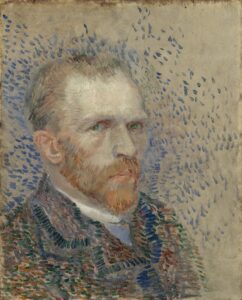
    Other lessons can be found in his life. He moved away from a career in the priesthood to which he was unsuited, though he took what he had learned there – the importance of the numinous in life – and applied it to his art. Nothing was ever wasted. He then applied himself with rigorous dedication to painting, and connected himself in that world, making sure that he was working not according to some outdated understanding of his craft but to its latest developments.

    As he carried out all this he was frugal, careful, and utterly committed. He also had an unfailing instinct for the next subject, and was prepared to subject himself to upheaval in order to pursue those instincts to their logical conclusion. The most famous example of this is his decision to leave Paris and move down to Arles in southern France.

    He did so because he craved another light. It was a masterstroke – when what Vincent calls that ‘high yellow note’ has entered his pictures, we feel he has come home somehow. It looks like something which had to happen. But this again is an illusion: he made it happen. Again, because his life ended tragically, we forget that he was possessed of exceptional self-reliance to have got as far as he did.

    Of course, a more organised person would have found somewhere less depressing than Arles to settle. It’s true that it had a few places going for it – the old Roman amphitheatre and some decent museums in towns nearby. But one senses that almost anyone else would have pressed on to Italy – or to Tahiti, as Gauguin did and follow their decision to relocate to its logical conclusion and find their way to a more appealing town.

    It was his hyperactive fascination with what he saw which made him stay. The fields, the café, his chair, his room: these were enough for him, because he realised that just by going to Arles he had learned to see things in a way which nobody before him had been able to do.

    No-one has seen like that since – and it must be that no artist has communicated to so many people with such immediacy. In fact, his work has the immediate comprehensibility of photographs: it is mass art in the way in which magazines are. And yet it stands up.

    This is abundantly clear at the blockbuster Vincent Van Gogh: the Immersive Experience now touring the world where huge crowds, including children, experience Vincent ‘interactively’. At times the exhibition – as in its roomful of sunflowers – feels somewhat gimmicky, but sometimes it astonishes.

    The centrepiece of the exhibition is a vast, almost cubist cinematic experience, where we see the familiar story of Vincent’s life written in subtitles while music contemporary to Vincent’s life plays and his paintings are shown in detail on large screens. The fascination of the show is that it’s impossible to see all of it at one go, and we’re reminded of what a complicated thing a life is, and especially a creative life like Vincent’s.

    But the principal reflection is this: it’s very hard to imagine a show on this scale for any other artist dead or alive. Picasso, perhaps. Hockney, just maybe. But in each case, I doubt that their work and life has the deep appeal of Vincent. Picasso is at heart too grotesque and misogynistic; Hockney’s work is probably not quite good enough, especially in the last 20 years or so.

    What accounts for this? It is that Vincent truly loved the world and truly loved all people. In his life, he imagined creating an artists’ colony alongside Gauguin and others where the world would be righted. Sometimes, Vincent had little self-awareness: he had neither the organisational skills, nor the money, nor really the personal magnetism, to make such a thing happen.
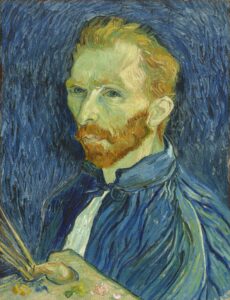
    But it happens today at any Vincent exhibition where people gather in a kind of loose arrangement of fascination, seeing the world again through his eyes. Of course that arrangement dissolves swifter than Vincent had in mind when he imagined a colony of artists. But it is something – more than something.

    And with every passing year we need to understand that Vincent’s popularity isn’t a quirk of madness. It was because his life in its way was exemplary, and there is much we can learn from him.


    Van Gogh. Self Portraits runs at the Courtauld Institute until 8th May 2022

     

  • A personal guide to careers in the wine industry

    Georgina Badine

    It’s a cold rainy day in November in London and I keep telling myself how could I forget my brolly today, it’s London after all. Yes it’s London but the forecast said cloudy with only a 20% chance of rain. The winter has just begun to make an entrance and I know exactly what will cheer me up, a lovely glass of Bordeaux.

    I enter a London restaurant for the second time in my life and the receptionist greets me with a warm smile and remembers my name, whilst saying that she will gift me an umbrella when I leave. I am already smiling before being shown to my table. Equally impressive is the Manager who had only met me once before and who remembers not only my name but also when I last came and where I was sat. Physiognomist or lucky shot? Either way, I’m delighted because he remembers me and every guest feels special when the staff remember them. The Chef patron wows me by knowing who I am before I have even uttered the words wine o’clock, highlighting what a tight knit industry this is.

    Remembering a guest goes further than just knowing his or her name. It involves knowing his or her favourite wines, any allergies and dietary requirements as well as those of his or her guests and knowing what occasion if any is being celebrated.

    I touched upon wine and how remembering some of my favourite wines is a definite bonus. I often get asked what makes a great sommelier? Some may think great knowledge and exams. But before all of that, a great sommelier to me is one who listens. “Would you like a rosé or a light white wine?” are words that are often uttered to me by sommeliers and it has become a bit of a joke within my circle of friends to see how many sommeliers will ask me this. Is it because I’m a young woman? Don’t assume every young woman likes only rosé. In fact, I love red Bordeaux with power and body and white Burgundy with oak and creaminess. The best sommelier will remember this whilst challenging me by taking me on a journey and making me discover other wines in that range that he or she thinks I will really enjoy.

    Vintage is key and there have been occasions where a different vintage has been brought to me.  I was once brought a 2007 Château Talbot instead of the 2005 listed on the wine list. Luckily, it didn’t take long for the sommelier to see I really wanted 2005 so he rectified this and surprised me with a Rauzlan Ségla 2005 that had just arrived.  Stock shortages can happen, although I think it’s always important to notify the guest of this to enable them to make an informed decision.

    I recently caught up with Angelo Altobelli, the Beverage Director and Head Sommelier of Dinings SW3. I know I am always in great hands when Angelo is there. With his Italian flair and charisma, Angelo knows what it takes to make his guests feel welcome and happy. He knows my love of Bordeaux as opposed to Malbec, and for Burgundy as opposed to Riesling and won’t even dream of recommending orange wine as he knows it makes the vein on my forehead pop! He also understands my obsession for decanting all my wines as well as my love of perfectly chilled champagne (who else hates champagne at room temperature?).

    I started by asking Angelo why it is so difficult to find sommeliers in the UK? Angelo explains to me that after Brexit, many people decided to leave the UK. This was very reinforced after the many lockdowns. Wine is not as present in this country as in Spain, France and Italy as a profession. Most of the sommeliers in the UK are not British. Angelo mentions that in Italy, there is even a school where you study hospitality and wine whereas in the UK this is not so common, apart from Le Cordon Bleu.

    I’m curious to know what Angelo thinks makes a great sommelier. He says they need to be able to adapt to the guest’s needs, whilst still making it fun based on their palette. Some sommeliers make it a bit too academic he says. I couldn’t agree more as we just want to be taken on a journey allowing us to discover different wines. What I perhaps like best about Angelo is that he listens to the guest. He knows my love for full-bodied wine so he avoids recommending me any Pinot Noir. Angelo also adds that a great sommelier has a good understanding of business so they know what sales and profit margins they need to achieve. Whilst we may be quick to complain about high wine prices, Angelo explains that a lot of research goes into what wine to put on his list, focusing on the producer and the vintage. It has taken him 9 months to get the Dinings SW3 wine list where it is now and he is not even half way there yet.

    The industry is clearly struggling and we are likely to see many restaurants shutting their doors which is heartbreaking. Angelo admits that he is a little bit scared about the situation. Demand for sommeliers is high at a time when there is a real shortage, meaning this may lead restaurants to have to recruit people who are either not sommeliers or not passionate about the trade. We talked about how the government needs to be doing more to help the hospitality sector, with a key priority being easier access for people to come work in the UK. Four years ago, it would not be uncommon to see a starting sommelier position advertised at under £25k. Today, you will struggle to advertise for that position under £30k, with some restaurants offering even more.

    Angelo has plenty of funny wine stories. Perhaps my favourite one is where a guest said to him, “can you recommend a good white wine?” When Angelo asked the guest what she normally drinks, she said everything but that she hated Chardonnay. He then went on to recommend a Riesling, yet she insisted on having a Chablis! My eyebrows are raised at this stage and I ask him if he told her that Chablis is a Chardonnay grape variety. He opted for diplomacy and just smiled I bet he was giggling inside…

    Perhaps what we don’t talk about so much is how much time sommeliers dedicate to their exams known as the Court of Master Sommeliers. The first of these exams took place in London in 1969. The aim of these exams is to encourage the quality standards for beverage service in the hospitality industry. The first of these exams is called Introductory, then comes Certified, followed by Advanced and ending with the most prestigious and highly coveted of all, the Master sommelier exam. On average, the pass rate for the Master Sommelier is about 5% and there are only 273 worldwide which shows how difficult it is to achieve. More than a decade can pass between the first exam and the Master Sommelier exam which involves a blind tasting of 3 red wines and 3 white wines, as well as an evaluation on service and a theory-based exam. So why put yourself through such intense studying? Well, on one level it’s the pride of the achievement but as well as this, it does demonstrate to a potential employer that the candidate is among the most qualified in the industry and can also lead to better progression and a higher salary within the industry.

    Historically, one could argue that sommeliers were not paid very well, given all their hard work and the long hours they spend in the restaurant. Before covid, it was not uncommon to see a starting sommelier salary between £24k-£25k. Now this is closer to £30k although it will depend on the restaurant of course. This is something positive though as the lack of supply has also highlighted the need to reward talented and passionate people. A Head Sommelier will of course be on more, typically this would start at around £40-£45k in London although it could be more depending on the person’s experience. As for Master Sommeliers, it is not unusual to expect them to be on £80k-£90k in London. The title is one of the most prestigious ones in the wine world so it is understandable that restaurants are proud to be able to say they have a Master Sommelier in their team.

    Investment in wine has become an interest of many wine lovers as it is an alternative way to make some money from something people are passionate about. It can get quite complex so having an advisor for this in the industry is very helpful. It all depends on how you buy the wine. The key is buying the wine En Primeur which means you are buying the wine before it has been bottled straight from the producer. This ensures you will make good revenue on your investments. You could expect to buy a bottle of Guiberteau 2 years ago for between £20-£25 that would now sell for between £35 and £40 per bottle. Both Burgundy and Bordeaux wines are great investments and 2 that I always turn to. Burgundy gets mature quicker so the return will come sooner, usually in about 5-6 years whilst Bordeaux can take up to 10 years. It is all dependent on the producer and the vintage also plays a part. The top 2 wines I would recommend for investment are Domaine Romanée Conti (known as DRC), although getting an allocation is a challenge in itself.  A case of 3 bottles about 5 years ago was £900, whilst today it is up to £4,000. DRC is so attractive as it can generate returns of up to 200%. For Bordeaux, I would turn to Château Lafite. As an example, a bottle of 2018 Château Lafite was £2,300 en Primeur whereas now it is selling for £3,500. The key with wine investment is patience and a careful selection by someone who understands the market.

    When it comes to hospitality, consistency is key and being made to feel welcome will make me coming back for more. My dad used to say, “this restaurant is my home away from home”. Nothing beats sharing a bottle of wine in good company. Warm treatment of your guests will make them a walking advertisement and they will not only become regulars but also spread the word to their network. True hospitality is achieved when people leave feeling better not about you but about themselves. Psychology plays a huge part in hospitality so understanding your guests is really key and the sooner this is achieved, the better, so keep the orange wine away from me and get your decanter out because it’s wine o’clock!

  • The Industry 2.0: Journalist aspirants rival bankers for drama and drive

    The Industry 2.0: Journalist aspirants rival bankers for drama and drive

    Daphne Phillips

    I recently enjoyed the BBC’s new drama Industry, in which we follow five graduates that vie for a permanent job at the fictional investment bank, Pierpoint. The clashes, the deceit, the egos and the excess draw you into their storm in a teacup. Yet I couldn’t help but notice that none of this rivals the tempest that gathers around graduates trying to break into the world of journalism.  

    Being one of them myself, and on one of the most competitive and well-respected journalism courses in the country, I can say with confidence that they’re a maverick and driven bunch. Since we spent last semester enjoying in-person teaching but with very little social life outside of the course, the long days, intensity of work and shared dream have led to a sense of village community. 

    But as with any village, there is also drama and intrigue. There has been suspected ‘ideas stealing’ and the reckonings to follow. Meanwhile, the psychological warfare of group chats reveals how many grad schemes and jobs people have applied for. 

    Some want to infiltrate, investigate, and expose terrorist organisations, whilst others are fiends at trawling through suspicious MPs’ expense record. Others just want to write about cricket. There is depth and there is range to their pursuit to make a living out of words. 

    Then there is the world of freelancing – like banking, one with its own quirky words and rules. Freelancing can be very rewarding and is an excellent way to introduce yourself to publications you one day hope to work at full-time. It is also another way of quantifiably comparing yourself to your journalist peers. Some will already be working on documentaries; others are writing features for national outlets; and the relentless Twitter stream can all seem a bit much sometimes. 

    Investment banking may be competitive, but it’s got nothing on journalism. More graduates than ever are interested in journalism as a career-path, and unfortunately there are fewer jobs waiting for them. The result is a highly competitive but undoubtedly exciting atmosphere.  

    Photo credit: Austine Distel on Unsplash

  • A look at the video game industry

    Patrick Crowder

    In the past 30 years, video games have gone from something experienced in an arcade, or on a home computer by a very select few, to a massive industry which makes upwards of £155 billion per year. The online gaming platform Solitaired analysed data from Indeed UK to find the highest paying roles and the best places to work in the video game sector.

    If you want to earn big money in the gaming industry, the best way to do it is to become a game developer. Game developers code and test the software which makes the idea for a game come to life. On average across the UK they make £43,469 per year. Game developers in London have the highest pay, at £59,940 per year.

    If coding doesn’t interest you, have no fear, as the second highest paying role in video games doesn’t require it.  Marketing managers are in charge of creating campaigns to find an audience for a game, and to promote that game in a way which maximises sales. They make £38,278 per year on average, making this a great way to get into the industry if you don’t have a background in computer programming. London is also the place to go for video game marketing, where you will see an average salary of £43,178 per year.

    An important yet oft overlooked role within the video games industry is that of the Quality Assurance tester. Before a game rolls out to the public, QA testers have to figure out every way that the game can be broken. When a game has millions of players, they will find new and innovative ways to mess things up by odds alone, so a good tester has to predict multiple failure modes and address them. QA testers make £35,919 on average, though those who work in Cambridge make £46,976 per year on average.

    3D artists create everything you see when you play a video game, from your favourite characters, vehicles, and weapons to the mountains you climb, and the trees you accidentally drive into. They make £35,828 on average, but London-based 3D artists earn about £43,616 per year. For those with an inclination towards the visual arts, this can be a great career which uses your creativity to earn a good living.

    If you want to get into the video game industry from a background in business, consider becoming a video game producer. Rather than dealing with coding or creating the art of a game, producers do the necessary jobs which players rarely think about. Marketing, budget, contract negotiation, and scheduling all fall under the video game producer’s umbrella, making it a role with considerable variety. They make around £33,796 per year across the UK, but producers based in Liverpool make the highest wage for their role in the country, netting around £38,802 per year.

    These are by no means the only roles available in the video game industry – far from it. Like any business, IT services, HR, market research, and sales representation are all necessary, along with writing the text and script for a game, voice acting characters, and translating games into different languages. If you’re wondering if the video game industry has a place for you, it does, because the roles available are a lot broader than you think.

    Credit: solitaired.com

  • 2021 highlights: How to be an Epidemiologist

    2021 highlights: How to be an Epidemiologist

    by Emily Prescott

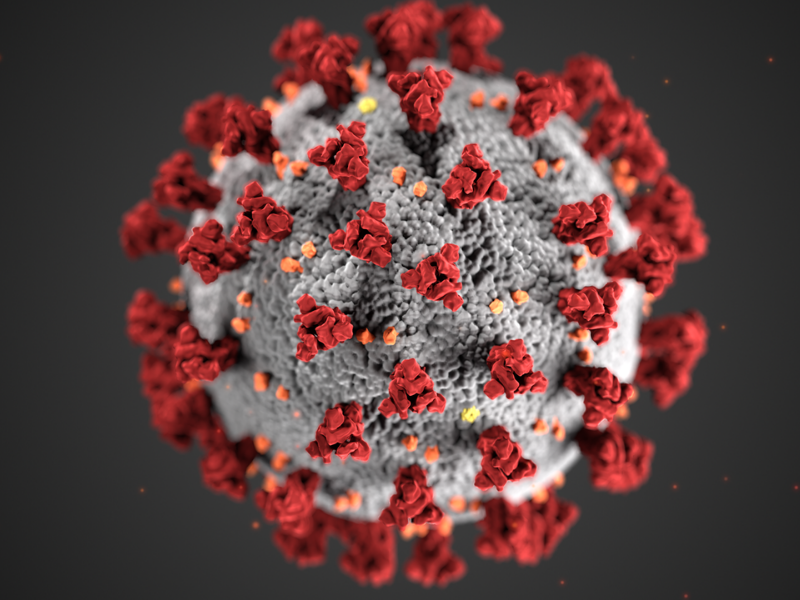
    Epidemiologist is one of those words that has unfortunately been thrust into everyday parlance. Along with, ‘furlough’, ‘coronavirus’ and an ‘R number’, in 2019 you would be forgiven for not knowing the respective definitions. Of course, you can’t get away with that now. In fact, many of us have even transformed into epidemiologists from our armchairs. But other than looking concerned on the television, what does being an epidemiologist actually involve and how do actual epidemiologists feel about the public discourse surrounding the virus? We caught up with three epidemiologists – a PhD student, a doctor and a professor  to find out.

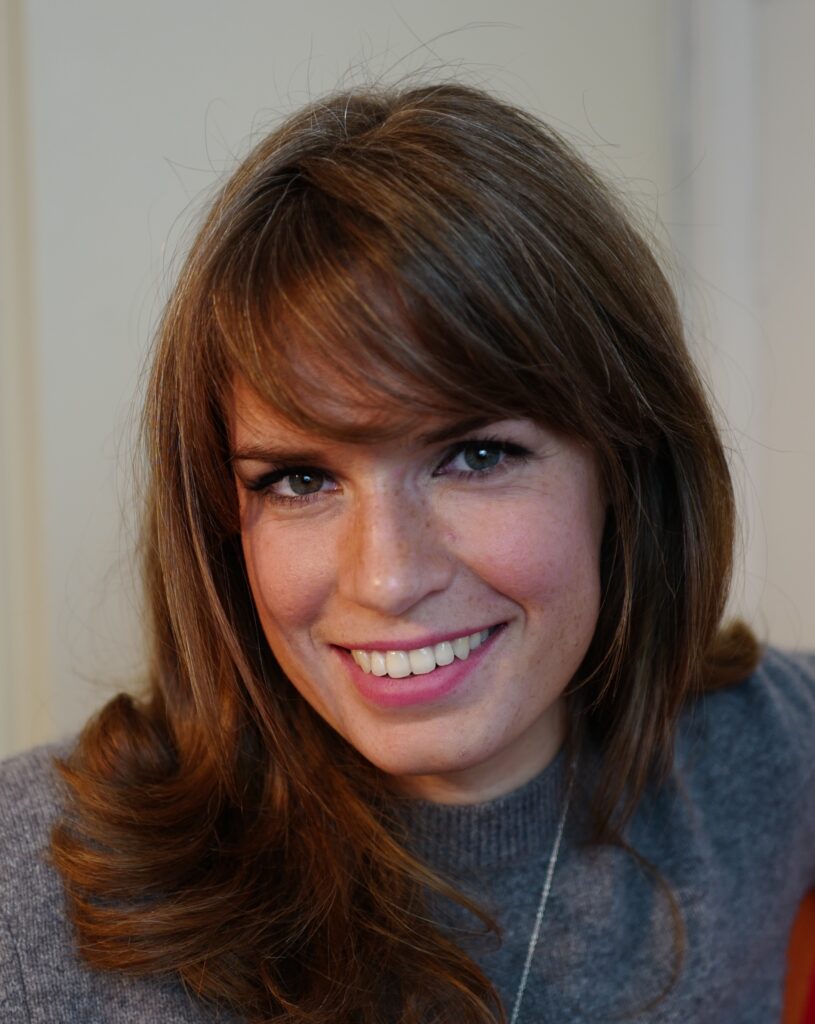
    Epidemiologists could colloquially be termed ‘disease detectives’ as they investigate public health problems. They will search for the cause of a health issue, identify people who are at risk and then determine how to control the spread or prevent the problem from recurring. But PhD student Florence Walker says that despite the pandemic, many people still don’t understand what an epidemiologist does. “I thought at least now everybody will know what an epidemiologist is and actually it’s still the case that I’ll tell people, ‘Oh I’m an epidemiologist’, thinking they will go ‘oh that’s so cool, that’s amazing,’ and instead I get a ‘What’s one of them then’ or an ‘Oh, I’ve got a problem with my skin, let me tell you about it’.”

    After graduating with a Masters in epidemiology from the London School of Hygiene and Tropical medicine, Florence has been looking into the consequences of people not taking medication properly as part of a PhD at the University of Edinburgh. As a student epidemiologist, she admits she finds some of the conversations around lockdowns frustrating. “Some people say the restrictions are ridiculous but you know, we have 75% fewer cases of flu this year which means that the lockdown is working.” 

    She adds: “It’s been a long time since anybody thought that the miasma theory (the theory that bad air is the main cause of every disease) was correct. We’ve got germ theory. We know that you can’t get infected unless you are able to transfer pathogens.” 

    Florence Walker: ‘We have 75 per cent fewer cases of flu this year which means lockdown is working’

    “People say oh well it’s just like a cold, well it is just like a cold for a lot of people but the problem is the percentage of the population for whom it will not be like a cold, it will be a life threatening if not life taking illness, is enough to overwhelm our national health service. We have to protect the NHS,” she sighs.  

    Florence herself has had coronavirus and as a consequence, she lost her sense of taste. “I put a spoon into a bottle of Colmans mustard and ate it and it just tasted like powder.” Thankfully it is back now. 

    For people who are considering getting out of the armchair and doing a PhD in epidemiology, Florence says: “The only bit of advice I could give anybody who wanted to go and do a PhD is “find your supervisor”. “PhDs are really lonely and I know lots of students who speak to their supervisor just twice a year, I have a call with my supervisor three times a week,” she says. 

    But Florence warns the pandemic has caused a sharp spike in the amount of people looking to do similar PhDs. “When I got mine my supervisor met me at the school and she was just asking everybody ‘do you want to come and do a PhD?’… But this year she advertised for a PhD student and there have been well over 100 applicants. It’s getting fierce.”

    Dr Thomas Churcher, who teaches at Imperial College in London, also told us about the spike in interest in studying epidemiology amid the pandemic. “Clearly epidemiology is very fashionable at the moment but that will clearly wane.” He says that an older colleague recalled the wave of interest in epidemiology surrounding the HIV epidemic. “Don’t be attracted to it because you see a lot of epidemiologists on the news. All the hard graft is done between those events,” he says. 

    Dr Churcher was drawn to epidemiology through an interest in disease after he caught malaria while travelling. He says: “The thing I like about epidemiology is you have to get to a broad understanding of everything that’s going on. It’s the really holistic approach that I find interesting. 

    Dr. Thomas Churcher explains that epidemiology in involves a holistic approach. “You have more diverse experiences coming in.”

    “In the past epidemiologists were very much born from the kind of maths and stats background but as understanding of the discipline has increased you have more diverse experiences coming in which is exactly what it needs. It doesn’t need to be just hardcore mathematicians doing it, it needs to be social scientists, it needs to be everything because it is a society based problem.” 

    Since the pandemic, Dr Churcher has focussed on the impact COVID is having on malaria, to avoid “a double pandemic”. He says while he is pleased the public has a greater awareness of epidemiology now but is frustrated that there’s still an “awful lot of rubbish being talked by an awful lot of people” when it comes to the virus.  

    Meanwhile, Professor Sarah Lewis, who is a Professor of Molecular Epidemiology at the University of Bristol, says she worries about the relationship between Twitter and epidemiology. 

    “I keep getting sucked into Twitter. I should stay away from it really but it’s a very good one for finding out new information because obviously data’s generated so fast at the moment. Normally in epidemiology, it will take us months to write a paper and then it will go out to peer review and that can take several more months and then you’ve got to wait for the publication. 

    “Because policies are being based on the research, everything is coming out so fast and lots of it hasn’t been peer reviewed and it’s posted up on Twitter and you find the latest information there really or in press releases which is quite different. Some of it has dubious quality but before anyone has had a chance to assess the quality it’s gone round hundreds and thousands of people,” she warns. 

    Professor Lewis says aside from the obvious frustrations at the moment, working in epidemiology is a very satisfying career path. “If you get involved in epidemiology you can apply the methods across a whole load of different subjects.” 

    “I normally work on using genes to identify risk factors for cancer but also cleft lip and palate and mental health, as well. So that’s quite diverse already. But then, with the pandemic, a lot of the methods that I’m familiar with apply to analysing data relating to COVID as well,” she explains. 

    She concludes: ”It’s a fantastic field if you’re broadly interested in health and you want to make a big impact on populations. Obviously a doctor will treat a single patient but an epidemiologist could identify a risk factor which could have an impact on thousands of people.” 

  • Racing Ahead: The equestrian industry emerges from lockdown

    Racing Ahead: The equestrian industry emerges from lockdown

    by Alice Wright

    According to the British Horse Council’s Manifesto for the Horse the equestrian industry in the UK provides full-time employment to over 250,000 people and is the second largest rural employer after agriculture. It’s also a growing industry, contributing around £8 billion a year to the economy. Employment opportunities stretch far beyond riding and caring for horses. For example, the industry incorporates marketing, betting, training, retail and veterinary sectors that offer myriad opportunities to work with and for horses.       

    For those acquainted with the equine world this may appear self-evident, but for those with a budding interest or considering a career change the British Horse Society (BHS) helpfully breaks the various sectors down in their ‘career pathways’: Breeding & Stud; Business Management; Coaching; Tourism; Dental; Farriery; Journalism, PR & Photography; Mounted Forces; Nutritionist; Racing; Saddlery; Sales & Marketing; Trainer and Veterinary Medicine. I spoke to some of the various leaders of these sectors to find out more about the opportunities in their professions and where the industry is headed as restrictions are lifted.     

    A spokesperson for the British Horse Society (BHS) told me that “like with all industries affected by the pandemic, it will take time for the equine industry to get back to business as usual. With people having more spare time we saw an uptake in the number of individuals taking part in horse riding, prior to the second lockdown. This, along with people embracing the outdoors and new hobbies, is a positive sign that the industry will continue to thrive.” 

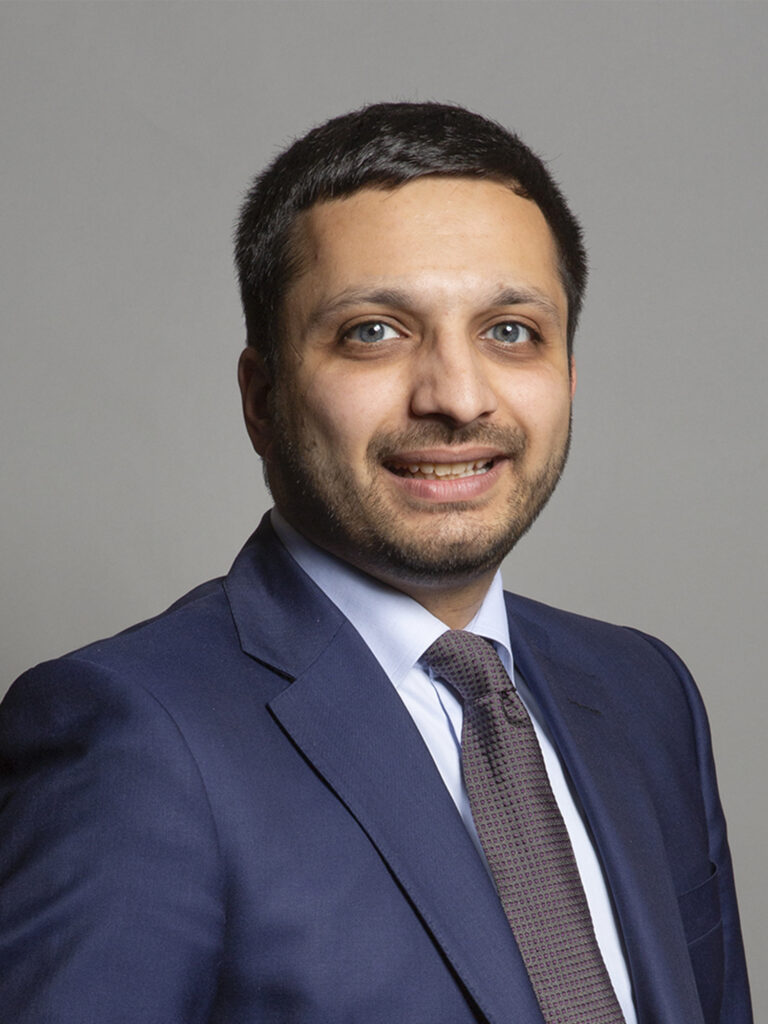
    Saqib Bhatti MBE MP is the Chair of the APPG for the Horse that, according to Bhatti acts as “a voice for the horse riding industry in the United Kingdom” to “give a unified voice to ensure industry concerns are heard in Parliament.” He tells me that recently their work has dealt with issues thrown up by the lockdown such as the operation of riding schools during restrictions and the classification of vets as key workers. 

    Indeed Bhatti’s APPG is now largely focusing on the post-Covid landscape. “We face a myriad of economic challenges and ensuring employment opportunities are available in the equestrian industry will require cooperation between industry and government.” 

    Saqib Bhatti MP chairs the APPG for Horses in Parliament

    Indeed, aspects of the equestrian industry have been hit hard by the pandemic. Last March, the iconic Cheltenham Festival was given the government green light to go ahead despite the escalating coronavirus crisis and has retrospectively been deemed a possible superspreading event. Race meets, sales and other large income generators all over the sector were closed down for months. 

    Yet, Bobby Jackson, marketing executive at Tattersalls sales in Newmarket claims that bloodstock, sales and marketing has remained relatively stable. “As our side of the industry deals directly with racehorses, COVID-19 hasn’t really affected the day-to-day care of them and therefore employment levels have remained fairly steady” he says, adding that “investment levels at the Tattersalls sales have been positive during the pandemic and would infer that employment levels should remain strong in the long term too.” 

    Claire Williams, Executive Director of the British Equestrian Trade Association (BETA) agrees, telling me that “to be honest, the trade and retail has come out of COVID quite strong. Certainly my retailers and manufacturers are coming out probably almost with higher turnovers than they were coming in [to the pandemic]. We’ve seen a real boom and equestrian sales over the last year. BETA is recognised as the official representative body for the trade sector of the equestrian industry, representing over 800 companies in retail, wholesale, manufacturing and other service agents.

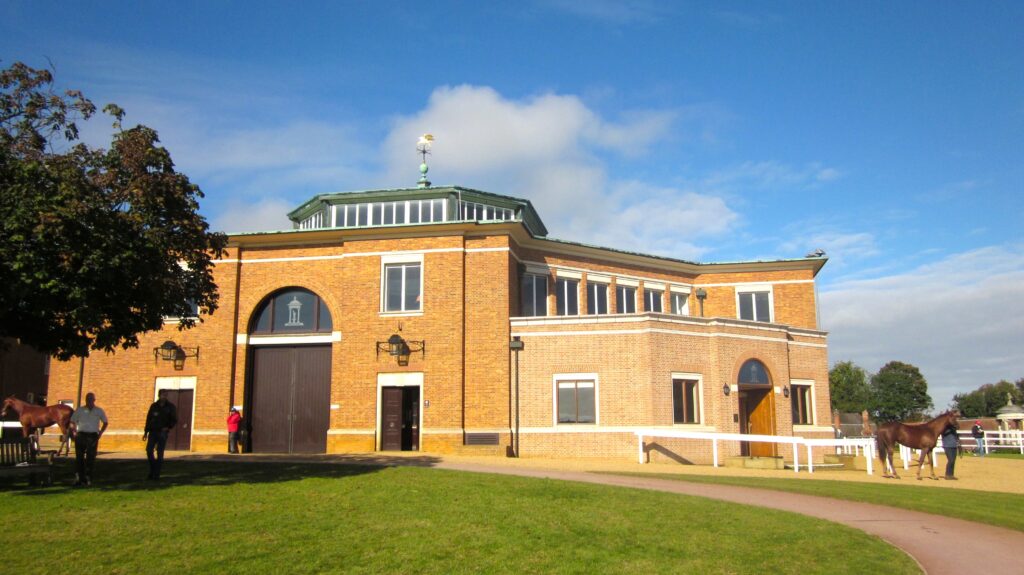
    The Tattersalls sales ring at Newmarket (Edumark)

    Williams is keen to emphasise just how many opportunities there are across the industry, but particularly in the trade sector. “In terms of the trade side, you’ve got everything from saddlers, to photographers, or working for a large manufacturer. You’ve got the range of nutritionists, assisting in the development of feed or to act as advisors to the customers.” Equine nutrition is constantly responding to developing research so there are academic opportunities as well as client-facing roles. 

    “Then you’ve got business management type positions and companies, whether that be product development, market development, marketing and sales,” Williams adds. She is also enthusiastic about the creative opportunities available, such as in product design for both horses and riders, from hat silks to winter rugs.    

    There are also “a lot of PR opportunities” both in-house with large companies and dedicated specialist firms such as Mirror Me PR, as well as “opportunities for more science-oriented people.” The scientific primarily relates to veterinary medicine and pharmaceuticals but Williams also mentions that there are a great deal of R&D (research and development) opportunities with companies, such as those creating supplements.  

    Further to this there is the management and events aspect of the trade which can be a fruitful career for the self-employed as well as those that want to work at events corporations. However, events businesses have been one of the hardest hit by lockdown and restrictions on gatherings. 

    BHS’ spokesperson agrees with Williams about the abundance of employment options surrounding horses, saying that working with horses will provide “a strong foundation of skills and knowledge to support any career, or career change, in the industry. It will provide you with many transferable skills such as communication, assertiveness, organisation, time-keeping, resilience and confidence” adding that, “in any career connected to horses, from journalism and graphic design to saddlery or farriery, a foundation knowledge in complete horsemanship is recognised throughout the world as a huge advantage.” 

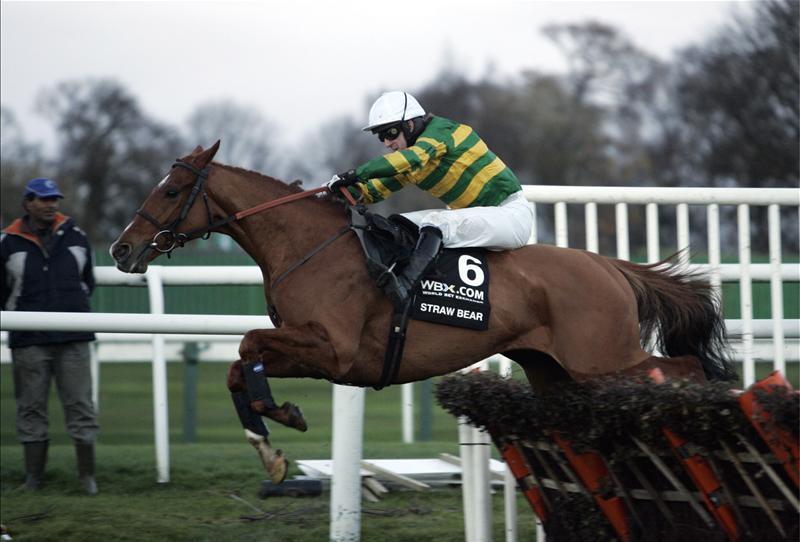
    The great AP McCoy riding Straw Bear to victory in 2006. Career opportunities are rife in PR, with dedicated firms such as Mirror Me Pr (Citrus Zest)

    Jackson too expresses the variety of opportunity within the marketing and sales sector of the equestrian industry. “In this side of the industry, if you want a hands-on job with horses you can do it, if you want an office job you can do it, or if you want a job combining outdoors and indoors then you can do it! There are roles for all talents.”  

    Jackson describes how the range of jobs within sales and bloodstock itself is huge. One can work on a stud farm and bring life into the world during the foaling season, or alternatively work at an auction house like Tattersalls and help fulfil people’s dreams when they sell a horse for a life-changing amount of money. “This side of the sport will give you moments that you will never forget,” he tells me.   

    Yet despite the plethora of opportunities the equine industry carries an unfortunate haze of elitism over it as a profession. It is associated with royalty and high-net worth investors, and while both hold essential roles in the sector, this perception can be an initial barrier to people considering a career in the sector. 

    The BHS told me that “there is an inaccurate perception that equestrianism is an expensive industry to get into. While it is true that owning a horse can be expensive, you do not have to own one to be able to start your career.” Jackson agrees: “The ‘sport of kings’ brings with it positive and negative connotations.” He tells me, “some people think that you need to have family in horse-racing in order to get a job in it. Incorrect.” He also stresses that his own family background is not connected to racing.  

    Williams disagrees that the industry is elitist at all. “When we look at our market research, [those with] lower to medium income levels actually comprise over half of the riders in the marketplace. It may be perceived as elitist but really I don’t believe it is otherwise we wouldn’t have 1.8 million regular riders.”    

    The winners’ enclosure at Cheltenham. Is horse-racing an elitist sport? (Winners’ enclosure; Carine 06)

    Jackson also explains that “unlike most industries, travelling the world and doing multiple jobs in your early career in order to get as much experience as possible isn’t seen as a negative in horse racing. So, by working hard, getting your hands dirty and proving your talent anybody can carve a successful career in our industry and absolutely love it.” This is a point of encouragement for those considering a career change or those yet to finalise their career choice after finishing studies.  

    Schools, colleges and further education institutions don’t tend to include opportunities to work with horses in the usual career days advertising medicine, the law and finance. Yet there are initiatives such as Racing to School which aims to educate school children on the activities and business of running racecourses. Jackson argues that such initiatives could be broadened to the bloodstock and sales side of the industry.      

    He adds that at Tattersalls, children from Newmarket Academy make an annual visit to Book 1 of the October Yearling Sale and “it would be wonderful if other schools around the country were able to do similar at stud farms, for example.”  

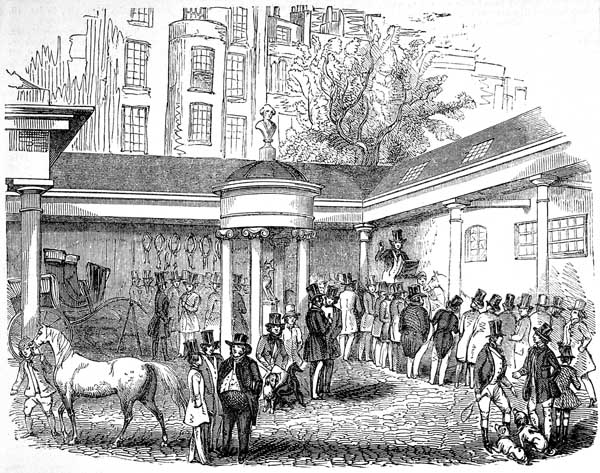
    An industry with pedigree: Tattersalls was founded in 1766

    Bhatti tells me that he agrees that there are challenges to those starting out in the equestrian industry. “The APPG has found that several employers feel that students coming out of education and moving into the sector lack some practical skills or experience and it is important to encourage as much hands-on experience as possible.” One solution he suggests is “working with schools to ensure placements in riding schools and other industry-related institutions become available for students.” A large part of the APPG’s work is with educational organisations such as the BHS to make people aware of opportunities within the industry.       

    Williams adds that “there are a lot of opportunities for young people such as apprenticeships. For example, we’ve got gateway stages with Kickstarter at the moment. I’ve got something like 40 employers with positions they’re creating specifically for young people.”    

    The equine industry seems to have remained relatively stable during restrictions, and even those elements such as racing and events that have been adversely affected are set to bounce back. Despite an air or exclusivity there is such a range of job opportunities within this industry and as Williams says “to work in the equestrian trade you don’t necessarily have to be horsey. You don’t have to have an equine degree to get a job in the equestrian trade at all. What we’re looking for is people showing that they’re capable, they can write well, they can analyse and they have the business skills that we need for business.”

    The BHS spokesperson offers equal encouragement: “the great news is that you can pick this up at any age or stage in your life – you are never too old to fulfil your passion for horses!” Jackson concludes with enthusiasm “what you will also find is that everyone is doing what they love – something I count myself very lucky to say – and this is a great leveller.”    

  • Interview: leading bookmaker Will Woodhams

    Interview: leading bookmaker Will Woodhams

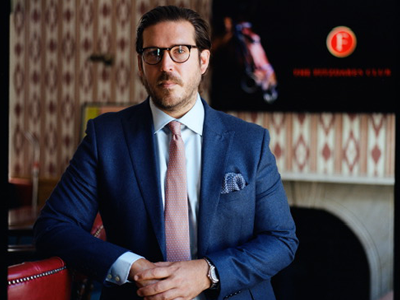
    The CEO of Luxury bookmaker Fitzdares speaks to Georgia Heneage of his career journey, the need to bring the ‘human’ back into business and the secret recipe for success

    Will Woodhams’ journey from Archaeology & Anthropology undergraduate to CEO of the world’s leading horseracing bookmaker Fitzdares holds nuggets of wisdom which any young jobseeker can learn from. And this is precisely the direction our conversation takes: even over the phone it’s easy to tell that he’s a natural people person – friendly, funny, and very generous with his advice.

    Woodhams entered the business world with a whole lot of drive and absolutely no experience (or formal training, for that matter). “All I did was flip my skill set on its head to become a corporate beast,” he tells me.

    Zigzagging from company to company, and propelled by his drive to “just get on and do stuff”, Woodhams worked for brands like French Connection (which he says he was “woefully underqualified” for), LVMH (Moët Hennessy Louis Vuitton) and finally Fitzdares. His career, he says, has taken the twists and turns of a “poacher turned gamekeeper”.

    So what is Woodhams’ core advice for anxious jobseekers beginning to brave the corporate world?

    Segment your audience

    Woodhams says that one of the most useful takeaways from his degree at Durham was the ability to “segment” his audience; he’s since learned to tailor his business model towards the right audience, even if that’s a high fashion brand aimed at women.

    “People pigeon-hole themselves into industries,” says Woodhams, “when all you need is to understand what consumers want; which is good customer experience and to be taken seriously.”

    Have a point of view and filter out the ‘bullshit’

    “This is the best advice I could ever give anyone,” says Woodhams. “You can read as many business books as you want but if you’re not actually shaping a particular point of view then you’ll fail.”

    For young people there’s reams of information and advice on the internet. “It’s a bit like the protestors in America,” says Woodhams. “If you’re reading it, you’ll start believing it.”

    “I think that having a really strong bullshit filter is absolutely imperative,” he says. But this is something you have to learn yourself: “No one can teach you that, and if you haven’t got it then you’re not probably going to do all that well.”

    Make decisions quickly, and have the ability to pivot

    In a world governed by tight time deadlines and swift turnovers, the “greatest skill anyone will ever have” is making decisions quickly. “That means hearing everyone’s advice, looking at the data, and then just making a call,” says Woodhams.

    But this isn’t always easy with big corporations, in which management is like “moving a supertanker”. Businesses must “be agile and be able to pivot weekly”, says Woodhams. Using another apt aquatic analogy, he says that once they stop moving they will, like sharks when they stop swimming, die.

    “A good example of this is Coca-Cola. People think they are static because the brand has stayed essentially the same, but they tactically remove products or markets and are brilliantly creative. They were the first brand to do personalization, for instance. So there’s tonnes of stuff happening under the water, even if the surface looks still.”

    How has Covid-19 affected this?

    Our lives in the previous year have been defined by the very sense of immobility which Woodhams warns is the death of all businesses. So how can this be avoided?

    Characteristically cutthroat, Woodhams says Covid-19 has in a sense been the great divider, or test, of business models. “Most businesses which have died haven’t been able to pivot quickly enough,” he says.

    Woodhams’ advice comes from personal experience. Woodhams has used the pandemic to accelerate business and get his clients “excited” about their future relationship with the bookmaking company.

    In September, Fitzdares faced almost certain death. But Woodhams was determined to build from the ground up, and he capitalised on the lockdown.

    Despite being opened and closed “like a fire escape”, they managed to generate huge amounts of marketing publicity which has been hugely beneficial for the business as a whole. They sent daily emails to clients, organised a drive-through in Derby so that clients could watch the race on a big screen, delivered Beef Wellington and encouraged people to post on Instagram, set up a wine club and a pasta club, and are planning to hire a castle for clients as an equivalent to the Cheltenham races in March, where it’s easy to socially-distance.

    “It’s about finding a solution to a problem. Business has been really good this year!” says Woodhams.

    State of Play

    But Covid-19 aside, what is the state of the betting industry as a whole? Because of government regulations over betting, the sector has been in a “tough spot”. But Woodhams is optimistic; “it’s a massive industry in the UK and we’re global leaders in the market”.

    Fitzdares has found a niche within the sector and played on the lack of care for customers shown by larger betting companies, which more often than not results in addiction, mental health issues and alcoholism. “We’re zigging when everyone’s zagging, and it’s working,” says Woodhams.

    This support for his clients is at the core of Woodhams’ business ethos. As big tech hurtles to new heights, Woodhams believes customers increasingly crave the “human side” of business. “The experience economy is coming back,” he says, “and I’ve noticed that customer service has got better again.”

    In Woodhams’ opinion, some companies deemed successful are hindered by a lack of attention to their customer needs: “British Airways is considered the world’s finest airline but I think they’ve shot themselves in the foot by delivering bad customer experience; it feels like they should be a cheaper product.”

    Topshop, who used to have a “great customer experience” back in the days when their store in Oxford Circus was teeming with pop-up beauty bars the occasional live events is another case in point. “The experience got worse and worse, the business got worse, the product got worse and even the owner became worse.”

    So if tech is “coming in and eating people’s lunches by trying to smooth the consumer journey”, what is the ideal business model in an technical age crying for the return of the human touch? A mix of the two, says Woodhams, is the “axis of amazing customer service”. With that our time is up, and I realise my conversation with him has enriched my understanding of business – and the world.

  • Interview: leading bookmaker Will Woodhams

    Interview: leading bookmaker Will Woodhams

    The CEO of Luxury bookmaker Fitzdares speaks to Georgia Heneage of his career journey, the need to bring the ‘human’ back into business and the secret recipe for success

    Will Woodhams’ journey from Archeology & Anthropology undergraduate to CEO of the world’s leading horseracing bookmaker Fitzdares holds nuggets of wisdom which any young jobseeker can learn from. And this is precisely the direction our conversation takes: even over the phone it’s easy to tell that he’s a natural people person – friendly, funny, and very generous with his advice.

    Woodhams entered the business world with a whole lot of drive and absolutely no experience (or formal training, for that matter). “All I did was flip my skill set on its head to become a corporate beast,” he tells me.

    Zigzagging from company to company, and propelled by his drive to “just get on and do stuff”, Woodhams worked for brands like French Connection (which he says he was “woefully underqualified” for), LVMH (Moët Hennessy Louis Vuitton) and finally Fitzdares. His career, he says, has taken the twists and turns of a “poacher turned gamekeeper”.

    So what is Woodhams’ core advice for anxious jobseekers beginning to brave the corporate world?

    Segment your audience

    Woodhams says that one of the most useful takeaways from his degree at Durham was the ability to “segment” his audience; he’s since learned to tailor his business model towards the right audience, even if that’s a high fashion brand aimed at women.

    “People pigeon-hole themselves into industries,” says Woodhams, “when all you need is to understand what consumers want; which is good customer experience and to be taken seriously.”

    Have a point of view and filter out the ‘bullshit’

    “This is the best advice I could ever give anyone,” says Woodhams. “You can read as many business books as you want but if you’re not actually shaping a particular point of view then you’ll fail.”

    For young people there’s reams of information and advice on the internet. “It’s a bit like the protestors in America,” says Woodhams. “If you’re reading it, you’ll start believing it.”

    “I think that having a really strong bullshit filter is absolutely imperative,” he says. But this is something you have to learn yourself: “No one can teach you that, and if you haven’t got it then you’re not probably going to do all that well.”

    Make decisions quickly, and have the ability to pivot

    In a world governed by tight time deadlines and swift turnovers, the “greatest skill anyone will ever have” is making decisions quickly. “That means hearing everyone’s advice, looking at the data, and then just making a call,” says Woodhams.

    But this isn’t always easy with big corporations, in which management is like “moving a supertanker”. Businesses must “be agile and be able to pivot weekly”, says Woodhams. Using another apt aquatic analogy, he says that once they stop moving they will, like sharks when they stop swimming, die.

    “A good example of this is Coca-Cola. People think they are static because the brand has stayed essentially the same, but they tactically remove products or markets and are brilliantly creative. They were the first brand to do personalization, for instance. So there’s tonnes of stuff happening under the water, even if the surface looks still.”

    How has Covid-19 affected this?

    Our lives in the previous year have been defined by the very sense of immobility which Woodhams warns is the death of all businesses. So how can this be avoided?

    Characteristically cutthroat, Woodhams says Covid-19 has in a sense been the great divider, or test, of business models. “Most businesses which have died haven’t been able to pivot quickly enough,” he says.

    Woodhams’ advice comes from personal experience. Woodhams has used the pandemic to accelerate business and get his clients “excited” about their future relationship with the bookmaking company.

    In September, Fitzdares faced almost certain death. But Woodhams was determined to build from the ground up, and he capitalised on the lockdown.

    Despite being opened and closed “like a fire escape”, they managed to generate huge amounts of marketing publicity which has been hugely beneficial for the business as a whole. They sent daily emails to clients, organised a drive-through in Derby so that clients could watch the race on a big screen, delivered Beef Wellington and encouraged people to post on Instagram, set up a wine club and a pasta club, and are planning to hire a castle for clients as an equivalent to the Cheltenham races in March, where it’s easy to socially-distance.

    “It’s about finding a solution to a problem. Business has been really good this year!” says Woodhams.

    State of Play

    But Covid-19 aside, what is the state of the betting industry as a whole? Because of government regulations over betting, the sector has been in a “tough spot”. But Woodhams is optimistic; “it’s a massive industry in the UK and we’re global leaders in the market”.

    Fitzdares has found a niche within the sector and played on the lack of care for customers shown by larger betting companies, which more often than not results in addiction, mental health issues and alcoholism. “We’re zigging when everyone’s zagging, and it’s working,” says Woodhams.

    This support for his clients is at the core of Woodhams’ business ethos. As big tech hurtles to new heights, Woodhams believes customers increasingly crave the “human side” of business. “The experience economy is coming back,” he says, “and I’ve noticed that customer service has got better again.”

    In Woodhams’ opinion, some companies deemed succesful are hindered by a lack of attention to their customer needs: “British Airways is considered the world’s finest airline but I think they’ve shot themselves in the foot by delivering bad customer experience; it feels like they should be a cheaper product.”

    Topshop, who used to have a “great customer experience” back in the days when their store in Oxford Circus was teeming with pop-up beauty bars the occasional live events is another case in point. “The experience got worse and worse, the business got worse, the product got worse and even the owner became worse.”

    So if tech is “coming in and eating people’s lunches by trying to smooth the consumer journey”, what is the ideal business model in an technical age crying for the return of the human touch? A mix of the two, says Woodhams, is the “axis of amazing customer service”. With that our time is up, and I realise my conversation with him has enriched my understanding of business – and the world.