Tag: California

  • What does Gavin Newsom’s Recall Election win mean for Californians?

    What does Gavin Newsom’s Recall Election win mean for Californians?

    By Patrick Crowder

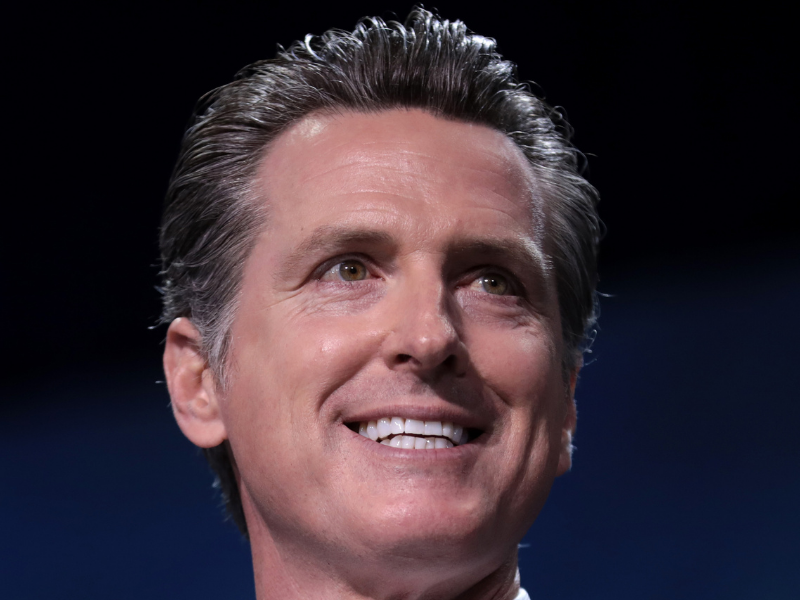
    California Governor Gavin Newsom survived the recall election on September 14th which could have caused a great shift of power in the state – but how did it come to this, and what does this mean for Californians?

    California heavily favours Democratic candidates, and Governor Newsom is a progressive who is much hated by the GOP. However, groups across California managed to gather over 1.5 million signatures to successfully petition for a recall election.

    For working Californians, Newsom retaining power means that they will keep their $14 an hour minimum wage and strict gun control. For Republicans in the state, it means that they will continue to lobby for reduced minimum wage and gun control, which are likely to be points of debate in the next gubernatorial election.

    Who wanted Newsom gone?

    The California Patriot Coalition was a major source of signatures on the petition. They said that Governor Newsom “failed Californians”, and called him a “Little Tyrant”. The CPC is led by Orrin Heatlie, a retired sheriff who has been vocal against Newsom. The petition did not initially gather enough signatures within the 160-day deadline, but a Sacramento Superior Court judge made the decision to extend the deadline by 120 days due to the pandemic.

    The campaign did not gain traction until the pandemic took full effect. A major driving force behind the recall campaign was Newsom’s shifting position on how best to handle Covid. This amounted to a strong lockdown in the beginning, an easing of restrictions, then more lockdowns. The inconsistency in the approach frustrated many Californians. Newsom was also caught at a Napa Valley restaurant maskless with friends during the height of a lockdown. This breaking of his own rules angered voters who then boosted the petition signature numbers greatly.

    Who could have replaced him?

    The frontrunner to replace Newsom in the event of a recall was Larry Elder. He is a Conservative talk show host who opposes the current Covid regulations and does not agree with Newsom’s policies which include police reform and minimum wage. If elected, Elder would have become California’s first black governor. He was the victim of a seemingly racially motivated attack last week, when a woman wearing a gorilla mask yelled and threw eggs at him. There have been reports that racial slurs were used during the attack. He has railed against the media, saying that “If (he) were a Democrat, obviously, this would be called systemic racism, they’d be calling it a hate crime.” Elder was accused of domestic violence by his ex-fiancee in 2015, which he has denied.

    John Cox is a businessman who is best known for campaigning around California with a live bear. He promised to bring “beastly change”, which included tax cuts, increased police funding, and the end of Covid restrictions thereby opening schools.

    Caitlyn Jenner also ran, though she did not debate any other candidates. She is a Republican who ran on a platform consistent with conservative views, which caused controversy in the transgender community over the way that Republicans have failed to protect their rights. It is not clear how seriously she took her campaign, but she was never a likely candidate to replace Newsom.

    What Does This Mean for Californians?

    California will keep its governor and, for the most part, return to normal. However, Newsom will only remain in office until January 2nd, 2023, and this recall election could be seen as a preview of the coming election.

    Minimum wage has been a major point of contention in this recall election, with Larry Elder saying that the “ideal minimum wage is zero”. Critics of the minimum wage say that it drives up the price of consumer goods and causes a loss of jobs. With Newsom in power, Republicans will continue to fight against minimum wage, and address this issue in the next election.

    Elder’s views on gun control were not aligned with those of most of the state, and Newsom’s continued governance will mean that California’s famously strict gun laws are not going anywhere. This debate will continue, as it always does, and will also figure prominently in the next election.

    Overall, Newsom represents a continuing policy of minimum wage, gun control, and welfare in California, largely sticking to the status quo which has stood for many years. California, for now, remains a liberal state, and even the rise of the right which can still be seen directly following the Trump presidency was not enough to change that. At least until the 2023 election, California will continue on its current path.

  • The Californian teachers who have never taught in the classroom

    The Californian teachers who have never taught in the classroom

    Patrick Crowder

    Schools in Ventura County, California first closed on March 13thof last year. As the pandemic continued, the county extended that shutdown multiple times with no set end in sight. Now, many districts are seeing students return to class. For many new teachers, this will be their first time in front of a class of real life, non-virtual students.

    Melissa Grennan is a 22-year-old history teacher in her first year on the job. It is apparent that she really cares for her pupils, and that she chose this job for the love of it.

    “I’ve always wanted to become a teacher. I’ve liked telling people what to do since I was little,” she jokes.

    Brennan now teaches US History to 16-year-olds in their Junior year at Ventura High School. She has never met any of them. A once exciting prospect, the reality of teaching in 2021 has not fitted with her expectations.

    “I was really excited about the aspect of getting to know my students, which is much harder online,” she says, while sitting in the same home office where she teaches. There are Polaroid photographs hung with clothes pins on her wall, and she keeps her camera angle high to disguise the fact that she is delivering lectures from her childhood bedroom.

    “I thought there was going to be a lot more interactive collaboration, and over Zoom there’s none,” Grennan continues. “We can’t require that the students turn their cameras on… we can’t even require that they attend because of equity issues. I only know what three of my students look like.”

    Ventura High School is public, so the school is not allowed to require parents to spend money on educational tools. Because some families cannot afford internet, attendance cannot be made mandatory.

    Getting students engaged with the material has always been difficult at the best of times. Now, with motivation at an all-time low, teachers often face black screens and muted microphones.

    “I feel so bad for them,” Grennan says. “I’ve had a few students reach out to me to say, ‘I’m sorry that my grades are so low, I just have no motivation right now’, and that’s a heart-breaking email to get from a 16-year-old.”

    She has attempted to make things easier on the students, but relaxed requirements are not enough to keep many of their grades afloat. 

    “My grading policy is pretty lax: there are no late penalties or homework. Everything I assign we do together in class,” Grennan explains. She has resorted to awarding one extra credit point for any comment a student makes in the chatroom – only one student regularly engages.

    “I once was able to bring Kanye West into the conversation,” she says, laughing to herself. “One student commented, ‘I miss the old Kanye’, and I said, ‘You know what? That’s an extra credit point right there, because at least I know that you were listening!’”

    New teachers report to a Cooperating Teacher (CT) who sits in on the class to keep things on track. Normally Grennan and her CT would alternate lesson plans, but with the pandemic, the CT has left her to fend mostly for herself. She has enjoyed this freedom, and often discusses current events in her online classroom. 

    Teaching US History today is in and of itself a challenge. Grennan had her students take a political typography quiz to provide an easier approach to the issue. 

    “On both sides of the spectrum, I had kids tell me that Trump was making the US a better place, and some tell me that AOC is their idol! Every one of them told me that they were going to vote in the first election they could,” she says. “I don’t share my own opinions, I mostly let them share theirs. Sometimes I do worry about turning kids away. When I say the election (of Joe Biden) was legitimate, which is a fact, I wonder how many of them just shut down.”

    While juggling lesson plans and drafting emails to concerned parents, Grennan attends Cal Lutheran University, pursuing her full teaching credential and a Master’s degree. She says that she faces the same feeling of distance and lack of motivation that her students face.

    “I think online learning works for some, but I don’t think it should become the norm. Even at the university level, I hate taking classes online,” Grennan says. “If I have to sit in class for three hours, I’d rather do it in a room full of people!”

    Despite the grim situation, Grennan is able to see the positive side of things. “If I’m able to teach online, imagine how much easier it’ll be in-person,” she says, adding that “so many teachers have quit because of how awful this is… I guess that makes it easier to find a job!”

    Ventura High School is set to re-open in August.

    Picture credit: Thought Catalog on Unsplash